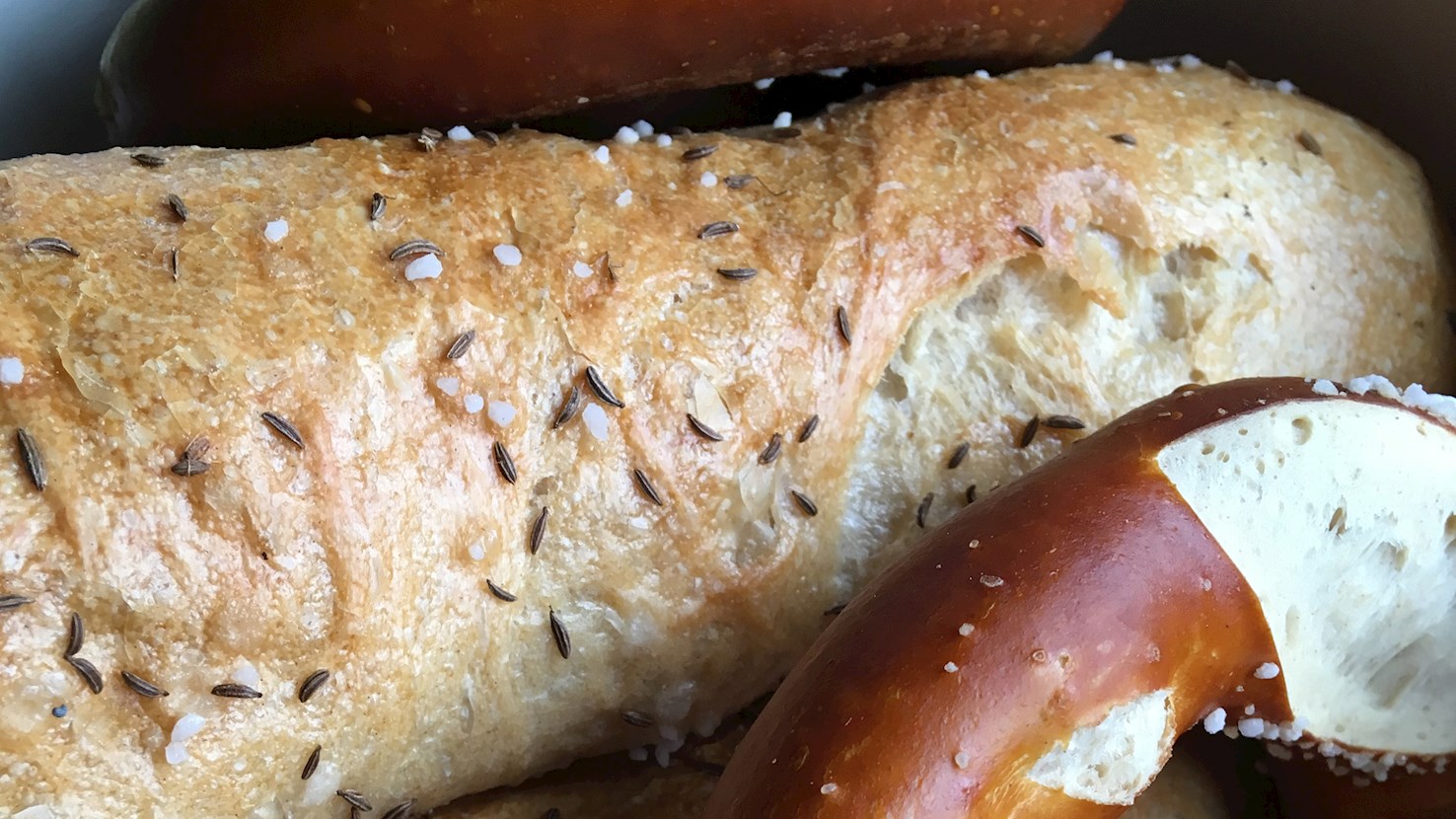
Seele is a traditional bread originating from Baden-Württemberg. The bread is usually made with a combination of wheat flour, spelt flour, yeast, salt, and water, without any additives or baking aids. Over the course of 24 hours, the dough is worked by hand several times. The small and oblong hand-shaped loaves are placed on the oven floor and the bread is baked until the crumb is moist and the crust is crisp. The crust is sprinkled with caraway seeds and coarse salt. Nowadays, only a few artisanal bakeries in the area still bake the bread using this traditional method that results in toasted aromas of the bread. Many bakeries use modern methods – the loaves are processed by machines, and the bread is less moist, while the crust is less crisp. The name seele means souls, and although the origin of the name is unclear, it's believed that it comes from the Christian All Souls' Day, when bread was given to poor people (souls) in need.
Schwäbische Brezel is a soft pretzel from the Swabian region of southern Germany, distinguished by its distinctive looped shape, deep brown crust, and soft, chewy interior. Originating in the historical region of Swabia, and most commonly eaten in Baden-Württemberg, this pretzel is a staple of local bakeries and beer gardens, often enjoyed with butter, cheese spreads, or sausages. The dough is made from wheat flour, yeast, water, and salt, and is briefly dipped in a lye solution before baking, which gives the crust its characteristic glossy surface and malty flavor. Unlike its Bavarian counterpart, the Swabian pretzel typically features a thinner, crispier loop and a plumper bottom, offering a contrast in texture that makes it especially popular for sandwiches or snacks. The surface is usually sprinkled with coarse salt, though variations may include sesame or poppy seeds. In Swabia, pretzels are more than just a bakery item, they are a daily food enjoyed across all age groups, from school lunches to breakfast and beer-time accompaniments. Their presence in the region is so prominent that many bakeries specialize in perfecting the shape and balance between crust and crumb, with some even marking their dough to control the spread during baking. The method of scoring the thicker bottom part of the pretzel before baking is a hallmark of the Swabian style, resulting in a satisfying bite that pairs well with savory toppings.
Mutschel is a star-shaped yeast bread that originates from Reutlingen, a city in the Swabian region of Baden-Württemberg in southern Germany. This baked specialty is easily recognized by its distinctive eight-pointed form and is deeply tied to local customs that date back centuries. Though it resembles other festive breads in appearance, Mutschel is unique in how it is woven into the cultural life of Reutlingen, especially during the annual celebration known as Mutscheltag. Historical references to Mutschel stretch back to at least the Middle Ages. Bakers and citizens in Reutlingen began making this bread in association with guild traditions and communal feasting. Over time, Mutschel became an emblem of civic pride. Each year on the Thursday after Epiphany, locals gather to play dice games where winners receive Mutschel loaves as prizes. The symbolism of the star shape is often linked to the Star of Bethlehem, but it is also said to reflect aspects of the city’s heraldry or references to bakers’ guild insignias. Preparing Mutschel involves an enriched yeast dough made from flour, butter, eggs, milk, a little sugar, and a pinch of salt. Once the dough is kneaded until smooth and pliable, it is left to rise until doubled in volume. Bakers then shape the loaf into its characteristic star with a central dome surrounded by triangular points carefully cut and pulled outward. After a second rising, the loaf is brushed with egg wash to develop a golden crust and then baked until cooked through and lightly browned. Mutschel can be served fresh and slightly warm or cooled to room temperature. It is usually eaten plain, though it can also be accompanied by butter, jam, or cold cuts. During Mutscheltag festivities, participants gather around tables with dice and compete in games to win the bread, reinforcing a sense of local identity and camaraderie. Bakeries across the city produce thousands of these star breads every January, and families consider it an essential part of marking the beginning of the year. Visitors often purchase Mutschel as an edible souvenir that captures a unique aspect of Swabian heritage.
TasteAtlas food rankings are based on the ratings of the TasteAtlas audience, with a series of mechanisms that recognize real users and that ignore bot,
nationalist or local patriotic ratings, and give additional value to the ratings of users that the system recognizes as knowledgeable.
For the “Top 3 Baden-Württemberg Breads” list until June 15, 2026, 18 ratings were recorded, of which 14 were recognized by the system as legitimate.
TasteAtlas Rankings should not be seen as the final global conclusion about food. Their purpose is to promote excellent local foods,
instill pride in traditional dishes, and arouse curiosity about dishes you haven’t tried.