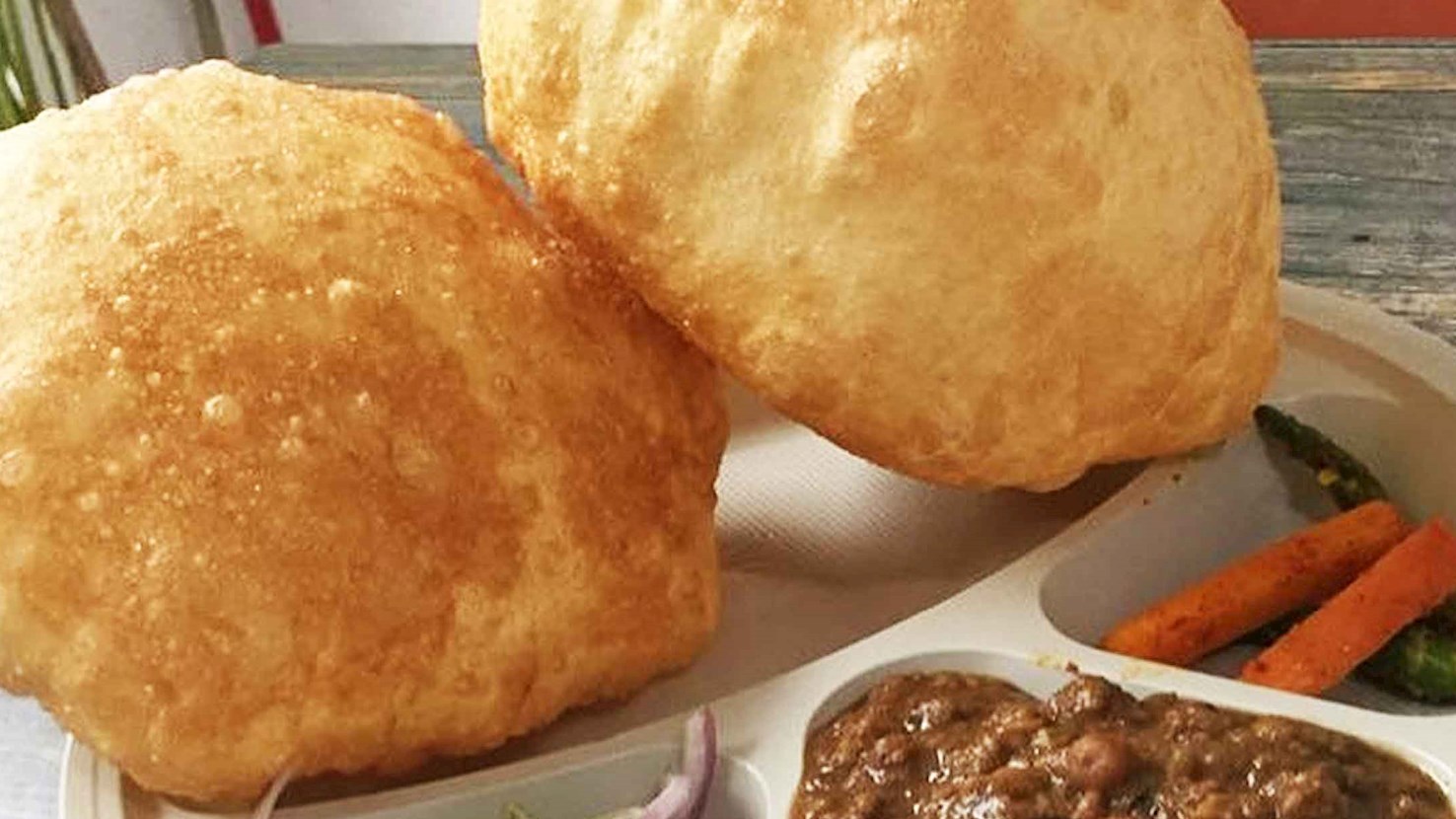
Bhatura is a deep-fried, leavened bread with North Indian origins and a light, fluffy texture. Its unique texture is achieved by letting the dough ferment for almost one hour. The dough consists of flour, oil, baking powder, and yogurt. After the bread is fried, it is usually sprinkled with Indian masalas or stuffed with paneer. If it's stuffed with chickpea curry, it becomes another popular dish, known as chole bhatura, found at almost every street corner in North India. Bhatura's versatility is seen in kulcha, which is made with the same dough, but it is baked or cooked on a pan instead of being deep-fried.
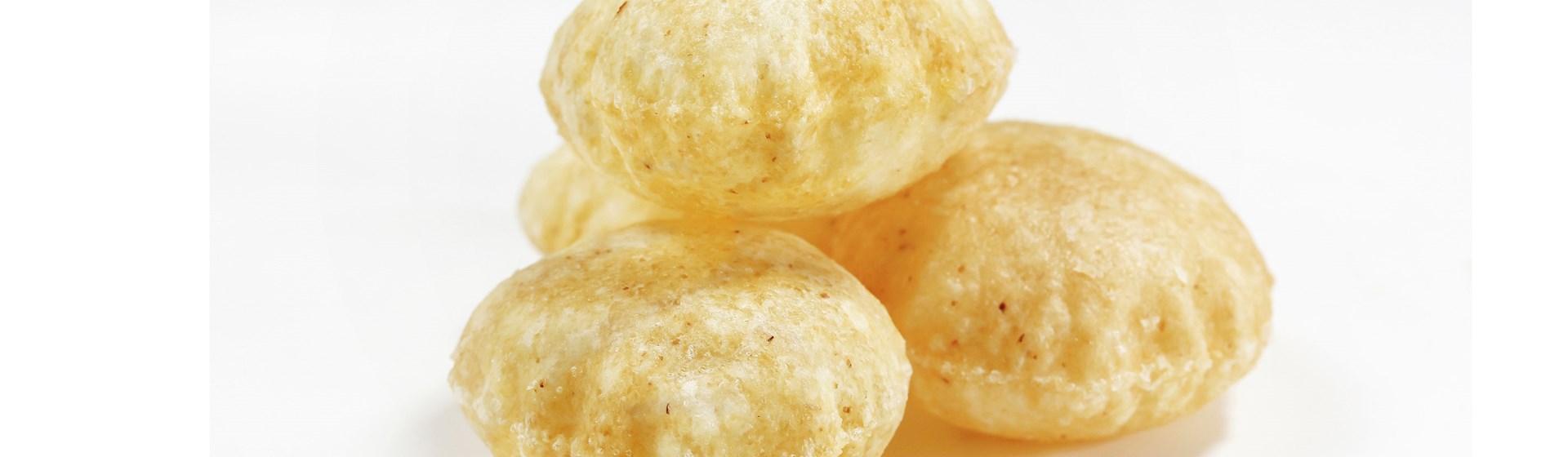
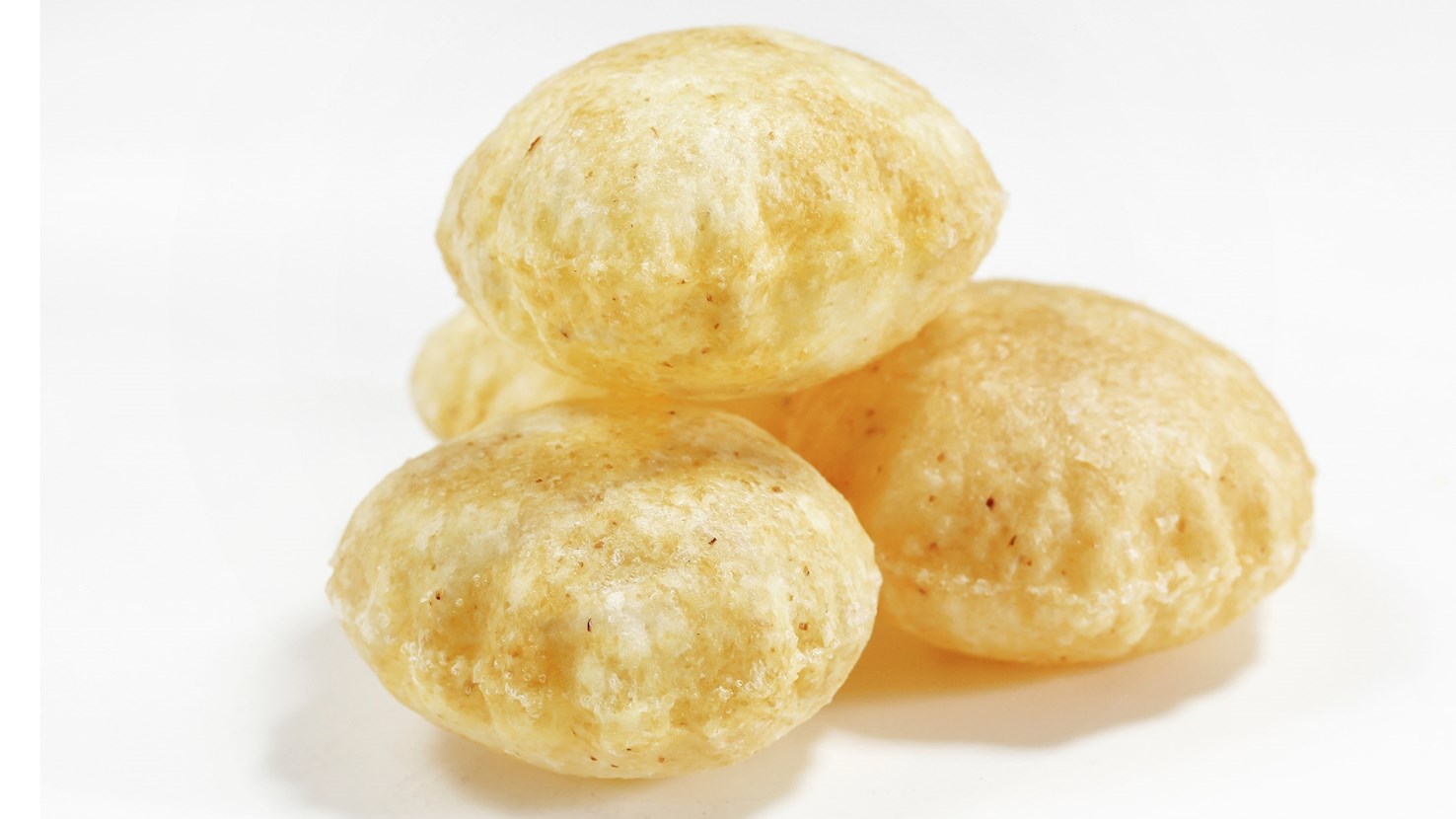
Puri is an unleavened, fried Indian bread made with water, finer or coarser wheat flour, and occasionally cumin seeds. The dough is rolled into flat round shapes and fried in copious amounts of vegetable oil or ghee. During frying, the dough absorbs oil and puri acquires the typical puffy appearance, crispy texture, and an appealing golden color. Occasionally, uncooked puri is punctured to produce a flat variety of the bread. It is consumed across the Indian subcontinent, but its origin is probably in the northern regions, where wheat flour was more usually employed. Most commonly, puri is consumed as a side dish, alongside creamy and spicy curries or a variety of vegetable dishes. It also represents an important breakfast staple and is commonly served during festivities and on special occasions. In some Indian states, it is also served as an accompaniment to sweet dishes, such as the creamy mango pulp or semolina halwa. Typical varieties include the spicy puri variety, a stuffed version filled with mashed potatoes, and the ones incorporating mashed or grated vegetables.
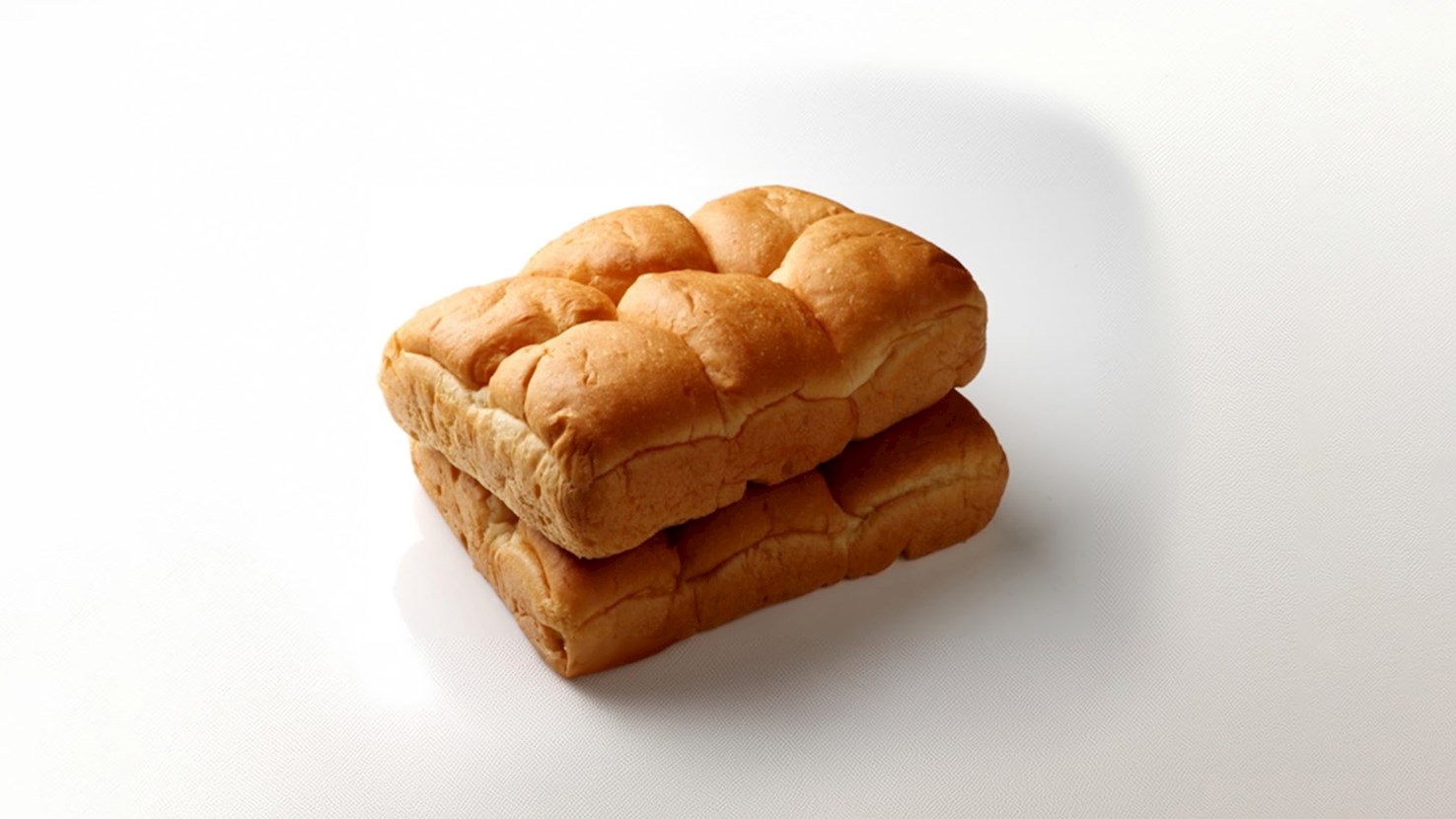
Pav in India refers to a type of soft, fluffy bread roll that is commonly used in various street foods and meals. The term "pav" comes from the Portuguese word "pão," which means bread. Pav was introduced to India during Portuguese colonization, particularly in Goa and Mumbai, and has since become a staple in Indian cuisine. Pav is soft, pillowy, and slightly chewy, with a light crust and a subtle sweetness, making it versatile for pairing with both savory and spicy dishes. Pav is traditionally made with a dough of refined flour (maida), water, yeast, sugar, salt, and a little butter or oil. The dough is kneaded, allowed to rise, shaped into rolls, and baked until soft and golden brown. It is typically small in size and comes in sets, perfect for individual servings. Pav is a key component of popular Indian dishes like vada pav, a spicy potato fritter sandwiched in pav, pav bhaji, where pav is served with a spicy, buttery vegetable mash, misal pav, which pairs pav with a spicy lentil curry, and keema pav, where pav accompanies spiced minced meat curry.
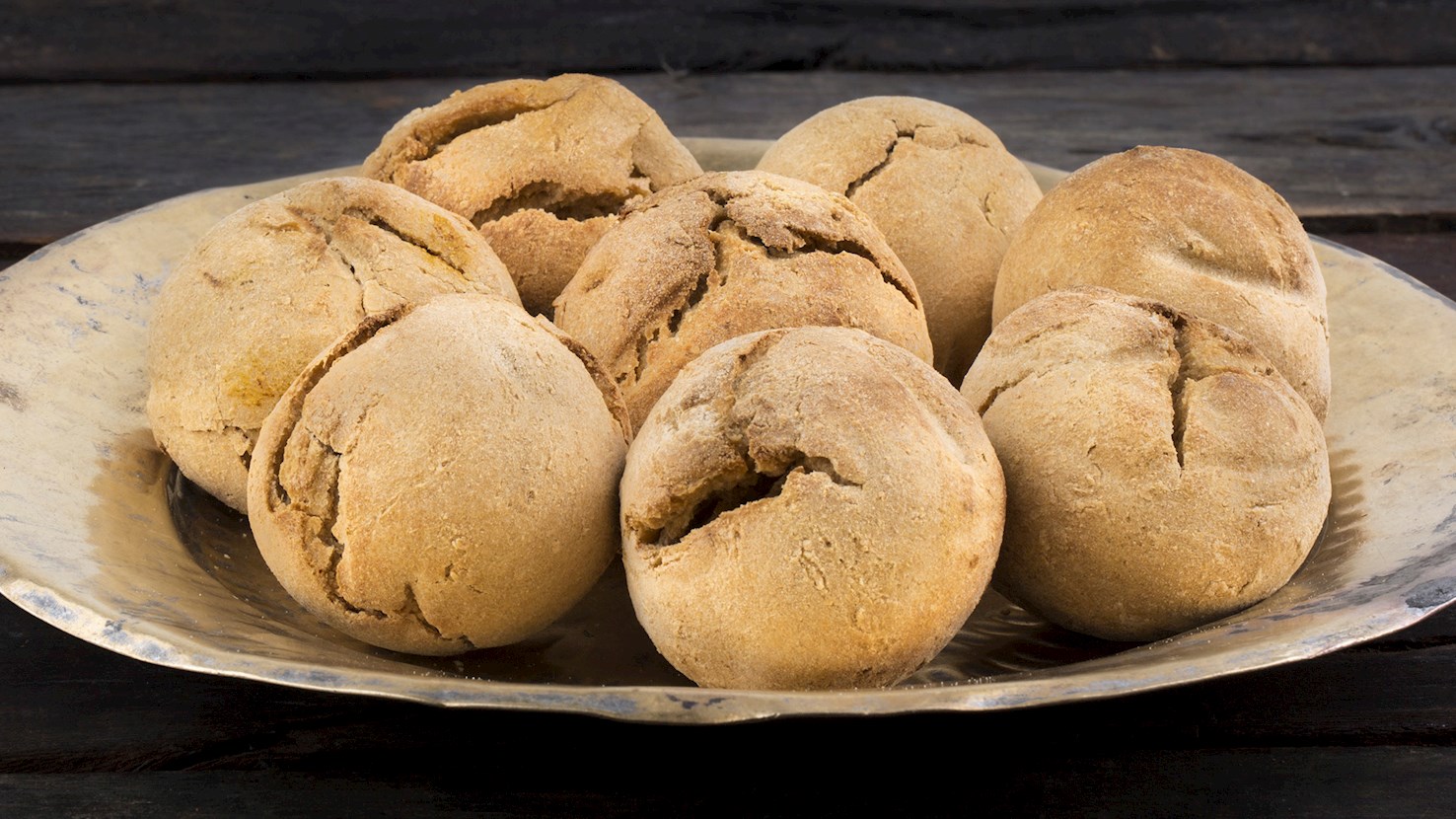
Baati is a hard, unleavened Indian bread that is typically prepared in the desert areas of Rajasthan, Uttar Pradesh, and Madhya Pradesh. Traditionally, baati is baked over the ambers of dried cow-dung. It consists of wheat flour, salt, ghee, and very little water, so the resulting low moisture and high fat content give it an extended shelf life. Baati is often eaten with dal, resulting in a dish called dal bati, a popular Rajasthani delicacy where baati is dipped in ghee and traditionally served in an earthenware pot. The bread can be prepared in a basic, plain version, but it can also be filled with peas, onions, or sattu.
TasteAtlas food rankings are based on the ratings of the TasteAtlas audience, with a series of mechanisms that recognize real users and that ignore bot,
nationalist or local patriotic ratings, and give additional value to the ratings of users that the system recognizes as knowledgeable.
TasteAtlas Rankings should not be seen as the final global conclusion about food. Their purpose is to promote excellent local foods,
instill pride in traditional dishes, and arouse curiosity about dishes you haven’t tried.



What People Say