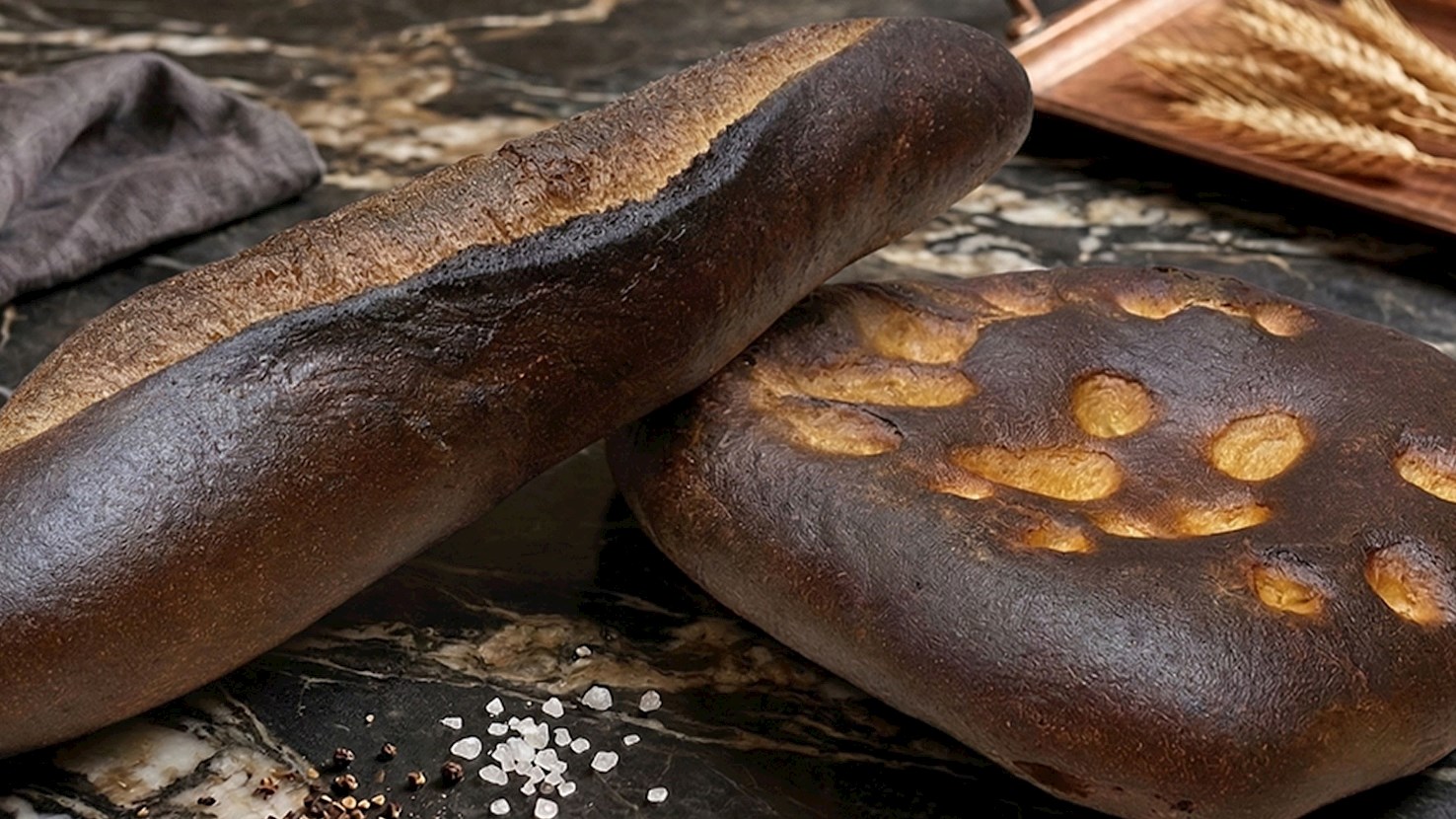
Pain à soupe is a substantial, rustic bread hailing from the Manche department. Typically baked in large round or oval shapes, it features a rugged, thick crust and a densely packed, dry interior. Made simply from wheat flour, water, yeast, and salt, it has a mild, low-acid flavor profile. Its primary defining trait is its structural resilience, engineered specifically to soak up large amounts of liquid without turning to mush. This loaf has its roots in the resourcefulness of rural farming and coastal communities. Historically, bread needed to endure for several days, and as it staled, it had to remain useful to prevent food waste. It became intrinsically tied to the daily dietary staple of soup, providing a hearty, caloric base that transformed simple broths into sustaining meals for laborers. The baking process starts with a low-hydration (stiff) dough that is kneaded until highly elastic and firm. After a slow fermentation, the dough is formed into large loaves and baked extensively. This thorough baking develops a hard outer shell that protects the crumb, ensuring that as the bread ages, it dries out completely rather than spoiling or developing mold. Differences among these loaves are generally minimal, mostly restricted to the overall size of the bread and the coarseness of the flour used—coarser grinds are sometimes preferred to increase liquid absorption. Regardless of these minor tweaks, the essential characteristic is always the bread's ability to hold its shape and cohesion when submerged in hot liquid. As its name suggests, pain à soupe is designed to be eaten presoaked. Thick slices of the aged, dry bread are placed at the bottom of a bowl, and piping hot vegetable, meat, or fish soup is ladled directly over them. The bread softens to a palatable texture while maintaining its form. It is often enriched with a bit of butter or grated cheese and is traditionally enjoyed as a complete, satisfying meal, typically washed down with unpretentious beverages like water or local rustic cider.
Pain de Dieppe is a yeast-based loaf originating from the French port city of Dieppe. It bridges the gap between a standard daily loaf and a rich pastry. The bread features a pale, delicate crust and a finely textured, uniform crumb. Crafted from a blend of wheat flour, milk, butter, eggs, sugar, and yeast, it offers a subtly sweet, buttery flavor. The bread's development is deeply tied to Dieppe's bustling maritime environment. Catering to both local city dwellers and the seafaring trade, urban bakers utilized their ready access to refined flour and high-quality dairy. This commercial influence resulted in a refined, softer loaf that stood in stark contrast to the heavy, dense, and utilitarian breads typical of the surrounding rural farming communities. To create this bread, bakers first combine flour, milk, yeast, eggs, and sugar into a flexible dough, subsequently working in the butter. The mixture undergoes meticulous kneading to build elasticity, followed by a carefully monitored fermentation process. This controlled rising ensures the internal structure remains tight and even. The dough is then formed into various shapes and baked just until it develops a light golden hue, intentionally avoiding the formation of a thick or hard crust so it remains highly sliceable. Differences among batches are generally minor, mostly pertaining to the bread's physical form—ranging from individual small rolls to full-sized loaves. While bakers might slightly tweak the ratios of butter or sugar to adjust the richness, the core identity of Pain de Dieppe always rests on its signature pillowy softness and a sweetness that is purposefully subdued compared to heavily enriched goods like brioche. Enjoyed predominantly while fresh, this bread is a staple for breakfast or daytime snacks. It is highly versatile, whether eaten plain, smeared with butter, honey, or fruit preserves, or used as a soft foundation for mild cheeses and simple sandwiches. It pairs beautifully with morning coffee, tea, or a crisp, light cider that highlights the loaf's gentle dairy notes.
Pain brié is a heavy, traditional wheat loaf originating from Normandy that has an exceptionally tight, compact interior and a robust, hard crust. Crafted from a simple mixture of wheat flour, water, salt, and yeast, it offers a chewy, somewhat dry mouthfeel and a mild, low-acid flavor profile that firmly distinguishes it from lighter, airier baked goods. The bread's origins are rooted in the practical needs of Normandy's coastal and agricultural communities, where long-lasting provisions were crucial for sailors and farmers. Its name is derived from the old Norman verb brer, which means to pound or crush. This refers to the intense mechanical labor historically required to process the low-hydration dough, creating a durable loaf perfectly suited for extended sea voyages or long stretches of farm work. The baking process centers around an unusually stiff dough. This mixture is subjected to prolonged, vigorous kneading or beating to expel air pockets and densely pack the gluten network. Because of this forceful working, the dough undergoes very little fermentation. It is then formed into large loaves and baked until a thick, protective crust develops. This unique method yields a highly uniform interior that strongly resists staling, molding, and crumbling. While the essential technique of forcefully pounding the dough is non-negotiable, bakers may alter the bread's external appearance. Loaves can range from large, spherical boules to longer, oval shapes. The thickness and darkness of the crust may also vary slightly depending on the specific temperature and conditions of the oven used. Pain brié is typically cut into thick, sturdy slices. Its firm texture and neutral taste make it an excellent, structural canvas for rich or salty toppings. It is frequently enjoyed with salted butter, fresh cheeses, smoked fish, and seafood rillettes. To drink, it is traditionally paired with regional hard cider, crisp dry white wines, or hearty broths, where the bread provides substance without overpowering the meal.
TasteAtlas food rankings are based on the ratings of the TasteAtlas audience, with a series of mechanisms that recognize real users and that ignore bot,
nationalist or local patriotic ratings, and give additional value to the ratings of users that the system recognizes as knowledgeable.
For the “Top 3 Norman Breads” list until June 15, 2026, 1 ratings were recorded, of which 1 were recognized by the system as legitimate.
TasteAtlas Rankings should not be seen as the final global conclusion about food. Their purpose is to promote excellent local foods,
instill pride in traditional dishes, and arouse curiosity about dishes you haven’t tried.