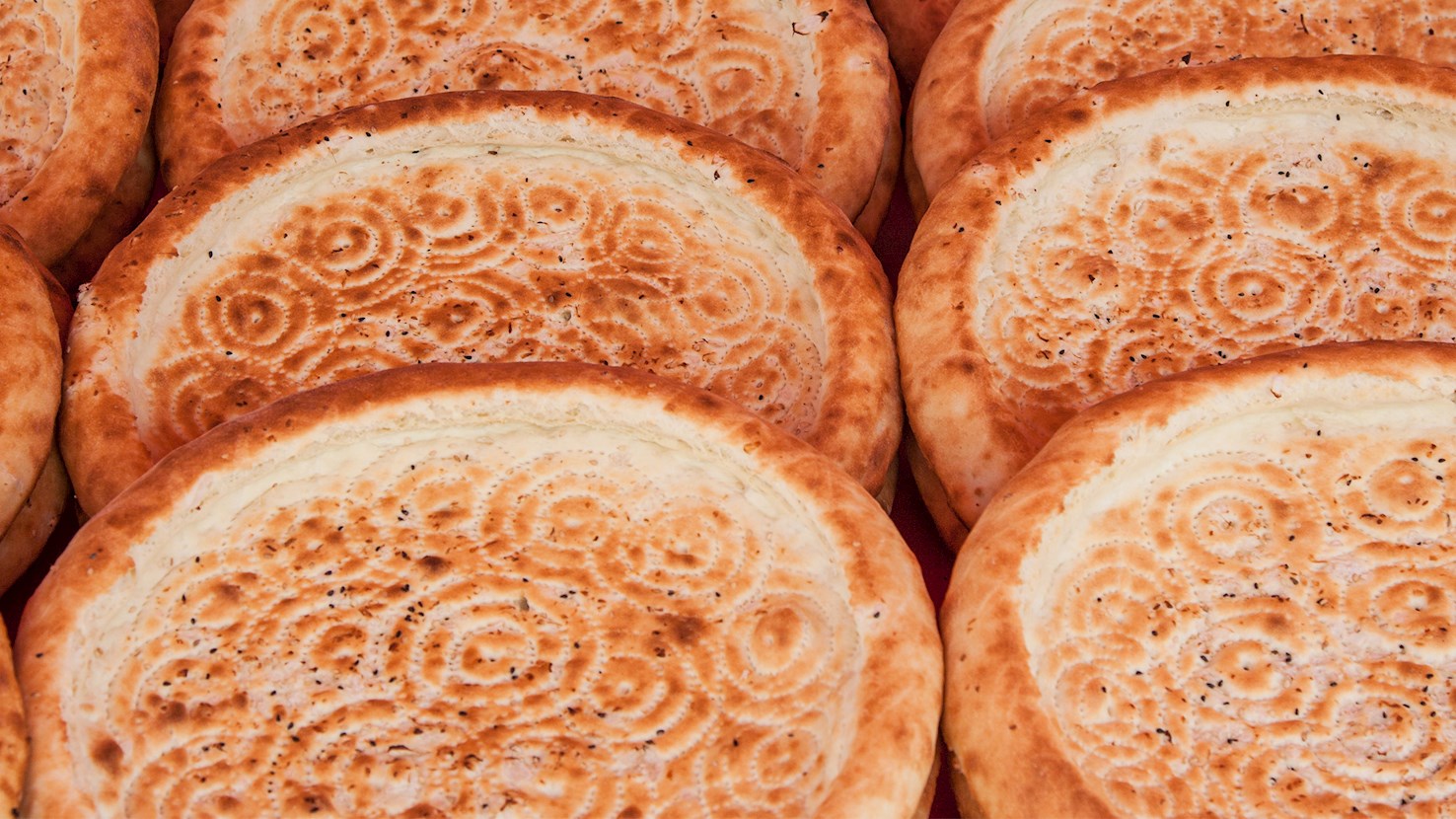
Obi non or lepyoshka is a traditional flatbread that is somewhat thicker than naan and is typically shaped into a disc with a decorated top. The dough is made from flour, water, salt, and yeast, and it is traditionally baked in a clay oven known as a tandyr. Today, there are numerous varieties of the flatbread such as bukhara lepyoshka (sprinkled with sesame and nigella seeds), flaky lepyoshka with cream and butter, and tashkent lepyoshka that is baked as a pastry with milk, butter, and sugar.
Samarkand non is a traditional round bread originating from Uzbekistan. This dense and dry bread made from flour and water (or milk) has a long shelf life and it usually looks like a large bagel. The Samarkand type of non has a darker crust and it's larger, heavier, and more filling than the Tashkent non types of bread. Once baked on the walls of a tandoor oven, the loaf is usually coated with a sheen of oil. In the center, there is a small patch that's covered with black sesame seeds. This type of bread can only be made in Samarkand, and some say (jokingly or not) that the air of the city is the bread's main ingredient.
Tandyr nan is a circular leavened flatbread produced throughout Central Asia, most prominently in Kazakhstan, Kyrgyzstan, Uzbekistan, and Tajikistan. The product is defined by its thick, raised outer rim and a depressed, decorative center that is baked in a tandoor, a vertical cylindrical clay oven. Archaeological evidence suggests that the use of these clay ovens for grain-based food preparation began in the Bronze Age within the Indus Valley and expanded throughout the Silk Road corridors, eventually becoming a primary dietary staple in the arid steppe and mountain regions of the Eurasian interior. Preparation of tandyr nan involves a dough consisting of wheat flour, water, salt, and yeast, which is fermented until its volume increases. Once the dough is divided into portions, it is shaped into a disc by hand, and a specific tool called a chekich (a handheld stamp with metal pins) is used to puncture the center of the loaf. This perforation prevents the center of the bread from rising during the baking process, ensuring the loaf maintains its structural indentation. The baker attaches the dough to the preheated interior wall of the tandoor by slapping it against the ceramic surface, where it adheres and bakes via a combination of radiant heat and conduction. A technical attribute of tandyr nan is the addition of milk, vegetable oil, or lamb fat to the dough in certain regional variations to increase caloric density and improve shelf stability in dry climates. The surface of the bread is frequently brushed with water or milk and sprinkled with nigella or sesame seeds prior to baking to enhance flavor and texture. Tandyr nan is eaten as a primary accompaniment to every meal in Central Asian households and is rarely cut with a knife; instead, it is torn into pieces by hand as a gesture of respect for the food. It is commonly served alongside shurpa (meat broth), grilled shashlik (skewered meat), or palov (rice pilaf), and it is frequently consumed with hot green or black tea, often being dipped directly into the tea or served with bowls of kaymak (thick clotted cream) and local honey.
TasteAtlas food rankings are based on the ratings of the TasteAtlas audience, with a series of mechanisms that recognize real users and that ignore bot,
nationalist or local patriotic ratings, and give additional value to the ratings of users that the system recognizes as knowledgeable.
For the “Top 3 Uzbekistani Breads” list until May 15, 2026, 50 ratings were recorded, of which 26 were recognized by the system as legitimate.
TasteAtlas Rankings should not be seen as the final global conclusion about food. Their purpose is to promote excellent local foods,
instill pride in traditional dishes, and arouse curiosity about dishes you haven’t tried.