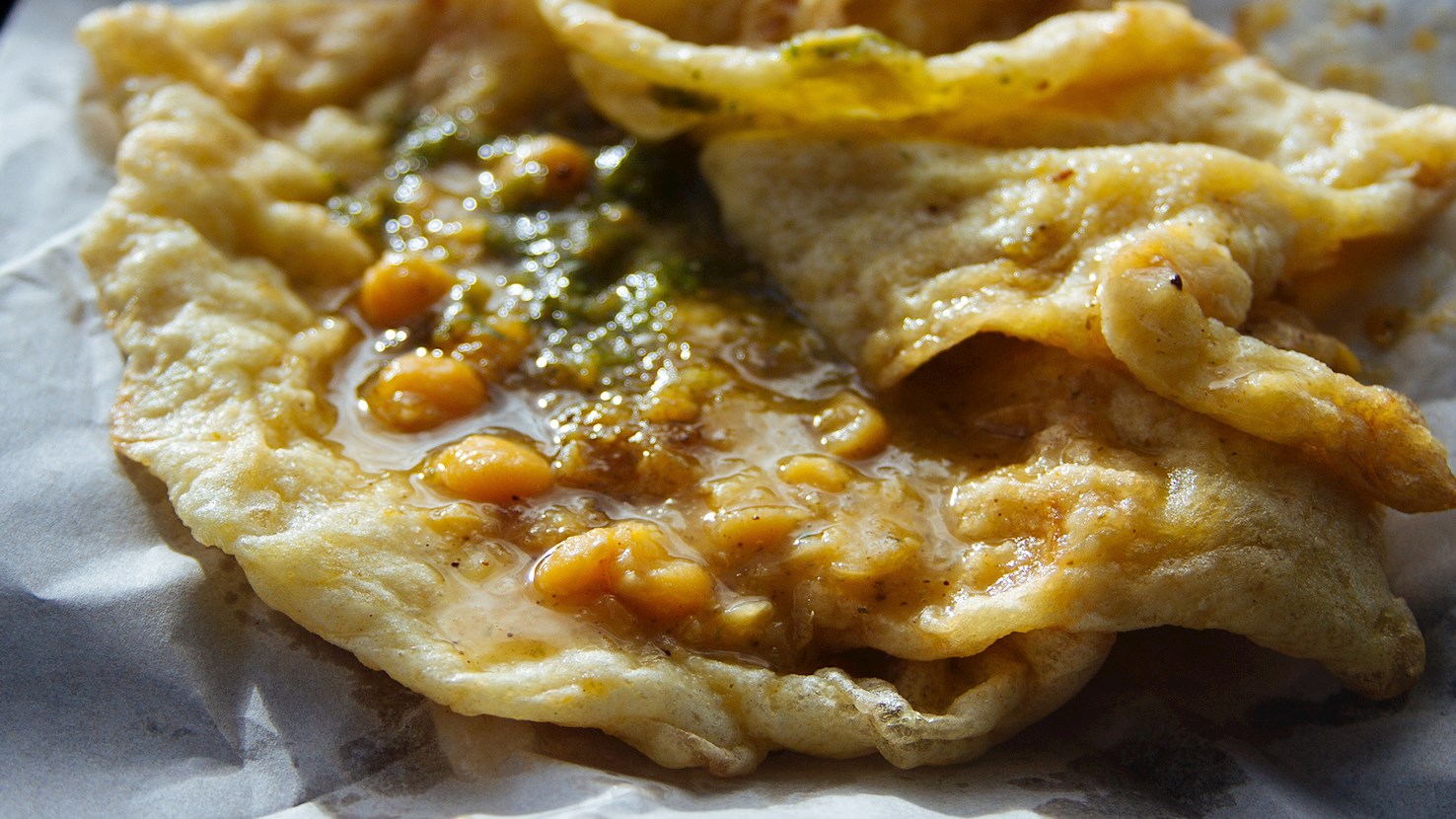
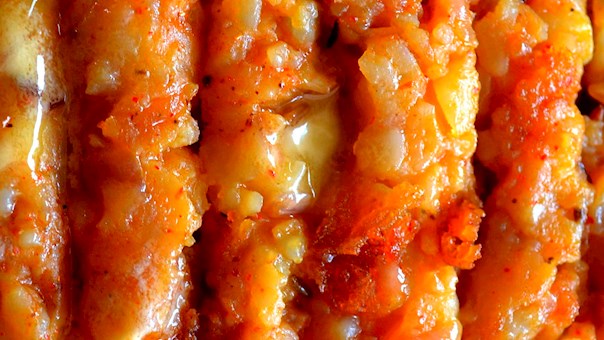
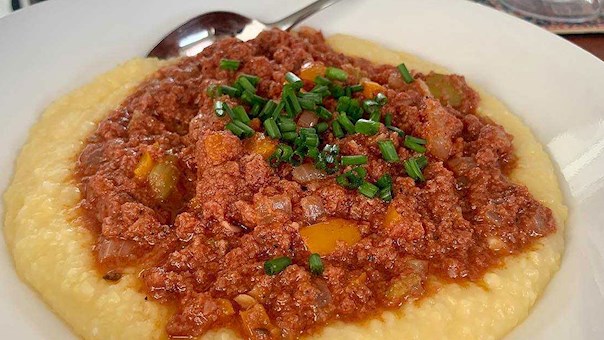
Doubles is a staple of Trini street food, a sandwich that consists of two fried flatbreads (bara) filled with curried chickpeas (curry channa). It is believed that doubles were invented in 1936 in Princes Town, and nowadays they are consumed for breakfast or as a late-night snack. The dish can be additionally enriched with ingredients such as pepper sauce, tamarind sauce, or green mango pickle with amchar masala, known as kuchela. In Trinidad and Tobago, doubles are typically sold wrapped in paper.
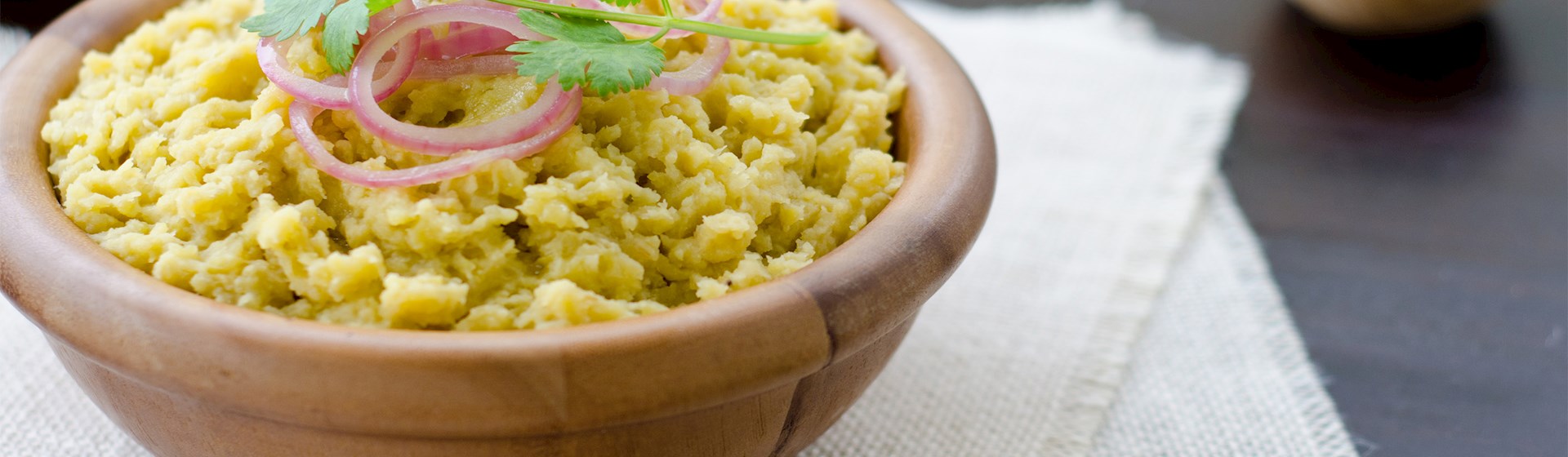
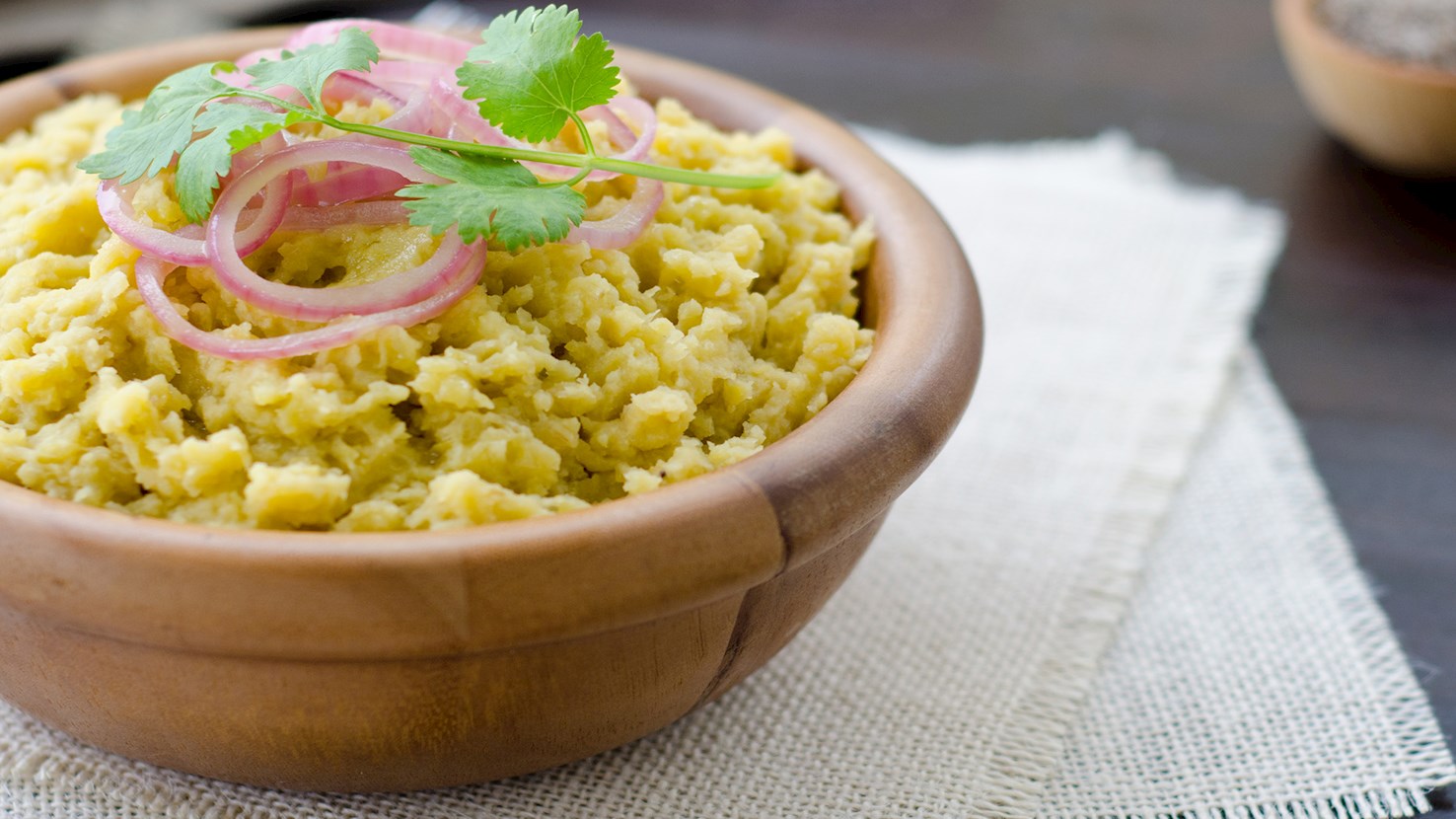
Mangú is a traditional dish that consists primarily of mashed plantains. It is a staple breakfast food in the Dominican Republic but can also be served at other meals. The preparation of mangú is quite simple: green plantains are peeled, cut into chunks, and boiled until they are soft. After boiling, the plantains are mashed with some of the water they were boiled in, along with butter, oil, or margarine to create a smooth, creamy consistency. Mangú is typically served with red onions that have been sautéed in vinegar, which adds a tangy flavor contrast. It is often accompanied by other side dishes such as fried cheese, eggs, or salami, making it a hearty and filling meal. This combination of foods is sometimes referred to as "los tres golpes" or "the three hits," referring to the three most common sides served with mangú.
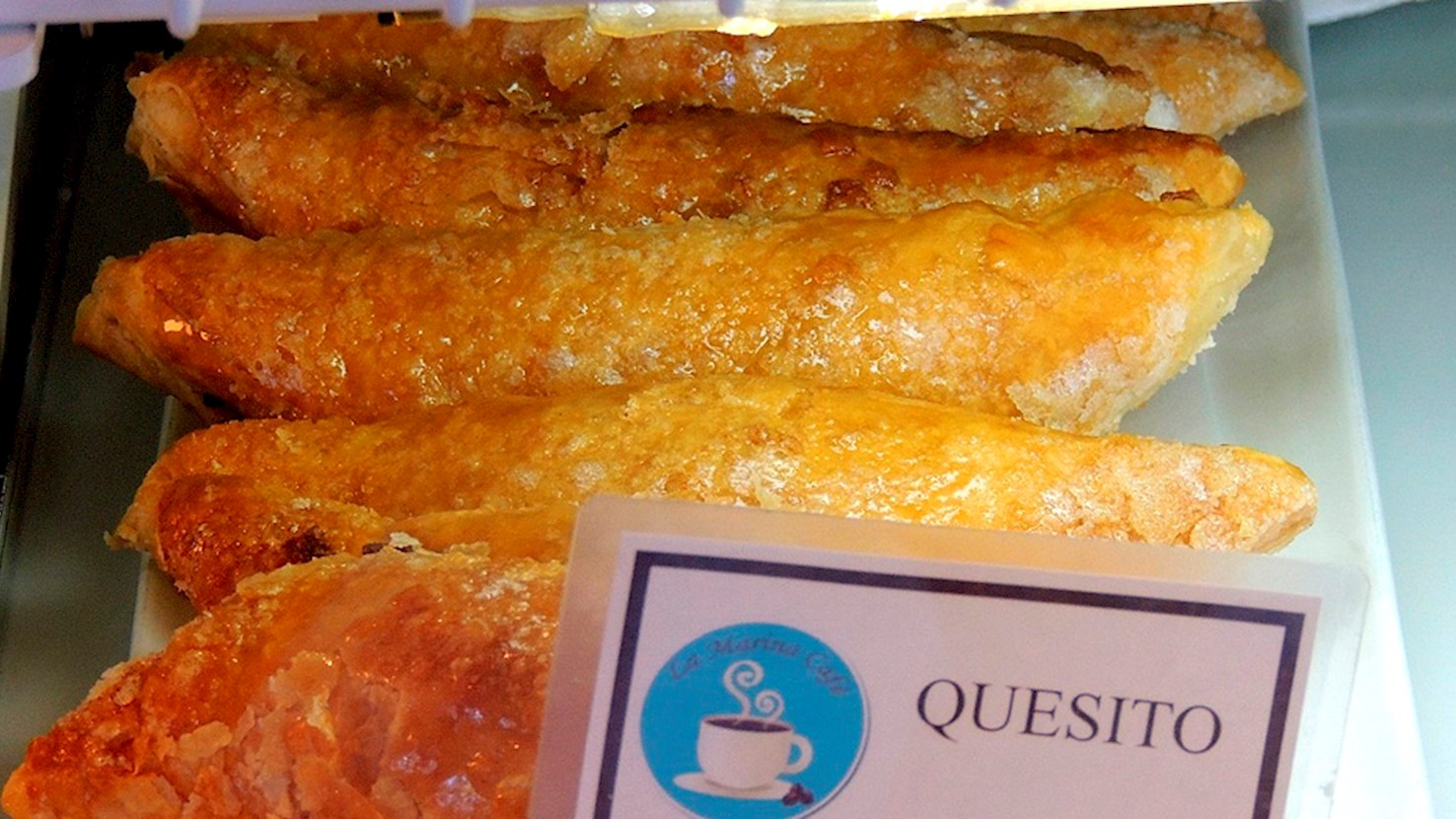
Quesito is a Puerto Rican pastry made with dough that is shaped into a cigar, then filled with sweetened cream cheese and various fruit preserves. After they have been glazed and baked, quesitos can be bought at bakeries throughout the island, and locals prefer to consume them for breakfast, paired with a cup of coffee on the side.
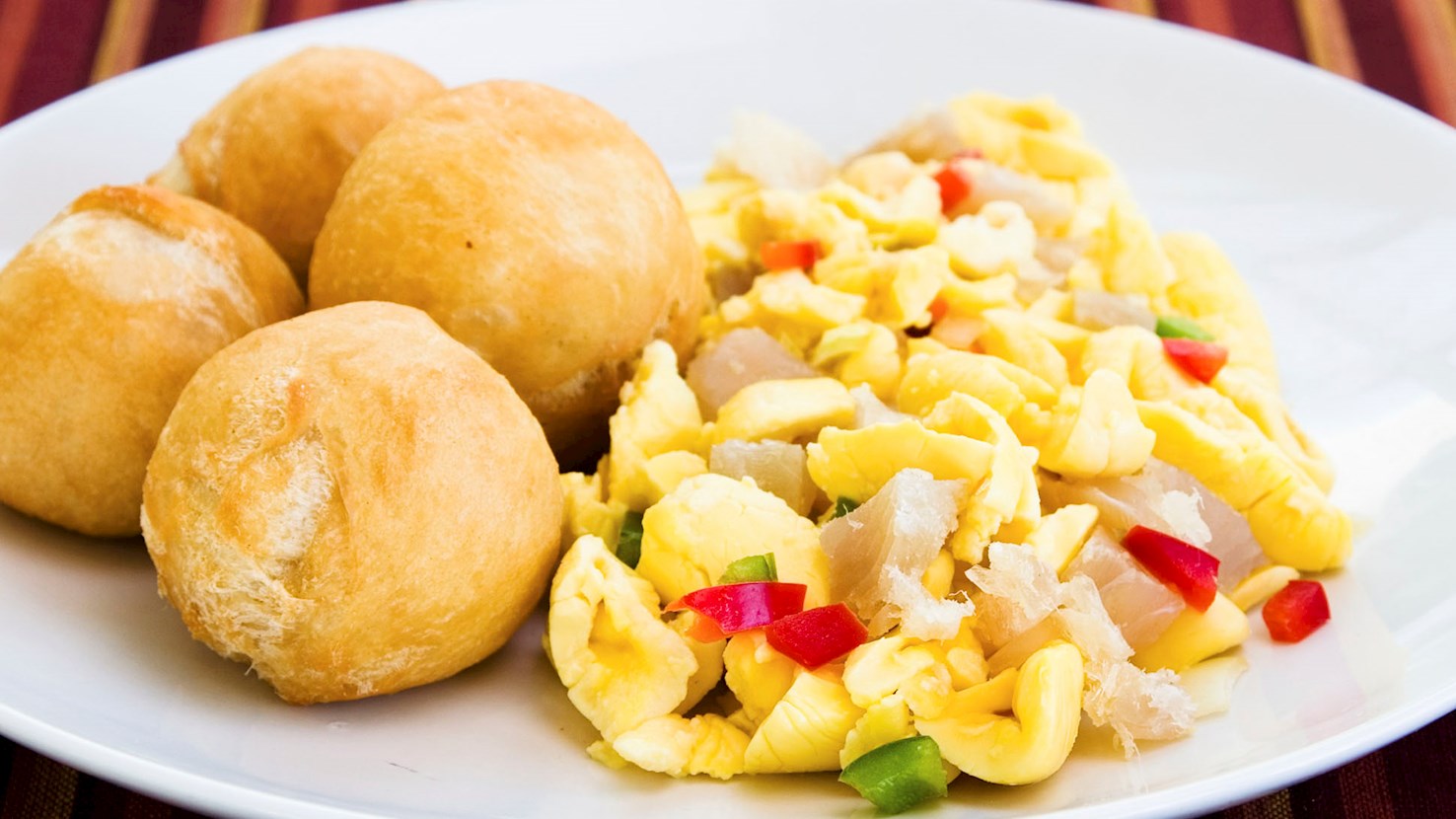
Ackee and saltfish is a dish made by combining the cooked flesh of the ackee fruit with flaked salted cod, sautéed aromatics, and seasonings such as Scotch bonnet pepper, thyme, scallion, onion, and tomato. It is widely regarded as Jamaica’s national dish and is eaten across the island for breakfast, lunch, and dinner. Ackee (Blighia sapida) originated in West Africa and was brought to Jamaica in the eighteenth century, where the tree adapted easily to the climate and became part of local diets. Salt cod arrived from the North Atlantic through colonial trade routes and became a dependable protein source because it was inexpensive and stored well in a tropical environment. Jamaican cooks combined these two ingredients, along with local herbs and peppers, over generations. By the nineteenth century, the pairing was established in domestic cooking and appeared in regional cookbooks and household records. Its growth in popularity coincided with the incorporation of Scotch bonnet pepper and fresh seasonings, which shaped the version recognized across Jamaica today. Preparation begins by cleaning and boiling ackee until the yellow arils soften and open naturally, ensuring they are fully ripe and safe to eat. The boiled ackee is drained carefully so the pieces remain intact. Saltfish is soaked or boiled to reduce salinity, then flaked and checked for bones. In a pan, onion, scallion, thyme, garlic, tomato, and Scotch bonnet pepper are sautéed until fragrant. The flaked saltfish is added and cooked briefly before the ackee is folded in gently to avoid breaking it apart. The mixture is simmered until the flavors meld without turning the ackee into a mash. Some versions include sweet pepper or black pepper, while others keep the seasoning minimal. Ackee and saltfish is eaten throughout Jamaica in homes, cookshops, hotels, and roadside eateries. It is commonly served with boiled green bananas, fried dumplings, roasted breadfruit, yam, or festival. At lunch it may appear with rice and peas or plain rice. Beverage pairings include ginger tea, cocoa tea, lime water, sorrel drink, or cold beverages such as ginger beer or ting. The dish’s versatility and presence across meal types make it one of the most recognizable representations of Jamaican cuisine.
Saltfish buljol is a spicy Trini dish made by soaking and boiling pieces of salted fish, then blending them with tomatoes, hot peppers, sweet peppers, onions, and oil. The dish is most commonly enjoyed as a hearty breakfast, when it is placed into a type of bread called bake, creating a sandwich in the process. Saltfish buljol is often paired with provisions (Trini term for boiled root vegetables) on the side, and the dish is often garnished with sliced scotch bonnet peppers.
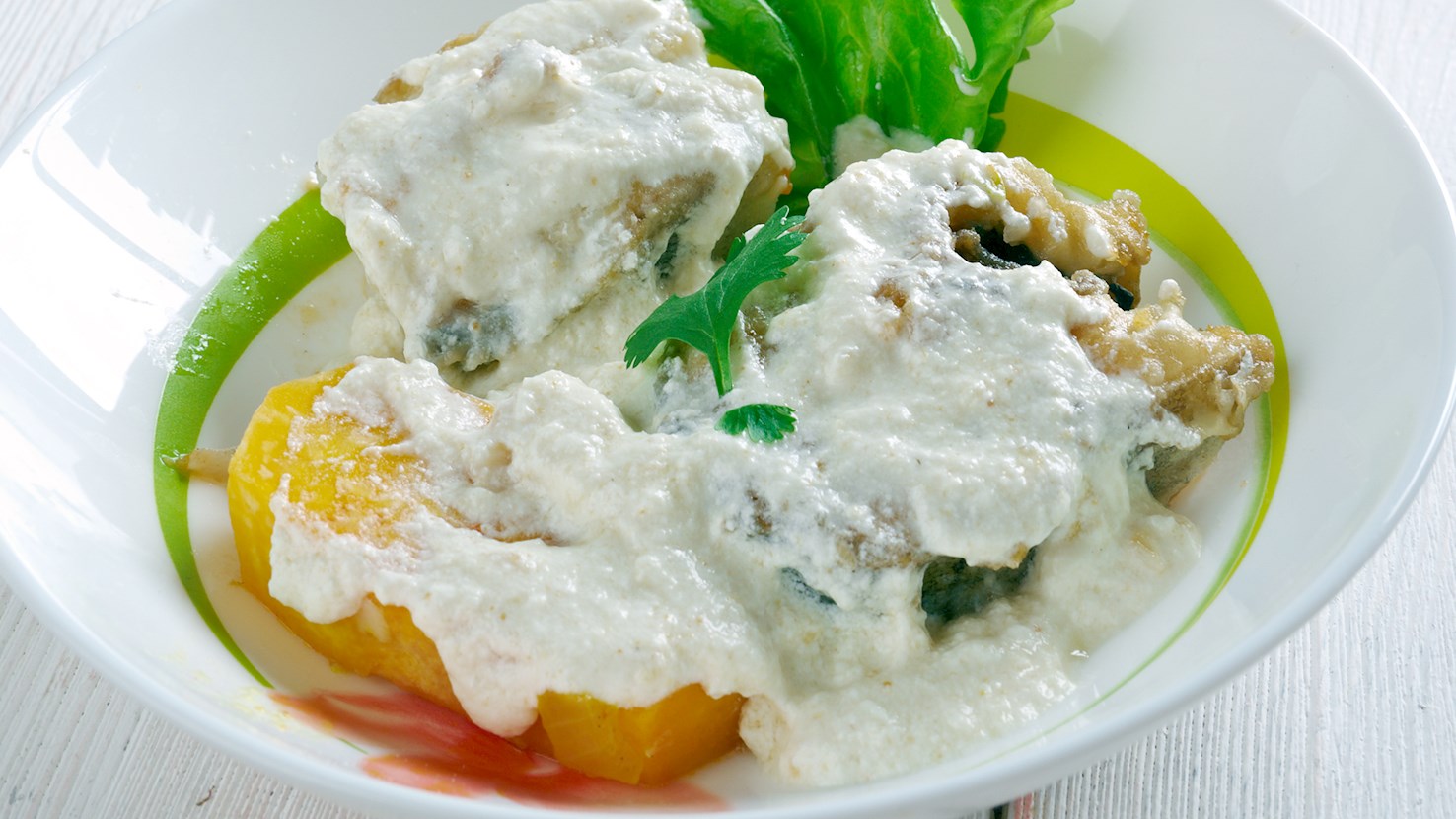
Run down, widely called run rown in Jamaican patois, is a Jamaican dish made by simmering salted or fresh fish in coconut milk until the liquid reduces into a thick, rich sauce that coats the ingredients. It is prepared across Jamaica with variations that use mackerel, cod, shad, or sometimes chicken or vegetables, but the defining feature is the long reduction of coconut milk and aromatics. The dish has a savory, slightly oily sauce that results from the coconut milk cooking down until it reaches a custard-like consistency. Its development is rooted in the cooking practices of Jamaican coastal and rural communities, where coconut milk was a standard ingredient and preserved fish such as salt mackerel and cod were widely available. The technique of reducing coconut milk appears in early Afro-Caribbean cooking, especially in areas where fresh coconuts were abundant. By the late eighteenth and nineteenth centuries, preserved fish had become an everyday ingredient in Jamaica due to colonial saltfish importation, and cooks combined these preserved foods with local coconut milk, scallion, thyme, Scotch bonnet pepper, and vegetables. Over time, this method formed the basis of run rown, which became common in households where fish and coconut were dependable staples. Preparation begins by soaking or boiling saltfish to remove excess salt, or by cleaning and cutting fresh fish into pieces. Coconut milk is placed in a pan and simmered gently until it begins to thicken and separate, forming a base that will eventually cling to the fish. Onion, scallion, thyme, garlic, pimento, tomato, and Scotch bonnet pepper are added, often alongside small amounts of pumpkin or okra depending on regional preferences. The fish is added once the coconut milk has reduced significantly, allowing it to absorb the flavors without breaking apart. The sauce continues to thicken until it reaches a creamy consistency that coats the fish and vegetables. The reduction process is central to the dish and gives it both its texture and its name, referring to cooking the coconut milk until it “runs down.” Run rown is eaten throughout Jamaica and is especially common for breakfast or lunch. It is often served with boiled green bananas, yam, breadfruit, dumplings, or rice. The dish is common at home kitchens, small cookshops, and rural gatherings. Beverage pairings include cocoa tea, ginger tea, lime water, ginger beer, sorrel drink, or cold lager, each complementing the richness of the coconut-based sauce.
Bammy is a Jamaican cassava flatbread made from grated, pressed, and cooked cassava, usually shaped into small rounds and finished by frying, steaming, or soaking in milk or coconut milk. It is widely eaten in Jamaica, especially in coastal areas where it is commonly paired with fried or steamed fish. The flatbread is made from bitter cassava varieties that require grating and thorough pressing to remove the toxic liquid before cooking. Once pressed, the cassava meal is sieved, shaped, and cooked on a griddle or flat pan until firm. Its development is rooted in the food practices of the indigenous Taino people of the Caribbean, who processed cassava into flatbreads long before European arrival. Cassava was a staple crop that grew well in the region’s climate, and Taino communities produced flour-like meal from grated cassava that was baked on clay or stone griddles. When Africans were brought to Jamaica, they continued the use of cassava and flatbread preparation methods, merging them with other cooking approaches. Over time, communities in rural and fishing villages maintained cassava processing techniques, and bammy became a recognized Jamaican product sold in markets and produced commercially by small factories. Its persistence in Jamaican cooking reflects the continued importance of cassava in areas where wheat flour was less accessible or less preferred. Preparation begins by peeling and grating the cassava, then placing the pulp in a cloth or pressing device to remove liquid. The dried meal is passed through a sieve to create a consistent texture. A dry pan or griddle is heated, and the cassava meal is shaped into flat circles and cooked until firm and lightly browned on both sides. At this stage bammy can be stored or cooked again. Before serving, the rounds are often soaked briefly in coconut milk or water, which softens them and adds flavor, followed by frying or steaming. Some cooks simply toast the flatbread without soaking, which produces a firmer texture. Bammy is eaten throughout Jamaica, especially with seafood dishes. It is typically served with fried fish, escovitch fish, steamed fish, rundown, or saltfish preparations. It is also eaten with butter, cheese, or lightly sweet spreads in some households. Beverage pairings include ginger beer, lime water, iced tea, sorrel drink, coconut water, or cold beer, which complement the flatbread’s mild flavor and starchy texture.
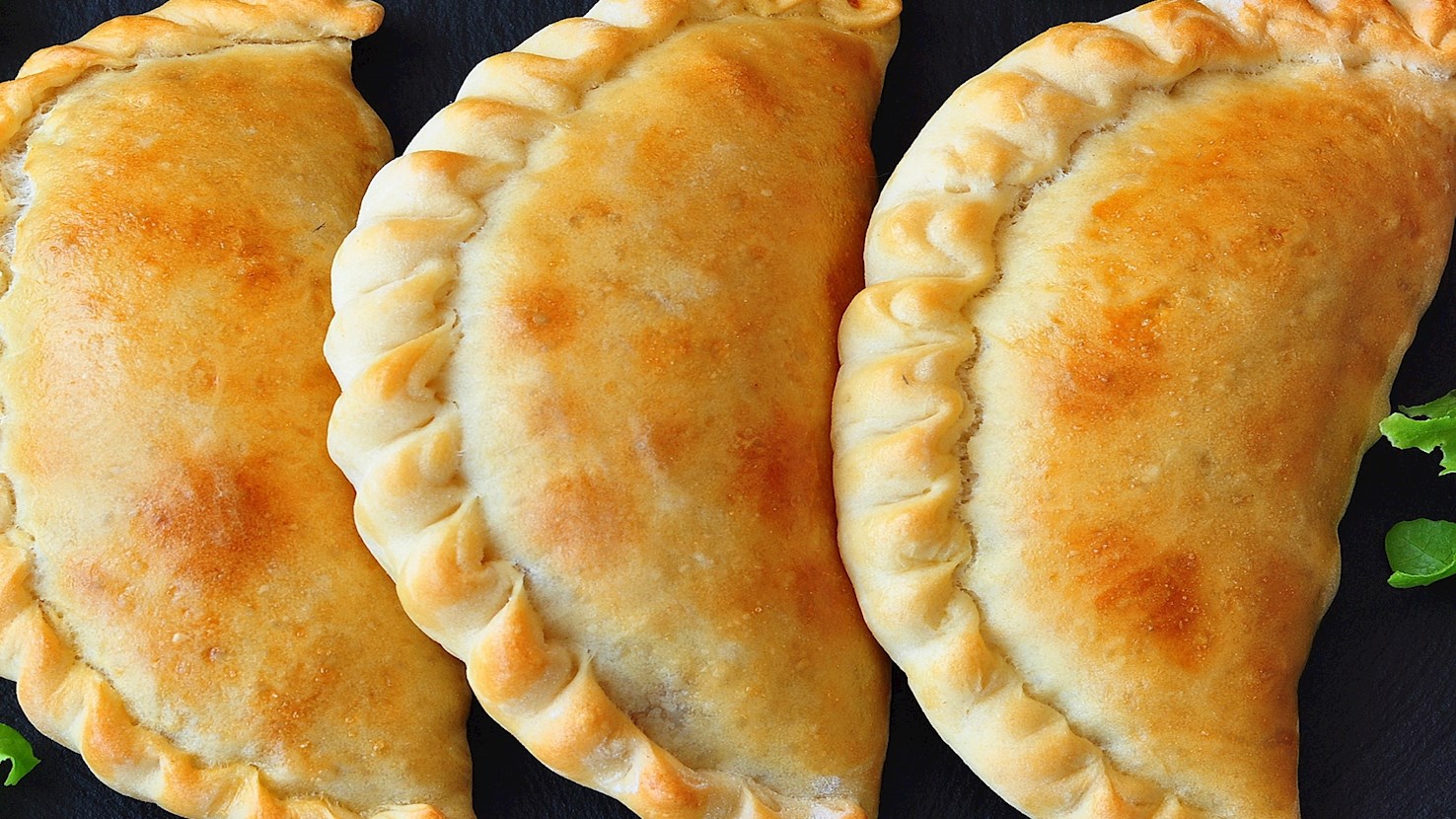
Pastechi is a traditional breakfast that can also be served as a snack, consisting of deep-fried, crescent-shaped dough filled with a variety of ingredients such as chicken, beef, tuna, vegetables, or cheese. The key ingredient is usually combined with finely chopped onions, green peppers, celery stalks, raisins, cumin, nutmeg, and hot peppers. Fried until golden brown, pastechis can be found throughout the island, especially in roadside snack-bars.
Antiguan butter bread is a tender, buttery loaf of bread that needs no more additional butter once it's been baked. It is common to serve the bread with cheese for breakfast, but many locals enjoy it throughout the day. Across the island, there are numerous bakeries where locals can go and purchase this freshly baked delicacy. Apart from cheese, the usual accompaniments to the bread include ingredients such as sardines or a local, bright red sausage called salami.
Huevos habaneros is a traditional dish originating from Havana. Although there are a few version of the dish, it's most commonly prepared with eggs, onions, bell peppers, garlic, tomatoes, white wine, habanero peppers, paprika powder, cumin, and butter. The peppers, onions, and garlic are sautéed in butter, followed by hot peppers, chopped tomatoes, cumin, and paprika. The white wine is then added to the skillet, and the mixture is boiled until half of the liquid evaporates. The mixture is placed into individual ramekins, topped with eggs, then baked in the oven until the eggs are fully cooked. It's recommended to serve this spicy dish straight out of the oven.
TasteAtlas food rankings are based on the ratings of the TasteAtlas audience, with a series of mechanisms that recognize real users and that ignore bot,
nationalist or local patriotic ratings, and give additional value to the ratings of users that the system recognizes as knowledgeable.
For the “Top 14 Caribbean Breakfasts” list until July 15, 2026, 292 ratings were recorded, of which 201 were recognized by the system as legitimate.
TasteAtlas Rankings should not be seen as the final global conclusion about food. Their purpose is to promote excellent local foods,
instill pride in traditional dishes, and arouse curiosity about dishes you haven’t tried.