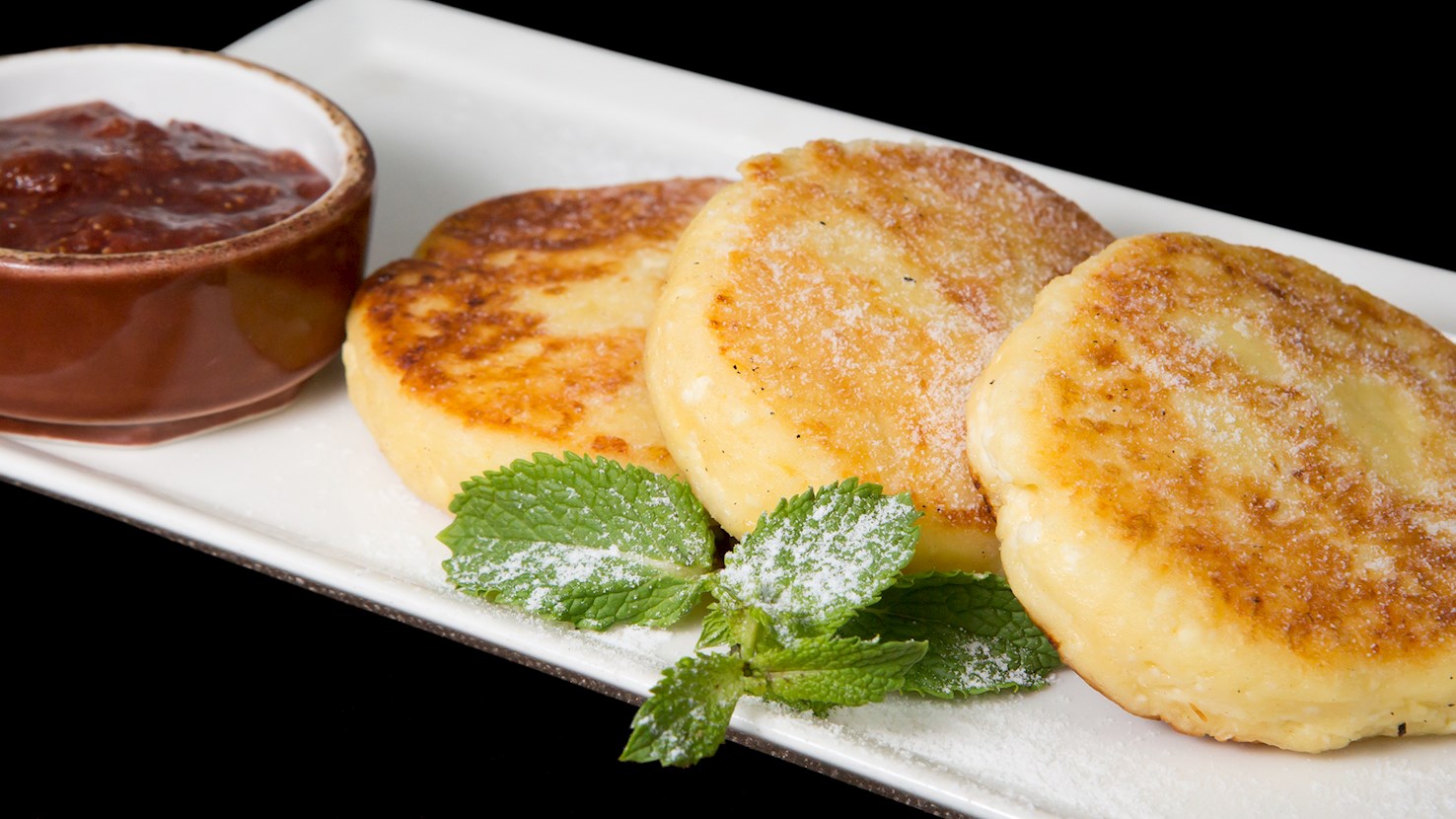
Syrniki is a dessert consisting of fried cottage cheese pancakes that are usually garnished with honey, fruit jam, sour cream, or applesauce. It is part of the Russian (where it's sometimes also called tvorozhniki), Belarusian, Ukrainian, Latvian and Lithuanian cuisine. Cottage cheese is traditionally first swetened with sugar, then combined with flour into a dough which is fried in hot oil until it develops a golden-brown color. Syrniki can be served for breakfast or consumed as a tasty dessert after a large meal.
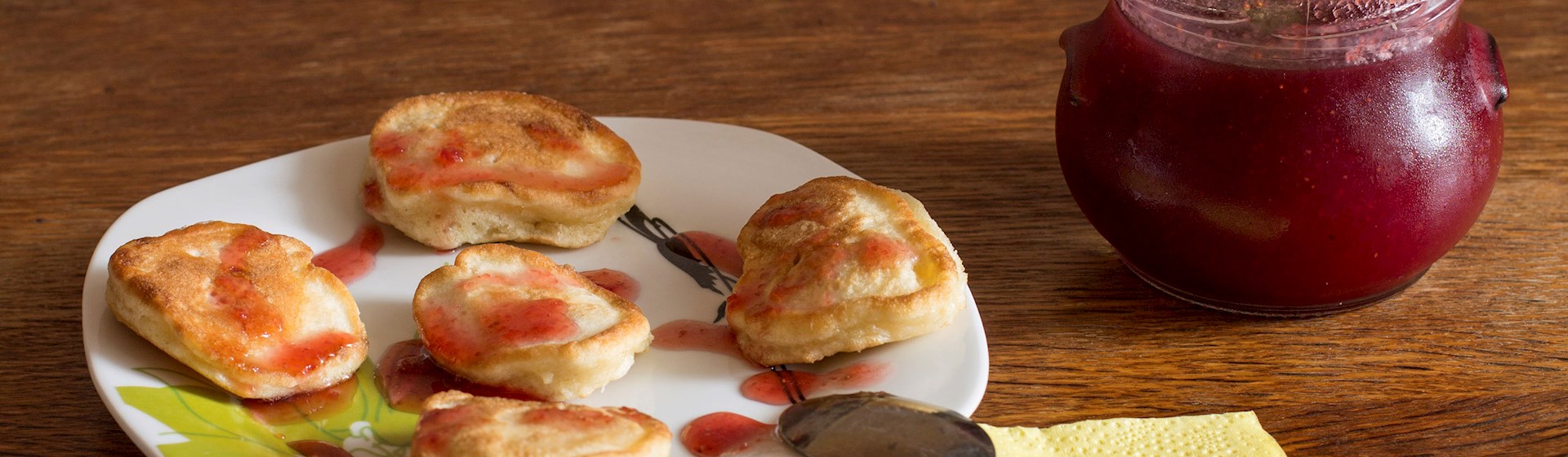
Small, but packed with flavor, the batter for these famous Russian pancakes differs from those for traditional pancakes as it is prepared with kefir, a fermented milk product with a slightly sour taste. Aside from kefir, the remaining ingredients for oladyi are typical for any run-of-the-mill pancake – flour, sugar, salt, and eggs. They are pan-fried into small rounds, similar to American-style pancakes. The pancakes turn golden brown when finished, and they are chewy with crunchy edges. They are slightly sweet and neutral in flavor, while the kefir lends them a mild sour note. These small, thick pancakes can be served plain or with honey, chocolate, fresh fruit, sour cream, or a variety of fruit preserves. Fresh fruit and chocolate chips are also occasionally added to the batter. Oladyi are a typical breakfast dish, and they are best served hot off the griddle while they are still fluffy and soft in the center and crunchy around the edges.
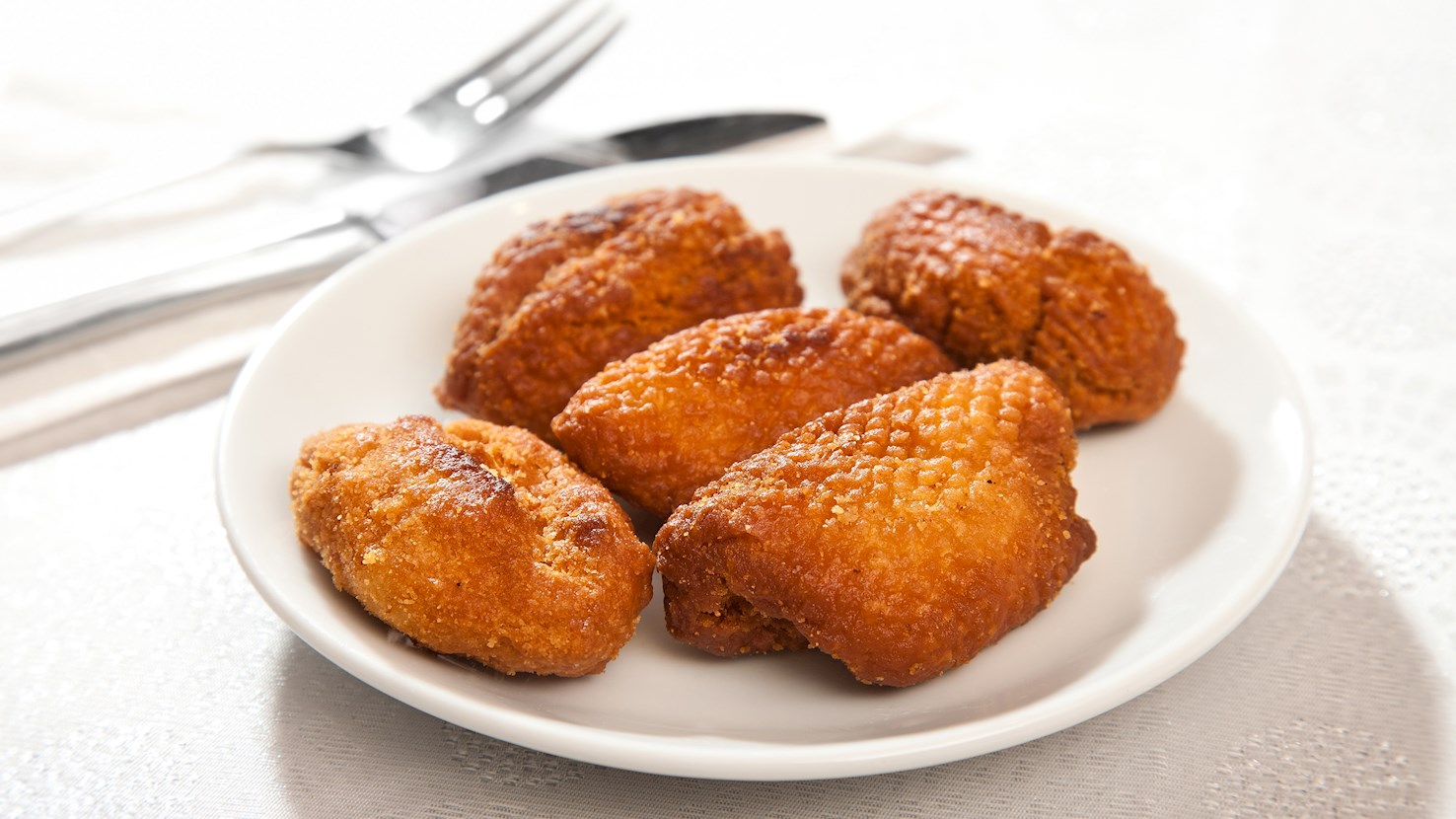
Beeshee, also known as bishi, is a thin and crispy Armenian fried treat similar to a pancake. It is usually made with a dough consisting of flour, sugar, salt, and warm water that is rolled out into very thin circles, brushed with melted butter, and then shaped into square packet-like pastries. The dough squares are rolled out again into larger squares, brushed with melted butter, and then fried until crisp golden on both sides. These crispy fried Armenian treats are eaten warm with lots of sugar, simple syrup, or honey on top, usually for breakfast.
Chirbuli is a traditional dish originating from the region of Adjara. The dish is usually made with a combination of tomatoes, eggs, walnuts, onions, garlic, basil, coriander, paprika, butter, cornflour, and salt. The onions are chopped, sautéed in butter over low heat until golden, and mixed with cornflour and chopped tomatoes. Ground walnuts, paprika, salt, coriander, basil, and garlic are added to the mix and stirred. The eggs are cracked onto the sauce, and the dish is cooked until the eggs have poached in the sauce. It's then served piping hot, usually for breakfast or as part of a supra (Georgian feast).
Sinori is a traditional breakfast dish from the mountainous Adjaria region made with thin phyllo sheets called iukha (lavash can be used instead), cheese curds or cottage cheese, butter, garlic, and salt. The preparation involves cutting the lavash into small pieces or rolls, which are then placed in a baking dish and generously spread with the cheese and butter mixture. The dish is baked until the cheese is melted and the flavors meld together, creating a creamy and satisfying meal. Sinori is typically served hot, straight from the oven, and is often enjoyed as a hearty breakfast or a comforting meal during cold weather. There is also a sweet version of sinori, which is sweetened and has walnuts added.
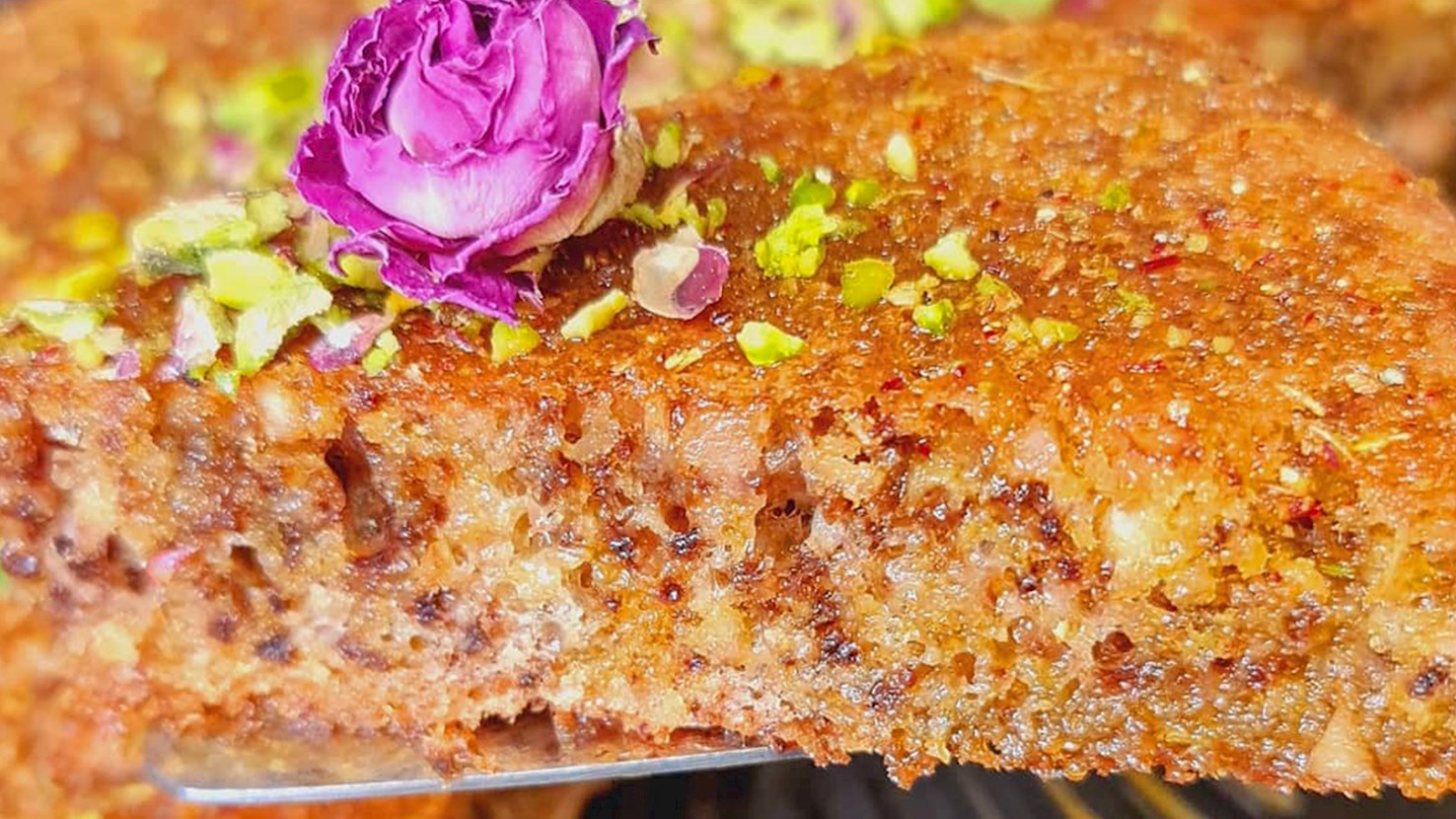
Khagineh is a simple Iranian and Azerbaijani egg-based dish, similar to a pancake or omelet. Often compared to a Persian-style omelet or pancake, khagineh is made by frying a mixture of eggs and flour or starch, then soaking or glazing it with a sweet syrup flavored with ingredients like rosewater, saffron, or cardamom. Though the preparation varies between regions and households, the dish is widely recognized in Iranian-Azeri and Kurdish cuisine, where it appears both as a breakfast food and as a simple dessert. The history of khagineh is closely connected to home cooking in northwestern Iran, where it developed as a flexible and accessible dish made from basic pantry ingredients. With roots in both sweet and savory Persian culinary traditions, khagineh reflects a practical approach to food, allowing cooks to create something satisfying and flavorful with minimal ingredients. While some versions are associated with celebratory events or specific seasons, others serve as everyday meals or snacks. Its name and preparation are distinct from other Persian egg dishes, and it has maintained its presence largely through oral tradition and domestic recipes rather than through formalized restaurant menus. To make khagineh, eggs are whisked together with flour or starch, sometimes with baking powder added for lightness. In sweet versions, a bit of sugar or rosewater may be included in the batter. The mixture is poured into a pan with hot oil or butter and fried gently until set, then flipped to cook both sides evenly. In some styles, the cooked egg mixture is cut into strips or squares before being returned to the pan and soaked in a warm syrup made from sugar, water, rosewater, and sometimes saffron or cardamom. The syrup is either poured over the pieces in the pan or added just before serving. Some home cooks add chopped walnuts or raisins, while others prepare layered versions that resemble a filled crepe or folded pancake. Khagineh is served warm or at room temperature, usually on its own or with tea. In Azerbaijani-style breakfasts, it appears alongside bread and cheese, while sweet variations are more often served in the evening or as part of a casual dessert spread. In some households, it is made for specific holidays or during the colder months due to its richness. Though rarely found in commercial bakeries or restaurants, it remains a common homemade item in Iranian households, especially in the northwest.
TasteAtlas food rankings are based on the ratings of the TasteAtlas audience, with a series of mechanisms that recognize real users and that ignore bot,
nationalist or local patriotic ratings, and give additional value to the ratings of users that the system recognizes as knowledgeable.
TasteAtlas Rankings should not be seen as the final global conclusion about food. Their purpose is to promote excellent local foods,
instill pride in traditional dishes, and arouse curiosity about dishes you haven’t tried.






What People Say