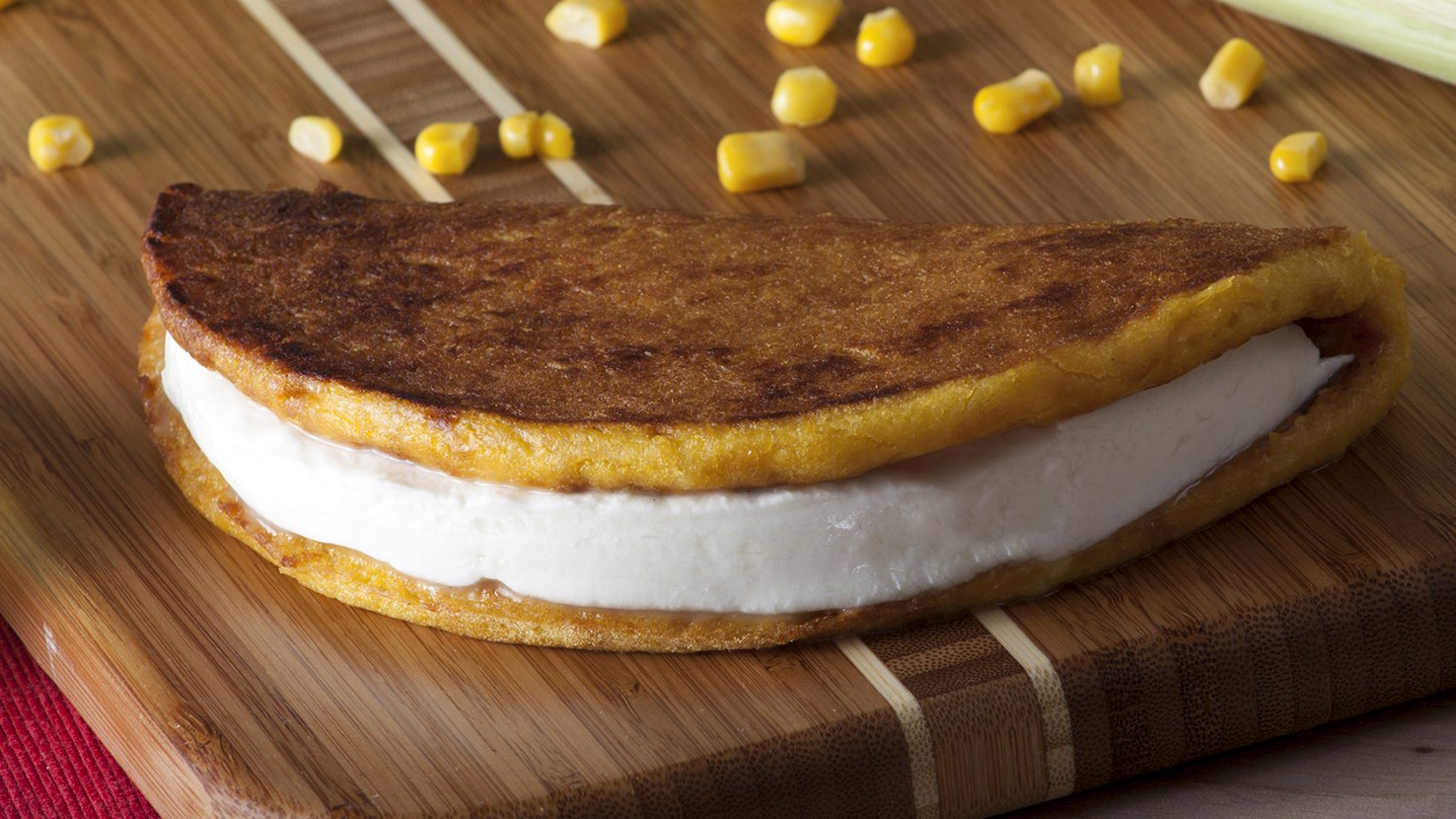
Cachapa, chorreada, arepa de choclo, güirila, toquera, tortilla de choclo, and tortilla changa, are all names that describe a Latin American corn dish that can be categorized as either a pancake, tortilla, or flatbread, depending on the country. It can be made only of corn or have additional ingredients like sugar, water, milk, salt, butter, cheese, and oil. They are typically prepared by street vendors and are either fried or griddled (in Nicaragua, they’re cooked between two banana leaves!) and characterized by a sweet-savory flavor. They can be eaten plain with a beverage, wrapped around a filling, or topped like an open-faced sandwich with things like cheese, shredded pork, sour cream, and eggs. They can be eaten any time of day, but typically they're eaten for breakfast, as a snack, or a quick dinner.
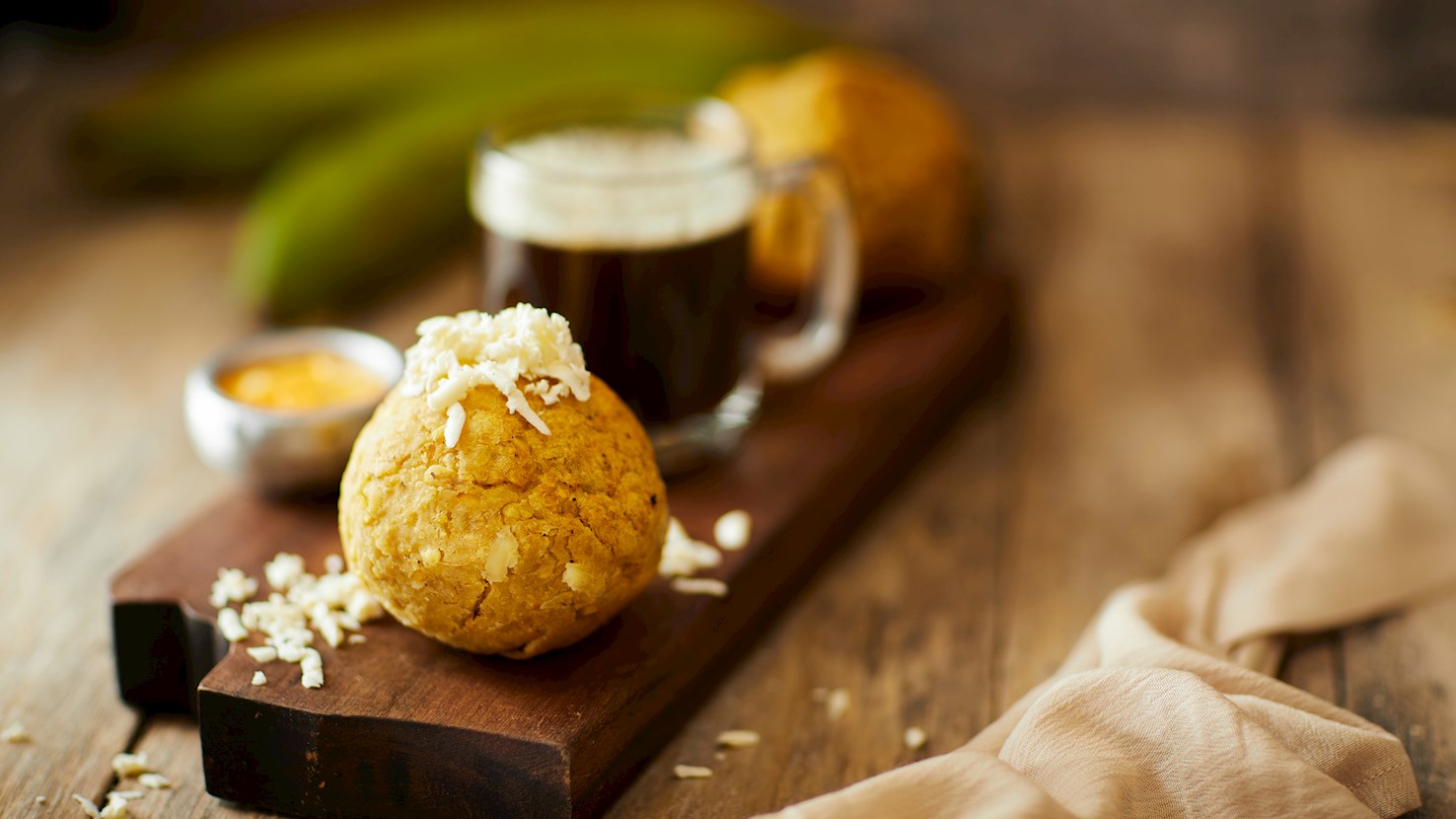
Bolón de verde is a dish of green plantain fritters that are typically filled with cheese, chicharrónes, or chorizo. It is a traditional and national Ecuadorian dish that’s usually eaten for breakfast. The name translates to big green ball since the main ingredient is green plantains. The preparation starts with cooking or frying the plantains, which are then mashed, seasoned, mixed with the filling, and shaped into balls. They are usually then fried once again to make them crispy. The fritters should be eaten while still hot or warm and are usually served with a fried egg and coffee.
Tigrillo is an Ecuadorian casserole-style dish made with a combination of mashed green plantains, cheese, and eggs. There are as many recipes as there are cooks, so some versions of tigrillo might include milk, ají hot sauce, or chicharrones (fried pork rinds). Queso fresco is one of the most popular choices for the cheese, and when served, tigrillo can also be served with a fried or poached egg on top. The dish is traditionally served for breakfast in Ecuador.
Bolón esmeraldeño is a substantial green-plantain specialty from Esmeraldas, on Ecuador’s northern Pacific coast, made by mashing cooked or fried green plantain and combining it with cheese, pork chicharrón, or both before shaping it into a large round ball. The dish belongs to the wider Ecuadorian family of bolones de verde, but the Esmeraldas version is especially associated with generous portions and rich fillings, reflecting the importance of green plantain in the province’s everyday food culture. Provincial sources describe bolón de verde as a common breakfast in Esmeraldas, sold in markets, small eateries, and neighborhood food businesses, where cheese, pork, and mixed versions are all common. The basic method starts with firm green plantains, which are peeled and either fried in pieces or boiled until tender, then mashed while still hot so they form a cohesive dough-like mass. Fresh cheese, crisp chicharrón, salt, and sometimes seasonings such as garlic, cumin, pepper, or cilantro are worked into the plantain, and the mixture is compacted by hand into a dense sphere. Some Esmeraldas-style versions are then fried again, producing a crisp exterior around a softer center with melted cheese and pieces of pork, while others are served directly after shaping. What most clearly distinguishes bolón esmeraldeño is not an entirely different base recipe but the way Esmeraldas has made it a particularly prominent breakfast food, often with large, heavily filled portions and combinations of both cheese and chicharrón. It is usually eaten hot in the morning, either on its own or with ají, and is commonly paired with black coffee or fresh fruit juice, especially orange juice. In Esmeraldas it works as a filling start to the day rather than a light snack, and mixed versions with both cheese and pork are among the most characteristic ways to serve it.
TasteAtlas food rankings are based on the ratings of the TasteAtlas audience, with a series of mechanisms that recognize real users and that ignore bot,
nationalist or local patriotic ratings, and give additional value to the ratings of users that the system recognizes as knowledgeable.
TasteAtlas Rankings should not be seen as the final global conclusion about food. Their purpose is to promote excellent local foods,
instill pride in traditional dishes, and arouse curiosity about dishes you haven’t tried.






What People Say