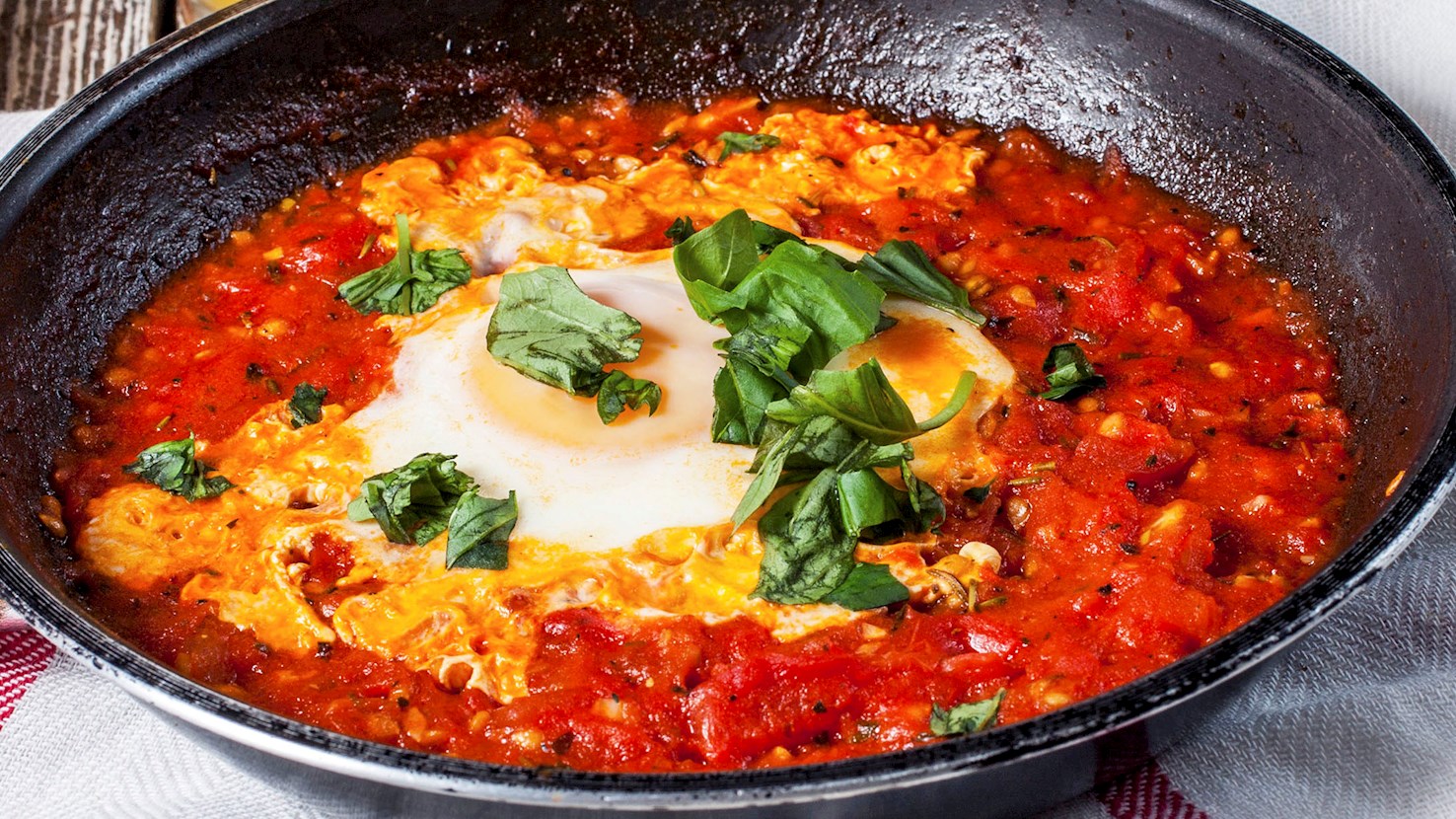
Shakshouka is a delicious combination of eggs poached in a spicy tomato sauce. Although it has an unusual name, the dish is straightforward and easy to make. It is usually made in a skillet in which onions, tomatoes, and spices are cooked until they form a delicious tomato sauce. Eggs are then added directly to the tomato sauce and poached until done. Merguez sausage can also be added to the dish. It is believed that shakshouka originated in Tunisia, but the dish is well-known and commonly eaten throughout North Africa and the Middle East as well. Almost every region has formed their distinctive variety of shakshouka: in Egypt, eggs are usually scrambled and served in a sandwich, and in Israel it is often served with salty feta cheese on top. The consistency of the sauce and eggs is also variable – the sauce can be thinner or thicker, while the eggs can be completely firm or soft. For a more nutritious meal, meat, most commonly sausages, can be included in the dish. Shakshouka is suitable for any meal of the day and is usually served warm or sizzling hot, with bread on the side. Because it is budget-friendly, simple, and easy to prepare, the dish has recently gained popularity both in Europe and North America.
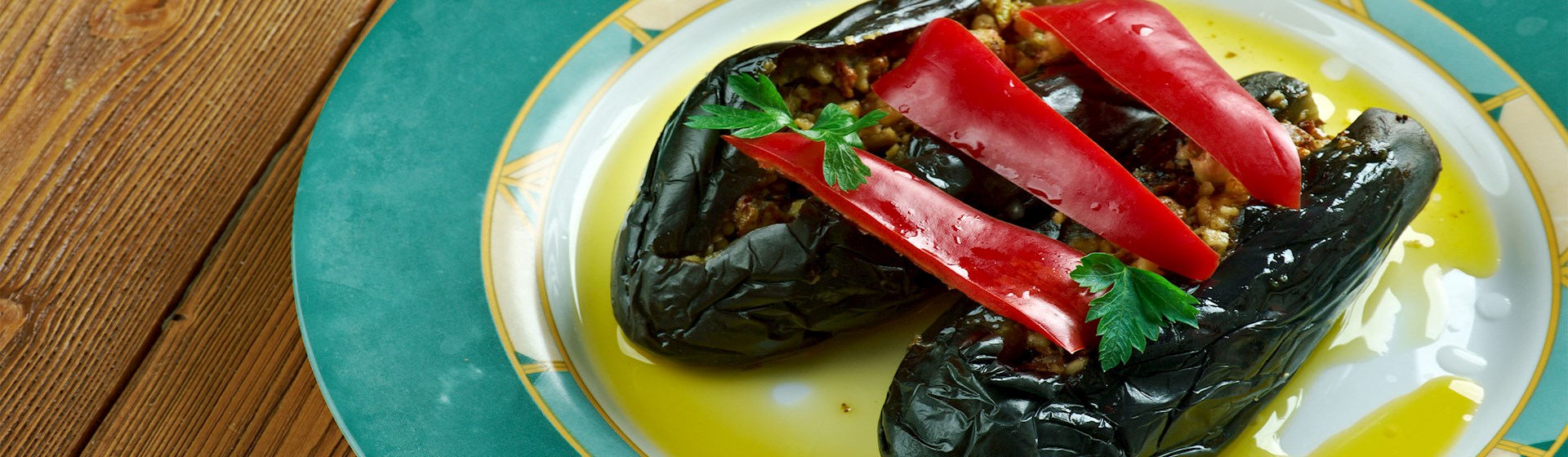
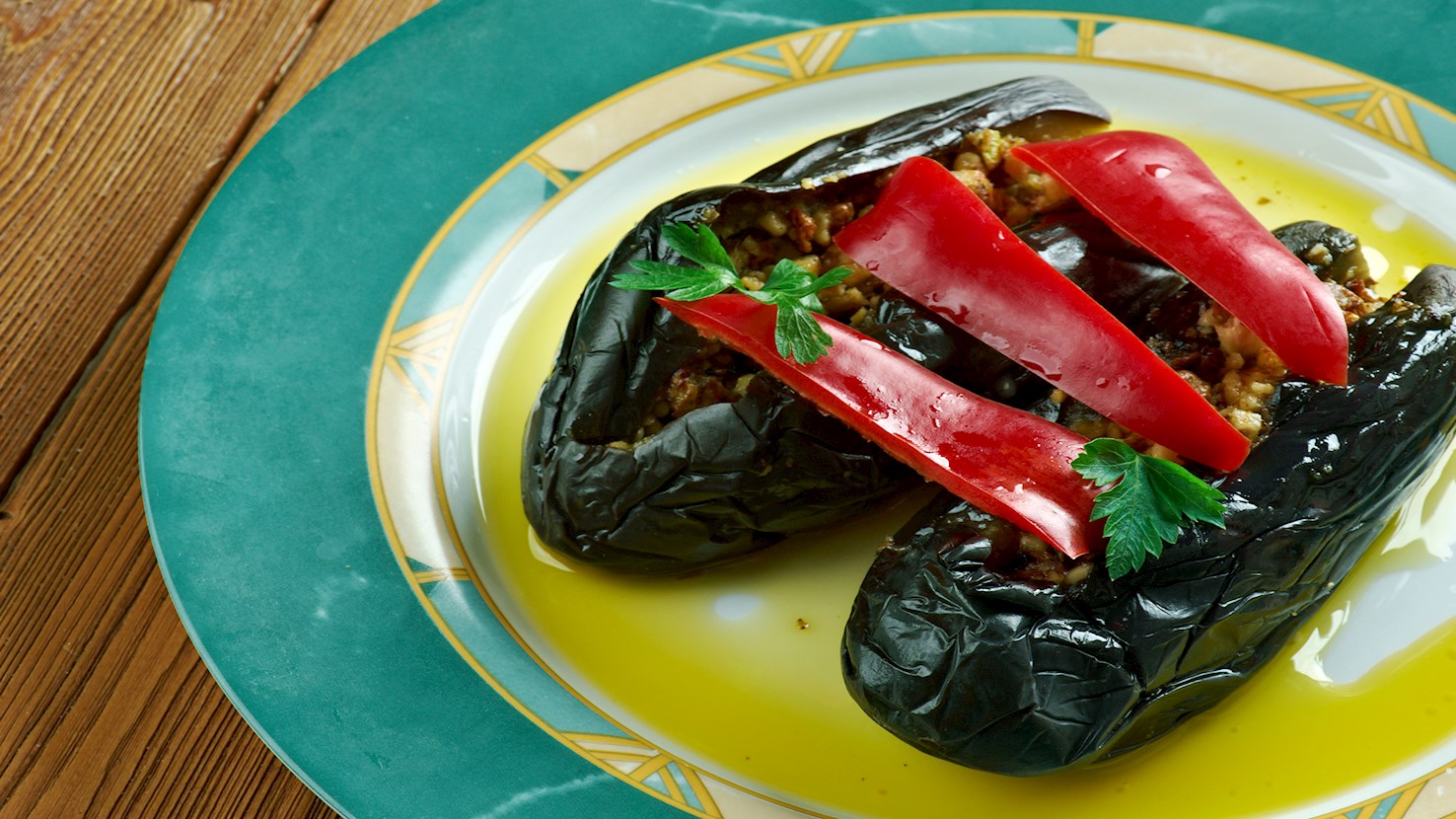
Oil-cured eggplants are a staple throughout Levantine and Middle Eastern cuisine. The dish is traditionally prepared with small-sized baby eggplants that are shortly boiled and stuffed with a flavorful mixture of roasted red peppers, walnuts, garlic, and salt. The eggplants are then cured in olive oil and are traditionally enjoyed for breakfast, usually accompanied by labneh, vegetables, and flatbread, but they also work as a standard meze dish or a snack. Though their origin is vague, preserved eggplants are strongly associated with Syria.
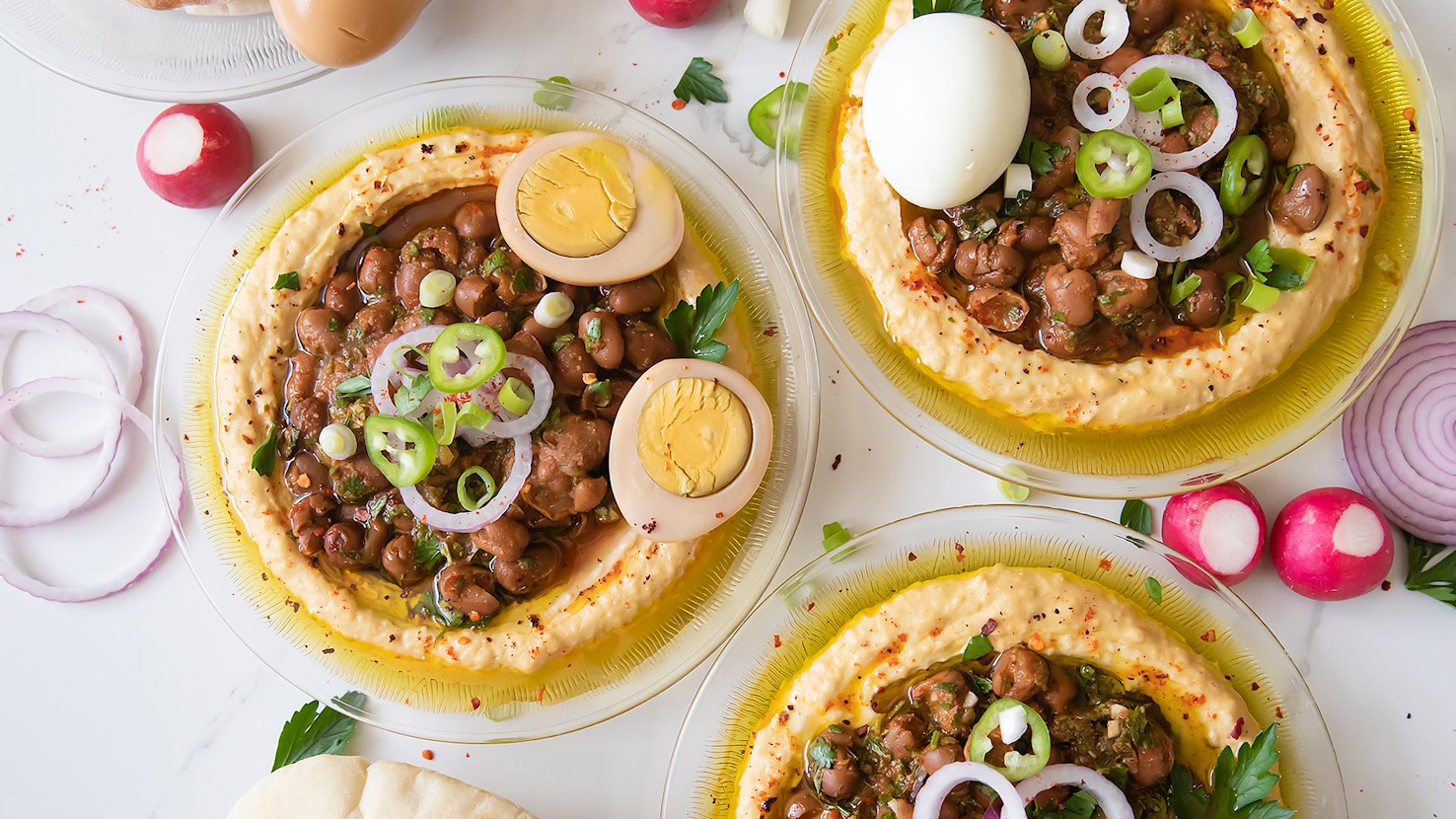
Hummus ful is a robust, protein-dense Levantine breakfast platter that masterfully unites two ancient culinary staples—a silky, tahini-rich chickpea purée or hummus and a warm, cumin-laced fava bean stew or ful medames—traditionally crowned with a hard-boiled egg. Functioning as a heavy, sustaining morning meal rather than a light appetizer, the dish is layered in a specific way to balance its contrasting temperatures and textures. Cooks first sweep a thick foundation of sharp, garlic-infused hummus across a wide bowl, forging a circular retaining bowl designed to cradle a generous ladle of steaming ful medames. As the slow-cooked broad beans settle into the center, their dark, earthy cooking liquid bleeds naturally into the pale chickpea cream. A shelled hard-boiled egg is then nestled directly into the warm stew, its firm yolk and tender white adding a distinct layer of richness that grounds the earthy profile of the beans. To deliberately slice through this immense, heavy richness, the dish requires a sharp, acidic contrast. Before serving, the whole dish is heavily flooded with peppery extra-virgin olive oil and finished with a vibrant, finely diced garnish of raw tomatoes, sharp white onions, and freshly chopped flat-leaf parsley. Dusted with sweet paprika and ground cumin, brightened with a final squeeze of fresh lemon juice, and occasionally spiked with a fiery chili sauce, the completed platter demands to be scooped up with warm, freshly torn pita bread.
TasteAtlas food rankings are based on the ratings of the TasteAtlas audience, with a series of mechanisms that recognize real users and that ignore bot,
nationalist or local patriotic ratings, and give additional value to the ratings of users that the system recognizes as knowledgeable.
For the “Top 3 Palestinian Breakfasts” list until November 15, 2026, 2,014 ratings were recorded, of which 554 were recognized by the system as legitimate.
TasteAtlas Rankings should not be seen as the final global conclusion about food. Their purpose is to promote excellent local foods,
instill pride in traditional dishes, and arouse curiosity about dishes you haven’t tried.



What People Say