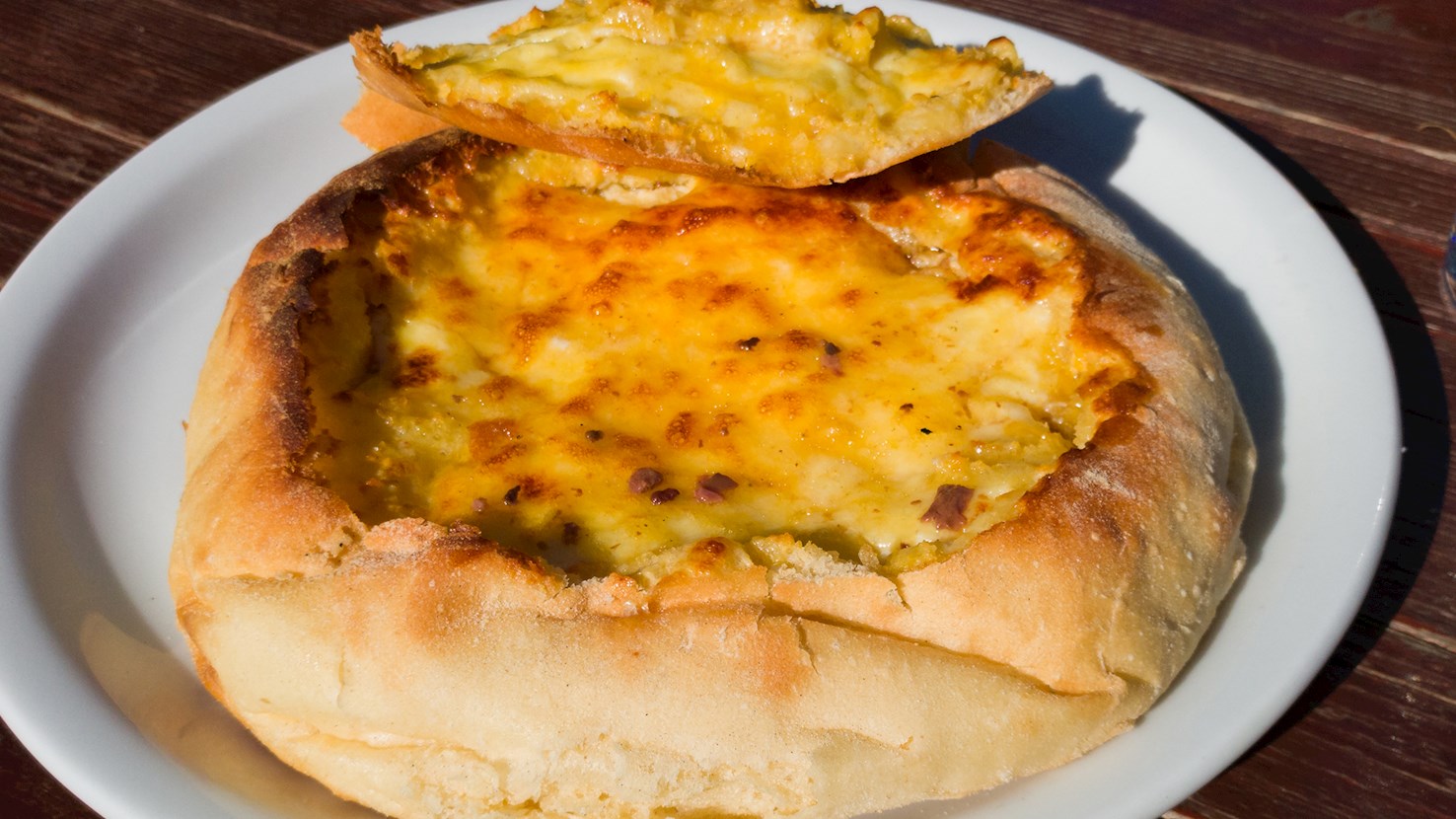
This delicacy consists of a traditional flatbread (lepinja) that is cut in half, coated in thick cream (kajmak), and topped with an egg. The combination is shortly baked and should be doused with a mixture of warm meat drippings, which is locally known as pretop. Komplet can be loosely translated as with everything in it, and is traditionally associated with Užice and Zlatibor. It is believed to have originated sometime before WWII, and the name was officially registered by Dragan Lazić, a current owner of the bakery Kod Šuljage in Užice. Although it is nutritious and highly caloric, the dish is commonly enjoyed for breakfast and is best paired with a glass of yogurt or sour milk on the side. For the most authentic experience, it is recommended to eat it with your hands.
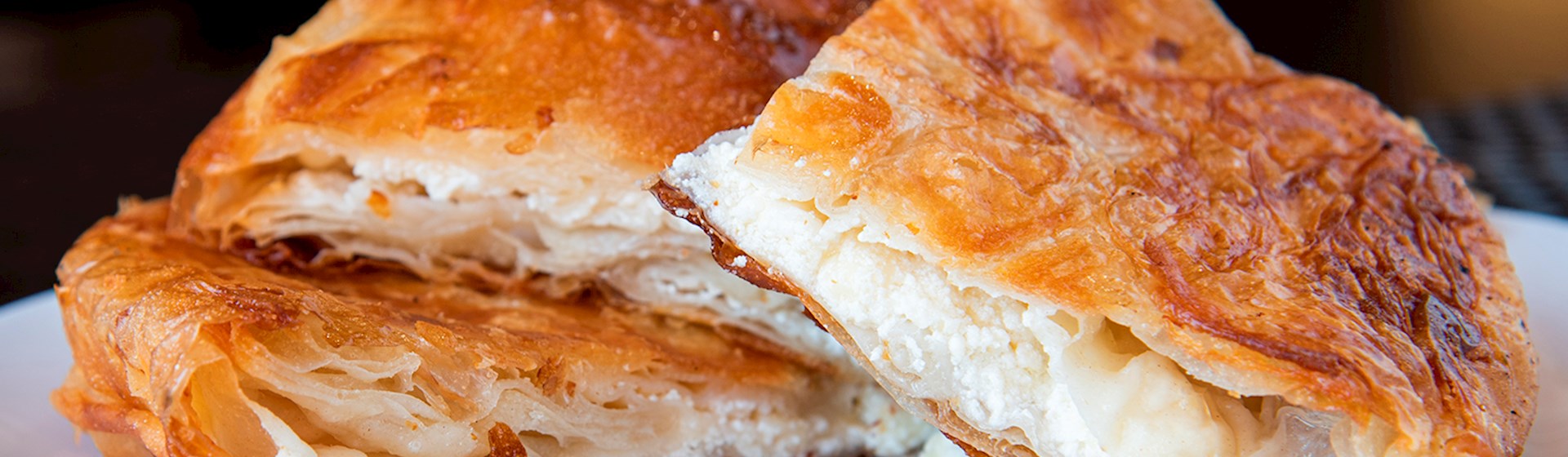
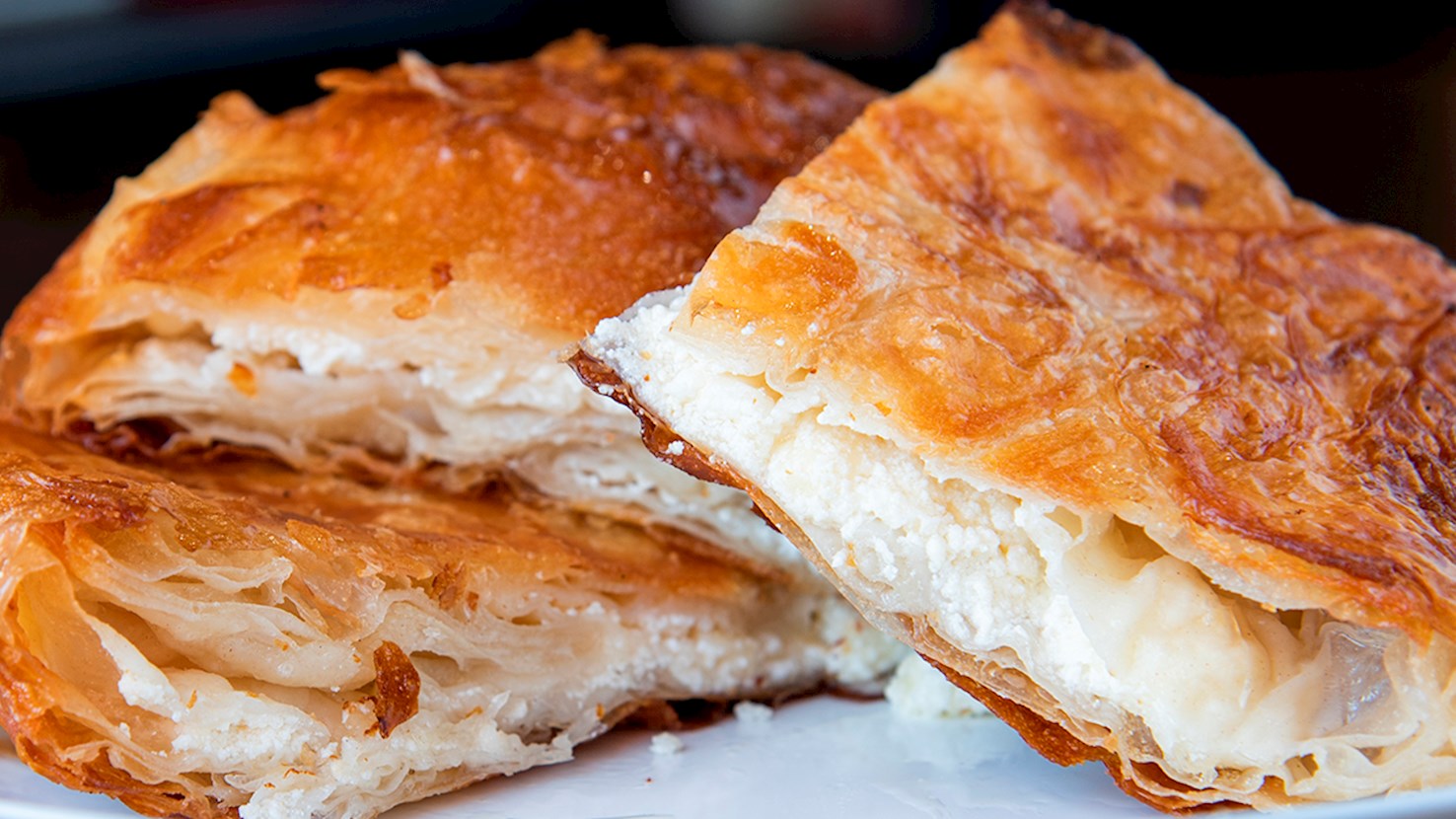
Burek sa sirom is a phyllo pastry that is round or coil-shaped and filled with a mixture of cheese and eggs. The dough is made with flour, salt, and water (and perhaps a bit of oil) and stretched into translucent sheets. The sheets of phyllo dough are stacked in a large tray, and each sheet is sprinkled with oil or oil and mineral water and spread with the cheese and egg filling. Still, you might have heard that burek can only be called burek if it's filled with meat. That is, if you live in Bosnia and Herzegovina, but not everyone does, nor is burek really Bosnian – in fact, it has Turkish origins. In Bosnia, burek (with meat) and other types of similar pies such as sirnica (cheese) and krumpiruša (potatoes) are usually rolled into a coil, while Croatians and Serbs have a more relaxed approach – burek can be round and cut into quarters, or rolled into a coil – both shapes are good, and both can be called burek sa sirom (when filled with cheese, of course). Initially, burek was brought over to Niš in the 15th century, and it was prepared as a round pie. After World War II, burek came to Croatia and Slovenia. The term burek sa sirom, denoting a round or coil-shaped pie filled with cheese has been so engrained into Croatian culture (for more than 50 years) that it can be considered a Croatian classic regardless of its name. The most important thing is that it's delicious, filling, and a great breakfast staple for many Serbs and Croatians, especially when paired with a refreshing cup of yogurt on the side.
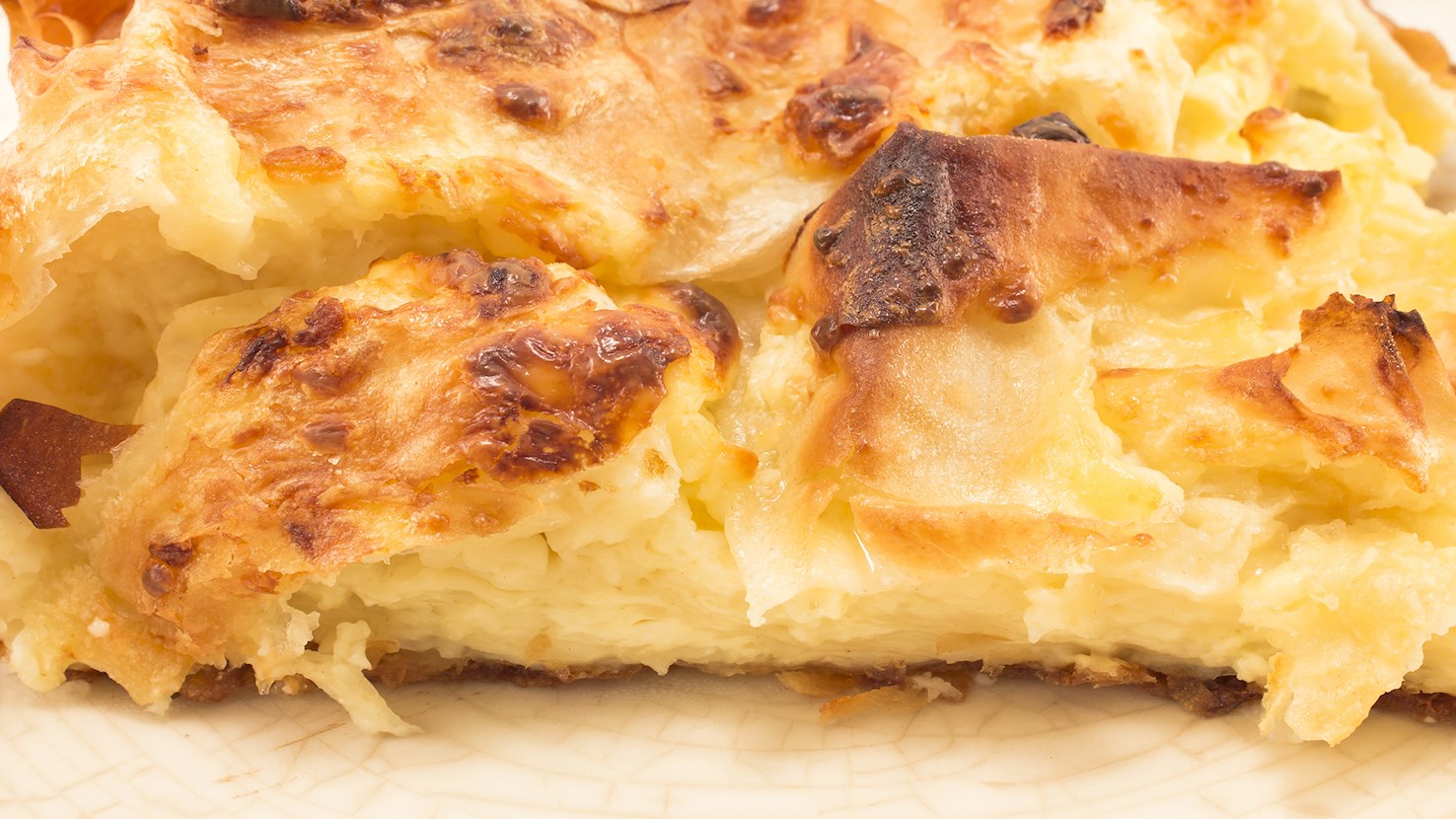
Although it is a common sight in countries such as Croatia, Slovenia, and Macedonia, gibanica is mainly associated with Serbia. It is a traditional pie-like dish that combines phyllo dough (occasionally replaced with yeast dough) with a creamy combination of cheese and eggs. The most popular version of this versatile pie is popularly known as gužvara, meaning crumpled, in which the sheets of phyllo dough are soaked in a creamy mixture of fresh cow’s cheese and eggs. The sheets are then layered and baked in the form of a casserole. This pie-like dish can be prepared in both sweet and savory versions, depending on the region and personal preferences. In Serbia, gibanica is usually paired with yogurt and makes a perfect breakfast staple or a filling snack. Served sliced, it is also a mainstay on every festive occasion, when it is traditionally enjoyed as a cold appetizer.
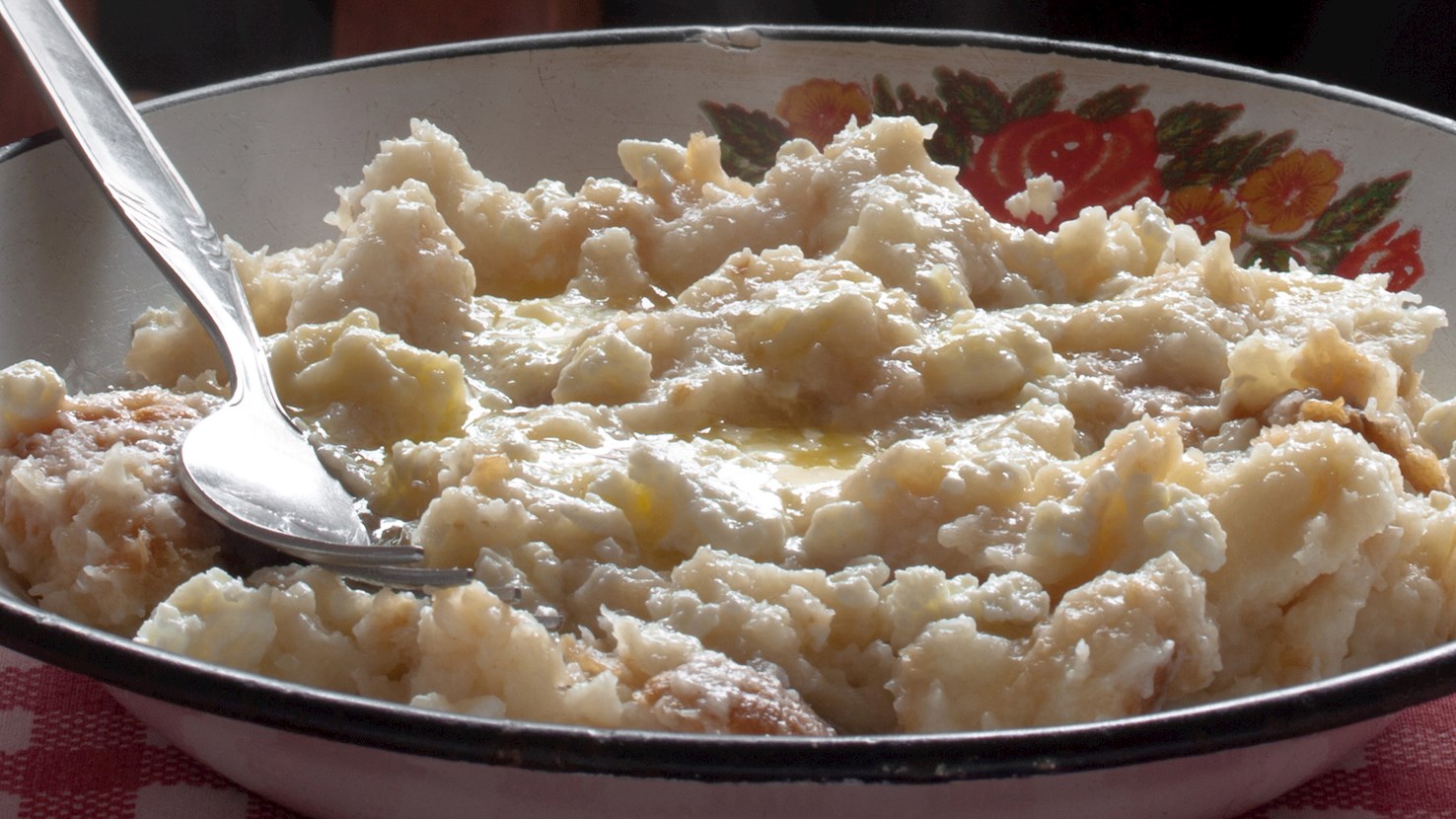
Popara, the Balkan version of bread mash, is an ancient dish that has been greatly appreciated as a quick and easy solution to use up leftover bread and to feed the whole family in the process. Since it is eaten in many countries across the region, there are many different ways of its preparation. The two crucial ingredients are bread, diced or torn into smaller pieces, and liquid, usually milk, water, or tea, that is used to blend the bread into a soft mass. The liquid is typically mixed with butter, vegetable oil, or lard to provide a more substantial meal. The bread can be shortly fried in the combination of liquid and fat, and in some versions, the heated mix is poured over the bread and stirred until it is thoroughly blended. Depending on tradition and preference, popara can be completely homogenous and creamy or it can have a coarse consistency filled with chewy bread pieces. Since plain popara is mild and neutral in taste, it can be prepared in both savory and sweet versions. Additional ingredients that are commonly used to uplift this nutritious meal include onions, garlic, full-fat cream, fresh cottage cheese, ground red pepper, or sugar in the sweet popara. It is hard to pinpoint the exact place where this simple and filling dish originated, but it is believed that it was invented out of necessity, during severe hardships, when many ingredients were scarce or hard to obtain. Today, popara remains a popular breakfast meal in many Balkan countries and regions.
TasteAtlas food rankings are based on the ratings of the TasteAtlas audience, with a series of mechanisms that recognize real users and that ignore bot,
nationalist or local patriotic ratings, and give additional value to the ratings of users that the system recognizes as knowledgeable.
TasteAtlas Rankings should not be seen as the final global conclusion about food. Their purpose is to promote excellent local foods,
instill pride in traditional dishes, and arouse curiosity about dishes you haven’t tried.



What People Say