
shutterstock

Top 9 Occitan Bulb Vegetables

Last updated on June 24, 2026
01

Oignon doux des Cévennes

3.2 ·

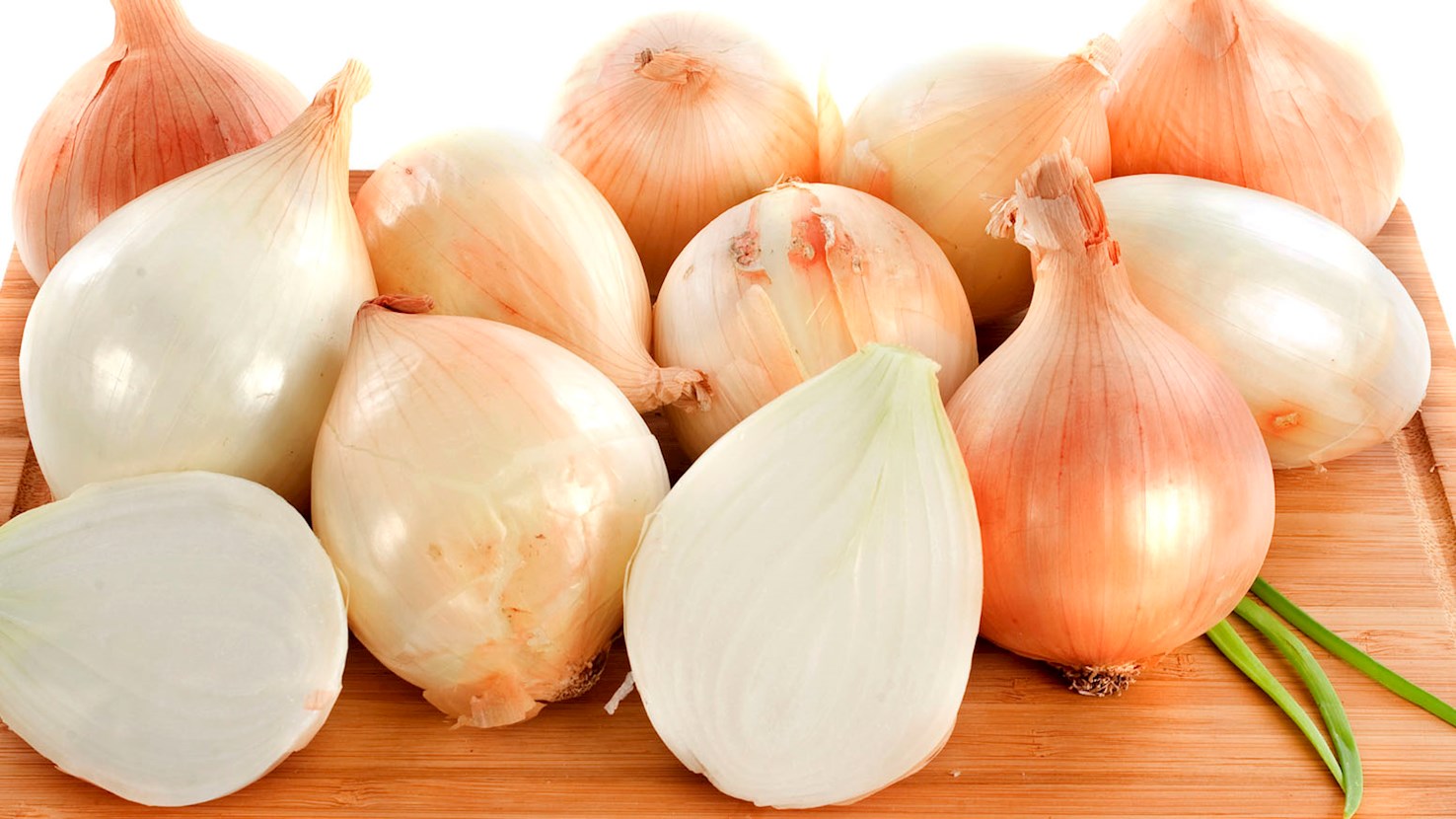
Oignon doux des Cévennes is a unique sweet onion grown in the Gard region in France, with its rugged terrain, light soils not susceptible to parasites, and a Mediterranean climate with dry summers and heavy rainfall. The onions are pearly white to almost copper in color with an elongated bulb and delicate, translucent skin. On the inside, there is a firm, juicy, crunchy flesh with balanced flavors. The flavors are sweet and mild with hints of honey when the onion is consumed raw. It is just as good for cooking, making a great onion tart or a savory, thick onion soup with bread, pepper, olive oil and Gruyére cheese. For a signature dish of the region, try caramelized sweet onions with anchovies.

02

Ail blanc de Lomagne

n/a ·

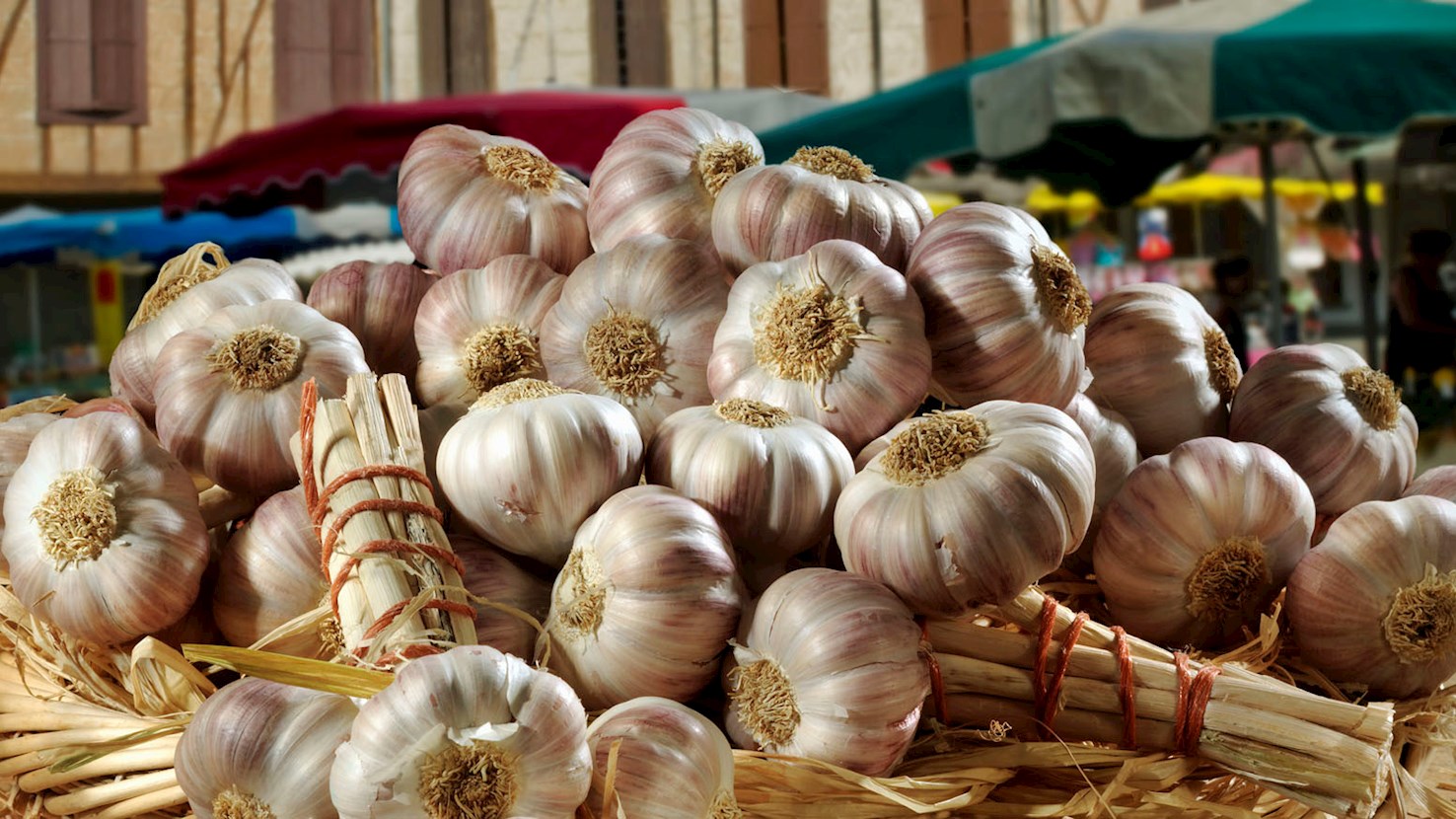
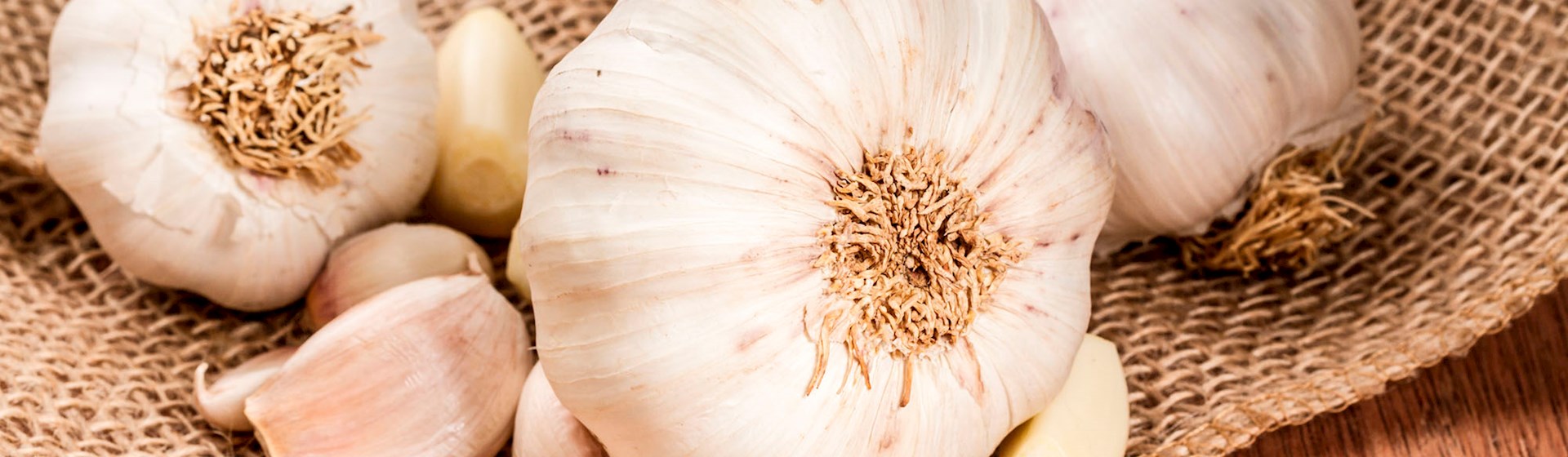
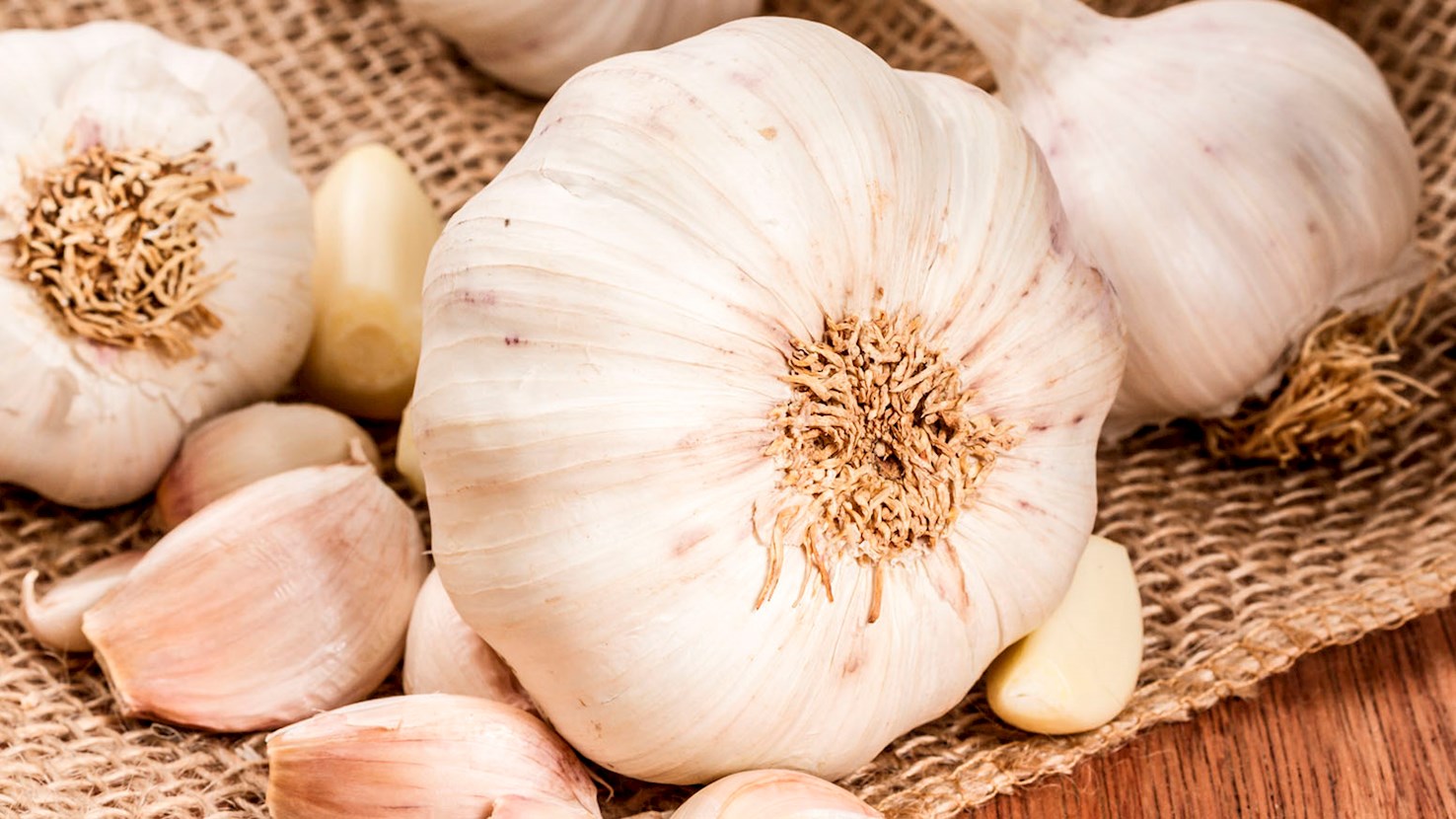
Ail blanc de Lomagne is a white bulb grown in the clay and limestone soils of the French Gers and Tarn et Garonne regions since the 13th century. Lomagne garlic is amazingly fragrant, it has an intense flavor and quite a specific shape and appearance: all of the 8-12 cloves are evenly sized and creamy beige with occasional violet streaks. When marketed, Lomagne white garlic must be dried and shaped in the traditional way - plaited into braids or packed in nets. Because of its antioxidant and anti-inflammatory qualities, Ail Blanc de Lomagne is eaten raw or used for adding flavor to various dishes such as the famous Tourin, a type of French garlic soup.

03

Oignon doux de Villemagne

n/a ·

Oignon doux de Villemagne is a sweet onion variety grown in the area of Villemagne in France. Its origins go back to a very old cultivar cultivated on sandy soils made from granite and shale, where farmers selected a flat, red onion that is sweet and fragrant rather than pungent. The cultivation process involves sowing seed in January on raised beds called “tautel,” transplanting seedlings after about four months when three shoots (“tails”) are present, digging shallow furrows which are moistened, placing the young plants about 5 cm (2 inches) apart, covering the necks with soil, watering lightly (modern irrigation is used but only sparingly so the onion retains its flavor), then weeding by hand on the soil and harvesting begins when the neck falls over at the end of August; the harvested bulbs are left to dry in the field and then handled carefully—any bump damages the skins and shortens storage life—and thanks to careful growth and gentle curing the bulbs can keep until January-February. Variations include differences in bulb size (some growers aim for larger sizes while others keep them more modest), in how fully red the skin blushes (some bulbs show a deep red overlay, others only a lighter shade), and in storage duration (older harvests are sorted for longer keeping). One unique aspect of the oignon doux de Villemagne is its reliance on a very specific geological soil type—sandy granite and shale humic soils—that give it its mildness: locals say that if the same variety is grown just a few meters beyond this soil the onions develop a bite. It is eaten raw to appreciate its sweetness and fine tunic—thin skin and crisp texture—commonly sliced into salads, with olive oil or fresh chèvre, or cooked gently in tarts and gratins; pairings include crusty country bread, lightly flavoured goat cheeses, and a light rosé from the region that complements the onion’s delicacy without overshadowing it.

04

Oignon doux de Citou

n/a ·

Oignon doux de Citou is a sweet onion variety cultivated around the commune of Citou in France. Its origins stem from the Montagne Noire region where growers selected bulbs for their mild flavor, fine skin and good storage capacity; over the decades the variety persisted in small plots despite competition from larger commercial onions and has come to be recognized for its culinary qualities. The onion is sown in early spring in well-drained schistose soils, often on sun-exposed slopes; seedlings are transplanted when strong, plants are spaced to allow bulb expansion, irrigation is managed so that the skins remain thin and glossy, harvesting takes place from early August when the foliage falls over, the bulbs are lifted, dried in air or in low-temperature drying sheds until the necks collapse, sorted and then stored in a cool, dry place where they may keep through to winter. Variations include differences in bulb size (some growers aim for very large flat-bulbs, others a more moderate size), in skin coloration (coppery yellow with varying degrees of blush) and in the degree of sweetness—older plantings often yield more intense sugar content because of slightly lower fertility soils; one defining trait of the Oignon Doux de Citou is its exceptionally fine tunic and flat, slightly compressed shape which contributes to its gentle, almost sweet taste and its ability to stand up to both fresh and long-storage use. The onion is eaten fresh in salads, sliced raw with goat cheese and olive oil, used in quiches and tarts such as the “tarte tatin aux oignons doux de Citou”, or lightly caramelized for soups and gratins, and it pairs well with mild-flavored white wines from the local Minervois area, fresh crusty country bread and light fresh cheeses that allow its delicate sweetness to shine.

05

Cèbe de Lézignan

n/a ·

Cèbe de Lézignan is a flat, sweet onion grown around the commune of Lézignan-la-Cèbe in France. Its cultivation began centuries ago when local farmers selected onion plants suited to the light, sandy soils and maritime-influenced climate of the area; over time its shape, flavor and cultivation methods became well-known in the region. Production starts with sowing seeds in well-prepared, well-drained sandy loam in autumn or early spring, seedlings are transplanted into raised rows spaced to encourage bulb expansion, plants are nurtured without excessive irrigation so the skins remain intact and water content stays high, the bulbs ripen during late spring and early summer and are harvested by hand when the foliage begins to yellow, then the onions are cured under shelter or dried outdoors in alairage (air-drying) on straw mats until the necks collapse, sorted for size and quality, and marketed either braided or loose. Variations of Cèbe de Lézignan appear in size (one can exceed 10 cm / 4 inches in diameter and weigh up to 1 kg / 2.2 lb) and in harvest timing (early-season vs. later-season), and a unique aspect is its very thin white-to-pale yellow skin and high water content which give it a mild, almost sweet taste rather than a pungent bite. The onion is consumed raw in salads, thinly sliced so its gentle flavor comes through, or lightly cooked—such as roasted in olive oil or used in a gentle pan-sauté—and pairs well with fresh goat-cheese, mild olive-oil dressings, grilled fish or white meats, and with crisp white wines or light rosés that highlight rather than mask the onion’s sweetness.

06

Oignon rouge de Toulouges

n/a ·

Oignon rouge de Toulouges is a large, flat-round red onion variety grown around the commune of Toulouges in France. Its origins trace back to seed lines handed down generation after generation among local growers, adapted to the irrigated soils and water-systems of the region. Documentation from 1793 records its sale on market stands in nearby towns, described as “sweet” and “nothing like a strong onion,” which confirms its longstanding presence in local commerce. Cultivation takes place on well-irrigated regadius lands fed by the valley channel system of the local river, a setup with roots going back to the 14th century. Seed sowing begins in December, using saved seed from the previous year. Transplanting occurs between March and April. The soil must supply sufficient but not excessive moisture, since over-watering can asphyxiate the plant. Hand-harvest normally takes place in July or August when the bulbs reach their full size. Once lifted, the onions are dried, sorted by size, and either marketed individually or braided using the long flat pointed leaves—known locally as “bogue”—that grow along the irrigation ditches (agullas). The skins are intensely red and the flesh a pearly white, offering a notably sweet, almost sugary flavor. Because the water content remains high, the onions are rarely stored beyond November, and they need cool, dry, dark storage to preserve quality. While true varietal distinction is acknowledged locally, the oignon rouge de Toulouges is vulnerable to imitation because its seed is not officially registered and the acreage under cultivation is very small (estimated at around 3 hectares in the immediate area, around ten in the wider department). Surrounding communes such as Le Soler, Saint‑Estève, Canohès and Thuir supply the few remaining plots. Variations of the practice mainly concern bulb size (some specimens can reach up to 20-25 cm / 8-10 inches in diameter and weigh more than a kilogram / 2 lb) and whether the product is sold as loose bulbs or braided strands of three to four kilos. Larger bulbs tend to register higher sweetness. As a result of the limited scale and localized character, the onions are largely confined to short-circuit sales (farmers’ markets, direct sales) rather than large-scale export. This onion is most commonly eaten raw: sliced into salads often alongside tomatoes and sweet peppers, where its sweetness and crisp texture shine. It is seldom cooked, although a regional specialty is the onion tart that features the red onion of Toulouges at the annual onion fair held at the end of July. Given its flavor profile, it pairs well with light vinaigrettes, fresh garden vegetables, mild goat cheeses or olive oil-dressed dishes where the onion’s sweet flesh complements but does not overpower.

07

Oignon de Trébons

n/a ·

Oignon de Trébons is a French sweet onion cultivar grown around the village of Trébons, known for its elongated shape. Cultivation of this variety was recorded in the late 18th century and by the 19th century it appeared in seed catalogues under the name “Hourcadère.” Over time local growers developed its cultivation through successive sowings—after Saint-Dominic’s day in August, again in October, and lastly mid-April—which allowed for a continuous and staggered harvest of fresh onions from May to July, drying on the plant for a summer crop and repotting sprouts (called cébars) for winter use. The plants are sown in early or late seasons in sun-exposed, free-draining soil that encourages their elongated bulb shape (10-20 cm / 4-8 inches long by 3-6 cm / 1-2 inches wide), and after harvesting the bulbs are either marketed fresh, partly dried, or replanted for scions; about eighty percent of the work lies in manual harvesting, cleaning and peeling. The onions have firm white flesh, are mild-sweet and barely pungent, which makes them suitable for fresh use from May to July, for drying and storage from August through September, and for repotted shoots eaten during the winter months. Variants include the fresh “primeur” form, harvested early, the half-dry version, sold later in the year, and the cébars from the previous crop, repotted for winter use; some growers also export the dried bulb for confit use beyond the region. It is eaten raw in salads or simply “à la croque au sel” (raw and seasoned only with salt), or cooked in dishes such as an onion tart, sautéed with white meat or rabbit, or used as the basis for a confit served with foie-gras or roasted poultry. It pairs well with fresh goat cheeses, country bread, and crisp rosé or dry white wines from nearby vineyards whose acidity balances the onion’s gentle sweetness.

08

Ail violet de Cadours

n/a ·

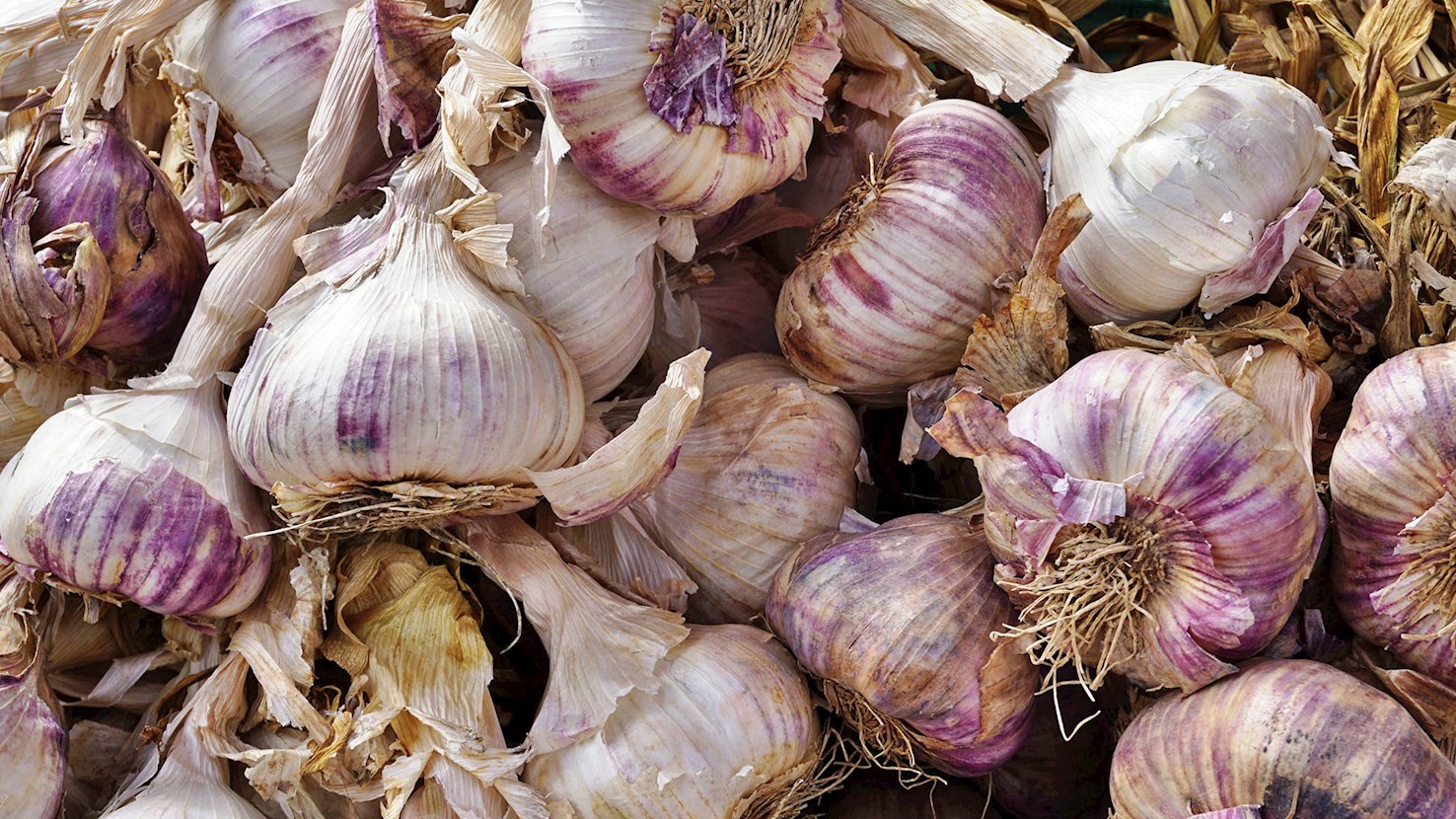
This variety of a violet tunic garlic is traditionally grown on the sun-exposed limestone and clay slopes in and around the village of Cadours in the northwest of the Haute Garonne region. After the harvest, Ail violet de Cadours is gently breezed over and dried by the vent d'Autan, a warm and dry Mediterranean wind. The robust appearance of Cadour garlic is far from being indicative of its delicate and sweet flavor. It is available from early summer and, if stored properly, it can be kept for up to six months. This versatile crop is celebrated at the Fete d’Ail, a festival held in Cadours every August.

09

Ail Rose de Lautrec

n/a ·

Ail Rose de Lautrec is France's finest garlic with pink cloves and white skin on the exterior. It is grown in the medieval town of Lautrec in the Tarn region. According to an old tale, a traveller with no money stopped in Lautrec in order to eat, but as he had no money, he paid with pink cloves of garlic instead. The owner of the inn planted them, and that is how it expanded throughout the region. Its taste is subtle, sweet and gentle and is used as a common spice, adding that extra touch of flavor to many dishes. Mainly used in the culinary world, it also has medicinal properties as it is long ago proven that garlic is full of vitamins, antibacterial, antiallergenic, and acts as a diuretic.

Read more
View all
View map
About this ranking

TasteAtlas food rankings are based on the ratings of the TasteAtlas audience, with a series of mechanisms that recognize real users and that ignore bot, nationalist or local patriotic ratings, and give additional value to the ratings of users that the system recognizes as knowledgeable. For the “Top 9 Occitan Bulb Vegetables” list until June 24, 2026, 14 ratings were recorded, of which 10 were recognized by the system as legitimate. TasteAtlas Rankings should not be seen as the final global conclusion about food. Their purpose is to promote excellent local foods, instill pride in traditional dishes, and arouse curiosity about dishes you haven’t tried.

Similar lists