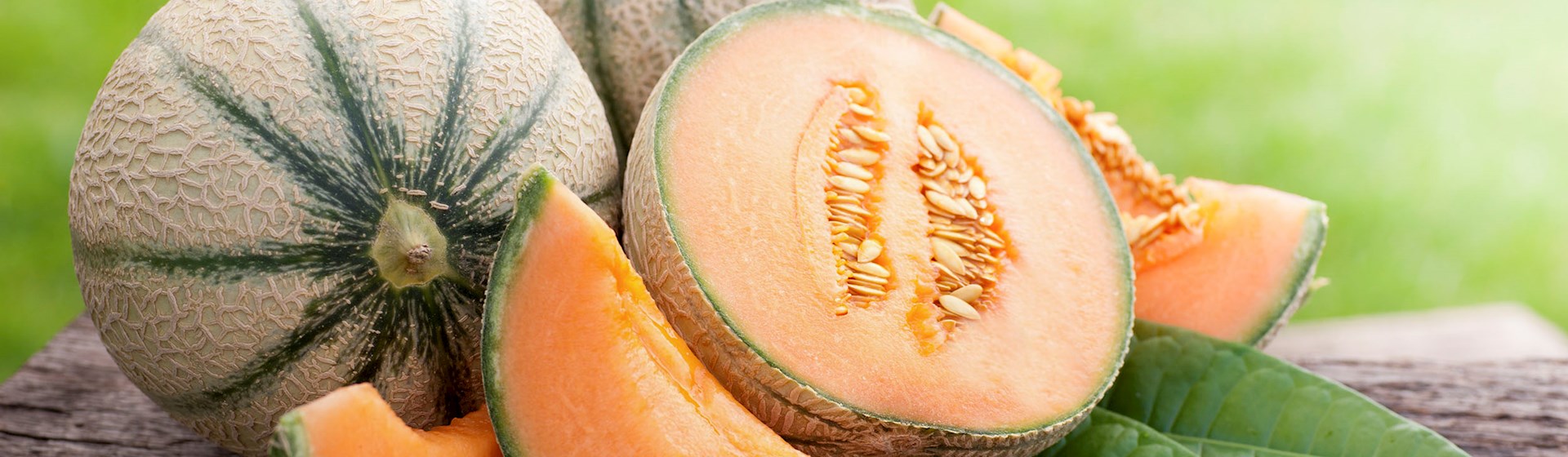
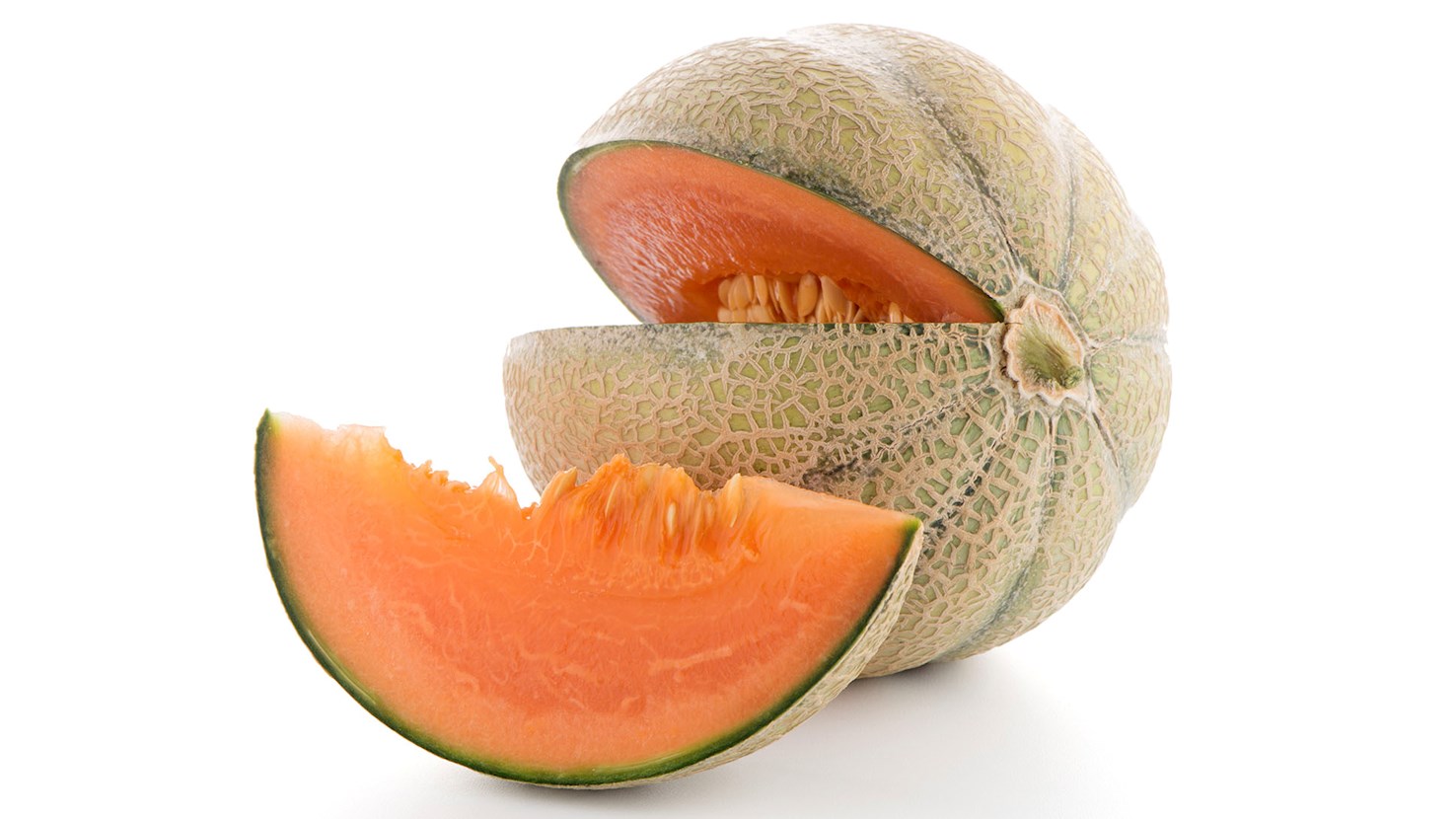
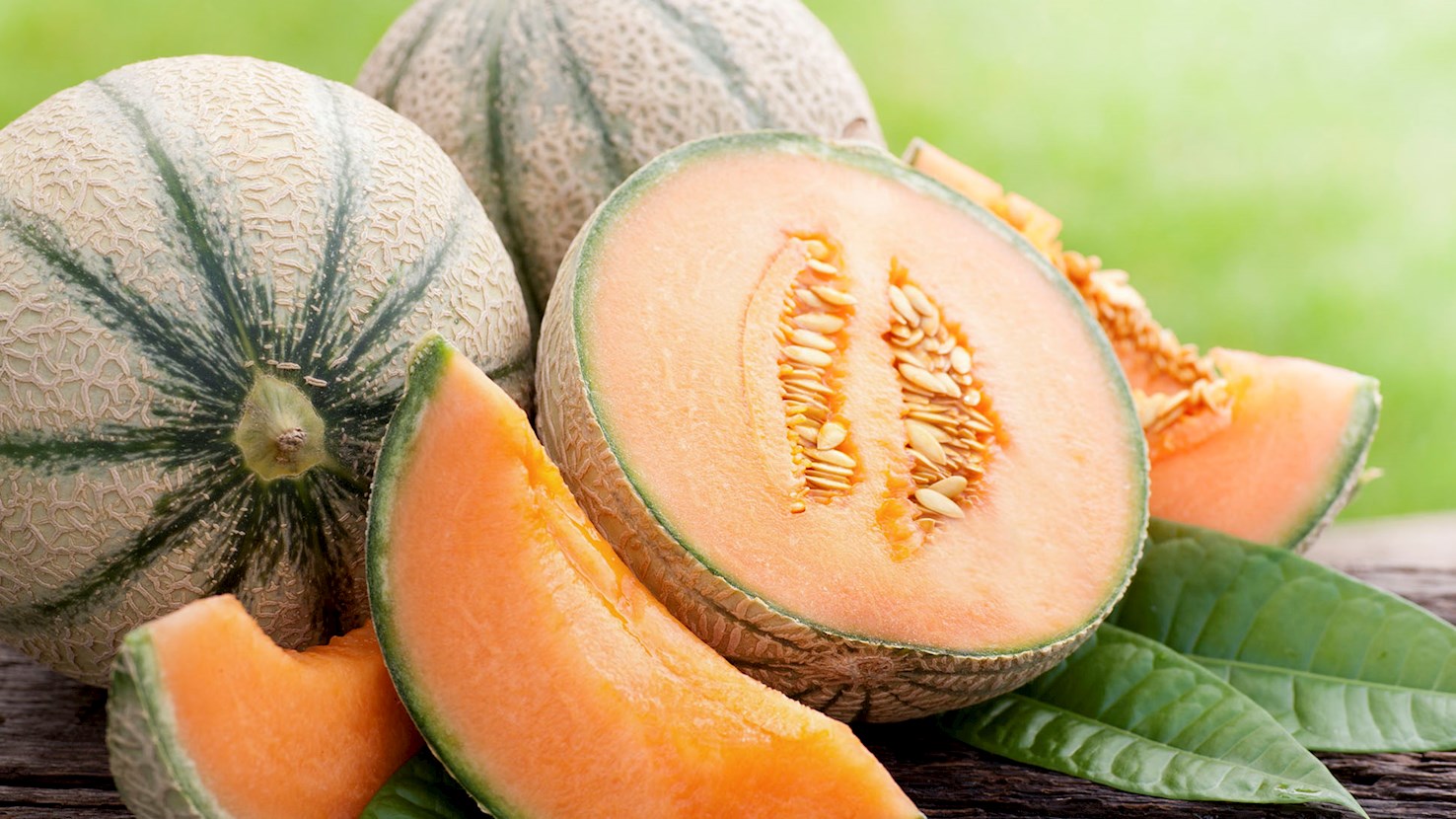
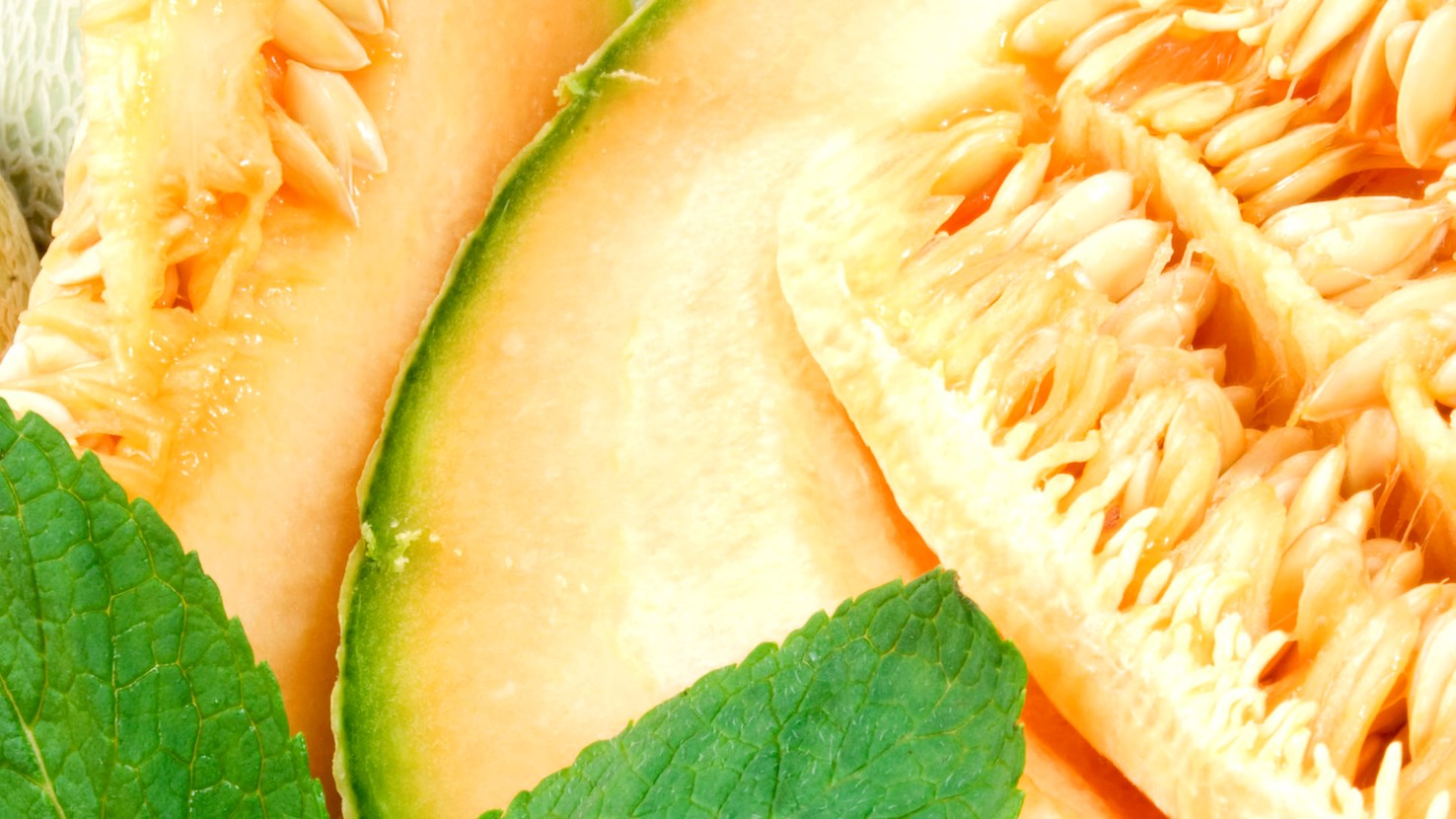
Melon du Hait-Poitou is a yellow melon with a sweet flavor and intense aromas, grown around the basin of Haut-Poitou. The orange flesh is firm but juicy and sweet and melts in the mouth. The melons weigh between 550 grams and 1350 grams. They are very health-beneficial, low in calories and sugar, full of vitamins and rich in fibre. Since it is a protected product, only 16 local producers are allowed to grow it with great care on clay-limestone soil. The unique aroma is due to the favorable climate, with very hot days that are followed by cool nights in the region. A true summer fruit, it is great as a dessert, snack, or used in salads.
Melon du Quercy is an orange-fleshed melon with a green to yellow peel, produced in the French regions of Tarn et Garonne and Lot since the 18th century. When fully ripe, the melons are harvested, checked, sorted and graded. Due to the soil that is made of lime and clay and regulates the plant's intake of minerals, Melon du Quercy has its typical scent and unique properties. Its taste is sweet with notes of honey, and the flesh is very juicy, with a melt-in-the-mouth texture. A great summer fruit, it is low in calories and high in vitamin content, and usually eaten sliced and fresh, or paired with cured meat and port wine. Alternatively, try these melons in gazpacho or as an accompaniment to duck meat.
Melon de Guadeloupe is a yellow melon of the Charentais variety, grown on the French island of Guadeloupe in the Caribbean. It is sold fresh, firm and whole, and must weigh at least 450 grams. Its rind is greenish or yellow on the exterior, while on the interior there is a very sweet, tender, orange flesh with a wide variety of aromas and flavors, the musky one being the most loved. The flesh is known to keep exceptionally well, due to the favorable clay soil and climatic conditions. However, it cannot be consumed just any day of the year since it is a seasonal product, harvested from November to June. Use it in chutneys, fruit salads, in cocktails or pair it with fresh scallops or dried ham.
Noir des Carmes is an early-ripening cantaloupe melon cultivar originating from the Centre-Val de Loire region and produced in the Tours area. The cultivation of this specific plant is directly attributed to the local Carmelite monks, who propagated the seeds centuries ago. Documentation of the crop appears in early agricultural texts, such as the 1787 publication by Mawe and Abercrombie, and in a subsequent 1817 botanical illustration by Mrs. Hooker in the United States, where the fruit is occasionally referred to as Black Rock. The melon is characterized by a deeply ribbed, exceptionally dark green, almost black skin that transitions to a bright orange hue when the fruit reaches full maturity. Each plant yields an average of four to five slightly flattened fruits, which can reach a substantial weight of up to 1.5 kilograms. A defining physical trait of this cultivar is its extremely short shelf life, requiring consumers to eat the fruit within 2 days of harvest, a stark contrast to modern commercial melons bred for extended transport and storage. To prepare the item, the thick rind is sliced open to reveal a dense, orange interior flesh, and the central seeds are discarded before the fruit is portioned into smaller segments. Because the flesh is highly sweet and fruity, individuals typically consume it raw immediately after slicing. Diners eat the wedges by hand or with standard cutlery. This cantaloupe is routinely served as an introductory course alongside thin strips of dry-cured ham or presented as a dessert paired with a chilled glass of sweet regional white wine or fortified spirits.
Petit gris de Rennes, also referred to as petit rennais, is a small cultivar of cantaloupe melon grown primarily in the Ille-et-Vilaine and Finistère departments of Brittany. The fruit physically distinguishes itself by a thin, mottled greyish-green rind featuring nine barely accentuated ribs, lacking the heavy netting found on standard commercial melons, that encases a soft, bright orange flesh. The melon typically weighs between 400 and 700 grams, reaching full maturity when the faint green stripes on its exterior turn a yellowish hue and the stem begins to detach. Botanical records indicate the plant descended from the noir de Carmes variety and was initially bred within the garden of the bishop of Rennes at the beginning of the 17th century. Market gardeners adapted the cucurbit to thrive in the basin's temperate maritime climate. During peak cultivation, the crop relied heavily on the peri-urban agriculture surrounding Rennes, where a local cavalry presidio supplied farmers with abundant horse manure to artificially heat the soil surface for the plants. Production declined rapidly in the 1960s as commercial operations shifted toward greenhouse environments and sturdier commercial hybrids capable of surviving long-distance transport without damage. Cultivating the specific crop requires precise timing, as the delicate fruit is highly susceptible to bursting open if left on the vine for too long after ripening. In recent decades, local conservatories and independent seed savers have actively recovered the true genetic lines, though some modern growers negatively alter the fruit's internal quality by grafting it onto disease-resistant hybrid rootstocks. To prepare the cantaloupe for consumption, individuals cut the sphere in half, use a spoon to scoop out the central seed cavity, and then divide the remaining flesh into wedges. Cooks serve the melon completely raw, either chilled or left at room temperature to maximize the release of its volatile aromatic compounds. The wedges are eaten by hand or with a fork and knife at residential dining tables, outdoor picnics, and regional markets across Brittany. The highly concentrated sugar content and floral scent make it a frequent component of both starter courses and desserts. Slices are regularly draped with thin cuts of cured pork or served alongside a poured glass of fortified wine, such as Port or Pineau des Charentes, as well as sweet, late-harvest white wines to complement the dense sweetness of the orange fruit.
TasteAtlas food rankings are based on the ratings of the TasteAtlas audience, with a series of mechanisms that recognize real users and that ignore bot,
nationalist or local patriotic ratings, and give additional value to the ratings of users that the system recognizes as knowledgeable.
For the “Top 5 French Cantaloupes” list until June 10, 2026, 21 ratings were recorded, of which 18 were recognized by the system as legitimate.
TasteAtlas Rankings should not be seen as the final global conclusion about food. Their purpose is to promote excellent local foods,
instill pride in traditional dishes, and arouse curiosity about dishes you haven’t tried.