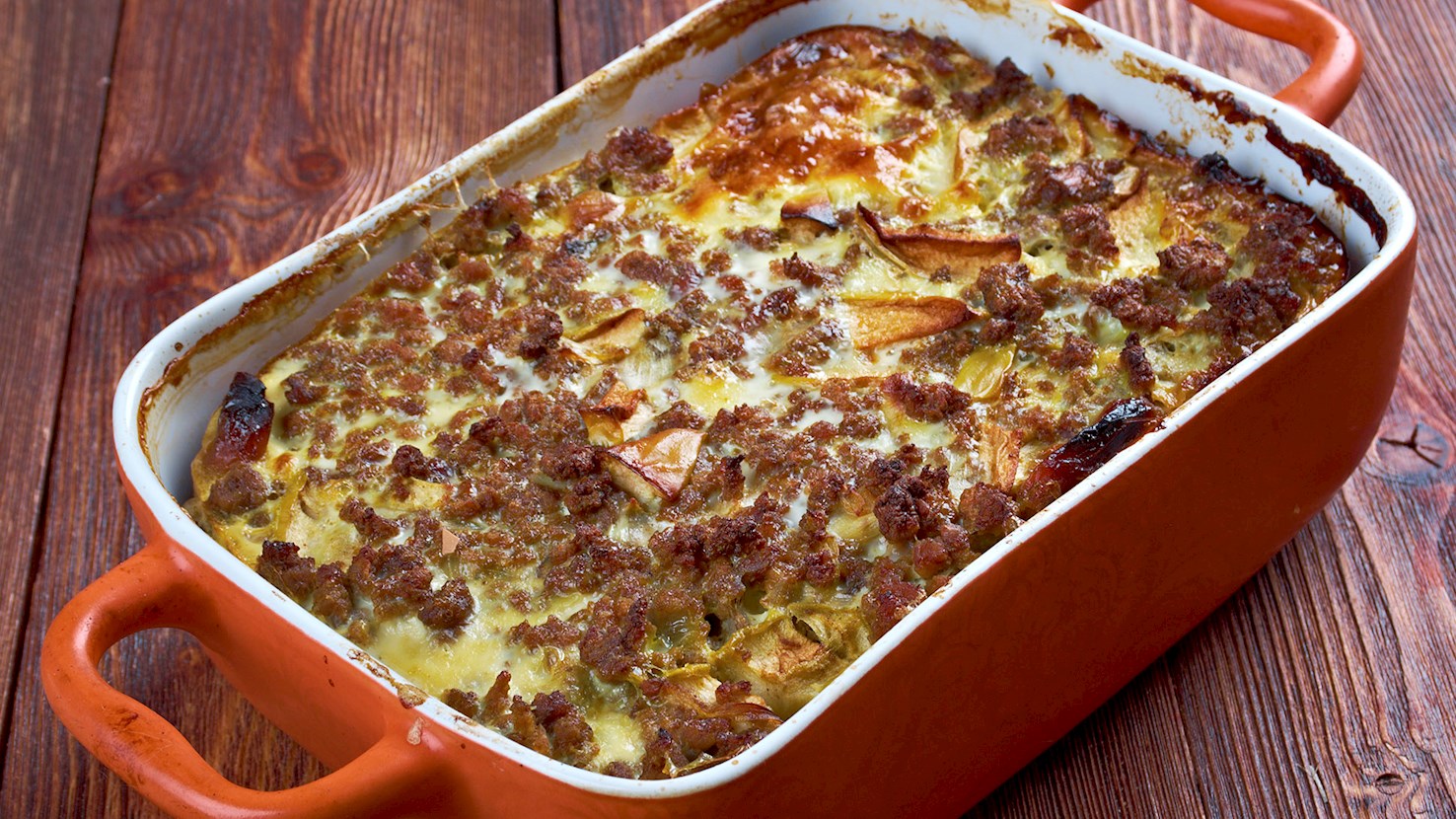
Bobotie or bobotjie is a South African deep-dish casserole made from ground beef or lamb, herbs, spices, curry powder, fruits, and a finish of golden-brown egg custard that is scented with cinnamon or nutmeg. The dish originated from an Indonesian dish called bobotok, which was taken to South Africa in the 16th century by the Indonesians that transported spices and slaves to the country. It is full of well-balanced flavors – sweet and fruity from the chutney, apricot jam, and sugar, spicy from curry and turmeric, sour from vinegar, and salty from the meat. Today, bobotie is so popular that it is a centerpiece of festive meals and can be found in most South African restaurants, where it is traditionally served with vegetables, yellow rice (white rice with turmeric), or steamed white rice that soaks up the rich juices oozing from the cut portions.
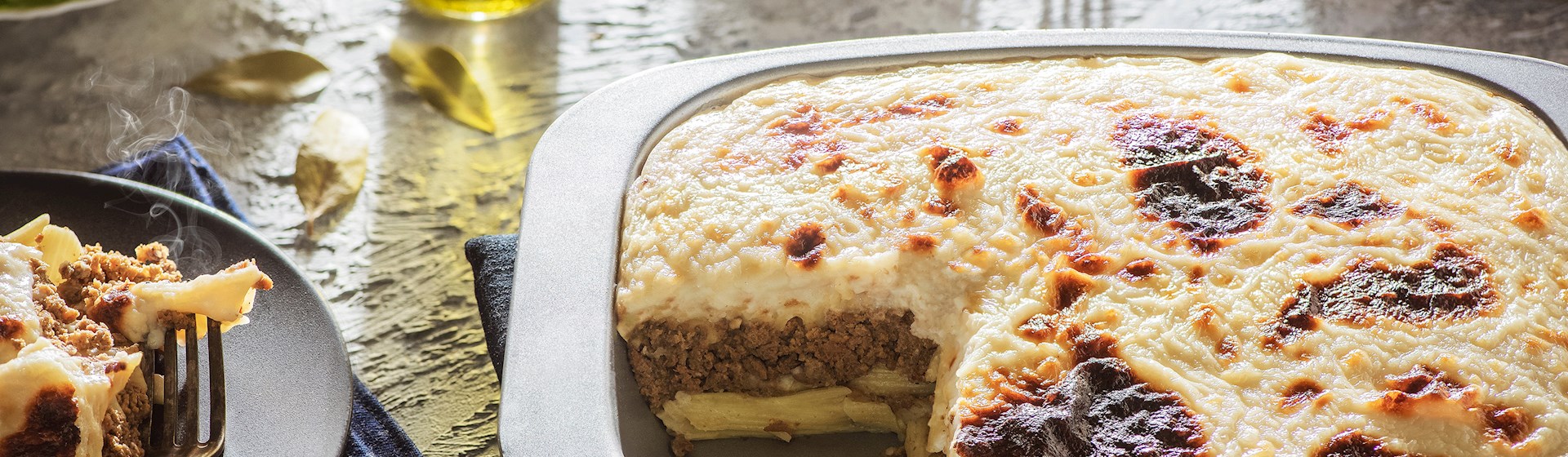
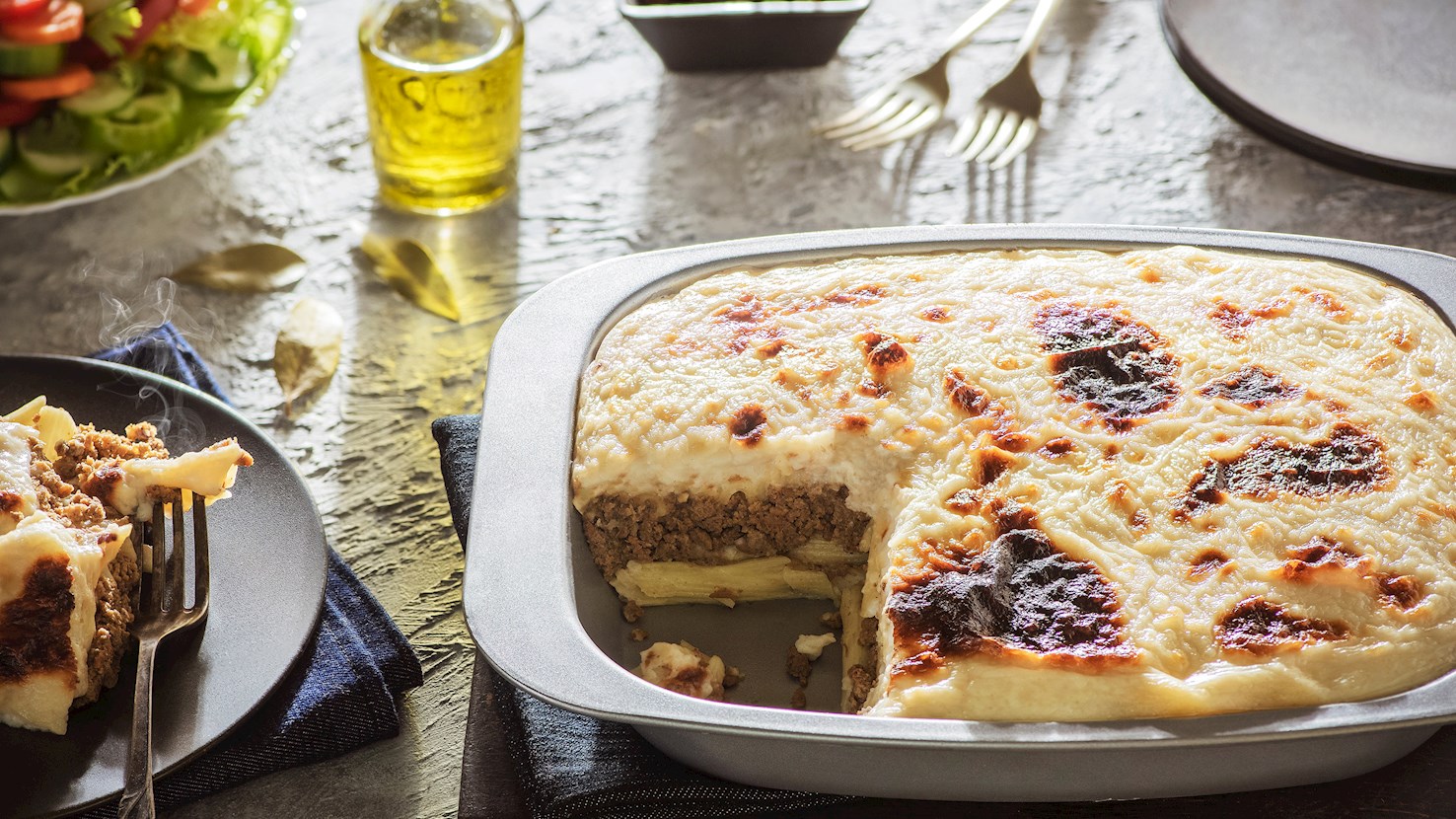
The filling Egyptian dish known as macaroni béchamel consists of layers of pasta (penne, rigatoni, or elbow macaroni) with a ground beef filling sandwiched in between, and a topping of béchamel sauce. The combination is baked in an oven as a layered pasta casserole until it develops a golden-brown color, and it is then sliced and served. This dish is very common at religious festivities, especially during Ramadan.
The rich and nutritious torly is an Egyptian mixed vegetable casserole with chunks of beef, lamb or chicken dispersed throughout it. The most common vegetables include potatoes, zucchini, carrots, and onions, while tomato sauce is used as a binding agent. In order to prepare it, a layer of cooked meat is topped with a layer of vegetables, and the process is repeated until the last layer, which is typically meat. The casserole is often topped with sliced tomatoes before baking.
Tajin sfinari bil zaytun is a colorful Libyan casserole prepared with diced lamb, sliced carrots, chopped onions, and pitted green olives as key ingredients. The casserole is flavored with caraway, lemon juice, cinnamon, harissa, and parsley. Traditionally, tajin sfinari bil zaytun is baked stove top in a clay casserole dish, which is later transferred to the oven, stemming from an old practice where the dish was first baked on top of a stove, and it was later sent to the neighborhood bakery. It is recommended to drizzle the dish with olive oil before serving, then pair it with warm bread that is used to soak up the flavorful sauces.
Mubattan kusha is a layered potato and meat casserole originating from Libya. Quick and easy to prepare, the dish consists of ground meat (lamb or beef), sliced potatoes, onions, tomatoes, butter, eggs, and flour. It is traditionally flavored with parsley, hot peppers, ginger, cinnamon, black pepper, and dill. Fried or grilled potato slices are first layered in a casserole dish, then topped with a mixture of eggs and herbs, and finally, with a layer of meat. The process is repeated until the casserole dish is filled, the whole thing is sprinkled with breadcrumbs, and mubattan kusha is baked until golden brown. It is recommended to pair it with a big salad for a complete meal.
Tajine el Bey is a refined Tunisian dish made with layers of minced meat, eggs, cheese, and spinach or parsley, often enriched with almonds or pistachios. Despite its name, it is not related to the Moroccan clay pot tajine but belongs to the family of baked Tunisian tajines, egg-based casseroles similar in texture to a frittata or quiche. The dish originates from the coastal cities of Tunisia, particularly Tunis and its surroundings, where it was considered a centerpiece of special occasions and family gatherings. The name “el Bey” refers to the historical Husseinite rulers ("Beys") of Tunisia, suggesting that the dish once symbolized wealth and elegance through its rich ingredients and careful preparation. The roots of tajine el Bey reflect Tunisia’s layered culinary influences, merging North African flavors with Ottoman and Mediterranean touches. In the nineteenth century, urban households developed more elaborate versions of everyday tajines, using ingredients like cheese, nuts, and spinach that were accessible to the upper class. The presence of pistachios or almonds, alongside minced meat and eggs, gave the dish a distinguished status, making it popular during celebrations and formal dinners. Preparation begins with cooking minced meat, usually beef or lamb, with onion, parsley, salt, and pepper until browned. Spinach or finely chopped greens are wilted separately, sometimes combined with a bit of grated cheese for texture. A mixture of beaten eggs, grated cheese, and breadcrumbs is then folded with the meat and greens to create a smooth batter. Some versions include crushed nuts for richness or a layer of cooked potato slices at the base for structure. The mixture is poured into a greased baking dish, topped with a light sprinkling of cheese or nuts, and baked until firm and golden on top. Once cooled slightly, it is cut into squares or diamonds, revealing a layered interior that balances the savory flavor of meat with the freshness of herbs and the creaminess of eggs and cheese. Tajine el Bey is eaten warm or at room temperature, often as a centerpiece during special meals, alongside salads such as mechouia or slata tounsia. It can also appear as part of a larger spread with couscous or stewed dishes. Because of its balanced richness, it pairs well with mint tea or light yogurt drinks, which cleanse the palate.
TasteAtlas food rankings are based on the ratings of the TasteAtlas audience, with a series of mechanisms that recognize real users and that ignore bot,
nationalist or local patriotic ratings, and give additional value to the ratings of users that the system recognizes as knowledgeable.
TasteAtlas Rankings should not be seen as the final global conclusion about food. Their purpose is to promote excellent local foods,
instill pride in traditional dishes, and arouse curiosity about dishes you haven’t tried.




What People Say