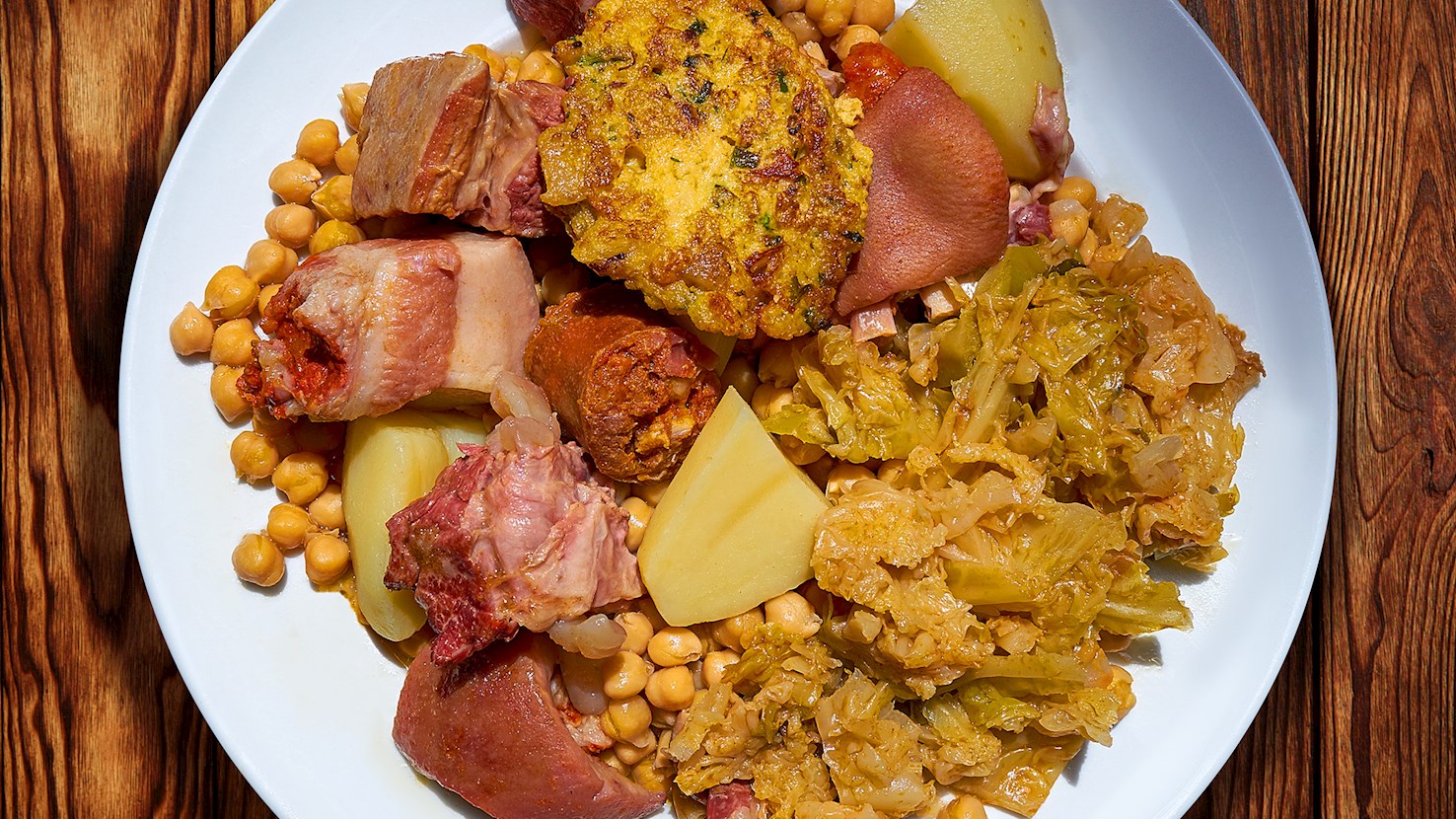
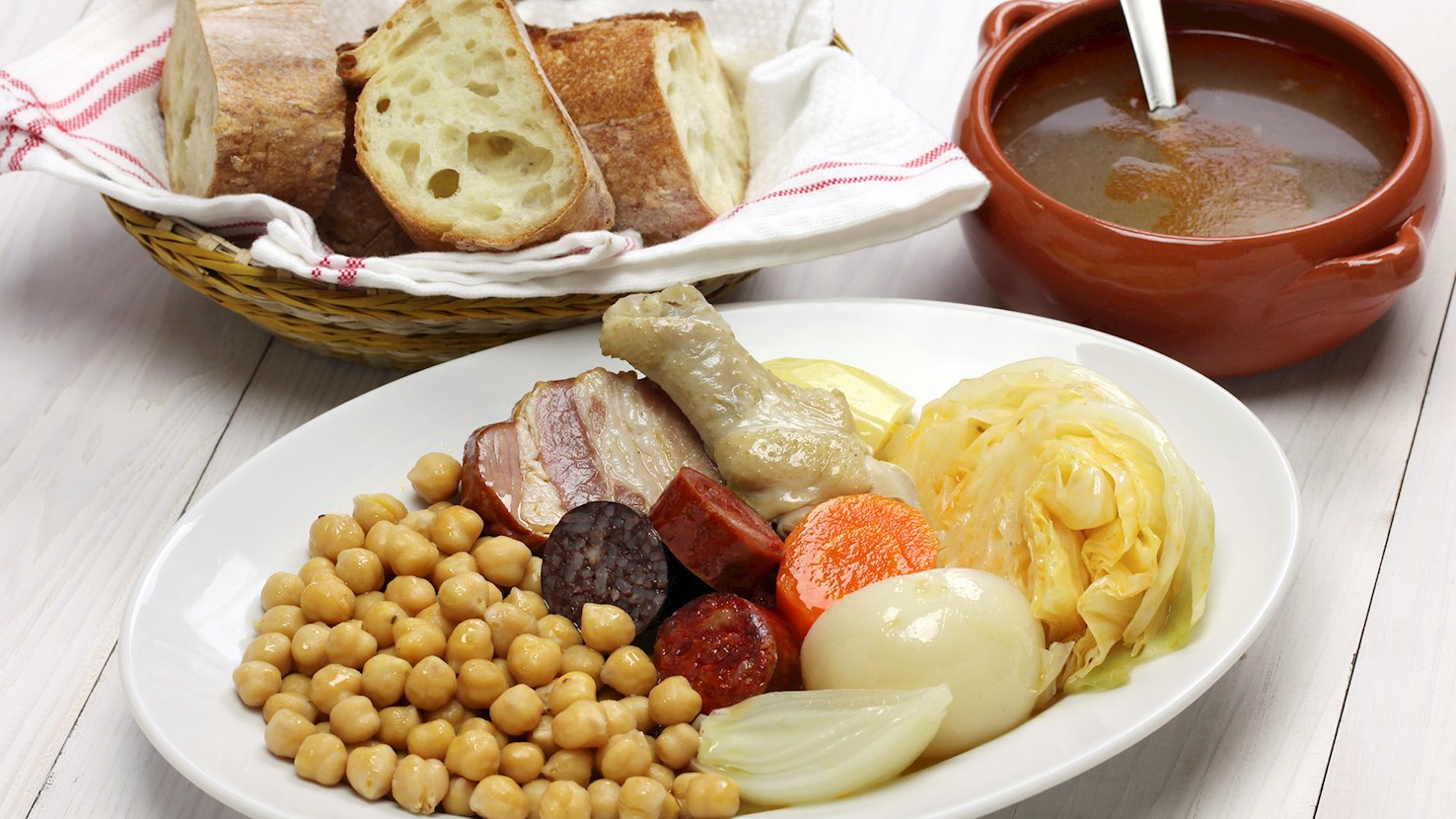
Cocido lebaniego is a traditional dish originating from the Liébana area in Cantabria. The stew consists of local chickpeas, potatoes, and cabbage with meat from the pig slaughter such as chorizo, bacon, and morcilla. Breadcrumbs, parsley, and cecina dried meat is often added to the stew as well. Due to the fact that the stew is very hearty and nutritious, it's traditionally eaten as the main course. The consommé is enjoyed first, followed by the chickpeas and vegetables, while the meat is usually saved for last, although some like to eat the meat and the chickpeas together.
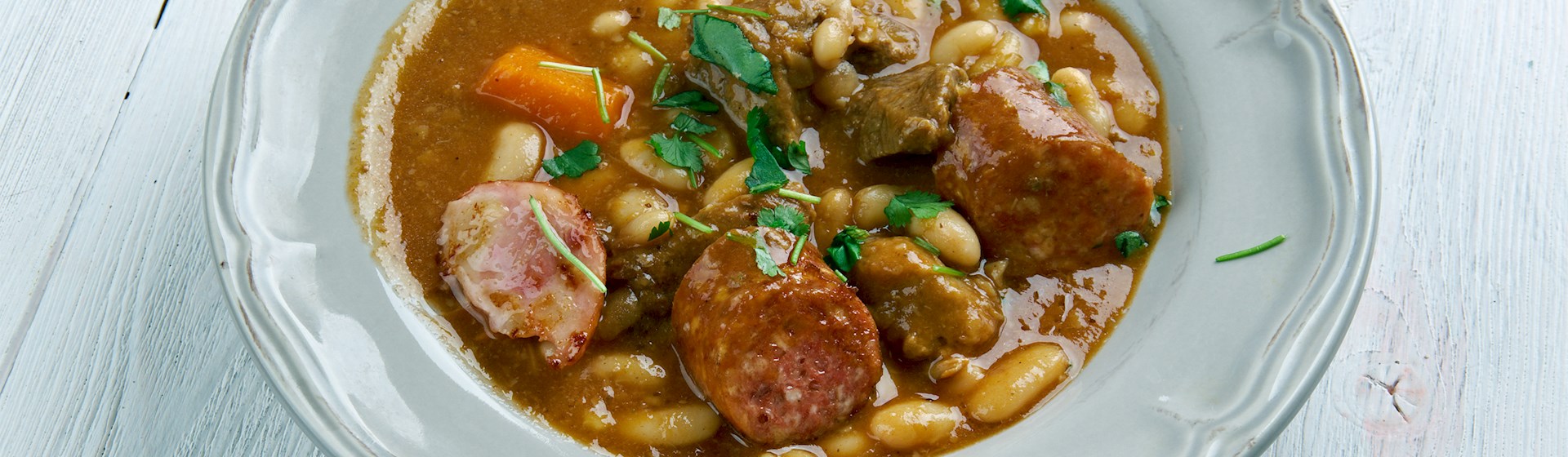
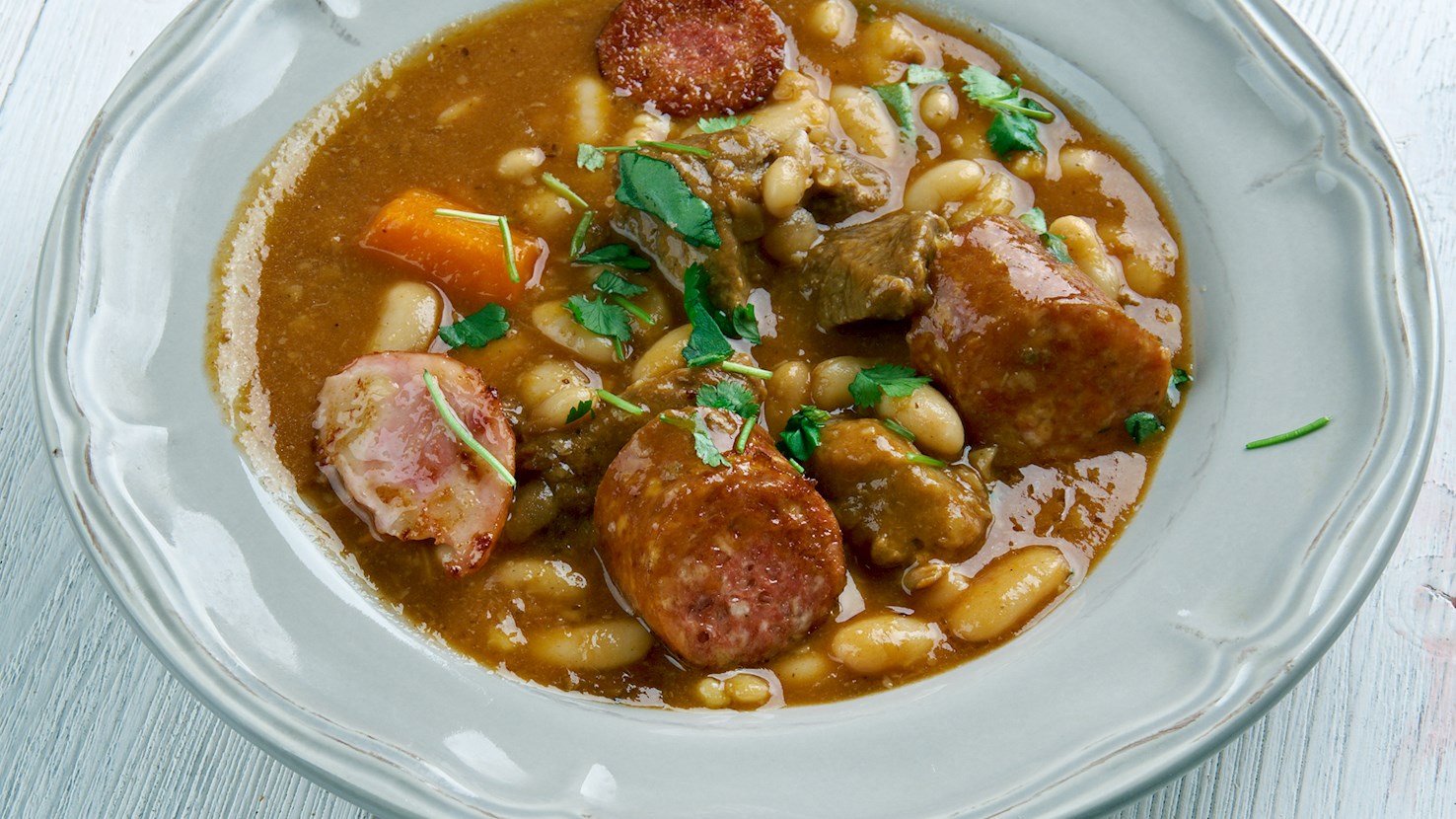
The essential ingredients in this hearty Cantabrian stew include white beans and collard greens (berza), but the dish is commonly enriched with chorizo (pork sausage) and morcilla (blood sausage), pork ribs, and bacon. It is believed that the stew was invented in the 17th century, but it was given its current name in the 1960s. Unlike many other types of Spanish stews where the broth is served separately, cocido montañés is typically enjoyed as a one-course meal.
Cozido is a classic Portuguese stew made with various types and cuts of meat and different vegetables. It appears in numerous frugal and sophisticated variations throughout the country and can also incorporate smoked meat and spicy smoked or blood sausages. This comforting winter meal is believed to have originated as a simple farmer’s dish which soon became a restaurant staple and a part of Portuguese national cuisine. Traditionally, the cooked ingredients are served on a platter accompanied by rice and beans, while the flavorful broth is usually enjoyed as an appetizer. On the Azorean island of Sao Miguel, the dish is prepared by placing the cooking vessel in the ground in the close vicinity of hot springs, allowing the heat to slowly cook the stew.
One of the most emblematic dishes of Madrilenian cuisine known as cocido madrileño is a hearty meat and chickpea stew whose origins can be traced back to the medieval-era Castilla La Mancha. Some food historians claim that this one-pot meal evolved from a peasant dish called olla podrida Manchega, but wasn't named cocido madrileño until the 17th century. However, most sources agree that the famed dish has its roots in the Sephardic stew called adafina–a Shabbat kosher meal based on chickpeas, vegetables, and either hard-boiled eggs or meat such as lamb, veal, beef, or chicken. With the arrival of the Inquisition, feared of prosecution by the Catholic priests who roamed the streets of Madrid at the time–in search of both Jewish and Muslim cookery–the converted Spanish Jews called Marranos started incorporating pork into their adafinas to prove themselves as Christians. Over time, with the addition of lard, bacon, Serrano ham, chorizo (pork sausages) and morcilla (blood sausages), adafina reportedly became the dish that is now known as cocido madrileño. This substantial meal is traditionally served in three separate vuelcos or courses: the first one is a rich, flavorful stock with added noodles; the second vuelco consists of chickpeas and vegetables, while the meat is dished out as the third course. Once commonly consumed during winter, cocido madrileño can nowadays be found prepared throughout the year in many of Madrid's restaurants and taverns.
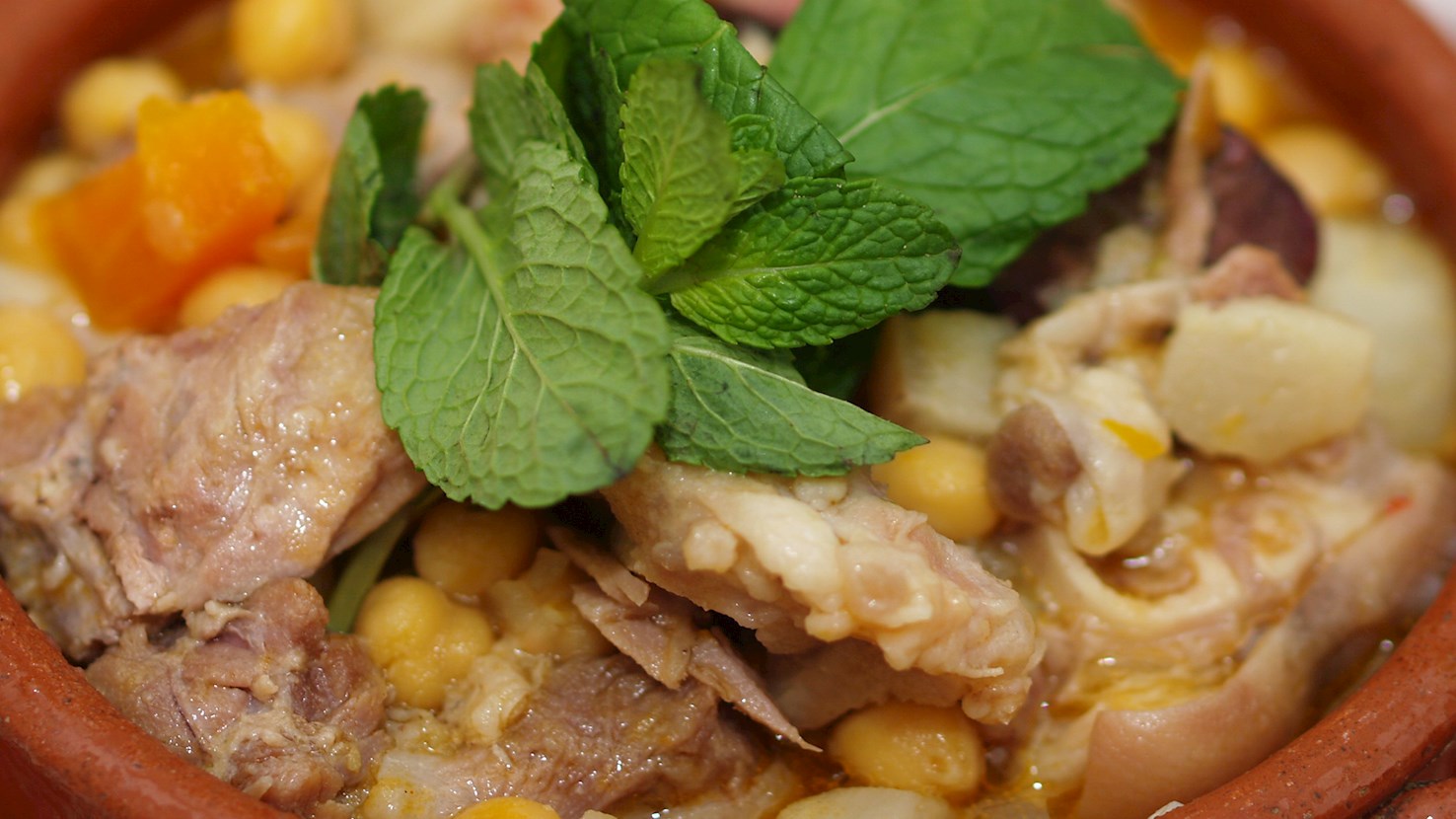
Chickpea stew is a Portuguese classic that comes in numerous regional varieties. Apart from chickpeas, the dish typically consists of different vegetables such as potatoes, carrots, green beans, or pumpkin, while the regional varieties may also include different types of sausages such as chouriço, morcela (blood sausage), or farinheira. In Alentejo, typical additions include lamb or pork, while the local Portimão version also includes beef. Cozido de grão can be enjoyed as a two-course meal, in which the broth is served separately. The dish is typically garnished with fresh mint.
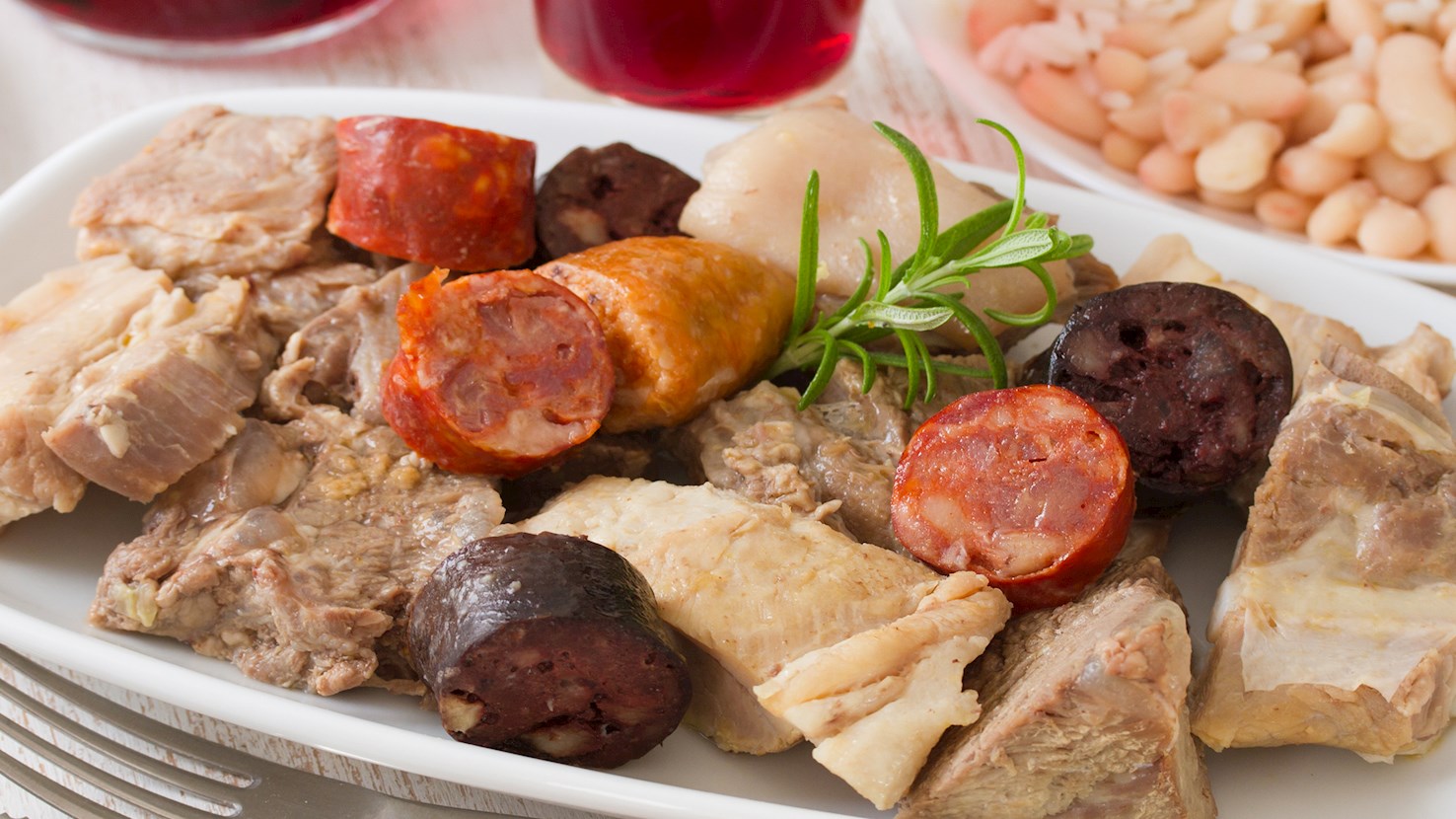
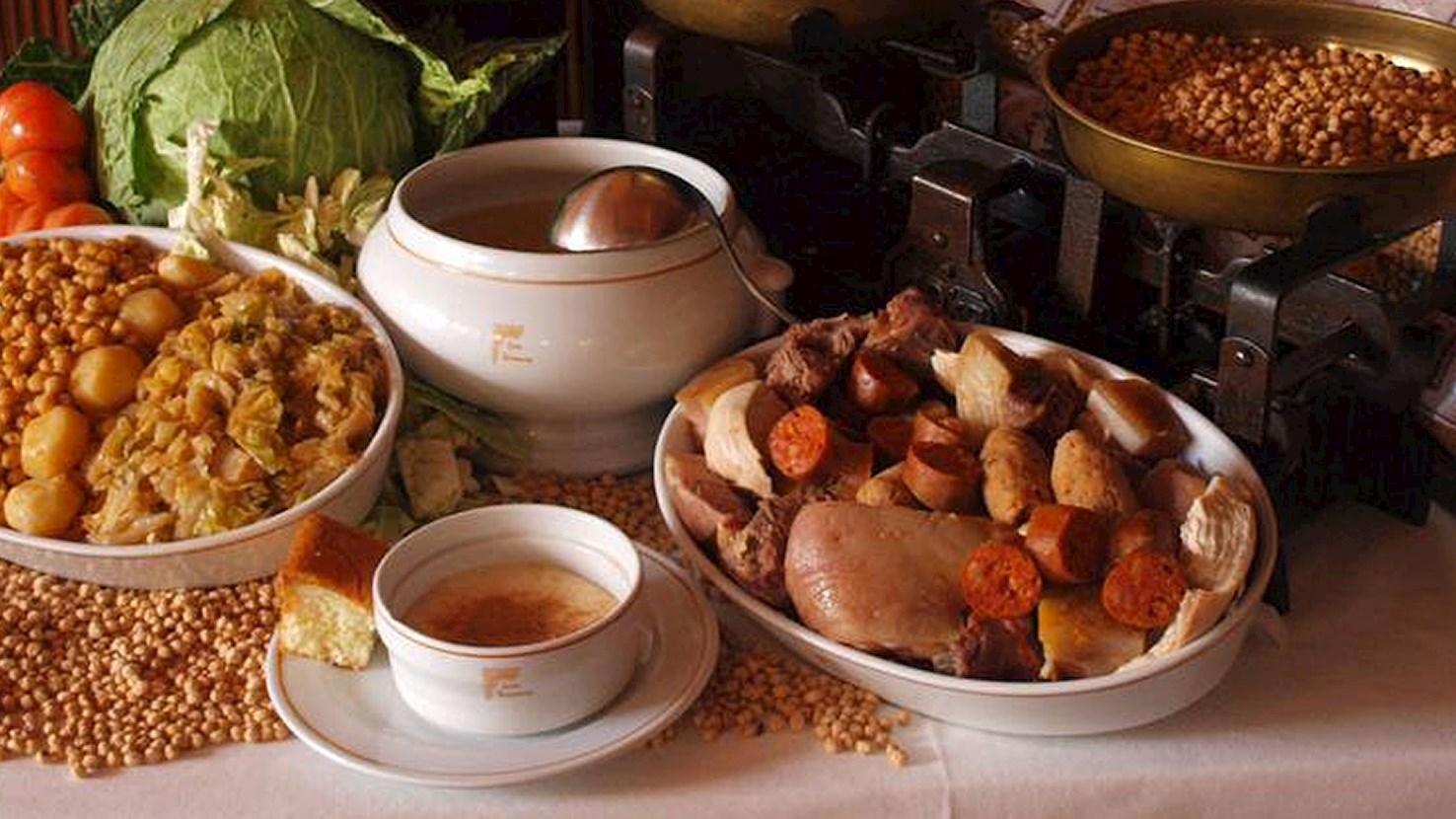
Cocido maragato is a hearty stew from the Maragatería region in the province of León, in the northwest of Spain. It is one of the most emblematic dishes of the area and a cornerstone of local cuisine, composed of several courses served in a specific order that distinguishes it from other Spanish stews. Rich in meats, legumes, and vegetables, it reflects the pastoral and rural character of the region, where resourceful cooking techniques developed around seasonal produce and preserved ingredients. Its origins are deeply connected to the lifestyle of the maragatos, a historic community of muleteers and merchants who transported goods across Spain. These travelers needed nourishing meals that provided energy during long journeys, and cocido maragato became a staple, originally prepared with whatever ingredients were available, often relying on cured meats and preserved vegetables. Over time, it evolved into a more elaborate dish served at family gatherings and festive occasions, while retaining its essence as a complete, sustaining meal. The stew also became associated with social and religious celebrations, particularly during colder months, when a slow-cooked, filling dish was most welcome. Preparation of cocido maragato involves a long, careful cooking process that brings together a variety of ingredients. Chickpeas form the base, soaked and simmered until tender, and are accompanied by a selection of meats, typically beef, chorizo, morcilla, pig offal, and cured ham. Cabbage, potatoes, and sometimes carrots are added to the broth to enrich its flavor. What sets this cocido apart is the sequence in which it is served: unlike other Spanish stews, where the soup or legumes are eaten first, cocido maragato is served in reverse order. The meats are presented first as the main course, followed by the chickpeas and vegetables, and finally the broth, which is often served with thin noodles (fideo) as a light soup to end the meal. This inverted serving order is said to have originated with muleteers who preferred to eat the heaviest portion first in case they were interrupted and could not finish the meal. Cocido maragato is typically served as a communal meal, often shared among family and friends during special occasions, winter gatherings, or village festivals. It is best enjoyed slowly, course by course, and pairs well with robust red wines from the region, such as those from the Bierzo appellation, whose earthy notes complement the dish's richness.
TasteAtlas food rankings are based on the ratings of the TasteAtlas audience, with a series of mechanisms that recognize real users and that ignore bot,
nationalist or local patriotic ratings, and give additional value to the ratings of users that the system recognizes as knowledgeable.
For the “6 Cocido Varieties Ranked From the Best To the Worst” list until June 17, 2026, 777,524 ratings were recorded, of which 504,674 were recognized by the system as legitimate.
TasteAtlas Rankings should not be seen as the final global conclusion about food. Their purpose is to promote excellent local foods,
instill pride in traditional dishes, and arouse curiosity about dishes you haven’t tried.