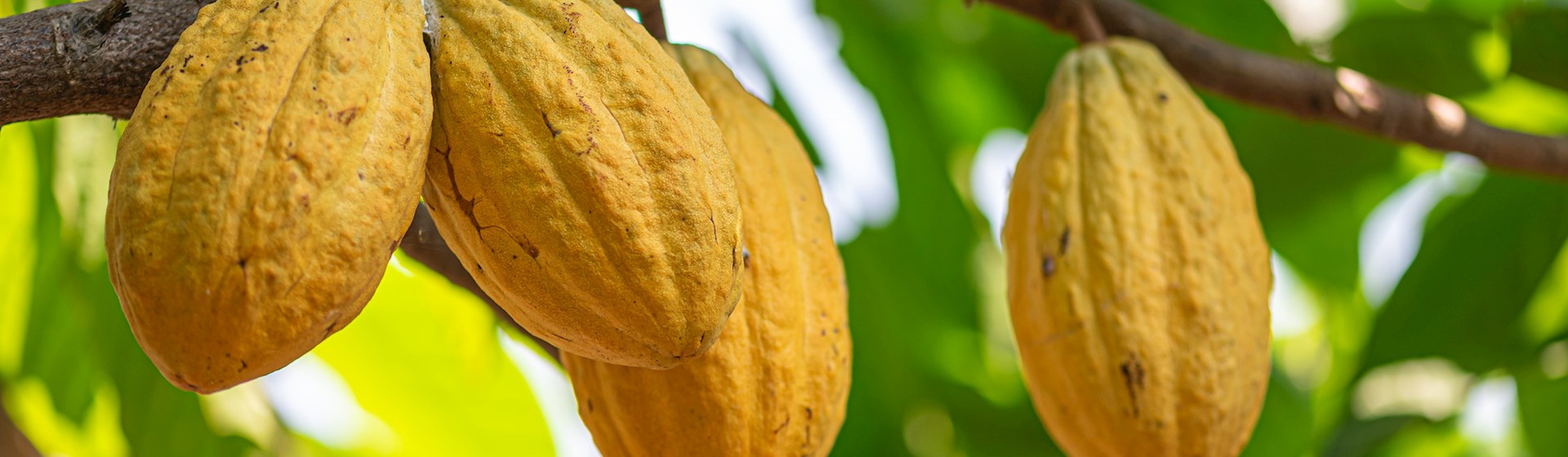
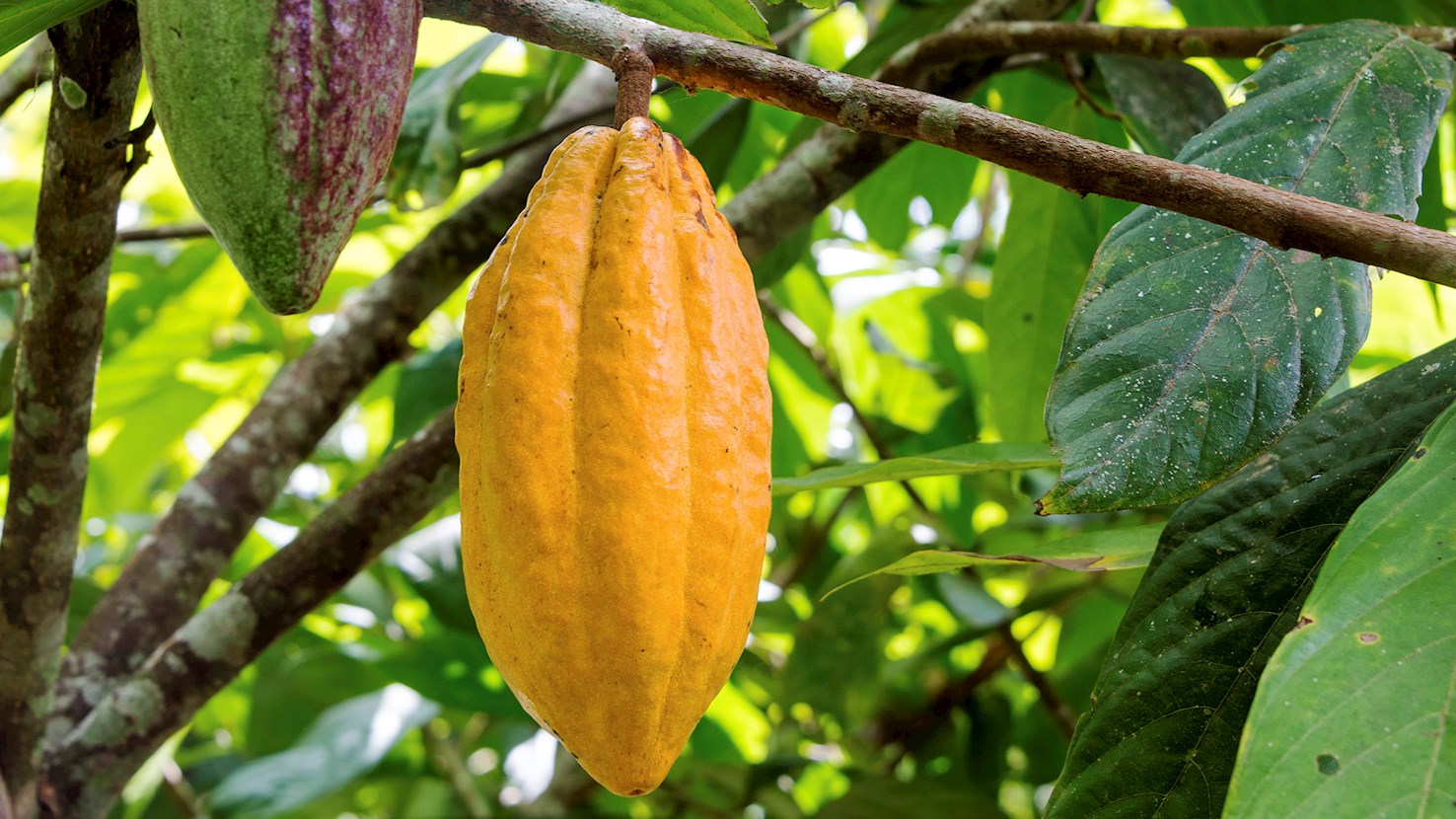
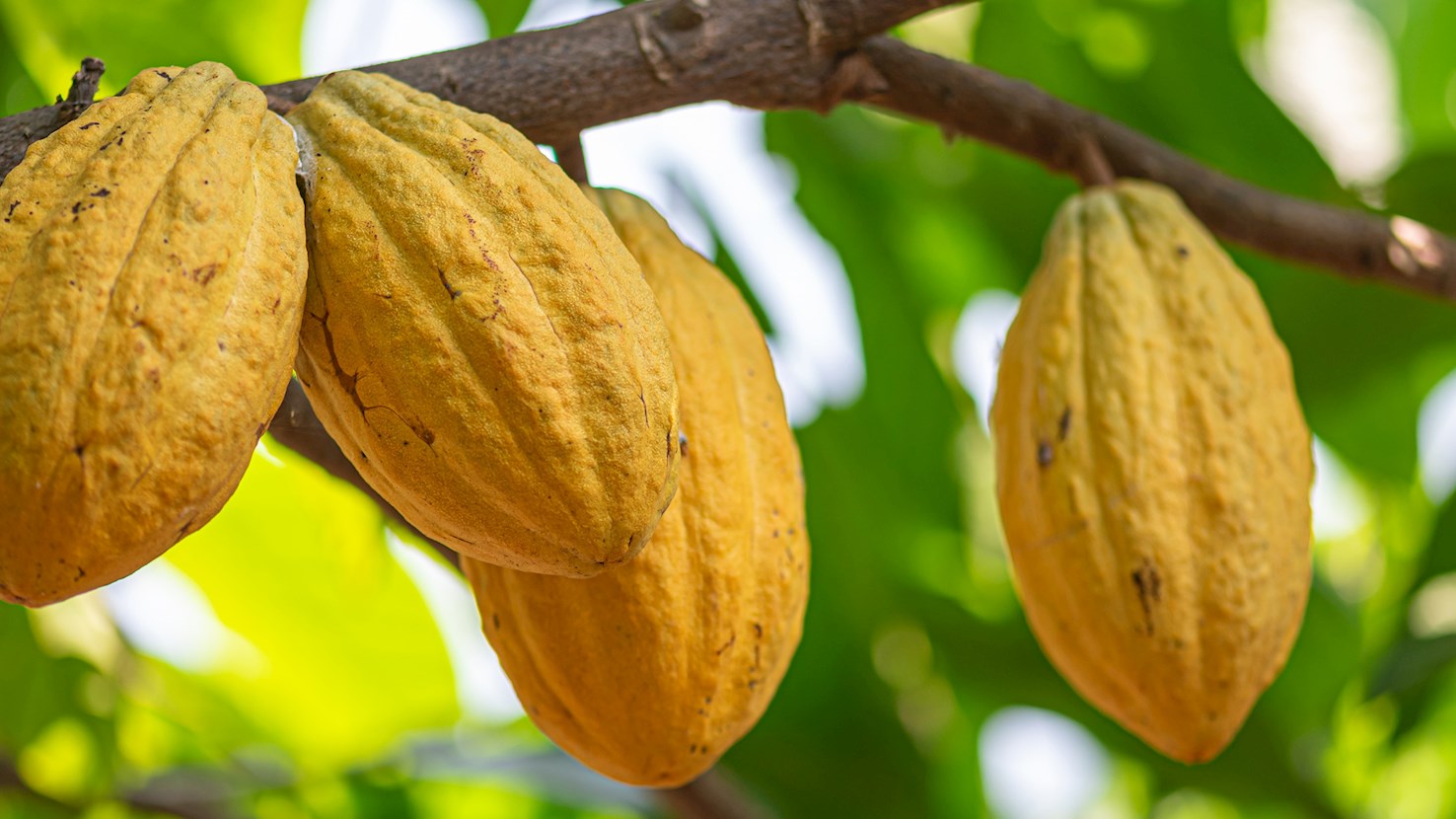
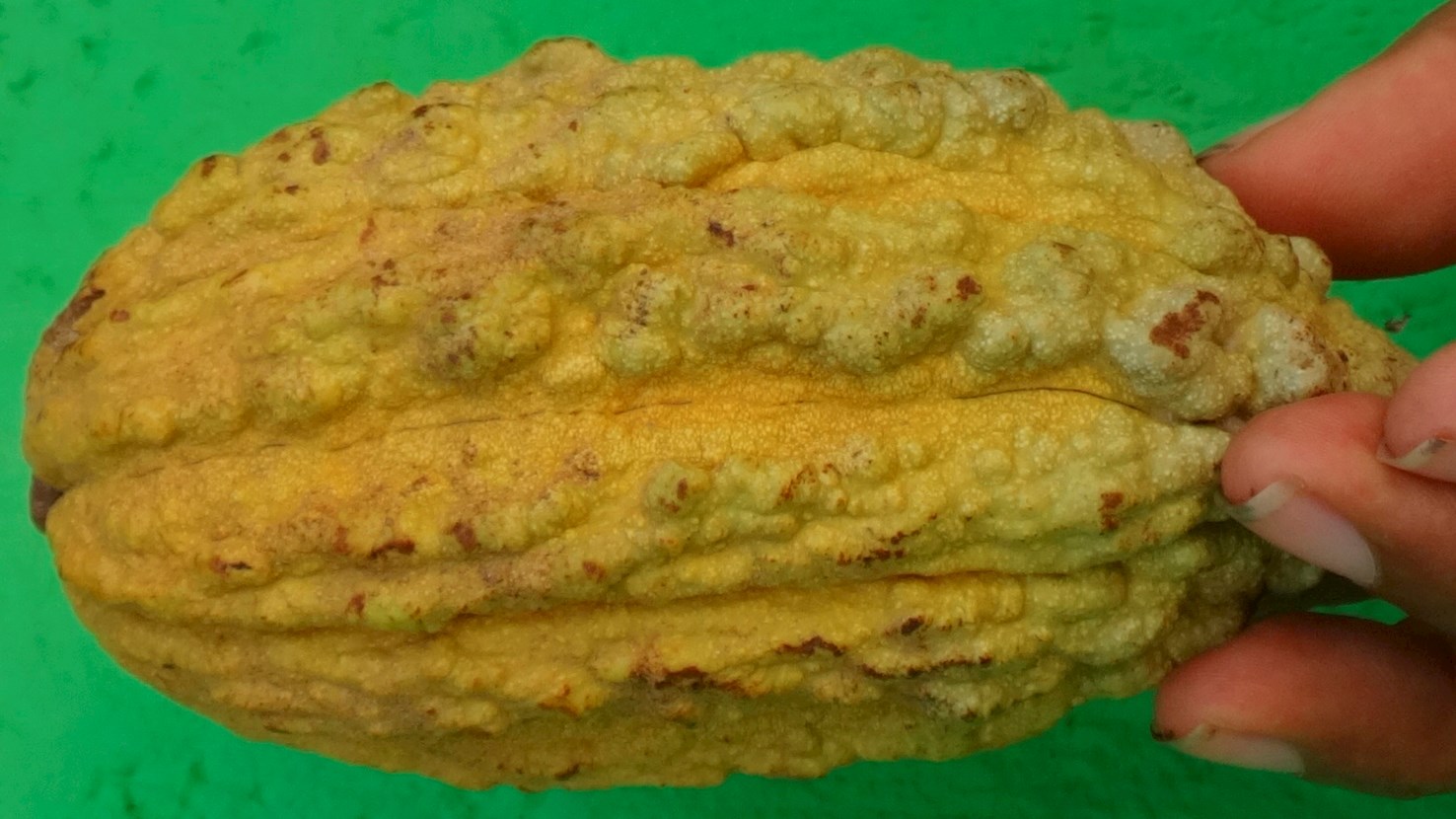
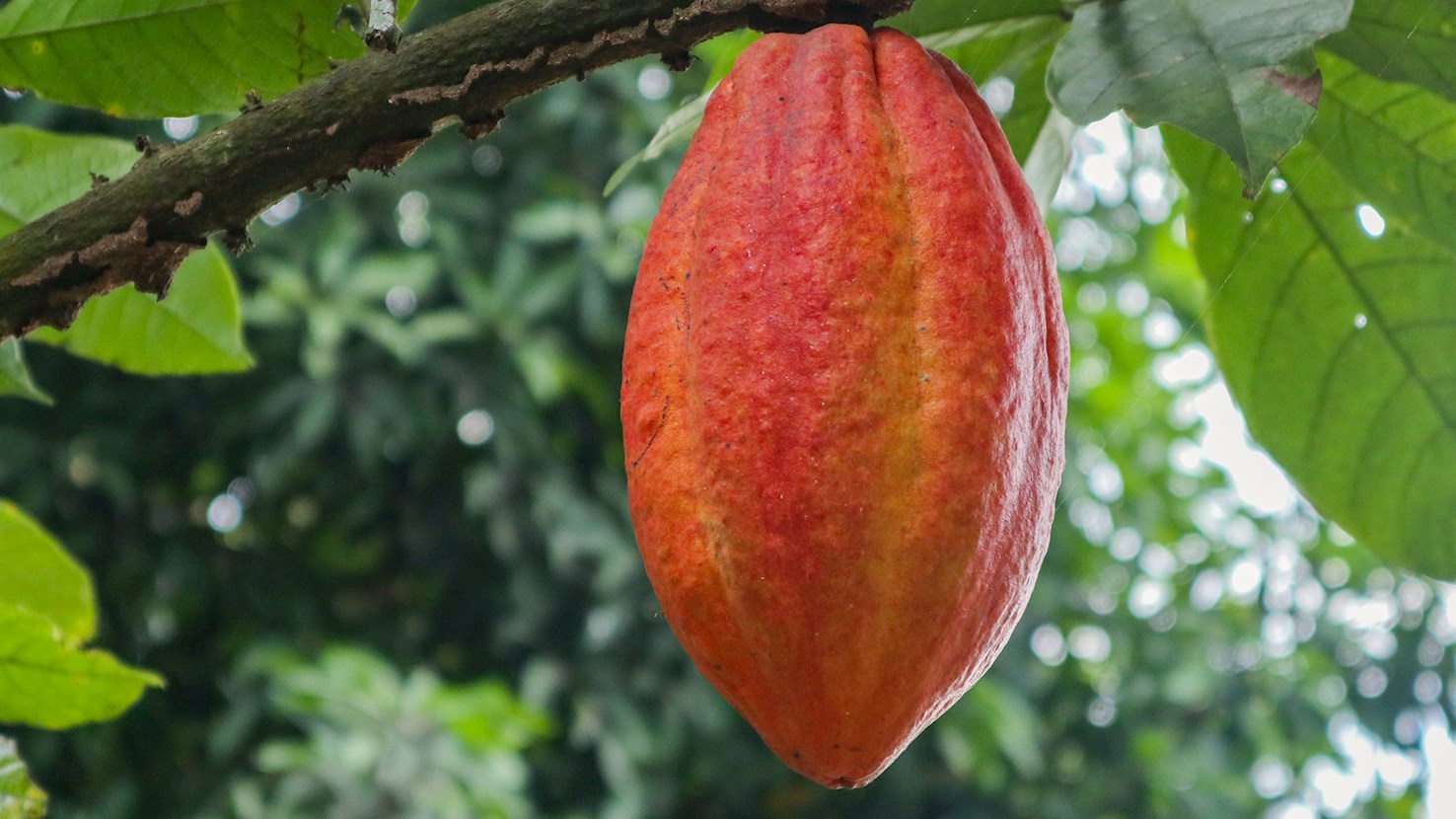
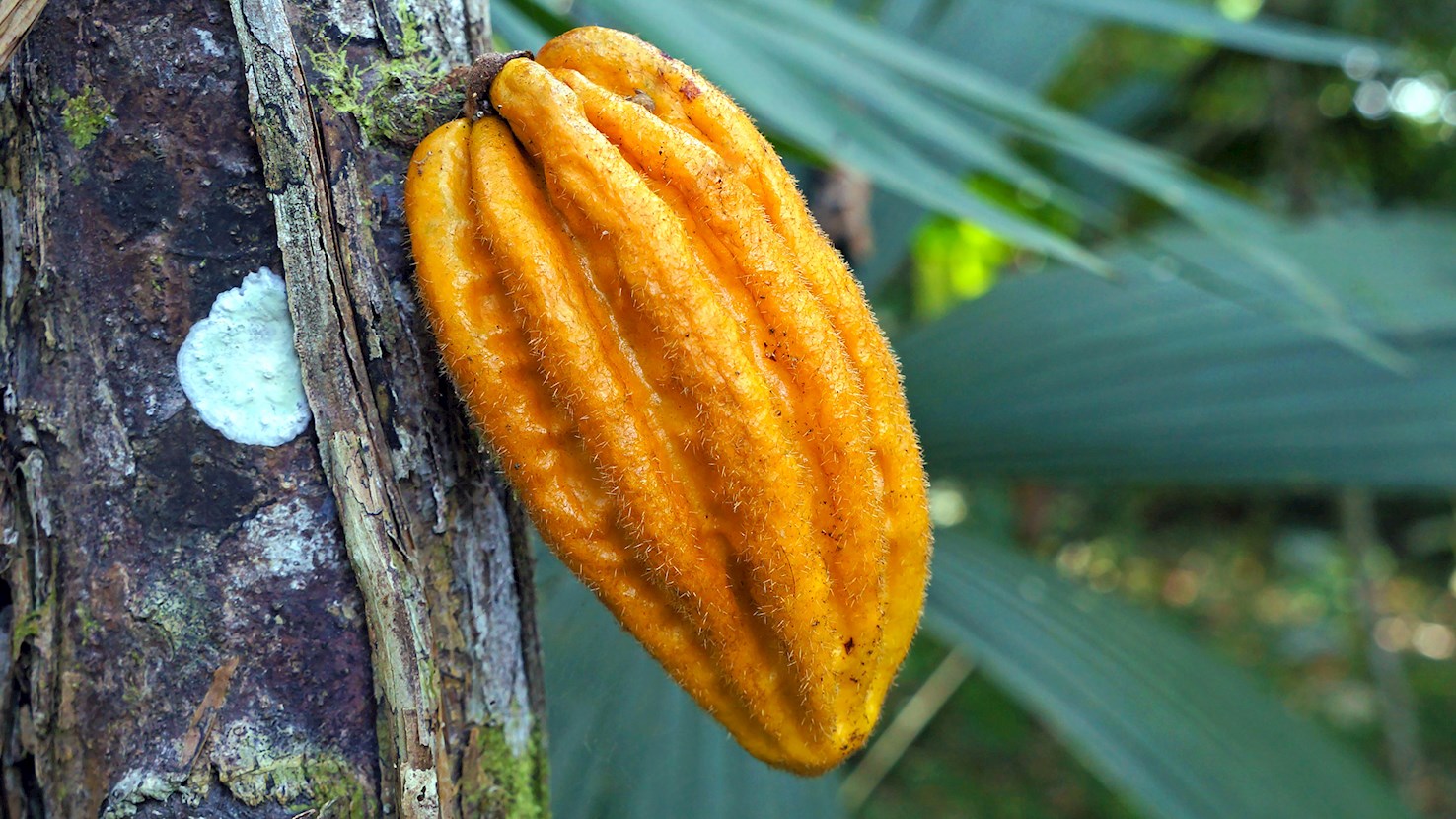
In the 19th century, Ecuador produced more than 30% of the world’s cacao, and almost all of the trees were of the Nacional variety, but in the 1920s, two serious diseases infected the trees, almost destroying the production in the process, leading to the substitution of many Nacional trees with other disease-resistant hybrids. Nacional cacao is delicate and exceptionally flavorful, similar to the legendary Criollo cacao. Nowadays, it is mainly produced in the remote area of Napo Province, and this isolation is the reason why the last stands of Nacional cacao are still protected in the Quichua tribe villages, located deep in the heart of the Amazonian forest.
Forastero cocoa is the most widely cultivated and commercially important cacao variety in the world, recognized for its robust, high-yielding trees, thick-walled pods, and purple-toned beans. The pods are typically rounded or melon-shaped, often yellow or green when ripe, and relatively smooth compared to other varieties. Inside, the beans are flat and large, with a bold, classic cocoa taste but little of the floral or fruity complexity found in finer varieties. Known for its strong, earthy flavor, Forastero cocoa forms the backbone of most mass-produced chocolate, offering notes of wood, nuts, and mild bitterness, with moderate acidity and low sweetness. While it lacks the aromatic finesse of Criollo or the complexity of Trinitario, it compensates with resilience, consistency, and productivity. Native to the upper Amazon basin, Forastero is now predominantly grown in West Africa (especially Côte d’Ivoire and Ghana), Brazil, and Southeast Asia. It represents the bulk of global cocoa production and is often used as a base cacao—blended with fine-flavor varieties to create balanced chocolates. One of the best-known sub-varieties of Forastero is Amelonado, originally from Brazil, now widely grown in Ghana, Côte d’Ivoire, and Nigeria. Despite its humble reputation, Forastero is indispensable to the global chocolate industry, valued for its hardiness, high fat content, and processing efficiency.
THIS FOOD IS RARE. Produced in the area of Dibulla municipality in the Colombian Guajira department, porcelana cocoa plants bear yellow-green pods with long leaves and thin white seeds with a unique, strong aroma. The plants are an important source of energy for the indigenous population as its ground grains were traditionally consumed by the elderly people in a sacred drink. The earliest records of cocoa cultivation date back to 1895, but wild cocoa has been found in the highlands of these mountains way before that year. Recently, porcelana cocoa has been replaced by hybrid varieties and intercropped with timber, fruit trees, and leguminous plants, which is the reason why the hybrids are sold at unusually low prices.
Criollo cacao is the rarest and most prized variety of cacao in the world, known for its delicate flavor, low bitterness, and aromatic complexity.The pods are typically elongated and deeply ridged, ranging in color from pale yellow to crimson, and contain white to pale-pink beans, a signature trait that reflects their low polyphenol (bitterness) content. The flavor of Criollo chocolate is refined and nuanced, often described as smooth, mildly acidic, and layered with floral, citrus, caramel, and dried fruit undertones. Unlike the bolder Forastero or hybrid Trinitario, Criollo offers an almost wine-like tasting experience, with minimal astringency and a long, elegant finish. Often referred to as the "noble cacao," Criollo beans are highly sought after by artisan chocolatiers for producing fine, elegant chocolate with subtle notes of fruit, nuts, flowers, and spice. Criollo cacao is native to Mesoamerica, particularly regions of present-day Mexico, Guatemala, and Venezuela, where it was revered by ancient civilizations like the Maya and Aztecs. Today, it represents less than 1% of global cacao production, as the trees are notoriously fragile, low-yielding, and susceptible to disease. Despite this, Criollo's exceptional quality and deep cultural roots continue to make it the gold standard in fine chocolate, reserved for the most discerning palates and premium single-origin bars.
Porcelana cacao is an exceptionally rare and refined variety of Criollo cacao, celebrated for its snow-white beans, smooth, low-bitterness profile, and extraordinary flavor complexity. Often considered the "Rolls-Royce of cacao," Porcelana gets its name from the porcelain-like color of its unfermented beans, which are naturally white due to their low levels of bitter polyphenols. The pods are typically elongated, deeply ridged, and pale green to yellow when ripe, thinner-skinned than most, and contain fewer but highly aromatic seeds. Chocolate made from Porcelana is renowned for its delicate, creamy texture and elegant flavor, often described as floral, nutty, and subtly fruity, with notes of honey, toasted almonds, fresh cream, and light citrus, all without the astringency found in more common cacao types. Its ultra-smooth melt and lingering finish make it a favorite among high-end bean-to-bar chocolate makers, often featured in limited-edition or ultra-premium releases. Porcelana cacao is native to the Andean foothills of Venezuela, particularly the Sur del Lago region near Lake Maracaibo. It descends from ancient Criollo varieties once cultivated by the pre-Columbian peoples and later revered by Spanish colonists. Due to its fragility, low yields, and susceptibility to disease, Porcelana represents only a tiny fraction of global cacao production, making it one of the most exclusive and expensive cocoas in the world—a true symbol of cacao heritage and luxury.
Marañón cocoa is an exceptionally rare and prized cacao variety that grows in the remote Marañón Canyon of northern Peru, one of the most isolated and ecologically rich areas of the Andes. It has a small to medium-sized pod, typically rugged and ridged, with hues ranging from yellow to orange as it ripens. On the outside, it may look similar to other cacao pods, but the real surprise lies within. When opened, the pod reveals pulp-covered beans, just like any cacao. But in the case of Marañón cacao, a significant number—sometimes over 40%—are naturally white beans. This is extremely rare. Most cacao beans are purple or deep brown, colored by anthocyanins (natural bitter compounds). The white beans found in Marañón cacao lack these bitter pigments, resulting in a milder, creamier, and more aromatic flavor even before processing. The pulp surrounding the beans is also notable—it’s typically fragrant, sweet-tart, and juicy, with tasting notes reminiscent of lychee, mango, and citrus. This pulp not only contributes to the fermentation process, adding complexity to the beans, but also hints at the inherent fruit-forward character of the chocolate it will become. Revered by chocolate makers around the world, it is best known as the source of the Pure Nacional cacao, a legendary variety once thought extinct and now considered one of the rarest and most genetically unique cocoas on Earth. What makes Marañón cocoa truly extraordinary is its genetic composition. Lab testing confirmed that the Pure Nacional strain found here is a genetic relic, with characteristics of both Criollo and Nacional cacao, making it a one-of-a-kind heirloom cacao. The flavor of Marañón cocoa is incredibly complex and balanced. It’s celebrated for its low bitterness, rich floral and fruity notes, hints of nutty sweetness, and a long, elegant finish. Tasting notes often include orange blossom, toasted nuts, tropical fruits, and mild spice, layered with a buttery texture and gentle acidity. Cultivation and harvesting are done by local smallholder farmers using traditional methods. The steep terrain and isolation of the canyon mean that beans are handpicked, fermented, and sun-dried with exceptional care. This remote origin, along with its limited production and genetic rarity, makes Marañón cocoa one of the most exclusive and sought-after cacaos in the world. Used by top-tier bean-to-bar chocolate makers, Marañón cocoa has earned its place as a symbol of cacao heritage, biodiversity, and rediscovery—a once-lost treasure now reclaimed by both science and tradition, celebrated in some of the finest chocolate bars ever produced.
Beniano cocoa, also known as cacao silvestre, is a rare, fine-flavor cacao variety native to the wild forests along the Beni River in Bolivia. The Beniano pod is typically small and rounded, much smaller than conventional cacao pods like Forastero or Trinitario. Its shape and size make it easier to handle in the wild, and it matures into a yellow-orange color when ripe. The surface is smoother and less ridged than most commercial varieties, reflecting its unique genetic identity and ancestral lineage. Beniano cocoa beans are small and round, with a low bitterness and a high fat content, making them ideal for premium chocolate production. The flavor is remarkably delicate and floral, with notes of honey, dried fruit, jasmine, and mild spice, often with a subtle citrus brightness. The taste is refined and well-balanced, without the aggressive bitterness found in bulk cacao varieties. Revered for its delicate aroma and complex taste profile, Beniano is part of the wild Amazonian cacao family, often considered a genetic treasure in the world of chocolate. It is typically classified under Bolivian wild cacao or referred to as a sub-variety of Criollo, though its genetics remain unique and highly prized. Unlike cultivated cacao, Beniano grows naturally in the floodplains and rainforests of the Bolivian Amazon. The trees are not planted but rather harvested from the wild, often requiring travel by canoe or on foot through dense jungle. This foraging-based harvesting process not only preserves the natural ecosystem but also connects the cocoa to centuries-old traditions of the indigenous and rural communities who have worked with these trees for generations. Due to its remote origin, limited harvests, and intensive collection process, Beniano cocoa is considered rare and exclusive, used primarily by artisan and bean-to-bar chocolate makers seeking exceptional raw material. Its wild nature and nuanced flavor place it among the world’s most coveted heirloom cocoas, celebrated not only for its taste but for its ecological and cultural significance.
Amelonado cocoa is a historically significant variety of Forastero cacao, known for its reliability, productivity, and bold chocolate flavor. The name "Amelonado" comes from the shape of its melon-like pods—smooth, rounded, and golden-yellow when ripe. Inside, it holds dark purple beans, a unique trait that points to its rich tannins and pronounced bitterness before fermentation. The beans are also quite fatty, making them excellent for chocolate-making, and they release complex aromas of coffee, wood, and warm spices like cinnamon and vanilla when roasted, offering a profile that is bold, earthy, and deeply satisfying. Once the foundation of global chocolate production, this variety is now increasingly rare, as high-yield hybrid trees take its place in many regions. Amelonado is believed to have eastern Amazonian origins, with traces still found in French Guiana, though it once flourished across West Africa, particularly in Ghana and Côte d’Ivoire. There, it became the cornerstone of commercial chocolate production. However, its presence in the region is steadily diminishing, as hybrid cacao trees—valued for their extreme productivity—replace traditional cultivars like Amelonado. Despite its decline, Amelonado remains a vital part of cocoa history. In regions like Bahia, Brazil, it’s still cultivated using traditional cabruca agroforestry systems, where cacao trees are grown under the shade of native forest canopies, preserving both ecological and cultural heritage.
Southern Bahian cabruca cacao is a distinct and ecologically rich variety of cacao grown in Brazil's Bahia region, particularly within the lush expanse of the Atlantic Forest (Mata Atlântica). It is typically Amelonado in variety—a type of Forastero cacao with a rounded, melon-like shape and a smooth, ridged surface. The pods are golden-yellow or orange when ripe and moderately sized. Inside the pod, the beans are coated in a sweet, juicy white pulp that carries mild notes of tropical fruit and citrus. This pulp plays a critical role in the fermentation process, helping to initiate the transformation of bitter raw beans into flavor-rich cocoa. The beans are typically medium-sized and plump, with a thick husk, a high cotyledon (nib) to shell ratio, and a deep purple and reddish hue. What sets this cacao apart is not only its flavor potential but also the traditional agroforestry method used to cultivate it—called "cabruca". In this system, cacao trees are grown under the natural forest canopy, allowing for the preservation of native biodiversity and the sustainable coexistence of agriculture and nature. The primary variety cultivated in this region is Parazinho, which is known for its fine flavor and ideal fermentation properties. Beans are fermented, sun-dried, and roasted, producing cacao with deep, complex notes—sought after by artisanal chocolate makers. However, the cabruca system is more than a growing method—it's a cultural heritage. Passed down through generations, it sustains both forest ecosystems and rural communities. Recognized by the Slow Food Foundation as a Presidia product, Southern Bahian cabruca cacao represents a harmony between tradition, sustainability, and exceptional taste.
TasteAtlas food rankings are based on the ratings of the TasteAtlas audience, with a series of mechanisms that recognize real users and that ignore bot,
nationalist or local patriotic ratings, and give additional value to the ratings of users that the system recognizes as knowledgeable.
For the “Top 9 South American Cocoa Beans” list until August 05, 2026, 188 ratings were recorded, of which 43 were recognized by the system as legitimate.
TasteAtlas Rankings should not be seen as the final global conclusion about food. Their purpose is to promote excellent local foods,
instill pride in traditional dishes, and arouse curiosity about dishes you haven’t tried.