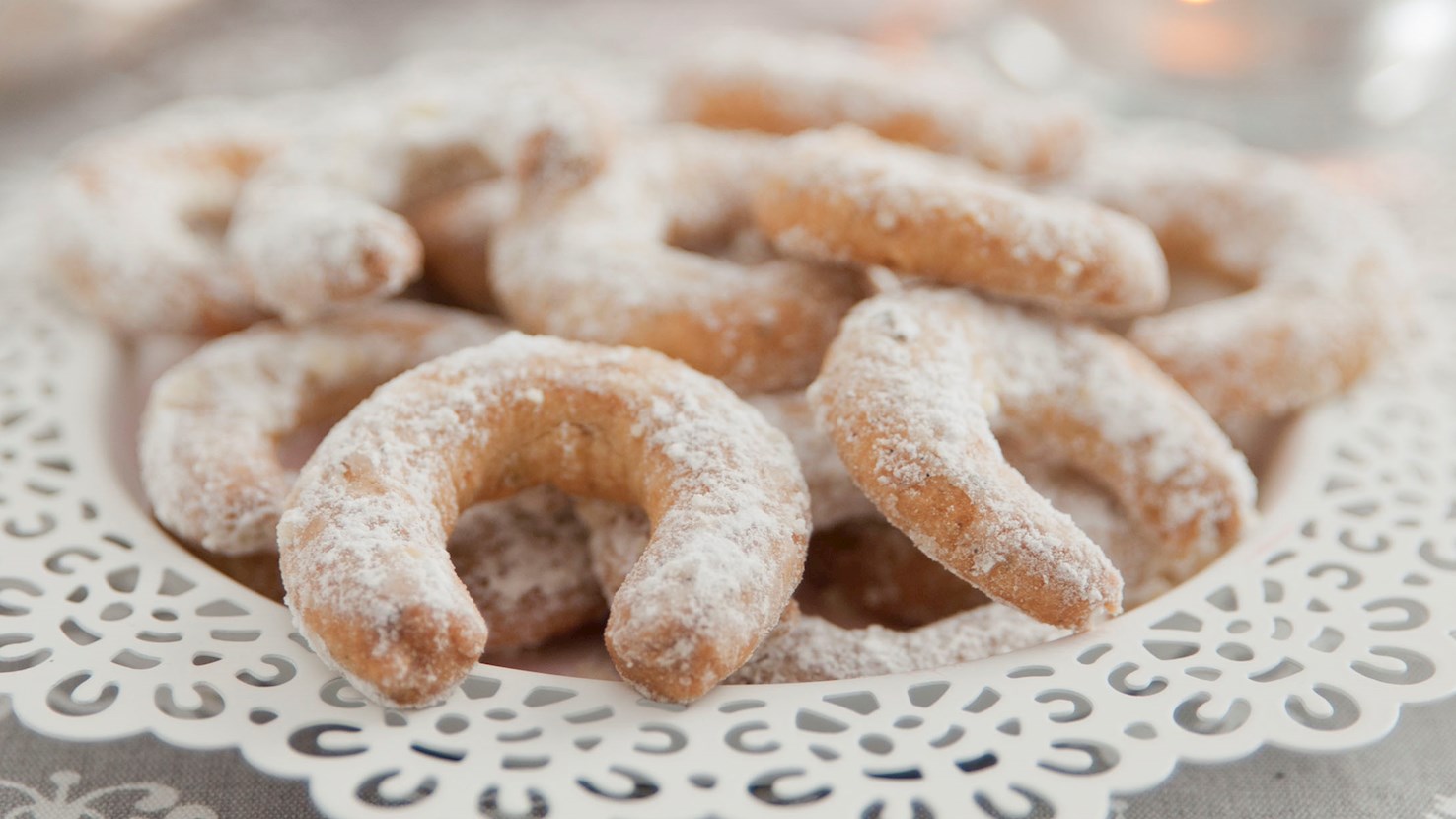
Commonly found throughout Austria, Hungary, and Germany, vanillekipferl are traditional, sweet, crescent-shaped cookies consisting of flour, sugar, butter, and vanilla. The cookies often contain ground nuts such as hazelnuts, almonds, or walnuts. According to a popular theory, the cookies were invented in the days of the Austro-Hungarian Empire. When the empire's army defeated the Turkish army at Vienna in 1683, the city's bakers celebrated the victory by shaping the kipferls into crescents - mimicking the characteristical shape found on the Turkish flag. Today, vanillekipferl are especially popular around Christmastime, when they are dusted with powdered sugar or dipped in chocolate.
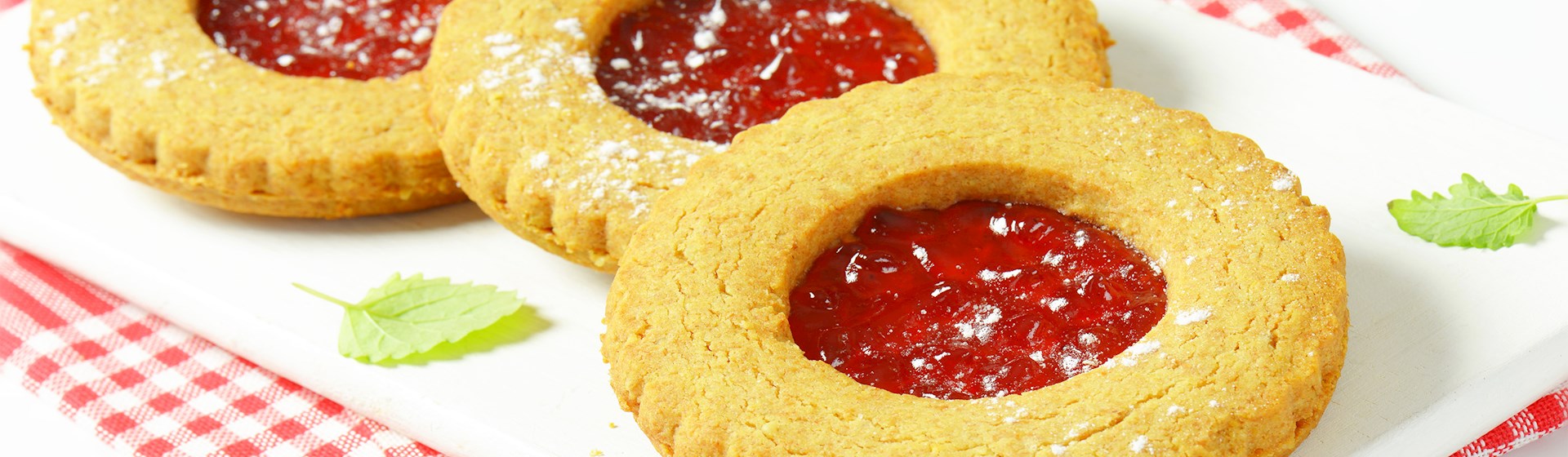
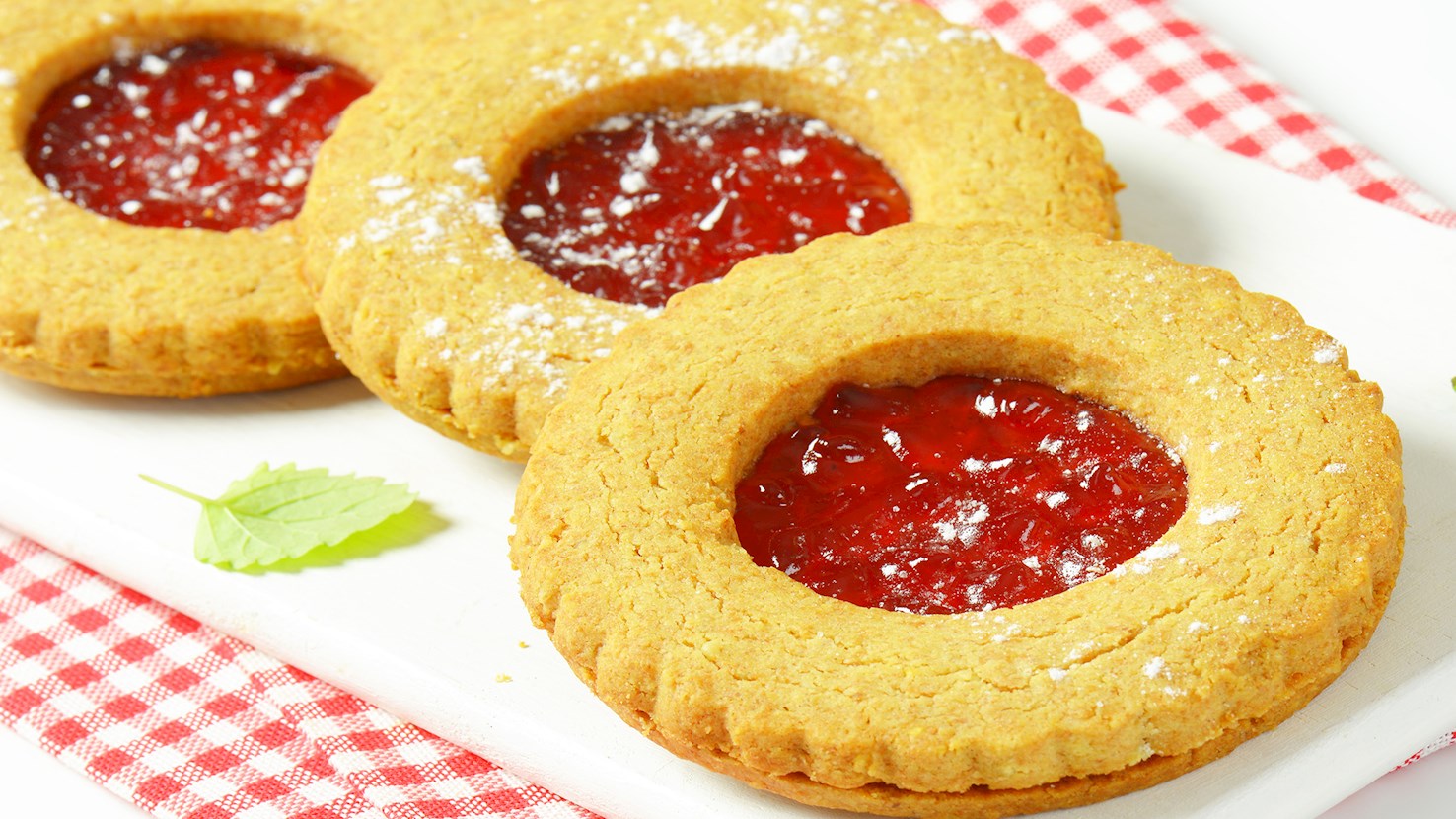
Linzer Augen, also known as a mini version of the Linzer torte, are made by gluing together two pieces of already baked shortbread cookies with redcurrant jam sandwiched in between. The shape of the cookies can vary, but they are typically circular with signature cutout holes on the front, resembling eyes or faces. These traditional cookies are often baked during the festive Christmas season, and it is recommended to sprinkle them with powdered sugar before consumption. They are also quite similar to the Italian occhio di bue cookies.
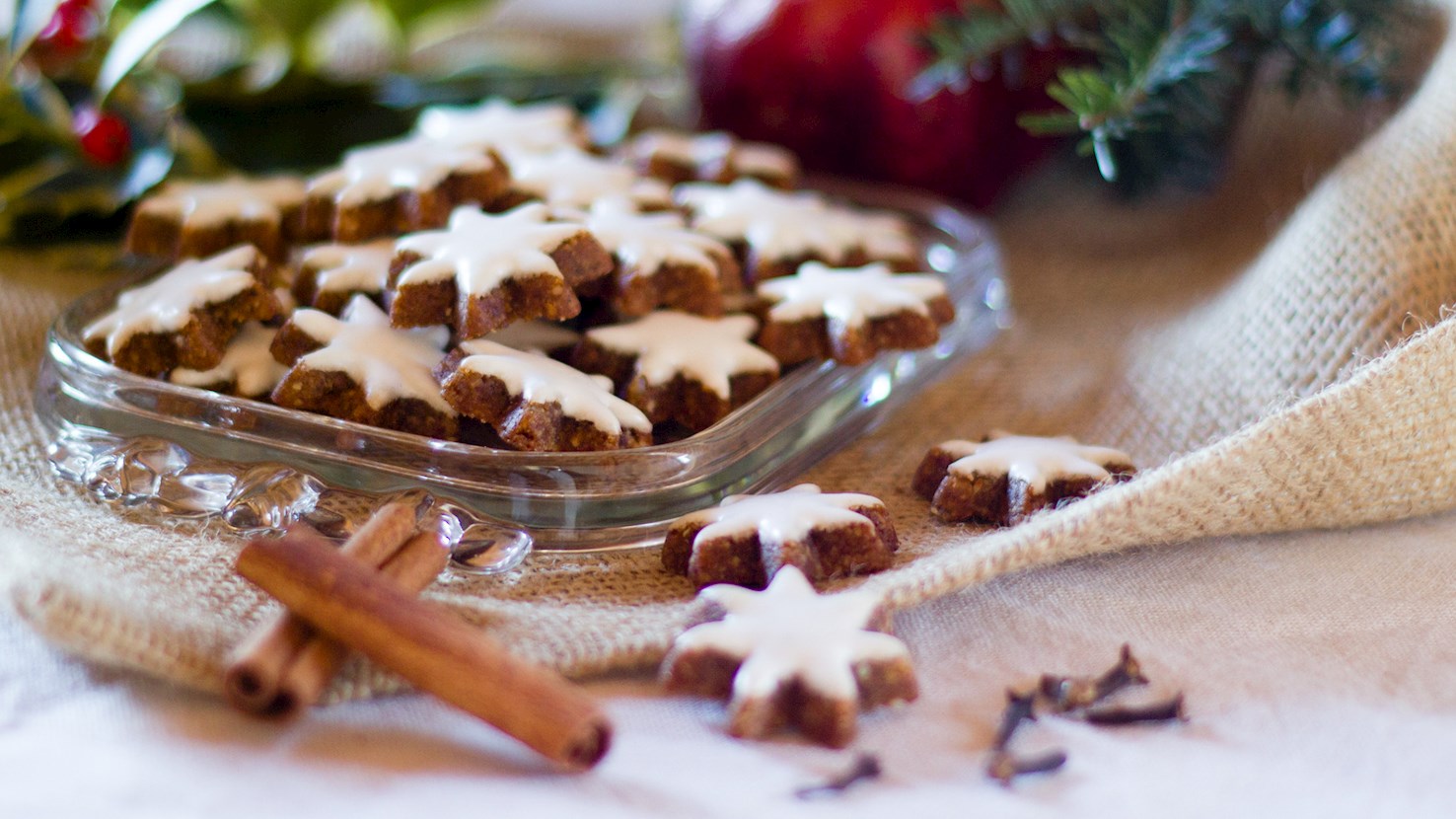
Zimtsterne are crispy star-shaped German and Austrian cookies. They are made with a combination of whipped egg whites that are mixed with sugar, cinnamon, ground nuts—traditionally almonds with the occasional addition of hazelnuts—and vanilla sugar. The dough is rolled and cut into star-shaped cookies. After baking, each cookie is coated with a layer of white frosting that is made from a combination of egg whites and sugar. The name of these cookies translates as cinnamon stars, due to the heavy use of the aromatic spice. Apart from Germany, Zimtsterne are also found in other German-speaking countries, and they are a staple treat during Advent and Christmas. It is not known when and where they originated, but their first written mention dates back to 1538. At the time, cinnamon was a rare and expensive ingredient, and it took approximately two hundred years for these cookies to become an integral recipe in various German cookbooks.
Ischler Törtchen are elegant Austrian confections that originated in the famous spa town of Bad Ischl. These petite pastries are essentially sandwich cookies composed of two tender, nutty shortbread rounds. They are filled with tart apricot preserves—sometimes enriched with buttercream—and finished with a glossy glaze of dark chocolate. The pastry emerged in the late 19th century, during the era when Bad Ischl served as the summer residence and social hub for the Austro-Hungarian imperial court and aristocracy. Local confectioners developed these refined "salon sweets" to accompany coffee for their high-society patrons. The treat quickly gained a reputation beyond the spa town, becoming a classic standard in pâtisseries throughout the former empire. The cookies are made with a rich dough made from flour, butter, sugar, egg yolks, and finely ground almonds or hazelnuts. This mixture is chilled, rolled out, cut into small circles, and baked gently to keep them pale and crumbly rather than crisp or browned. Once cooled, the cookies are paired and cemented together with a layer of smooth apricot jam. The final step involves dipping the top half into tempered dark chocolate, creating a crisp shell that seals the pastry and provides a visual and textural contrast to the soft interior. Recipes can vary in the choice of nuts (hazelnuts versus almonds) and the composition of the filling. Some versions rely solely on jam for a sharper fruit flavor, while others include a buttercream ring for added richness. The chocolate coating is traditionally dark/semisweet, though milk chocolate variations are sometimes found. Ischler Törtchen are served at room temperature and are a staple of the Austrian coffeehouse tradition. They are typically enjoyed as an afternoon treat alongside espresso, black coffee, or tea, which helps cleanse the palate of the rich nut and chocolate flavors. They also pair well with light dessert wines or dry sparkling wines.
TasteAtlas food rankings are based on the ratings of the TasteAtlas audience, with a series of mechanisms that recognize real users and that ignore bot,
nationalist or local patriotic ratings, and give additional value to the ratings of users that the system recognizes as knowledgeable.
TasteAtlas Rankings should not be seen as the final global conclusion about food. Their purpose is to promote excellent local foods,
instill pride in traditional dishes, and arouse curiosity about dishes you haven’t tried.




What People Say