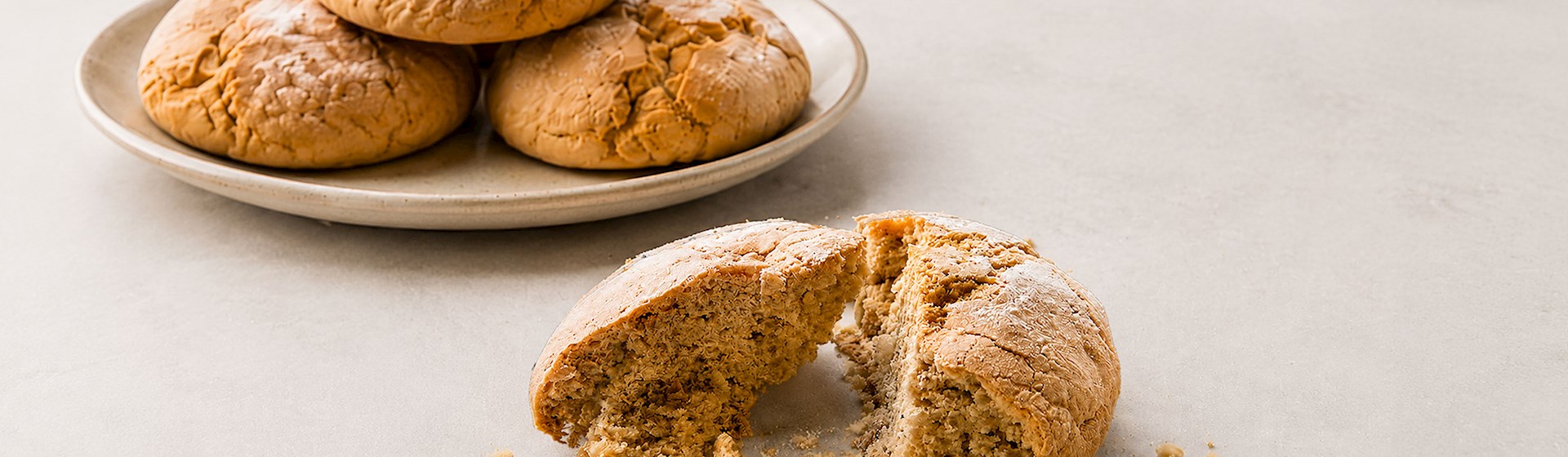
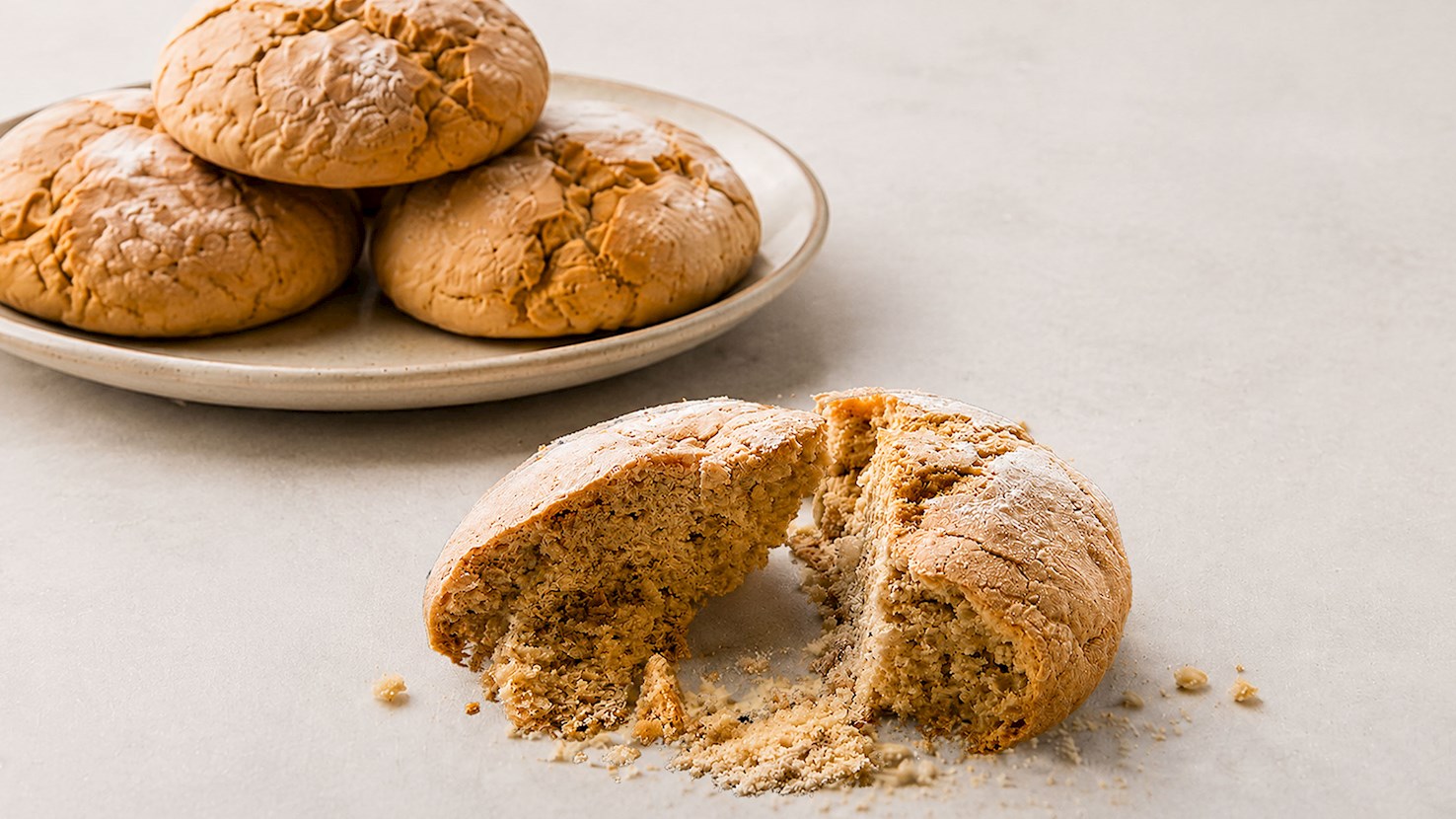
Conconetes are traditional cookies originating from Dominica. These rustic cookies are usually made with a combination of grated coconut, flour, sugar, baking powder, cinnamon water, ginger, and salt. The cinnamon water is made by boiling cinnamon sticks in water. The ingredients are mixed together into a homogenous mass, and scoops of the mixture are then placed on cookie sheets and baked in the oven until golden brown and crunchy. They can easily be found in most colmados (corner stores) in the country. It's recommended to serve them with fruit shakes, coffee, or cocoa on the side.
Torticas de Morón are traditional Cuban shortbread cookies originating from the city of Morón in the Ciego de Ávila province. These crumbly cookies are usually made with a combination of flour, sugar, lard or shortening, and lime zest. Once prepared, the dough is rolled out and cut into circular shapes. The cookies are baked until golden, then cooled and served with ice cream or café cubano as an afternoon treat.
Konparèt is a dense, spiced biscuit originating from Jérémie, the capital of the Grand'Anse department in Haiti. It has a heavy, compact texture and an oval or round shape, often described as a hybrid between a sweet bread and a biscuit. The item emerged in the early 20th century, specifically around 1914, following a commercial exchange between Jérémie and Kingston, Jamaica. Josephine Charmant, a local baker, is credited with adapting a Jamaican ginger-based recipe to the Haitian palate using regional ingredients. The name is derived from the Haitian Creole phrase "lè ou santi l, ou parèt," which translates to "when you smell it, you appear," referencing the aromatic presence of the bakery during production. Preparation involves a mixture of wheat flour, shredded coconut, and a concentrated syrup made from unrefined cane sugar or molasses. The dough is flavored with a specific profile of fresh ginger juice, cinnamon, nutmeg, and almond extract, often supplemented by lime zest or bergamot. Unlike standard cakes, the dough is kneaded into a stiff, sticky consistency without the use of eggs or water in its earliest iterations, though modern adaptations may include them for a softer crumb. The biscuits are baked in wood-fired brick ovens on large metal trays until they achieve a deep golden color and a hard, protective exterior. While widely available in Port-au-Prince, the versions produced in Jérémie are specifically sought after for their adherence to the original ratio of ginger to coconut. It is eaten as a hearty snack or a breakfast staple and is commonly broken into pieces rather than sliced. The item is most frequently paired with Haitian coffee, which provides a bitter contrast to the spiced molasses and ginger. It is also commonly accompanied by milk or soy milk, which softens the hard texture of the biscuit during consumption.
TasteAtlas food rankings are based on the ratings of the TasteAtlas audience, with a series of mechanisms that recognize real users and that ignore bot,
nationalist or local patriotic ratings, and give additional value to the ratings of users that the system recognizes as knowledgeable.
For the “Top 3 Caribbean Cookies” list until June 15, 2026, 17 ratings were recorded, of which 11 were recognized by the system as legitimate.
TasteAtlas Rankings should not be seen as the final global conclusion about food. Their purpose is to promote excellent local foods,
instill pride in traditional dishes, and arouse curiosity about dishes you haven’t tried.