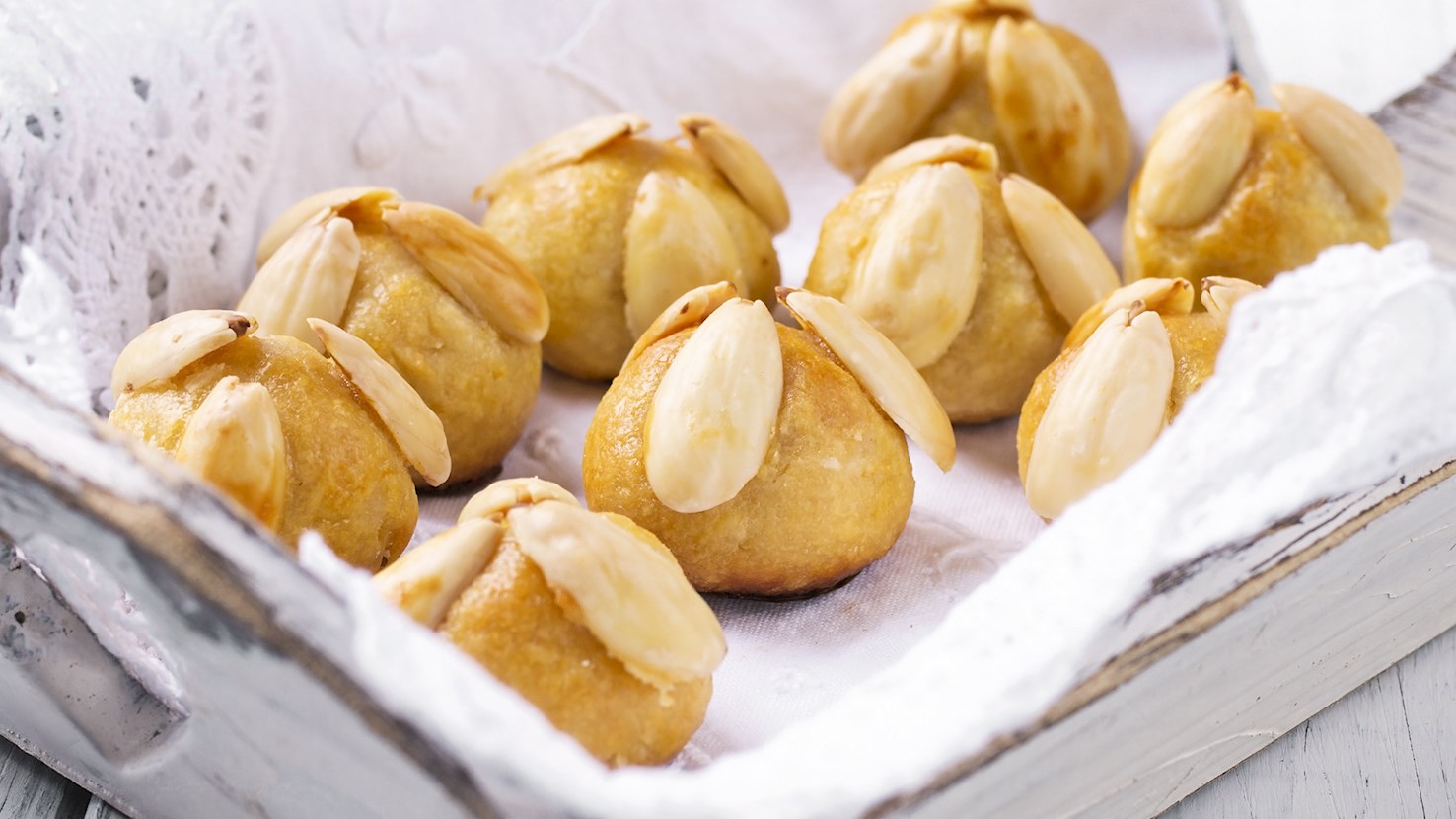
Bethmännchen have been a Christmas staple in Germany for over 200 years. Hailing from Frankfurt, these cookies are made from marzipan dough that is infused with rose water. Before they are glazed and baked, each cookie is decorated with three almond halves. Bethmännchen are closely associated with the once influential Bethmann family. The legend says that the family’s pastry chef, who was inspired by a similar dessert known as Frankfurter Brenten, invented the cookies in 1838 and decorated them to honor Bethmann's four sons. Although disputed, it is said that one of the almonds was subsequently removed after one of the sons passed away. The cookies are now popular across the country, but Bethmännchen are still strongly linked with Frankfurt, and they are usually prepared during the festive Christmas season.
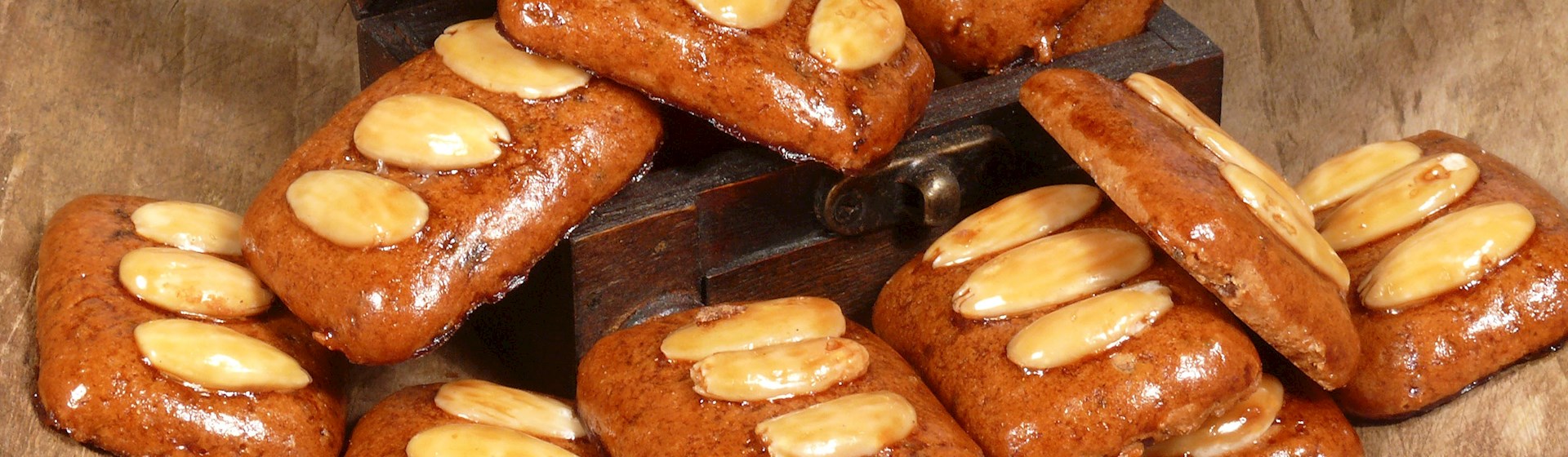
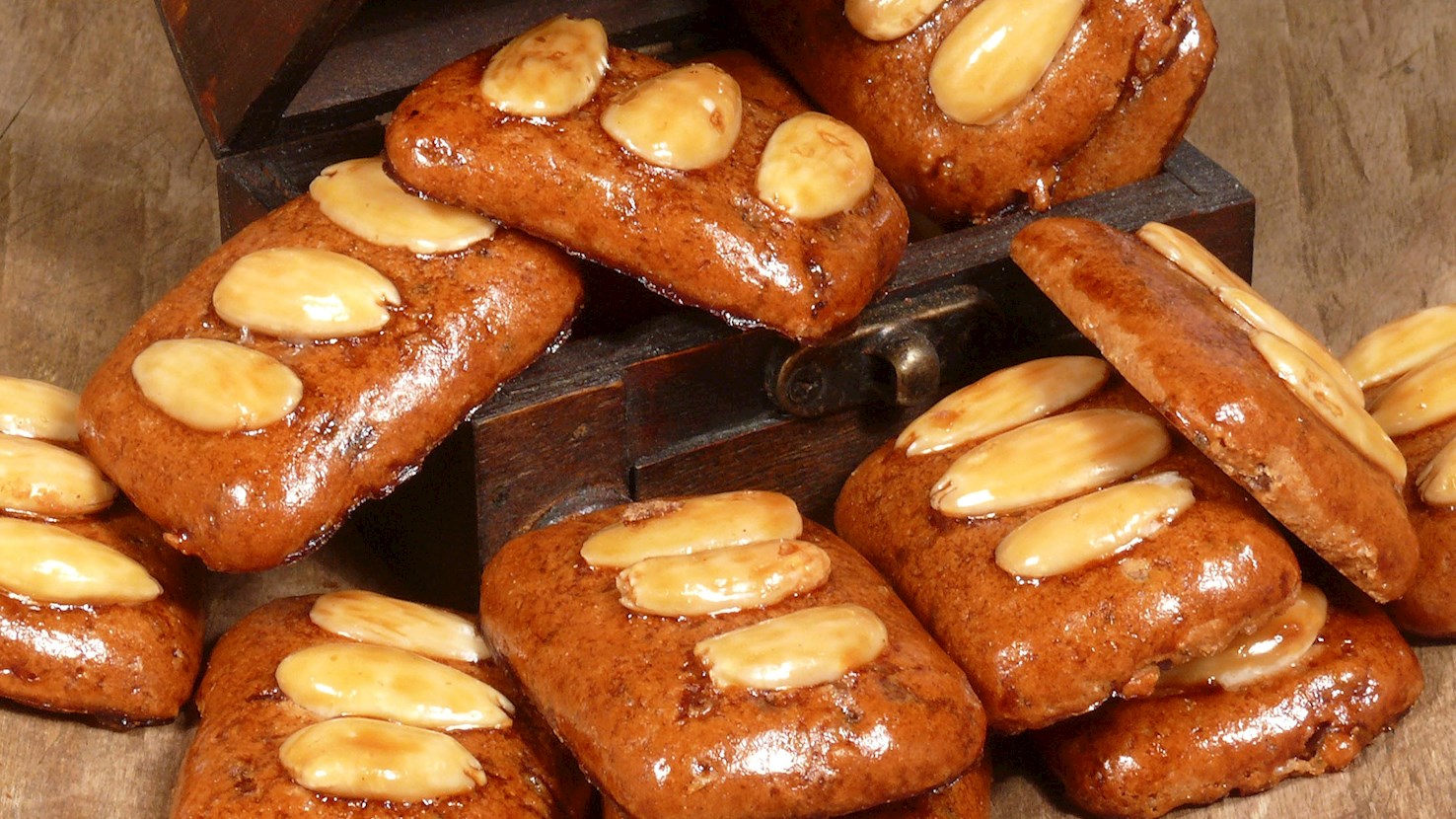
This is a special variety of brown, firm gingerbread that has been baked in Aachen since the 1820s. The term printe refers to the use of carved wooden molds into which the dough is pressed during production. Having been regionally protected, the Aachener Printen may only be produced in Aachen and a few neighboring villages. The dough is made from flour, sugar, and exotic spices such as cinnamon, aniseed, or ginger, which impart a unique flavor to the gingerbread. Freshly baked Printen are always firm, but because many people prefer their pastries tender, they are also offered in a soft version. Experts swear that Printen taste the best if they are left for a few days to develop their full flavor.
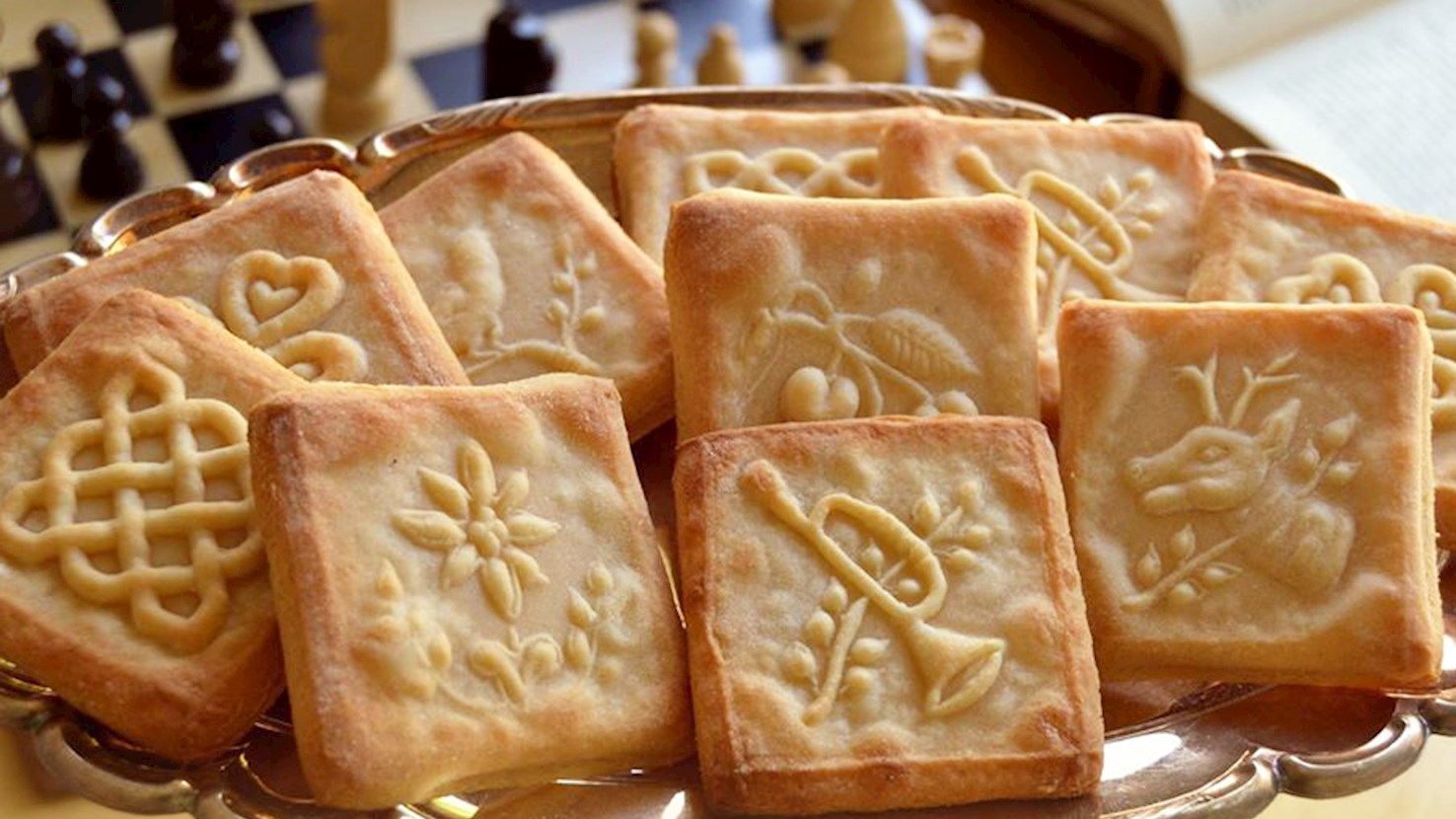
This traditional Christmas cookie originated in Frankfurt, and it has a long history that dates back to the Middle Ages. Although the recipes may vary, these cookies are usually prepared with a soft dough that incorporates marzipan, orange blossom or rose water, sugar or honey, and flour. Traditionally, the cakes are formed into squares, and the top is usually imprinted with different patterns or comes decorated with almond halves. Frankfurter Brenten cookies are nowadays mostly available during Christmastime.
Offenbacher pfeffernüsse are spiced cookies from Offenbach am Main, recognized as a historic regional baked good that was widely known beyond the city from the eighteenth century onward. The cookies are small, light-colored, and softly textured with a tender crumb rather than a hard bite. Offenbacher pfeffernüsse gained prominence in Offenbach during the eighteenth century, when the city became closely associated with pfeffernüsse and was repeatedly mentioned in lexicons, trade fair catalogs, diaries, and periodicals in connection with the pastry, and they were regarded for a long time as a representative Hessian specialty. The recipe is attributed to the Offenbach confectioner Philipp Fleischmann in 1757, and the cookies were valued highly enough that the state of Hesse served them at official state receptions until 1980, after which they gradually fell out of public awareness for several decades. The preparation starts with creaming eggs and sugar into a light base to which flour and leavening are added. The spice mixture of pepper, nutmeg, coriander seed, and cinnamon is worked evenly into the dough, and small portions are shaped and baked briefly so the cookies remain pale and soft rather than browned. Common variations involve slight adjustments to the spice balance or sweetness and differences in size, while the defining qualities of light color, soft texture, and restrained spicing remain consistent, and the cookies are distinct within the broader Pfeffernüsse family for their tenderness. Offenbacher Pfeffernüsse are eaten at room temperature and are served in homes, bakeries, and seasonal settings, most often alongside coffee, tea, or mulled wine, and they have been produced again since 2014 after a period of absence from the market.
Haddekuche is a cookie from Frankfurt and the surrounding area, made from a stiff dough designed for durability rather than softness. The cookie has a flat, round shape, usually cut into wedges, an extremely firm and dense texture that softens only when soaked or chewed slowly, and a geometric lattice pattern on the surface that resembles the ribbed design of Frankfurt apple wine glasses. The cake developed in Hesse as part of local baking practices, in which ovens were fired infrequently and durable baked goods were needed for storage, travel, and winter periods. Haddekuche also became closely associated with Frankfurt seasonal baking and gift-giving. Preparation involves creaming margarine with sugar, incorporating eggs and milk, mixing flour with cocoa powder, baking powder, and the full spice blend, combining wet and dry components into a thick batter, shaping it into a flat round, and baking it slowly so the cake sets firmly and evenly without rising excessively and thus dries out. Common variations include small differences in sugar content and changes in thickness or baking time that affect hardness. The cake is eaten at room temperature and is commonly broken into pieces or sliced thin, often softened by dipping into coffee, milk, soup, or apple wine, and it is served in homes and at seasonal gatherings, frequently paired with hot drinks or enjoyed alongside butter, cheese, or cured meats after soaking.
TasteAtlas food rankings are based on the ratings of the TasteAtlas audience, with a series of mechanisms that recognize real users and that ignore bot,
nationalist or local patriotic ratings, and give additional value to the ratings of users that the system recognizes as knowledgeable.
For the “Top 5 Western German Cookies” list until May 15, 2026, 84 ratings were recorded, of which 68 were recognized by the system as legitimate.
TasteAtlas Rankings should not be seen as the final global conclusion about food. Their purpose is to promote excellent local foods,
instill pride in traditional dishes, and arouse curiosity about dishes you haven’t tried.