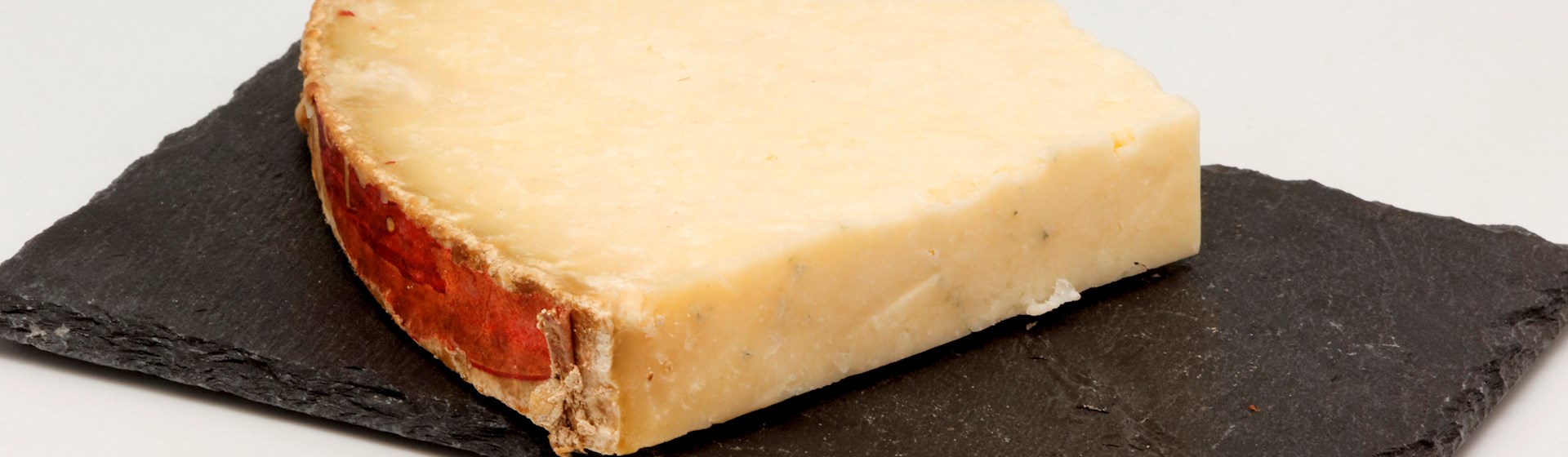
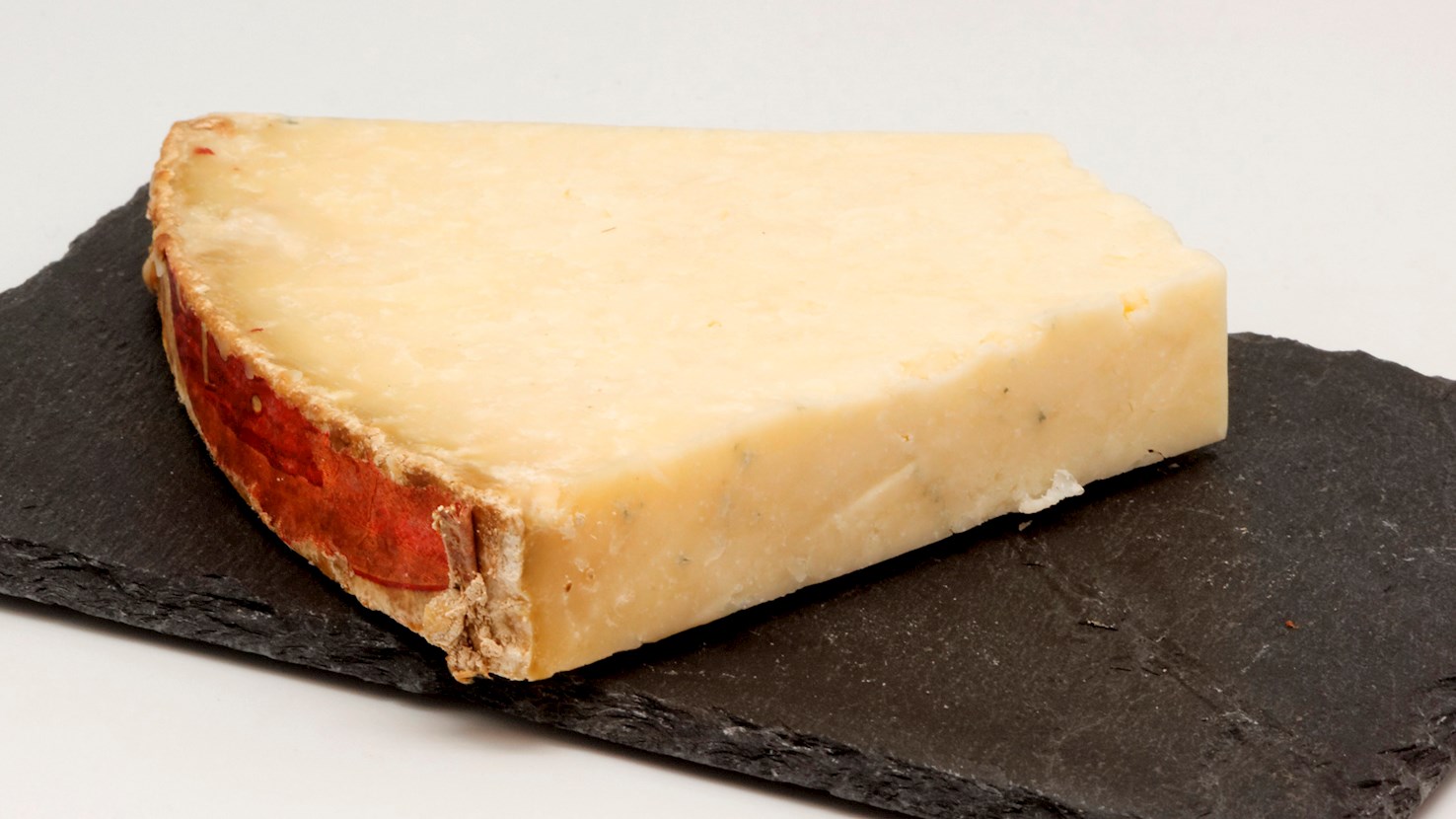
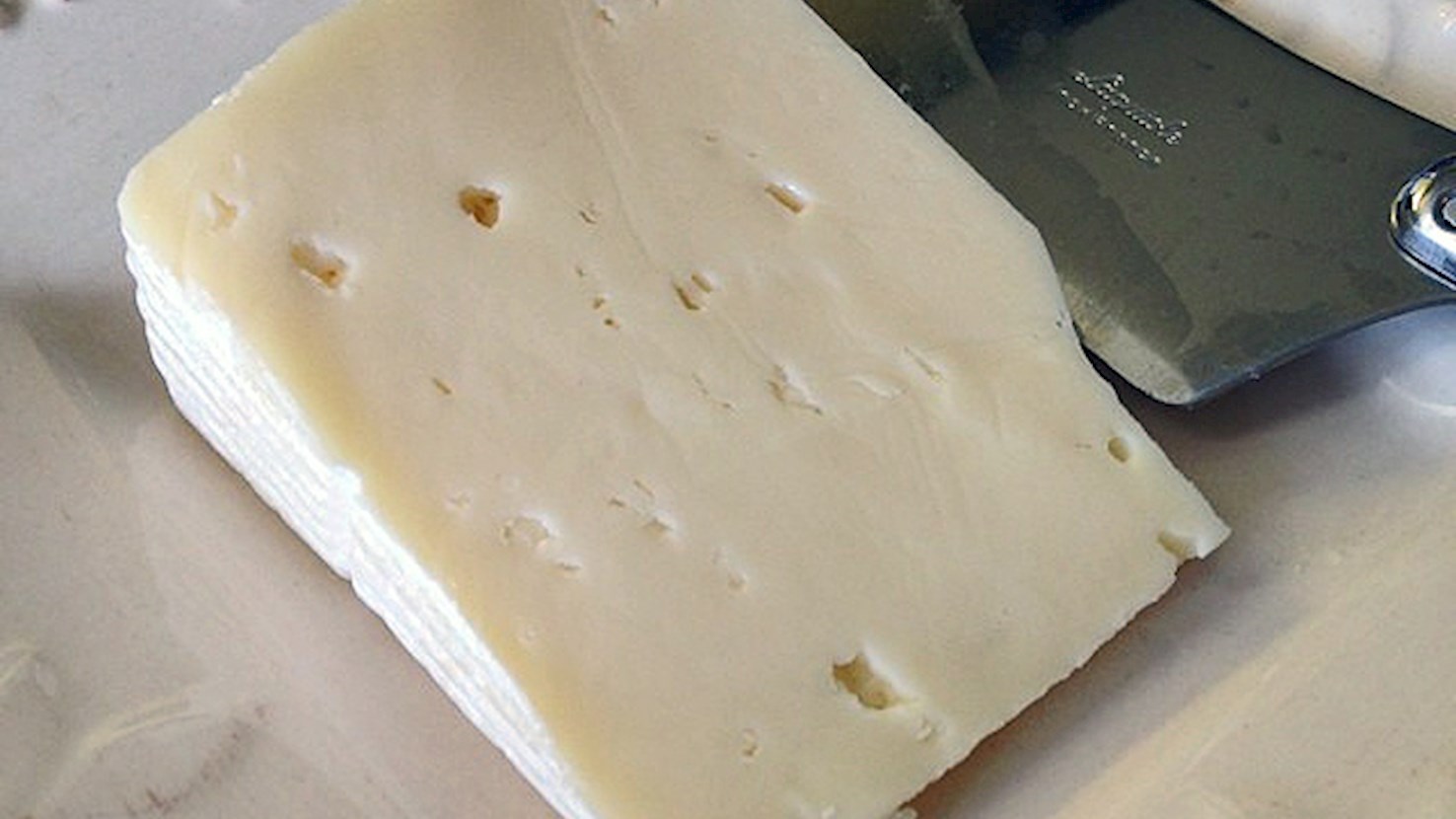
Tomme des Pyrénées is a semi-hard, cow's milk cheese from the Pyrénées region in France that must mature for at least 21 days before consumption. It is wrapped in a distinguishable black wax coating, which acts as a seal to prevent the air from coming in and thus stopping the maturation process. Appreciated for its big, bold flavors, Tomme has a rubbery texture and buttery, salty, earthy taste with slight hints of sourness and undertones of mushrooms, garlic, onions, peanuts and beef bouillon that come forth once the cheese has melted in the mouth. Pair it with wines from the Pyrénées region or strong ales to best complement its big taste.
Laguiole is a semi-soft, aromatic cheese made from raw, whole-cream cow's milk, with a thick light orange rind that turns light brown as it matures. Interestingly, the rind is so important that it is prohibited to sell grated Laguiole, and each piece of the cheese must come with a piece of its rind. It was first made by monks in a local monastery, who then gave the recipe to the mountain farmers. The maturation takes at least four months at a temperature lower than 14 °C. Laguiole possesses a creamy, rich texture on the inside that instantly melts in the mouth, providing a sharp, slightly sour taste. Try it with light red wines or dry white wines for the best pairing combination. The cheese is traditionally used to prepare aligot, a creamy dish of mashed potatoes and cheese.
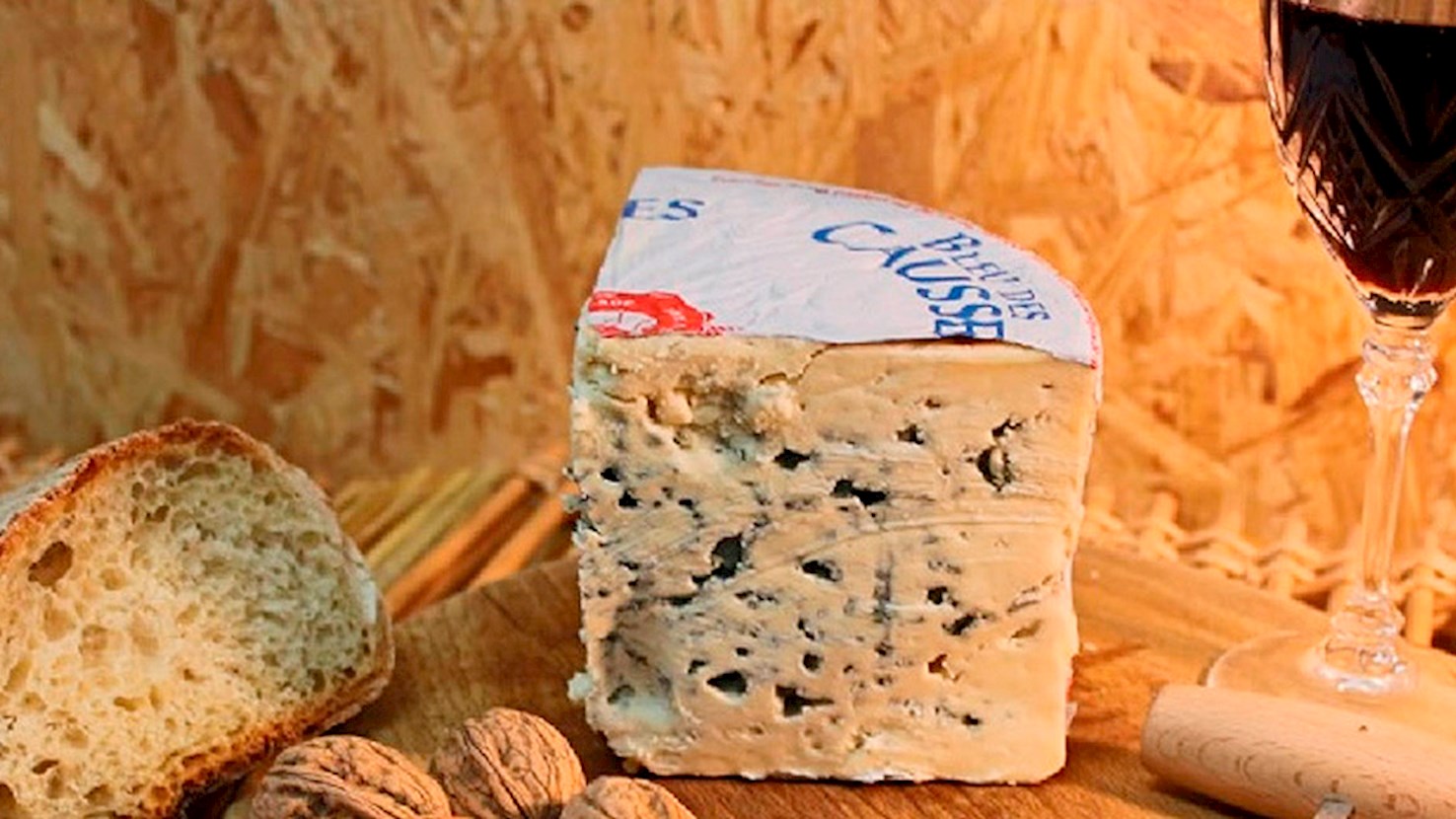
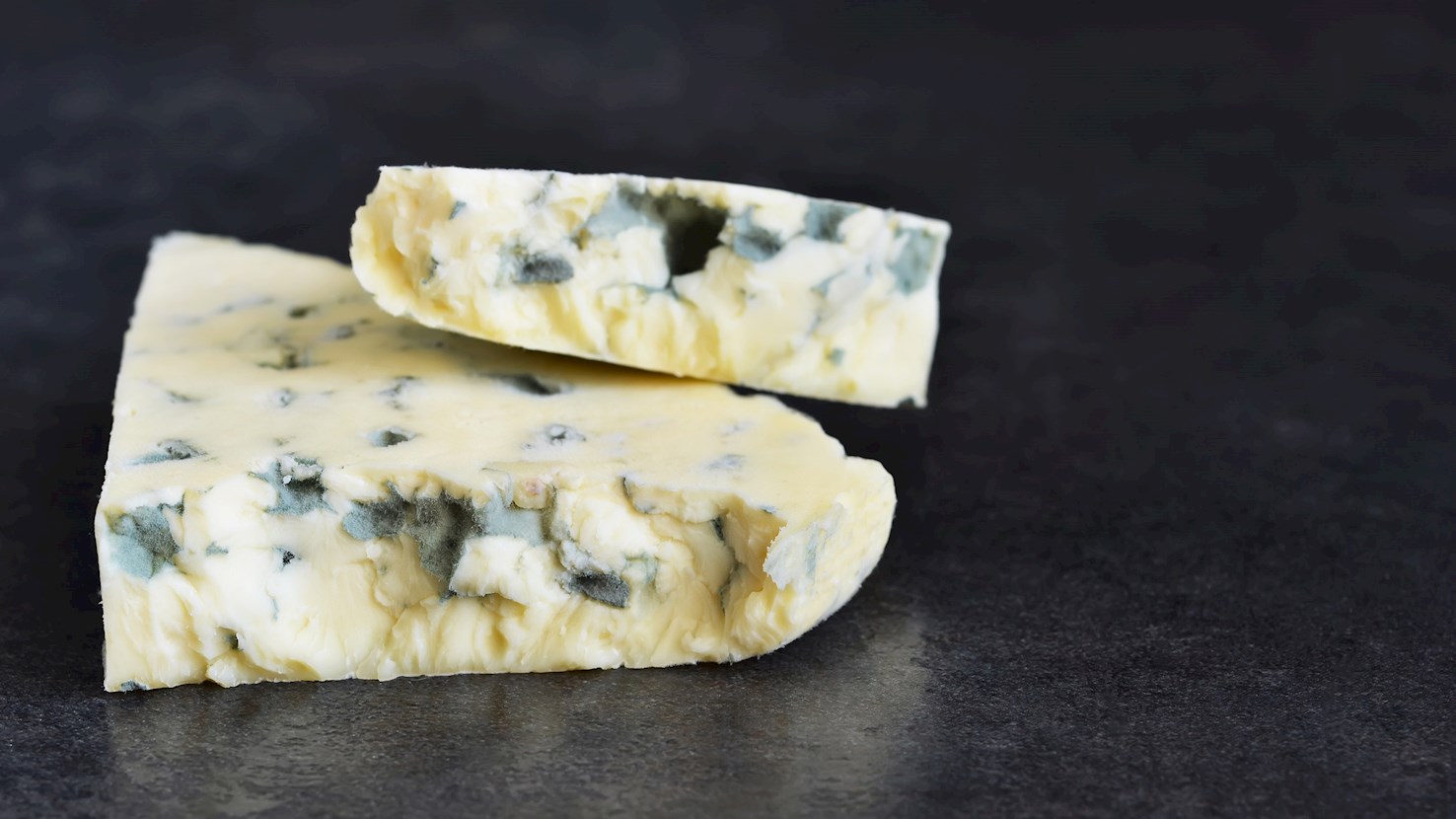
Bleu des Causses is a traditional blue cheese made from unpasteurized cow's milk. The cheese is placed in a cave, which is under the influence of drafts of cold and damp air, providing a unique maturation process that lasts for at least 70 days. Because of the air gusts in the cave, and due to the fact that the cheese is pricked with needles, Penicillium mold forms inside the cheese. Bleu des Causses is neither pressed nor cooked and its flavor is full, intense, salty, and spicy (because of the mold), while the texture is crumbly and creamy. It can be used in sauces, and is best paired with sweet white wines at the end of a meal.
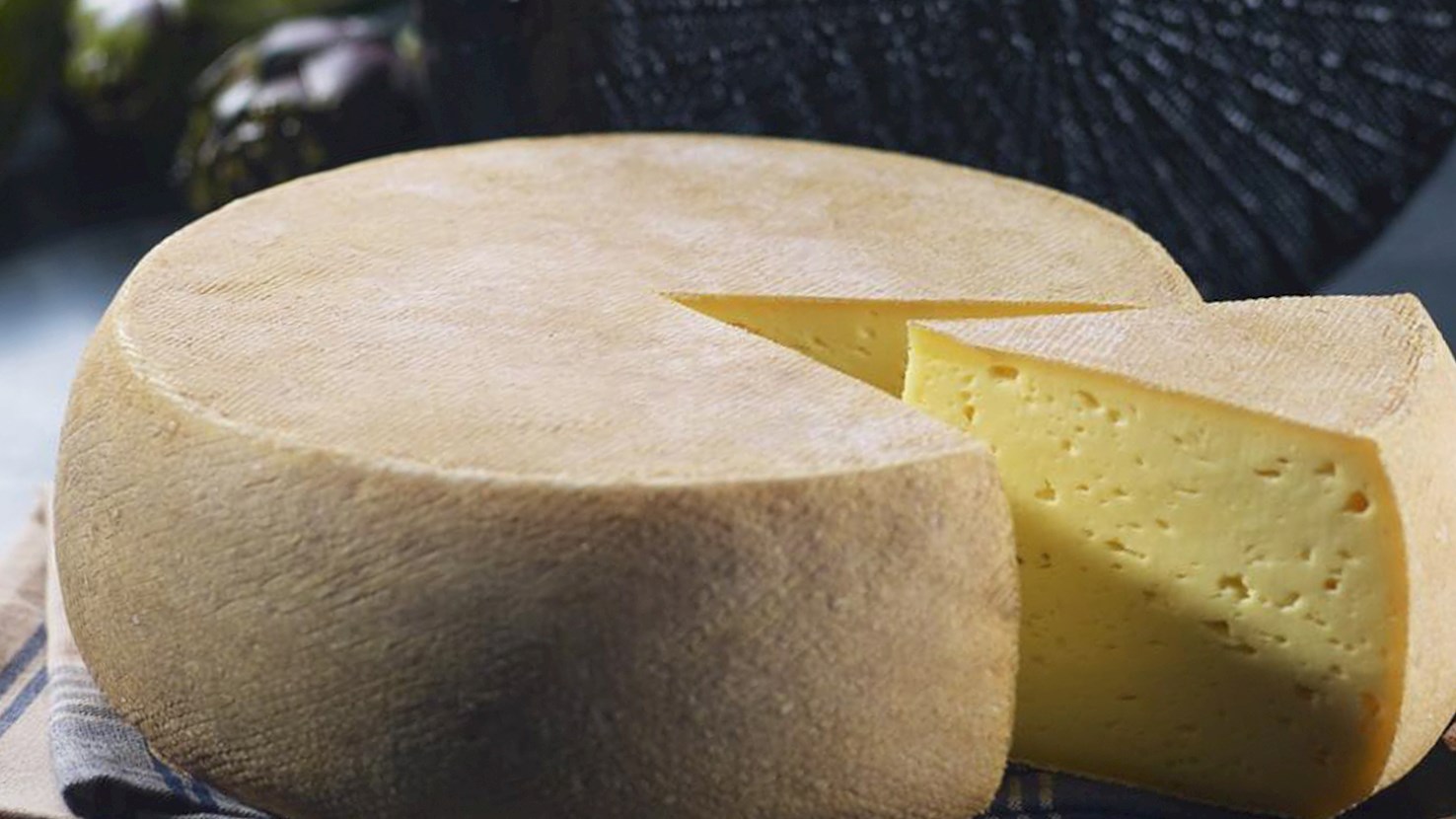
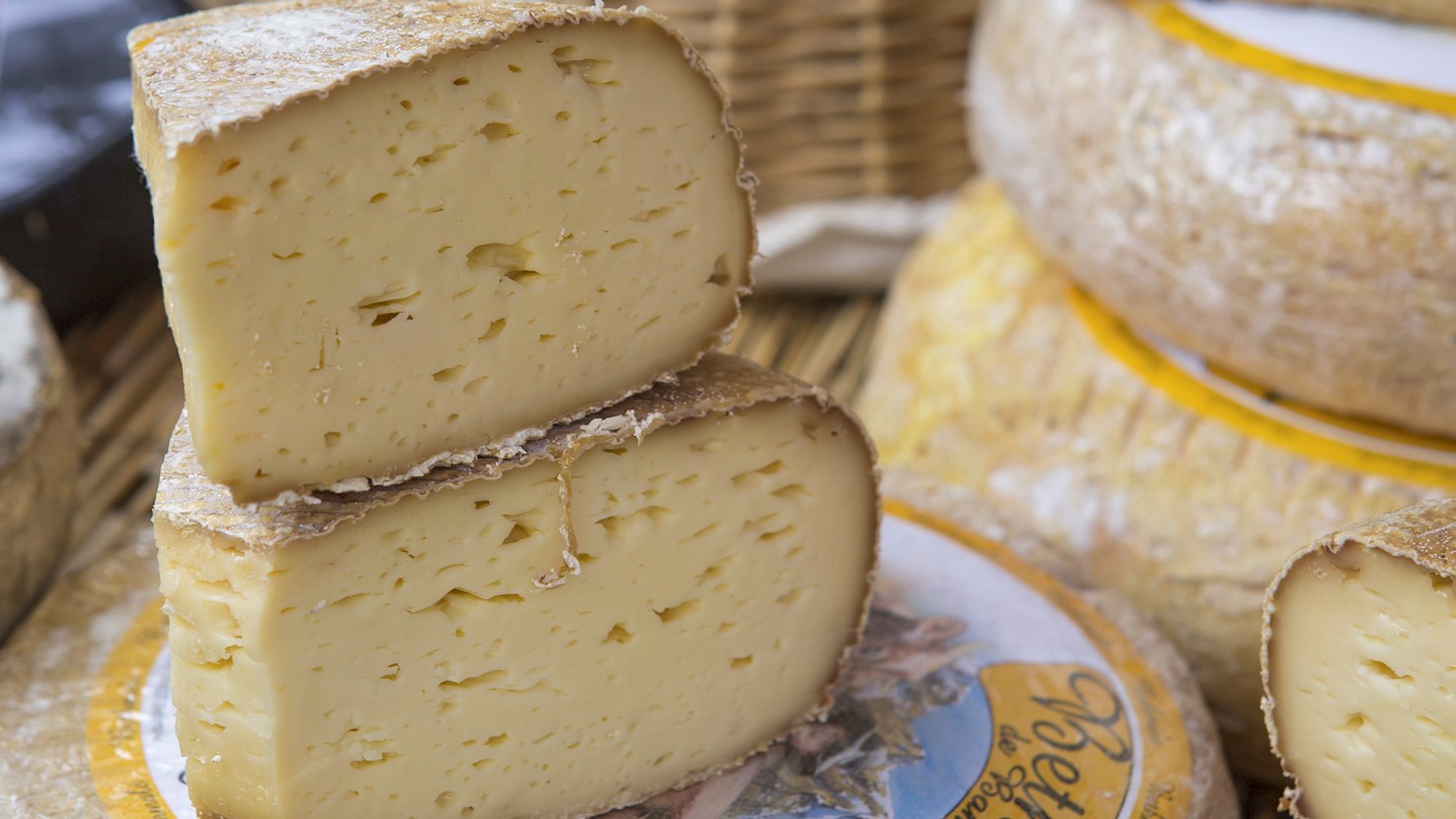
Bethmale is a French cheese produced in the village of the same name in the Pyrénées region. This semi-hard cheese is made from raw cow's milk and has a mild and rich flavor with earthy and mushroomy aromas. The interior is either ivory white or yellow in color, filled with small horizontal eyes. Bethmale was first mentioned in the early 12th century, when Louis VI had first tried it during his visit to the region. Back then, the cheese was described as the 'fat cheese of Saint-Girons,' referring to the fact that the interior glows with fat when cut. It is recommended to pair Bethmale with sherry or a glass of full-bodied red wine such as Bordeaux or Malbec.
Tomme fraîche is a hard-pressed curd that is made with cow’s milk. It is made in the production of Laguiole, Cantal, and Salers cheese. The curd is unsalted and slightly fermented, and because it’s hard-pressed, it has a high level of dry matter. It is produced in the natural region of L’Aubrac, which is located in the central-south of Massif Central and is comprised of three departments - Aveyron, Lozère, and part of Auvergne. There are many types of tomme fraîche, but the most noted is the tomme fraîche de l'Aubrac. Tomme fraîche has a soft texture and a mild, milky, slightly sour taste, plus melts extremely well. It is sold in blocks that are vacuum sealed and can range anywhere from 250g (8.8 oz) to 10kg (22 lbs). Tomme fraîche is used to make regional dishes - the cheesy mashed potatoes aligot, truffade, patranque, and retortillat - and most other dishes that require a crumbly cheese or a cheese with good melting properties, such as pizzas, gratins, pies, and salads.
Bleu du Mazet is a traditional cheese that’s produced in Lachamp in the department of Lozère. This blue cheese is made from raw cow’s milk. Underneath its bloomy rind, the texture is elastic, dense, and open, with blue-grey marbling running throughout the paste. The aromas are reminiscent of mushrooms and humid cellars, and the flavors are creamy, fruity, and mild. Bleu du Mazet is usually sold in the recognizable blue foil wrapping.
Barousse is a raw-milk, pressed, uncooked cheese from the Barousse valley in France, made from sheep, sheep and cow, or cow milk. It began with shepherds producing cheese from sheep’s milk in the mountain pastures, documented as early as 1813 in descriptions of the region when the valley was still a major zone for transhumance. Over time, cattle breeding developed in the mid-mountain zones, and the milk base shifted from pure sheep’s milk to a mix of cow and sheep milk, or exclusively cow’s milk. Production requires the milk to be coagulated in a copper cauldron placed near the hearth, after one to three hours the curd is worked with a fir-top stick with five branches (“cafair”), then formed into a ball in its own whey, cut with a knife, hand-moulded in a cloth-lined round mold about 20 cm (8 inches) diameter and 6 cm (2 inches) high weighing 2-2.5 kg (4.4-5.5 lbs). The paste is pressed by hand, covered with a wooden board topped with a stone to drain for about 24 hours, salted with coarse salt on one side and then the other 36 hours apart, and finally matured for 1.5 to 4 months in a ventilated cellar where it is brushed and turned 2 to 3 times per week. Variations of the Barousse revolve around the milk source (pure sheep, mixed sheep and cow, or pure cow) and the aging time, which influences the texture, flavor, and color of the paste (whitish during winter, more yellow when animals graze fresh grass). The cheese is typically eaten at the end of a meal on a cheese board, paired with country bread, fresh fruit, or a simple salad, and goes well with a light red wine or a dry white wine from local vineyards.
Aveyronnais is a traditional aromatic French cheese hailing from the Massif des Causses area in Midi-Pyrénées. The cheese is made from cow's milk by only one producer in the region. Underneath its leaf-wrapped bloomy rind, the texture is delicate and soft. The aromas are grassy, while the flavors are creamy and buttery with hints of wild flowers on which the cows have been grazing. It's recommended to serve Aveyronnais with crusty bread on the side.
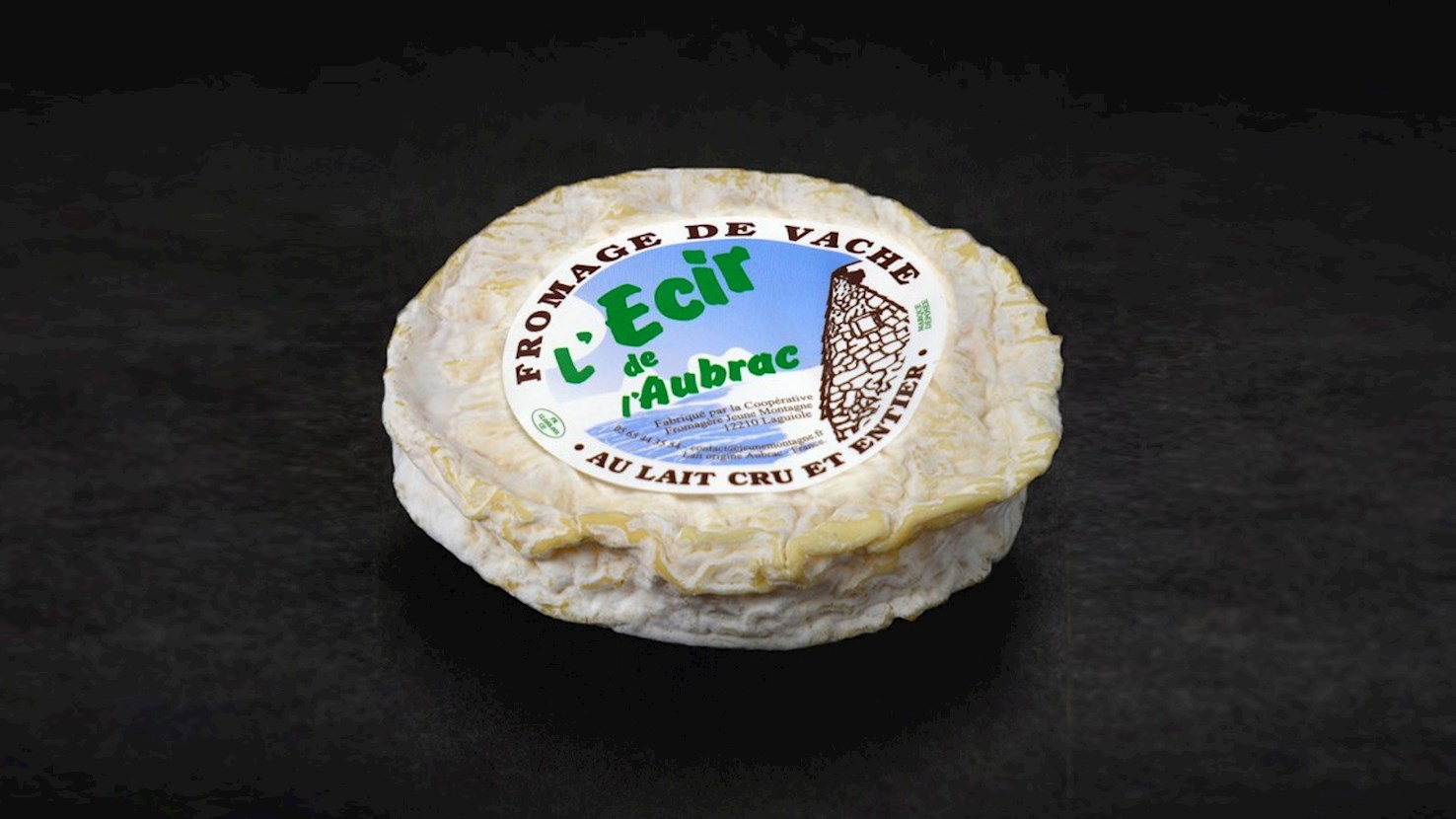
L'Ecir de l'Aubrac is a French cheese originating from the plateau of Aveyron. The cheese is made with cow's milk and has a natural white rind. The aroma of this cheese is pleasant, the texture is smooth, while the flavors are sweet with notes of mountain flowers and honey. It is recommended to pair it with a glass of Condrieu (white wine) or Marcillac (red wine).
TasteAtlas food rankings are based on the ratings of the TasteAtlas audience, with a series of mechanisms that recognize real users and that ignore bot,
nationalist or local patriotic ratings, and give additional value to the ratings of users that the system recognizes as knowledgeable.
For the “Top 9 Occitan Cow's Milk Cheeses” list until May 29, 2026, 148 ratings were recorded, of which 116 were recognized by the system as legitimate.
TasteAtlas Rankings should not be seen as the final global conclusion about food. Their purpose is to promote excellent local foods,
instill pride in traditional dishes, and arouse curiosity about dishes you haven’t tried.