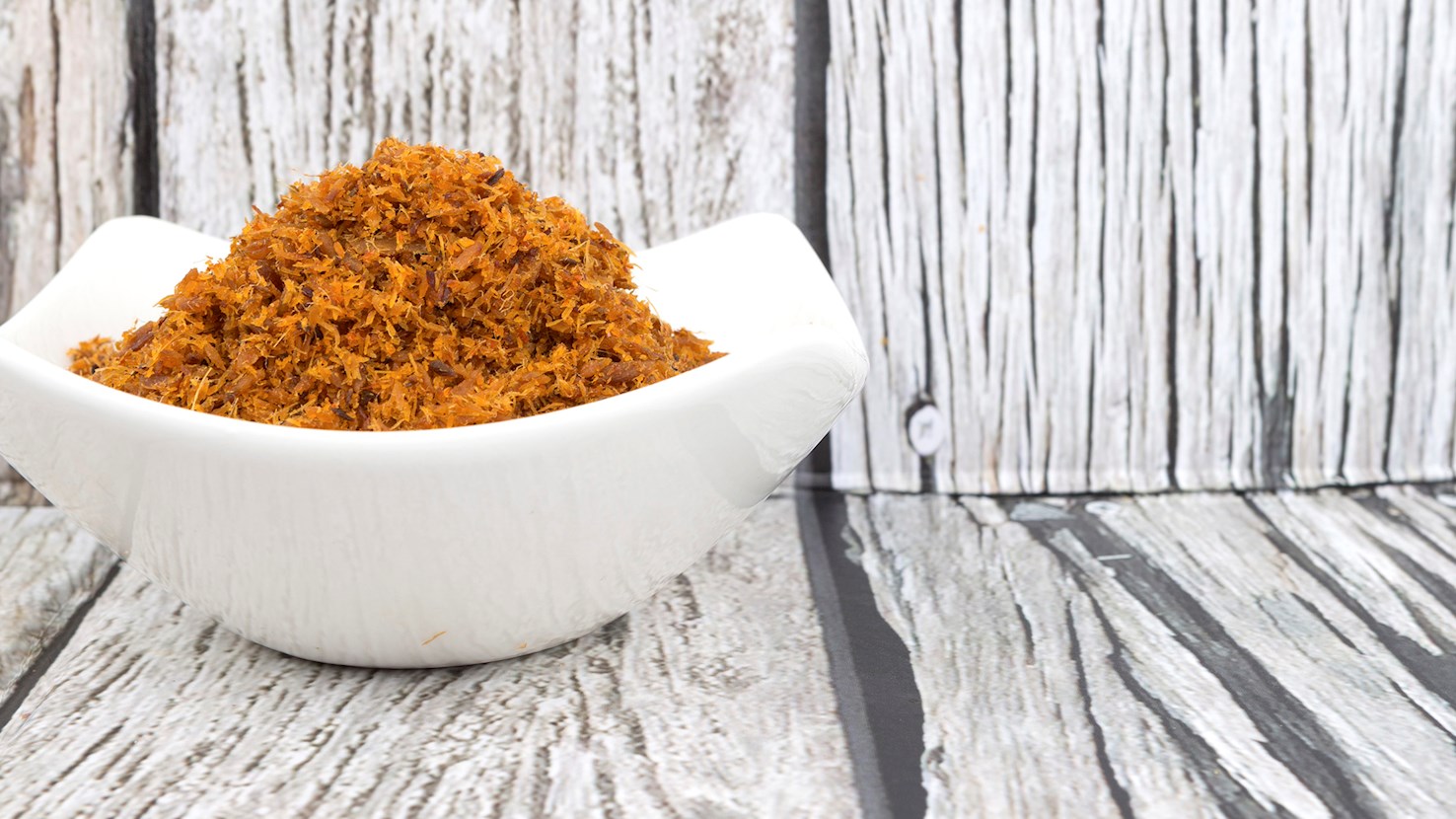
Rousong is a Chinese dried meat product consisting of fluffy shredded pork that is usually seasoned with sugar and soy sauce. There are two main types of rousong: pork fu and pork sung, where pork fu is less fried, less shredded, and has a lighter color than pork sung. It can be consumed as a topping for rice, congee, tofu, noodles, and pasta, or as a filling for egg rolls, onigiri, and sticky rice rolls, but it can also be consumed on its own. For those with a sweet tooth, rousong can also be used as a topping or filling for sponge cakes. Rousong dissolves quickly when consumed, leaving a combination of sweet, salty, and meaty flavors on the palate. In Singapore, it is quite popular to consume pork floss buns, which are buns coated with mayonnaise and rousong, and they are available at numerous bakeries across the country.
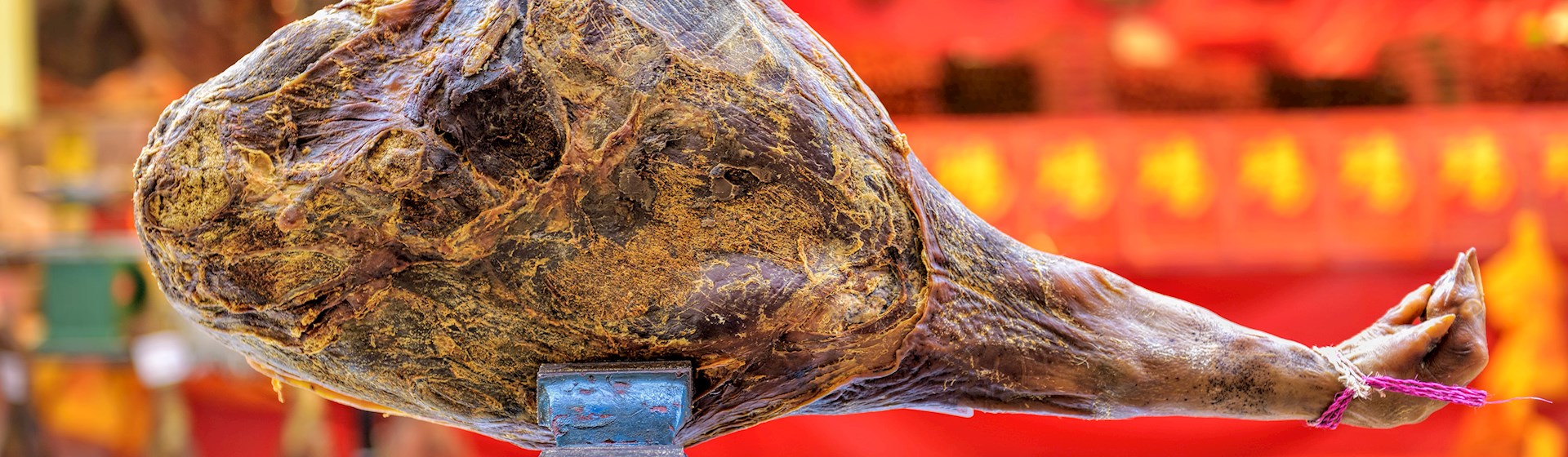
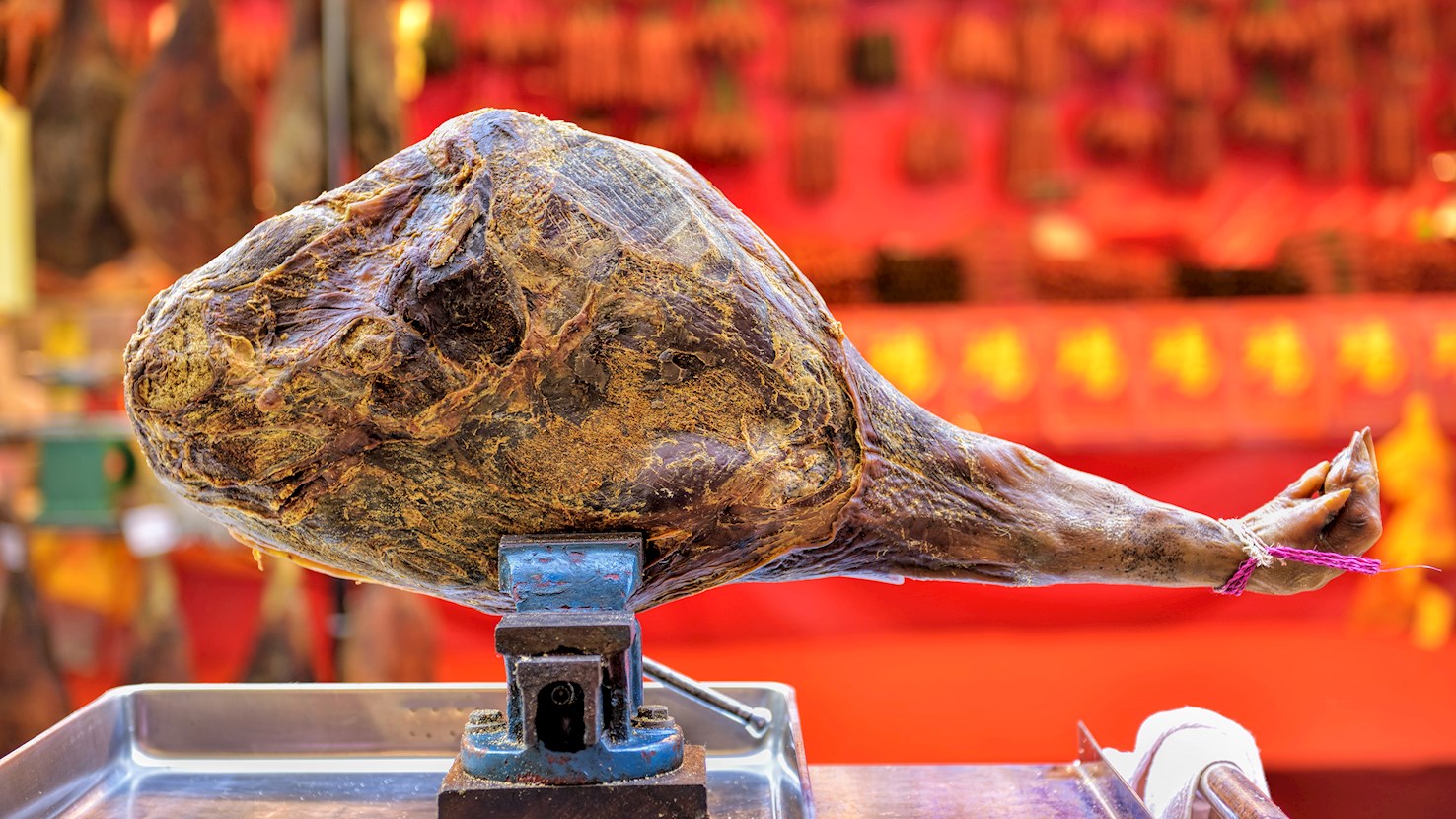
Jinhua is a traditional type of dry-cured ham originating from the city of Jinhua in the Zhejiang province. The ham is produced using the hind legs of native Chinese pig breeds that have great meat and thin skin. Many procedures are necessary to produce this salty and tough ham, such as dressing, trimming, salting, washing, drying, fermenting, and smelling. The ham leg is cleaned, dressed, and salted six times, about a month between each salting. It is then stored in cool and dark place from six to eight months in order to develop the distinct flavor and aroma. Jinhua ham is typically used as a flavoring for stews and braised dishes, as well as making broths and stocks for Chinese soups. Due to the fact that it's tough and intensely salty, this lute-shaped ham is usually not eaten by the slice.
Xuanwei ham is a traditional dry-cured ham from Qujing prefecture, China’s most famous ham-producing region. The Xuanwei ham was first produced some 250 years ago, in 1766. It is made with local Wujin pigs with a high fat percentage. Once cleaned, the ham is generously salted about three times, then hung in a well-ventilated room and left to cure for about a year. At about 5 months, the ham will start to grow a powdery mould, which simply means it’s been cured properly. The ham is very sensitive to weather conditions, meaning any changes will impact its flavor, so it’s important to always check and adjust the moisture in the room in which the ham is stored. Xuanwei ham is aged for a minimum of 8 months, and once it’s been aged for 3 years, it can be eaten raw. Since the Chinese are not prone to eating raw meat, Xuanwei ham is usually used in soups, stews, and braised dishes.
Gǔlàngyǔ ròusōng is a type of pork floss produced on Gulangyu Island, located off the coast of Xiamen in Fujian Province. Pork floss, known in Chinese as ròusōng, is a dried, fluffy meat product made from finely shredded cooked pork that has been seasoned and dehydrated until light and fibrous. The Gulangyu version is recognized for its delicate texture, mild sweetness, and savory depth, often described as softer and more finely processed than other regional varieties. The development of Gǔlàngyǔ ròusōng is closely tied to Fujian’s long-standing meat preservation and export practices. Xiamen, a major port city, became a center for processed food production during the late Qing dynasty and the early twentieth century, when local families and small workshops began producing pork floss for storage and trade. The technique was likely influenced by methods of preserving shredded meat through frying and drying, adapted to Fujianese tastes, which favor subtle sweetness balanced with savory soy flavor. Gulangyu, once a hub for merchants and foreign residents, developed its own variant that emphasized refinement, using lean cuts of pork and longer processing to achieve a lighter texture. Over time, local brands based on the island established reputations for producing pork floss of consistent quality, which became a common souvenir and local specialty. Preparation begins with boneless cuts of pork, typically shoulder or loin, which are boiled or stewed until tender. The cooked meat is shredded into fine strands, mixed with seasonings such as soy sauce, sugar, salt, and occasionally five-spice powder, and then cooked again over low heat while being stirred continuously. As the moisture evaporates, the meat fibers dry out and separate, transforming into light, fluffy strands. In the Gulangyu style, this process is performed slowly to achieve a finer, less coarse texture, and the finished product is evenly golden in color. Some producers use mechanical dryers for consistency, while others rely on pan-roasting techniques to bring out a toasted aroma. The final product is crisp yet tender, with a clean sweetness and savory aftertaste. Gǔlàngyǔ ròusōng is eaten throughout Fujian and across China, both as a snack and as an ingredient. It is sprinkled over rice porridge, packed into buns, layered in sandwiches, or used as a topping for rice rolls and pastries. In Fujianese bakeries, it appears in soft bread rolls and sponge cakes that combine sweet and savory flavors. The pork floss is also served alongside congee at breakfast or as a side dish in lunchboxes. It pairs well with plain rice, soy milk, or mild tea, all of which balance its concentrated umami and sweetness. On Gulangyu Island, visitors often buy it as a packaged food souvenir, representing one of the region’s most recognizable culinary products.
Húnán làròu is a type of cured and smoked pork from Hunan province, valued for its intense aroma, deep savory flavor, and firm texture. It is one of the region’s most iconic preserved meats and a cornerstone of Hunanese cooking, appearing in both everyday meals and festive dishes. The name “làròu” literally means “waxed meat,” a reference to the glossy, firm texture the pork develops during the curing and drying process. The origins of Húnán làròu are closely linked to the province’s climate and agricultural patterns. Hunan’s humid subtropical environment made meat preservation a practical necessity before modern refrigeration, particularly during the colder months when fresh pork was abundant after winter slaughtering. Over generations, families developed specialized curing and smoking techniques to extend the shelf life of pork while enhancing its flavor. Smoking over hardwoods not only preserved the meat but also added a distinctive depth that became closely associated with local cooking. The practice became embedded in seasonal rhythms, with households preparing làròu in late autumn and early winter for consumption throughout the following months. Preparation begins with pork belly or another fatty cut, which is rubbed generously with salt and spices such as Sichuan peppercorns, star anise, and sugar. The meat is left to cure for several days, sometimes up to a week, allowing the seasoning to penetrate deeply. It is then hung in a well-ventilated area to dry and firm up before undergoing a long, slow smoking process over a fire fueled by hardwoods such as cypress, tea branches, or rice husks. This smoking step can last from several hours to several days, depending on the desired intensity, and gives Húnán làròu its signature aroma and reddish-brown exterior. The finished product is firm, slightly glossy, and richly scented with smoke and spices. Húnán làròu is most often eaten during the colder months, especially in winter, when preserved meats are a central feature of family meals. It is served at home as part of everyday cooking but also plays a prominent role in banquet dishes and holiday feasts. The meat pairs well with steamed rice, pickled vegetables, or mildly flavored greens, all of which balance its richness and intensity.
Sìchuān làròu is a type of cured and smoked pork from Sichuan province, known for its deep flavor, firm texture, and aromatic complexity. It is a staple of the region’s preserved meat repertoire, prepared especially in the colder months and valued for its ability to add richness and depth to a variety of dishes. The roots of this preserved meat lie in the practical need to store protein before the advent of refrigeration, a necessity in the agrarian lifestyle of Sichuan’s rural communities. Curing pork with salt and air-drying it in the winter climate allowed families to preserve meat for extended periods, ensuring a supply through seasons when fresh meat was scarce. Over generations, this basic preservation technique evolved into a refined culinary practice, with the addition of spices, smoking methods, and timing adjustments that shaped the distinct identity of Sichuan-style cured pork. Preparation of Sìchuān làròu follows a time-honored sequence. Pork, typically from the belly or leg, is first rubbed generously with salt, sugar, and spices such as Sichuan peppercorn, star anise, and cinnamon. It is left to cure for several days, allowing the seasonings to penetrate deeply. The meat is then hung in a cool, airy place to dry, a step that concentrates its flavor and firms its texture. The defining characteristic of this style, however, is the smoking process. The meat is smoked over hardwood, often cypress or fruitwood, which imparts a subtle fragrance and enhances its savory depth. Once cured and smoked, the pork develops a reddish-brown hue, a dense yet tender texture, and a complex flavor profile that balances saltiness, sweetness, and spice. Sìchuān làròu is highly versatile in the kitchen. It can be sliced thin and stir-fried with vegetables such as garlic shoots or leeks, steamed with rice for a fragrant, savory meal, or added to soups and braises where its smoky richness infuses the broth. Its concentrated flavor means that even small amounts can transform a dish, making it a valued ingredient in both everyday cooking and festive meals. Sìchuān làròu is commonly enjoyed during winter and the Lunar New Year period, often served alongside steamed rice, pickled vegetables, or stir-fried greens, whose freshness and acidity complement its richness.
TasteAtlas food rankings are based on the ratings of the TasteAtlas audience, with a series of mechanisms that recognize real users and that ignore bot,
nationalist or local patriotic ratings, and give additional value to the ratings of users that the system recognizes as knowledgeable.
For the “Top 6 Cured Meats in East Asia” list until July 22, 2026, 57 ratings were recorded, of which 49 were recognized by the system as legitimate.
TasteAtlas Rankings should not be seen as the final global conclusion about food. Their purpose is to promote excellent local foods,
instill pride in traditional dishes, and arouse curiosity about dishes you haven’t tried.