Niter kibbeh is a popular Ethiopian and Eritrean product that is also the secret ingredient in many popular regional dishes. Essentially, it is slowly-simmered clarified butter with the addition of spices such as garlic, onions, ginger, cinnamon, cloves, cardamom, and fenugreek, imparting a unique, spicy aroma to the final product. Complex and rich, this butter variety is quite versatile: it can be used when cooking sauces, eggs, and vegetables, but it is also often brushed on injera flatbreads.
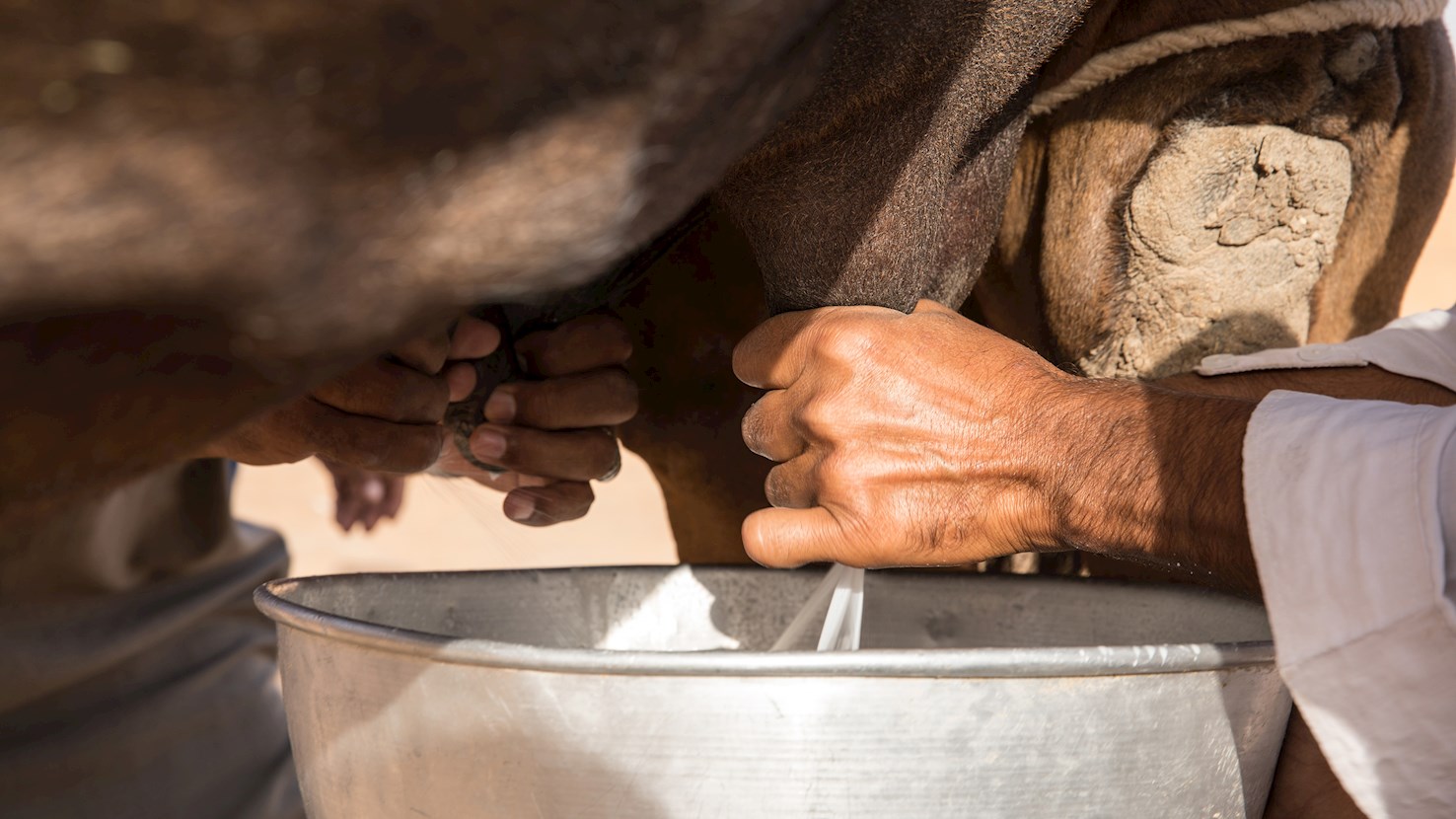
Camel herding is deeply rooted in the life, culture, and tradition of the Karrayyu, an ancient nomadic pastoralist tribe living in Ethiopia. Karrayyu herders residing in the Fantalle district have a long tradition of camel milking, camel milk production, and consumption of fresh camel milk, which, along with barley, has been an essential food source for the tribe. Milking typically happens twice a day, and the milk is traditionally collected in grass-woven vessels before being sold in nearby towns. Distinguished by a unique, savory, and aromatic flavor, fresh Karrayyu herder’s milk has a pure white color and thick foam on its surface. Camel milk has a lighter consistency, lower fat content, and higher nutritional value than cow’s milk, and it has been highly-prized for possessing excellent healing properties. Cheese, yogurt, or other processed milk products haven’t been produced from camel milk in the past, although attempts to change this have been made in recent years. Aside from the Karrayyu nomadic herders, the Somalis are also extremely fond of camel milk, which they often combine with ginger, cinnamon, and sugar into a flavor-packed beverage that is offered at their small shops. Unfortunately, the survival of the Karrayyu camel herds and the production of this delicacy are threatened by climate change and drastically reduced lands caused by the expansion of sugarcane plantations and wildlife conservation schemes.
In Kenya’s region of western Pokot, village communities have produced an unusual dairy product for generations – a yogurt made from cow’s or goat’s milk, combined with the ashes of the native tree known as cromwo. Raw milk ferments inside dried hollow gourds, and the ash is then added for an aromatic note. The ash also gives the yogurt its unusual, light grey color. Nowadays, the yogurt is produced only by a few families for their own needs, while surplus is not so often, and it is typically sold at local markets. The milk from cows and goats is not combined, but used to produce two different varieties of yogurt – cow’s milk yogurt for men, and goat’s milk yogurt for women and children due to its high nutritional value. The flavor of the yogurt changes depending on the duration of fermentation. Pokot ash yogurt is often consumed with a thick millet porridge.
TasteAtlas food rankings are based on the ratings of the TasteAtlas audience, with a series of mechanisms that recognize real users and that ignore bot,
nationalist or local patriotic ratings, and give additional value to the ratings of users that the system recognizes as knowledgeable.
For the “Top 3 African Dairy Products” list until June 24, 2026, 13 ratings were recorded, of which 10 were recognized by the system as legitimate.
TasteAtlas Rankings should not be seen as the final global conclusion about food. Their purpose is to promote excellent local foods,
instill pride in traditional dishes, and arouse curiosity about dishes you haven’t tried.