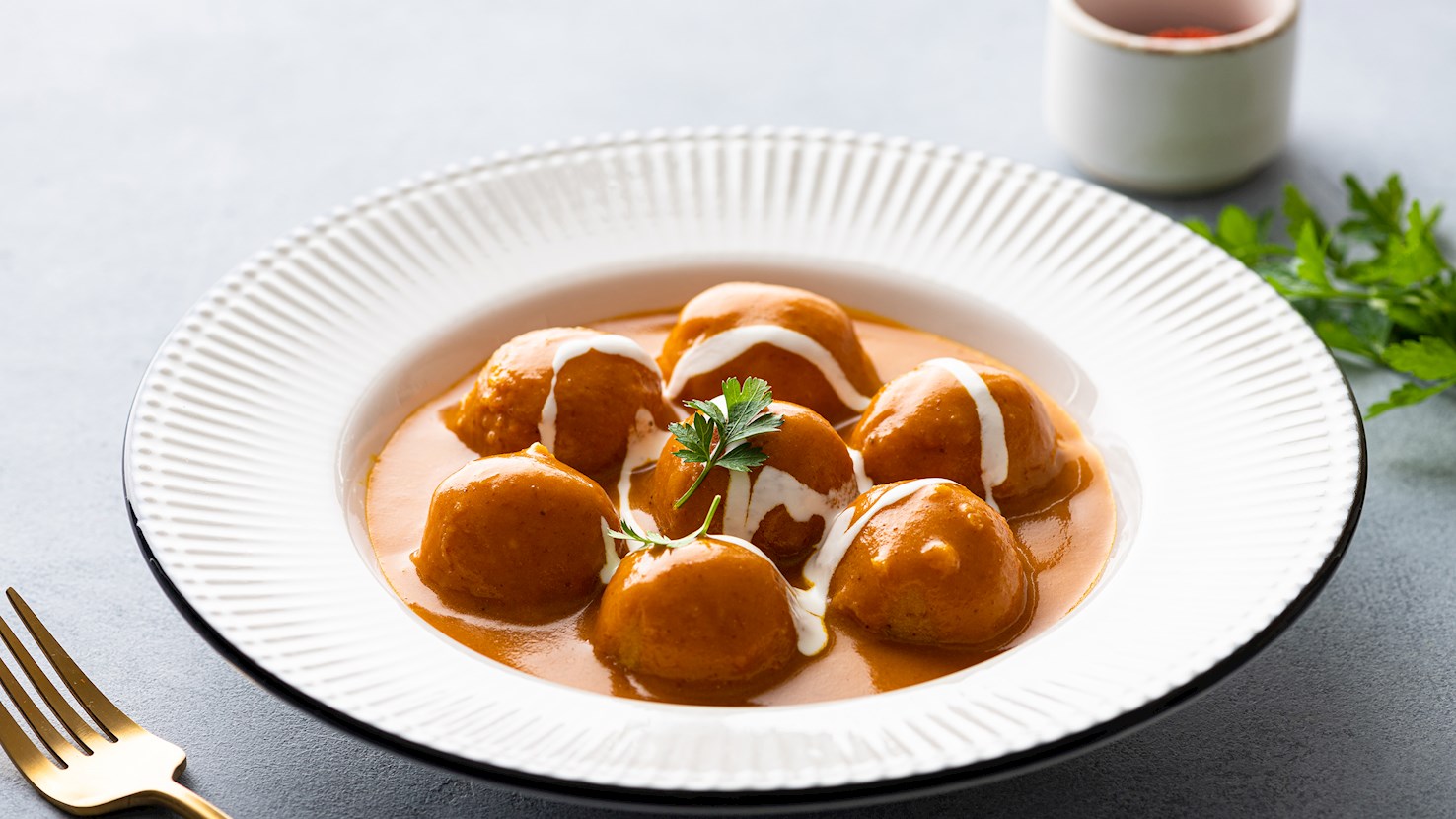
Malai kofta is a traditional North Indian dish consisting of fried potato and paneer balls in a creamy sauce. The dish is commonly served at festivals, celebrations, and weddings due to its rich texture and flavors. A typical dish of Mughal cuisine, developed in Medieval India by the cooks of the Mughal Empire, it is essentially a vegetarian substitute for a meatball curry, malai meaning cream, and kofta meaning dumplings. The dish is often prepared in a unique wok called a kadai, hence the other name of the dish, kadai kofta. Some food historians believe that these deep-fried dumplings have incorporated the influences of Turkish and Persian food cultures within them. The best and most usual accompaniments to malai kofta include naan bread and rice, and the dish is commonly garnished with shredded paneer and chopped coriander.
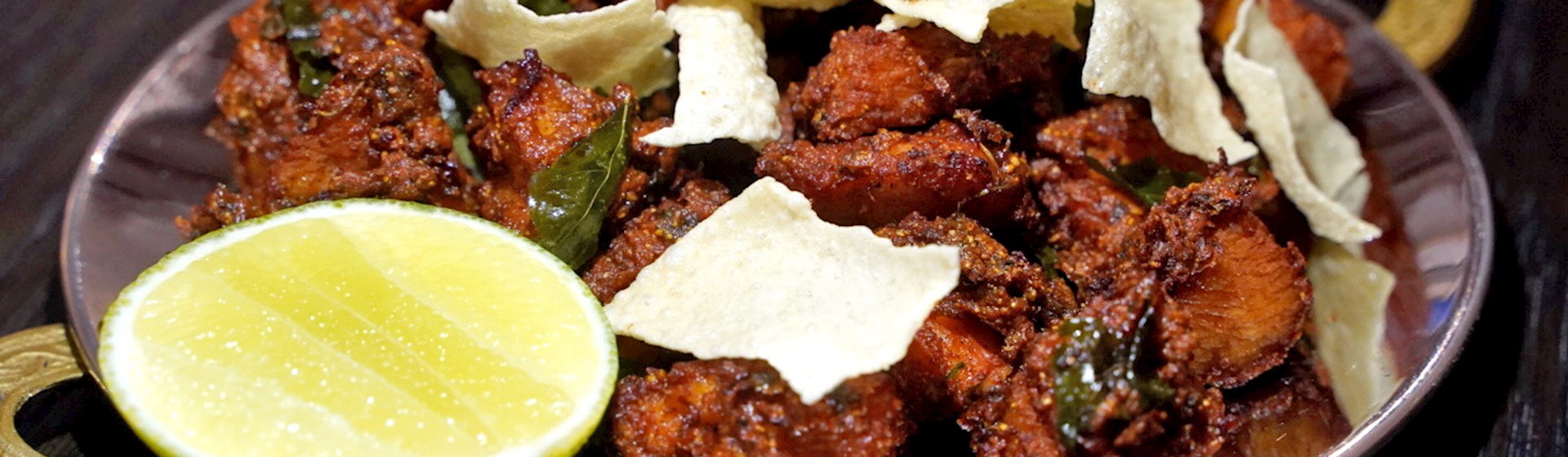
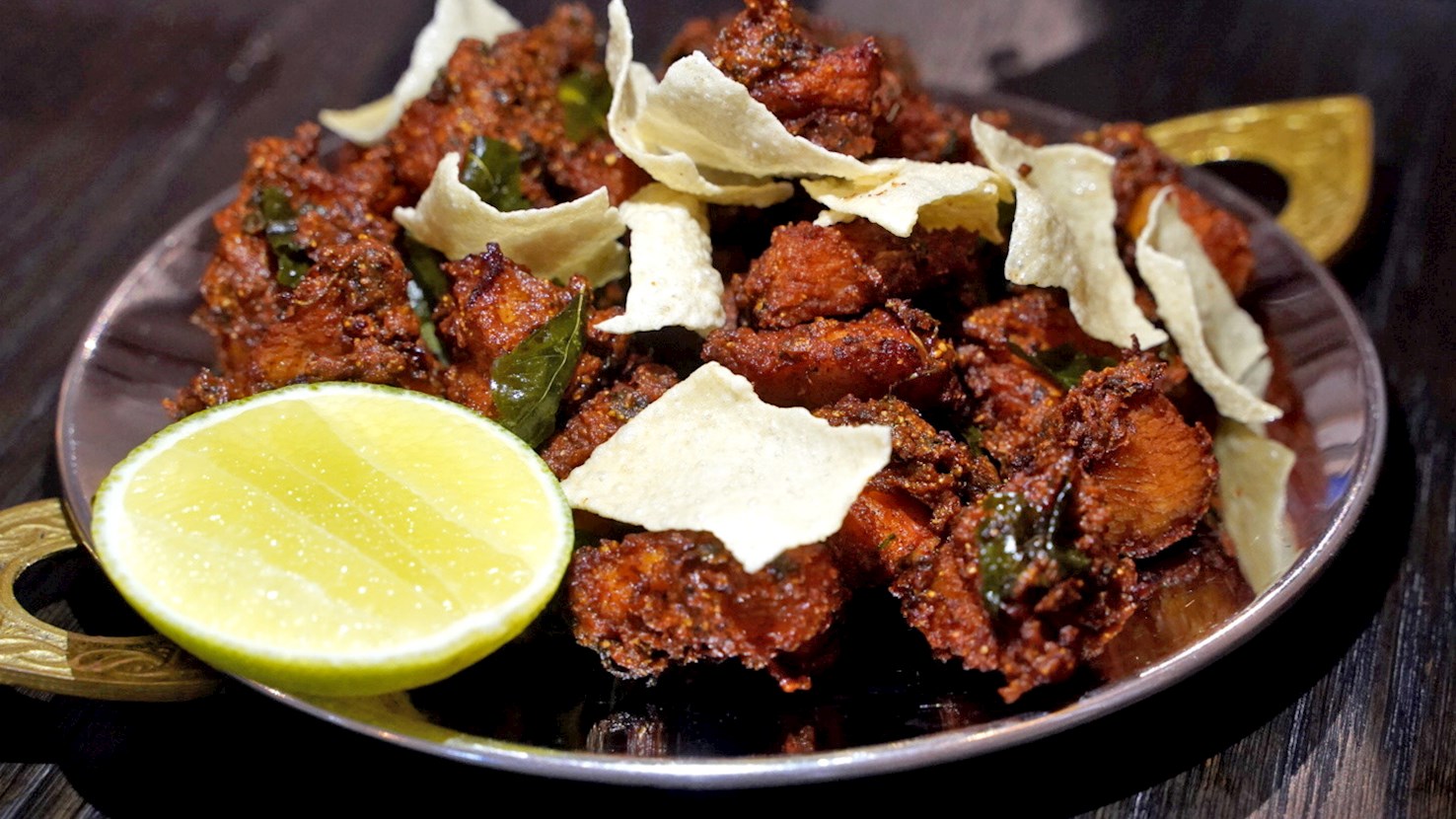
Chicken 65 is a classic poultry dish with origins in Chennai, India. It consists of deep-fried chicken that is marinated in ginger, lemon, red chiles, and a variety of other spices. There are a few theories about the origin of chicken 65. The most popular theory says that it was created in Tamil Nadu by A. M. Buhari in 1965. Another one says that the original dish was made with 65 hot chili peppers, as a testament of manliness. There are also some unlikely theories, such as the one claiming that the chicken was cut into 65 pieces, or that the chicken was 65 days old when the dish was prepared. Due to the dish's popularity, there are numerous variations, and each South Indian state has its own version. In Karnataka, the dish is garnished with grated coconut, and in Andhra Pradesh, the chicken is cooked instead of fried. Chicken 65 is commonly served with hot, red chutneys.
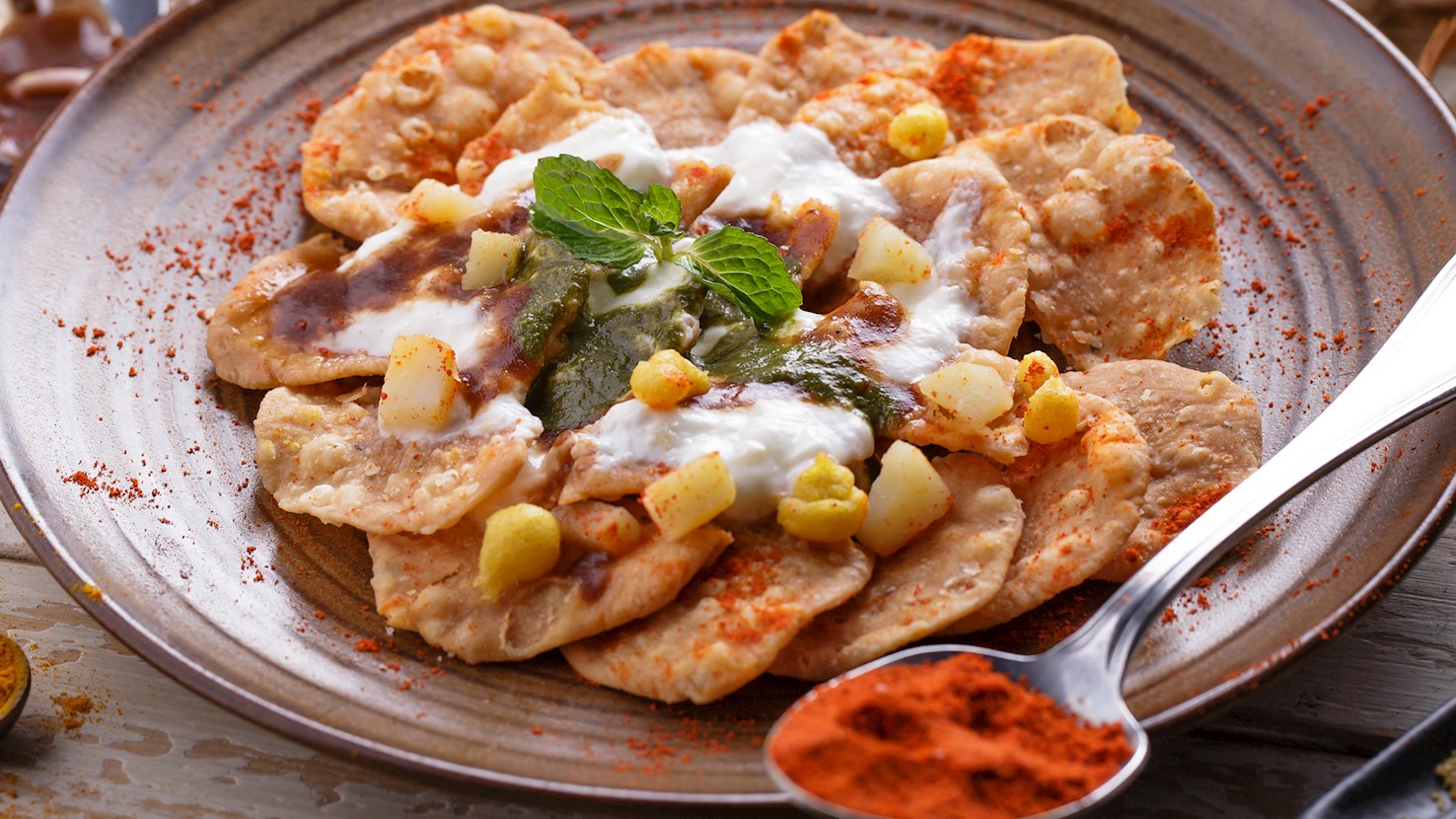
Papri chaat is a snack of crisp, fried wheat wafers layered with boiled potatoes, chickpeas, yogurt, and sweet-and-spicy chutneys, especially popular in Delhi and at its street-food stalls. The wafers, called papri or papdi, break into small, brittle pieces beneath the soft toppings, while tamarind, chili, and ground spices season each spoonful. It is assembled rather than cooked, and its texture changes quickly once the sauces meet the pastry. A freshly dressed plate has both dry crunch and patches of softened wafer, with cool yogurt coating the potatoes and chickpeas. Delhi is a strong center of its preparation, but a precise birthplace, inventor, or date of creation is not securely established. Papri chaat belongs to the wider North Indian chaat repertoire, in which fried dough, cooked vegetables or legumes, chutneys, and assertive seasonings are combined in small servings. Claims about the beginnings of chaat as a whole do not establish when this particular combination appeared. Its familiar forms have developed through the practices of vendors, sweet shops, and households, with differences in the toppings and proportions rather than a single fixed recipe. The name identifies the ingredient that must remain recognizable: without the crisp papri, the dish becomes another kind of chaat. These small, usually round wafers are commonly made from maida, a refined wheat flour, although whole wheat flour or a mixture of the two can also be used. Salt seasons the dough, and a little oil or ghee rubbed into the flour helps produce a tender, slightly flaky bite rather than a hard cracker. Ajwain, or carom seeds, adds a pronounced herbal flavor; cumin is another option, but neither seasoning is compulsory. The dough is kept firm, rested, and rolled thin before being cut into discs. Small holes pricked into the surface allow steam to escape during frying, helping the wafers stay relatively flat instead of swelling into hollow puris. They are fried until golden and crisp, then drained and cooled before assembly. A wafer that is too thick can be difficult to break neatly with a spoon, while one that is excessively thin may disappear under the yogurt before the plate reaches the diner. The toppings require a different kind of attention. Potatoes should be fully tender but diced or lightly broken, not reduced to a smooth mash. Chickpeas should be soft enough to yield easily, and both ingredients should be drained so cooking water doesn't dilute the sauces. Their mild flavor lets the chutneys stay sharp and concentrated. Yogurt, often called dahi or simply curd in Indian English, is whisked smooth and may be lightly sweetened. It should flow over the toppings without flooding the plate. The brown chutney usually adds tamarind’s sourness alongside sweetness from sugar or jaggery; some versions include dates. Green chutney brings fresh cilantro, often mint, and green chili. These sauces serve different roles, so increasing one changes the dish in ways the other cannot replicate: extra tamarind sharpens the acidity, and extra green chutney emphasizes herbs and chili heat. Roasted ground cumin contributes a warm, toasted flavor, and kala namak, or black salt, adds its characteristic sulfurous savor. Chaat masala, commonly containing sour dried mango powder and other seasonings, provides another layer of tartness and spice. Red chili powder can be scattered over the surface, but a plate need not be fiercely hot to have a clear, lively flavor. Assembly is quick once these components are ready. Papri are spread across a shallow dish, topped with potatoes and chickpeas, and dressed with yogurt and chutneys shortly before serving. Some remain whole, while others break under the toppings or the first press of a spoon. Garnishes vary: chopped cilantro is common, fine sev adds delicate strands of fried chickpea-flour crunch, and pomegranate seeds contribute small pockets of juice. Onion and tomato occur in some versions but are not essential; many Delhi-style preparations omit them. Another established form includes bhalla, or small urad-dal fritters that are fried, soaked, and gently squeezed. These readily absorb yogurt and chutney, creating a softer, more substantial plate often called bhalla papri chaat. Papri chaat is eaten at street stalls, chaat counters, sweet shops, restaurants, and homes, usually as a snack or a light meal rather than with a separate serving of rice or bread. It also suits a gathering where the ingredients can be prepared ahead and individual plates dressed as needed. Serving it promptly matters more than elaborate presentation: prolonged standing turns the wafers uniformly soggy and removes much of the contrast. For an afternoon snack, hot chai is a sensible accompaniment; a tart lime drink also works, particularly when the yogurt and tamarind chutney have been sweetened generously.
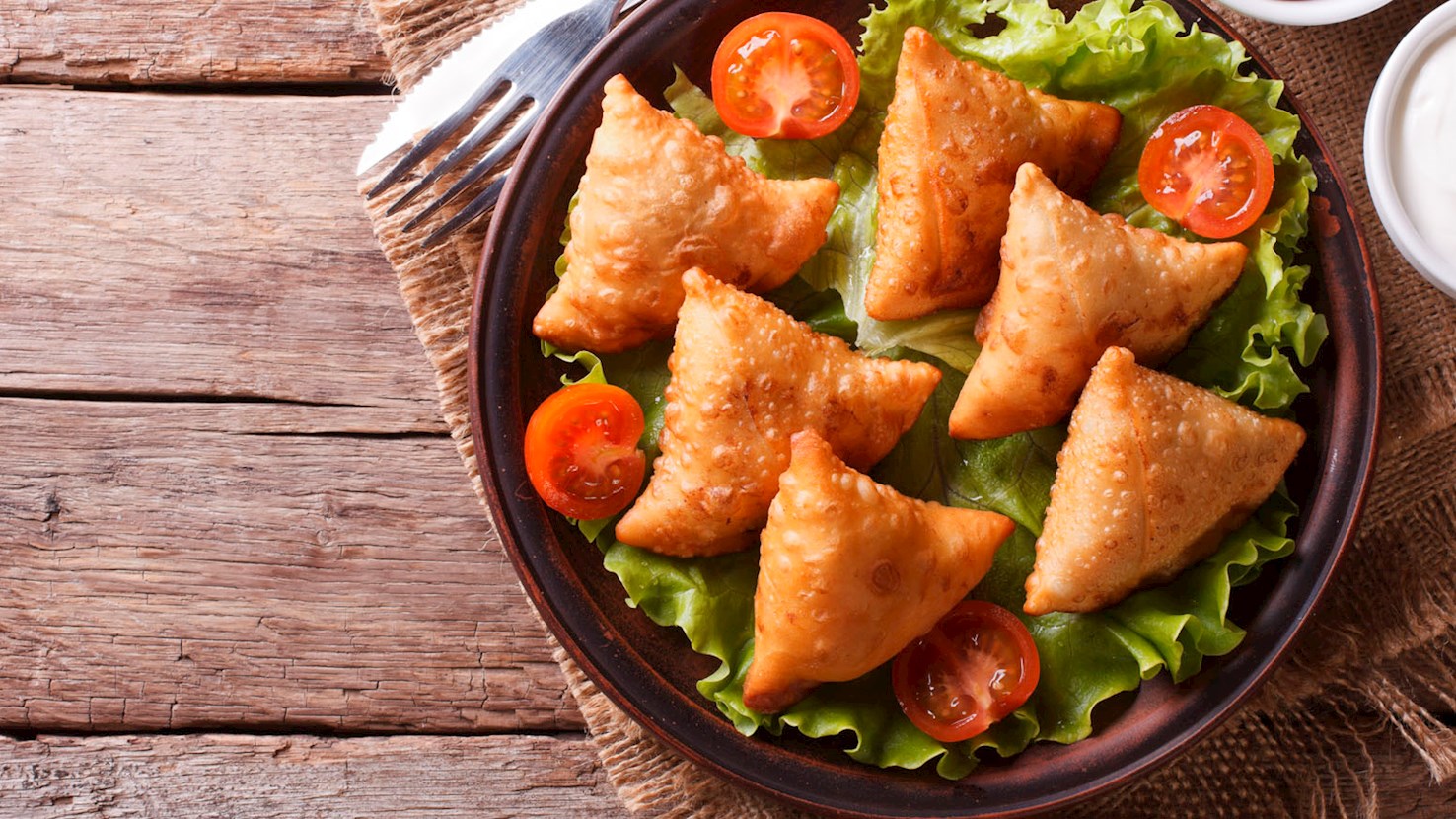
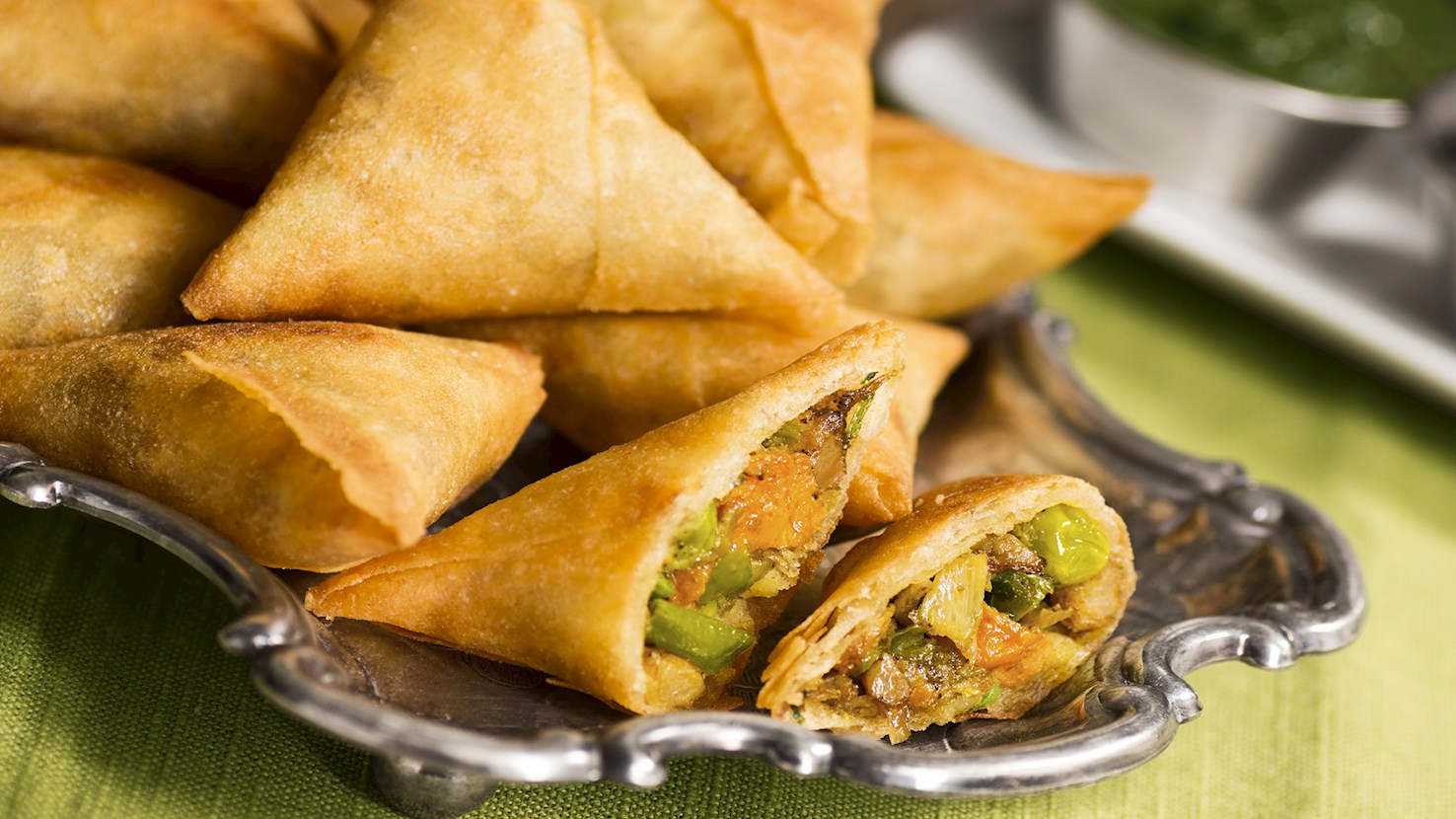
Due to their crunchy texture and a variety of different flavors, samosas provide a perfect introduction to the world of Indian cuisine for newcomers. These deep-fried, triangular pastries are filled with a variety of ingredients ranging from vegetables to meat, such as onions, lentils, spiced potatoes, peas, or ground meat. It is said that the popular, golden-brown snack travelled to India along the old trade routes from Central Asia, which is why samosas are also prevelent in Middle Eastern countries where they are typically served for Ramadan. In Saudi Arabia, for example, they are typically filled with meat or cheese and can be shaped as triangles, squares, and rolls. These savory triangles are typically served hot and accompanied with chopped onions, yogurt, or fresh, homemade Indian chutneys made with a variety of ingredients such as mint, coriander or tamarind. However, not all samosas are savory - some versions can contain a number of sweet ingredients such as pomegranate, mango, and raisins. Sweet or savory, they can be found throughout India at numerous street stalls and roadside eateries, freshly made and traditionally paired with masala chai tea.
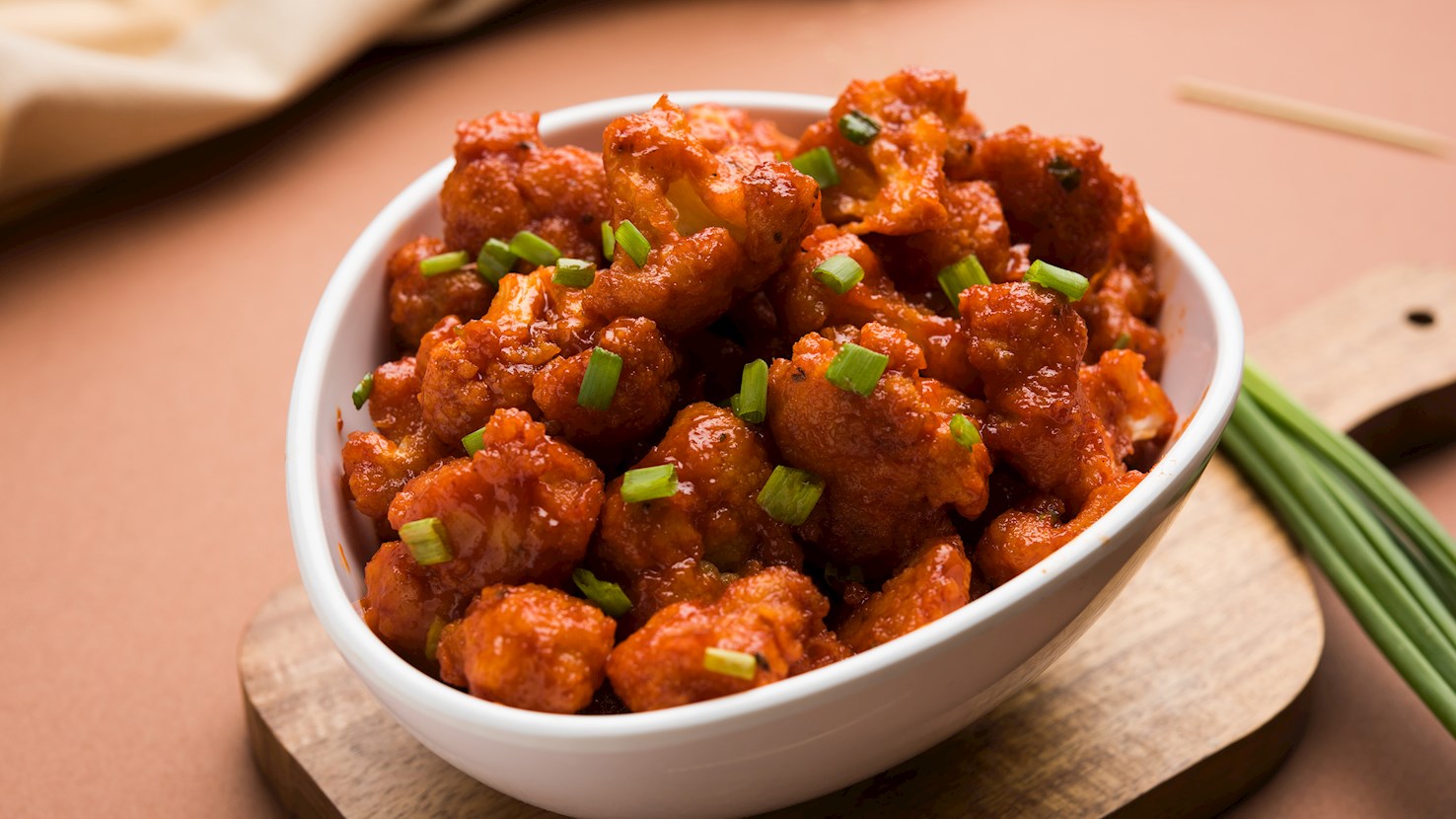
Gobi manchurian is a traditional Indo-Chinese dish consisting of fried cauliflower (gobi) that’s tossed in a sweet and spicy sauce (manchurian). There are two versions of the dish – dry and in gravy. The dry version is often served as an appetizer or a bar snack with ketchup on the side as a dipping sauce, while the gravy version features a thick sauce made with cornstarch and it’s usually served as a main dish with rice on the side, either fried or steamed. The cauliflower florets are coated in batter and deep-fried until crisp. The batter often consists of water, flour, corn flour, red chili powder, and seasonings, while the sauce is made with a combination of garlic, ginger, onions, scallions, soy sauce, vinegar, oil, sugar, and chili peppers. Originally, the dish was created by the Chinese community in Kolkata during the time of the British Raj.
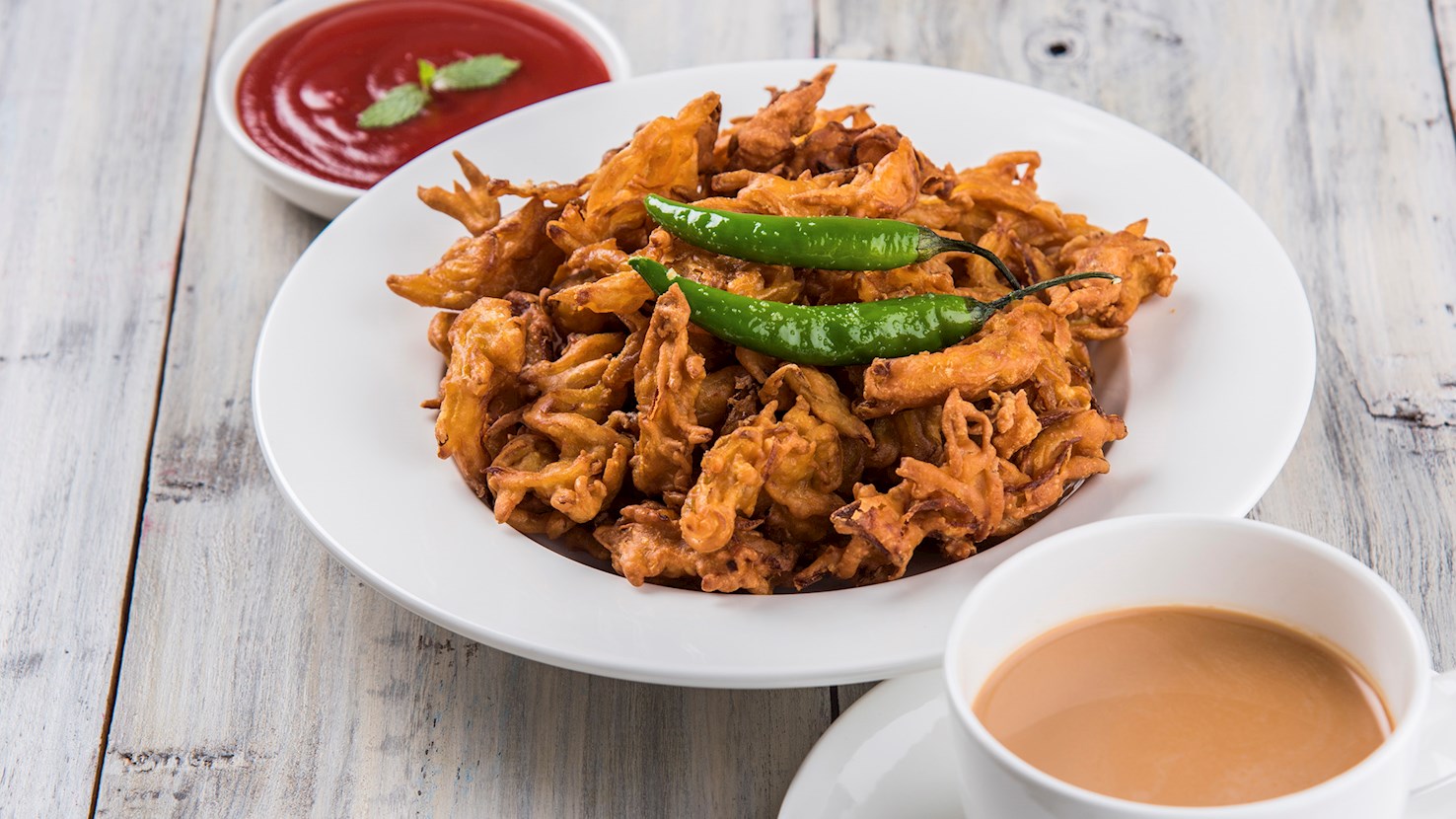
Pakora is a savory, deep-fried Indian snack made with pieces of vegetables such as cauliflower and eggplant. Although it is a quintessential Indian snack that can be easily found on numerous street corners, it can also be made at home. Traditionally, pakoras are at their most popular during spring, when the locals enjoy fried foods to celebrate the monsoon season. The snack comes in many varieties but is usually made from two main ingredients - potato, and another vegetable or meat of choice, which is then dipped in flour and deep-fried in ghee. Pakoras are usually seasoned with turmeric, salt, chili, or other spices. There is also bhaji, the same snack with a different name, but made without any seasonings. Bhaji is popular in South India, while pakoras are mostly consumed in North India. Regardless of the nomenclature, pakoras make a great appetizer or a snack, and it is recommended to pair them with chutneys and a hot cup of tea on the side.
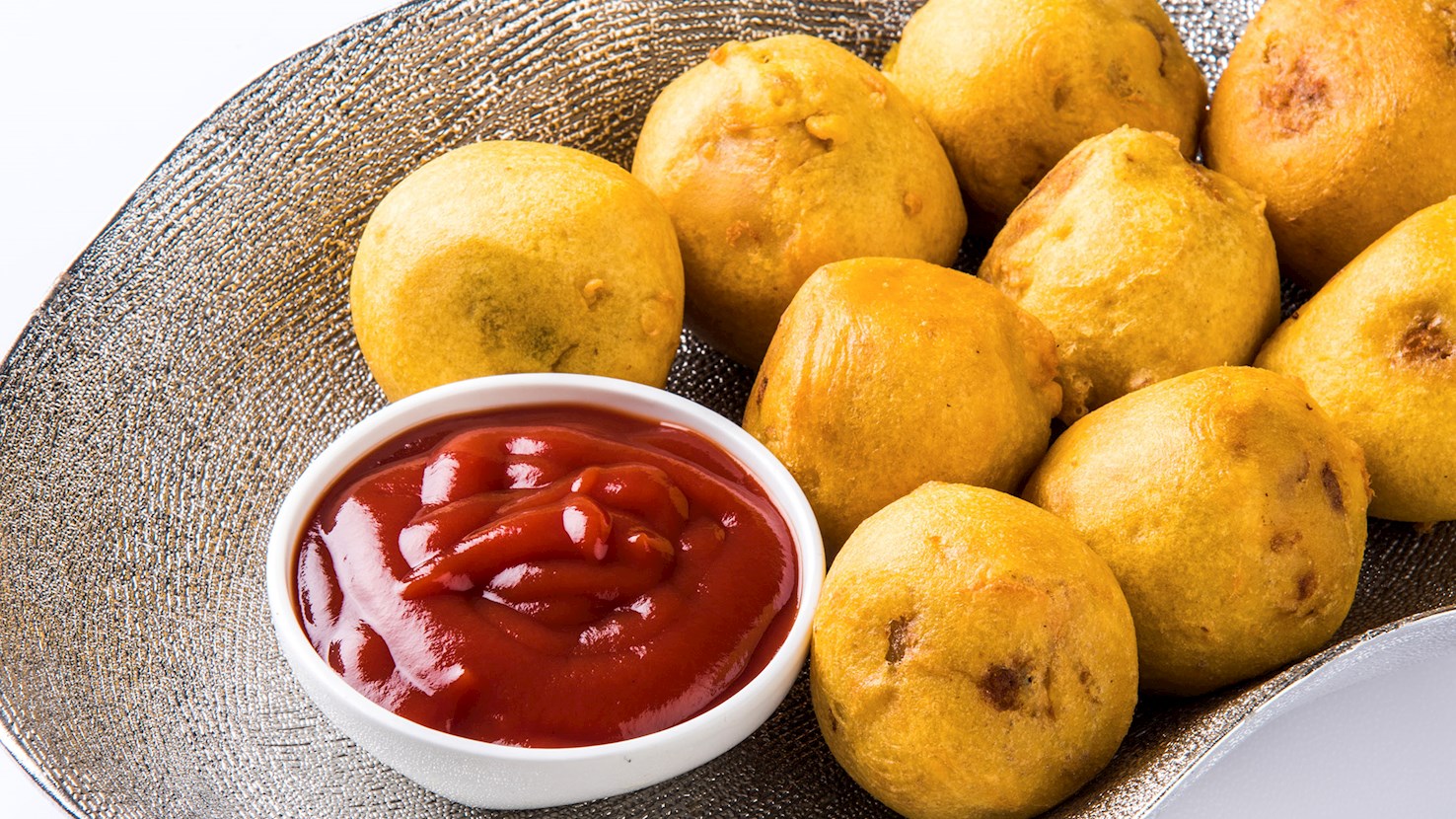
Batata vada is a popular vegetarian street food item that was invented in the Indian state of Maharashtra. It is a potato fritter made with a combination of mashed potatoes and spices that is shaped into a ball, dipped in chickpea batter called besan, then deep-fried. The dish is typically served with a chutney consisting of shredded coconut, tamarind, and garlic. Batata vada is also a part of a popular Indian sandwich called vada pav, consisting of batata vada and chutney, served on soft buns called pav. Vada pav sandwich is the most popular way of consuming batata vada, sold at numerous food stalls throughout Mumbai.
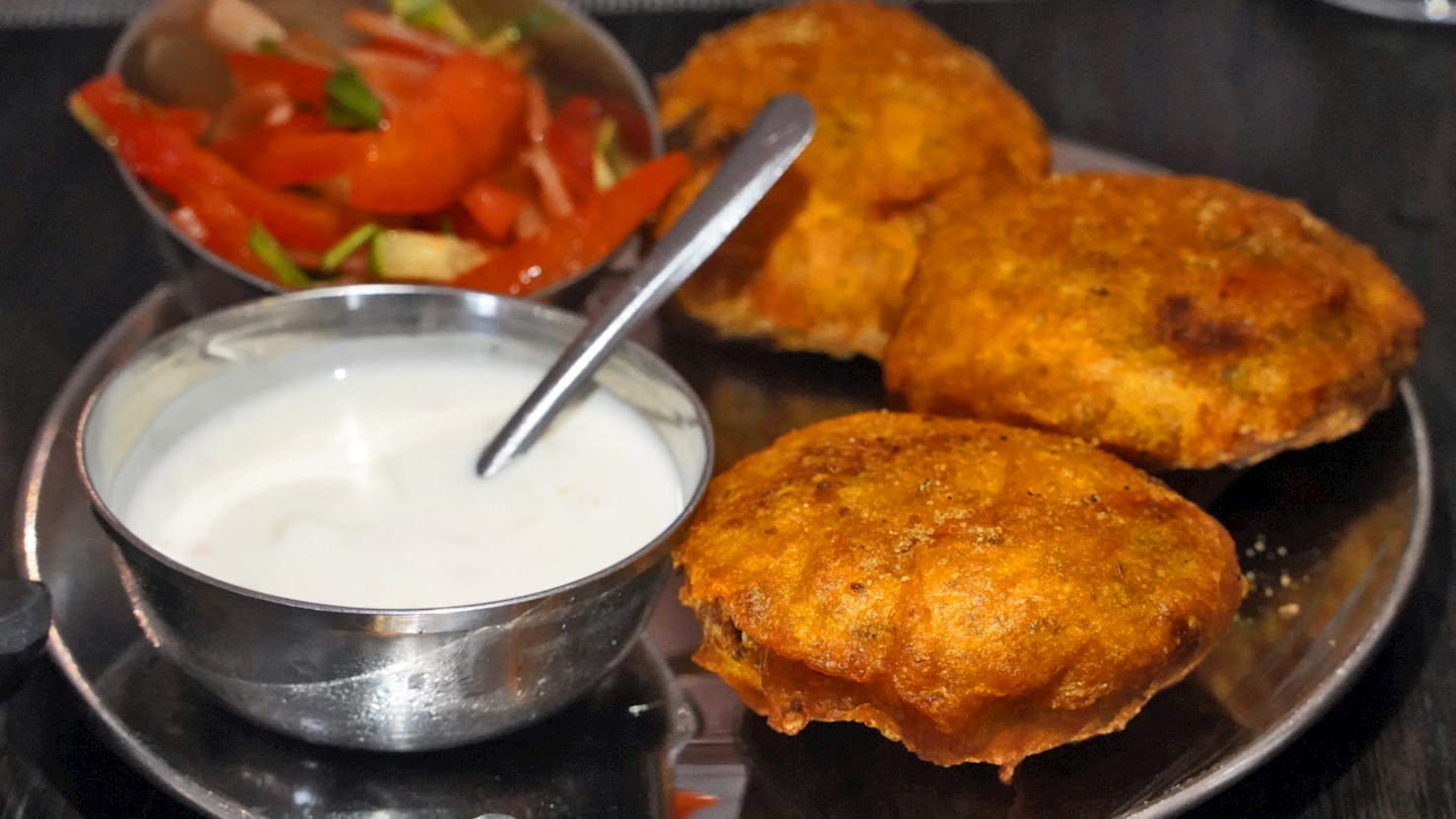
Aloo tikki is a flavorful snack that is popular in North India and Pakistan. It consists of potatoes (aloo) and onions made into croquettes (tikki), which are then flavored with various spices and deep-fried. The croquettes are a staple of every chaat stall in Mumbai and North India. Aloo tikki is often garnished with onion, chutney, coriander, or hot chiles, and it is usually served with yogurt or chickpeas. In Mumbai, the snack is often topped with spicy curries. Although aloo tikki is mostly consumed in North India and Pakistan, it is also gaining popularity in the United Kingdom, especially in the East Midlands area.
One of India's most popular deep-fried snacks known as samosa is often called "the king of Indian street food." This particular variety is stuffed with a savory filling of sliced onions (and sometimes also cabbage and rice flakes) which are seasoned with a variety of spices such as red chili powder, poha, and coriander. Typically served hot, the crispy fried onion samosas are best enjoyed accompanied with the zesty mint and coriander chutney.
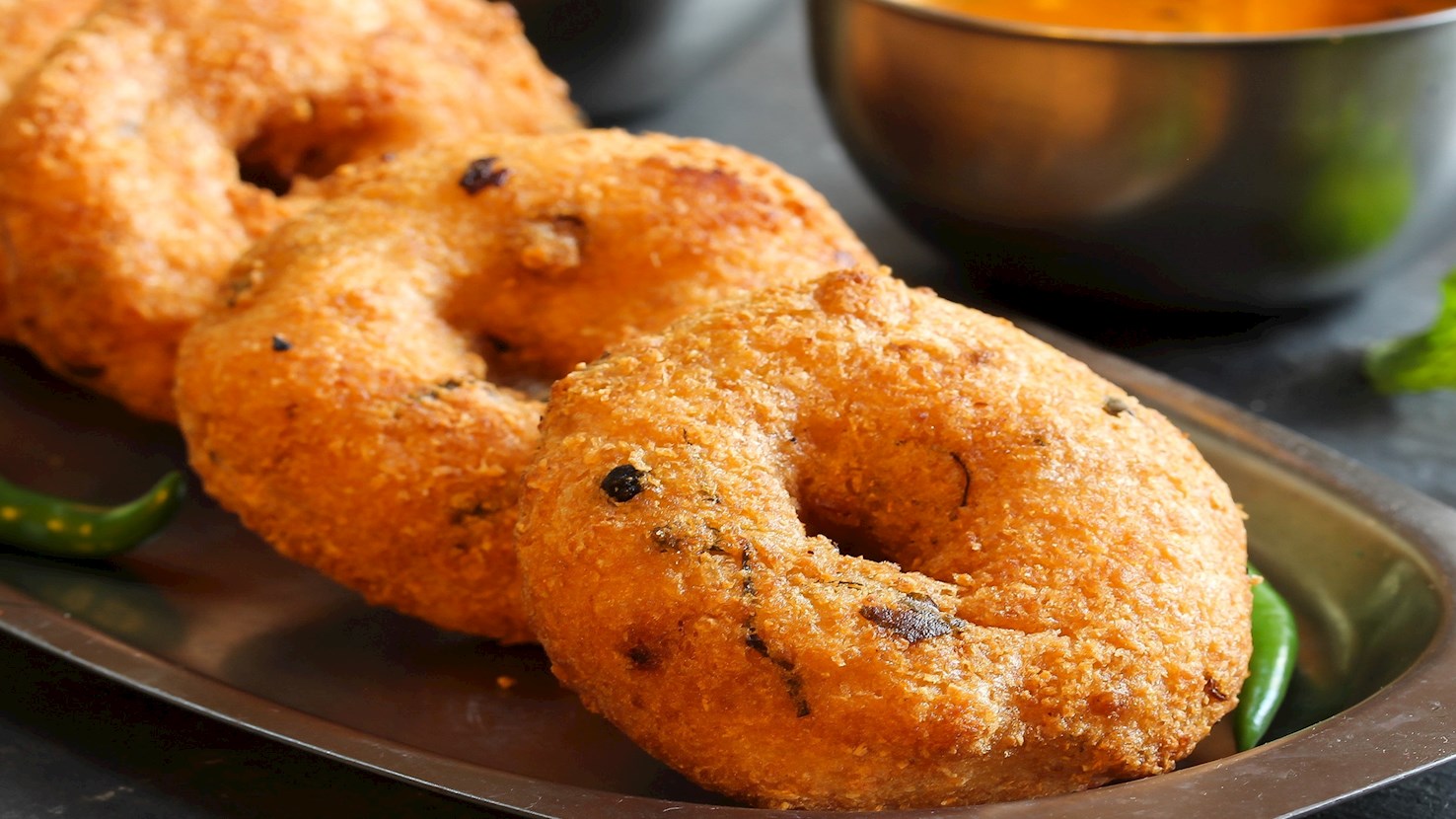
Medu vada is a savory, deep-fried, donut-shaped fritter made from a thick, heavily aerated batter of ground black gram. Creating this crisp snack begins by submerging skinned urad dal in cold water for several hours until the lentils swell and soften completely. The drained legumes go into a heavy wet grinder with a strict, minimal splash of water. The grinding action introduces a large amount of air into the mixture, transforming the dense lentils into a light, fluffy paste. Finely chopped green chilies, minced fresh ginger, crushed black peppercorns, cumin seeds, torn curry leaves, and diced shallots fold directly into the whipped batter to introduce sharp, aromatic heat. Shaping the batter requires wet hands to prevent sticking. A small portion is rolled into a sphere, pierced straight through the center to form a ring, and immediately dropped into a deep vat of hot vegetable oil. The central hole ensures even cooking, allowing the hot oil to crisp the entire exterior while leaving the interior crumb soft and spongy. Medu vada traces back to the southern regions of the Indian subcontinent. Concrete historical records point to the 12th-century Sanskrit encyclopedia Manasollasa, compiled by King Someshvara III, which provides a detailed recipe for "vataka" involving soaking, grinding, and deep-frying black legumes. Over the centuries, it evolved into a staple across Karnataka and Tamil Nadu, serving primarily as a breakfast item. One widespread adaptation replaces the lentil base with coarse semolina and yogurt, yielding an instant, highly brittle fritter. Another variant involves dropping the hot, freshly fried lentil rings directly into a vat of cold, seasoned yogurt, softening the crisp exterior and creating a tart, spongy appetizer. Leafy greens like chopped amaranth, spinach, or grated cabbage are sometimes mixed into the raw batter to introduce extra moisture and an earthy crunch. The medu vada are served hot, arriving stacked on a metal plate. A hot, thin tamarind-and-lentil stew known as sambar, along with a cold, creamy bowl of freshly ground coconut chutney, universally accompanies the fritters. Eating the snack requires tearing the hot ring apart by hand and submerging the spongy interior directly into the hot stew and cold chutney to absorb the heavily spiced liquids.
TasteAtlas food rankings are based on the ratings of the TasteAtlas audience, with a series of mechanisms that recognize real users and that ignore bot,
nationalist or local patriotic ratings, and give additional value to the ratings of users that the system recognizes as knowledgeable.
For the “Top 13 Indian Deep-fried Dishes” list until October 15, 2026, 1,508 ratings were recorded, of which 1,216 were recognized by the system as legitimate.
TasteAtlas Rankings should not be seen as the final global conclusion about food. Their purpose is to promote excellent local foods,
instill pride in traditional dishes, and arouse curiosity about dishes you haven’t tried.



What People Say