



shutterstock

Top 4 Traditional Desserts
in Aleppo Governorate

Last updated on May 15, 2026
01

Ballourieh

3.8 ·

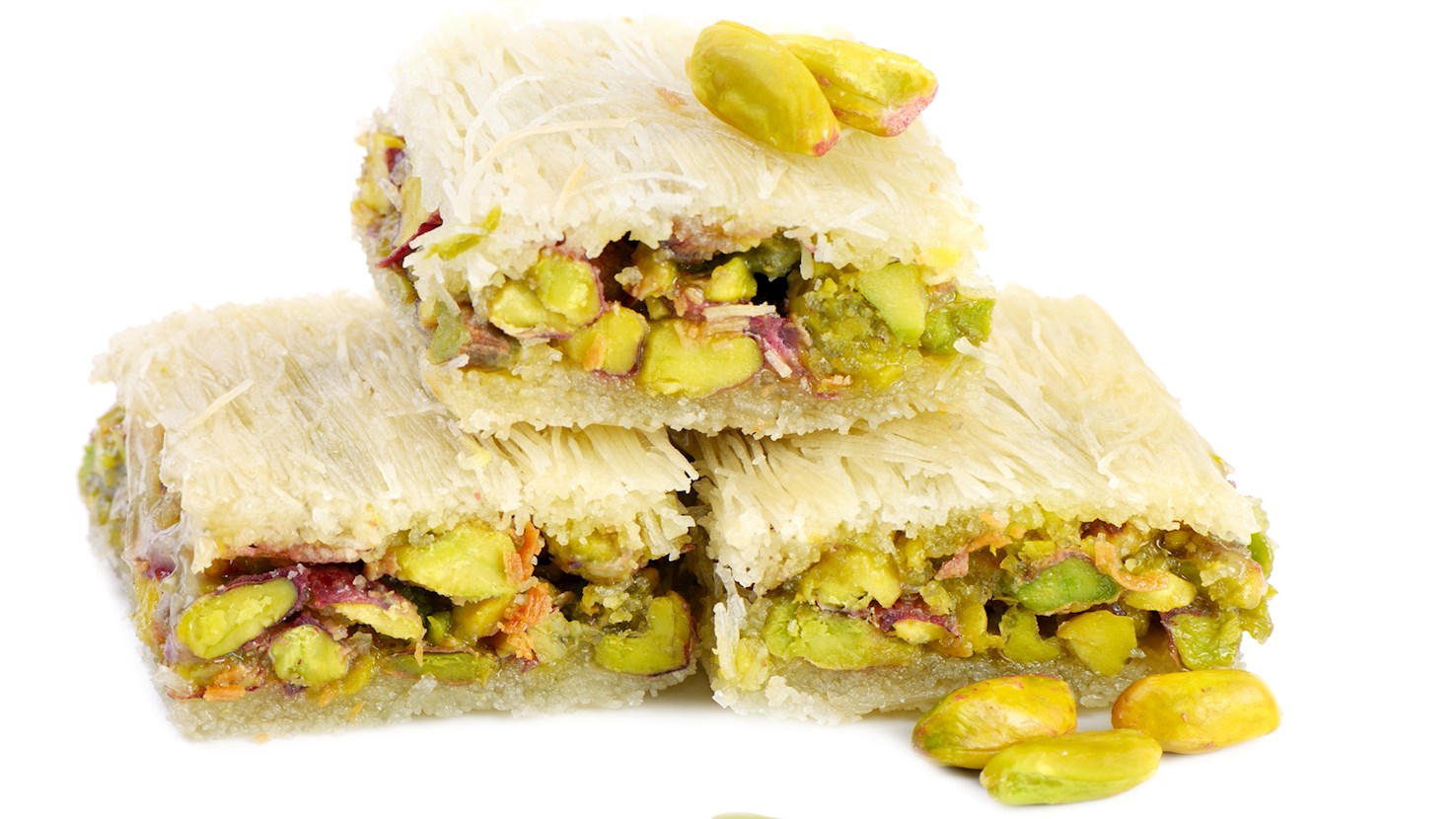
Ballourieh baklava consists of a pistachio filling that is placed between two layers of shredded kataifi dough—similar to the one used in kunāfah. This baklava variety is lightly baked because it needs to retain its typical white color. When baked, it is doused in syrup and left to set, and it is then traditionally served cut into large squares. Although it is believed to have been invented in Aleppo, ballourieh baklava is commonly found in Lebanon, Saudi Arabia, Palestine, and Jordan.

02

Mamounia

3.8 ·

Mamounia is a traditional semolina dessert that resembles a thick porridge. It is made with semolina, butter, and sugar and is typically served warm for breakfast or dessert. The texture is creamy, and it can be flavored with rose water and orange blossom water and garnished with toppings like cinnamon, toasted pine nuts, pistachios, almonds, and rose petals. Mamounia is especially popular in Aleppo and is cherished for its comforting and rich taste. It is typically served with string cheese, cream, and pita bread.

03

Jok malbal

3.5 ·

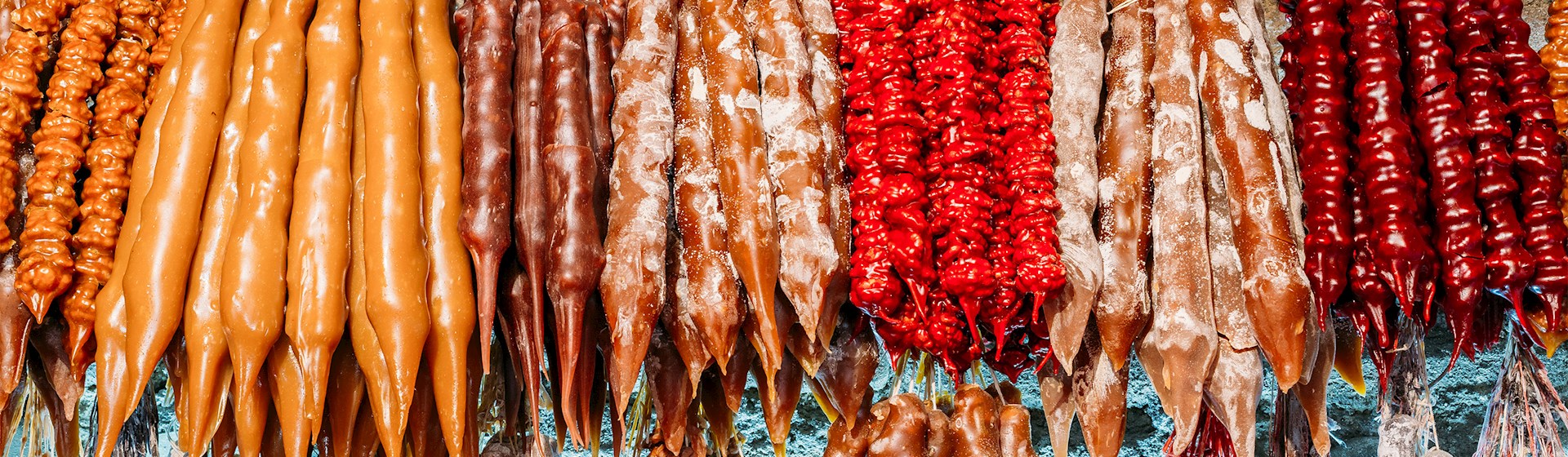
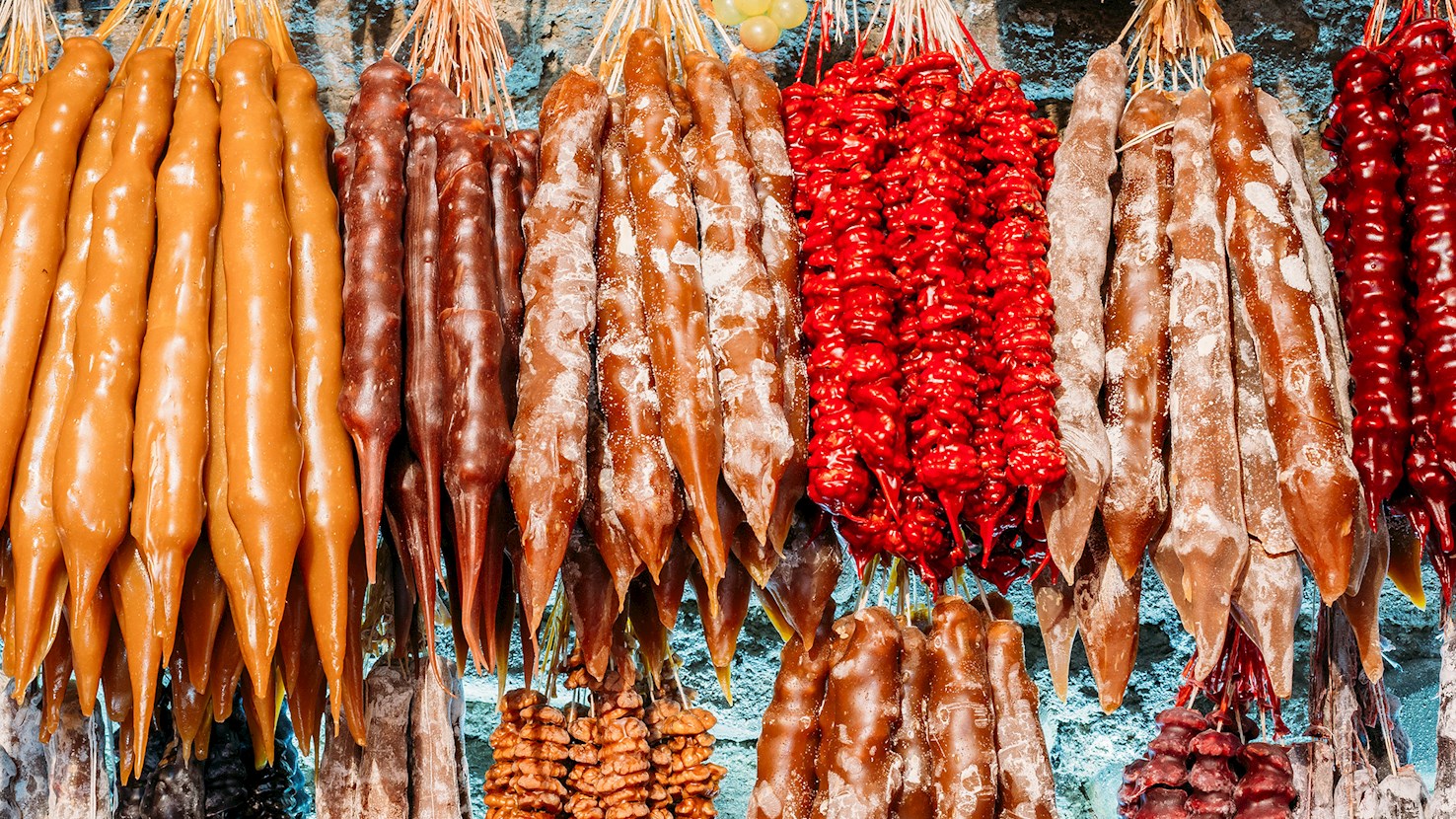
Churchkhela is a traditional Caucasian candy that is shaped into a sausage. This candy is made by dipping a long string of nuts (usually walnut halves) in concentrated grape juice, then leaving the concoction to dry. It is so healthy and so nutritious that, in the past, it was even carried by Georgian warriors on their long journeys. Although walnuts are usually used in the preparation of churchkhela, they can be replaced by almonds, hazelnuts, or raisins.

04

Karabij halab

3.4 ·

A sweet specialty hailing from Aleppo, karabij halab is a semolina flour cookie filled with a crunchy nut mixture and flavored with rose and orange blossom water. This sweet treat is typically made with semolina flour dough, topped with a mixture of ground pistachios or walnuts, sugar, ghee, cinnamon, and fragrant water, pinched closed, and then baked until nicely colored. Karabij halab, named after Halab - Aleppo’s ancient name, is typically shaped by hand, but it can also be molded in special, carved molds. The dessert is usually accompanied by natef - a type of white cream made from soapwort root - and is traditionally prepared on special occasions and holidays, such as Eid Al-Fitr. Although these Syrian cookies can be made at home, they are more commonly bought in numerous pastry shops selling them throughout the country, as making them can be a bit tricky due to the crumbly semolina dough.

About this ranking

TasteAtlas food rankings are based on the ratings of the TasteAtlas audience, with a series of mechanisms that recognize real users and that ignore bot, nationalist or local patriotic ratings, and give additional value to the ratings of users that the system recognizes as knowledgeable. For the “Top 4 Traditional Desserts in Aleppo Governorate” list until May 15, 2026, 2,931 ratings were recorded, of which 218 were recognized by the system as legitimate. TasteAtlas Rankings should not be seen as the final global conclusion about food. Their purpose is to promote excellent local foods, instill pride in traditional dishes, and arouse curiosity about dishes you haven’t tried.

Similar lists