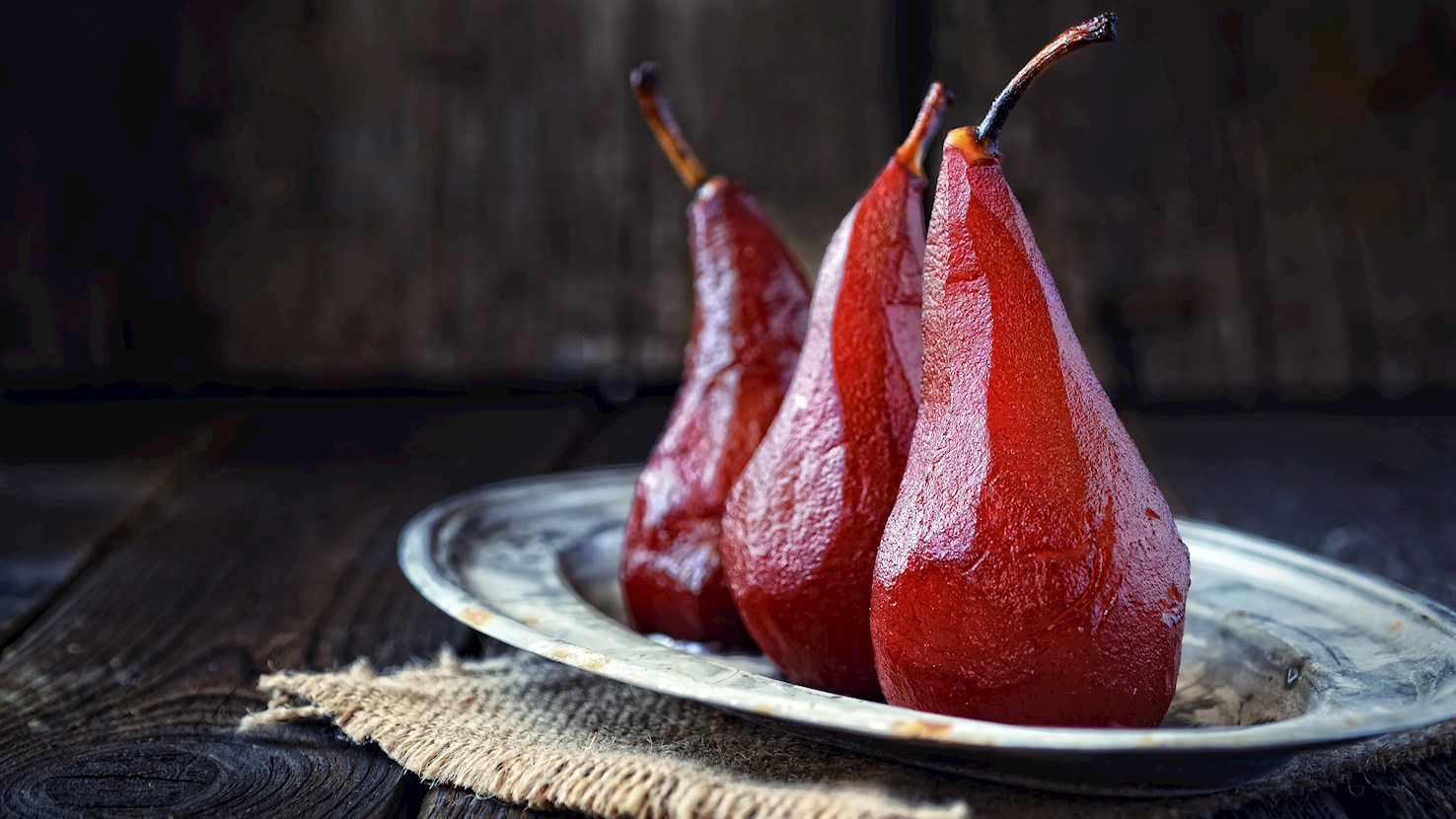
Poires au vin is a traditional, world-known French dessert originating from the Beaujolais wine-growing region. It consists of pears, fruity red wine (usually Beaujolais), and flavorings such as honey or sugar, cinnamon, vanilla, orange zest, peppercorns, and cloves. The pears are poached in wine and other ingredients, and the combination is then brought to a boil. The pears, still slightly firm, are drained, while the remaining ingredients are thickened into a sauce which is then poured over the pears when served. Pears in wine are traditionally served either cold or lukewarm.
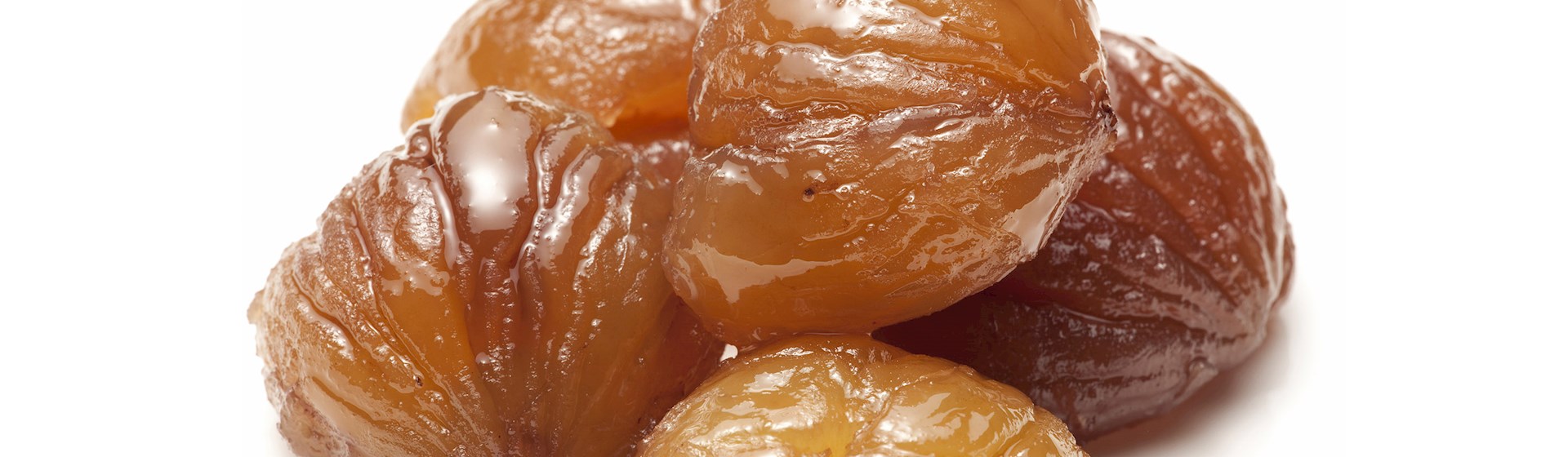
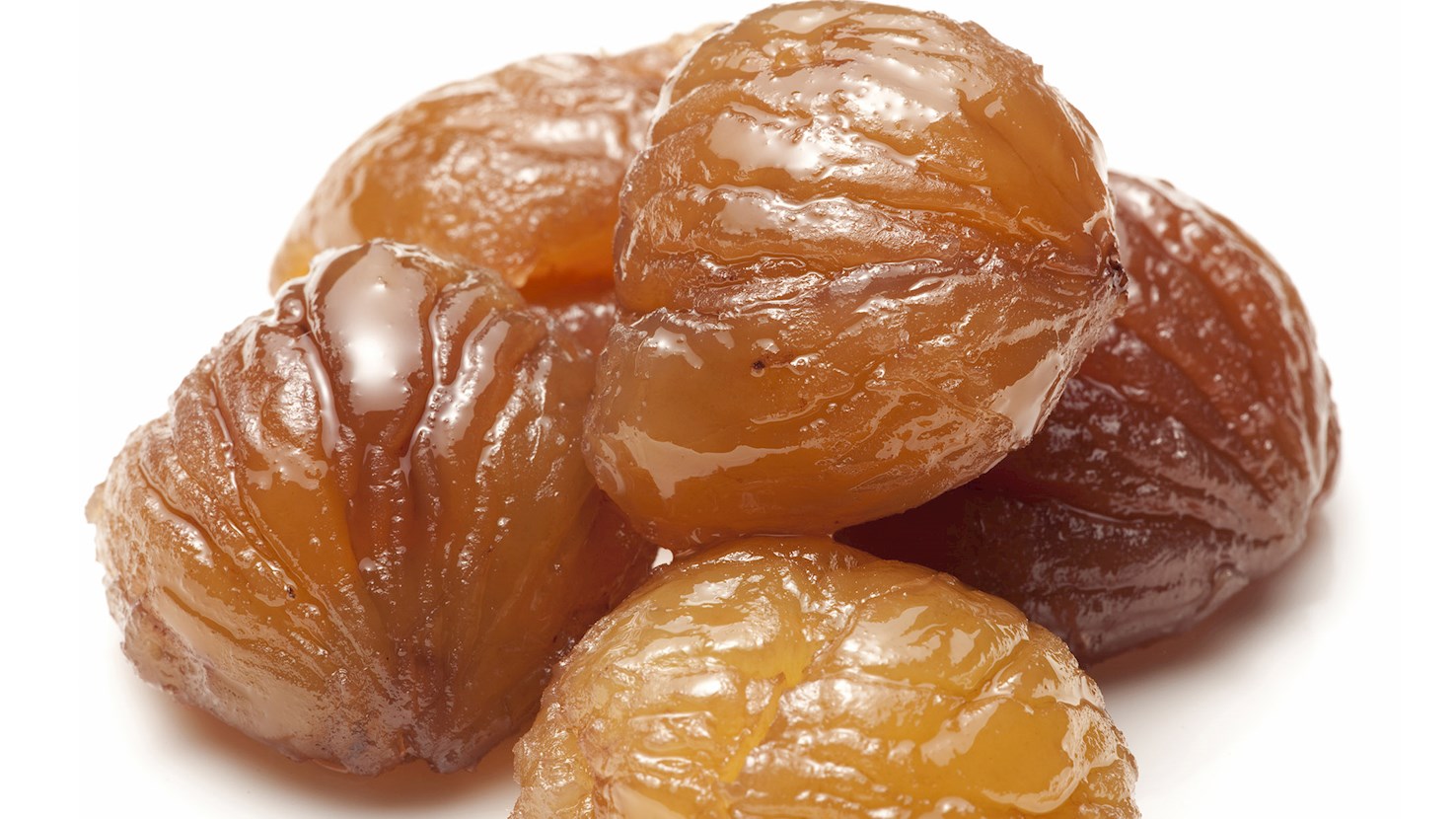
Marron glacé is a dried and candied chestnut, a French sweet treat that is extremely popular during the festive Christmas season. Preparing the candied chestnuts is a time-consuming process, so it is considered an expensive treat. The chestnuts have a unique, soft texture, and a slightly sweet flavor. They are often wrapped individually in order to preserve their shape. The first recipe for marron glacé appeared in the 16th century around the city of Lyon. Marron glacé enthusiasts say that the dessert is best when consumed on its own, ideally accompanied by a cup of warm tea.
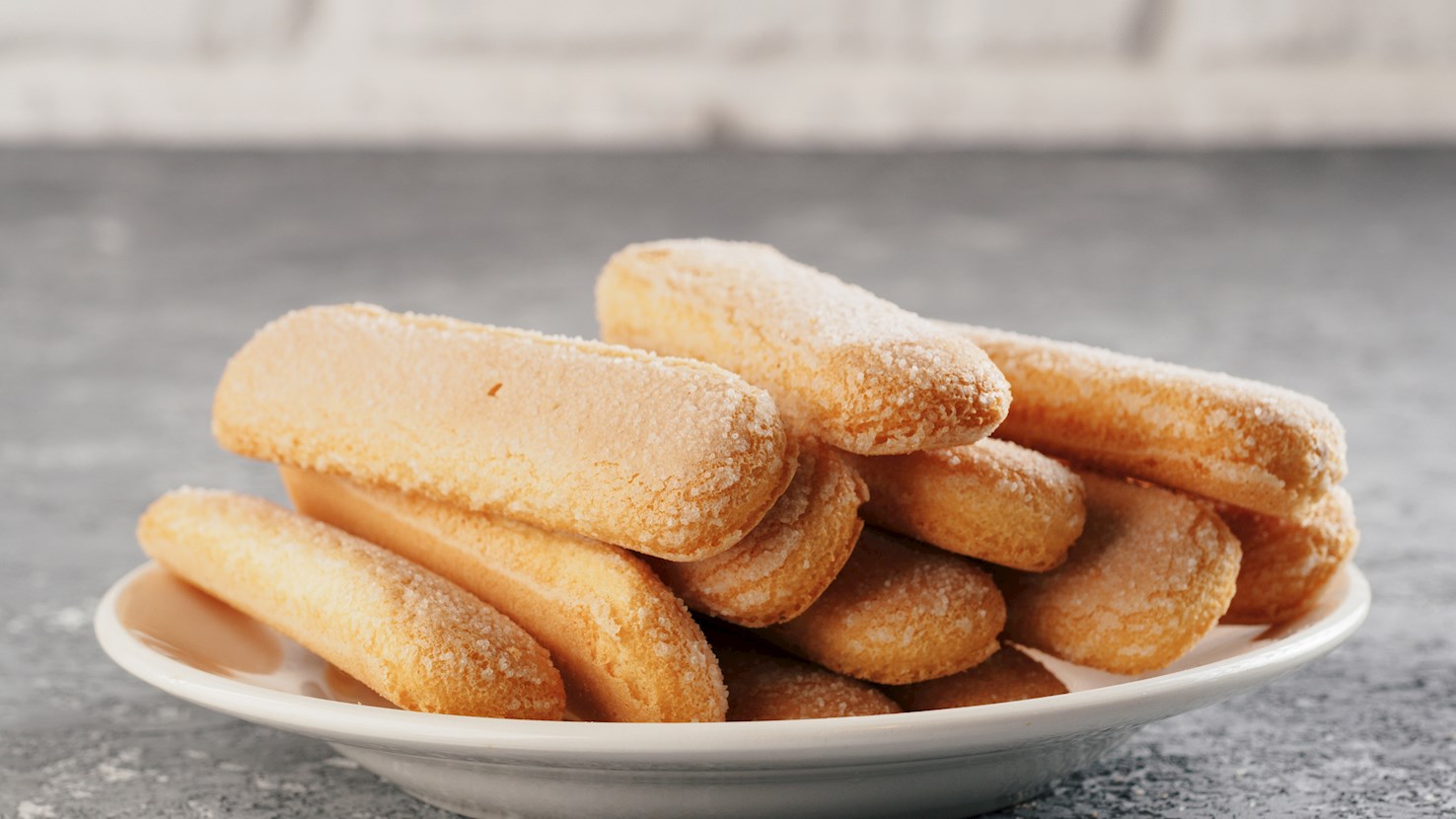
Boudoirs, savoiardi, or ladyfingers are traditional sweet sponge biscuits shaped into a large finger. They were created in the 15th century at the Duchy of Savoy for a visit by the King of France. These official court biscuits were often offered to visitors as a token of local cuisine. The texture of ladyfingers is low in density, light, airy, and dry, and they're usually made with a combination of flour, egg whites and yolks, sugar, and powdered sugar. These sponge biscuits are typically used in desserts such as charlottes and trifles, tiramisu, and chocolate cakes. They're often soaked in liqueur, sugar syrup, or espresso. Nowadays, ladyfingers can be found in most countries across the world.
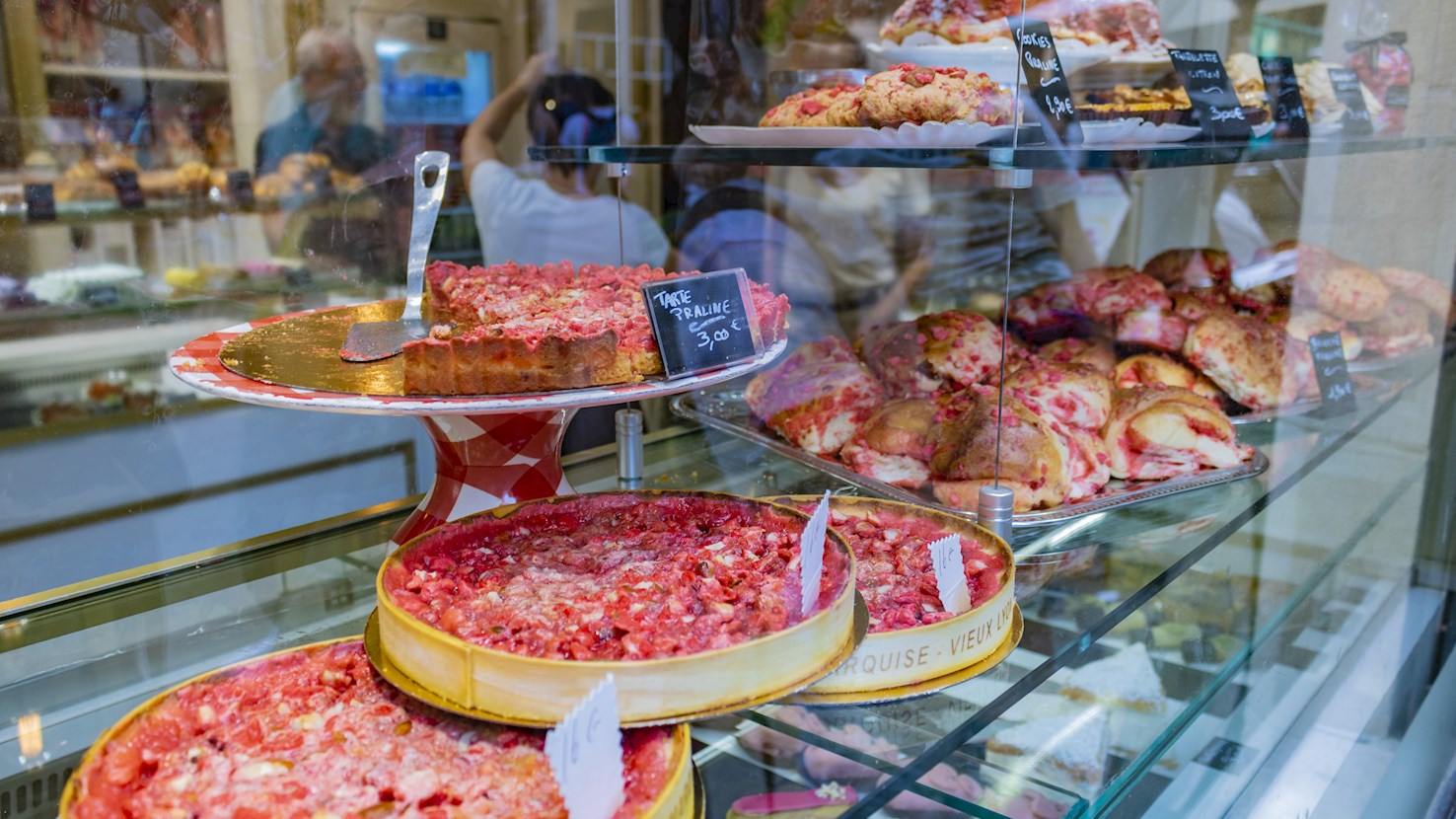
Tarte aux pralines, or praline tart, is a traditional dessert that hails from the Lyon region. It is celebrated for its vibrant pink color and sweet, nutty flavor. The tart consists of a buttery, flaky pastry crust, typically made from a shortcrust pastry (pâte sucrée), filled with a mixture of crushed pink pralines and heavy cream. To prepare the pastry crust, you mix flour, sugar, and butter to form a dough, which is then chilled, rolled out, and fitted into a tart pan. The crust is blind-baked until golden. For the praline filling, pink pralines are crushed into small pieces and heated with heavy cream until melted and combined. This mixture is then poured into the pre-baked tart shell. The tart is baked until the filling is set, and it is allowed to cool completely before serving to let the filling solidify. Tarte aux pralines is often enjoyed as a dessert or a sweet treat with coffee.
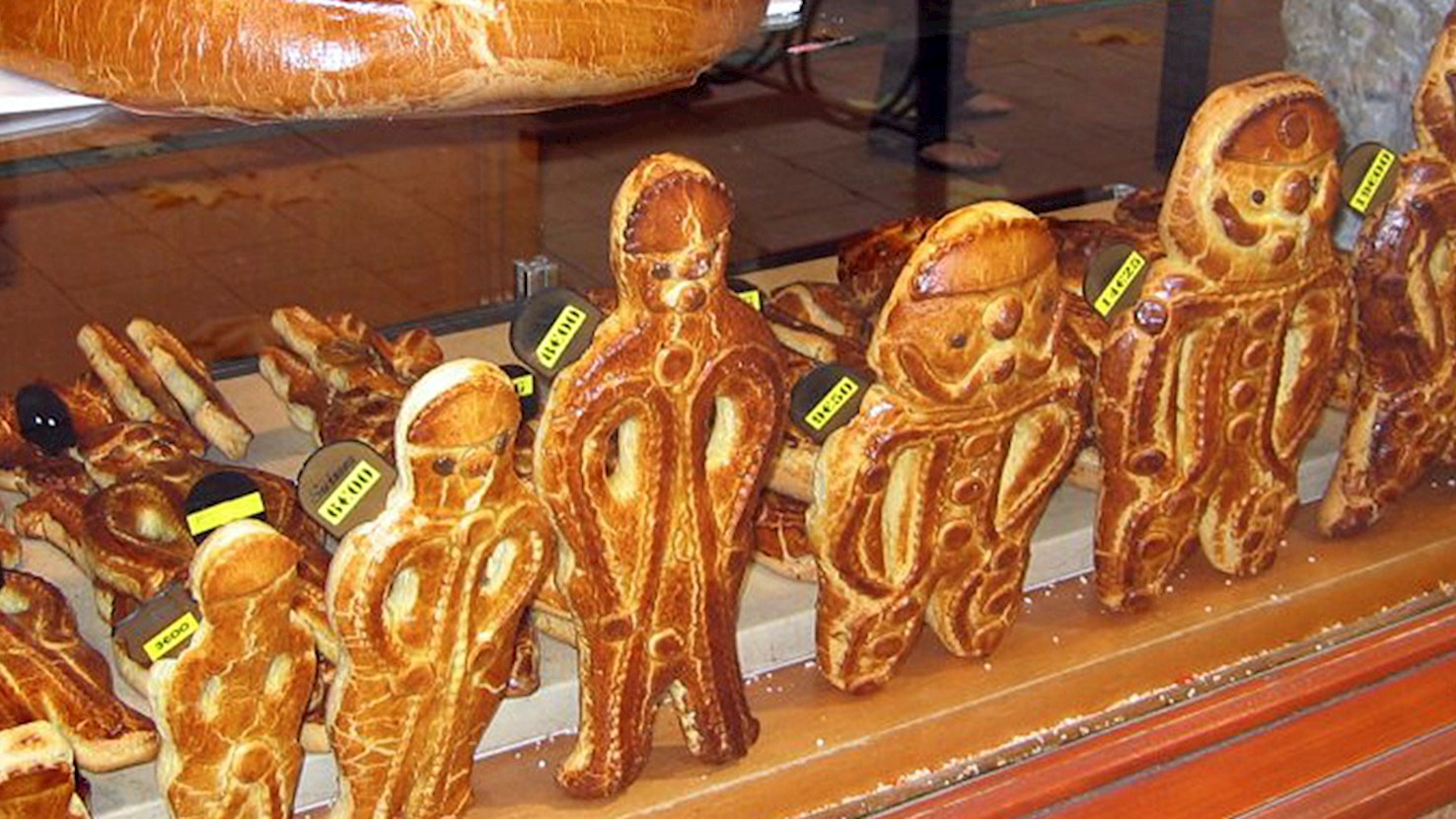
Suisse de Valence is a traditional cookie that is shaped like a man. Its design (and the name, because Suisse means Swiss) was inspired by the uniforms worn by Pope Pius VI's Swiss guards. The Pope himself was a prisoner in Valence in 1799, where he had also died. The cookie is made with shortbread that is flavored with orange blossom and contains tiny pieces of candied orange peel. It has a hat, a mustache, raisins that are used as buttons on the uniform, and coffee beans that are used as its eyes. Suisse de Valence is most commonly enjoyed with a cup of coffee or a scoop of ice cream on the side.
Lunette de Romans is a traditional pastry from Romans-sur-Isère in France, characterized by its oval shape with scalloped edges and two holes on the top, resembling glasses. It consists of two layers of shortcrust pastry, typically filled with fruit jelly, such as raspberry or apricot. The top layer is dusted with powdered sugar. This pastry has its roots in a similar Italian biscuit, brought to the Dauphiné region by immigrants. Lunette de Romans is enjoyed as a dessert or snack, often accompanied by tea or coffee.
Galette bressane is a sweet tart from Bresse that is coated with a layer of cream and sugar that caramelizes in the oven, offering a lightly sweet, buttery, and creamy flavor. Its development is rooted in Bresse’s abundant dairy production, where milk, cream, and butter have long been central to local cooking, and bakers and home cooks in the region refined this enriched dough preparation into a recognizable sweet that appears in markets and family kitchens as a rich, lightly sweet tart. Preparation begins by activating yeast in warm milk, then mixing this with eggs, sugar, flour, and a pinch of salt to form a smooth, elastic dough; this dough is kneaded until supple, left to rise until well developed, then spread into a galette shape on a baking tray, the center is depressed to form a shallow well, and thick cream is spread over the surface before dusting with sugar and baking so the cream and sugar form a lightly caramelized topping while the dough remains tender and moist. Variations include minor differences in the ratio of cream to sugar on top, the choice between milk or cream in the dough itself, and occasional additions such as vanilla or other mild flavorings. Galette bressane is eaten warm or at room temperature as a dessert or sweet course, often served after meals or with coffee and tea, and pairs well with regional cider, light sparkling wines, or simply a cup of black coffee, which complements its rich dairy and gentle sweetness.
Pangée is a cake that combines dried apricots, ground almonds and honey, and originates in the Drôme department. It was created in 2001 by a group of local pastry makers seeking to highlight the region’s produce, and in 2004 it received a national award. The preparation involves making a dense biscuit-like dough with flour, butter, eggs, sugar, lots of finely ground almonds, honey, and dried apricot pieces or compote, the dough is molded into a round shape in which a sector is cut out to represent a missing “continent”, an apricot is placed at the centre, then the cake is baked until caramelised and allowed to cool and set before packaging. Many versions exist: some variations swap in apple purée or add a light apple component, others use slightly different honeys (such as lavender honey) or present the cake with or without the signature missing-wedge shape, and the unique attribute of this cake lies in its deliberate missing slice and central apricot which symbolise the ancient super-continent Pangea and the local terroir. The pangée cake is sold in fine bakeries, especially in the Drôme region, packed for travel or gift use, and is often enjoyed with tea or coffee, or paired with a light dessert wine or a gentle sparkling to complement the almond-honey richness.
Gâteau aux noix de Grenoble is a walnut cake from Grenoble and Vinay made with Grenoble walnuts cultivated in the walnut-growing zones surrounding the city of Grenoble. The quality and abundance of noix de Grenoble encouraged local pâtissiers to create a cake centered on finely ground walnuts combined with simple pantry ingredients. The first step in making the cake is grinding the shelled Grenoble walnuts into a fine meal, then mixing egg yolks with sugar until pale before adding the walnut powder, starch to lighten the batter, and softened butter, after which stiffly whipped egg whites are folded in to provide lift; the mixture is baked in a buttered mold until set, cooled, and often finished with a glaze made from powdered sugar and coffee, with walnut halves arranged on top. The cake is commonly flavored with rum and coffee directly in the batter or the glaze, giving it a characteristic aroma that complements the walnuts. Variations mainly concern the thickness of the glaze, the choice to leave the cake unglazed, or the use of slightly coarser walnut pieces for a more textured result, while the defining element remains the exclusive use of Grenoble walnuts, ground finely enough to create a moist, dense crumb with a deep nut character. Gâteau aux noix de Grenoble is eaten as a dessert in homes, pâtisseries and during local celebrations, often enjoyed with a lightly roasted coffee, a sweet or semi-sweet white wine from nearby alpine vineyards, or a simple afternoon tea.
Macaron de Joyeuse is a cookie from the town of Joyeuse in Ardèche. Its origins date back to 1581, when macaroons made from almonds and hazelnuts were created for the wedding festivities of the Duke of Joyeuse, after which local confectioners began making similar pastries that gradually became part of the town’s identity. Production continued for centuries, and in 1867 pastry chef André Maurice Pellier perfected the recipe when he introduced a new oven that altered the baking process and established the final form of the macaron as it is known today. The method he defined remains the foundation of the version still produced in Joyeuse. Preparation involves a mixture of finely ground almonds and hazelnuts blended with sugar and egg whites, shaped into small domes and baked slowly at low heat to develop a crisp, lightly golden exterior and a tender, chewy center. Once cooled, the macaroons are boxed and can keep for several months without losing flavor or texture. Modern variations may add chocolate coating, praline, or citrus zest, but the authentic recipe relies only on the nut mixture, egg whites, and sugar. A distinctive feature of macaron de Joyeuse is the balance between almond and hazelnut and its dry, friable consistency rather than the soft or creamy texture of other types of macarons. The confection remains made by hand by the Charaix house in Joyeuse, which continues the artisanal process defined in the nineteenth century. It is eaten at room temperature as a dessert or sweet accompaniment to coffee or tea and pairs harmoniously with sweet white wines such as Muscat, nut-based liqueurs, or mild milk chocolate whose richness enhances the nutty aroma of the macaron.
TasteAtlas food rankings are based on the ratings of the TasteAtlas audience, with a series of mechanisms that recognize real users and that ignore bot,
nationalist or local patriotic ratings, and give additional value to the ratings of users that the system recognizes as knowledgeable.
For the “Top 20 Aurhalpin Desserts” list until June 15, 2026, 468 ratings were recorded, of which 406 were recognized by the system as legitimate.
TasteAtlas Rankings should not be seen as the final global conclusion about food. Their purpose is to promote excellent local foods,
instill pride in traditional dishes, and arouse curiosity about dishes you haven’t tried.