


shutterstock

Top 4 Cambodian Desserts

Last updated on July 15, 2026
01

Kralan

3.2 ·

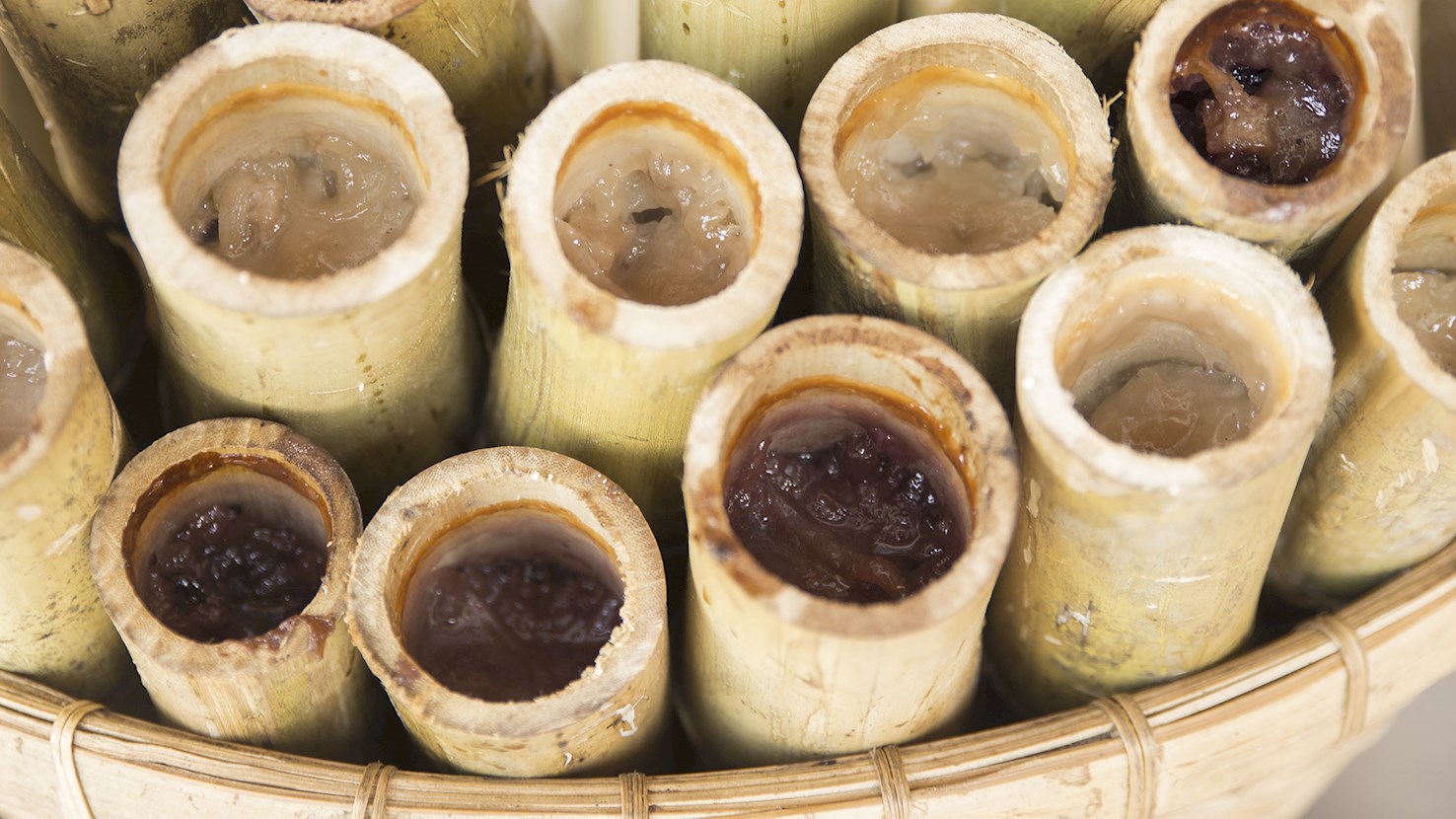
Khao lam or kralan is a unique Southeast Asian dessert consisting of sweet sticky rice, either white or red, steamed in bamboo tubes, popular in Thailand, Myanmar, Cambodia, and Laos. The simplest, original version included only rice mixed with water and salt, but more elaborate interpretations nowadays include the addition of grated coconut, sugar, coconut milk, and red beans. The rice is mixed with the desired ingredients and placed inside specially prepared bamboo sticks. Coconut milk is added on top of the rice, and then the stick is sealed and carefully placed on a construction over hot coals. This unusual slow-cooking process transforms the rice into a sweet and rich creation, similar to custard or rice pudding. Modern versions come in a variety of different flavors such as taro, durian, Thai custard, or corn, which are usually tucked in the center of the roll. Khao lam is regarded as a filling treat and is usually sold by street vendors at food fairs, around the temples, and at numerous Asian markets.

02

Sankhya lapov

n/a ·

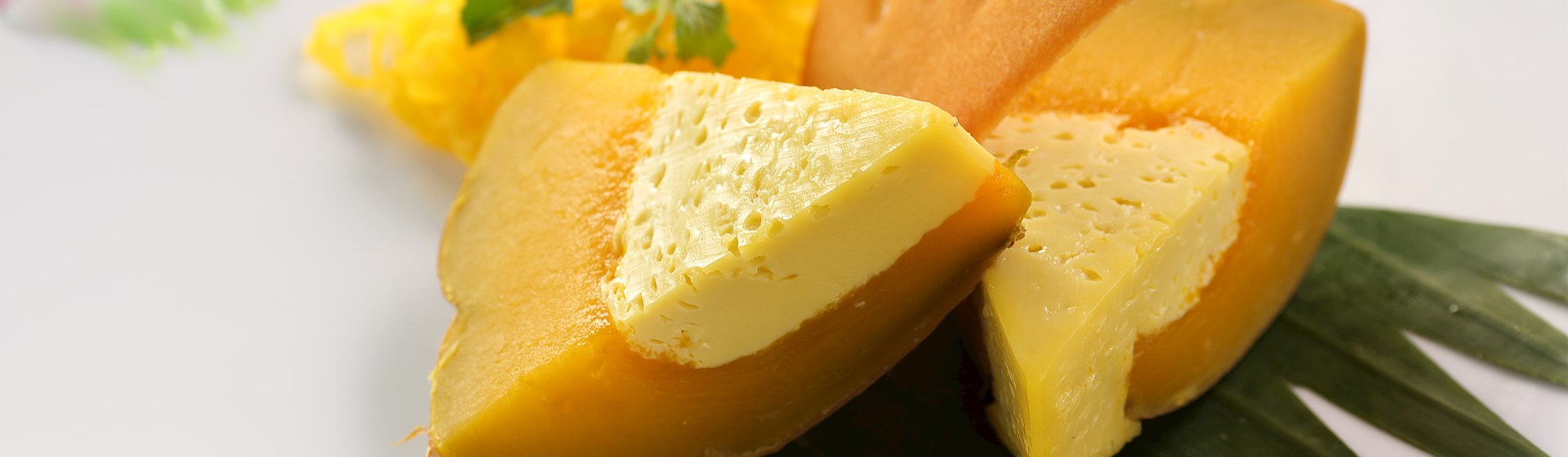
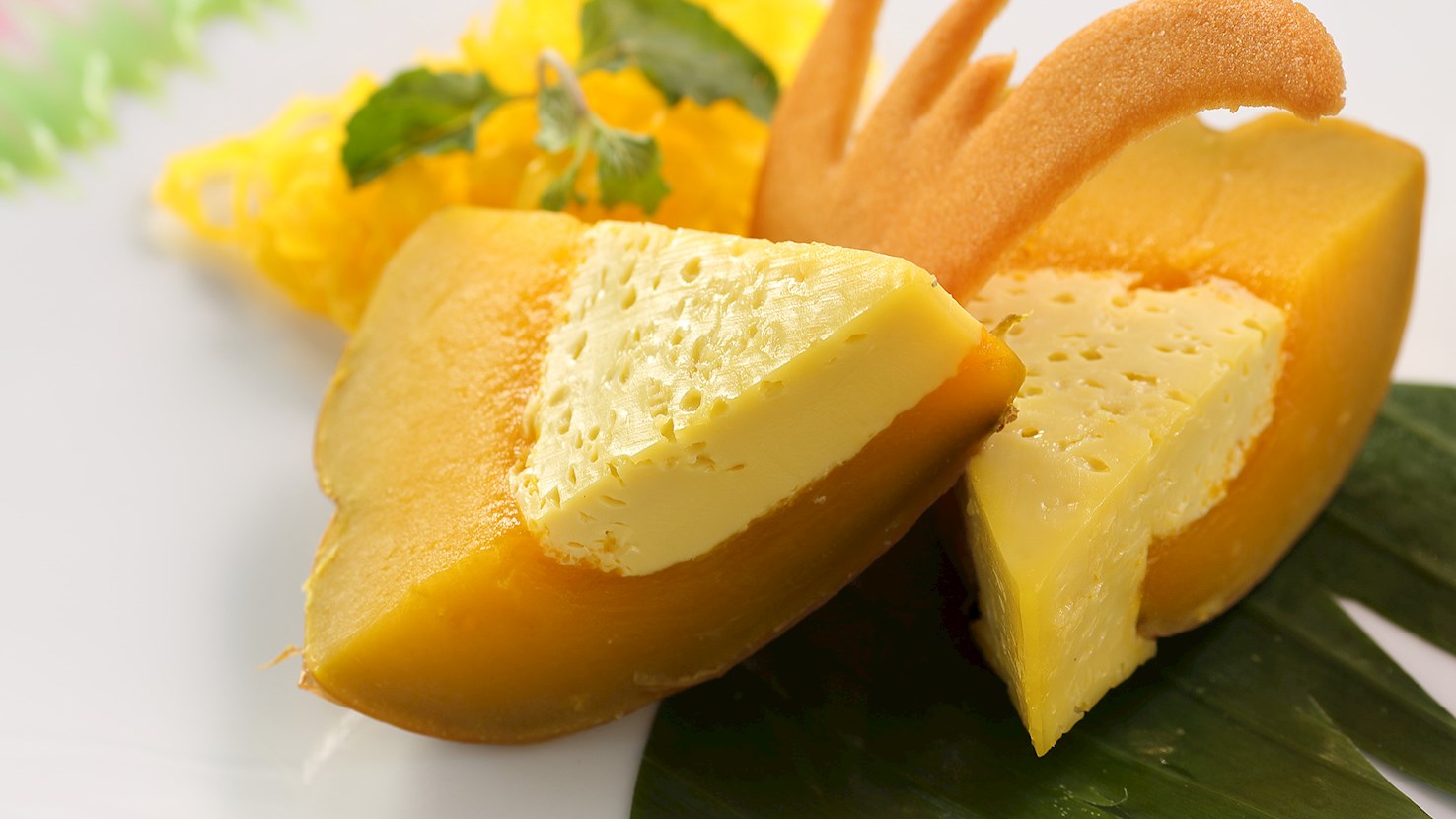
Sankhya lapov is a traditional dessert that consists of a small pumpkin filled with creamy custard containing coconut milk or cream, palm sugar paste, eggs, and salt. It is usually prepared with kabocha squash, which is dark green on the outside and has a bright orange interior with a sweet flavor. The top of the squash is cut off, its seeds are removed, and the cavity is filled with the custard. The pumpkin’s top is then replaced, and the pumpkin custard is steamed until it is thoroughly cooked. Sankhya lapov can be enjoyed warm or chilled, and it is traditionally prepared for special occasions and religious festivals. In the Khmer language, sankhya means custard, while lapov translates to pumpkin. This sweet treat is also a typical dessert in Thailand and Laos, where it is known as sangkhaya fak thong and sangkhaya maryu, respectively.

03

Ansom chek (Sticky rice banana cake)

n/a ·

Ansom chek, also known as num ansom chek, is a traditional sticky rice cake combined with slices of banana. The cake is steamed in banana leaves. The dessert is made with a mixture of sticky rice, coconut milk, and coconut shavings that is spread over banana leaves, topped with a slice of salted, ripe baby banana which is covered with more rice, and then the whole thing is carefully enclosed within the banana leaves. The resulting cylindrical-shaped dessert is then steamed until tender and fragrant. Ansom chek can optionally be enriched with red mung beans or black beans and it can also be sweetened with palm sugar if desired. In Cambodia, this sweet delicacy is traditionally prepared for important celebrations such as Cambodian New Year and the religious festival Pchum Ben (Festival of Souls).

04

Nom lote

n/a ·

Nom lote is a Cambodian rice pudding that is made with a combination of rice flour, water, pandan leaf extract, palm sugar, and coconut milk. Rice flour is cooked with water, pandan leaf extract, and white lime until it obtains a thick consistency. The resulting pudding-like mixture is pressed through a strainer, added to a serving bowl, and is then typically topped with a sweet liquid consisting of palm sugar dissolved in salted water and heated coconut milk. Sweet and creamy, the dessert gets its distinctive green color and unique fragrance from the pandan leaf extract used in it. Nom lote can be consumed warm or chilled.

Read more
View all
View map
About this ranking

TasteAtlas food rankings are based on the ratings of the TasteAtlas audience, with a series of mechanisms that recognize real users and that ignore bot, nationalist or local patriotic ratings, and give additional value to the ratings of users that the system recognizes as knowledgeable. For the “Top 4 Cambodian Desserts” list until July 15, 2026, 90 ratings were recorded, of which 45 were recognized by the system as legitimate. TasteAtlas Rankings should not be seen as the final global conclusion about food. Their purpose is to promote excellent local foods, instill pride in traditional dishes, and arouse curiosity about dishes you haven’t tried.

Similar lists