This internationally known, decadent, and sugar-packed dessert is usually made with a mixture of flour, sugar, yeast, and salt, which is deep-fried and then bathed in syrup or honey. The origin of lokma fritters is ancient but often debated. It is presumed that they first appeared in Greece or Turkey, though some suggest Arabic origin. The dish is considered to be one of the oldest recorded desserts in Greek history. It is said that the pastries were even given to winning Olympians as a treat and were called honey tokens. Loukoumades, or loukmades in Cyprus, can be found throughout the streets of Greece, in shops selling nothing else but this caloric dessert. Alternatively, loukoumades can be topped with Greek cheese, chocolate, sesame seeds, or walnuts. In Turkey, lokma fritters are best enjoyed while still warm. They are drizzled with honey or syrup and can occasionally be sprinkled with either ground cinnamon, walnuts, or pistachios. The name probably stems from from Arabic luqma, meaning bite or mouthful, and it is said that lokmas were first prepared in Turkey by the sultans' cooks in palaces of the Ottoman Empire, though the oldest documentation of a similar dish was even found in the tomb of Ramses IV. In some Middle Eastern and Levant countries, this dessert is known as luqaimat or luqmat al-qadi, which roughly translates as judge's mouthful. The deep-fried balls are usually covered with date syrup, honey, or flavored syrups, while some prefer them sprinkled with various seeds. They are also often flavored with saffron or cardamom. The dessert is traditionally made in the month of Ramadan, and consumed after iftar, or breaking the fast. The dish is also found in some African countries, where it appears under various names.
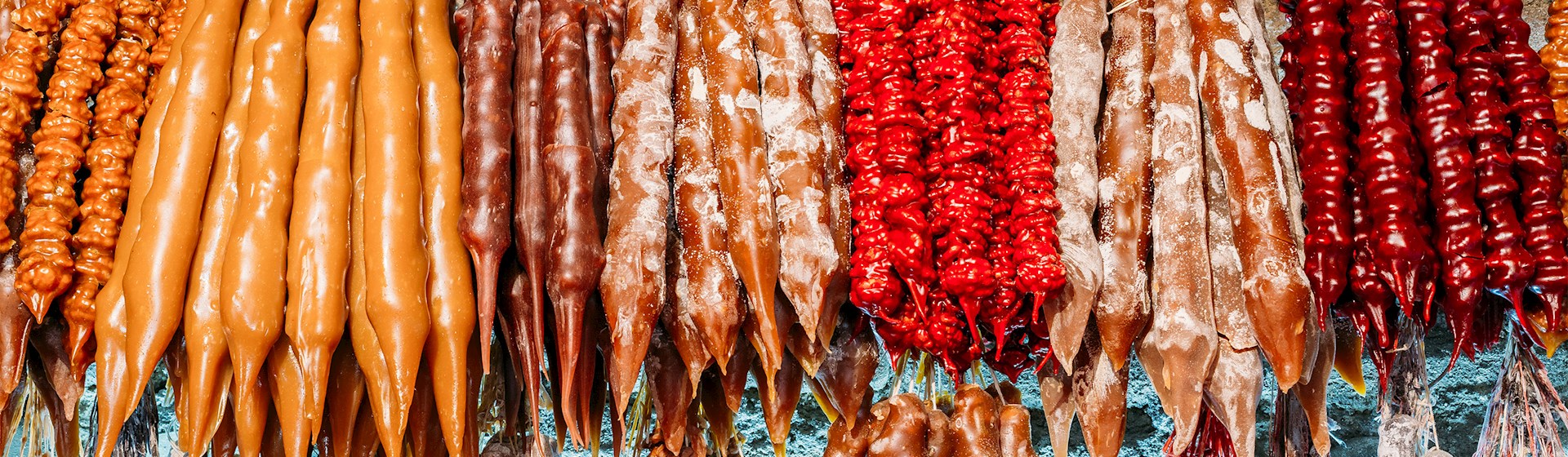
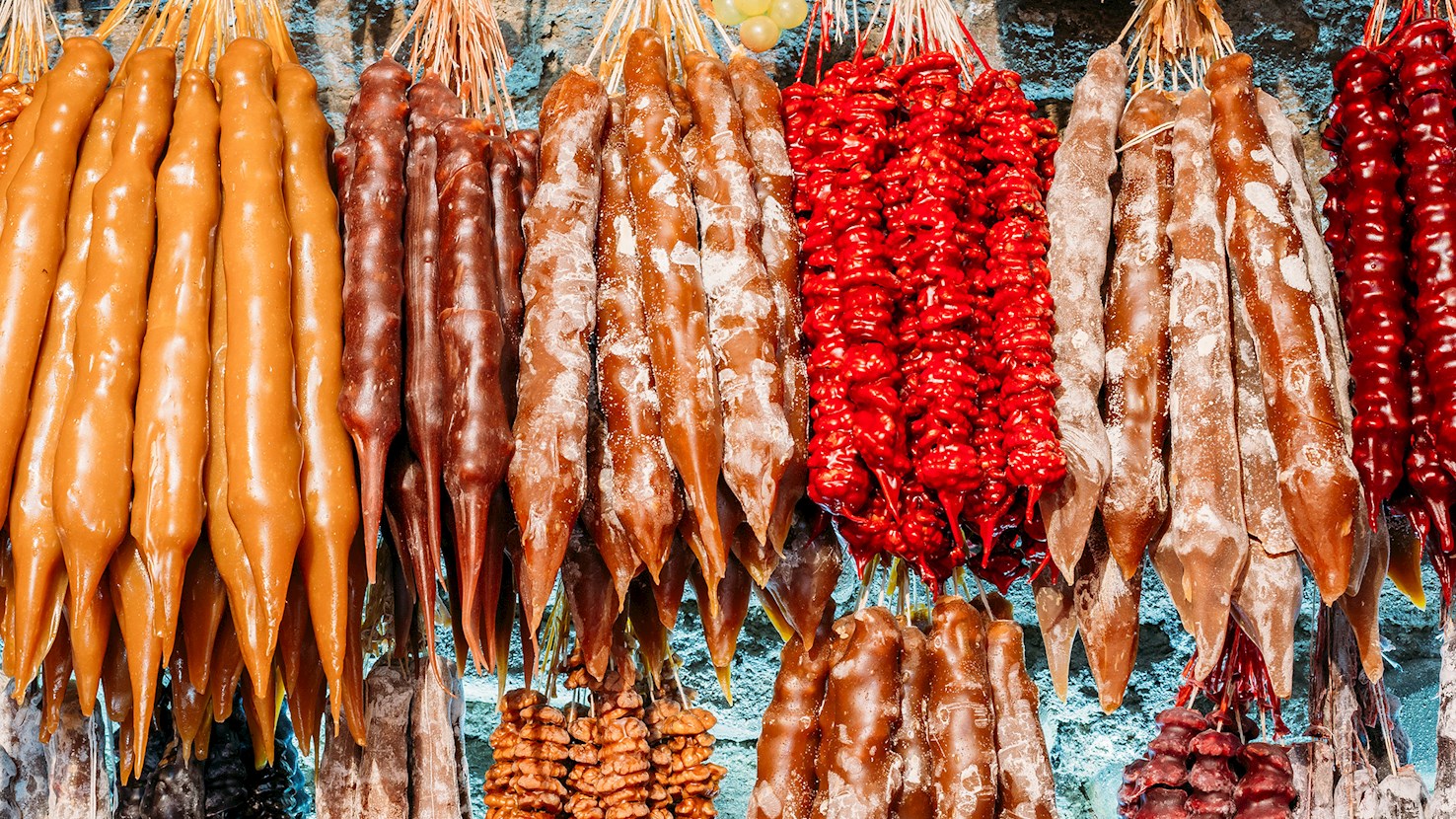
Churchkhela is a traditional Caucasian candy that is shaped into a sausage. This candy is made by dipping a long string of nuts (usually walnut halves) in concentrated grape juice, then leaving the concoction to dry. It is so healthy and so nutritious that, in the past, it was even carried by Georgian warriors on their long journeys. Although walnuts are usually used in the preparation of churchkhela, they can be replaced by almonds, hazelnuts, or raisins.
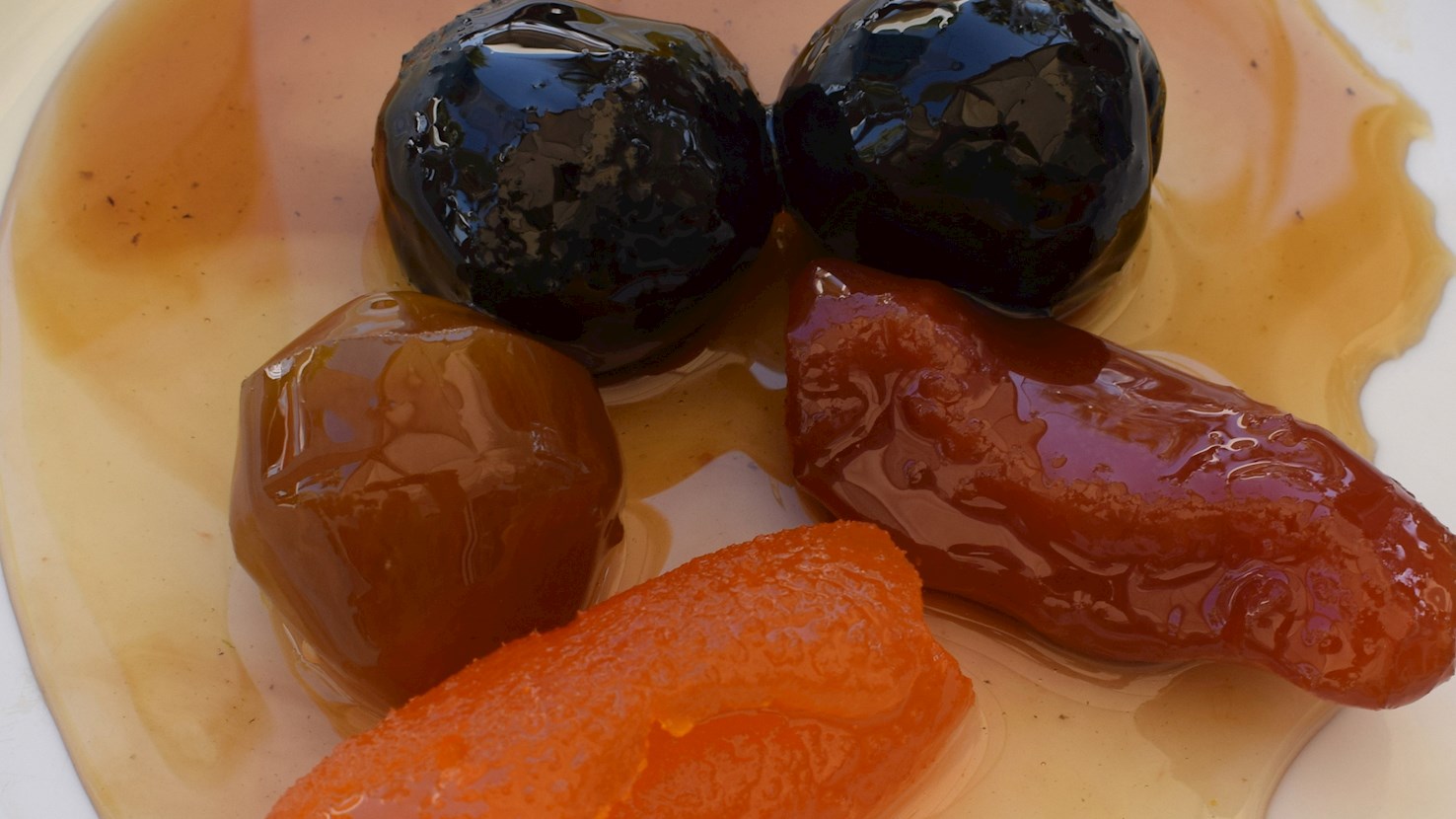
Spoon sweets are a traditional Greek and Cypriot custom and a sign of hospitality – fruits, nuts, and vegetables are placed in sugar syrup, remaining firm and retaining their original color, flavor, and aroma. They are called spoon sweets because the standard serving portion is a well-filled teaspoon which is offered to guests at numerous Greek homes. It is believed that when the custom first started to appear, everyone took spoon sweets from the same bowl as a precautionary measure – it was a way to know that the food was not poisoned. Even though spoon sweets are made throughout Greece, some of them are linked to specific regions: Andros is known for lemon and orange blossoms, Chios for grapes, figs, and mandarins, Santorini and Kos for their small, cinnamon-flavored tomatoes and almonds, Crete is famous for its grape and raisin sweets, while the Peloponnese is known for every imaginable citrus. Since these sweet treats have no fat, they are one of the Mediterranean's healthiest sweet products which can even be used as a topping for ice cream, yogurt, and various cakes.
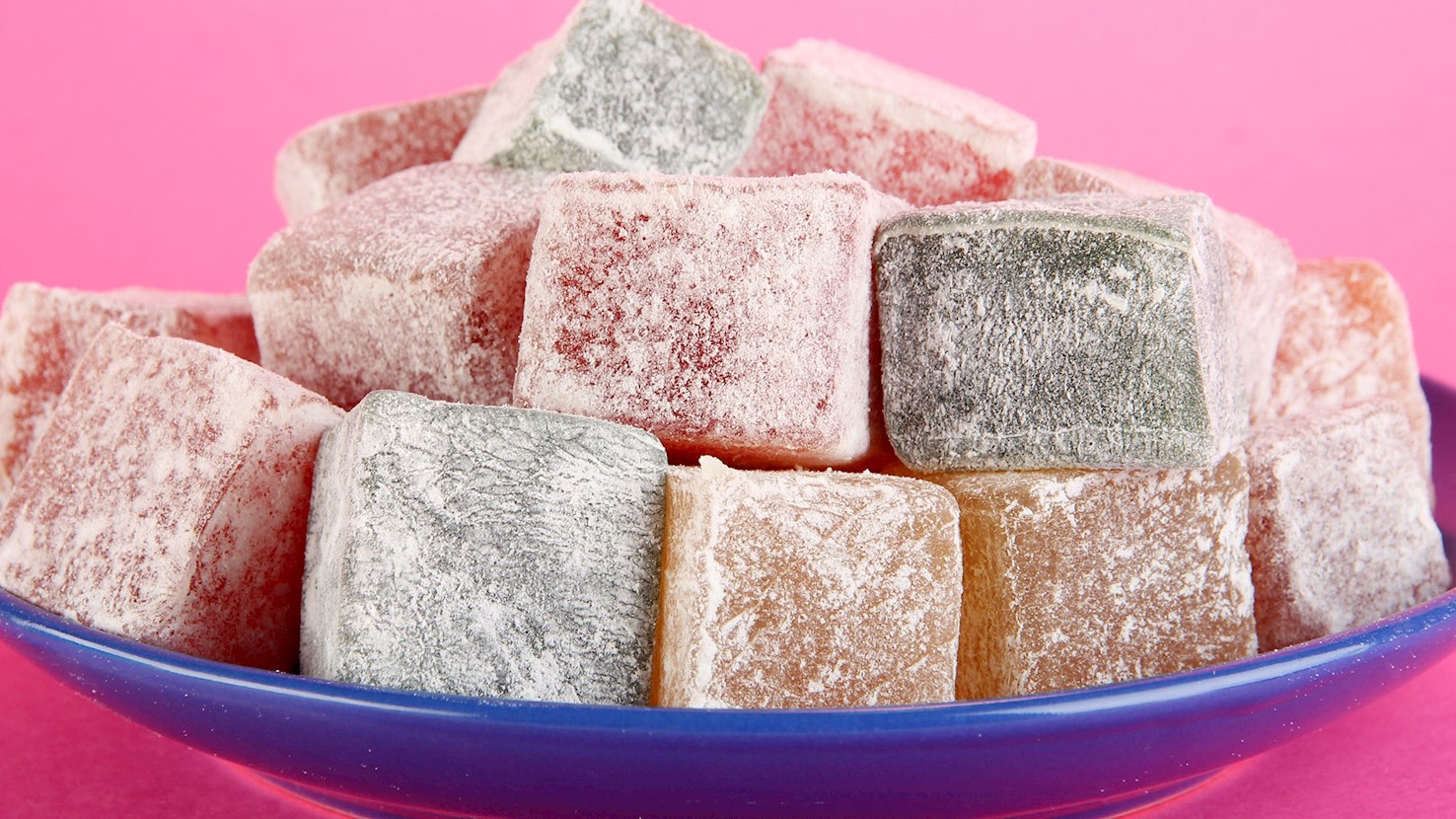
Loukoumi Geroskipou is a type of flavored rahat lokum which is made from sugar within the boundaries of Geroskipou municipality. It is coated in powdered sugar or shredded coconut, and it may be flavored or enriched with rose, strawberry, mandarin, orange, mint, pineapple, bergamot, banana, pistachio, lemon, vanilla, chocolate, and coconut. Nuts, honey, and bitter chocolate may be added to the product as well. The process of making Loukoumi Geroskipou requires time and patience, and thus it is very hard to imitate the original taste. It was first produced in 1895 by Sophocles Athanasiou and since then, it has been made according to the same recipe. His daughter took over the production of Loukoumi Geroskipou under the trade name 'Aphrodite Delights' in the 1920s. There are also many small local producers selling this treat which is adored both by locals and tourists. In 2009, Loukoumi Geroskipou was awarded the best Cypriot product of the year at the Time Out Eating Awards in Cyprus.
Shamishi is a popular Cypriot dessert consisting of fried pastry dough that is filled with sweet semolina paste. These treats are additionally flavored with cinnamon and orange blossom water, and are traditionally sprinkled with powdered sugar. Shamishi can be found at various Cypriot fairs and festivals throughout the year, and it is recommended to serve them hot. The word shamishi means work of Damascus, and it's believed that the dessert was brought to Cyprus by Anatolian Turks during the Ottoman period.
Karidaki glyko is a sweet preserve from Cyprus and Greece made from young, unripe walnuts that are harvested while still tender, and slowly cooked in syrup until glossy and deeply flavored. It is part of the wider category of glyka tou koutaliou or spoon sweets, which have long been prepared across the Eastern Mediterranean as a way to capture seasonal fruit and serve it in a preserved form throughout the year. The ideal moment for collecting the walnuts has traditionally been around June 24th, the feast day of Saint John the Baptist, when the nuts are at their perfect stage—soft enough to pierce with a needle yet mature enough to hold their shape. Families in both Cyprus and Greece often plan the preparation around this date. Fresh green walnuts are harvested in late May or June while the inner shell is still soft. They are peeled, with the tips trimmed, and each nut is pierced, then soaked in cold water for a week with daily changes. After a four-hour soak in pickling lime to keep them firm, they are rinsed thoroughly, briefly blanched, and soaked again with lemon juice for shine and texture. A syrup of sugar and water is prepared, and the walnuts are simmered before being boiled for about ten minutes on three consecutive days to thicken the syrup and allow flavor absorption. On the final day, cinnamon, cloves, and a little lemon juice are added. The finished walnuts, dark and glossy, are stored with the syrup in sterilized jars, where they keep for up to a year. It is typically served as a small sweet offering to guests, often presented on a small plate with a spoon and accompanied by a glass of cold water. At home, it is enjoyed with thick Greek or Cypriot coffee or as a sweet finish after a meal. It can also be paired with creamy yogurt, vanilla ice cream, or mild cheeses, which contrast with its intense sweetness and aromatic depth.
Kiofteri is a Cypriot sweet from the island’s wine-growing villages, made by setting grape must into a jelly and then drying it into firm, chewy slabs that are cut into rectangles for snacking. It grew out of the seasonal grape harvest, when fresh must was boiled and thickened for palouzes; portions were then laid to dry in the shade to produce a portable sweet with a long shelf life, a practice recorded locally as kiofteri or kiofterka. Preparation starts with clarified grape juice that is simmered and thickened with a little wheat flour, sometimes lightly scented with rose water; once the jelly sets, it is dried and sliced, yielding a dense, elastic texture and concentrated grape flavor that keeps well beyond harvest time. Some makers sweeten only with must or add a touch of sugar, and many describe kiofteri simply as palouzes left to dry, which explains its familiar shape and its use as an energy-giving bite through winter. Today it is eaten across Cyprus at home and from small producers’ stalls, served plain at room temperature or alongside nuts, coffee, or a nip of local spirit; the concentrated sweetness pairs well with bitter Cypriot coffee, herbal teas, crisp village whites, or chilled zivania or Commandaria.
TasteAtlas food rankings are based on the ratings of the TasteAtlas audience, with a series of mechanisms that recognize real users and that ignore bot,
nationalist or local patriotic ratings, and give additional value to the ratings of users that the system recognizes as knowledgeable.
For the “Top 7 Cypriot Desserts” list until August 15, 2026, 1,463 ratings were recorded, of which 706 were recognized by the system as legitimate.
TasteAtlas Rankings should not be seen as the final global conclusion about food. Their purpose is to promote excellent local foods,
instill pride in traditional dishes, and arouse curiosity about dishes you haven’t tried.







What People Say