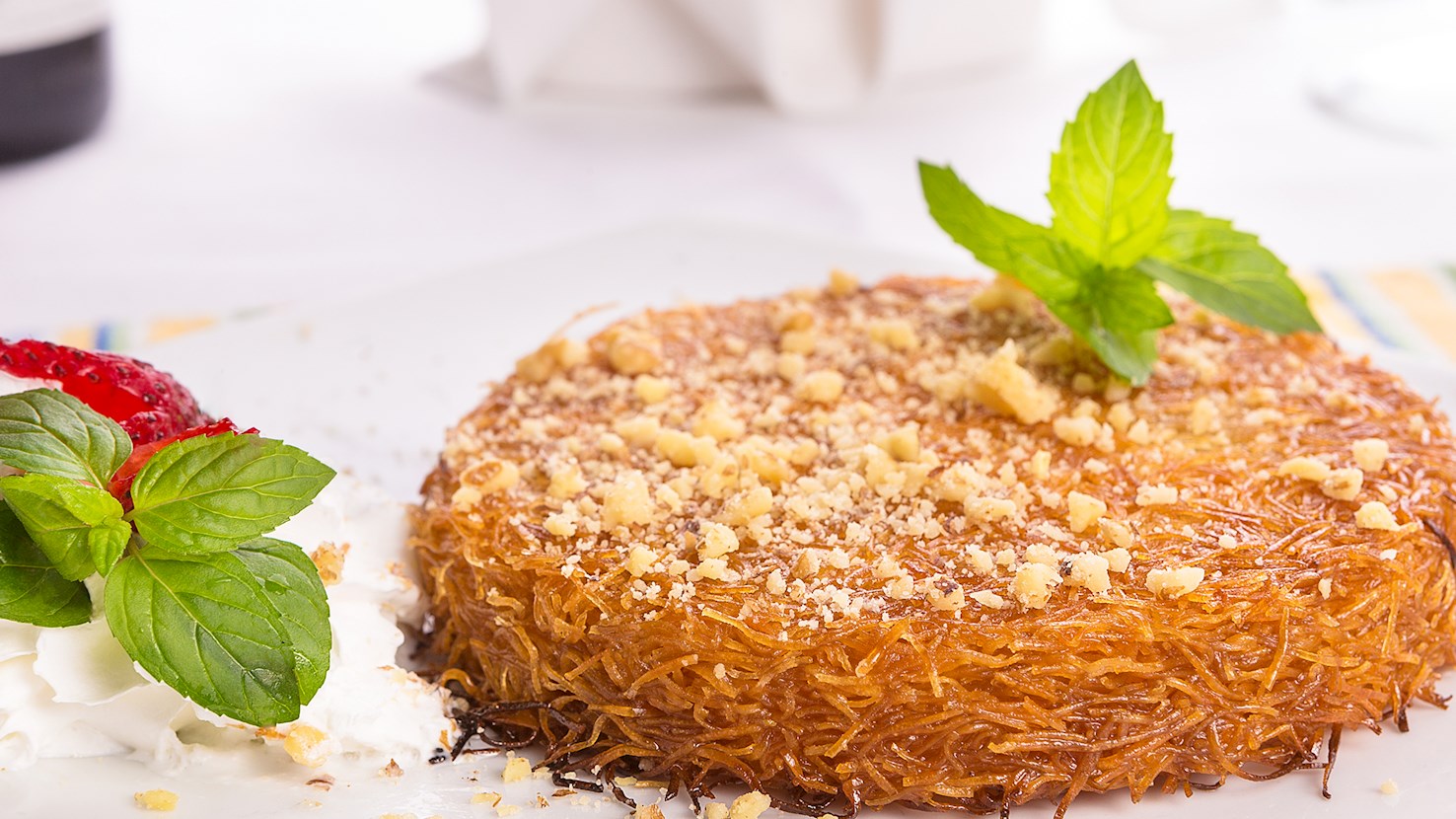
Kunāfah consists of two crunchy layers of shredded and buttered kataifi or knefe dough, filled with a luscious cheese cream that's often flavored with orange zest and cardamom, then drenched in a sugar syrup infused with lemon juice and orange blossom water. Turkish künefe is traditionally made with Hatay, Urfa, or Antep cheese. It is usually topped with pistachios and is best served warm. Elegant and amazingly simple to make, this dessert is nothing short of what cheese-filled pastry dreams are made of. Some authors speculate that it originated from the Fatimid Egypt or pre-Islamic Syria, while others claim that the Palestinian city of Nablus is its birthplace - hence the name kanafeh nabulsieh. Nevertheless, this decadent dessert has been a part of a long culinary tradition in Türkiye and Egypt, and it is listed as one of Egypt's national dishes.
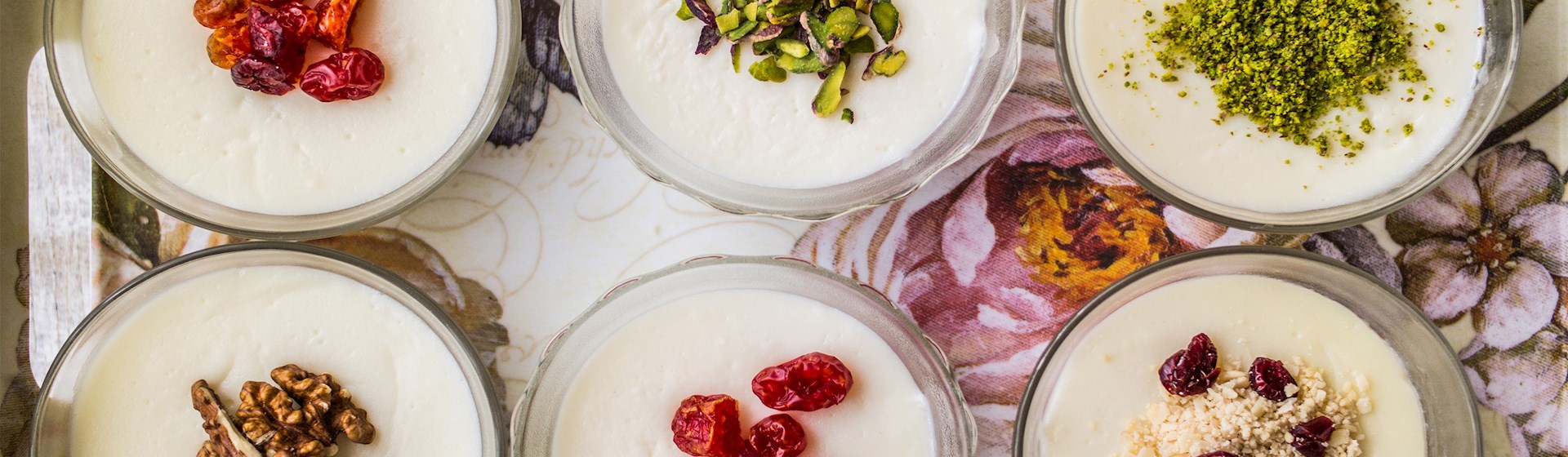
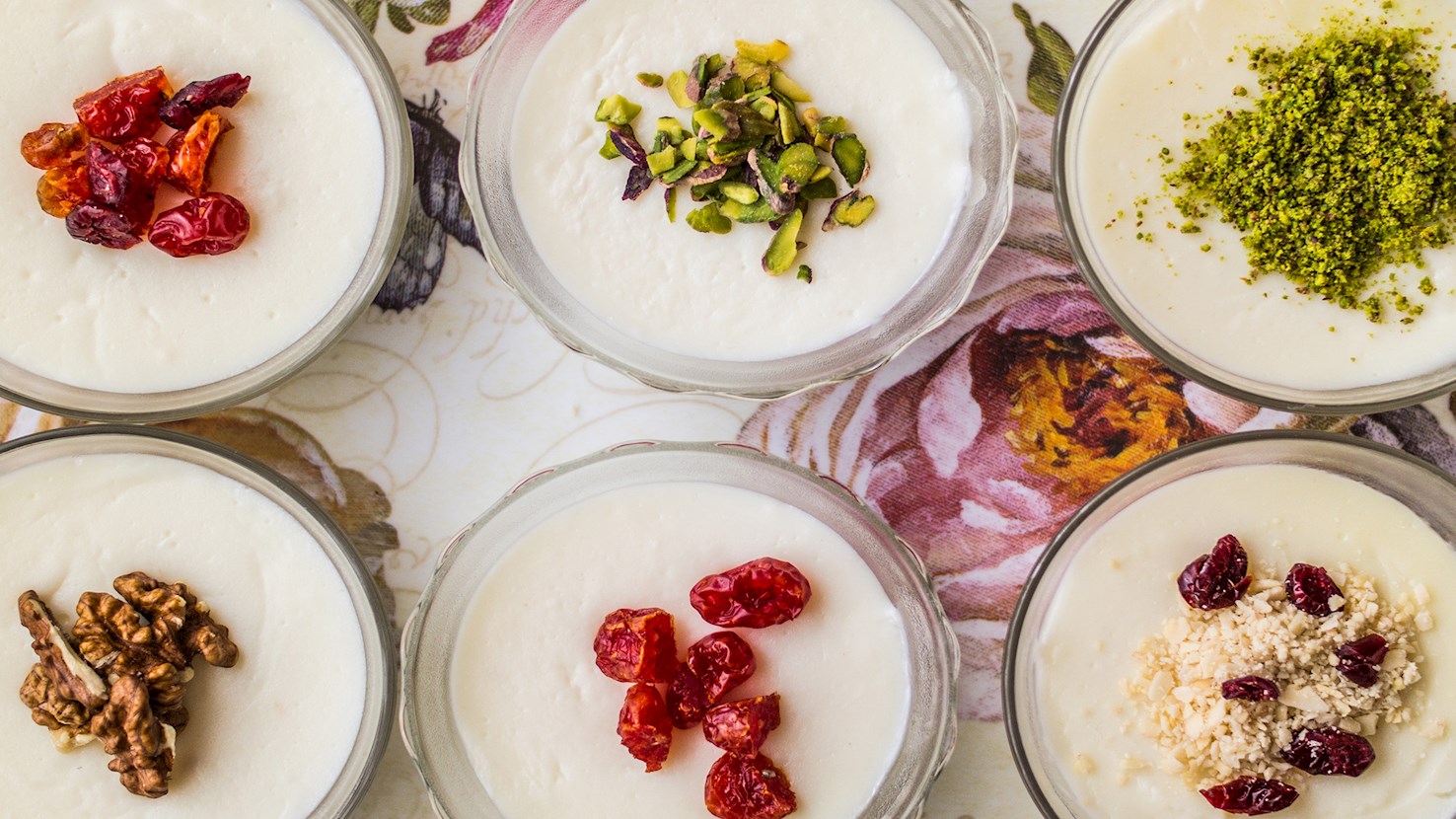
Muhallebi is a milk-based dessert widely known across the Middle East, Eastern Mediterranean, and North Africa. It is a smooth, lightly sweetened pudding made from milk thickened with rice flour, cornstarch, or semolina, and flavored with ingredients such as rosewater, orange blossom water, or mastic. The dessert has deep roots in Ottoman and Arab cuisines, where it became a staple of both palace and household cooking. Variations exist throughout the region under different names, including malabi in Israel, mahalabia in Egypt, and mahalabiyeh in Lebanon and Syia, all sharing a similar base of milk and starch with slight differences in flavoring and garnish. Muhallebi developed within the culinary traditions of the eastern Mediterranean, influenced by Persian and Arab sweet-making practices that emphasized dairy-based desserts flavored with floral essences. It became especially prominent in the Ottoman Empire, where palace chefs refined the recipe into a smooth, delicate pudding served chilled. Over time, it spread throughout the empire’s territories, blending with local ingredients and preferences. In Turkey, muhallebi remains part of daily dessert culture, sold in dessert shops and restaurants specializing in milk-based sweets, known as “sütlü tatlılar.” Preparation begins by mixing starch or rice flour with a portion of cold milk until smooth. The remaining milk is heated with sugar over medium heat, and the starch mixture is slowly whisked in to avoid lumps. The pudding is cooked until it thickens to a creamy consistency and begins to coat the spoon. At this point, flavorings such as rosewater, orange blossom water, or mastic are added, and the mixture is poured into bowls or molds to cool and set. Once firm, it is typically chilled before serving. The texture should be silky and light, with a mild sweetness balanced by the fragrance of the added flavoring. Muhallebi is often garnished with ground nuts such as pistachios or almonds, shredded coconut, or a thin layer of syrup. In some versions, a fruit compote or rose-flavored syrup is spooned on top to add color and acidity. Turkish-style muhallebi is commonly unflavored and served plain or dusted with cinnamon, while Levantine and Egyptian versions lean toward floral and aromatic notes. A baked variation, known as “fırın muhallebi,” develops a golden crust on top while maintaining a soft center. It is eaten year-round, often as a light dessert after meals or as a refreshing treat during warm weather. It is served in cafés, sweet shops, and homes, especially during religious festivals and gatherings. Muhallebi pairs well with Turkish tea, mint tea, or lightly roasted coffee, which balance its sweetness. Its simplicity, gentle flavor, and adaptability have made it one of the most enduring dairy desserts of the Eastern Mediterranean, linking diverse regional cuisines through a shared culinary foundation.
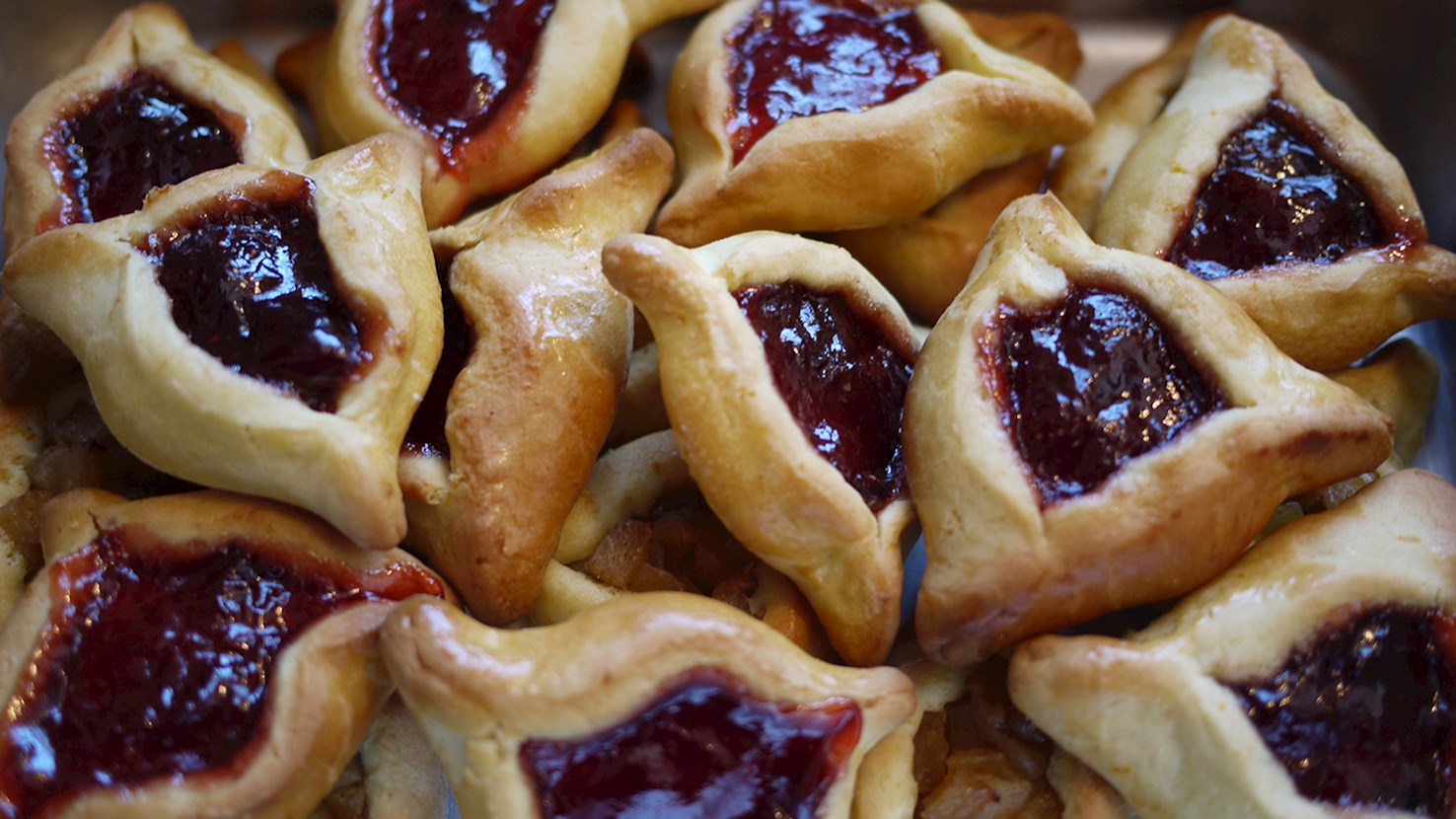
Hamantash is a filled pastry shaped into a three-cornered form and associated with Jewish communities, especially during the festival of Purim, where it appears across bakeries and home kitchens in many countries. It developed among Ashkenazi Jews in Central and Eastern Europe, where filled pastries were already part of local baking practices, and the triangular shape and symbolic associations took hold as the pastry became linked to Purim observances. Its preparation generally involves a dough made from flour, sugar, eggs, and fat such as butter or oil, rolled out and cut into circles before being filled and pinched into a triangular shape; fillings vary widely but often include poppy seed paste, prune lekvar, apricot jam, chocolate mixtures, or contemporary variations that reflect regional tastes. A notable element is the folding technique that creates the three corners, as it requires a balance between sealing the edges firmly enough to hold during baking while leaving part of the filling visible at the center. The pastry is eaten primarily during Purim in Jewish households, schools, community centers, and synagogues, and it is paired with tea, coffee, milk, or fruit drinks depending on the setting, though it is also enjoyed on its own as part of the broader festive foods of the holiday.
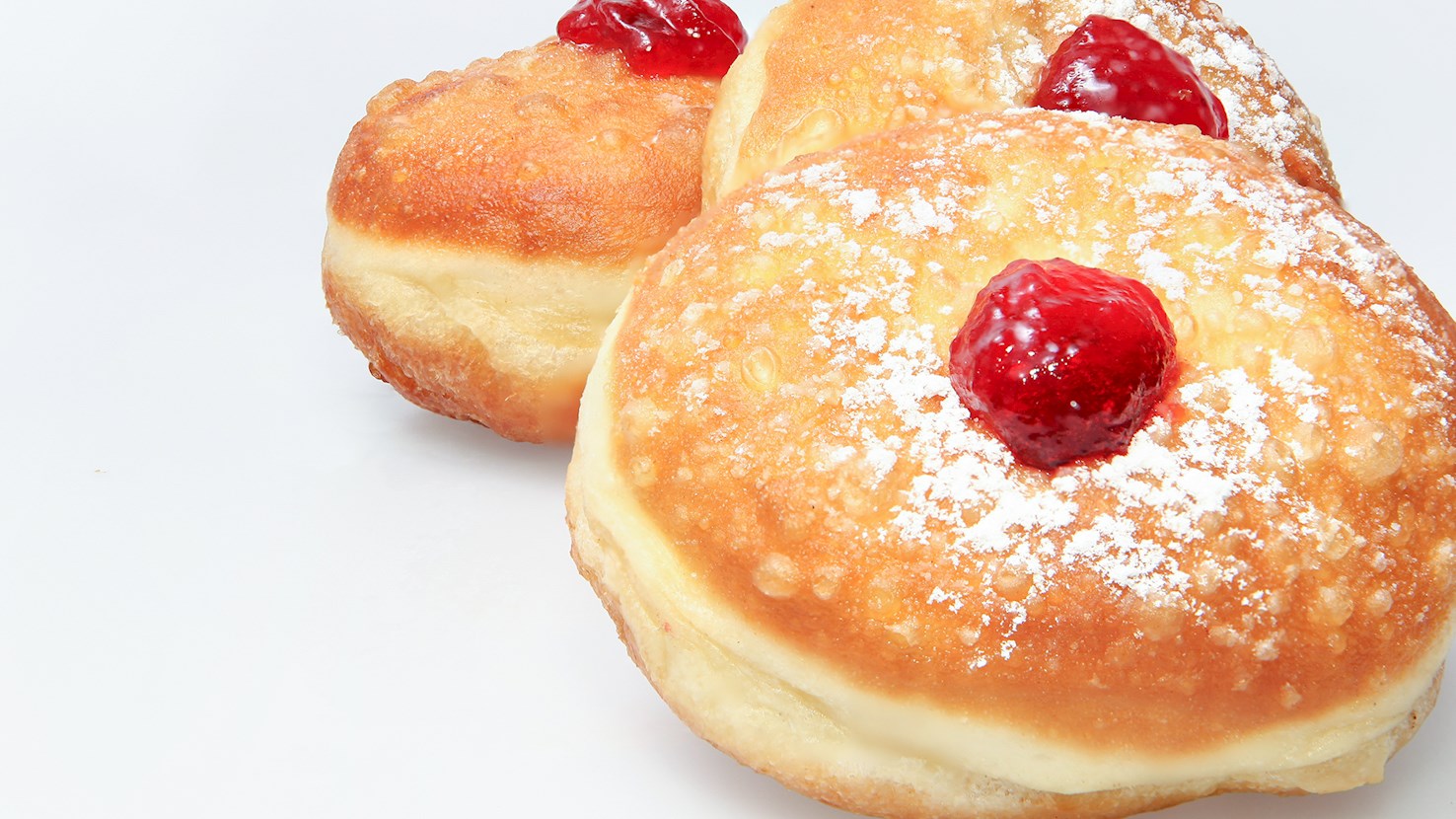
Sufganiyah is a round, deep-fried doughnut filled most commonly with jam and widely associated with Jewish communities, particularly in Israel, where it is produced in large quantities during Hanukkah and sold in bakeries, cafés, and markets. Its development traces to earlier European jelly-filled pastries such as the German Berliner and Central European sufganiyot-style fried doughs that Jewish migrants adopted and adapted, eventually becoming integrated into local cuisines in the Levant during the twentieth century when commercial bakeries began standardizing the recipe and promoting it as a convenient holiday food that aligned with the regional emphasis on cooking with oil during the season. The dough is usually made from flour, eggs, yeast, sugar, and fat, mixed into a soft enriched dough that is left to rise before being shaped into small rounds, proofed again, and fried in oil until golden, after which they are filled through a small opening with jam, custard, chocolate, halva cream, or other fillings introduced by modern bakeries; the surface is often dusted with powdered sugar. One notable element is the ring-less shape that sets it apart from American-style doughnuts and the focus on post-frying filling rather than mixing the flavor into the dough, a method that preserves a clear contrast between the soft interior and the filling. It is eaten primarily during Hanukkah in Israel and Jewish communities worldwide but is available year-round in many places, served with coffee, tea, hot chocolate, and other warm drinks that balance the sweetness and richness of the fried dough.
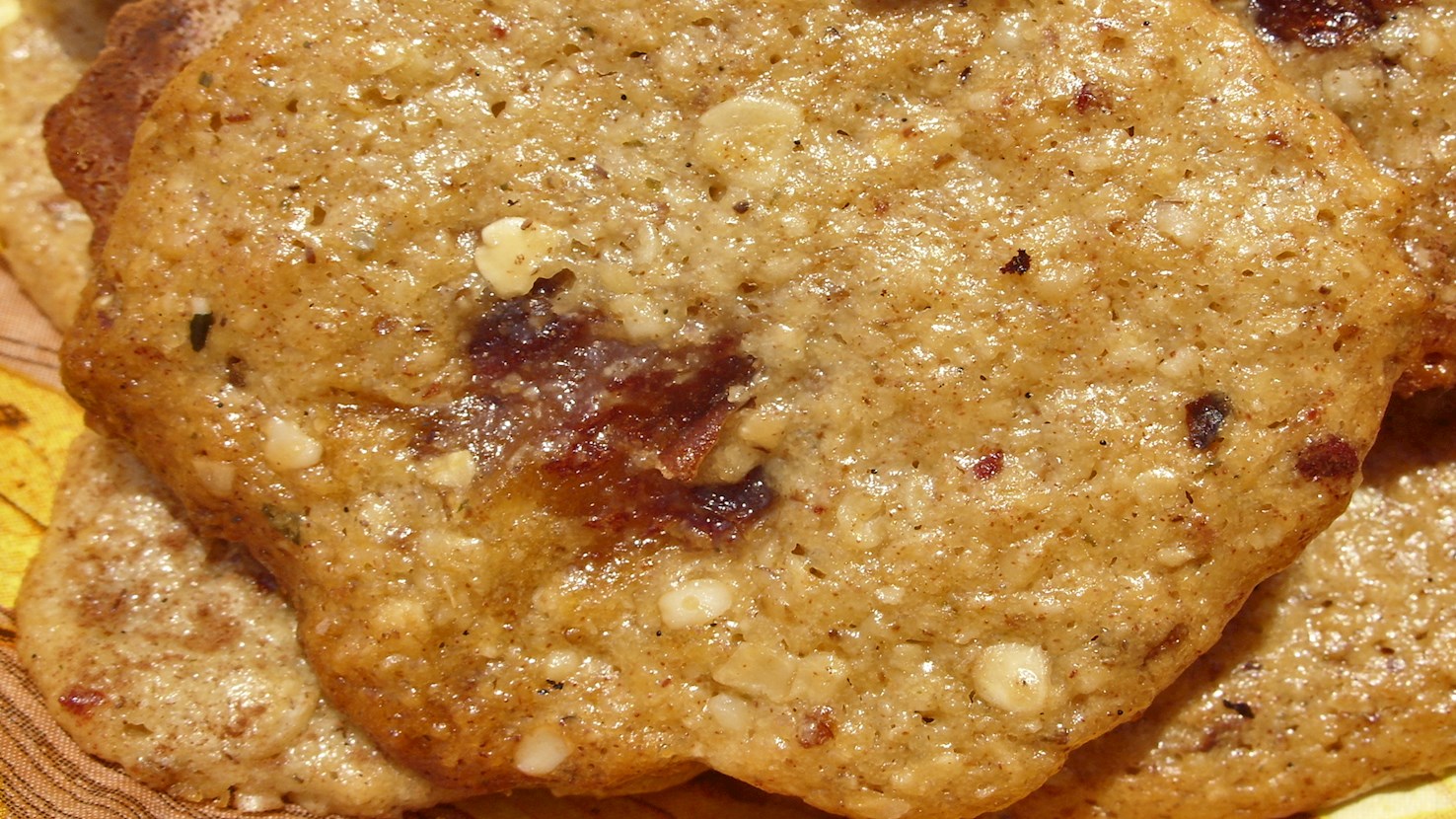
Tahini cookies are baked sweets made with tahini, the sesame seed paste that is widely used across the cuisines of the Eastern Mediterranean and parts of the Middle East, where sesame cultivation and milling have been present for centuries. They emerged from regions where tahini was already a common pantry ingredient, especially in areas of present-day Lebanon, Israel, Palestine, Turkey, and parts of Greece, gaining presence in home kitchens and bakeries as sesame-based confectionery evolved. Their development followed the spread of sesame grinding techniques and the growing use of tahini in both savory and sweet preparations, which eventually led bakers to incorporate it into flour-based doughs that could be shaped and baked easily. The cookies are usually made by mixing tahini with sugar, flour, and a fat source such as butter or oil, creating a dense dough that needs no complicated handling and often relies on the natural richness of sesame for flavor. They are baked until lightly set, resulting in a crumbly texture that comes from the high fat content of the sesame paste rather than from large amounts of added butter, and this reliance on tahini for both structure and flavor is a distinguishing feature. Some versions may include vanilla, citrus zest, or a small amount of leavening, but many rely on the purity of sesame without elaborate additives. They are eaten throughout the year in households, cafés, and bakeries, often as an accompaniment to coffee or tea, and they pair well with beverages that balance their richness, including unsweetened black tea, Arabic coffee, espresso, or mildly acidic herbal infusions.
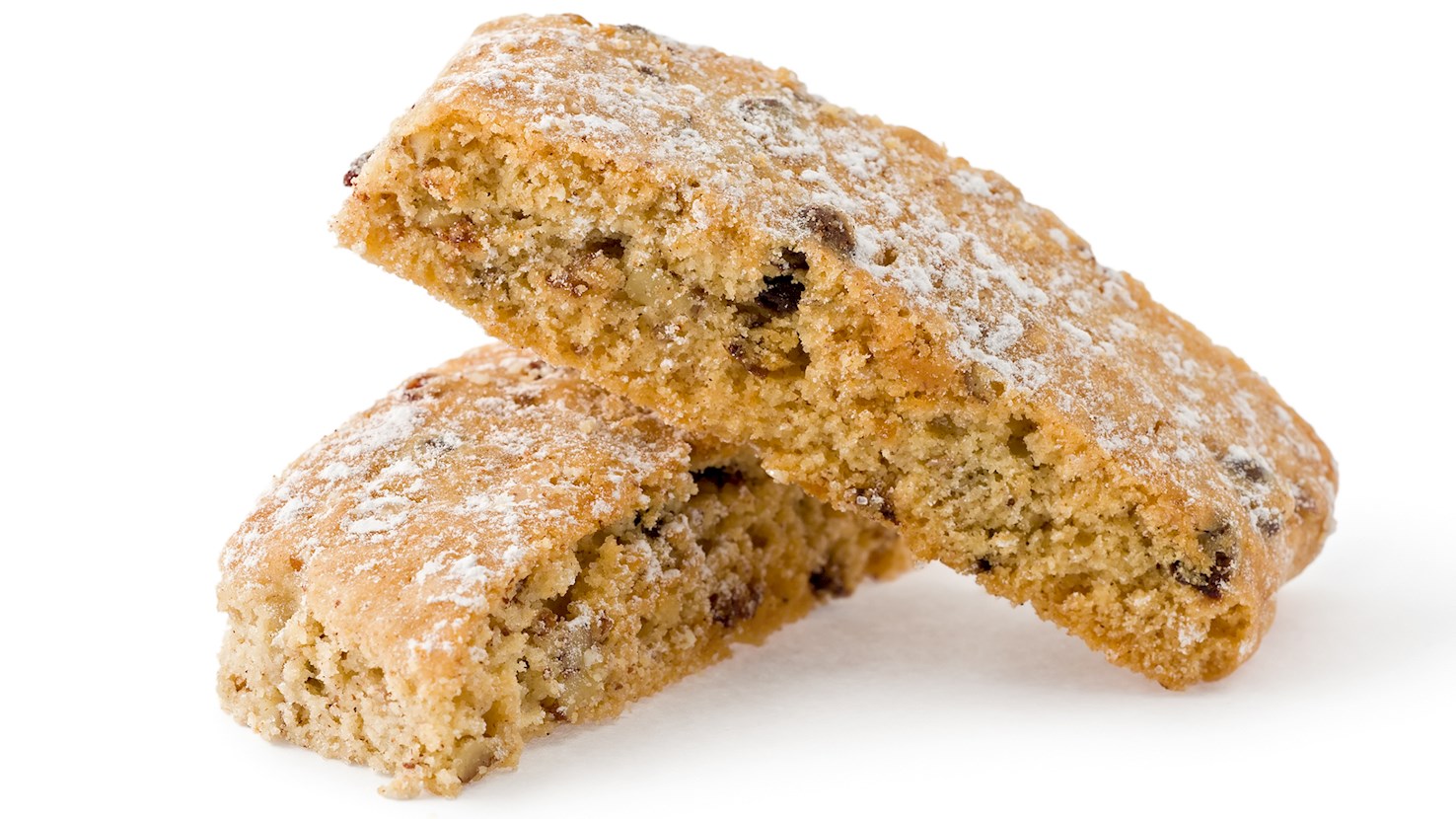
Mandelbrot is a twice-baked almond cookie originating from Ashkenazi Jewish cuisine, known for its crisp texture and nutty flavor. The name comes from the Yiddish and German words for “almond bread,” reflecting its main ingredient and loaf-like form before slicing. It is similar in technique to biscotti but generally richer and slightly softer due to a higher fat content. Mandelbrot is made from flour, eggs, sugar, oil or butter, and nuts, often flavored with vanilla, cinnamon, or dried fruit. The cookies are cut from a baked loaf and returned to the oven to dry, resulting in slices that are crunchy on the outside and tender within. The recipe developed among Jewish communities in Eastern Europe, where home bakers adapted European almond biscuits to suit available ingredients and kosher dietary rules. Oil was often used instead of butter to make the cookies pareve, allowing them to be eaten with either dairy or meat meals under Jewish dietary law. Over time, the recipe spread through Jewish diaspora communities, especially to the United States, where variations incorporating chocolate chips, raisins, or spices became common. In Europe, versions with walnuts, hazelnuts, or almonds were typical, reflecting regional availability. The baking method made mandelbrot ideal for long storage, a useful feature in cold climates and for travel. Preparation begins by whisking eggs and sugar until light, then adding oil or melted butter, followed by flour, baking powder, and flavorings. Chopped nuts or chocolate are folded into the dough, which is shaped into logs on a baking sheet. The loaves are baked until firm but not browned, then removed, cooled slightly, and sliced into thick pieces. The slices are arranged cut-side down and baked again at a lower temperature until crisp and golden. This process allows the cookies to dry out while maintaining a slightly chewy center. Some bakers dust the finished slices with cinnamon sugar or drizzle them lightly with melted chocolate. Mandelbrot is often served at room temperature with coffee, tea, or dessert wine. It can appear at Sabbath meals, holidays, or family gatherings, often stored in tins for extended use. Its flavor deepens over time, and the cookies retain their texture well, making them popular for home baking and gifting. In Israel and North America, mandelbrot remains a staple in Jewish bakeries and cafés, frequently appearing alongside other baked goods such as rugelach or babka. It is commonly eaten with morning or afternoon beverages, pairing well with coffee, black tea, or sweet wines like Tokaji or Moscato.
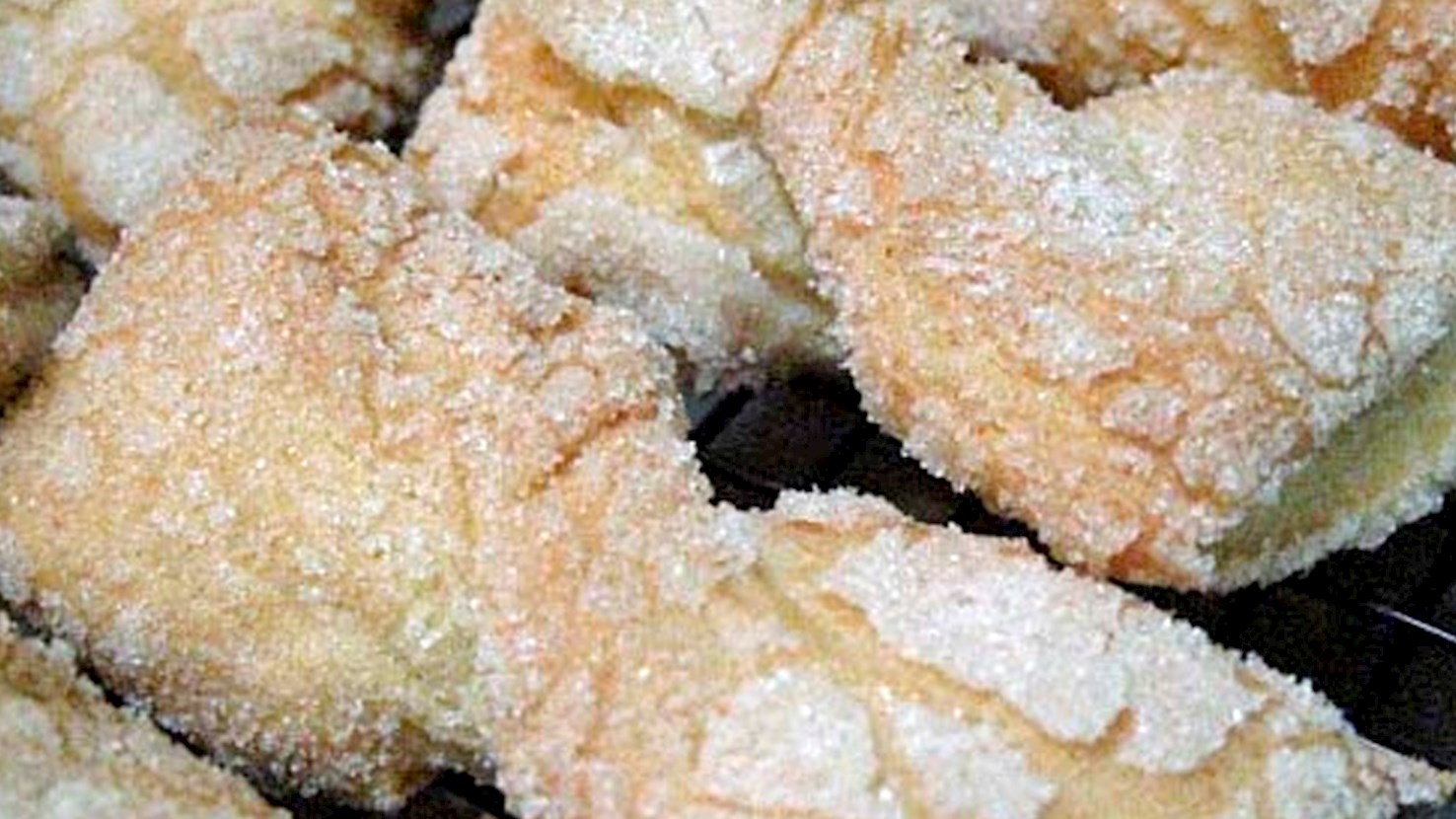
Kichel is a lightly sweetened egg-based cookie or cracker found in Ashkenazi Jewish cuisine, recognized for its crisp, airy texture and bow-tie or diamond shape. It is associated with Jewish communities in Central and Eastern Europe, where egg-rich doughs were common in home baking, and where cooks used available ingredients such as flour, eggs, sugar, and sometimes schmaltz or oil to create pastries suitable for festive meals and synagogue gatherings. Its development was tied to the need for a baked item that could keep well without refrigeration and suit both sweet and savory accompaniments, which made it a reliable option for communal events and holiday meals, particularly those where dairy or meat meals influenced which fats could be used. Preparation begins with a dough made from eggs, flour, sugar, and a small amount of fat, beaten until smooth and soft. The dough is rolled very thin, cut into strips or diamonds, and often twisted into a slight bow shape before being baked at a high temperature until puffed and crisp. The characteristic lightness comes from the high egg content and the very thin rolling, which allows steam to expand the dough in the oven. Kichel is served at many Jewish events, including post-services gatherings, holiday meals, and family celebrations, where it is often paired with chopped herring, a combination that contrasts the cookie’s mild sweetness with the herring’s salty and tangy flavors. It is also eaten on its own or with tea or coffee, and in some homes it is used as a lightly sweet snack alongside fruit spreads or soft cheeses.
TasteAtlas food rankings are based on the ratings of the TasteAtlas audience, with a series of mechanisms that recognize real users and that ignore bot,
nationalist or local patriotic ratings, and give additional value to the ratings of users that the system recognizes as knowledgeable.
For the “Top 7 Israeli Desserts” list until September 15, 2026, 1,843 ratings were recorded, of which 760 were recognized by the system as legitimate.
TasteAtlas Rankings should not be seen as the final global conclusion about food. Their purpose is to promote excellent local foods,
instill pride in traditional dishes, and arouse curiosity about dishes you haven’t tried.


What People Say