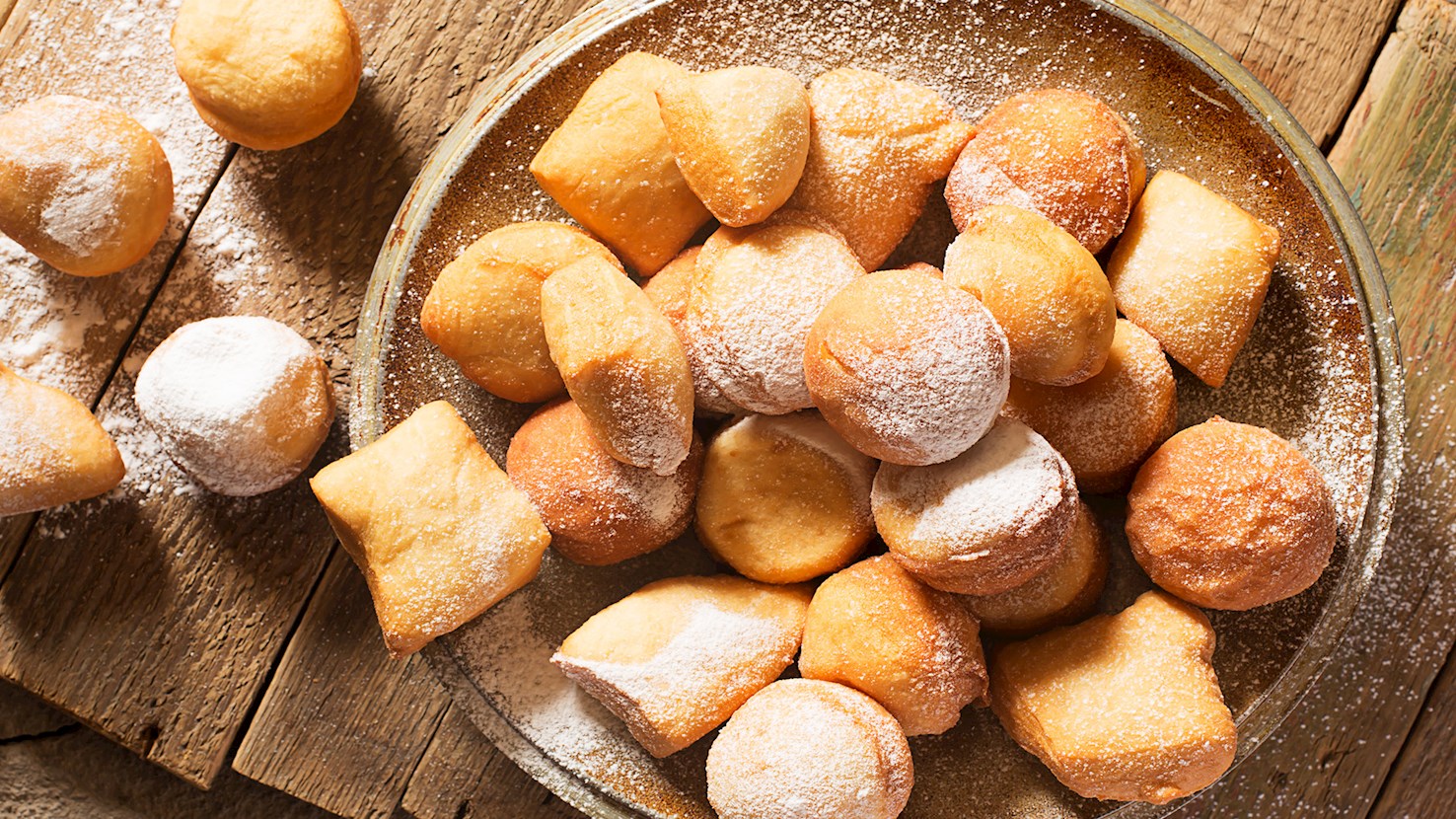
Baursak is a small fried dough food made from wheat flour, fat, and a leavening agent, prepared widely in Central Asia and especially identified with Kazakhstan, where it appears as a common element on family tables, guest meals, and ceremonial spreads rather than as a single-plate dish. Its formation is tied to pastoral and semi-nomadic lifeways in which portable ingredients such as flour and animal fat were readily available and cooking methods favored pots and shallow cauldrons over ovens, making frying small pieces of dough an efficient way to produce bread-like food that could be cooked quickly and shared easily, while the use of yeast or fermented dairy as a leaven reflected locally accessible fermentation practices. Preparation involves mixing flour with warm liquid, salt, fat, and yeast or another leavening agent, kneading the dough until smooth, allowing it to rise, then cutting it into small rounds, diamonds, or irregular pieces that are fried in hot oil or rendered fat until puffed and evenly colored, after which they are drained and kept warm. Serving places baursak in large bowls or piles at the center of the table, often alongside both savory and sweet foods, without sauces or toppings applied directly, allowing it to function flexibly as bread, snack, or accompaniment depending on the context. It is eaten by hand at home meals, celebrations, and guest gatherings, commonly paired with boiled meats, soups, honey, jam, or dairy products, and is most often consumed with black tea, milk tea, or fermented dairy drinks, which complement its fried richness without requiring additional seasoning. Interestingly, the biggest baursak was made in Ufa, Russia, in 2014, with a weight of 179 kg.
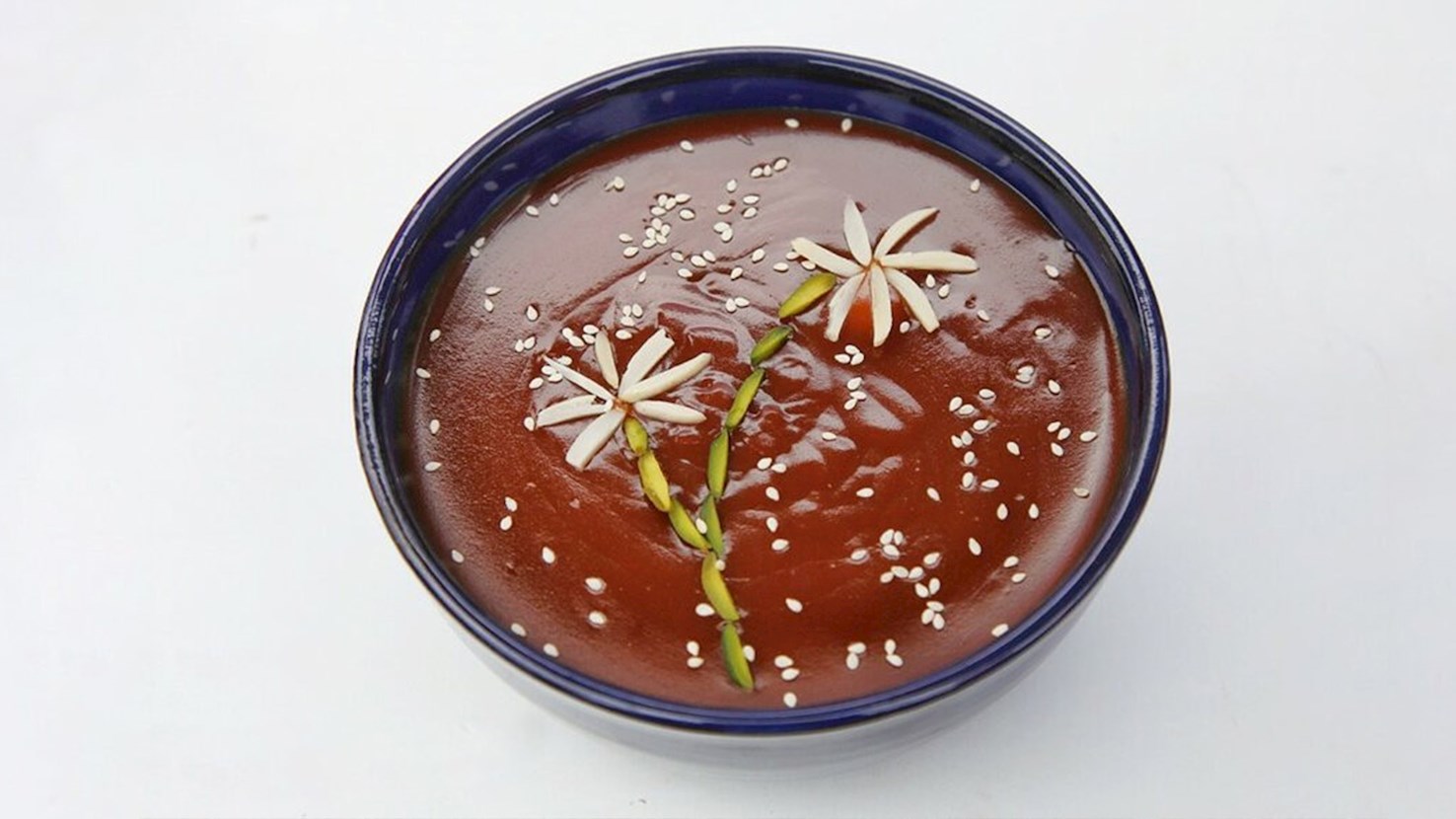
Samanu is a sweet dessert made from wheat germ, akin to pudding, commonly prepared in Iran, Afghanistan, and Central Asian countries, especially during Nowruz (Persian New Year). It symbolizes abundance, sweetness, and prosperity and is often shared among family and friends. The dish is made by sprouting wheat germ, grinding it, and cooking it slowly with water and wheat flour. The natural sugars from the sprouted wheat give samanu its sweet taste, requiring no additional sugar. It has a thick, pudding-like consistency and a rich, caramel-like flavor. The cooking process can take up to 24 hours and requires continuous stirring. Traditionally, women gather to prepare samanu together, singing songs and making wishes for good fortune. As a Nowruz tradition, samanu is one of the seven symbolic items on the Haft-Seen table, representing patience and strength. In countries like Iran, Tajikistan, and Uzbekistan, making samanu a group activity reinforces bonds of friendship and family. Some believe that the slow cooking process carries blessings and positive energy. It is widely enjoyed in Iran, Afghanistan, Tajikistan, Uzbekistan, Turkmenistan, and Kyrgyzstan, where it is often prepared in large communal gatherings before Nowruz. More than just a dish, samanu is a symbol of renewal, perseverance, and community spirit, deeply rooted in Persian and Central Asian traditions.
Balkaimak is a luxuriously thick Kazakh dessert crafted by slowly simmering high-fat dairy until it transforms into a dense, golden, caramel-like sweet. Rooted in the ancient nomadic traditions of the Central Asian steppe, this extraordinary treat is a direct reflection of a pastoral lifestyle in which dairy was the primary pillar of the diet, engineered to deliver intense nourishment, pure energy, and profound comfort during the brutally cold Kazakh winters. In its oldest, most authentic form, the dessert was made exclusively from the fresh, pure milk of desert-adapted camels. This ancient method requires absolute patience: raw camel milk is boiled and left to simmer while being constantly stirred for up to eight grueling hours until the water completely evaporates, condensing the liquid into a naturally sweet, creamy white paste that is eventually shaped into slices and dried, requiring six entire liters of camel milk to produce just a single kilogram of the precious sweet without a single additive or preservative. However, as the nomadic lifestyle shifted over generations, the recipe adapted. Modern and historically common domestic variations, often affectionately referred to as "homemade toffee," use rich, heavy cream (kaimak) or sour cream, both skimmed from cow's or sheep's milk. To create this modern iteration, the rich cream is placed into a heavy-bottomed pot and brought to a gentle, rolling simmer, where the water content slowly evaporates. This process requires constant, vigilant stirring so the dairy does not boil aggressively, and as it thickens, a generous amount of floral honey and a small amount of fine flour are folded into the bubbling mixture in a thin, steady stream. The natural sugars react with the dairy fats, initiating a slow caramelization that turns the mixture into a glossy, yellowish-red paste with a texture somewhere between soft fudge and whipped honey butter. Because of its intense richness, balkaimak was historically considered a rare delicacy, reserved strictly for the most honored guests or special occasions as a profound gesture of Kazakh hospitality. Today, it is most traditionally served warm, meant to be scooped up by dipping fresh, hot flatbreads or puffy baursak directly into the golden spread while drinking hot tea. The cultural significance of the dish is so deeply ingrained in the nation's heritage that the legendary Kazakh composer Kurmangazy even named one of his celebrated musical pieces "Balkaimak," serving as a lasting testament to the sweet, rich spirit of the steppe.
TasteAtlas food rankings are based on the ratings of the TasteAtlas audience, with a series of mechanisms that recognize real users and that ignore bot,
nationalist or local patriotic ratings, and give additional value to the ratings of users that the system recognizes as knowledgeable.
For the “Top 3 Kazakhstani Desserts” list until June 15, 2026, 82 ratings were recorded, of which 36 were recognized by the system as legitimate.
TasteAtlas Rankings should not be seen as the final global conclusion about food. Their purpose is to promote excellent local foods,
instill pride in traditional dishes, and arouse curiosity about dishes you haven’t tried.