Kozinjak or milibrod is a sweet yeasted bread with soft, moist, and thread-like texture, usually flavored with lemon zest or orange zest, and filled with dried fruits, typically raisins soaked in rum or orange juice. The dough is braided, brushed with a yolk-milk mixture on top, and then baked in a well-oiled baking tray or high bread pan in the oven. Once baked, kozinjak is generously sprinkled with sugar to form a sugar crust, or dusted with powdered sugar before serving. Poppy seeds and different types of fruit jams are also used as common kozinjak fillings. This sweet bread is usually prepared for holidays, especially for Easter and Christmas, and it is also consumed in neighboring Bulgaria, where it is known as kozunak. Some make this sweet treat more frequently and consume it as a light dessert or with a glass of milk for breakfast.
Recognized as the first Slow Food Presidium item of North Macedonia, wild fig slatko, or slatko od divi smokvi, as it is known in Macedonian, is a type of fruit preserve that is made with wild figs. This preserve has traditionally been produced in the Southeastern region of the country, in the municipalities of Gevgelija, Valandovo, Bogdanci, and Dojran, where wild fig trees are abundant. Customarily, it has been the task of men to gather the small green, pear-shaped fruits of the wild fig tree just as they start to ripen, while women have been responsible for cleaning the figs and preparing the preserve. The making of wild fig slatko (slatko, meaning sweet in Macedonian) is a long and laborious process that involves boiling the whole fruits nine times to eliminate the bitter-flavored, milky latex they contain before simmering them in a sugar syrup until the syrup has thickened. Lemon juice or citric acid is typically added to the preserve to help the figs retain their distinctive color and shape. Once done, the preserve is traditionally stored in clean glass jars. The flavor of this preserve is sweet with a slightly astringent finish, while the aromas are herbal and spicy, with subtle notes of caramel. In North Macedonia, wild fig slatko is typically prepared for family consumption only, although efforts are being made to promote the product on the market as well. Although it is most commonly enjoyed on its own, wild fig slatko can also be used as a topping for ice cream or a filling for pancakes, and it may be incorporated into a variety of desserts such as cakes or cookies.
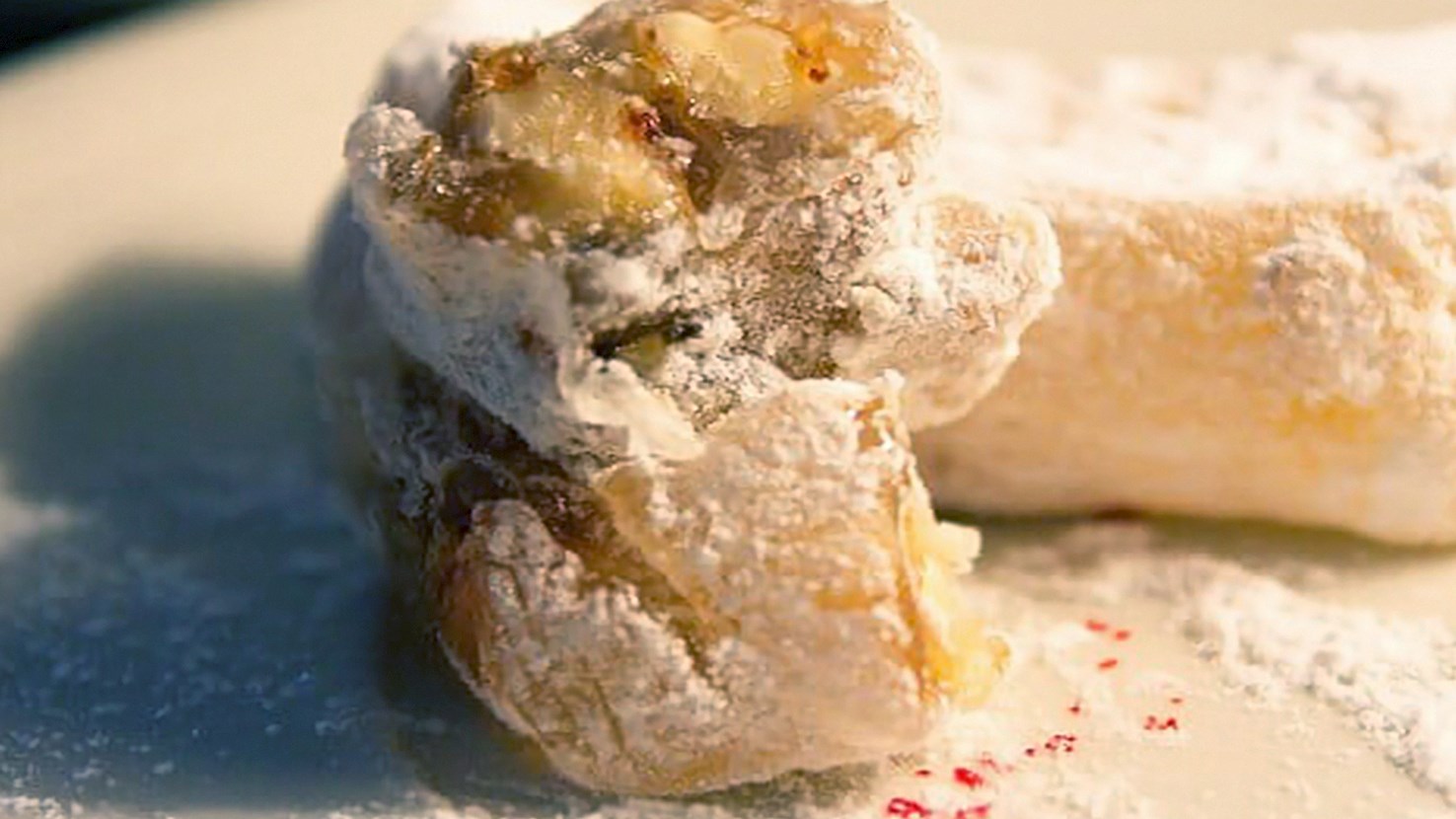
Krushevo lokum is the North Macedonian version of Turkish delight, made with a mixture of water, sugar, starch, and lemon acid, which is cooked in a large copper vessel. Once ready, the hot lokum mixture is carefully dripped onto wooden trays and allowed to rest for a whole day before it is cut into small cubes and dusted with powdered sugar. Krushevo lokum is handmade, except for the stirring part, and has two varieties: one is sade lokum, or plain lokum with no added ingredients, and the other one is lokum with walnuts. The preparation of this North Macedonian delicacy is a family tradition that started almost 100 years ago. Although the ingredients are simple, they have to be used in the right ratio to produce the desired product. Krushevo lokum is sold in a little sweet shop, called Balkan, located in Krushevo. In this town, it is a custom to serve freshly prepared coffee with lokum on the side. This delicacy is typically consumed during holidays such as Proshteni pokladi, or Prochka, name days, memorials, and weddings.
This layered North Macedonian cake is a luscious combination of walnut sponges and a sweet egg yolk filling. Both the sponges and the filling can be enriched with a special walnut caramel (grilijaš), which is chilled and then ground into a fine powder, while some varieties also include melted chocolate or crushed walnuts. The cake is a local specialty of the entire Ohrid region, and it is usually glazed with chocolate and decorated with whipped cream.
TasteAtlas food rankings are based on the ratings of the TasteAtlas audience, with a series of mechanisms that recognize real users and that ignore bot,
nationalist or local patriotic ratings, and give additional value to the ratings of users that the system recognizes as knowledgeable.
For the “Top 4 Macedonian Desserts” list until May 15, 2026, 75 ratings were recorded, of which 23 were recognized by the system as legitimate.
TasteAtlas Rankings should not be seen as the final global conclusion about food. Their purpose is to promote excellent local foods,
instill pride in traditional dishes, and arouse curiosity about dishes you haven’t tried.