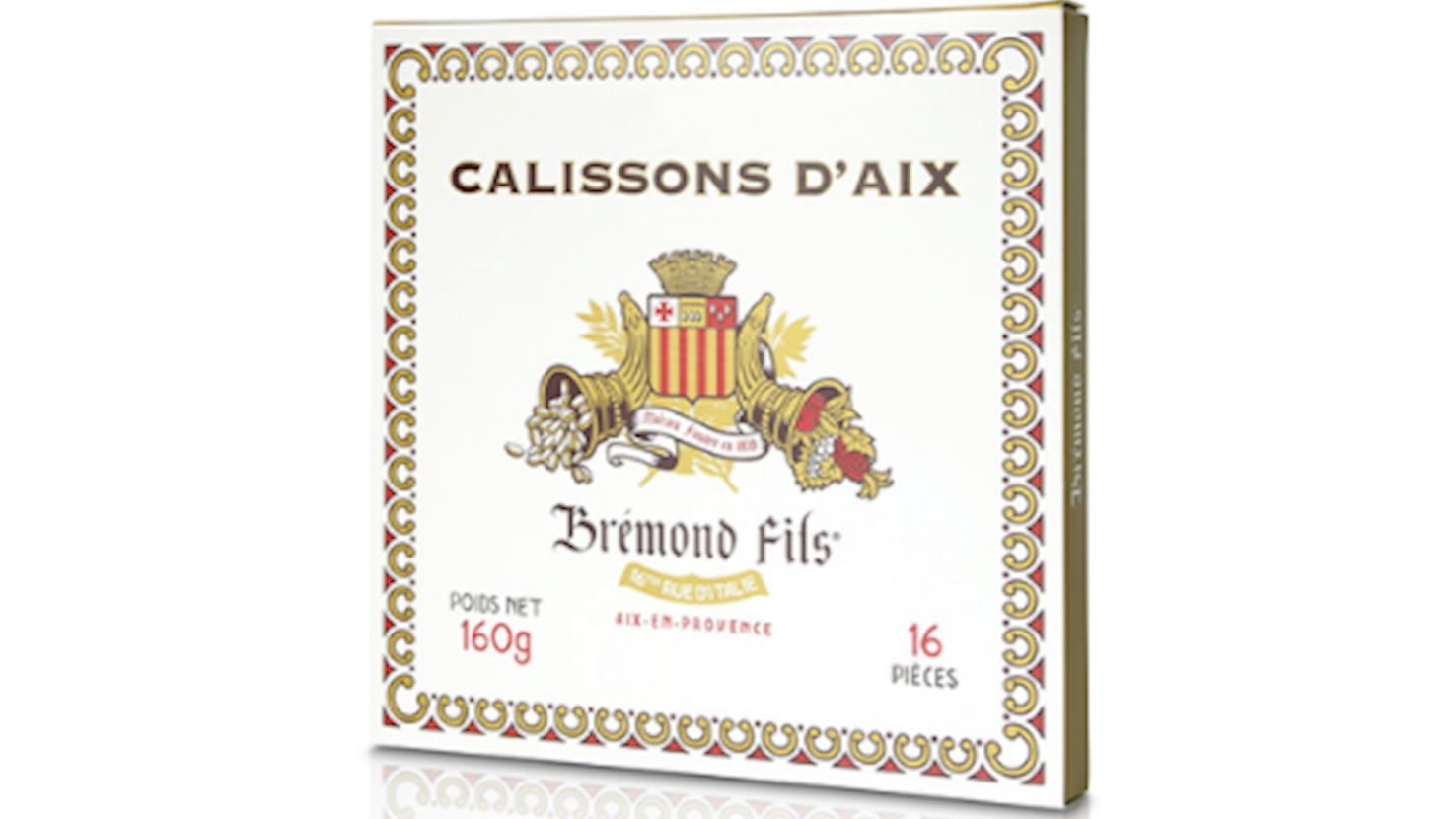
Maison Brémond 1830 is a historic Provençal delicatessen house founded in 1830 in Aix-en-Provence, where the Brémond family originally established a confectionery and gourmet grocery on the iconic Cours Mirabeau. Over time, the brand evolved from a traditional confectioner into a refined gourmet food house specializing in high-quality Mediterranean and Provençal products, including extra virgin olive oils, balsamic vinegars, truffle specialties, spreads, preserves, seasonings, confectionery, and regional delicacies.
The company places strong emphasis on artisanal craftsmanship, product origin, and collaboration with carefully selected producers who reflect the culinary heritage of southern France. In 2015, Maison Brémond 1830 entered a new chapter under the leadership of Olivier Baussan, founder of L’Occitane en Provence, who reinforced the brand’s focus on sustainability, biodiversity, and preservation of local agricultural traditions.
Its philosophy combines gastronomy with environmental responsibility, supporting agroforestry initiatives, biodiversity conservation, and regional farming communities. Maison Brémond 1830 presents itself not simply as a gourmet retailer, but as a curator of Provençal lifestyle and Mediterranean culinary culture.
Today, the brand operates boutiques in France and selected international markets, bringing authentic southern French flavors to a global audience while maintaining its heritage-driven identity.
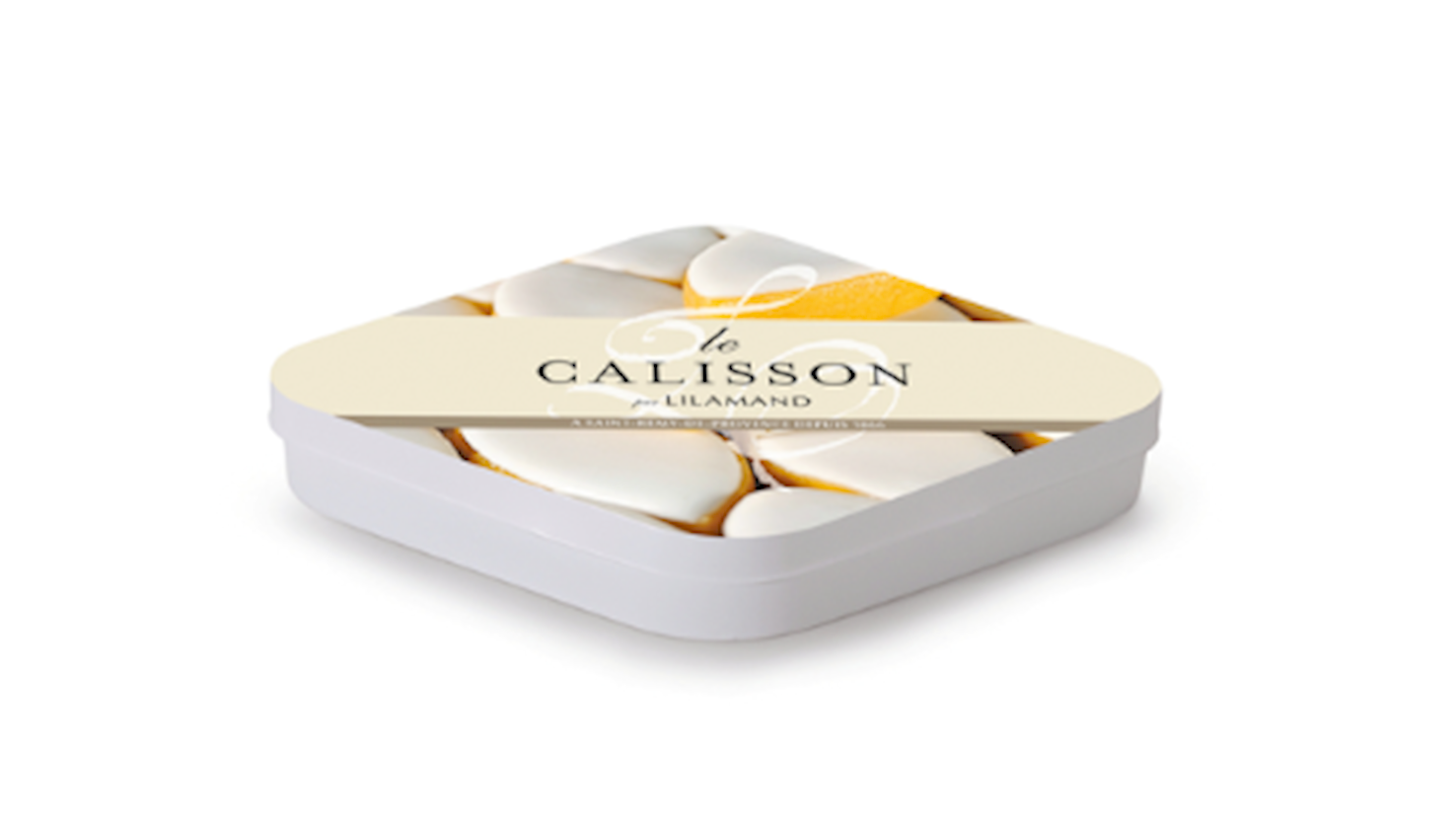
Confiserie Lilamand is a French family-owned confectionery company based in Saint-Rémy-de-Provence, founded in 1866. The brand is best known for its candied fruits, calissons, and other traditional Provençal sweets.
Established by Marius Lilamand, the company has passed its expertise down through five generations of the same family. Production is rooted in artisanal methods and the meticulous candying process that requires time, precision, and extensive experience.
Lilamand is particularly dedicated to preserving the Provençal tradition of candied fruit, a craft with deep historical roots in southern France. Its portfolio includes candied fruits, calissons, fruit preserves, syrups, fruit pastes, honey, and a variety of gourmet confectionery products.
In 2009, the company expanded its production facilities, and since 2016 it has also been developing its own almond cultivation to support the production of calissons. Today, Confiserie Lilamand is recognized as one of Provence’s distinguished confectionery houses, combining family heritage, high-quality ingredients, and traditional French craftsmanship.
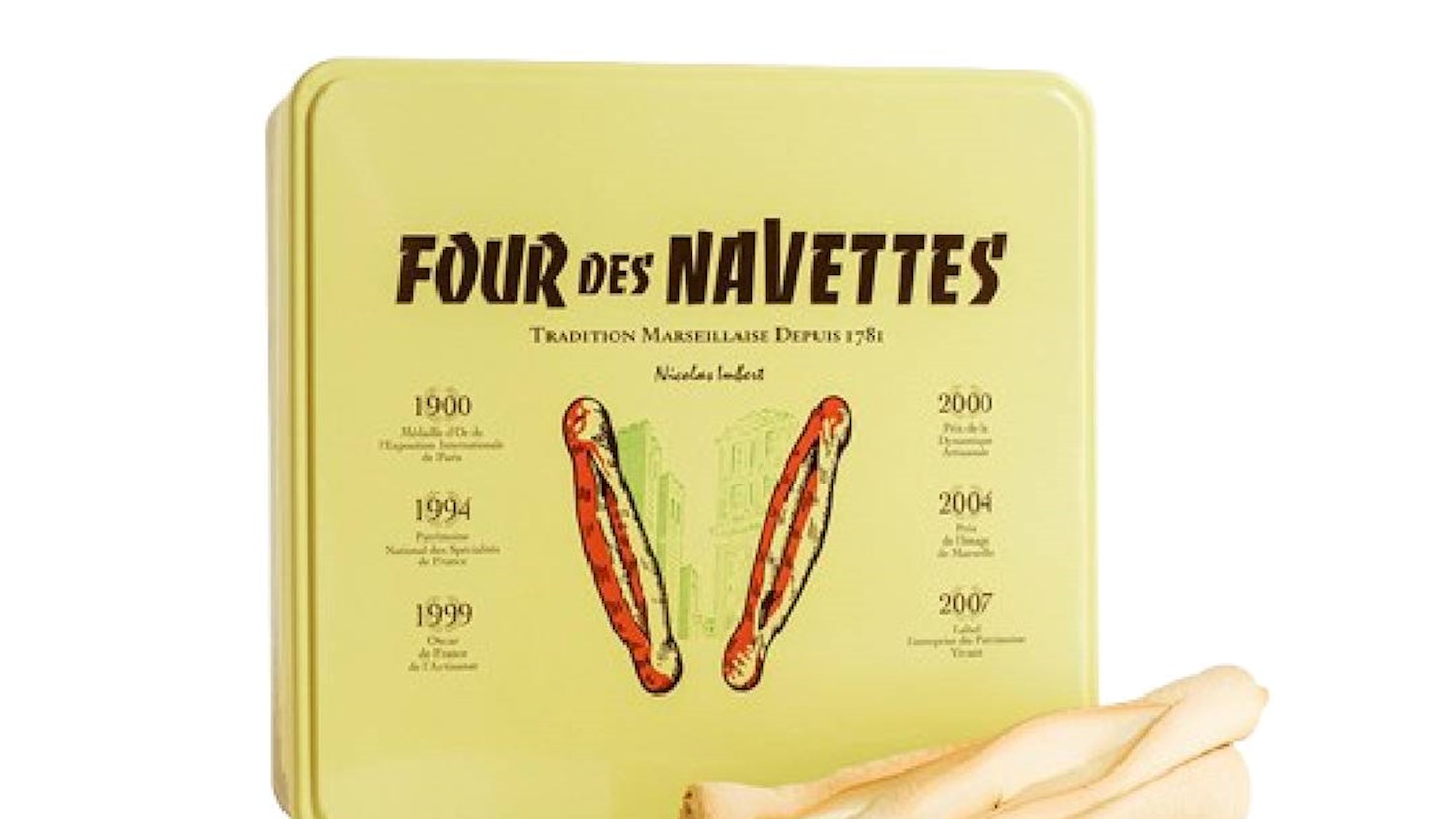
Le Four des Navettes is the oldest bakery in Marseille and a shining example of preserved French artisanal tradition. Founded in 1781 near the historic Saint-Victor Abbey, this legendary workshop has been baking its signature creation—the navette—for over two centuries.
These firm, boat-shaped biscuits delicately flavored with orange blossom water have become a culinary symbol of the city and a cherished part of its spiritual and gastronomic identity.
Passed down through generations, the craft remains in the hands of the Imbert family, who continue to use the original 18th-century vaulted oven to bake each navette by hand. Free from additives and made with patience and care, every biscuit is shaped and baked as it was centuries ago, honoring a tradition that refuses to fade.
More than just a sweet, the navette carries a legend—its shape is said to commemorate the wooden boat that brought the Three Marys to Provence.
Each year, on February 2nd, navettes are blessed during the Candlemas celebrations at the nearby abbey, preserving a ritual that connects faith, community, and heritage.
Le Four des Navettes is far more than a bakery—it is a living piece of Marseille’s history. With every bite of their iconic biscuit, you taste not only the warmth of orange blossom but also the soul of a city that has treasured its traditions for generations.
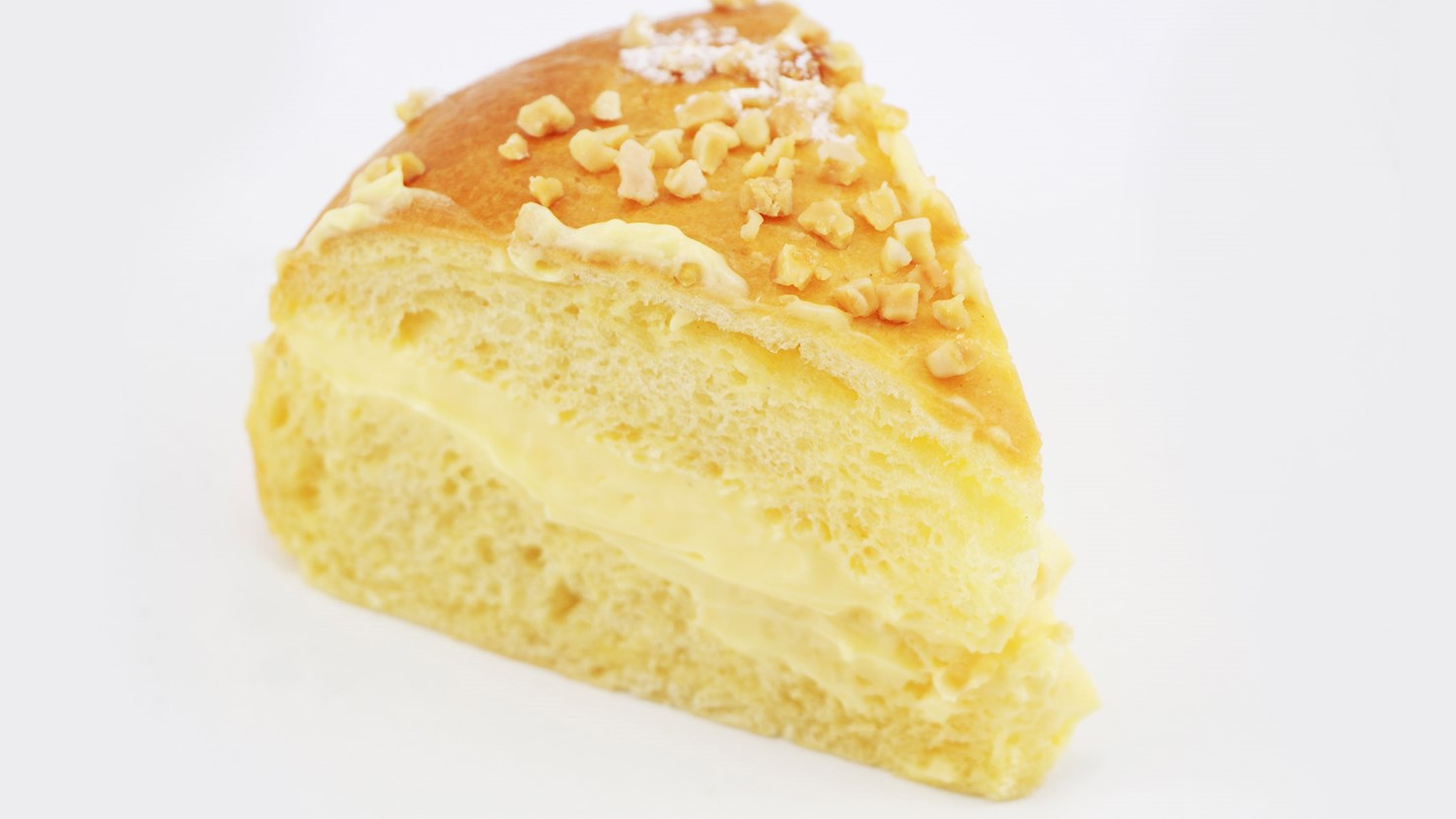
Tarte tropézienne is a dessert with a brioche pastry base, usually orange-flavored, which is cut in half and filled with a creamy filling. Since the original recipe is a secret, fillings may vary, including pastry cream, buttercream, crème diplomat, or other pastry cream varieties. The top is usually decorated with sliced almonds, pearl sugar, or a thin layer of powdered sugar. The recipe for this cream-filled brioche has arrived in France with the Polish pastry chef named Alexandre Micka in 1950. In 1955, during the filming of a famous movie in Saint-Tropez, Micka was supplying the entire crew with his food, and when he offered his brioche invention to the renowned actress Brigitte Bardot, she named the dessert pie de Saint-Tropez. Micka later patented his invention under the name tarte tropézienne. and the original recipe has not been revealed up to this day.
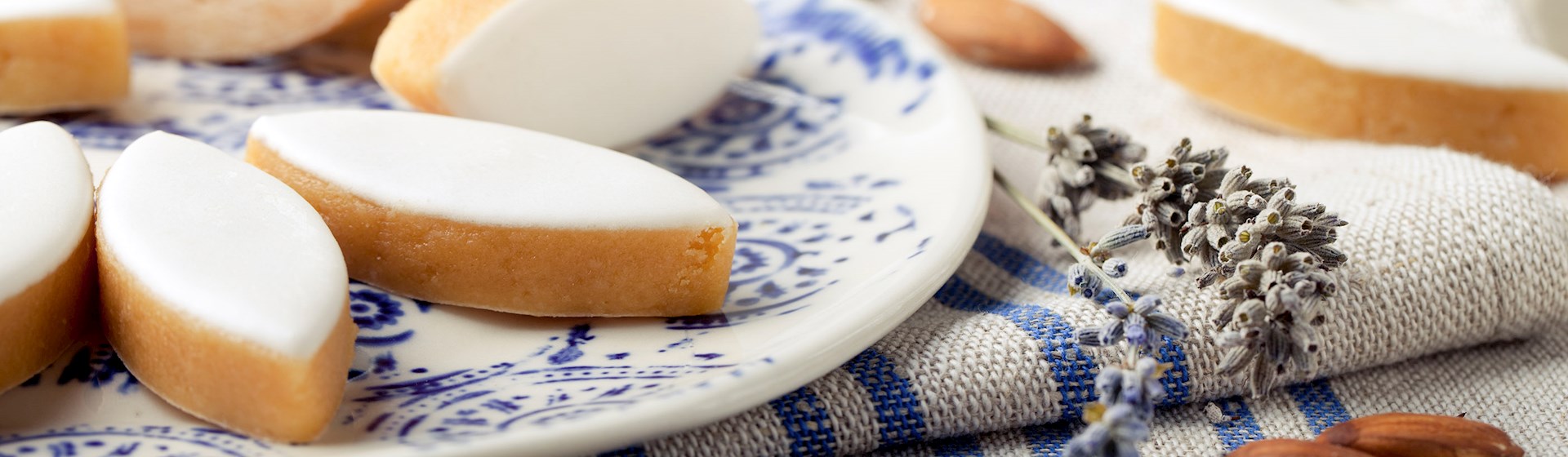
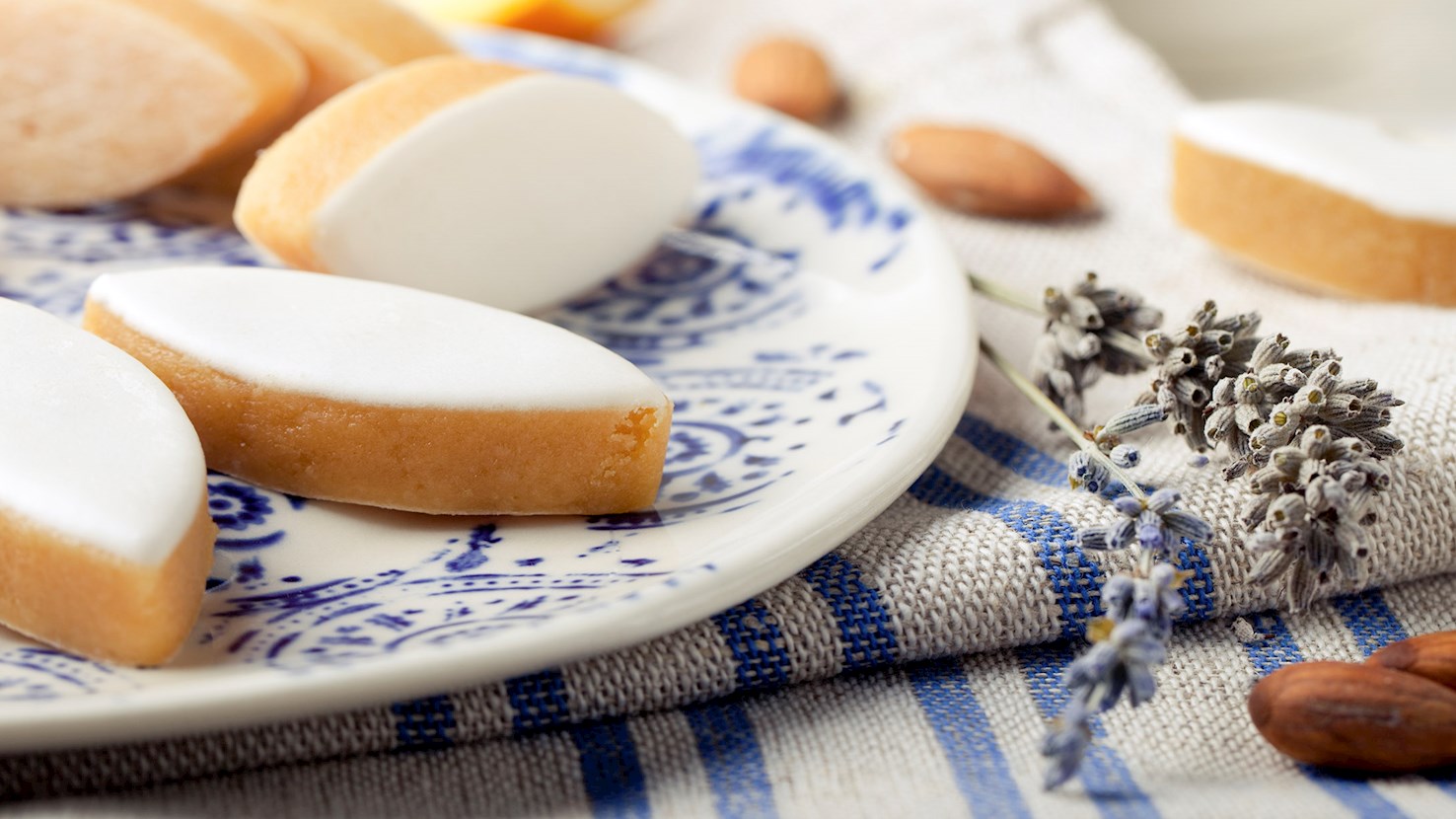
A specialty of Aix-en-Provence, calissons are diamond-shaped sweets made with almonds and candied melons, covered in icing. The tradition of combining almonds and candied fruits dates all the way back to Greek and Roman times, while some texts from the 12th-century mention Italian monks who made cakes from almonds. As almonds became important in the city of Aix-en-Provence, they were combined with Cavaillon melon to make the famous calissons. There is also an interesting tale about their invention, taking place at the wedding feast of King René of Anjou in 1454. During the festivities, the bride was in a bad mood, so the head chef looked for a way to cheer her up. He created a sweet treat out of almonds and candied fruit and got the bride's smile, while the rest of us got the delicious calissons.
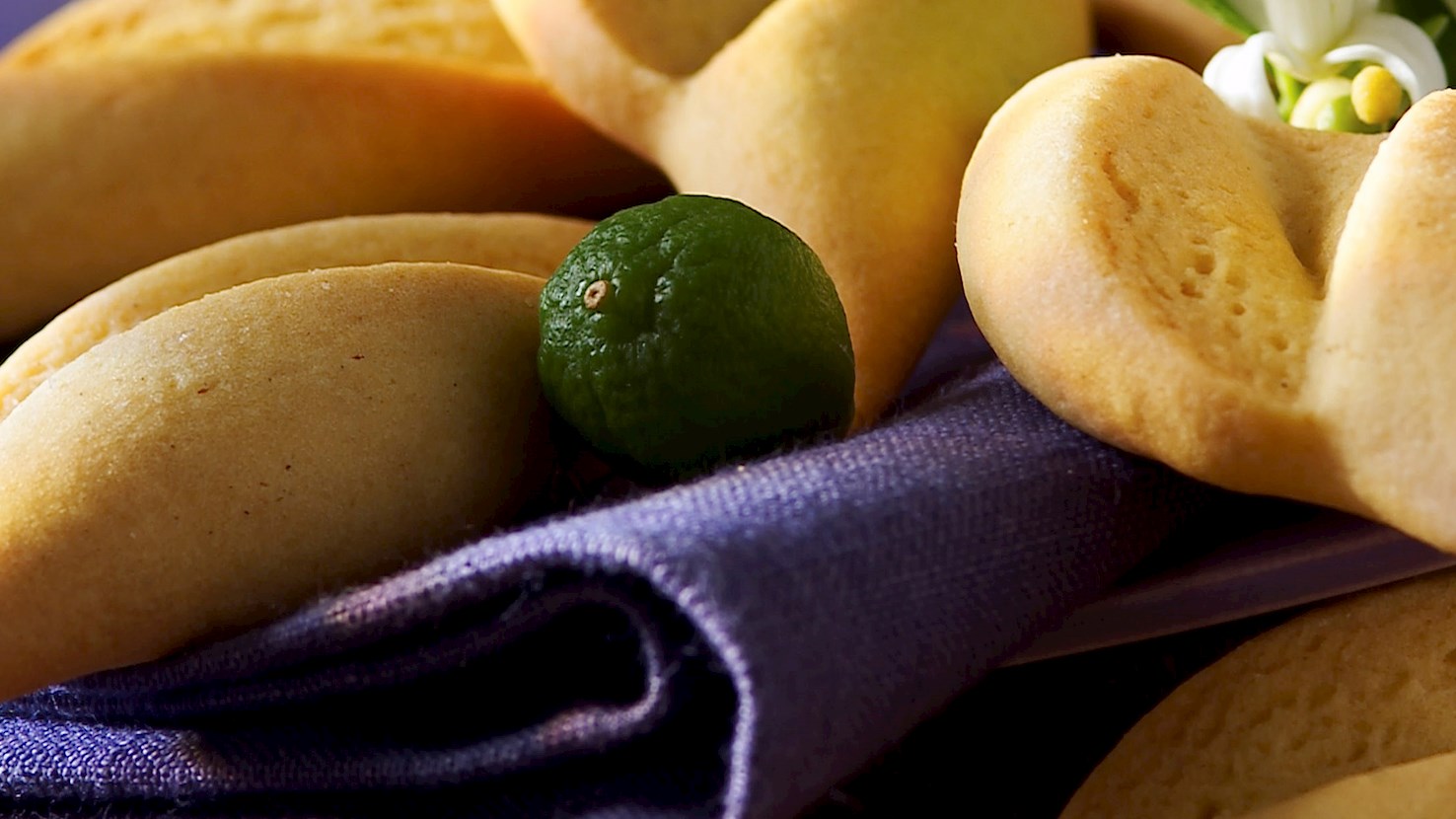
Navettes are cookies from Marseilles that are shaped like a boat or a shuttle. Their characteristical shape is said to commemorate Mary Magdalene and Saint Martha and their voyage to Marseilles by boat, about 2000 years ago. The cookies are flavored with orange-flower water and are traditionally consumed on February 2nd, known as Candlemas Day, although they can be bought all year round in the Four Des Navettes bakery in the center of Marseilles. The bakery hasn't stopped producing these cookies since 1781. Although orange-flavored navettes are the most popular choice, there are also varieties with cinnamon, chocolate, vanilla, and lavender.
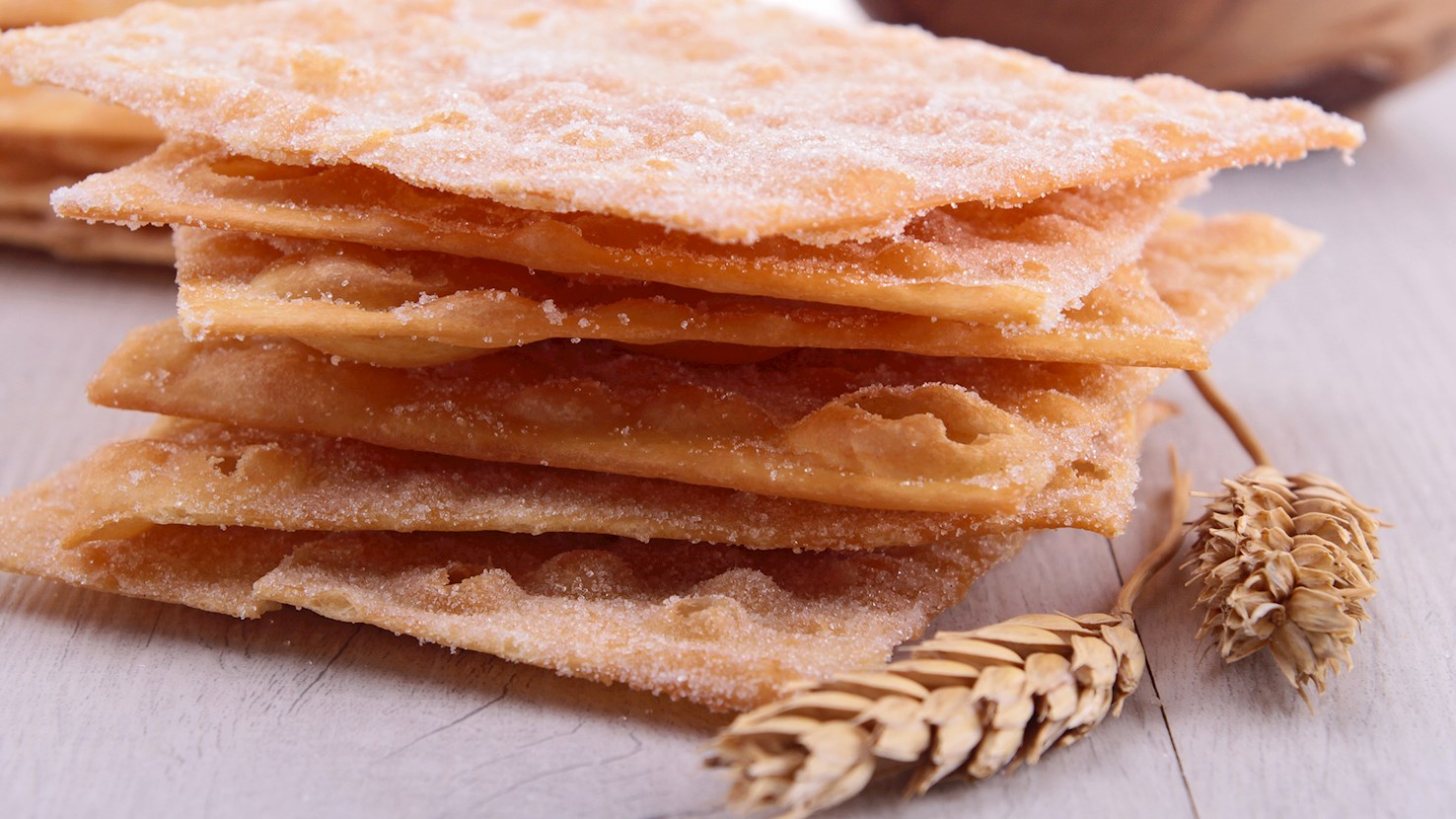
Hailing from Provence, oreillettes are the thin, rectangular sheets of deep-fried dough. They are prepared with flour, eggs, and butter, and are usually enriched with citrus zest and orange flower water. Traditionally enjoyed during the Carnival season, they are best served freshly prepared and generously coated in powdered sugar. These crispy fritters are also enjoyed in the neighboring Occitanie region.
Ganses are small, fried pastries from the county of Nice, deeply rooted in the region’s carnival-time baking. They have been made for centuries in local households where simple ingredients like flour, eggs, butter and citrus zest were transformed into treats for festive gatherings. The dough is prepared by combining flour, sugar, butter, eggs, milk, a pinch of salt and a leavening agent, then flavouring with lemon or orange zest. After resting, the dough is rolled thinly, cut into strips or diamonds, often knotted, and deep-fried in olive oil until golden. While still warm, the ganses are generously dusted with powdered sugar. Variations include using wheat flour blends, increasing the aromatics such as orange blossom water, omitting the leavening for a denser texture, or dipping the finished pastry in honey rather than sugar. What distinguishes ganses is their shape, knotting or folding of the dough strips, and the use of olive oil for frying in the Nice version, which gives them a crisp exterior and light interior. Ganses are eaten during the carnival season, at village squares or family gatherings, and are best enjoyed fresh, paired with coffee, tea or hot chocolate, and they accompany dessert wine or sparkling wine as a sweet finish to a meal.
Galapian d’Apt is a cake created in the town of Apt and crafted with meunière-wheat flour from the Apt terroir, almond powder, eggs, sugar, lavender honey and candied fruits. It was invented in 1994 by maître-pâtissier Alain Bouchard during a competition organised by the Confrérie du Fruit Confit d’Apt, when local confectionery producers sought to highlight the region’s candied fruits. The preparation begins by making a short-crust pastry dough from the Apt meunière wheat flour, almond powder, icing sugar, butter, an egg and a little water; the dough is chilled, rolled out and placed into a tart ring. For the filling blond melon-and-cherry-based candied fruits are sliced and laid on the pastry base, then a folding of almond powder with whipped egg whites and sugar is poured over them and the tart is baked for about 30 minutes. A final syrup made of equal parts lavender honey and water is boiled to syrup consistency and poured over the hot cake before cooling. Variants of the galapian d’Apt may use different candied fruits such as apricot or orange peel instead of melon and cherries, replace the lavender honey with standard honey or caramelise the surface for extra crunch; some modern versions add a thin layer of praline or drizzle a chocolate glaze. A distinctive feature of this cake is the use of the rare Apt meunière wheat-derived flour combined with the region’s signature candied fruits and lavender honey—giving it a strong sense of place in the Luberon. The cake is served chilled or at room-temperature as a dessert or with coffee, and is typically paired with a dessert wine such as a vin cuit or a Muscat de Beaumes-de-Venise whose sweetness and herbal notes complement the almond-honey-candied-fruit profile.
Chanteclair is a frozen cake from Toulon, where coffee and praline cream are sandwiched between crisp meringue discs, topped with toasted hazelnuts and a signature rooster motif. Local pastry chef Monsieur Calvi invented this specific dessert around 1935, designing the distinctive bird decoration as a direct tribute to Edmond Rostand's famous play Chantecler. Making the pastry requires whipping egg whites and sugar to form two large Swiss-style meringue discs, which are baked and dried until completely brittle. While the sugar layers cool, a rich filling is mixed by blending chilled heavy cream, powdered sugar, praline paste, and soluble coffee into a chantilly, occasionally incorporating a folded crème pâtissière for extra density. Assembly involves placing the first crisp disc at the bottom of a mold, piping or spreading the thick coffee and praline cream in the middle, and sealing the structure with the second meringue round. The entire cake is then heavily chilled or fully frozen to set the cream firmly in place. Before the final presentation, the exterior edges are coated with toasted almonds or crushed hazelnuts, and the top is finished with a sugar-glazed rooster design. Alternative recipes modify the baseline formula by introducing chocolate, raspberry, or vanilla cream fillings, while a completely vegan adaptation substitutes plant-based cream and swaps the nuts for toasted sesame seeds. Some bakeries also scale down the large entremets format to produce individual miniature portions. Cake is served very cold, with slices placed directly on dessert plates as a festive conclusion to a meal. The rich coffee-and-cream profile is ideally matched with a strong, bold espresso or a sweet regional dessert wine like Muscat de Beaumes-de-Venise.
Chichi frégi is a sweet fried pastry from Provence, known for its elongated shape, crisp exterior, and soft interior, often coated with sugar and enjoyed as a snack or dessert. Its origins are linked to southern coastal towns where it was prepared by street vendors and at fairs, particularly around fishing ports, where it became a staple treat for locals and visitors alike. The name “chichi” is believed to derive from an old Provençal dialect, while “frégi” refers to the frying process. Over time, it became a familiar sight at markets, seaside promenades, and festive gatherings, where its simple preparation and appealing texture ensured its enduring popularity. The preparation begins with a smooth dough made from flour, water, sugar, yeast, a little salt, and olive oil. The dough is kneaded until elastic and left to rise until doubled in size. Once ready, it is shaped into long, ridged strips using a piping bag or a special nozzle, then carefully lowered into hot oil and fried until golden and puffed. The chichis are drained on paper and rolled in granulated sugar while still warm, ensuring the coating adheres evenly. Some recipes enrich the dough with orange blossom water for fragrance; others use chickpea flour mixed with wheat flour, a nod to older regional methods that give the pastry a distinctive flavour and slightly denser texture. Variations include filling the chichis with pastry cream, chocolate, or jam after frying, or dusting them with cinnamon sugar for extra aroma. In certain regions, they are made shorter and thicker, while in others they remain long and slender, often exceeding 30 centimetres (12 inches). A characteristic feature of chichi frégi is its dual texture — crisp on the outside and soft inside — and the fact that it is almost always made and eaten fresh, ideally straight from the fryer. Chichi frégi is most often sold at markets, seaside stalls, fairs, and festivals, particularly during the warmer months. It is eaten plain as a sweet snack, sometimes served with coffee or hot chocolate, and it pairs well with sweet dessert wines or fortified wines. In coastal towns, it is a staple of summer evenings, enjoyed while walking along promenades or at celebrations and gatherings. Its simplicity, freshness, and connection to local street food culture have secured it a lasting place in French culinary life.
TasteAtlas food rankings are based on the ratings of the TasteAtlas audience, with a series of mechanisms that recognize real users and that ignore bot,
nationalist or local patriotic ratings, and give additional value to the ratings of users that the system recognizes as knowledgeable.
TasteAtlas Rankings should not be seen as the final global conclusion about food. Their purpose is to promote excellent local foods,
instill pride in traditional dishes, and arouse curiosity about dishes you haven’t tried.
The initial list of top producers was compiled based on available reviews, awards, local recommendations, media and blog coverage, and consumer reviews.
The list will be updated with ratings from TasteAtlas local ambassadors and TasteAtlas users.






What People Say