Fartons are traditional Valencian sweet bar-shaped sponge cakes that are glazed with sugar. Especially popular in Alboraya, they are made with a combination of flour, sugar, water or milk, oil, yeast, and eggs. These elongated treats are typically dipped in orxata (Spanish horchata), but they can also be consumed with other beverages such as coffee or hot chocolate.
Figues albardaes is a traditional Valencian dessert originating from Castellón. It's usually made with a combination of dried figs, flour, yeast, water, sugar, and salt. The figs are cut in half and flattened. In a bowl, the yeast is dissolved in warm water, and flour is then added to the bowl and mixed until the batter becomes slightly thick. The batter is left to stand for about an hour, and the figs are then dipped in the batter and fried in hot oil until nicely golden. Once done, figues albardaes are rolled in sugar and enjoyed warm or at room temperature.
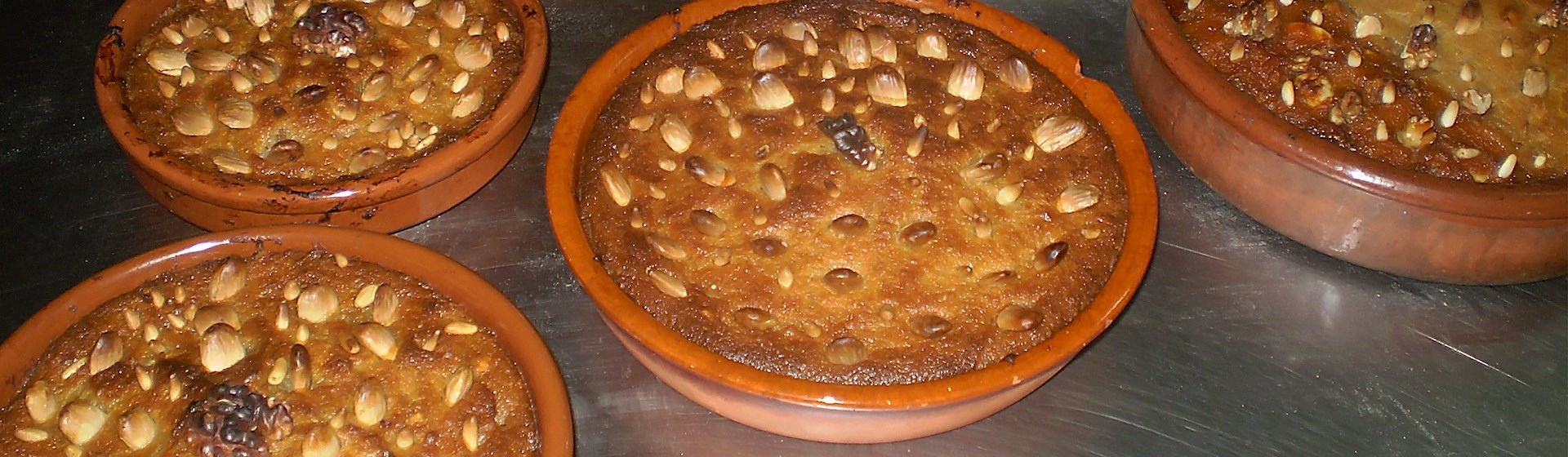
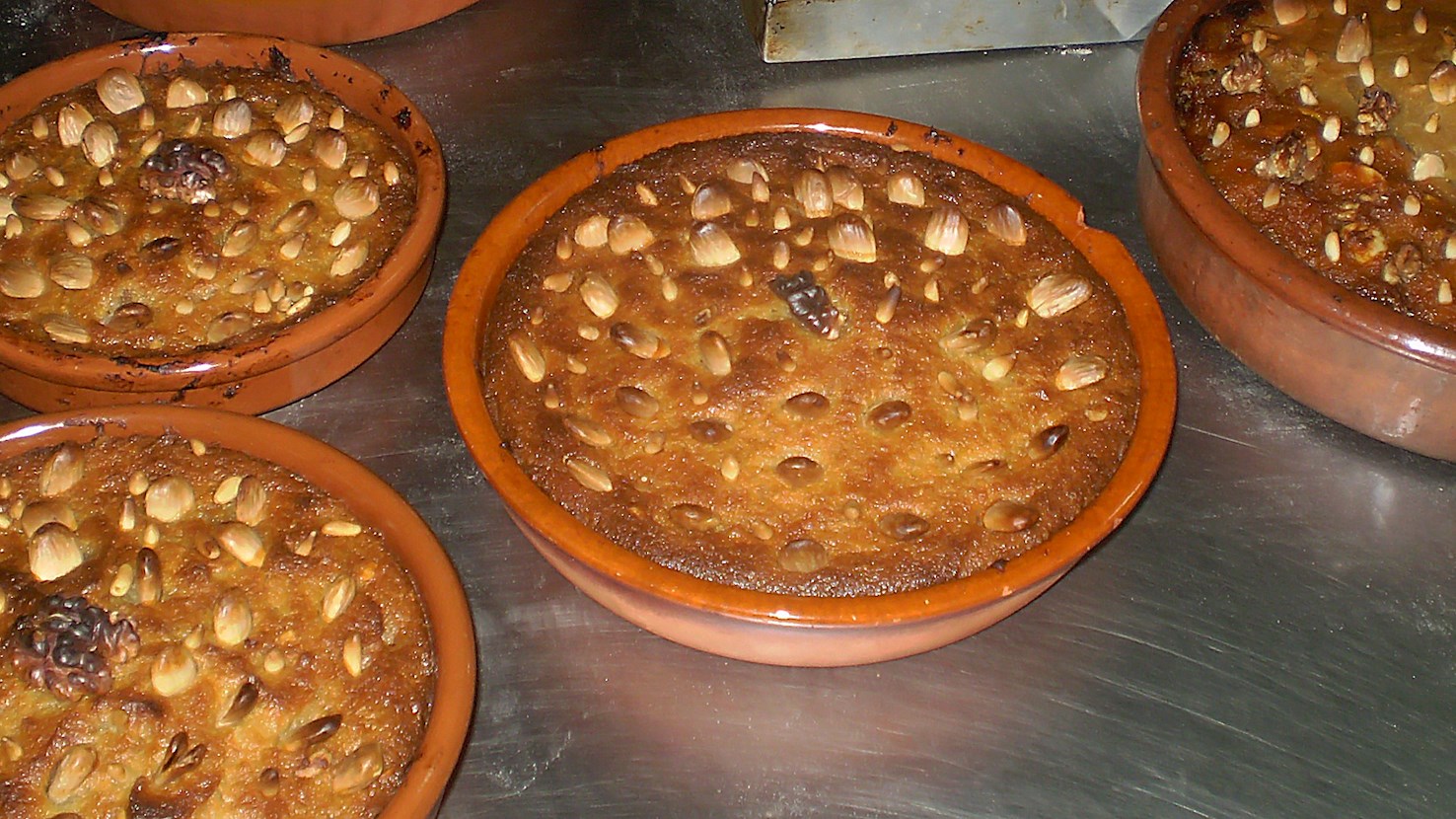
During Holy Week in Valencia, people traditionally prepare and consume arnadí, a festive cake featuring pumpkin, almonds, sugar, and lemon zest. Some opt to use pine nuts in combination with almonds, or sweet potatoes in combination with pumpkin. The cake is baked at low heat for about two hours, and it is then shared with family and friends. Arnadí is notoriously hard to find outside Valencia, and it is especially popular in the village of Xativa.
Arrop i tallaetes is a sweet preserve from the Valencian Community, known for its dark, rich syrup and pieces of candied fruit suspended within it. It is made by slowly reducing grape must until it becomes thick and deeply flavored, then combining it with small cubes of fruit, usually pumpkin, melon, quince, plump, or peach (previously macerated in lime water) which absorb the syrup and become tender and sweet. The result is a dessert that captures the essence of Mediterranean autumn, when grapes are harvested and fruit preservation was once a vital part of household cooking. Its origins go back centuries, when preserving seasonal fruit was essential for extending the harvest into the colder months. In the winemaking regions of eastern Spain, grape must — the freshly pressed juice from grapes before fermentation — was readily available, and it became a natural base for sweet preserves. As sugar was historically expensive and scarce, boiling must to concentrate its natural sweetness was a common practice. Over time, this technique evolved into the making of arrop, to which small pieces of fruit, or tallaetes, were added to create a more complex texture and flavor. The resulting preserve became a staple of autumn kitchens, often prepared during the grape harvest and shared in family gatherings. Preparation begins with grape must, which is slowly simmered for hours and treated with lime to reduce acidity, until it thickens into a dense, dark syrup. Once the desired consistency is reached, pieces of prepared fruit — peeled, cut into small cubes, and macerated in lime water — are added to the syrup and cooked gently until they are infused with its flavor and color. The mixture is then left to cool and stored in jars, where it keeps well for months. The syrup takes on a deep mahogany hue, and the fruit becomes soft and sweet, with a subtle tartness that balances the richness of the must. One feature that distinguishes arrop i tallaetes is its use of must instead of refined sugar as the sweetening and preserving agent, giving the dessert a natural, complex sweetness and a depth of flavor that sugar alone cannot achieve. Its preparation is also tied closely to the rhythms of the grape harvest, making it a seasonal delicacy that reflects the agricultural cycles of the region. Arrop i tallaetes is usually served cold or at room temperature, often in small portions as a dessert or sweet snack. It can be enjoyed on its own, spread over bread or biscuits, or paired with mild cheeses, whose saltiness contrasts with its sweetness. It also pairs well with dessert wines from the region, which echo its deep grape flavor.
TasteAtlas food rankings are based on the ratings of the TasteAtlas audience, with a series of mechanisms that recognize real users and that ignore bot,
nationalist or local patriotic ratings, and give additional value to the ratings of users that the system recognizes as knowledgeable.
For the “Top 4 Valencian Desserts” list until June 15, 2026, 68 ratings were recorded, of which 52 were recognized by the system as legitimate.
TasteAtlas Rankings should not be seen as the final global conclusion about food. Their purpose is to promote excellent local foods,
instill pride in traditional dishes, and arouse curiosity about dishes you haven’t tried.