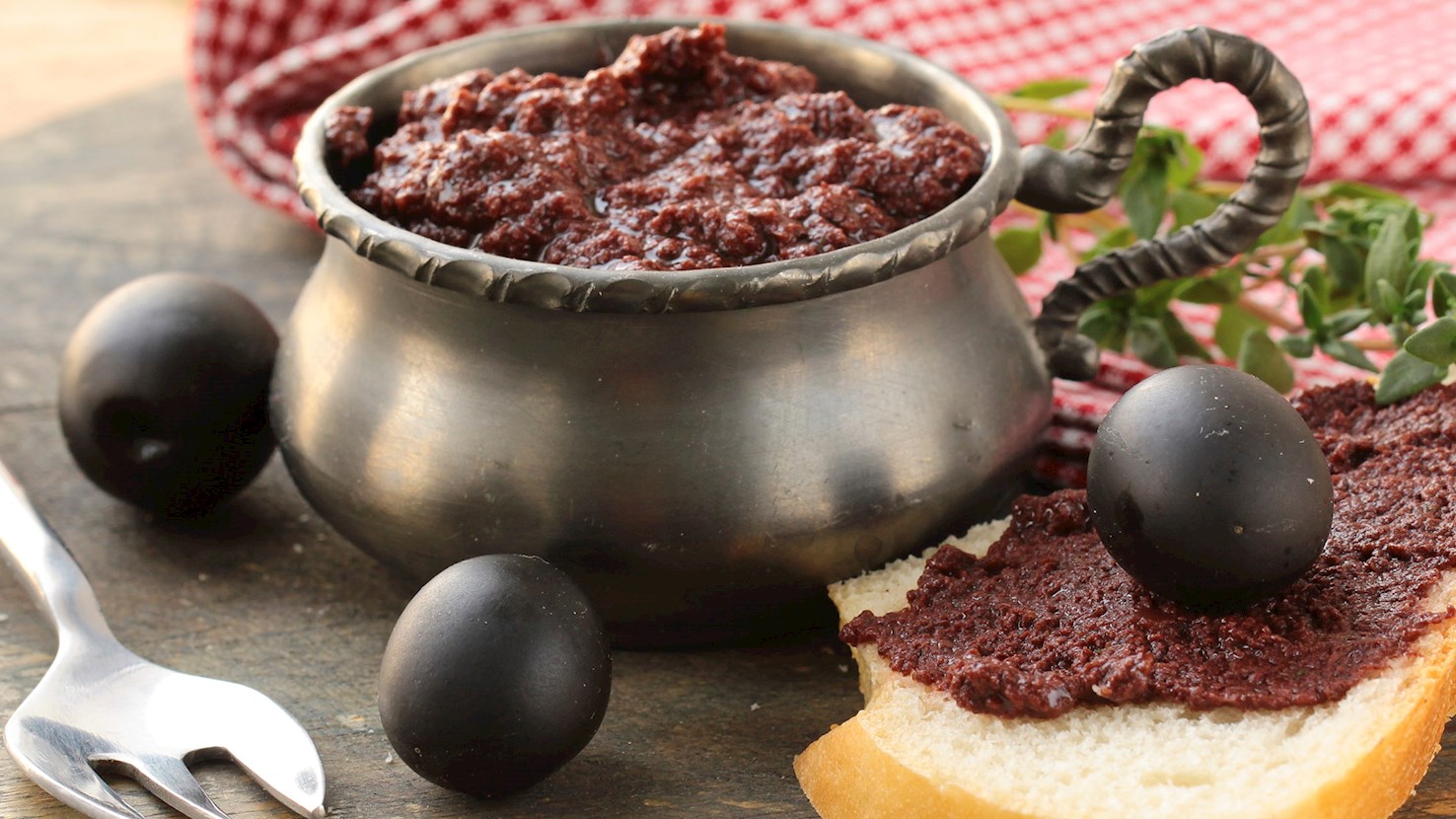
This aromatic, decadent spread is made with black or green olives. The original recipe includes four essential Mediterranean ingredients – chopped olives, anchovies, capers, and olive oil – combined with additional ingredients and spices to form a thick, fragrant spread. Even though it is often described as a Provençal recipe, it was originally invented in 1880 by a chef Meynier at a Marseilles restaurant called La Maison Dorée, while the first recipe dates back to 1897, when it was published in Jean-Baptiste Reboul's La Cuisinière Provençale. In the past, tapenade was made using a mortar and pestle, but today it can be easily prepared in a food processor. Even though it uses simple ingredients and is a quick dish to prepare at home, ready-made tapenades can be found in supermarkets all over the world. French restaurants usually serve it as an appetizer with a warm, crunchy baguette on the side. Sometimes, it is also used as a dipping sauce for crackers, assorted vegetables, or breadsticks.
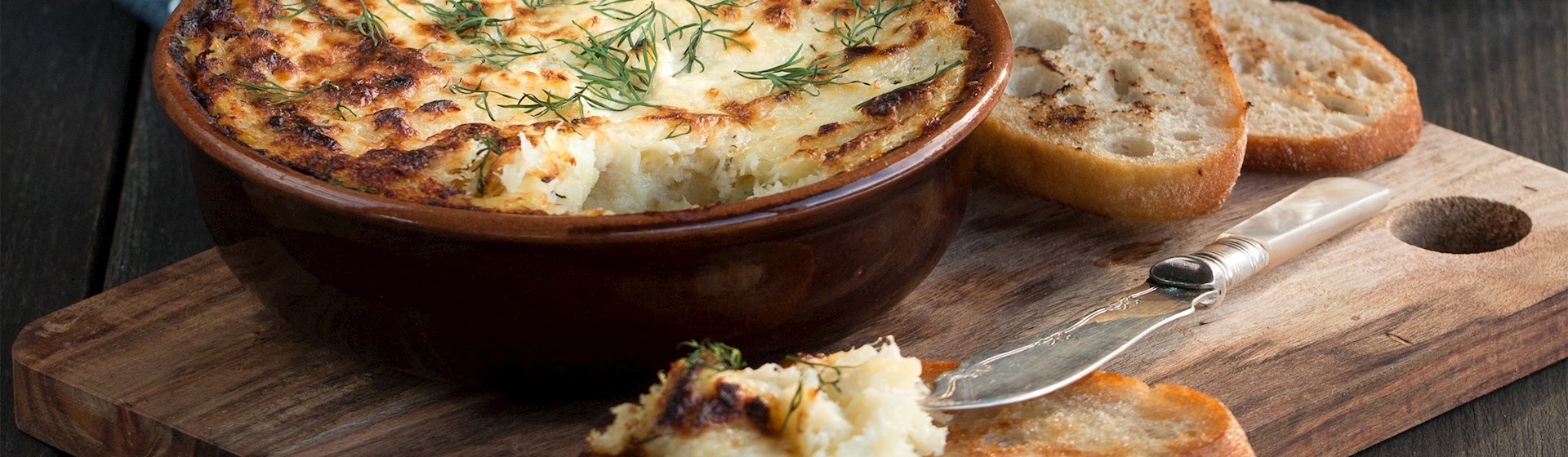
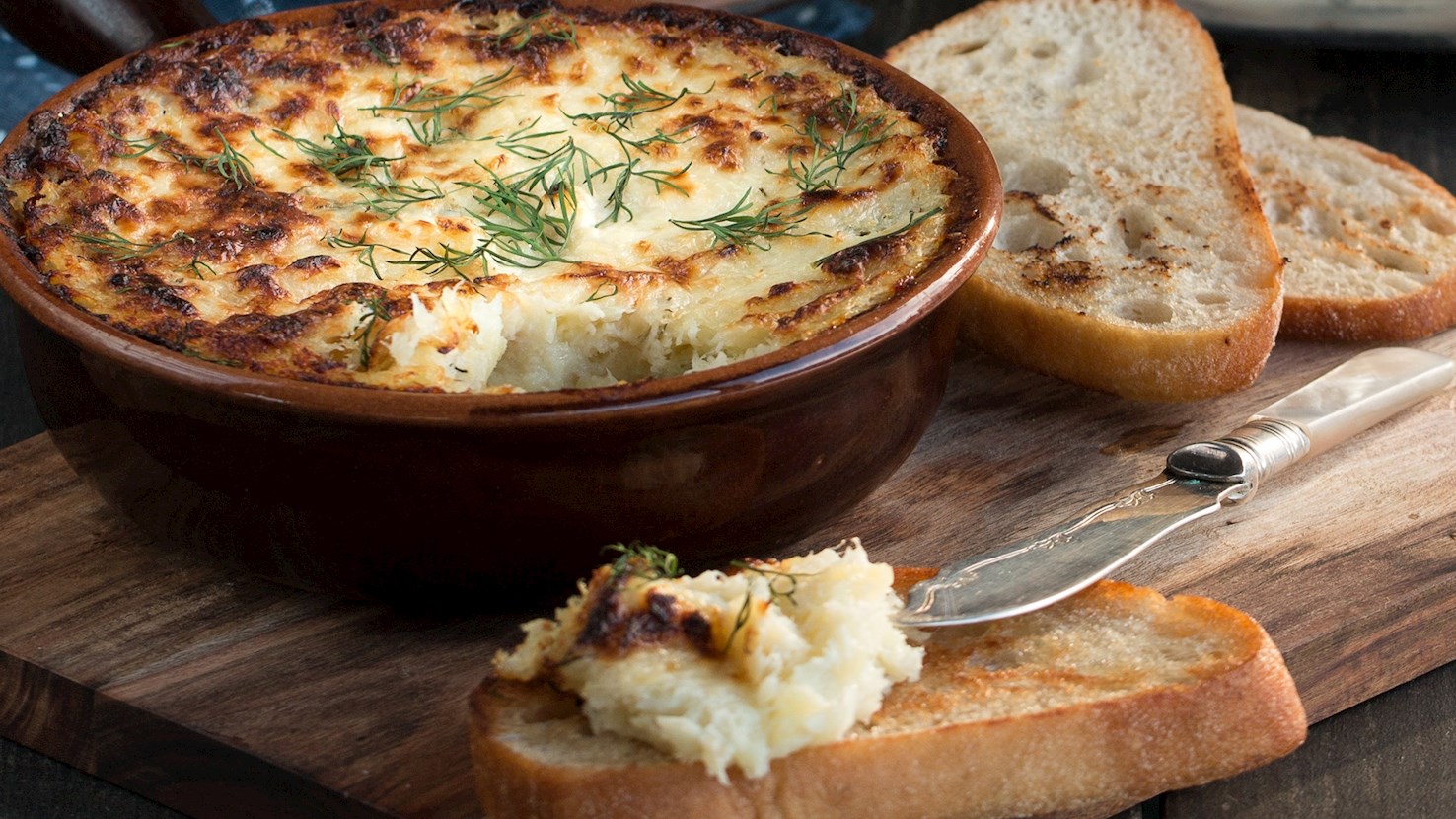
Brandade is a French dish consisting of mashed salt cod that is mixed with olive oil, potatoes, and often garlic and milk until the consistency becomes smooth and creamy. The name of the dish stems from the Provencal word brandado, meaning to shake or to stir. Brandade was most likely invented by the cooks of Nîmes and Marseilles in the 18th century. The dish was first popularized by a famous French chef named Durand in his cookbook from 1830. It is usually served warm as an appetizer, dip, or spread that's accompanied by bread or crackers.
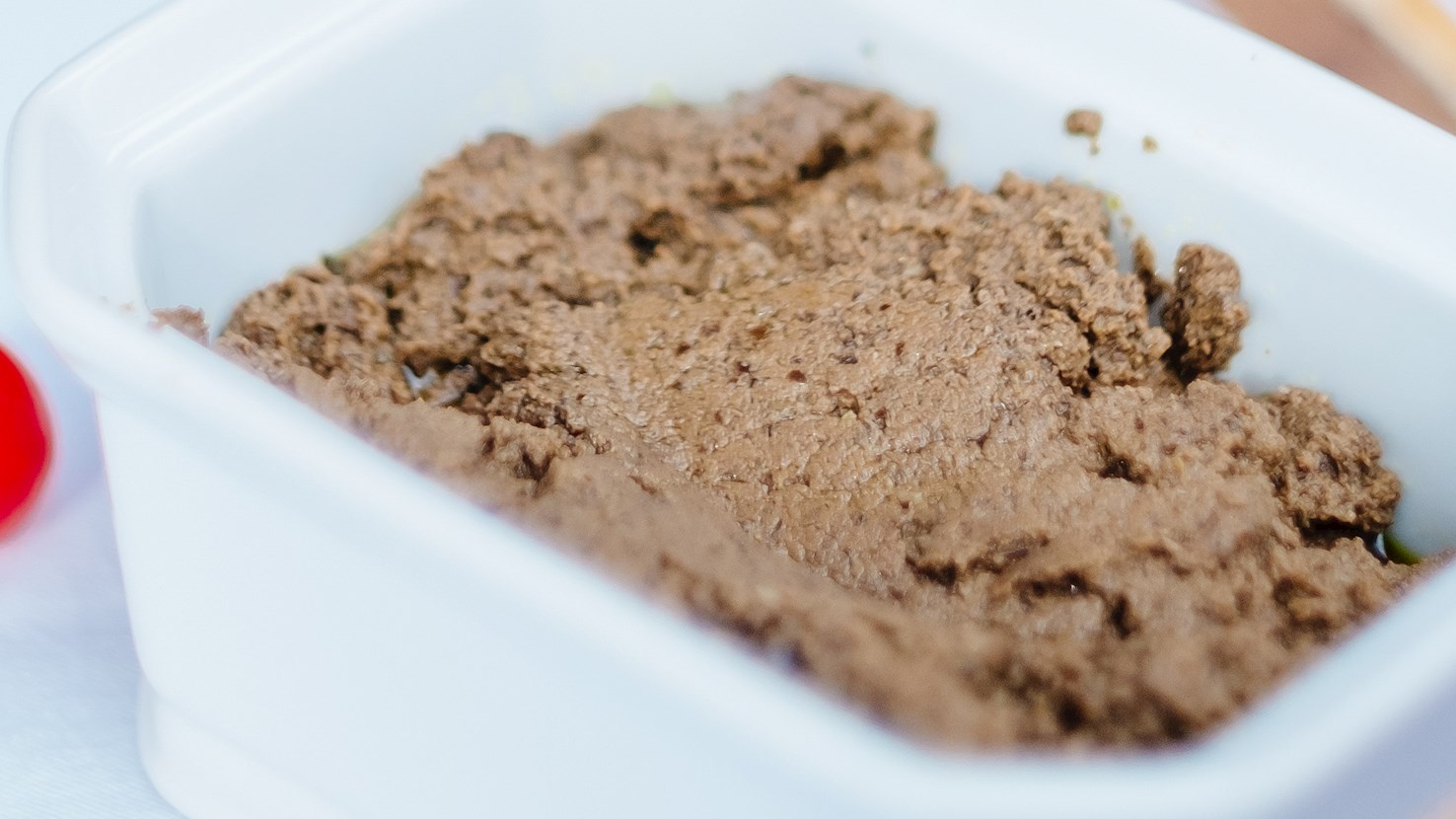
Anchoïade is a traditional dip originating from Provence. It consists of anchovies which have been packed in oil, red wine vinegar, minced garlic, and olive oil. The anchovies and garlic are ground into a paste, and it's then combined with vinegar and olive oil, which should be whisked in bit by bit until the desired consistency has been reached. Anchoïade is often slathered on grilled bread as a spread, used as a dip with crudités, or as a dressing for salads. However, it's most commonly used with crudités, so make sure you have an assortment of vegetables prepared for dipping, such as celery stalks, thinly sliced black radishes, or florets of broccoli romanesco.
Poichichade is a rustic Provençal chickpea purée/spread that is thick, earthy, and savory, closely resembling its Middle Eastern cousin, hummus. However, poichichade strictly omits tahini, relying instead on generous glugs of high-quality, local extra virgin olive oil to achieve its rich, velvety texture. This minimalist approach allows the pure, unadulterated flavor of the chickpea to shine, perfectly balancing the robust, nutty earthiness of the legumes with the bright, acidic tang of fresh lemon juice and the sharp, pungent bite of raw garlic. Because there is no sesame paste to mask the ingredients, the quality of the olive oil takes center stage, contributing a fruity, slightly peppery finish that beautifully coats the palate. The tradition of poichichade is deeply woven into the gastronomic tapestry of southern France, where chickpeas have been cultivated since Antiquity and have since become an agricultural staple. Beyond being a simple, nourishing peasant food, the dish holds specific cultural weight; historically, its consumption has been strongly associated with Palm Sunday. In many rural communities, chickpeas play a central role in these springtime festive meals, symbolizing sustenance, the local terroir, and the changing of the seasons. The true beauty of the dish lies in its rustic, unpretentious preparation. A purist recipe calls for dried chickpeas soaked overnight and slowly simmered until tender, yielding a far superior texture to modern canned varieties. These are traditionally pounded in a mortar and pestle—or pulsed carefully in a food processor—with olive oil, garlic, lemon, and often a dash of cumin or a pinch of classic Herbes de Provence. The resulting consistency is intentionally left a bit coarser and more textured than commercial, mass-produced dips. While the classic version is superb on its own, poichichade serves as an excellent canvas for other iconic Mediterranean flavors. Local artisanal canneries and chefs frequently offer vibrant regional variations, blending the purée with green or black olive pulp to bridge the gap with traditional tapenade, folding in roasted red peppers for a smoky sweetness, or adding aromatic twists like toasted fennel seeds and crushed hazelnuts to elevate its umami profile. Today, poichichade remains an undisputed star of the southern French apéritif hour. It is best enjoyed swooped generously into a shallow earthenware bowl, drizzled with a final pour of excellent olive oil, and dusted with paprika. Locals traditionally smear it onto toasted baguette slices and crostini, or scoop it up with a colorful platter of crisp, fresh crudités like radishes, carrots, and raw fennel. To experience the dish exactly as intended, this savory spread is ideally paired with a pale, crisp glass of Rosé de Provence or a chilled, dry white wine from the surrounding valleys.
TasteAtlas food rankings are based on the ratings of the TasteAtlas audience, with a series of mechanisms that recognize real users and that ignore bot,
nationalist or local patriotic ratings, and give additional value to the ratings of users that the system recognizes as knowledgeable.
For the “Top 4 Provençal Dips” list until May 16, 2026, 295 ratings were recorded, of which 274 were recognized by the system as legitimate.
TasteAtlas Rankings should not be seen as the final global conclusion about food. Their purpose is to promote excellent local foods,
instill pride in traditional dishes, and arouse curiosity about dishes you haven’t tried.