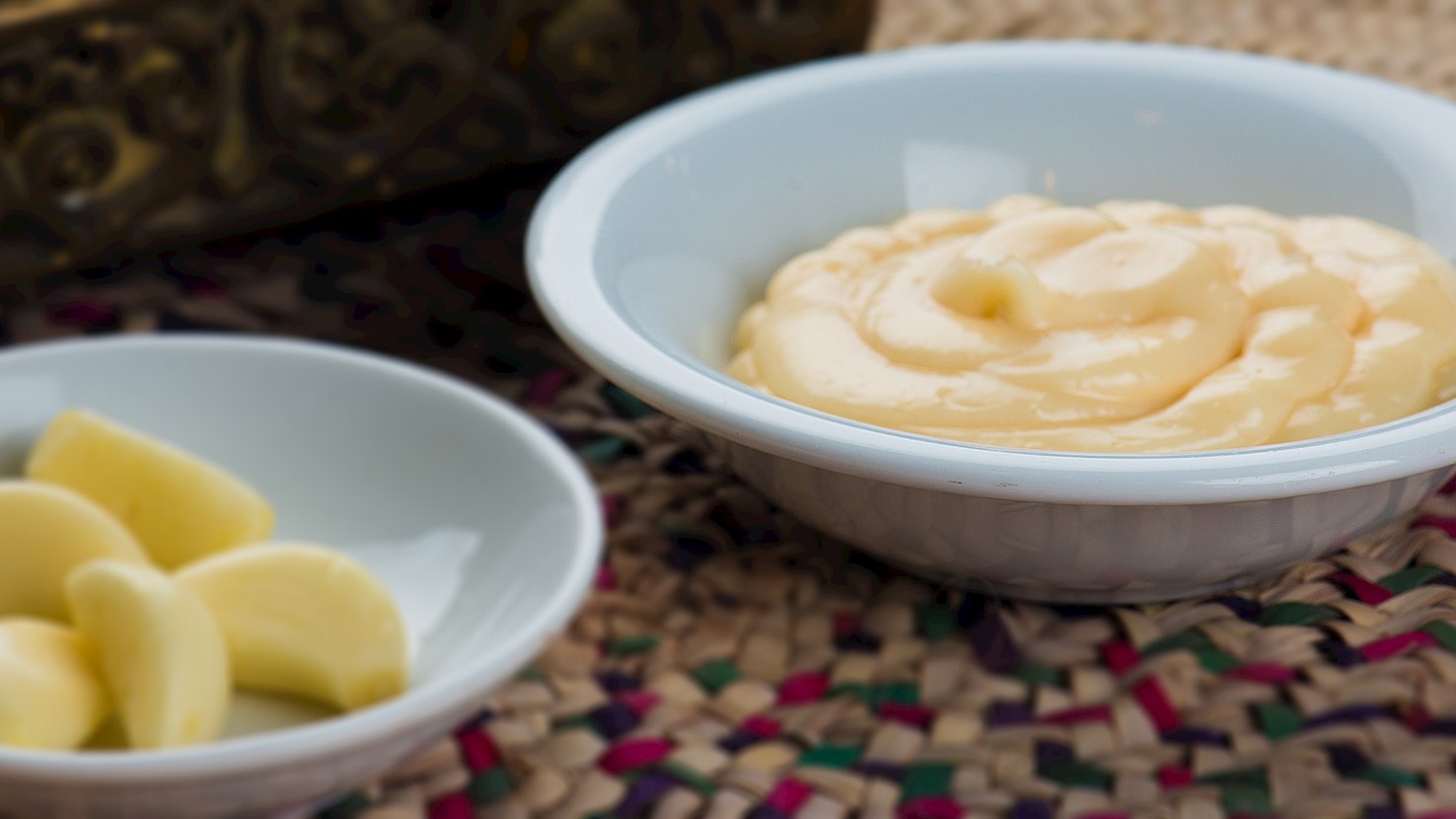
Toum is an authentic Lebanese and Syrian garlic paste. It is made with whole garlic cloves, which are slowly crushed using a mortar and pestle, or nowadays simply ground in a food processor. During this process, oil (preferably neutral oil such as canola, or the flavorful olive oil) is gently added to create a homogeneous garlic paste with an unusual, fluffy texture. Finally, salt and lemon juice are added to the mix, giving the paste a salty flavor and ivory color. Toum is used for marinades, sauces, and dips, and can enrich any meal. It is usually combined with chicken in traditional dishes such as roast chicken, chicken skewers or chicken shawarma, but is also commonly combined with beef, lamb, or goat meat. It is often used as a spread in the famous Lebanese pita sandwiches and wraps, or as a simple spread over bread, which is served as a starter or a snack. Toum can be made in advance and can keep up as long as three weeks. Since it is highly versatile, numerous ingredients, such as mint, can be added to diversify its flavor and texture. This delightful, pungent garlic spread and its adaptations can also be found in eastern Mediterranean countries, Egypt, and Iraq.
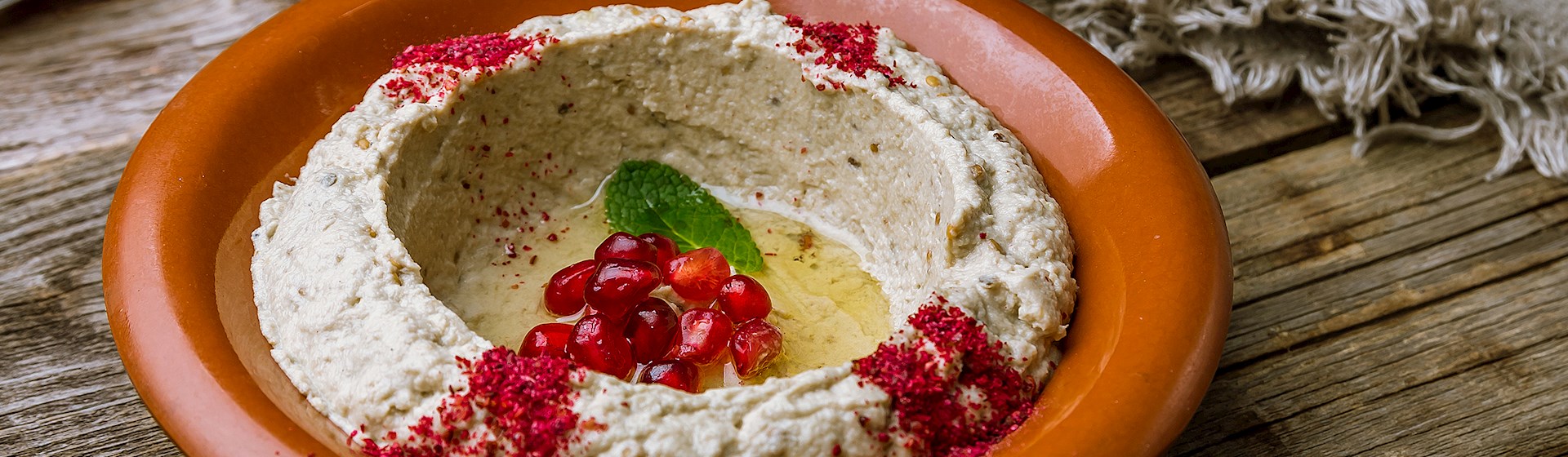
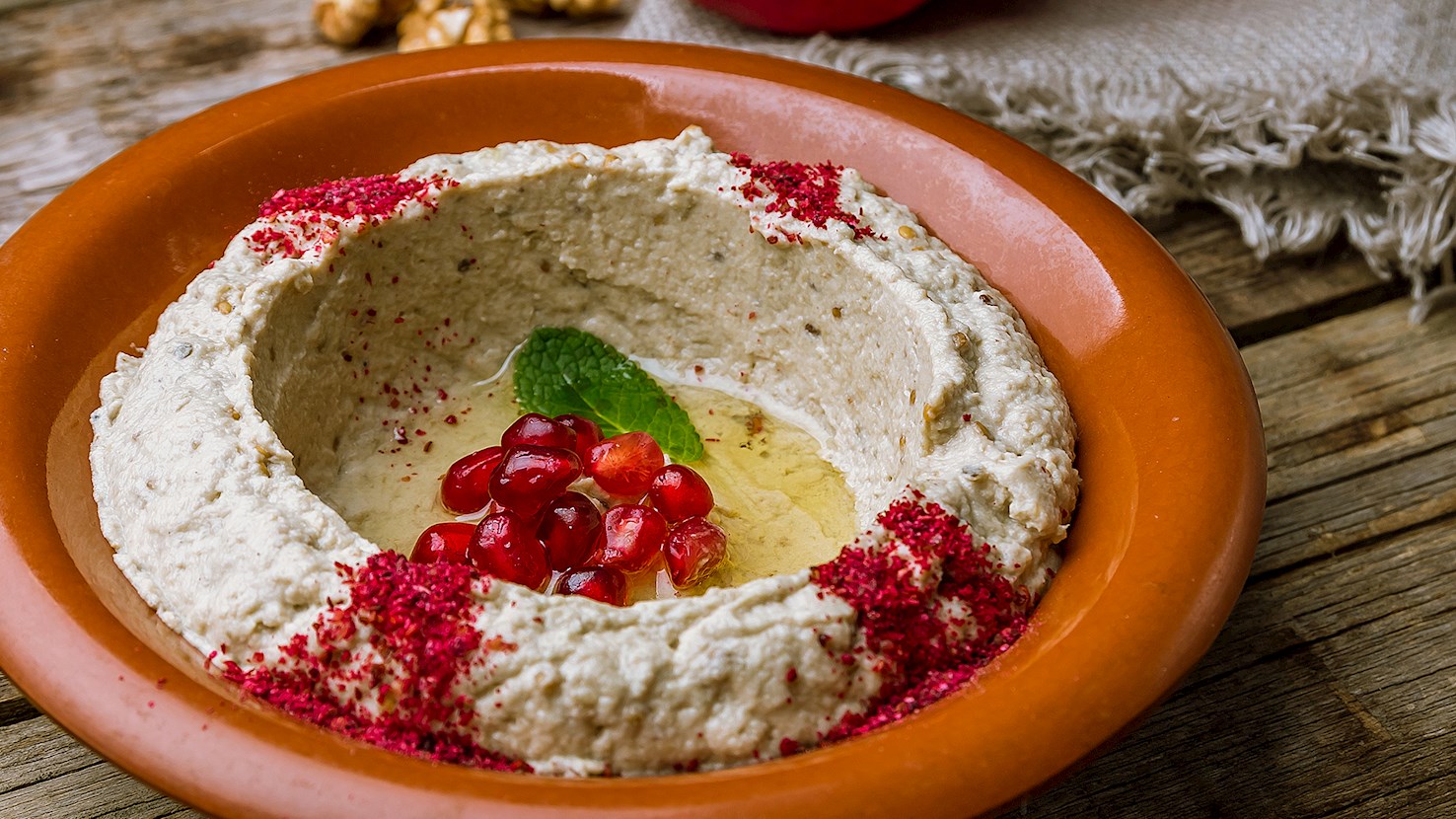
Mutabal is an eggplant-based dip prepared in the eastern Mediterranean and Arabian regions, most commonly associated with Lebanon, Syria, Jordan, and Palestine, made from cooked eggplant blended with tahini, lemon juice, garlic, and salt to form a smooth, pale-colored spread. Its development is closely tied to the long-standing cultivation of eggplant in the Levant and the parallel use of sesame paste as a core ingredient in savory preparations, with regional cookery texts from the medieval Islamic world describing combinations of mashed vegetables, fermented or acidic elements, and ground seeds, indicating a settled culinary logic in which mutabal emerged as a distinct preparation emphasizing tahini more strongly than other eggplant dishes. Preparation begins with roasting whole eggplants, ideally over direct flame, until the flesh softens and absorbs smoke, after which the skins are removed and the pulp drained to control bitterness and moisture, then mixed thoroughly with tahini, lemon juice, crushed garlic, and salt until the mixture becomes cohesive and smooth rather than coarse. Mutabal is served at room temperature, usually spread in a shallow dish and finished with olive oil, and it is presented as part of a larger table rather than as an individual portion. A defining characteristic of mutabal is the dominant role of tahini, which gives it a lighter color, thicker body, and more pronounced nutty profile compared to related eggplant spreads that rely less on sesame paste. It is eaten in homes, restaurants, and social gatherings throughout the Levant, typically accompanied by flatbreads such as pita or markouk and raw vegetables, and it pairs well with unsweetened black tea, mint tea, arak diluted with water, or dry white wines, fitting naturally into meals where multiple small dishes are shared and balanced by bread rather than by heavy seasoning.
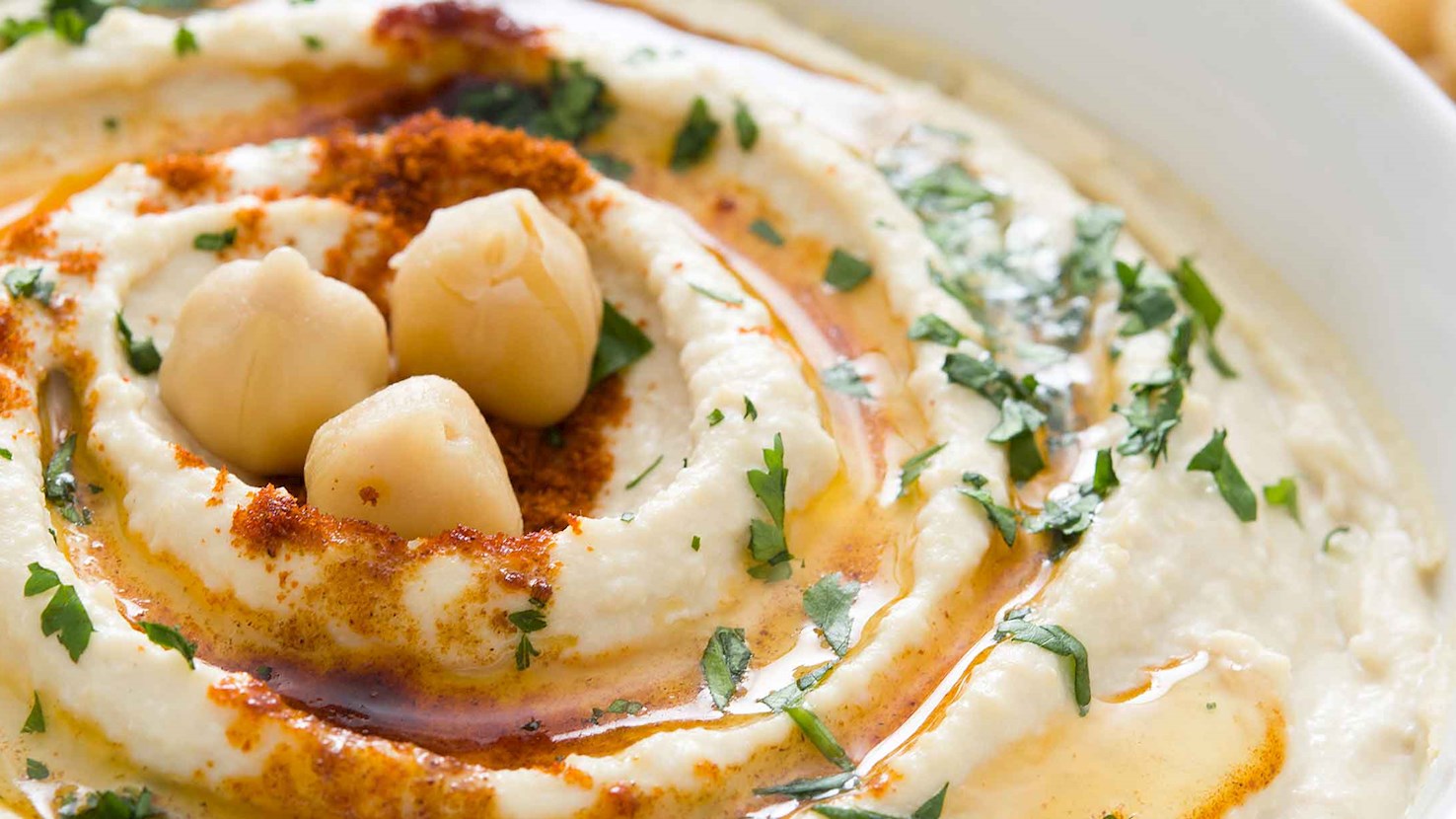
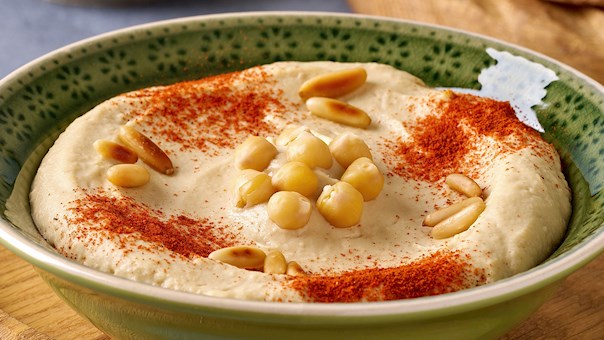
Hummus is a creamy dip made primarily from cooked and mashed chickpeas blended with tahini, olive oil, lemon juice, and garlic. It originates from the Middle East, where it has been a dietary staple for centuries, especially in countries like Lebanon, Palestine, Israel, Syria, and Jordan. Hummus’s roots can be traced back to ancient times (earliest mention of hummus dates back to 13th-century Egypt), when legumes and seeds were common sources of nutrition in the Levant. Over time, the combination of chickpeas and tahini evolved into a dish that balances earthy, nutty, and tangy flavors. While recipes vary slightly across regions, the core ingredients remain consistent, emphasizing freshness and quality. The smooth texture and rich taste make hummus both versatile and widely appealing, able to serve as a simple snack or a complement to more elaborate meals. Preparation involves soaking and cooking dried chickpeas until tender, then blending them with tahini paste, freshly squeezed lemon juice, crushed garlic, and extra virgin olive oil to create a velvety consistency. Salt is added to enhance the flavors, and the mixture is often garnished with a drizzle of olive oil, a sprinkle of paprika or sumac, and sometimes fresh herbs or whole chickpeas. Hummus can be served chilled or at room temperature, paired with pita bread, vegetables, or as part of a larger mezze platter. Hummus enjoys widespread popularity not only in the Middle East but globally, embraced as a healthy and flavorful dish. It is commonly found in homes, restaurants, and markets, representing both everyday nourishment and a dish for social gatherings.
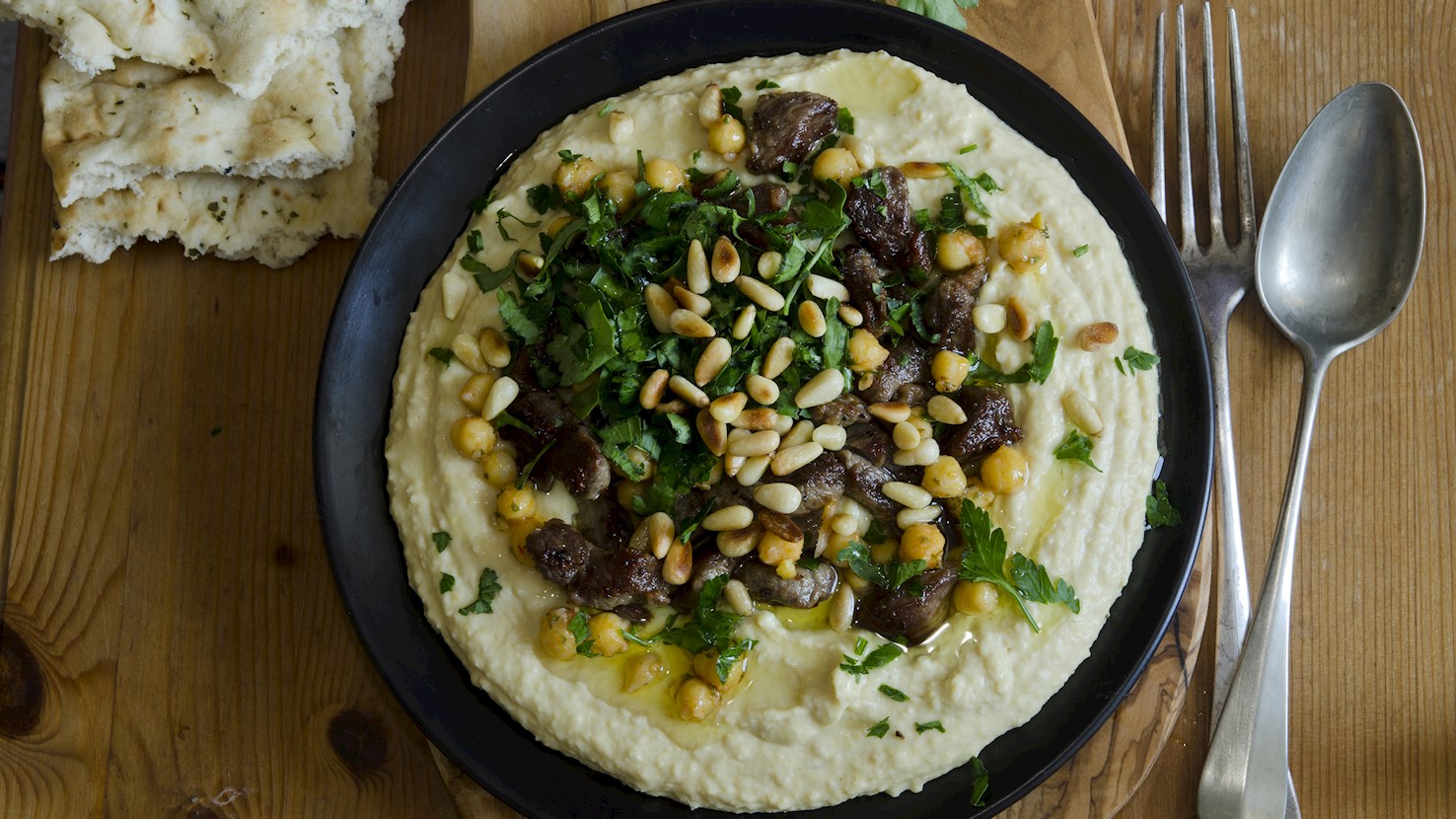
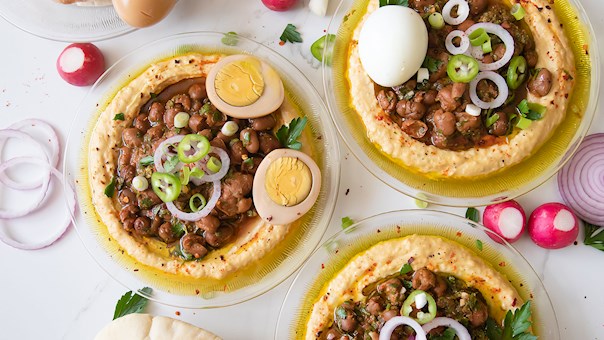
Hummus kawarma is a traditional version of hummus. In order to prepare it, freshly made hummus is topped with fried pieces of lamb. The hummus is made from chickpeas, tahini, lemon juice, crushed garlic, and cold water, while the kawarma consists of chopped lamb, white vinegar, olive oil, and spices such as pepper, allspice, cinnamon, nutmeg, oregano or za’atar, mint, and parsley. Once prepared, hummus kawarma is often garnished with chopped parsley and toasted pine nuts.
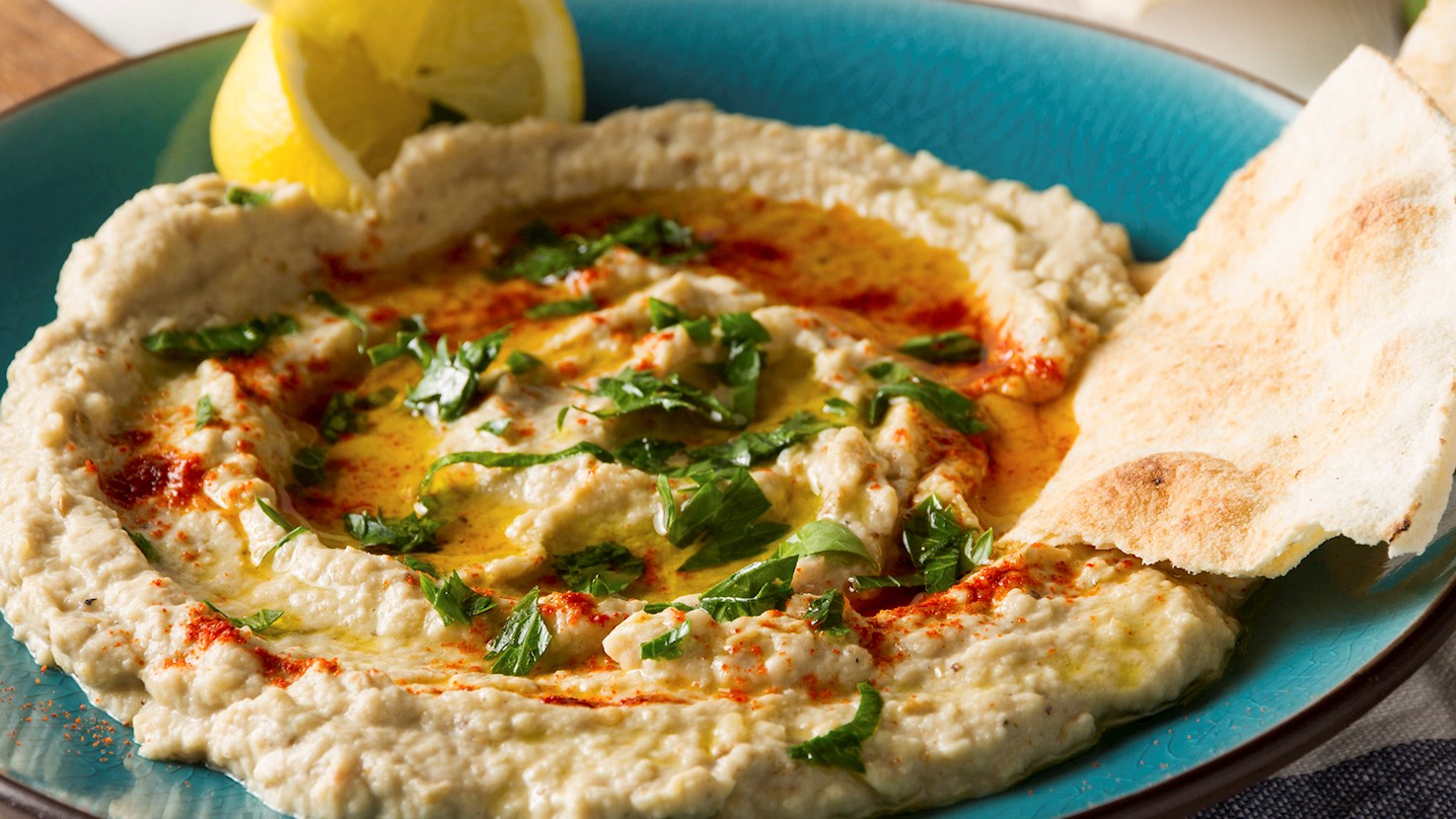
Baba ghanoush is a cold eggplant-based spread originating from the Levant, widely prepared and consumed in countries such as Lebanon, Syria, Jordan and Palestine, made primarily from cooked eggplant combined with tahini, lemon juice, garlic, and olive oil to form a smooth or lightly textured paste. Its emergence is tied to the long-standing cultivation of eggplant in the eastern Mediterranean and the parallel development of sesame-based condiments, with medieval Arabic cookery texts describing mashed or puréed eggplant dishes seasoned with acids and fats, indicating a settled place in regional cuisines by the early Islamic period as cooking techniques such as open-fire roasting became common in domestic kitchens. Its name comes from the Arabic phrase baba gannuj, where baba means father or daddy, and gannuj means pampered or spoiled, referring to a supposed invention of baba ghanoush by a member of a royal harem. Preparation begins with whole eggplants roasted directly over flame or in ovens until the flesh softens and absorbs smoke, after which the skin is removed and the pulp drained to control moisture before being mixed with tahini, lemon juice, salt, and garlic, producing a balance between bitterness, acidity, and fat, and the spread is usually finished with olive oil and sometimes garnished with parsley or pomegranate seeds depending on local preference. A defining characteristic of baba ghanoush is the use of smoke from direct heat rather than added spices to create depth of flavor, and its composition relies on emulsification between eggplant fibers and sesame paste rather than dairy or starch for body. Baba ghanoush is eaten throughout the Levant and beyond as part of mixed appetizer spreads, served with flatbreads such as pita or saj, alongside raw vegetables or grilled meats, and it pairs well with dry white wines, light-bodied reds, anise-based spirits diluted with water, or non-alcoholic options like mint tea and sparkling water that complement its acidity and richness without overpowering its flavor.
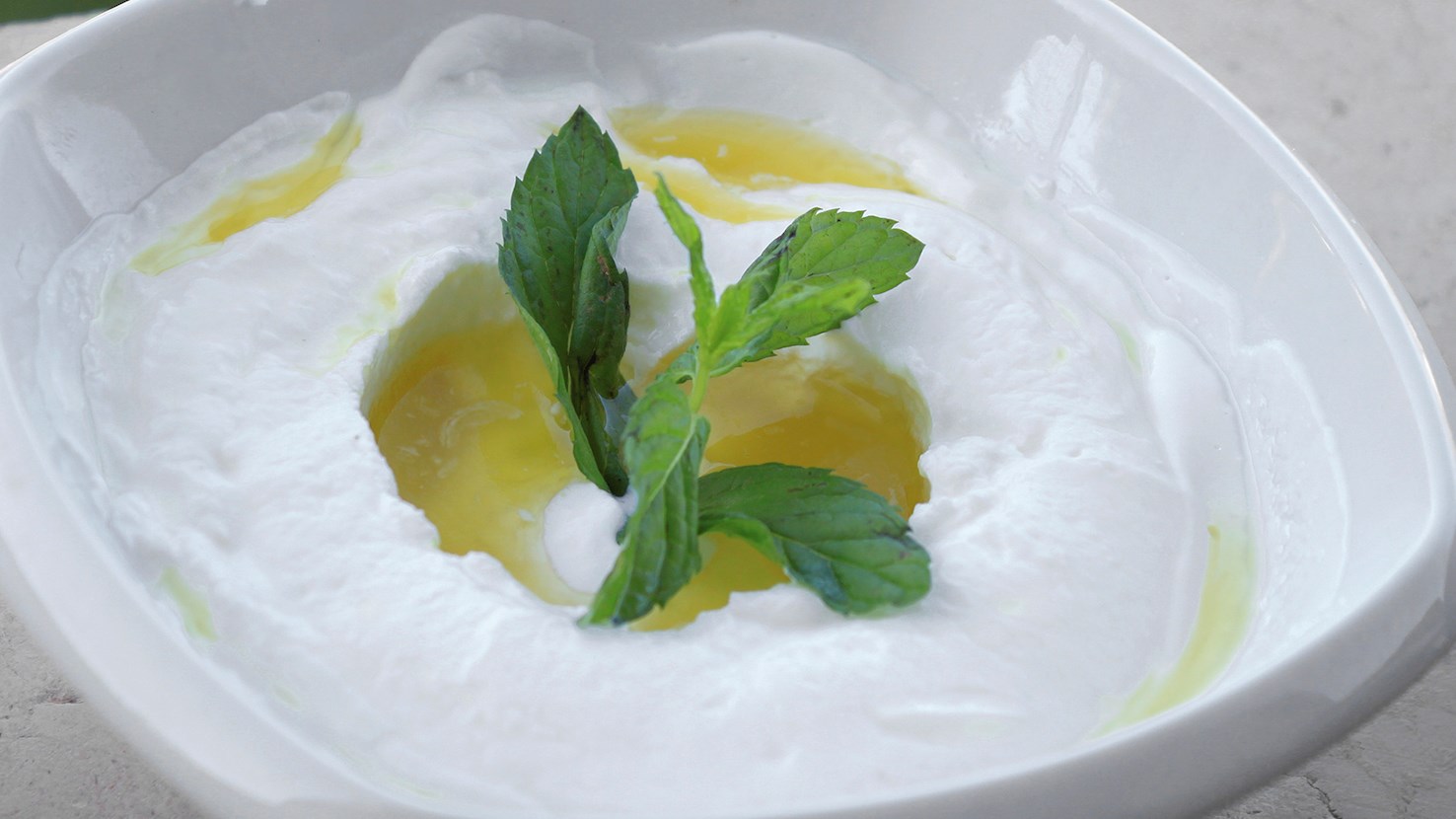
Creamy texture and mild flavor are the main attributes of labneh; a traditional Middle Eastern strained yogurt that is prepared with yogurt and salt. No strict guidelines are used to produce it; plain full-fat yogurt is mixed with salt and left to strain for twelve to twenty-four hours. During straining, the yogurt whey separates, and what is left is a thick and firm cheese-like product. Its texture can vary from creamy to dense, but it always has a relatively mild and slightly salty flavor. The name labneh is native to the Middle East, but strained yogurt varieties are found in numerous other countries and regions such as Greece, Turkey, Cyprus, Central Asia, the United States, Mexico, and the United Kingdom. It usually employs cow milk, but other kinds, such as goat yogurt in Greece, are also common. In many Levantine countries, labneh is enjoyed as a part of a mezze, served alongside flatbreads and other small dishes. It can be eaten plain, garnished with olive oil or chopped mint, but it can also be served as a creamy spread over bread or bagels. It is often incorporated as a condiment in many meat and vegetable dishes. Because of its thick consistency, it can be rolled into balls and preserved in olive oil, or covered in crushed nuts or spices, then served as a decorative appetizer.
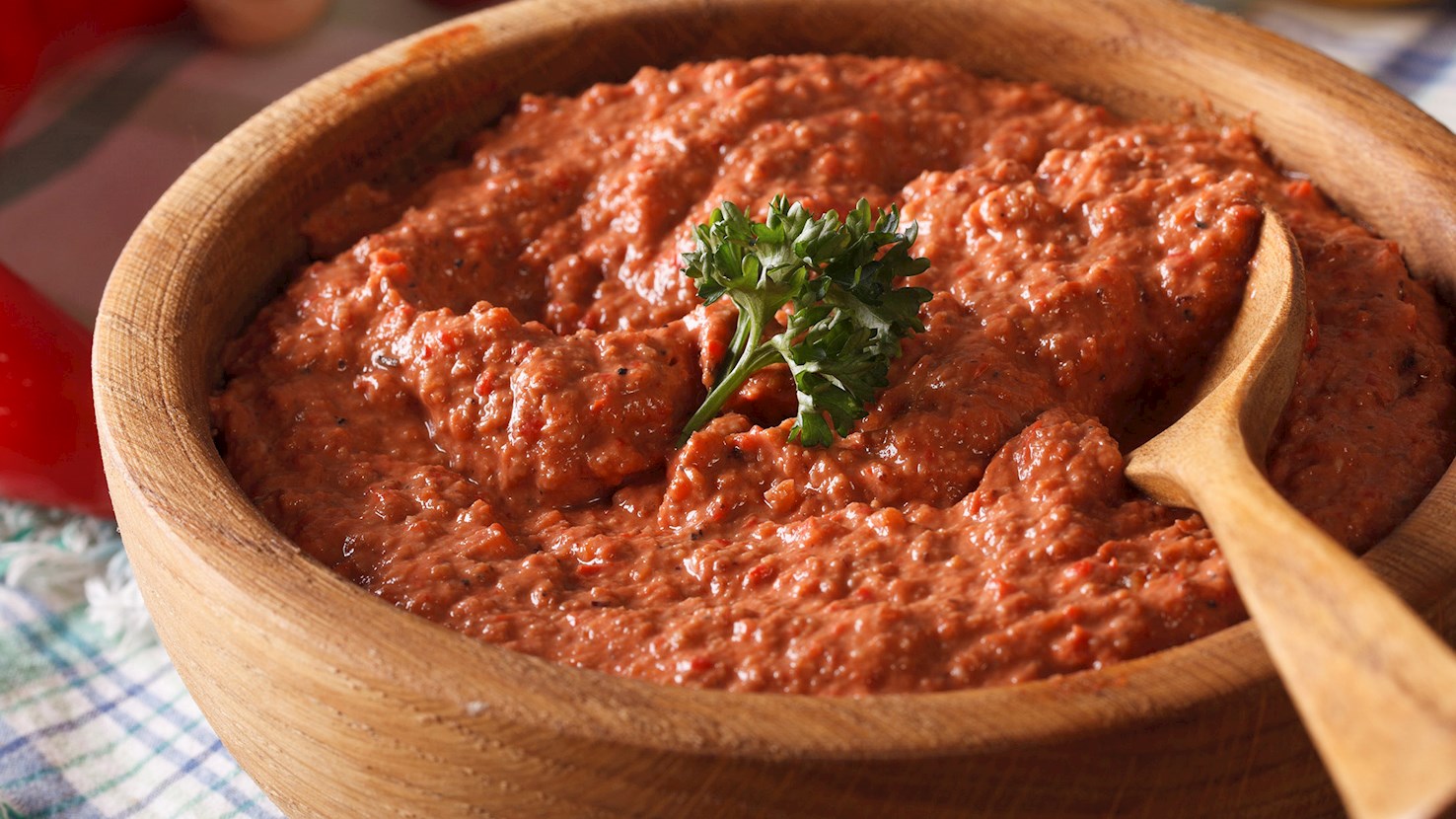
Muhammara is a nutritious dip originating from the Syrian city of Aleppo. It is made with a combination of roasted red peppers, olive oil, and ground walnuts. The peppers give the dish a particular sweetness and smoky flavor, while ground walnuts make it texturally exciting. Lemon juice, pomegranate molasses, garlic, and salt are often added to the dish. Traditionally, it was prepared in a mortar, but modern techniques usually mechanically blend the ingredients, so its texture might vary from grainy to smooth. It is usually served individually in small bowls or in larger plates, when it is consumed communally. Freshly baked pita bread is the essential accompaniment to every muhammara dip - typically cut in triangles, pita is used as a utensil to scoop up this delightful spread. Muhammara is often a part of a mezze, served alongside baba ganoush, labneh, or hummus, but it is also often used as a dip for raw vegetables or a sauce accompanying grilled meat and fish dishes.
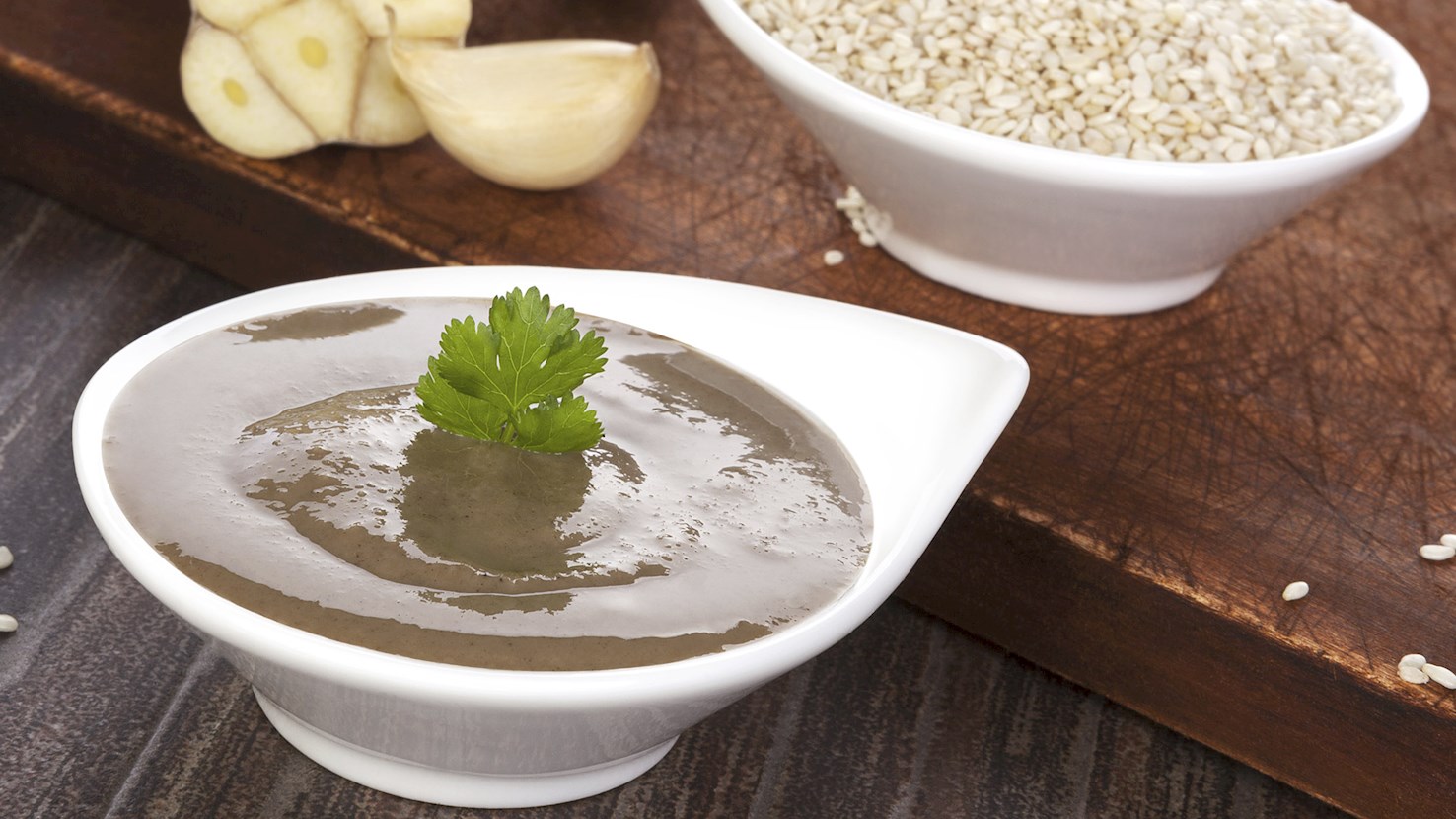
Tahini is a paste consisting of toasted and ground sesame seeds which are usually thinned with lemon juice and water. It is an incredibly versatile paste that can be served as a dip and consumed on its own, or as a condiment accompanying numerous meat and vegetable dishes in Middle Eastern cuisine. Tahini can also be used as a spread, as the main ingredient in soups, or as a key ingredient in hummus, halva, or baba ghanoush. It is believed that the best tahini should have a light and toasty sesame seed flavor and a rich texture. The paste contains large amounts of Vitamin B and E, as well as magnesium, iron, and calcium. Originally, sesame seeds came to Israel via ancient Persia, where they were considered holy food. Sesame products were so popular that they were reserved only for the aristocracy, and tahini soon spread to India, Africa, and Asia. Today, it remains an extremely popular condiment in numerous countries such as Greece, Iraq, Turkey, Syria, and Egypt. It is recommended to pair it with date syrup or cocoa powder for a nutritious, flavorful dessert.
Mutabbal al-batirsh is a traditional and famous eggplant and minced lamb dip from the city of Hama in Syria, known for its rich and distinctive flavor. The dish consists of roasted and finely chopped eggplant mixed with tahini, garlic, lemon juice, and olive oil and seasoned with salt and cumin. This mixture is then combined with minced meat cooked with onions and tomatoes, giving it a rich and unique taste. Mutabbal al-batirsh is served sprinkled with pine nuts and parsley alongside fresh Syrian bread, usually as an appetizer or light meal, and is a favorite among many in Syrian cuisine.
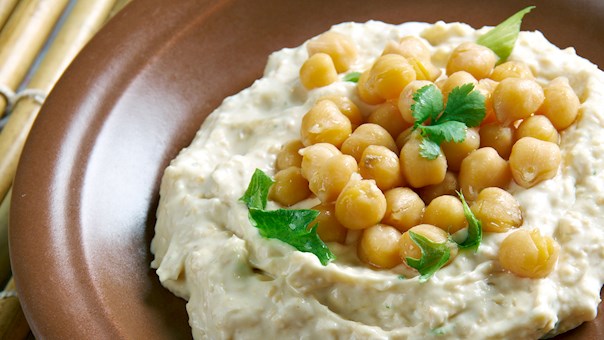
Mashawsha is a steaming hot, textured variation of Levantine hummus—essentially a rustic, chunky counterpart—prepared by manually crushing freshly boiled chickpeas into a coarse, jagged mash rather than blending them into a smooth cream. Originating from the working-class kitchens of the Eastern Mediterranean, deeply rooted in Palestinian, Syrian, and Lebanese culinary traditions, this dish is fundamentally defined by its manual labor and intentional imperfection. Rather than relying on modern food processors to whip the ingredients into a pale emulsion, cooks use a heavy mortar and pestle to physically smash the hot beans just moments before serving. This deliberate, partial mashing creates a porridge-like consistency where half-crushed chickpeas release their natural starches, binding the mixture without ever losing their hearty structural integrity. Because the dish is always served warm, its rough culinary architecture serves a highly specific functional purpose: the deep crevices of the smashed chickpeas grip and absorb heavy pours of cold-pressed extra-virgin olive oil far more efficiently than a smooth puree ever could. A proper bowl of mashawsha demands a sharp, vibrant flavor profile to cut through its dense, starchy weight, which is achieved by folding in raw, crushed garlic, fiery green chili sauces like tatbila, and a heavy dose of freshly squeezed lemon juice directly into the hot mash. Crowned with a dusting of ground cumin and finely chopped flat-leaf parsley, this formidable breakfast staple is meant to be scooped up instantly with thick shards of raw white onion and tearing-hot pita bread, delivering an unapologetically heavy, texturally complex meal.
TasteAtlas food rankings are based on the ratings of the TasteAtlas audience, with a series of mechanisms that recognize real users and that ignore bot,
nationalist or local patriotic ratings, and give additional value to the ratings of users that the system recognizes as knowledgeable.
For the “Top 13 Syrian Dips” list until August 15, 2026, 7,513 ratings were recorded, of which 2,427 were recognized by the system as legitimate.
TasteAtlas Rankings should not be seen as the final global conclusion about food. Their purpose is to promote excellent local foods,
instill pride in traditional dishes, and arouse curiosity about dishes you haven’t tried.





What People Say