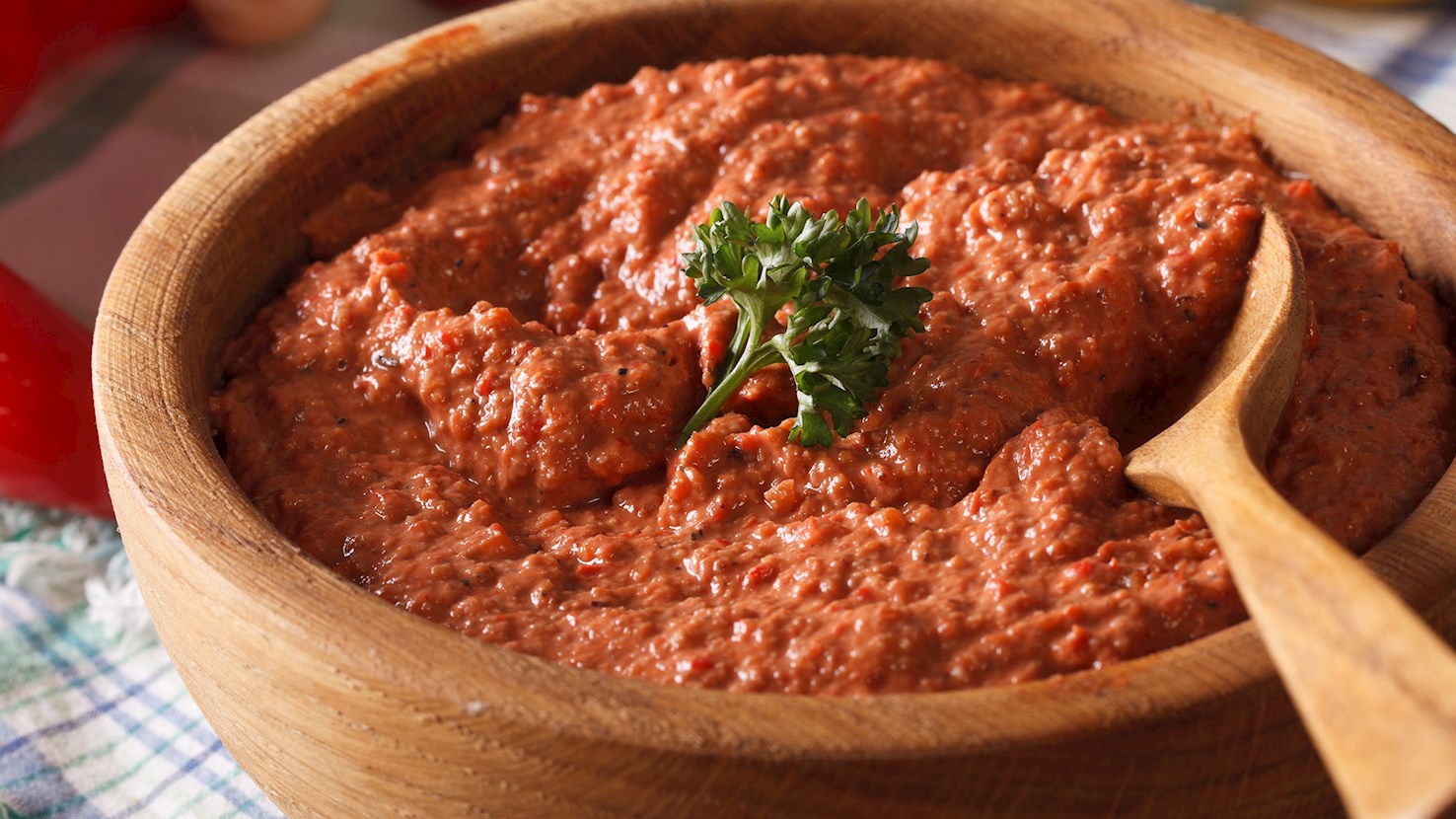
Muhammara is a nutritious dip originating from the Syrian city of Aleppo. It is made with a combination of roasted red peppers, olive oil, and ground walnuts. The peppers give the dish a particular sweetness and smoky flavor, while ground walnuts make it texturally exciting. Lemon juice, pomegranate molasses, garlic, and salt are often added to the dish. Traditionally, it was prepared in a mortar, but modern techniques usually mechanically blend the ingredients, so its texture might vary from grainy to smooth. It is usually served individually in small bowls or in larger plates, when it is consumed communally. Freshly baked pita bread is the essential accompaniment to every muhammara dip - typically cut in triangles, pita is used as a utensil to scoop up this delightful spread. Muhammara is often a part of a mezze, served alongside baba ganoush, labneh, or hummus, but it is also often used as a dip for raw vegetables or a sauce accompanying grilled meat and fish dishes.
Kubbah bi-aṣ-sīnīyah is baked kibbeh assembled in a shallow tray, filled with cooked ground meat, onions, and often pine nuts, and enclosed between two layers of finely ground meat and bulgur. Its browned surface is usually scored into diamonds, squares, or a geometric pattern, and a cut portion reveals the looser filling beneath the compact outer layers. The name means kibbeh “in the tray” and also appears as kibbeh bil sanieh or kibbeh bi saniyeh. The tray format uses the same basic construction as stuffed kibbeh shells but spreads it across a single baking dish, removing the need to shape and seal each piece individually. It can therefore be prepared as a substantial main course and divided at the table, with crisp edges around a softer center. Meat appears twice, but it's treated differently in the outer mixture and the filling. For the enclosing layers, lean lamb or beef is ground very finely and worked with softened bulgur, onion, salt, and seasonings until it forms a cohesive paste. The meat is added raw and cooked in the oven. The filling, often called hashweh, is cooked separately: chopped onion is softened in fat, then ground meat is added and broken into small pieces as it browns. A slightly fattier meat can be used here, where it contributes moisture without interfering with the smooth texture needed for the outer layers. Pine nuts add a firm, buttery bite, though the amount varies and they can be omitted. Cinnamon, allspice, and black pepper are common seasonings that add warmth without necessarily making the filling hot. Fine bulgur is especially important for texture. Bulgur is wheat that has been parboiled, dried, and cracked; the fine grade, often labeled number one, hydrates quickly and blends into the meat more readily than larger grains. It should be softened without leaving excess water in the mixture. Depending on the method, cooks rinse and drain it, briefly soak it and squeeze out the excess, or measure the water the grain can absorb. Too much moisture makes the paste difficult to shape, while insufficient hydration leaves the wheat gritty. Finely processed onion supplies additional moisture and distributes its flavor throughout the layers. Some versions also add herbs or a kibbeh seasoning mixture called kamouneh, which can include cumin, dried mint, marjoram, and other aromatics. These mixtures vary by household; they are an option within the dish rather than a single required formula. A meat grinder or food processor helps bring the ingredients together, but the mixture still needs enough working to spread smoothly and hold its shape. Assembly begins with a well-greased, round or rectangular baking dish. Half of the meat-and-bulgur mixture is pressed into an even base, using hands moistened with cold water to prevent sticking. The cooled filling is spread across it without being compressed into a solid mass. The upper layer takes more care: small portions of the remaining paste are flattened between the palms, laid beside one another over the filling, and joined by smoothing the seams with wet fingers. This allows the cook to cover the surface without dragging the filling out of place. Keeping both outer layers reasonably thin preserves the contrast between the fine-textured casing and the crumbled meat inside. Before baking, the top is scored with a sharp knife. Some patterns mark serving portions, while more elaborate designs subdivide larger wedges into small diamonds. The cuts generally pass through the upper layer rather than all the way to the bottom of the pan. Butter, clarified butter, or oil is added to the surface to encourage browning and keep the lean outer mixture from becoming dry. As the tray bakes, the top and edges develop a crust while the interior remains softer. A brief rest after baking makes it easier to lift out portions without scattering the filling. Kubbah bi-aṣ-sīnīyah is served for family meals and larger gatherings, either as the main dish or as one of several dishes to share. Plain yogurt or a cucumber-and-yogurt salad supplies cool acidity alongside the meat and bulgur, while tomato, cucumber, and leafy salads provide a fresher accompaniment. It can be served warm or cold, and the layered structure firms as it cools, making leftovers easy to portion. For meals prepared ahead, the assembled tray can be frozen before baking, or the cooked kibbeh can be refrigerated and reheated in the oven before serving.
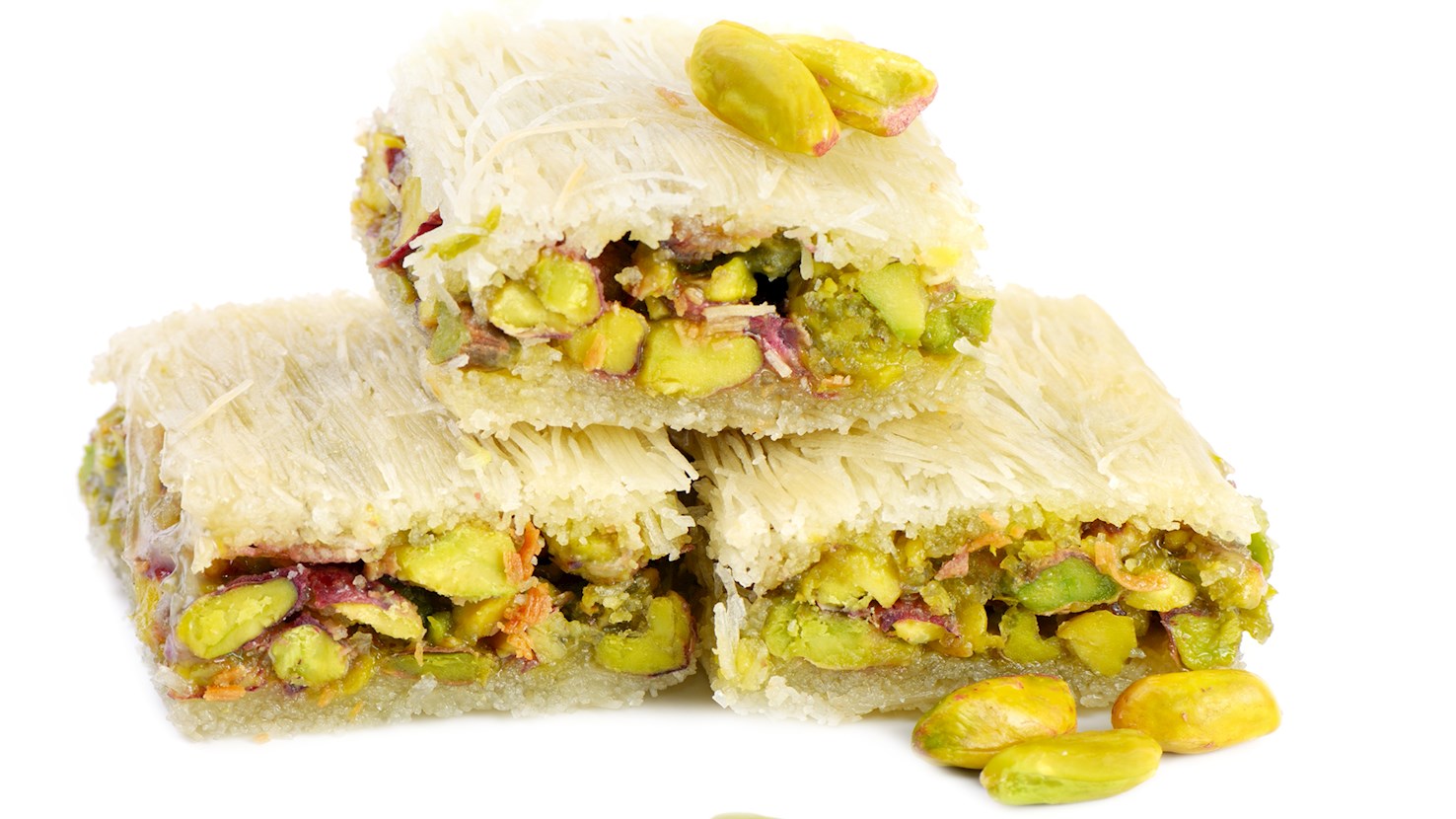
Ballourieh baklava consists of a pistachio filling that is placed between two layers of shredded kataifi dough—similar to the one used in kunāfah. This baklava variety is lightly baked because it needs to retain its typical white color. When baked, it is doused in syrup and left to set, and it is then traditionally served cut into large squares. Although it is believed to have been invented in Aleppo, ballourieh baklava is commonly found in Lebanon, Saudi Arabia, Palestine, and Jordan.
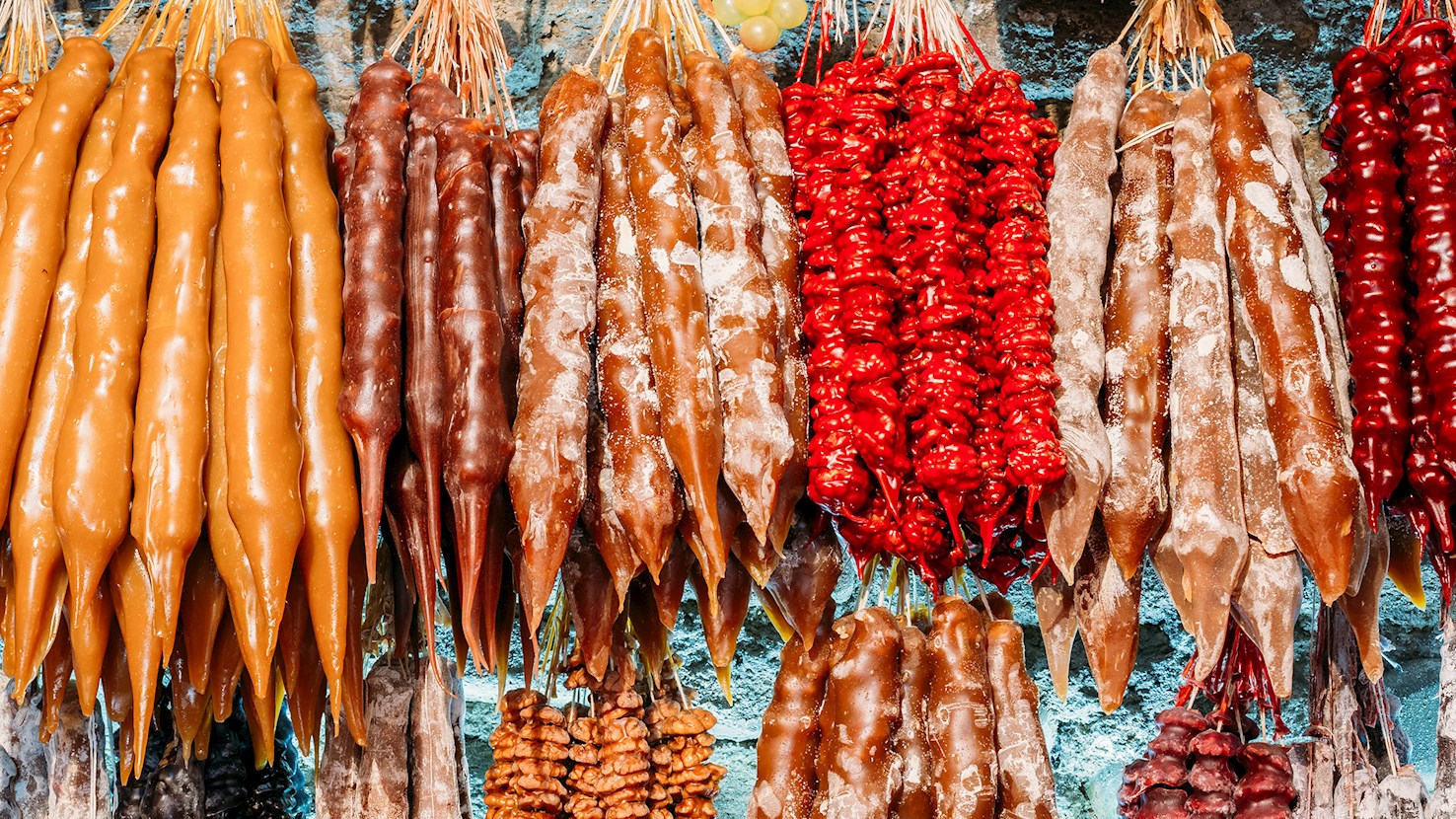
Churchkhela is a traditional Caucasian candy that is shaped into a sausage. This candy is made by dipping a long string of nuts (usually walnut halves) in concentrated grape juice, then leaving the concoction to dry. It is so healthy and so nutritious that, in the past, it was even carried by Georgian warriors on their long journeys. Although walnuts are usually used in the preparation of churchkhela, they can be replaced by almonds, hazelnuts, or raisins.
Mamounia is a traditional semolina dessert that resembles a thick porridge. It is made with semolina, butter, and sugar and is typically served warm for breakfast or dessert. The texture is creamy, and it can be flavored with rose water and orange blossom water and garnished with toppings like cinnamon, toasted pine nuts, pistachios, almonds, and rose petals. Mamounia is especially popular in Aleppo and is cherished for its comforting and rich taste. It is typically served with string cheese, cream, and pita bread.
Salatet set klaileh is a traditional Middle Eastern salad with a colorful history, either named after an Ottoman princess or as the "Lady of the Evening" due to its prominence on the table. This tangy salad usually features diced pickled cucumbers, diced pickled turnips, pickled chilies, onions, tomatoes, and parsley, dressed with cumin, lemon juice, vinegar, salt, pepper, olive oil, and some turnip pickle water. It is often served alongside fish, barbecues, or any dish that pairs well with a zesty, pickled side.
A sweet specialty hailing from Aleppo, karabij halab is a semolina flour cookie filled with a crunchy nut mixture and flavored with rose and orange blossom water. This sweet treat is typically made with semolina flour dough, topped with a mixture of ground pistachios or walnuts, sugar, ghee, cinnamon, and fragrant water, pinched closed, and then baked until nicely colored. Karabij halab, named after Halab - Aleppo’s ancient name, is typically shaped by hand, but it can also be molded in special, carved molds. The dessert is usually accompanied by natef - a type of white cream made from soapwort root - and is traditionally prepared on special occasions and holidays, such as Eid Al-Fitr. Although these Syrian cookies can be made at home, they are more commonly bought in numerous pastry shops selling them throughout the country, as making them can be a bit tricky due to the crumbly semolina dough.
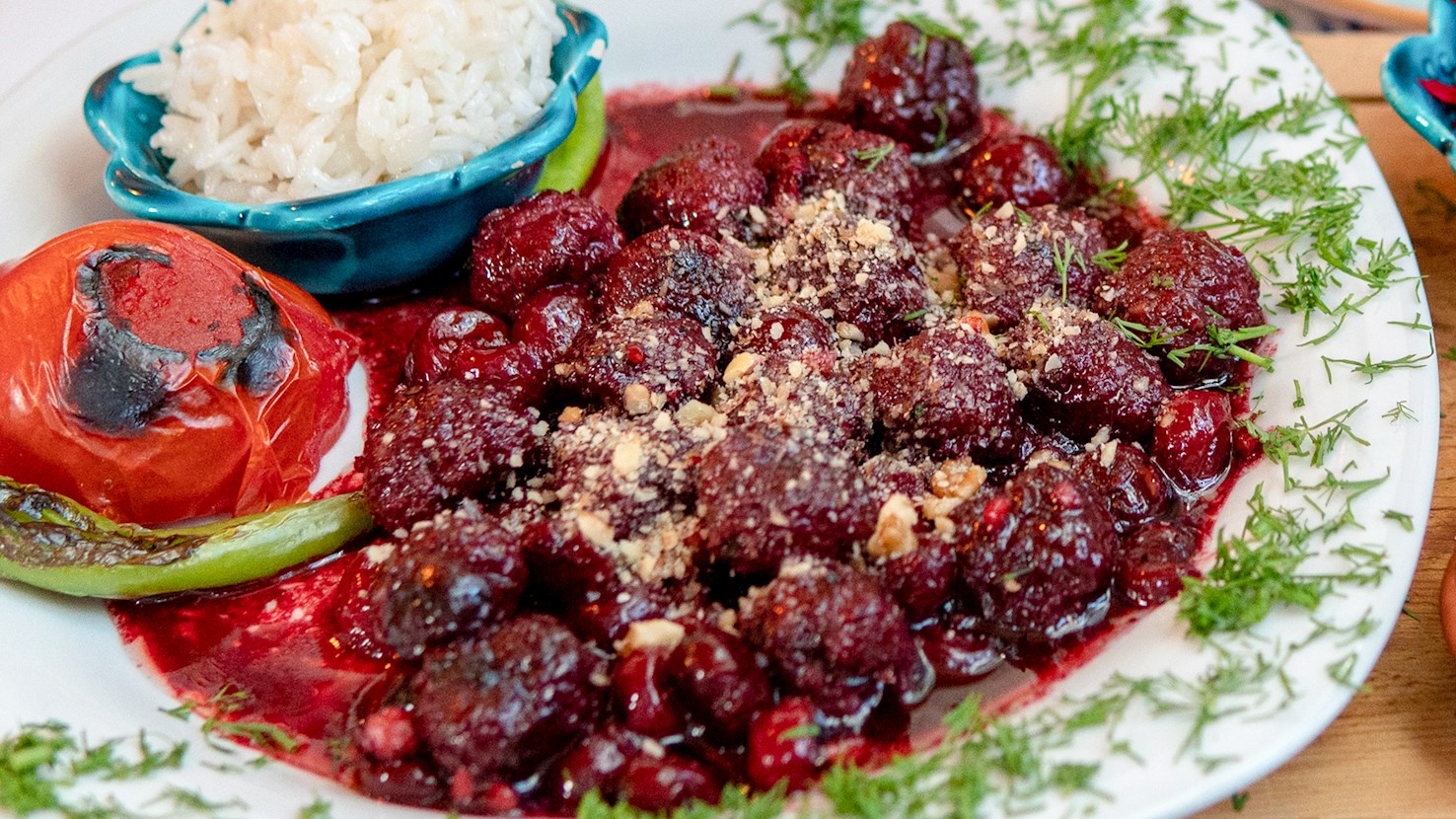
Kabab be al-karaz is a traditional and beloved Syrian dish of lamb kebab and cherries, especially popular in the city of Aleppo. It is made from minced meat mixed with onions and sour cherries (St. Lucie cherries traditionally), cooked with sugar and either ghee or butter until tender. The meat is shaped into balls or patties and then fried until browned. Cherry sauce is added to the kebab, and the mixture is cooked together until the flavors meld. The dish is garnished with toasted pine nuts and parsley and served with Syrian bread or rice, offering a unique taste that combines sour and sweet flavors. The dish is also popular in neighboring countries, like Armenia, Izrael, Palestine, Lebanon, Jordan, and parts of Türkiye.
Kibbeh yaqin, also known as pumpkin kibbeh, is a celebrated vegetarian dish in Syrian cuisine, particularly favored during the fasting season. This dish features a squash-based bulgur shell encasing a savory filling of spinach, chickpeas, and aromatic spices. The inclusion of pomegranate molasses adds a subtle sweetness and tang, enhancing the overall flavor profile. The kibbeh is meticulously shaped into oval forms with pointed ends, then deep-fried until golden brown, resulting in a crispy exterior that contrasts beautifully with the flavorful, moist filling. This culinary delight exemplifies the rich traditions and resourcefulness inherent in Middle Eastern vegetarian cuisine.
Kibbeh sqaqieh is a popular and affordable street food of fried bulgur patties in Aleppo, Syria. The term "sqaqieh" derives from "sqaq," a colloquial adaptation of the Arabic word "zqaq," meaning "alley" or "narrow street." This name reflects its widespread availability in the city's alleys and markets, making it a staple among daily laborers and those seeking cost-effective meals. Unlike other kibbeh varieties that may feature fillings or complex preparations, kibbeh sqaqieh is straightforward. It's made from bulgur wheat mixed with spices, formed into patties, and fried in oil. This simplicity contributes to its low cost and popularity among locals. Vendors often serve it wrapped in bread, accompanied by fried and fresh hot peppers, creating a satisfying and spicy meal. In Aleppo, while the city boasts numerous types of kibbeh, kibbeh sqaqieh has carved out its unique place, appreciated by both the working class and wealthier individuals. Despite its humble origins, it remains a beloved dish, embodying the rich culinary traditions of Aleppo.
TasteAtlas food rankings are based on the ratings of the TasteAtlas audience, with a series of mechanisms that recognize real users and that ignore bot,
nationalist or local patriotic ratings, and give additional value to the ratings of users that the system recognizes as knowledgeable.
TasteAtlas Rankings should not be seen as the final global conclusion about food. Their purpose is to promote excellent local foods,
instill pride in traditional dishes, and arouse curiosity about dishes you haven’t tried.






What People Say