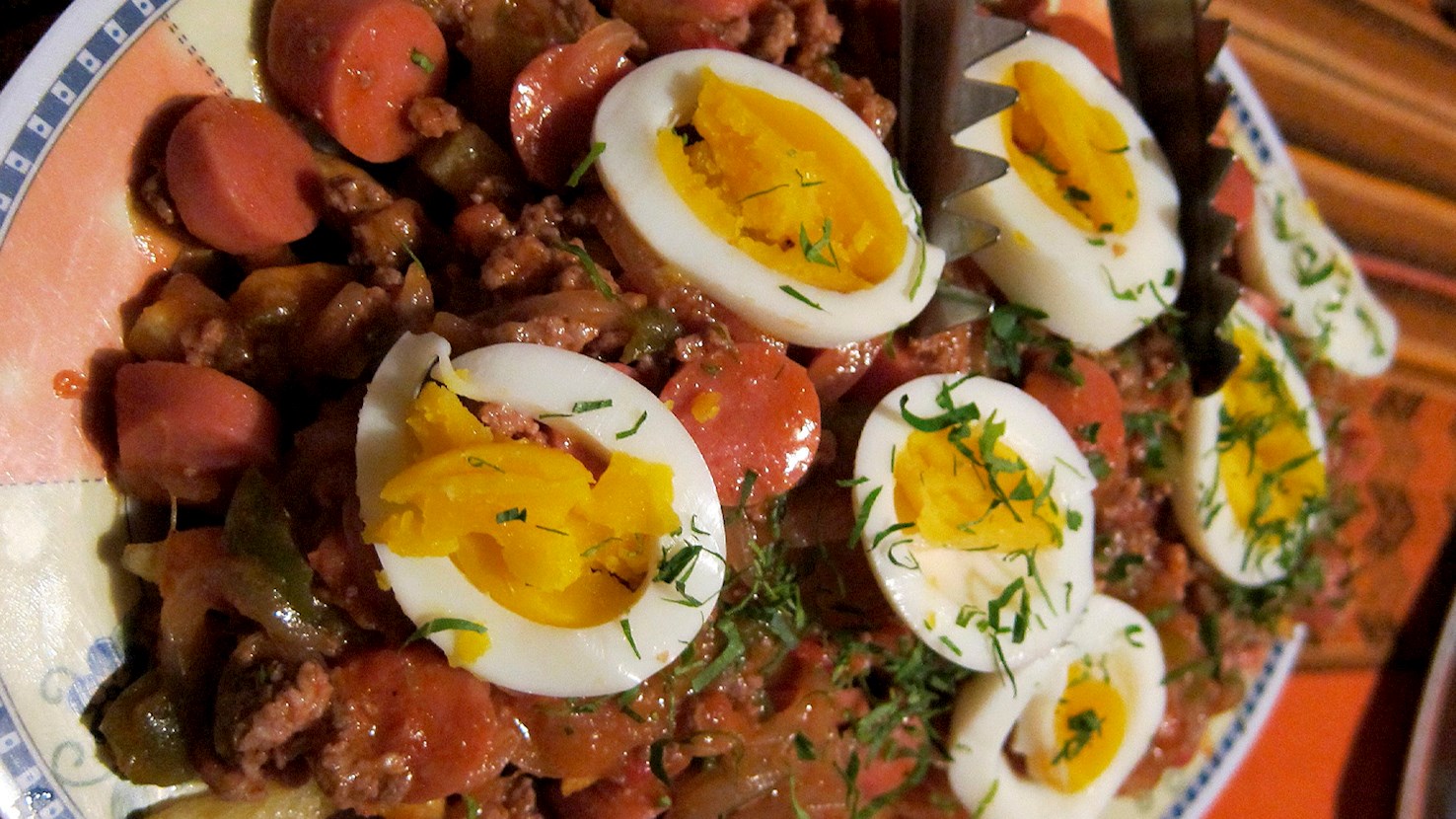
Pique macho is a massive, protein-heavy platter of bite-sized beef, sausages, French fries, and spicy peppers originating in Cochabamba, Bolivia. The dish was invented in 1969 by Evangelina Rojas Vallejo and Honorato Quiñones Andia at the Restaurante Miraflores to feed late-night patrons. The exceptionally fiery meal was presented with a verbal challenge to finish the sharp peppers, testing masculine endurance and firmly establishing the dish's name. The first step is marinating bite-sized chunks of beef tenderloin or sirloin in a mixture of dark beer, soy sauce, minced garlic, and ground cumin. The marinated beef is pan-fried in hot oil alongside diagonally sliced frankfurters or local beef sausages until thoroughly browned. A savory brown gravy forms naturally in the pan from the rendered meat juices and the reduced beer marinade. Simultaneously, thick-cut potatoes are deep-fried until crisp and golden. The base of the meal is constructed by spreading the hot fries across a large communal platter. The cooked beef, sausages, and gravy are poured directly over the fries, allowing the starches to absorb the seasoned cooking liquids. The mountain of meat and potatoes is subsequently topped with coarse slices of raw or lightly sautéed red onions, fresh tomatoes, and fiercely spicy green locoto peppers. Sliced or quartered hard-boiled eggs are arranged around the perimeter and across the peak of the mound. Generous ribbons of ketchup, mayonnaise, and yellow mustard are squeezed over the entire assembly. The towering platter is served exclusively as a shared dish, placed in the center of the table for communal consumption. Due to the heavy fat content, dense carbohydrates, and sharp spice levels, the massive meal is heavily consumed late at night following alcohol consumption or the next morning as a potent hangover cure. While available year-round, the dish is a mandatory fixture at celebratory gatherings, regional carnivals, and weekend social events. The massive portion size and intense heat firmly cement the plate as a symbol of Cochabamba's regional culture, representing culinary abundance and communal gastronomy.
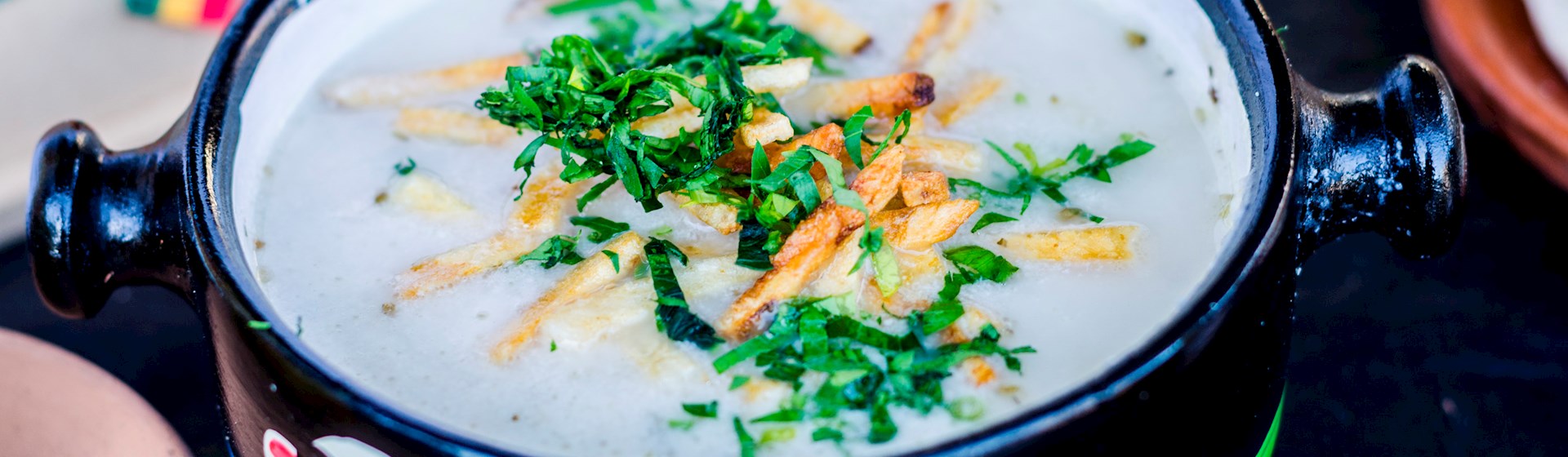
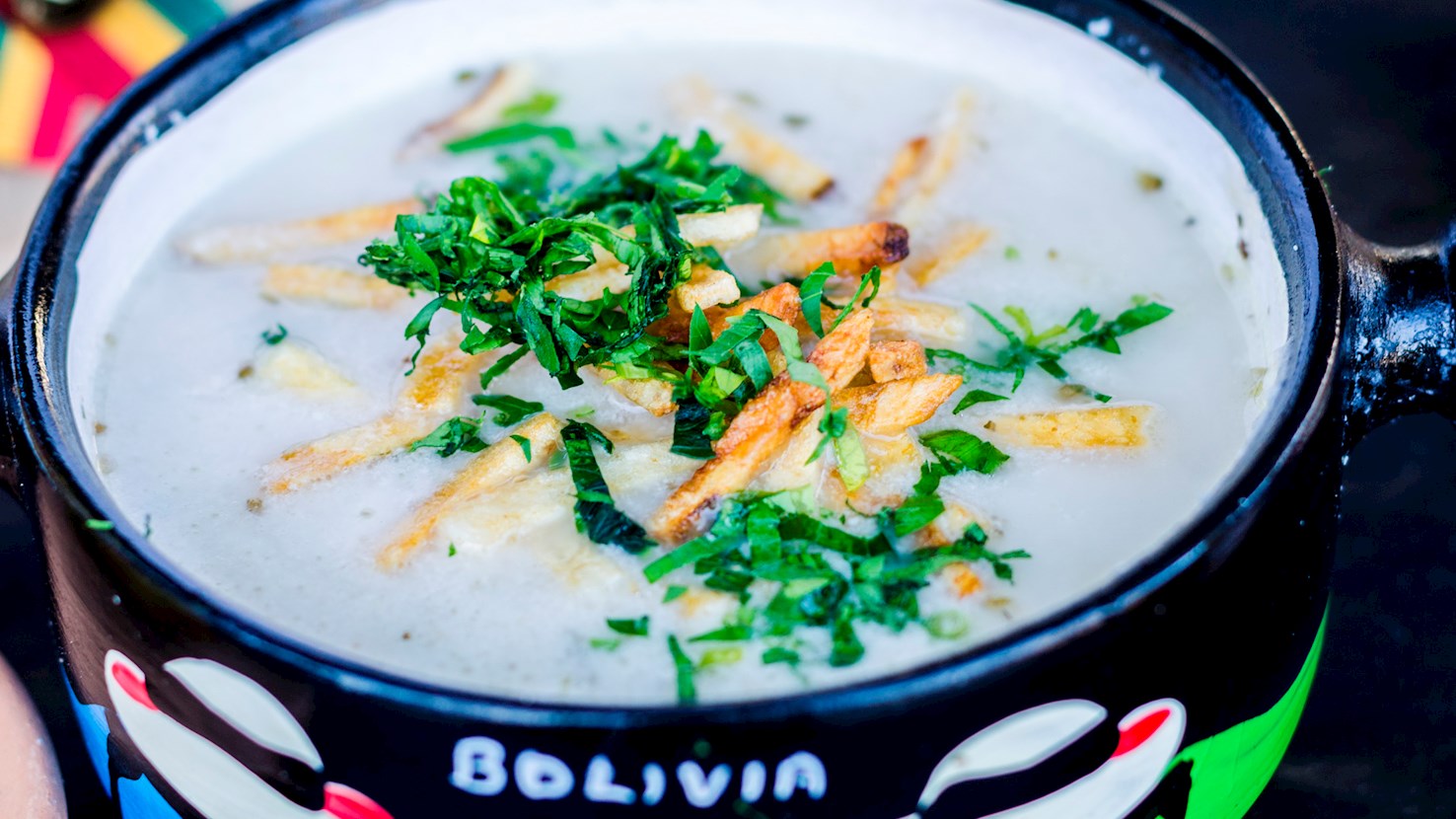
Sopa de mani is a Bolivian peanut soup made with beef, beef bones, potatoes, and peas as the main ingredients. Beef is sometimes substituted with chicken since it pairs nicely with peanuts, but the soup can also be modified so that it is meatless. The distinctive thickness and creaminess of the soup come from the pureed peanuts and potatoes. This dish is a staple on the lunch menus of restaurants throughout Bolivia where you will get it served with a few potato fries on top and a sprinkle of cilantro or parsley.
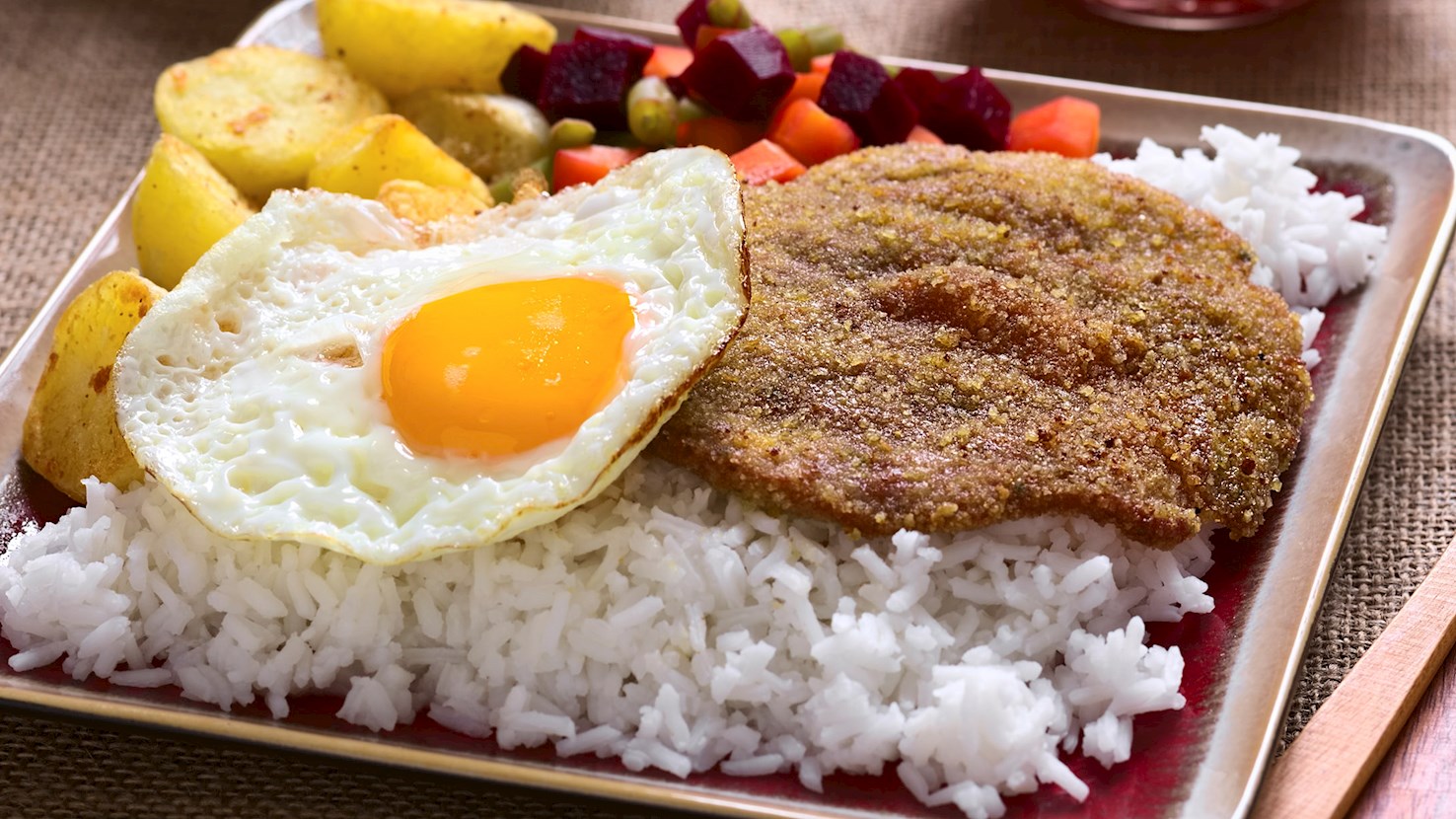
Silpancho is a traditional dish characterized by its huge size and ingredients that are rich in fat and carbohydrates. The dish typically consists of a layer of white rice topped with boiled or steamed potatoes, beef or chicken cutlets, and fried eggs. Silpancho is usually garnished with chopped parsley, onions, and beets. The dish was invented in the city of Cochabamba, famous for its unique cuisine. Its name comes from a Quechua word silpanch'u, meaning thin and pounded, referring to the meat used in the dish. Although it is a traditional dish of Cochabamba, it has become so popular that it quickly spread throughout Bolivia, where it's served in many restaurants with different variations on the recipe.
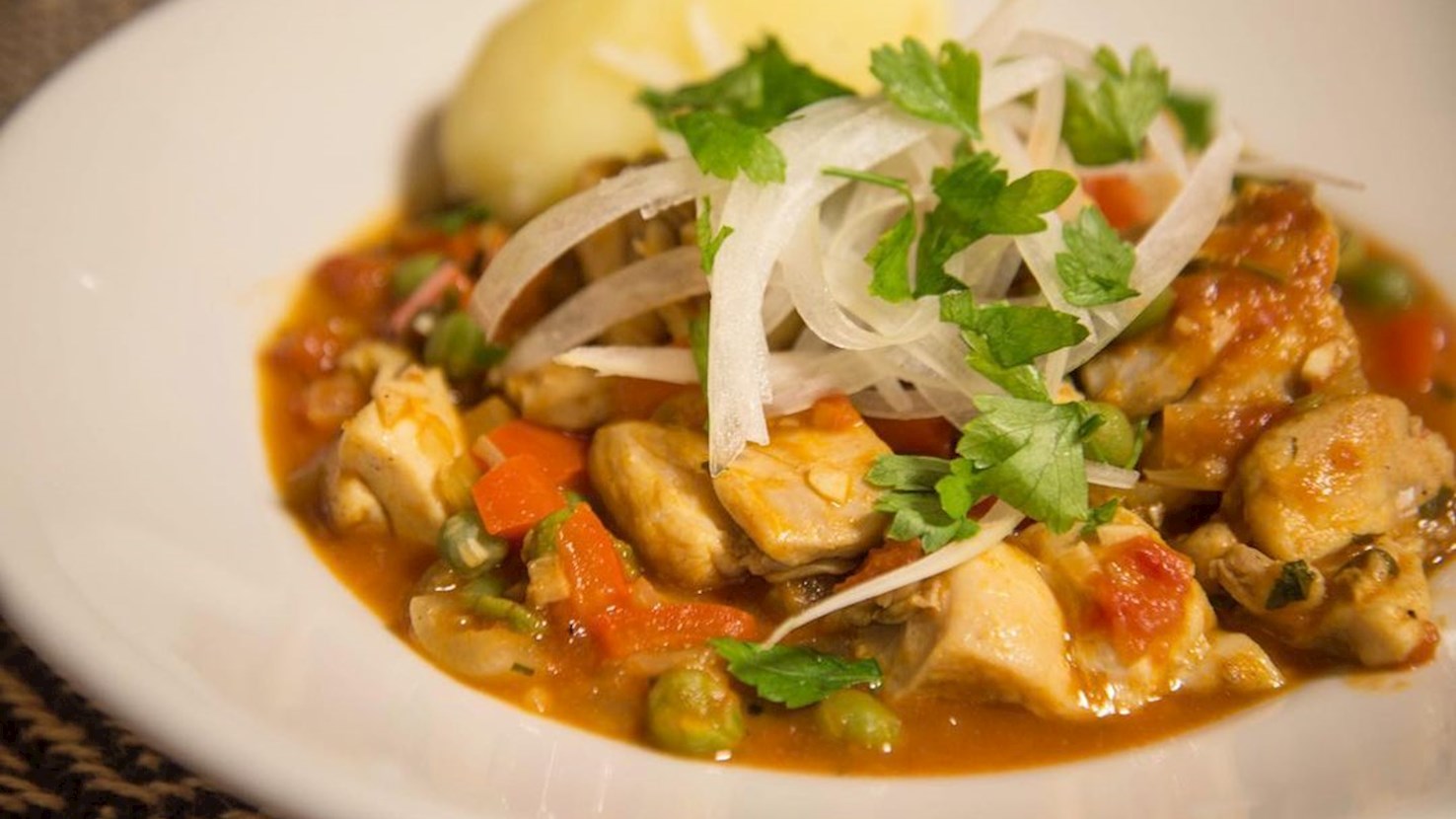
Picante de pollo is a spicy Bolivian dish made with pieces of chicken cooked in a combination of onions, potatoes, tomatoes, hot peppers, peas, and chicken stock. The thick sauce is typically flavored with cumin, garlic, and oregano. It is recommended to serve picante de pollo with rice or boiled potatoes on the side and to garnish it with fresh chopped parsley.
Lagua de choclo is a traditional soup. It's prepared with a combination of fresh corn kernels, beef, onions, potatoes, and various vegetables. The ingredients are simmered for about one hour until the beef is tender and the soup has a creamy consistency. Lagua de choclo is usually flavored with oregano and cayenne pepper. Before serving, it's garnished with finely chopped parsley.
Quesillo refers to different types of cheese (and dishes) throughout Latin America, but in Bolivia, that name indicates a small, fresh cheese, primarily from the Cochabamba Valley. It is made from raw, unpasteurized cow's milk (although, sometimes, it can be mixed with sheep's milk). The cheese curds that form by adding the rennet are dry-salted and shaped into small balls. The cheese is then left to rest for a couple of hours. It can be eaten on its own or be used as an ingredient in various meat dishes, street food snacks, and salads.
Ají de fideos is a spicy Bolivian dish originating from Cochabamba, prepared with a combination of pasta noodles, potatoes, ground chilis, ground meat, peas, carrot and fresh herbs such as cumin, oregano, and parsley. The dish is quite easy to prepare and it can be made in a single pot, which makes it quite popular at festivities and celebrations.
TasteAtlas food rankings are based on the ratings of the TasteAtlas audience, with a series of mechanisms that recognize real users and that ignore bot,
nationalist or local patriotic ratings, and give additional value to the ratings of users that the system recognizes as knowledgeable.
For the “Top 7 Traditional Foods in Cochabamba Department” list until June 17, 2026, 345 ratings were recorded, of which 136 were recognized by the system as legitimate.
TasteAtlas Rankings should not be seen as the final global conclusion about food. Their purpose is to promote excellent local foods,
instill pride in traditional dishes, and arouse curiosity about dishes you haven’t tried.