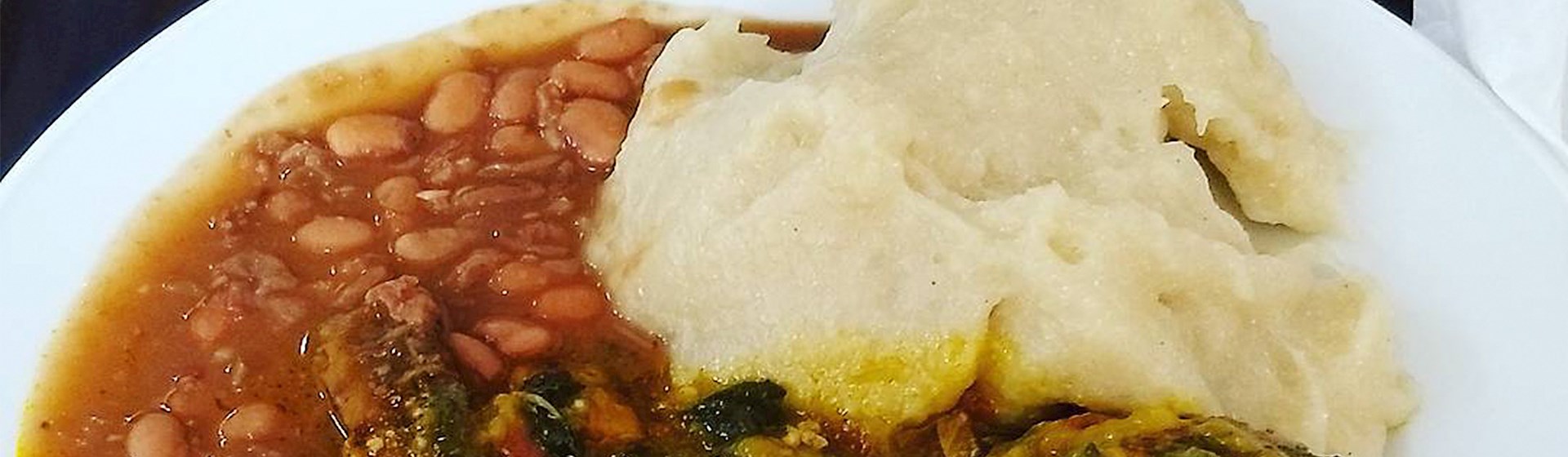
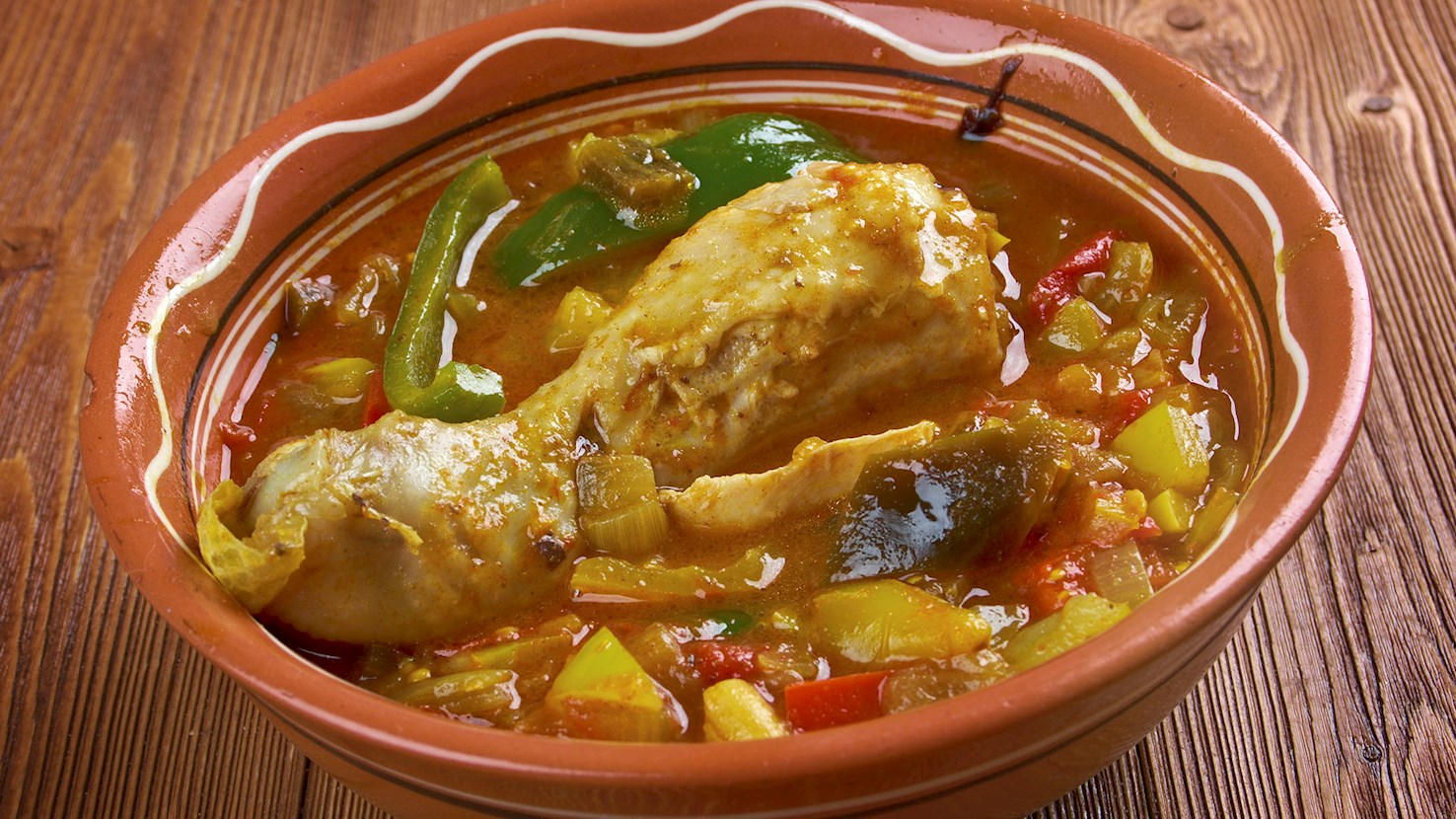
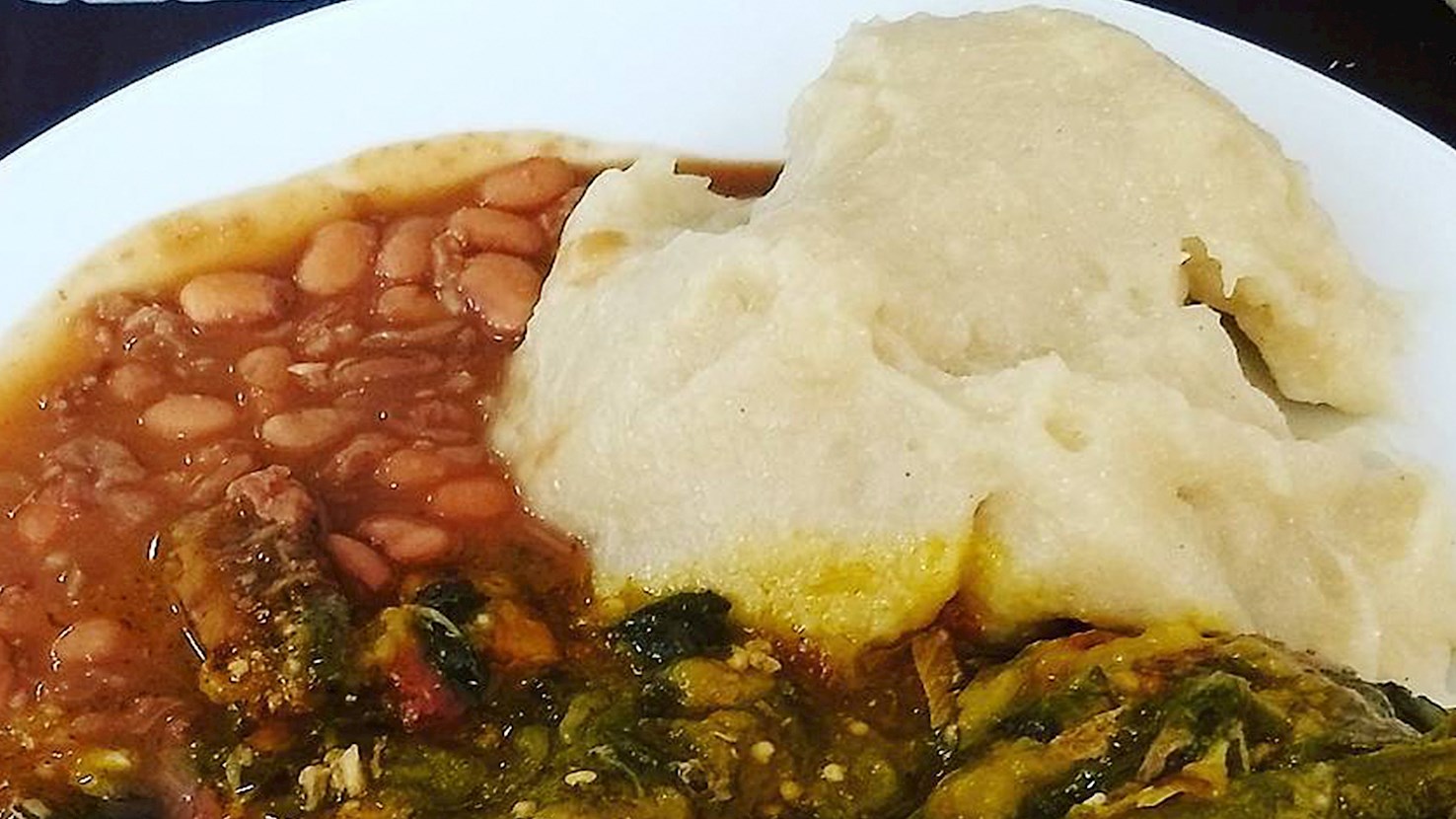
Muamba de galinha or chicken muamba is a Central African dish made with chicken, red palm oil sauce called muamba de dendem, garlic, okra and hot chile pepper. Palm oil gives the dish a specific flavor, while lycopene provides the red color. Studies have shown its various health benefits – it is rich in antioxidants, helpful in preventing heart disease, and regulates cholesterol. Since that part of Africa was a Portuguese colony for ages, Portuguese gastronomy had a great influence on the local cuisine, so as a result, many dishes are based on meat and palm oil. It can be made in spicy or mild versions, depending on personal preferences. The dish is traditionally accompanied by fungee (a starchy food prepared by boiling and stirring corn or cassava into a porridge) and tender cooked beans seasoned with palm oil and salt.
Known as funge or funje in Angola and Ghana, and mfundi in Democratic Republic of the Congo and Republic of the Congo, it is an essential side dish accompanying breakfast, lunch, and dinner meals in many households of rural families throughout these countries. It is a type of porridge known as swallow, made from cassava flour that is stirred into water. Funge has a sticky, smooth, and creamy texture, while a slightly bland flavor makes it great for evening out the intense spices found in many local dishes. Traditionally, at their most basic, these dishes consist of funge and a full-flavored, spicy sauce.
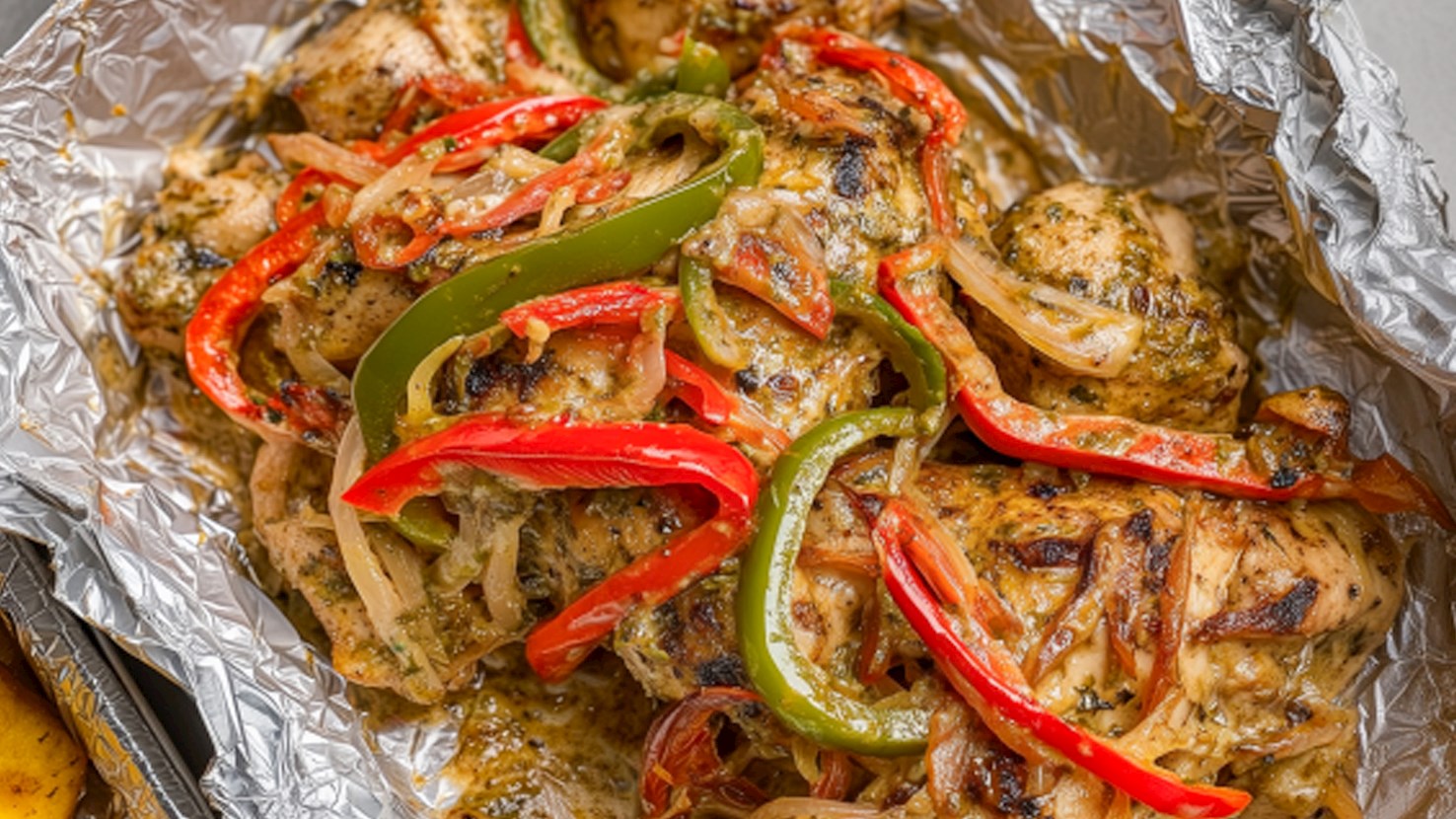
Poulet mayo is a dish from the Democratic Republic of the Congo, where it has become one of the most recognisable and loved examples of Congolese street food. It consists of grilled or roasted chicken served with a generous amount of mayonnaise, sometimes plain and sometimes mixed with mustard, chilli, or lemon juice. The dish emerged in Kinshasa and other urban centres during the second half of the 20th century, as chicken became more accessible and mayonnaise, introduced through imported products, was adapted into local food culture. Street vendors and small eateries quickly popularised the combination, offering smoky grilled chicken paired with creamy, tangy mayonnaise as an affordable and filling meal. It grew in popularity not only for its taste but also for the social atmosphere it created, as it was often eaten in outdoor settings where people gathered to share food, music, and conversation. Preparation of poulet mayo typically involves marinating the chicken with spices before roasting or grilling it, often over charcoal to develop a distinct smoky flavour. The mayonnaise is sometimes flavoured with chilli for heat, or with garlic and mustard for added sharpness, reflecting the personal touch of each vendor or household cook. It can be accompanied by fried plantains, chips, rice, or cassava-based sides such as fufu or chikwangue, turning it into a hearty meal. Today poulet mayo continues to thrive in Kinshasa and across the Democratic Republic of the Congo, while also travelling abroad with the Congolese diaspora. In African restaurants in Europe and beyond, it is often presented as a gateway dish to Congolese flavours, offering diners something familiar in chicken while introducing them to the smoky cooking style and bold seasonings that characterise the cuisine.
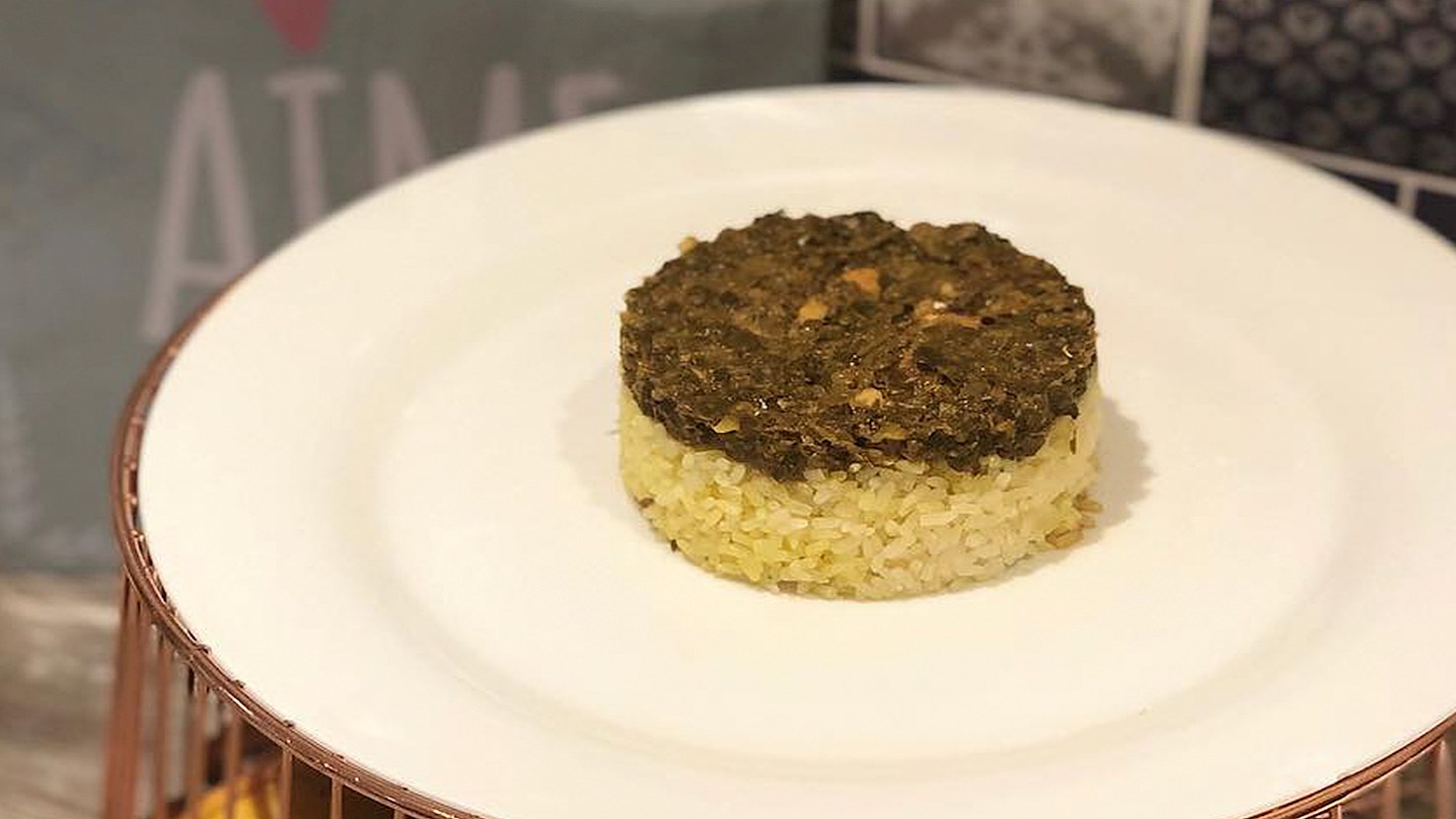
In Central Africa, saka saka is the name of green cassava leaves, as well as the name given to the dish that is made from the leaves. Although there are numerous variations of the dish, saka saka dish typically incorporates fresh cassava leaves that are ground and combined with palm oil, onions, garlic, peppers, okra, or other additions such as dry fish, meat, ground peanuts, peanut butter, or other greens such as spinach or collards. The dish has a thick consistency, and it is usually served with dry or fried fish, meat, rice, fried plantains, or luku (fufu). Saka saka is found in both the Democratic Republic of Congo and Republic of the Congo.
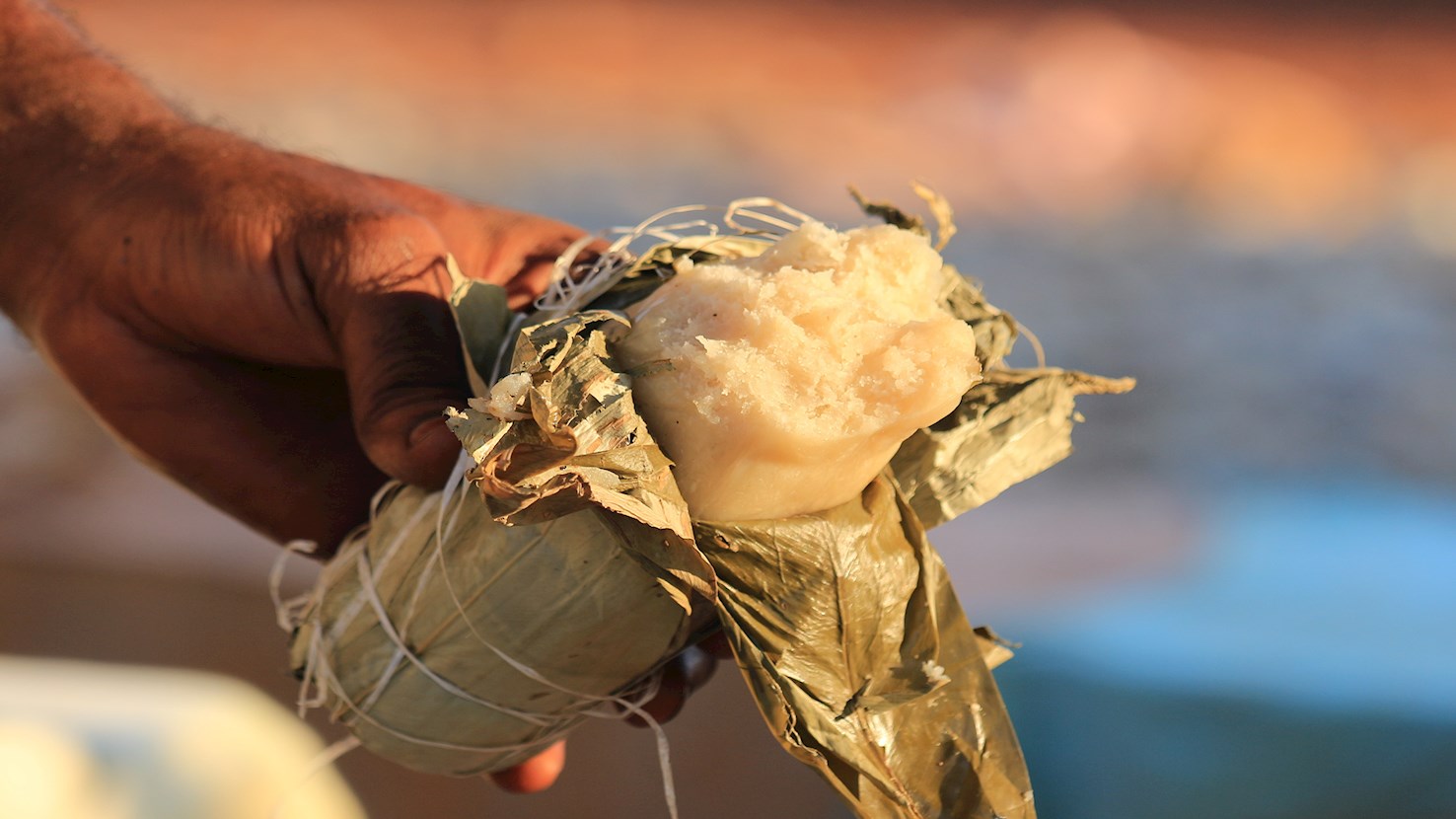
Chikwanga or kwanga is a traditional bread from the Democratic Republic of Congo, consisting of cassava flour cakes that are wrapped in dry banana leaves, then steamed. Its savory flavor pairs well with most of the main meals in the country. It is especially popular to serve warm chikwanga with various African stews, soups, and sauces as it helps to slightly offset their spicy flavors. This cassava-based bread is typically cut into thick round slices before it's served on the plates. Once prepared, chikwanga will keep for a few days, but only if it's kept in the leaf-wrapper in a dry and cool place.
Classified as both a soup and a sauce, dongo-dongo is a flavorful African dish that uses okra as the key ingredient. The dish is prepared by sautéeing onions, garlic, Maggi bouillon cubes, okra, and hot peppers. Water is added to the pot, along with dried, salted, or smoked fish, and either baking soda or tomato paste. The dish is simmered until the fish and okra are tender, and dongo-dongo is then typically served accompanied by starchy foods such as rice, fufu, or chikwangue. It is believed that dongo-dongo is a distant cousin of the popular Cajun-Creole gumbo.
TasteAtlas food rankings are based on the ratings of the TasteAtlas audience, with a series of mechanisms that recognize real users and that ignore bot,
nationalist or local patriotic ratings, and give additional value to the ratings of users that the system recognizes as knowledgeable.
TasteAtlas Rankings should not be seen as the final global conclusion about food. Their purpose is to promote excellent local foods,
instill pride in traditional dishes, and arouse curiosity about dishes you haven’t tried.




What People Say