Fah-fah is a traditional soup originating from Djibouti. It's usually made with a combination of goat meat, cabbage or kale, leeks, garlic, onions, potatoes, hot peppers, coriander, salt, and pepper. The meat and vegetables are placed into a pot, covered with water, and gently simmered. After some time, the garlic and coriander are added to the pot and the soup is simmered until the meat is tender. Once done, fah-fah is typically served in individual bowls with canjeero (injera) flatbread on the side. The soup is usually made in the southern parts of the country and it's often served for dinner.
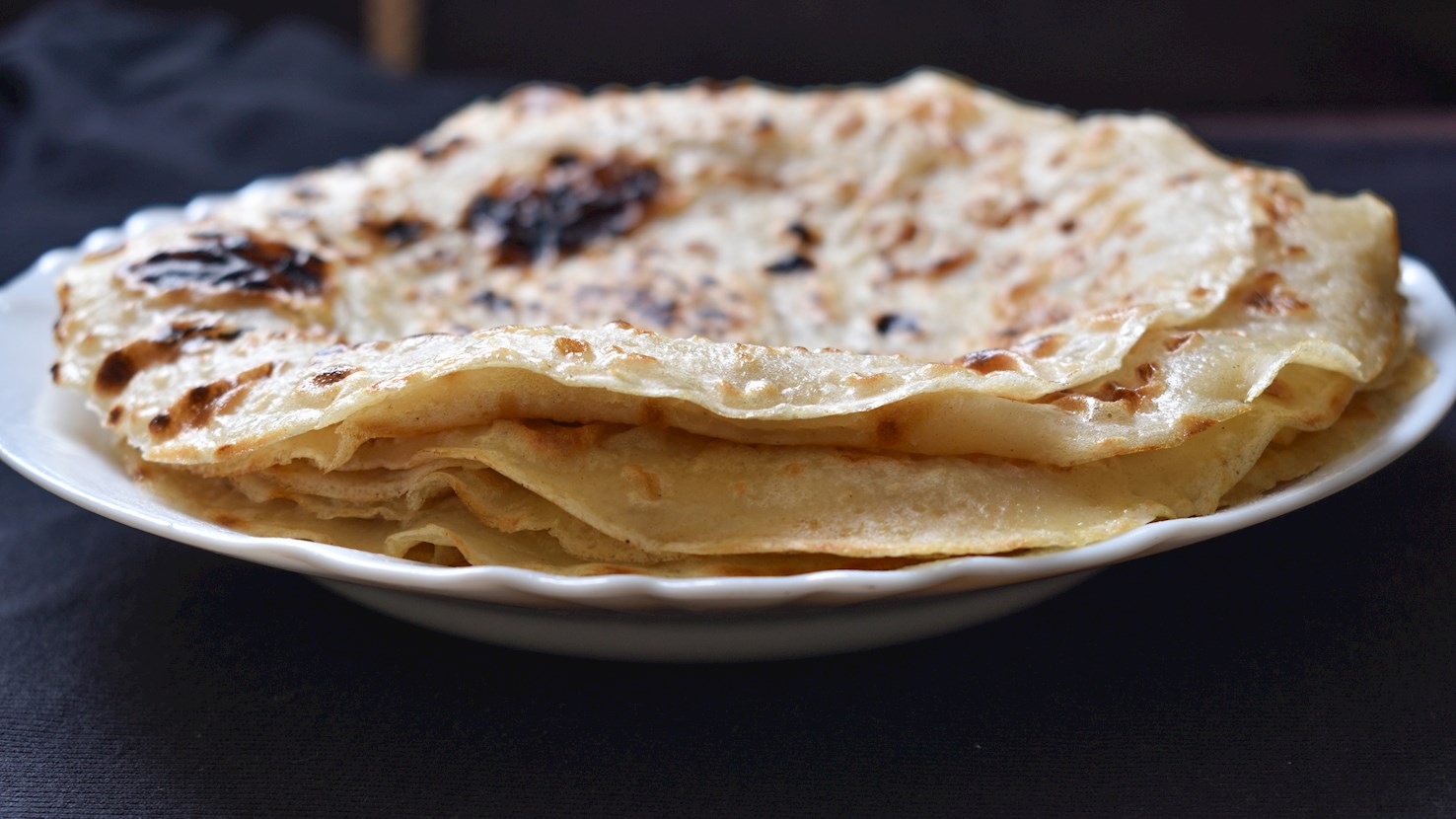
Sabaayad is a layered flatbread from Somalia, Somaliland, Djibouti, and Somali communities in eastern Ethiopia, made from wheat flour, water, salt, and fat, then folded and pan-cooked until the outside is lightly crisp and the inside separates into soft, thin layers. It is closely related to other laminated flatbreads found around the Indian Ocean and Red Sea, especially paratha, and its presence in Somali cooking reflects centuries of contact with Arabian, South Asian, and East African food cultures. The dough is usually mixed until smooth and elastic, divided into portions, and rested before being rolled out thinly. Oil, ghee, or another fat is spread over the surface, after which the dough is folded, rolled, or coiled to create layers, then flattened again and cooked on a hot griddle or frying pan. The result can be round, square, or triangular depending on the folding method, with browned spots on the surface and a tender, slightly flaky interior. Some versions are very thin and crisp at the edges, while others are thicker and softer, but the layered structure is what distinguishes sabaayad from simpler Somali breads such as canjeero or muufo. It is eaten throughout the day and works equally well with savory and sweet accompaniments. At breakfast it may be served with tea, honey, sugar, or eggs, while at lunch and dinner it commonly accompanies stews, beans, grilled or stewed meat, and sauces. Sabaayad is also well suited to dishes with goat, beef, chicken, or lentils because the layers absorb juices without immediately falling apart. In Somali households and restaurants, it is often torn by hand and used to scoop up food, while sweet Somali tea with milk is one of its most familiar pairings. Yogurt, fresh fruit, or a simple salad can provide a lighter contrast when the bread is served with richer meat dishes.
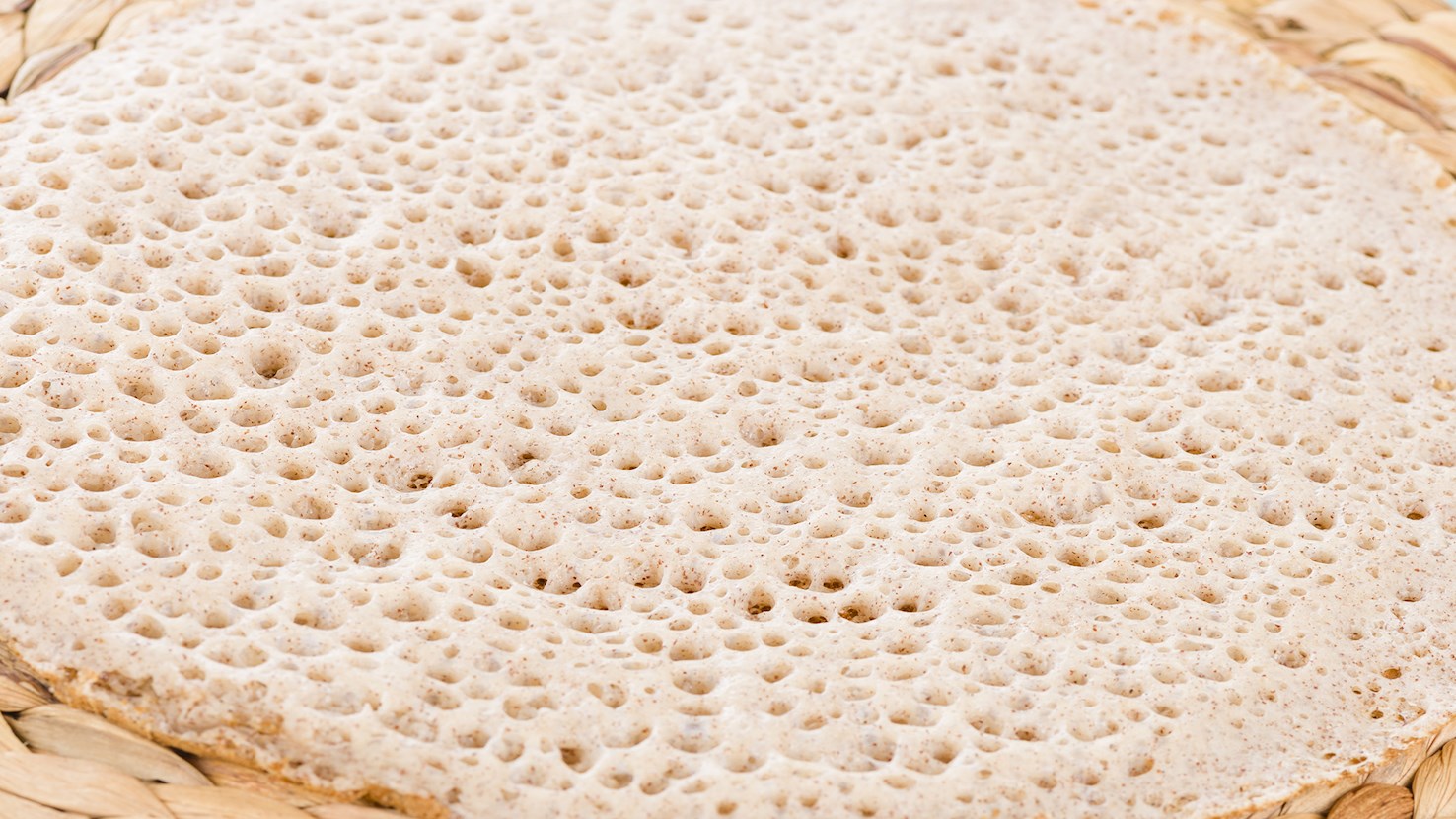
Lahoh is a soft, fermented flatbread eaten across Yemen and the Horn of Africa, especially in Somalia, Somaliland, Djibouti, and eastern Ethiopia. It is made from a loose batter rather than a kneaded dough, usually based on wheat flour, sorghum, maize, or a mixture of grains, and fermentation gives it a lightly sour flavor and a distinctive surface covered with small holes. Lahoh belongs to a wider family of fermented griddle breads that developed across the Red Sea region, where long-standing movement between Arabia and the Horn helped create closely related breads under different local names, including laxoox and canjeero. Preparation begins by mixing flour with water and a starter or yeast, then leaving the batter to ferment until it becomes bubbly and slightly tangy. The batter is poured onto a hot griddle or pan and spread into a thin round, usually cooked on one side only, so the underside browns while the upper surface stays soft and porous. This structure allows lahoh to absorb sauces, butter, honey, and stews very easily without losing its shape. Depending on the region, it can be thin and flexible or slightly thicker and spongier, and the degree of sourness varies with the grain and fermentation time. Lahoh is commonly eaten at breakfast with butter, ghee, honey, sugar, or sweet milk tea, but it also works as a savory bread alongside beans, lentils, meat stews, vegetables, and spiced sauces. In Somali-speaking areas, laxoox may be served with tea or milk in the morning, while in Yemen it can accompany soups, eggs, or savory dishes later in the day. Its mild acidity and soft texture make it especially useful with rich or spicy foods, and tea, coffee, milk, or yogurt are natural drinks and accompaniments.
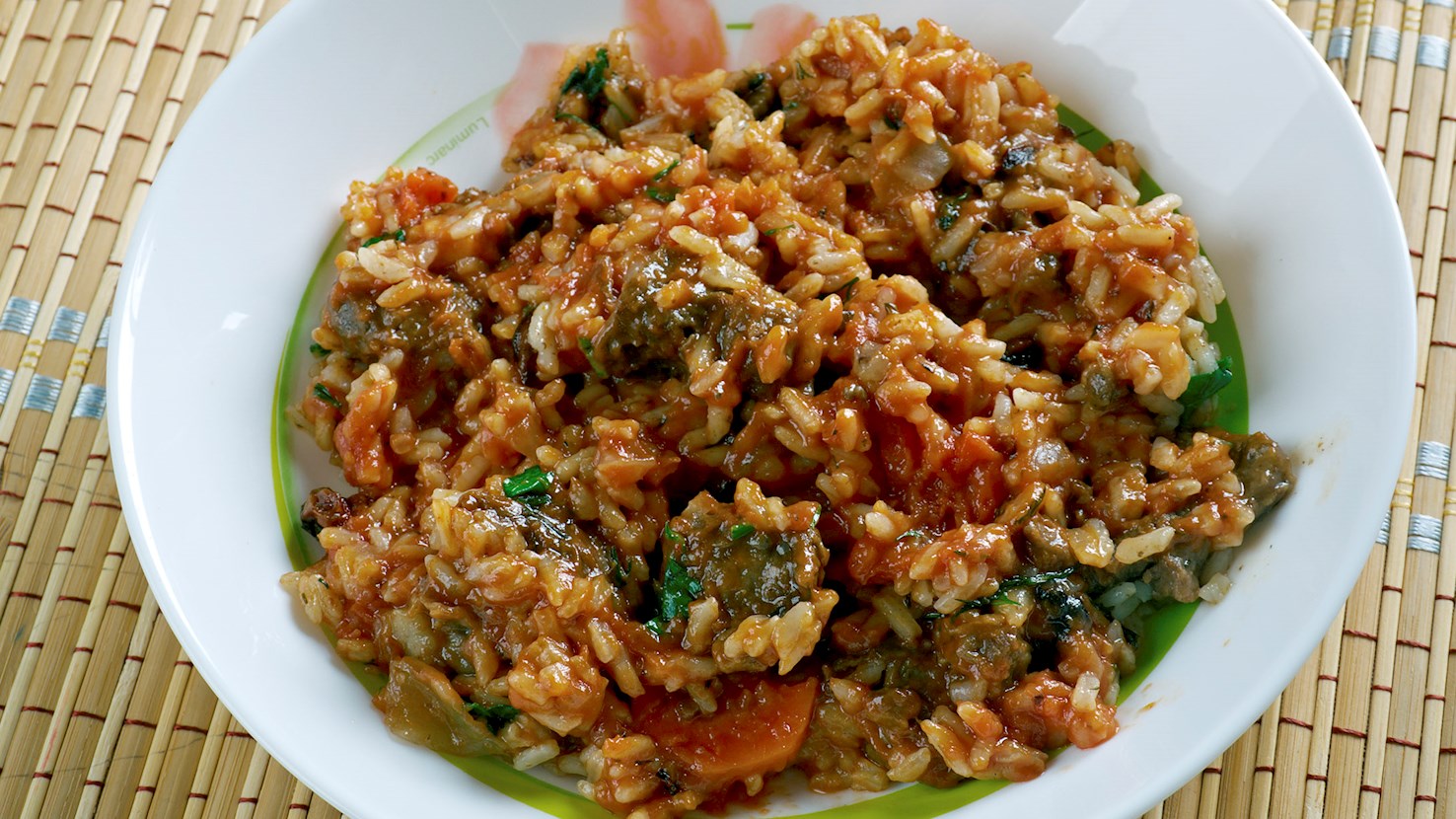
Coming from one of the world's smallest and least populated countries, Djibouti, a former French colony located between Ethiopia and Somalia, skoudehkaris is a flavourful rice dish seasoned with cardamom and cooked with lamb, although lamb can sometimes be substituted by chicken, beef, or fish. This thick, spicy stew is additionally enriched with cumin, cloves, cayenne pepper, cinnamon, and tomatoes, evolving into a warm and hearty comfort food dish. The spices and herbs are cooked with onions until soft, lamb is browned, then tomatoes and water are added to the pot. When the meat gets tender, rice is added to the pot to slowly simmer for about 20 more minutes. In the end, fragrant spices fill the air, and the meat melts in the mouth. All it needs is a bit of traditional lahoh flatbread on the side, some chopped coriander on top, and Djibouti's national dish is ready to be consumed.
Marake kaloune is a traditional fish stew originating from Djibouti. The dish is usually made with a combination of fish fillets (often tilapia or sea bass), potatoes, onions, okra, eggplants, tomatoes, garlic, tamarind paste, salt, pepper, parsley, rice, and oil. The potatoes are browned in oil and then mixed with the onions, okra, tomatoes, eggplants, tamarind paste, and garlic. The ingredients are seasoned with salt and black pepper before they're mixed with the fish and rice. The mixture is covered with water, brought to a boil, and then simmered until the rice is tender. Marake kaloune is garnished with chopped parsley and served while the stew is still hot.
Muqmad is a preserved meat preparation from Somalia, Somaliland, Djibouti, and Somali communities across the Horn of Africa, made most often from camel meat or beef that is dried, cooked, and preserved in fat. It developed within pastoral Somali food culture, where meat had to remain edible during long journeys, dry seasons, and periods when refrigeration was unavailable. The need to preserve large amounts of meat after slaughter made drying and fat-sealing especially practical, and muqmad became closely associated with nomadic life, household food storage, weddings, and other important occasions. In Djibouti and Somaliland the name muqmad is widely used, while in central and southern Somalia the same preparation is often called oodkac or odkac. Preparation usually begins with lean camel meat, beef, or occasionally goat cut into strips or small pieces and salted. The meat is exposed to the sun until much of its moisture has been removed, after which it is cut more finely and cooked or fried in oil, rendered animal fat, or clarified butter. FAO documentation of Somali dried meat describes a process in which large salted pieces are briefly sun-dried, cut into smaller strips, cooked in oil, dried further, and then seasoned. Other Somali methods cook the lean meat until most of its moisture has evaporated before combining it with melted fat, garlic, salt, and spices, which helps produce a rich, concentrated product that can be kept for weeks or months. Camel meat is especially common in pastoral areas, followed by beef and goat. The finished meat is firm, chewy, salty, and intensely savory, with the fat coating the pieces and protecting them during storage. Spices vary, but cumin, coriander, cardamom, black pepper, and garlic are among the seasonings often used. Muqmad is commonly stored in a covered container with enough fat to surround the meat, and older preservation methods made it possible to keep the product for extended periods without refrigeration. It is usually served in relatively small portions because of its concentrated flavor and richness, most often at breakfast or lunch. Canjeero or lahoh are among its most characteristic accompaniments, while rice, muufo, dates, or other simple staples can also be served alongside it. Sweet Somali tea with milk works particularly well with the salty meat, while water, camel milk, or yogurt-based drinks can provide a milder contrast. Muqmad remains both a practical preserved food and a recognizable part of Somali food culture, especially in communities where camel and livestock herding continue to shape everyday eating.
TasteAtlas food rankings are based on the ratings of the TasteAtlas audience, with a series of mechanisms that recognize real users and that ignore bot,
nationalist or local patriotic ratings, and give additional value to the ratings of users that the system recognizes as knowledgeable.
TasteAtlas Rankings should not be seen as the final global conclusion about food. Their purpose is to promote excellent local foods,
instill pride in traditional dishes, and arouse curiosity about dishes you haven’t tried.
The initial list of top producers was compiled based on available reviews, awards, local recommendations, media and blog coverage, and consumer reviews.
The list will be updated with ratings from TasteAtlas local ambassadors and TasteAtlas users.







What People Say