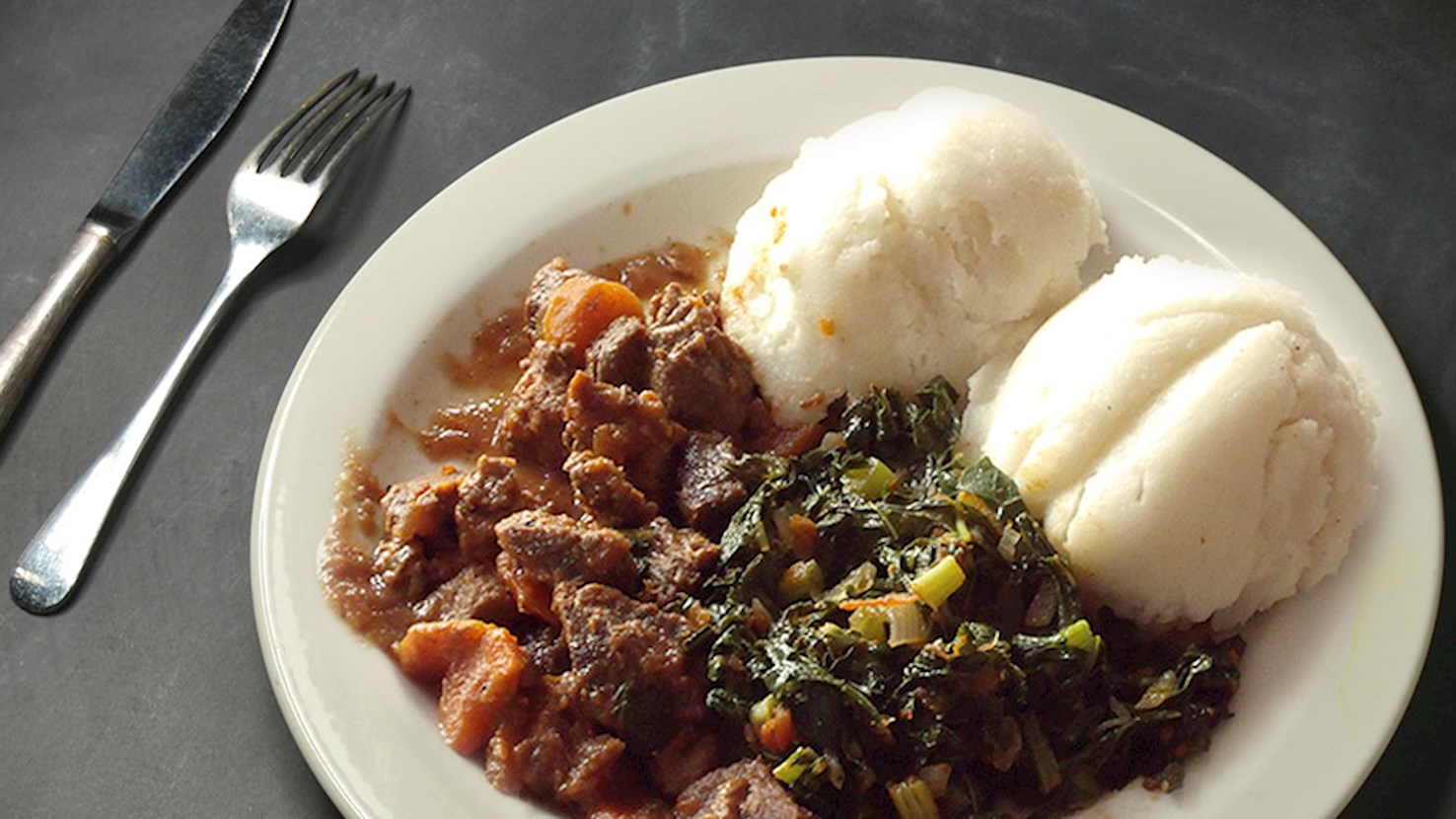
Ugali is a stiff maize-based staple food made by cooking maize flour with water into a firm mass, eaten widely across eastern and southern Africa, most prominently in Kenya and Tanzania, and also present under the same name or close variants in many other African countries, where it functions as a primary source of dietary energy rather than a side dish. Its development followed the introduction of maize to Africa from the Americas beginning in the sixteenth century, after which the crop spread rapidly because of its adaptability and yield, gradually replacing earlier millet and sorghum porridges in many areas and becoming embedded in everyday meals due to its affordability, long storage life, and compatibility with diverse local sauces. Preparation involves bringing water to a boil and steadily adding maize flour while stirring continuously to prevent lumps, then cooking the mixture until it thickens into a cohesive mass with no free liquid, a process governed more by experience and texture than by fixed measurements. Serving is immediate, with the cooked ugali shaped into a mound and portioned by hand or spoon, and it is not consumed alone but used to scoop vegetables, legumes, meat stews, or fish, acting as a neutral carrier rather than a flavored component. It is eaten primarily at lunch or dinner in homes, eateries, and communal settings, most often by hand, and it pairs naturally with leafy greens, bean dishes, grilled or stewed meats, and fish sauces, while beverages alongside are typically water, unsweetened tea, or light fermented drinks rather than sweet or acidic options, keeping attention on the accompanying foods rather than the starch itself. Nsima from Malawi, which follows the same method and role at the table and was formally recognized in 2017 when it was inscribed on the Representative List of the Intangible Cultural Heritage of Humanity by UNESCO, reflecting its central place in daily life and social practice.
Sishwala is a traditional porridge originating from Eswatini (formerly known as Swaziland). It is made with a combination of corn flour, salt, water, and dried beans. The beans should be soaked overnight, then drained, covered with water, and seasoned with salt. The combination is cooked until tender, and maize is added near the end of cooking. The whole thing is mixed well before serving. This porridge is typically served alongside meat or vegetables.
Slaai is a traditional salad originating from Eswatini (formerly known as Swaziland). Although there is no fixed recipe, it is usually made with a combination of diced avocados, crushed peanuts, lemon juice, and grated ginger. All ingredients except crushed peanuts are mixed together, seasoned with salt, and the combination is then left to marinate for about 20 minutes before sprinkling the salad with crushed peanuts and serving it.
Karoo roast ostrich steak is the national dish of Eswatini (formerly known as Swaziland), a country whose cuisine is influenced by French cooking methods such as meat marinades and the use of various cream-based sauces. The ingredients needed for the dish include thinly sliced ostrich steaks, sliced onions, white wine, heavy cream, peppercorns, juniper berries, cornmeal, red wine, and pumpkin. The onions are sautéed with peppercorns, white wine, and heavy cream, while the meat is marinated in red wine and juniper berries with salt and pepper. The meat is then fried in butter and served with pumpkin mash, made by combining mashed pumpkin and ground maize. The creamy sauce is drizzled over the dish before serving.
TasteAtlas food rankings are based on the ratings of the TasteAtlas audience, with a series of mechanisms that recognize real users and that ignore bot,
nationalist or local patriotic ratings, and give additional value to the ratings of users that the system recognizes as knowledgeable.
TasteAtlas Rankings should not be seen as the final global conclusion about food. Their purpose is to promote excellent local foods,
instill pride in traditional dishes, and arouse curiosity about dishes you haven’t tried.




What People Say