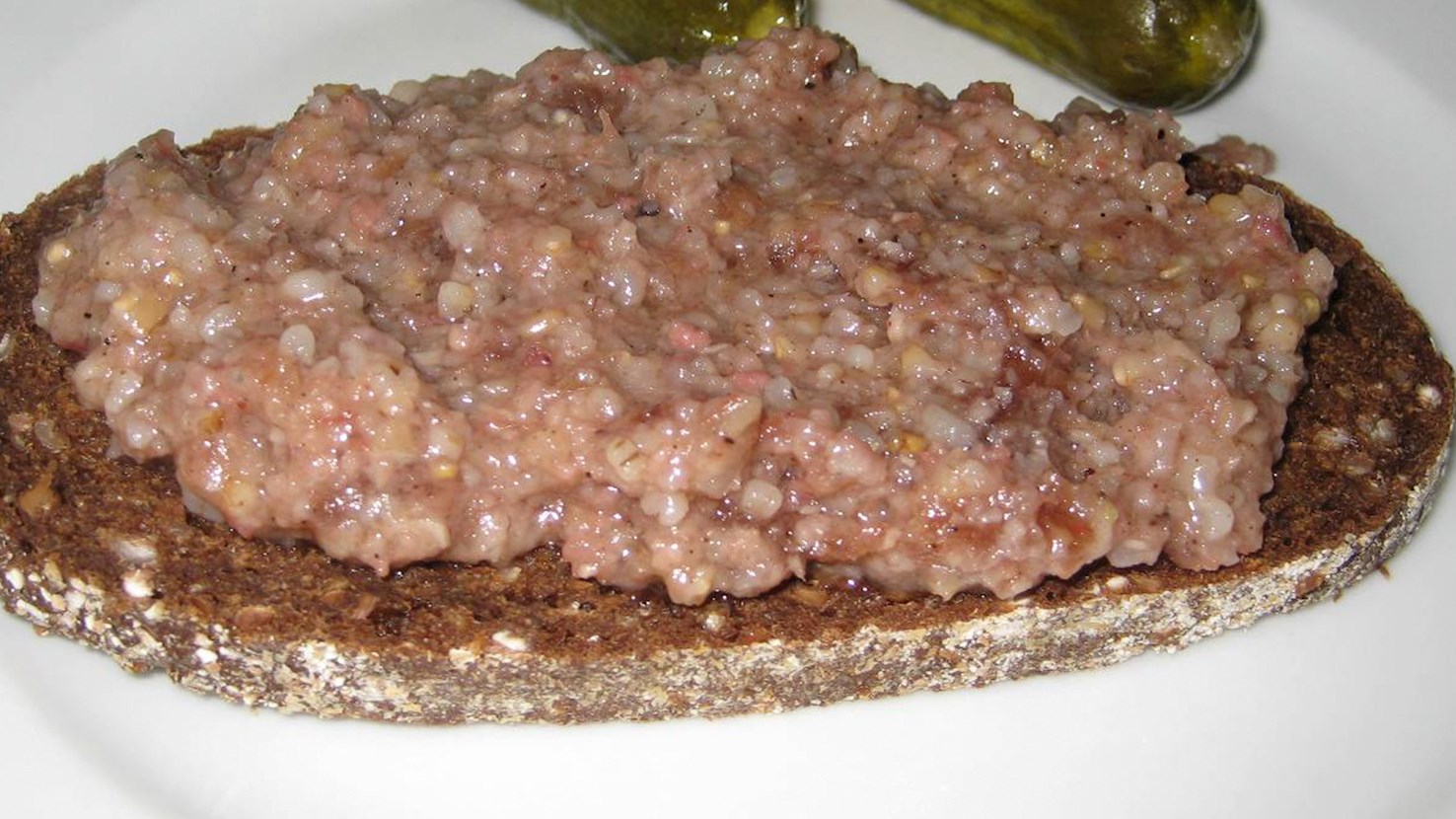
Knipp is a hearty grain-and-meat sausage from Bremen and the surrounding northwestern German food culture, made by combining oat groats with meat, fat, broth, and strongly savory seasoning, then frying the mixture until the outside darkens and crisps. Bremen’s official food guide classifies it as a grützwurst related to pinkel and describes the usual base as hafergrütze, broth, and a mixture of pork and beef. Unlike sausages, whose identity depends on a firm casing and a clean slice, knipp is valued largely for what happens in the frying pan: the soft, dense mixture is cut or spooned into portions and cooked until a browned crust forms around an interior that stays moist, grainy, and rich. Its character comes directly from northern German household slaughter culture. NDR’s Low German dictionary defines Bremen knipp as something prepared during slaughtering from groats, pork rind, and meat remnants, a concise description of the practical circumstances in which the food developed. When a pig or other animal was slaughtered, broth, fatty pieces, rind, organ meat, head meat, and smaller scraps all had value, and combining them with inexpensive grain let a household turn highly perishable parts into a substantial preparation that could feed many people. Its development makes much more sense as part of the wider northern German family of grain sausages and slaughter-day foods, where cooked grain absorbs broth and fat and makes small quantities of meat go considerably further. This relationship also explains its similarity to pinkel, although the two are used differently: pinkel is strongly associated with kale meals and is commonly cooked as a sausage, while knipp is most recognizably fried in a pan and served as the central element of the plate. The composition has never been completely fixed. Modern Bremen descriptions usually mention oats, broth, pork, and beef, while household recipes can include pork belly, pork rind, head meat, beef liver, or other available cuts. A representative home preparation might simmer pork belly and liver until tender, reserve the cooking broth, and grind the meat with onion. Oat groats are cooked separately in the same meat broth until swollen and soft, then mixed with the minced meat and seasoned with salt, pepper, and often marjoram; other formulas use allspice, whose warm peppery aroma is especially pairs with fatty pork and offal. The grain is not merely filler. During cooking, it absorbs the broth, rendered fat, and meat juices, giving Knipp its characteristic dense but loose consistency and making the flavor of the slaughter broth part of the finished food rather than something discarded after cooking. Once the mixture has been thoroughly cooked and allowed to set, it can be stored as a compact mass and portioned for frying. Commercial knipp is often sold in substantial blocks or thick portions rather than looking like a familiar narrow sausage. Frying turns it into the dish most people in Bremen recognize. A portion is placed in a hot pan and allowed to brown decisively, either as thick slices or broken into a coarse mass. The aim is not simply to warm it through. The surface should become distinctly crisp and roasted while some of the fat renders out, creating a contrast with the softer oat-and-meat center. If disturbed too early, the mixture can break apart before developing a crust; if cooked patiently, it forms browned edges and small crisp fragments that are among the most valued parts of the plate. The strong frying also changes the flavor considerably, adding roasted notes to a mixture that would otherwise be dominated by boiled meat, broth, and grain. This is one reason knipp can appear visually modest before cooking but become much more aromatic once it reaches the pan. It has sometimes been grouped with foods described as economical or working-class cooking, and its use of rind, scraps, organs, broth, and oats certainly reflects careful use of an entire slaughtered animal, but that description does not fully explain its present role. The city of Bremen now presents knipp alongside labskaus, kohl und pinkel, and other foods regarded as characteristic of Bremen itself, and it remains on restaurant menus rather than surviving solely as a household leftover dish. The classic plate relies heavily on contrast. Bremen’s official culinary guide pairs crisp-fried knipp with bratkartoffeln or bread, sour pickles, and applesauce. Fried potatoes reinforce the browned, savory side of the dish, while the sharpness of Gewürzgurken cuts through the pork fat, and the sweetness and acidity of applesauce provide an unexpectedly effective counterpoint to the salty meat and oats. Bremen restaurant versions follow much the same logic, sometimes serving knipp with fried apples and red onions in addition to pickles and potatoes. Boiled potatoes can replace fried ones, and dark or mixed-grain bread is another straightforward accompaniment, particularly when knipp is served in a simpler meal. Some people also eat it cold on bread, although frying still best showcases its texture. Red beet can appear alongside it, supplying another sweet-and-acidic element, and mustard works well for diners who prefer a sharper finish, but neither is required for the dish to be recognizable. Knipp is particularly suited to colder weather because of its mix of fat, grain, meat, and fried potatoes, and its historical connection to household slaughter also places it naturally in the colder part of the agricultural year. It is most strongly identified with Bremen, where the word itself remains part of the local Low German vocabulary; NDR even records Mokkels as another Bremen term for Knipp. At the table it is normally eaten as a main course rather than a small sausage accompaniment, since a generous portion with potatoes is substantial enough to form the entire meal. A crisp northern German pilsner is one of the easiest beverage pairings: bitterness and carbonation clean up the fatty texture while leaving the pepper, browned meat, and oats clearly recognizable. A maltier lager can work particularly well when the Knipp has developed a dark crust, while dry cider is a useful alternative because apple already has an established place on the plate. For a non-alcoholic match, apple spritzer provides the same sweet-acid contrast, while sparkling mineral water keeps a very rich serving from feeling too heavy.
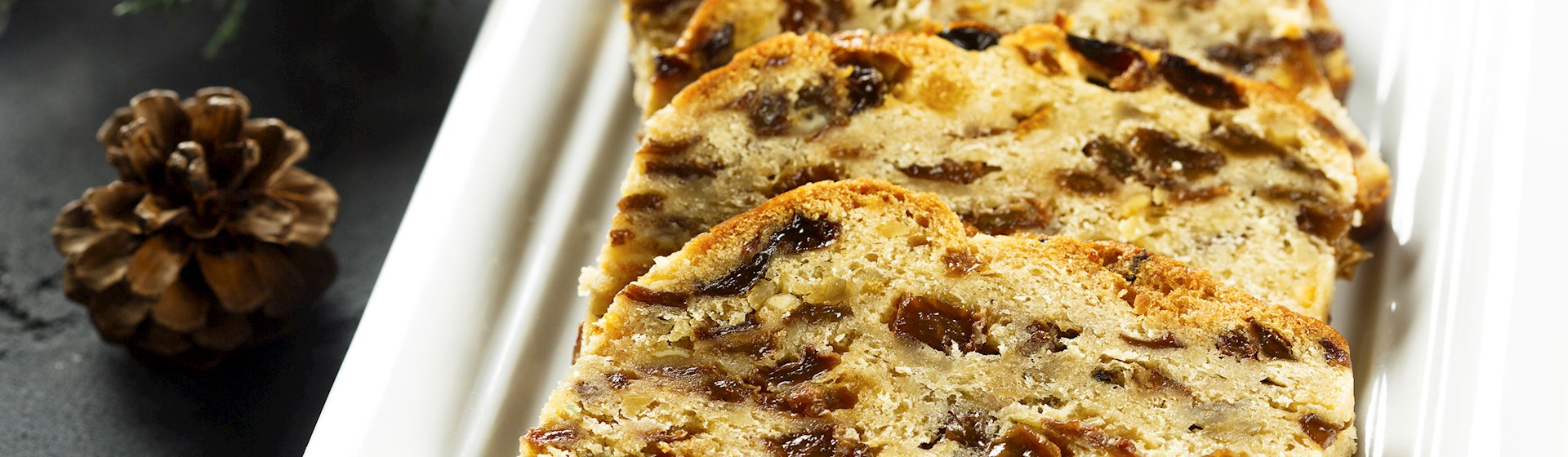
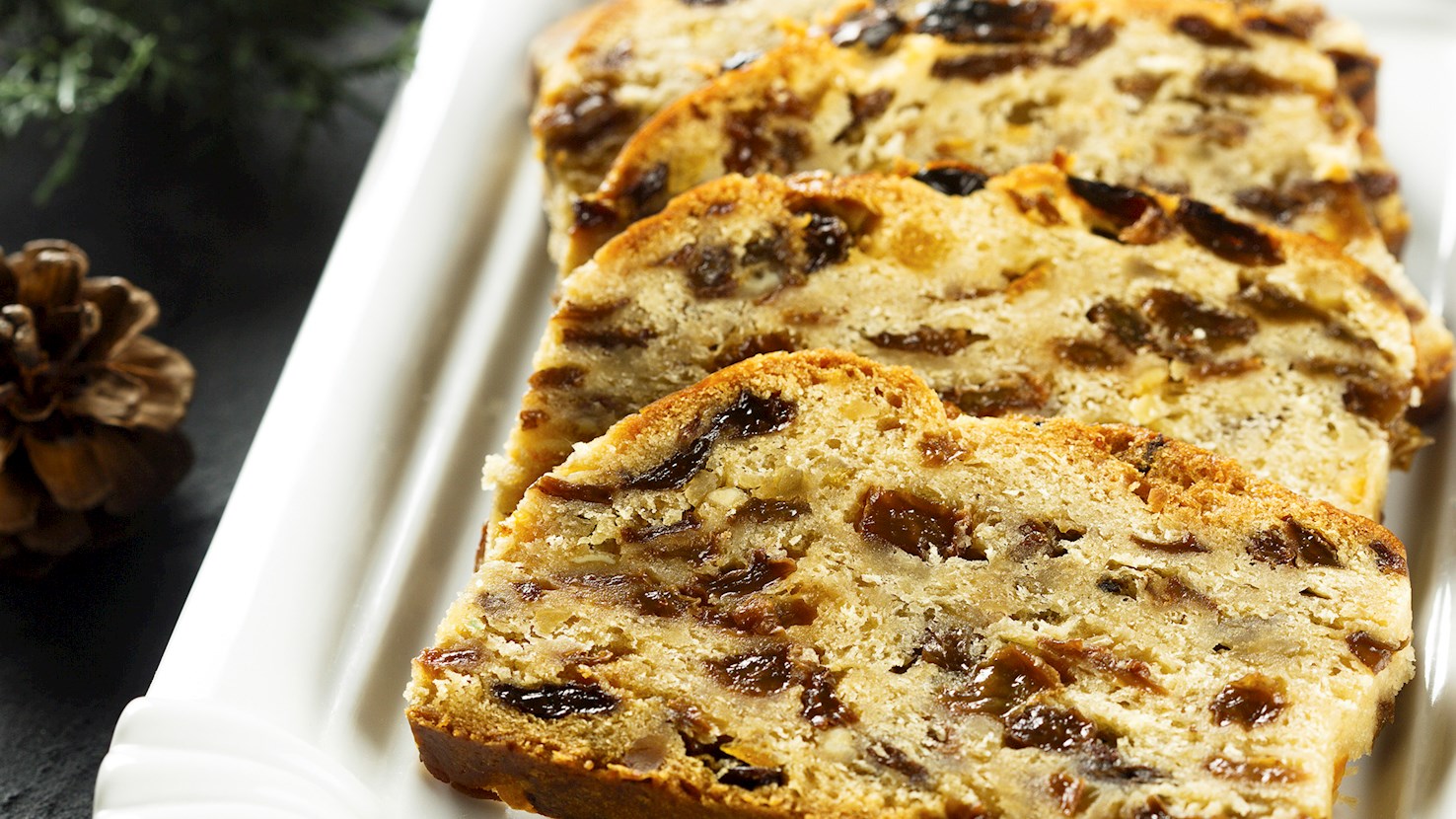
This rich sweet bread is made with a heavy yeast dough mixed with candied fruit and nuts. It is one of the many traditional specialties of Bremen's cuisine. The recipe for Klaben dates back to the 16th century, when bakers in Hanseatic League cities gained access to exotic ingredients they were able to obtain through their member cities. The sweet bread is filled with raisins, almonds, various nuts, and orange and lemon peel. It is not sugar-dusted after baking, as opposed to Dresdner Stollen. The distinctive taste of this holiday favorite comes from the addition of cardamom, rum, or nutmeg. Klaben is usually baked at the beginning of December, and it can stay fresh until Easter.
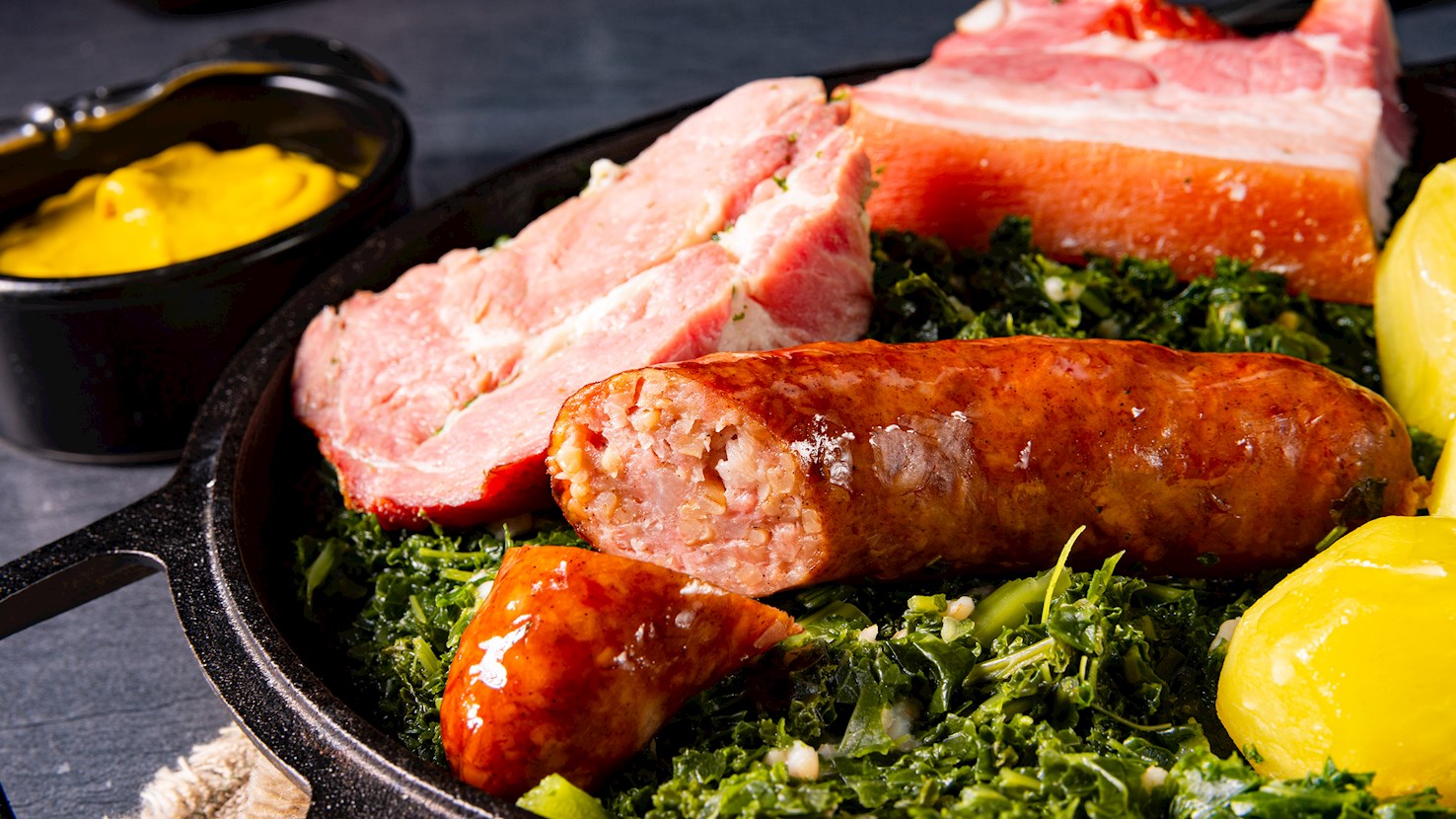
Bremer braunkohl is a traditional dish originating from Bremen. It's made with a combination of kale, onions, oats or buckwheat groats, salt, sugar, and either chicken fat, goose fat, or lard. The kale is chopped and sautéed with onions in fat. The oatmeal or buckwheat groats are then added to the pot with some water and salt, and the combination is then cooked until the kale becomes tender and the cereal is done. Bremer braunkohl is usually served as an accompaniment to sausages and it's especially popular in winter.
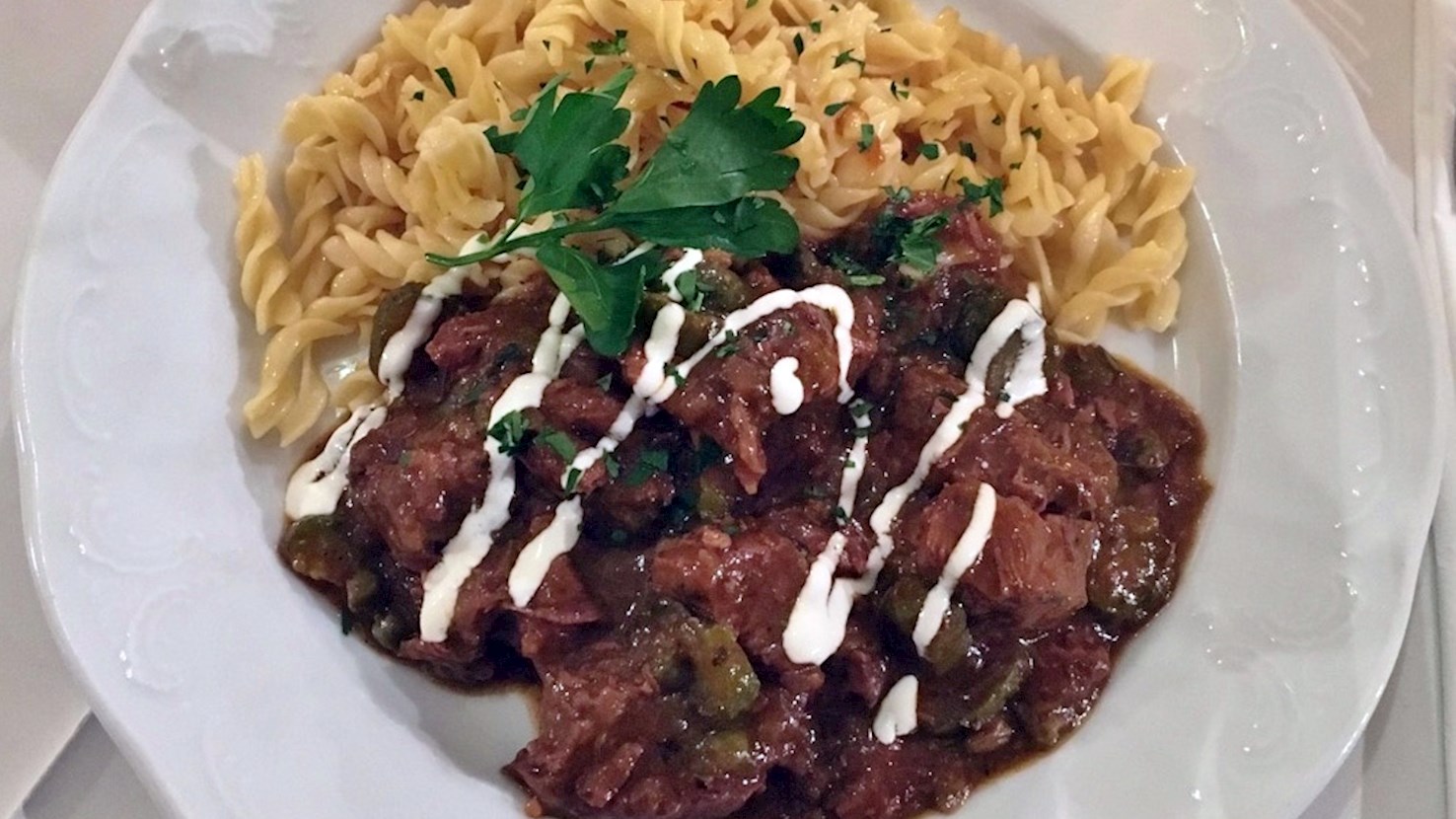
Matrosenfleisch is a traditional meat dish originating from Bremen. The dish is usually made with a combination of beef tenderloin, bacon, flour, butter, onions, parsley, beef stock, sour cream, lemon peel, capers, marjoram, salt, and pepper. The beef steaks are seasoned with salt and pepper and wrapped in bacon. One side is dredged in flour and the steaks are then shortly browned in butter on both sides. The meat is removed from the pan and the onions and parsley are sautéed in the same pan. They're sprinkled with flour and stirred until the flour is absorbed. Stock and sour cream are added to the pan along with the remaining ingredients and the steaks. The dish is slowly simmered until the meat is fully tender and the dish is then ready to be enjoyed.
TasteAtlas food rankings are based on the ratings of the TasteAtlas audience, with a series of mechanisms that recognize real users and that ignore bot,
nationalist or local patriotic ratings, and give additional value to the ratings of users that the system recognizes as knowledgeable.
TasteAtlas Rankings should not be seen as the final global conclusion about food. Their purpose is to promote excellent local foods,
instill pride in traditional dishes, and arouse curiosity about dishes you haven’t tried.
The initial list of top producers was compiled based on available reviews, awards, local recommendations, media and blog coverage, and consumer reviews.
The list will be updated with ratings from TasteAtlas local ambassadors and TasteAtlas users.



What People Say