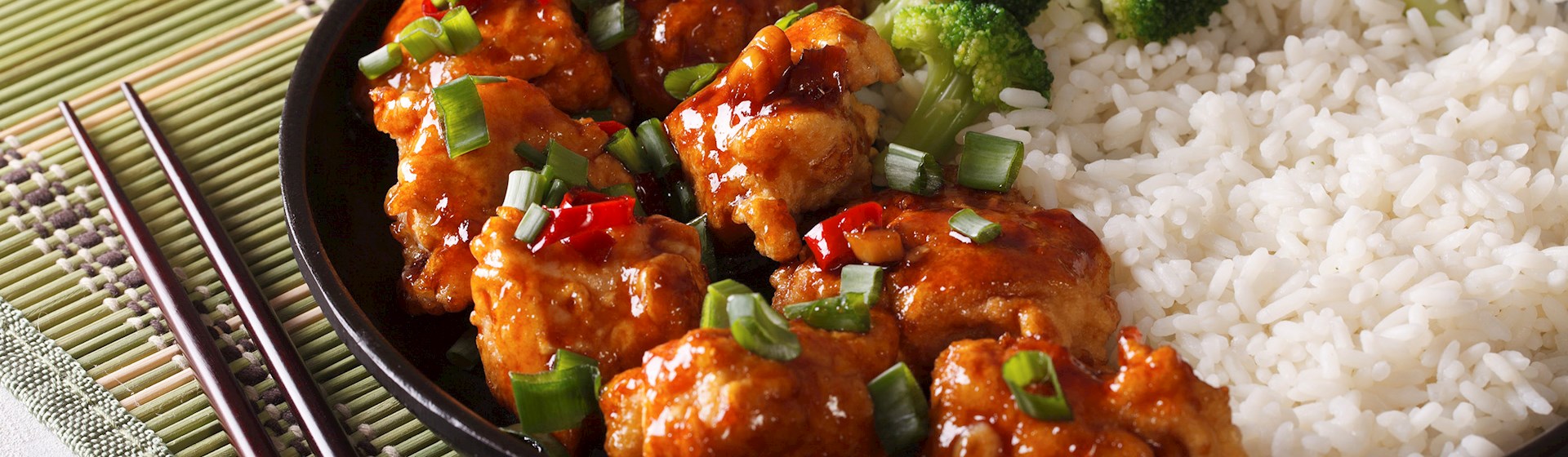
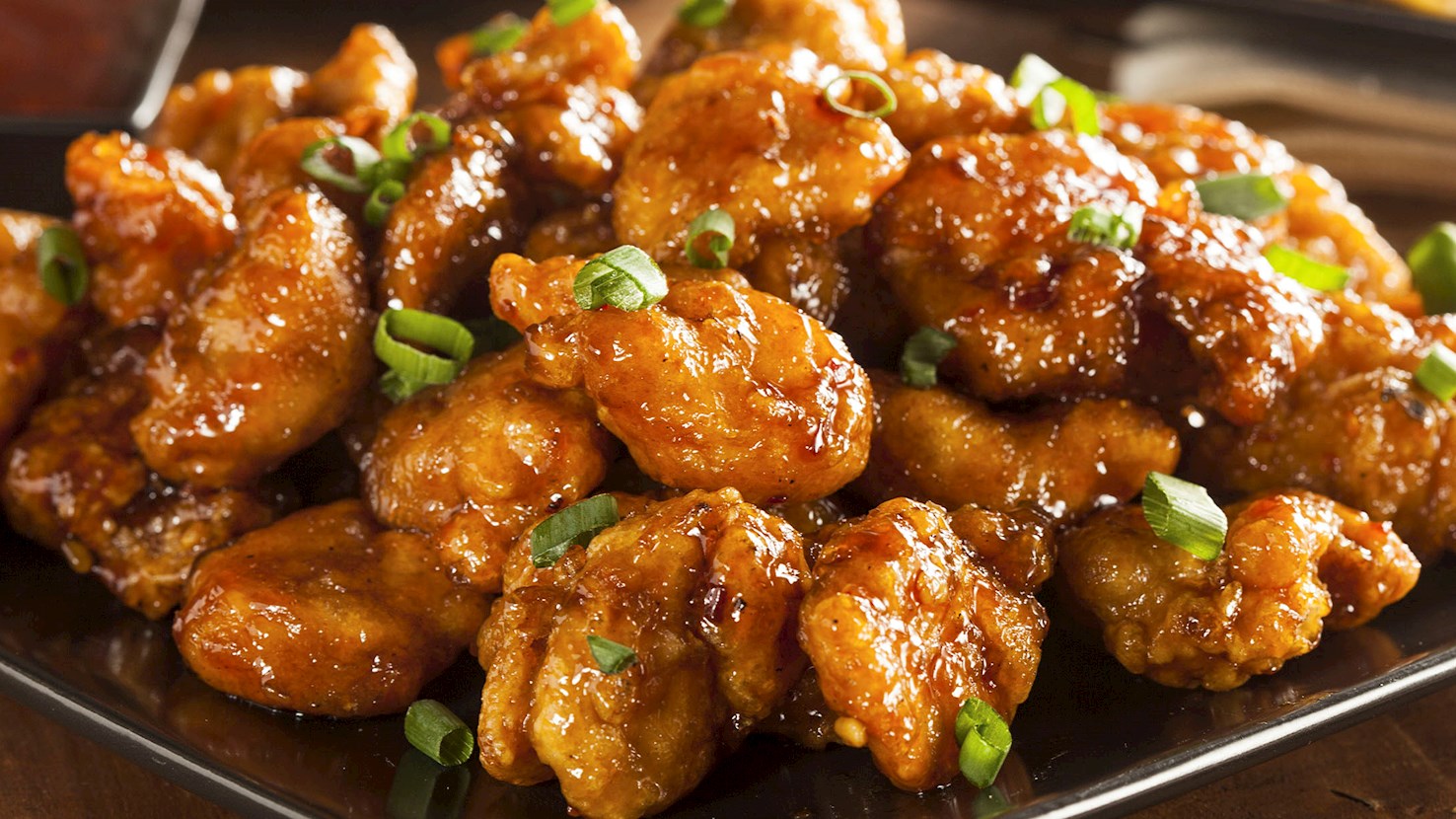
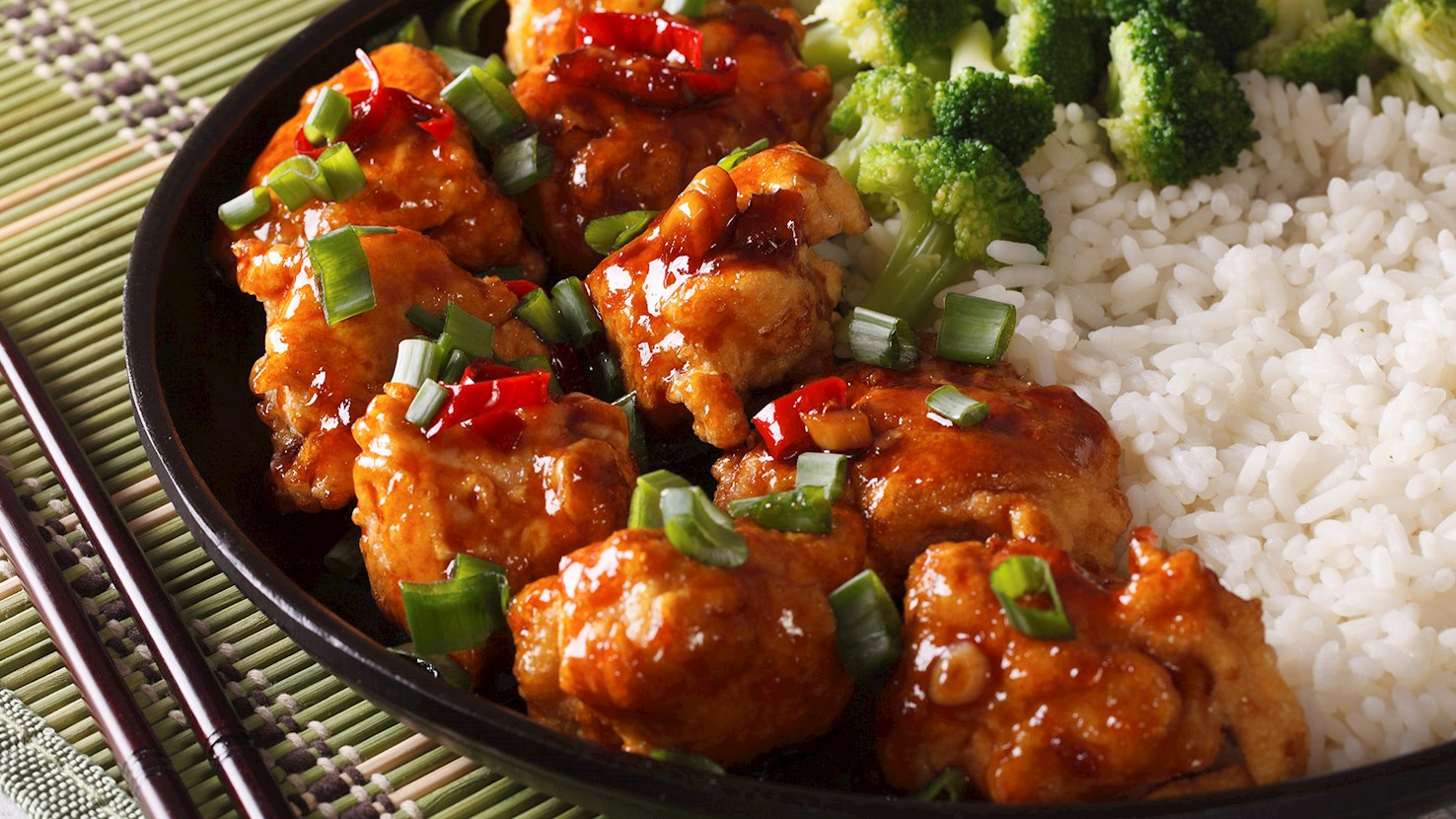
Orange chicken is an American-Chinese dish that was invented as a variation on General Tso's chicken. The dish consists of battered chicken that is fried with sweet and sour orange and chili sauce. In the United States, a chain restaurant called Panda Express credits itself with the invention of the dish, evolving it into a meal that is much sweeter than the dish it was modeled after - the original tangy and spicy version from Hunan, where the subtropical climate with mild winters makes it ideal for growing oranges, tangerines, and lemons that are native to Asia. Orange chicken is traditionally accompanied by steamed rice on the side.
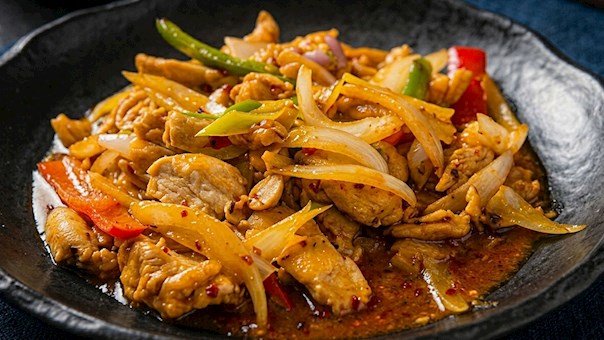
General Tso’s chicken is a Chinese-American sweet and spicy dish consisting of chicken dices that are first deep-fried, then stir-fried together with ginger, garlic, scallions, and hot chili peppers in a sauce made from sugar, soy sauce, rice vinegar, and rice wine. Although named after General Tso Tsungtang, the dish has no real-life connection with him. The dish is most likely a descendant of a simple Hunanese chicken dish, and two immigrant chefs, Chinese and Taiwanese - respectively, claim to be its inventors. The sweetness and spiciness of the dish can be adjusted according to one's taste, and the dish is served with either steamed or fried rice.
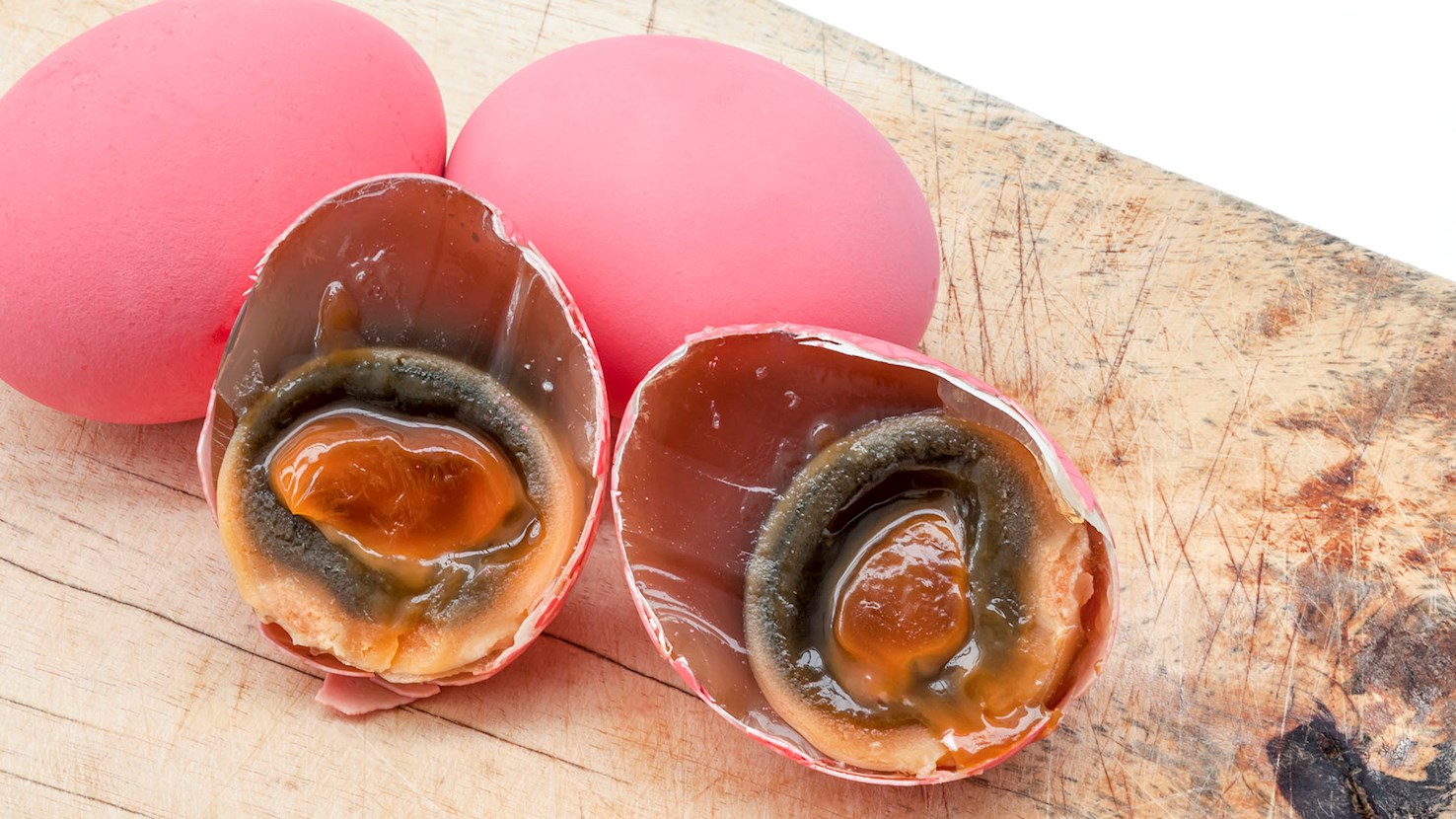
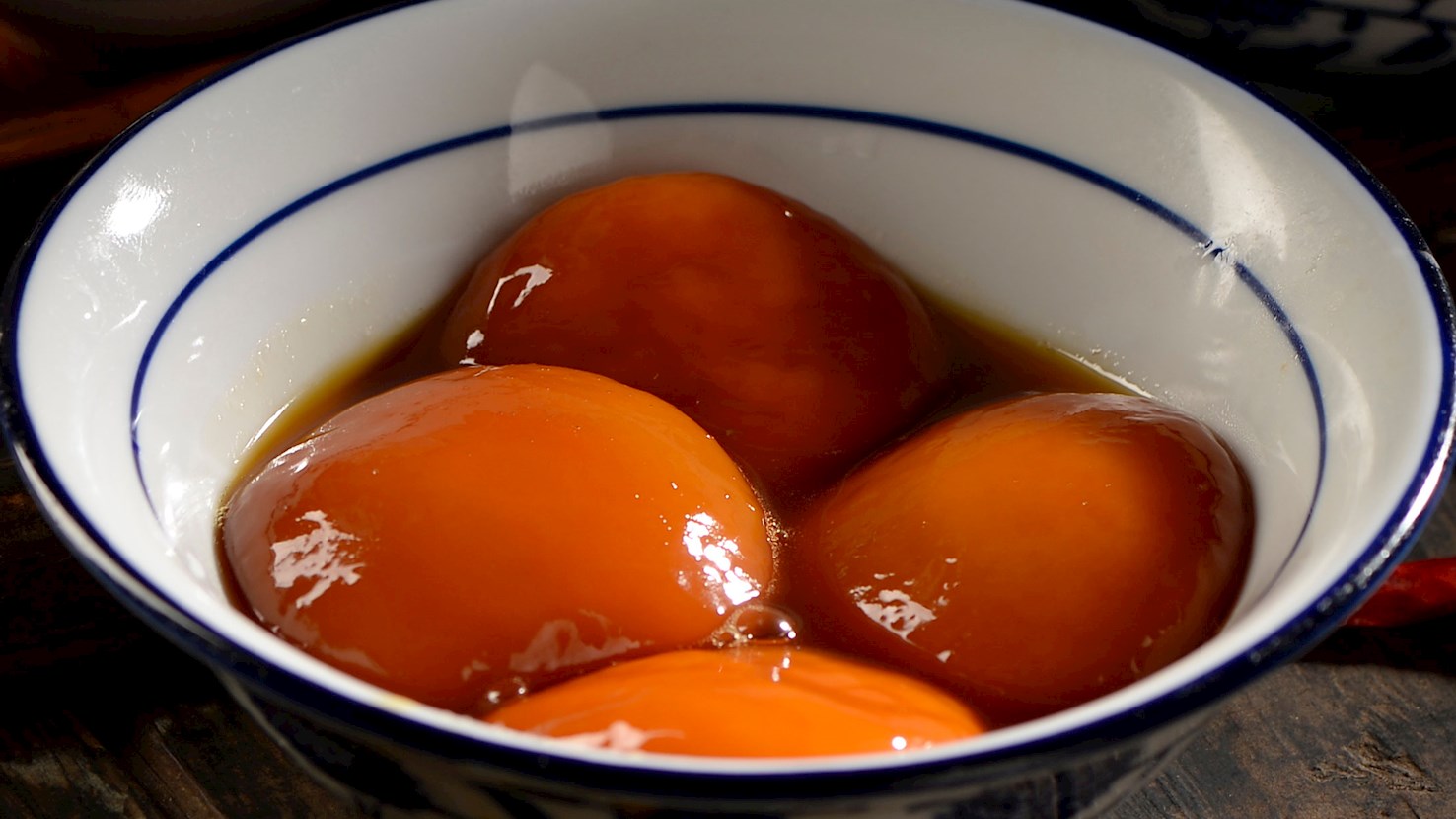
Pi dan, commonly known as a century egg, is a preserved egg product created by burying duck, quail, or chicken eggs in a highly alkaline mixture of clay, wood ash, salt, quicklime, and rice hulls for several weeks to several months. Historical accounts trace the discovery of this preservation method to Hunan during the Ming Dynasty, roughly six hundred years ago. A homeowner allegedly found duck eggs resting in a shallow pool of slaked lime used for mortar during household construction. Tasting these accidentally preserved eggs prompted the creation of a deliberate manufacturing process with added salt to improve the final flavor. The modern preservation process coats the raw egg with a paste of alkaline materials, which gradually raises the egg's internal pH from around 9 to 12 or higher. This severe chemical shift breaks down complex, flavorless proteins and fats into smaller, highly flavorful chemical compounds. The egg white transforms into a translucent, dark brown jelly with a salty taste. The yolk simultaneously turns into a dark green or grey creamy substance with a strong odor of sulfur and ammonia. The rice hulls prevent the eggs from sticking together in the curing vessel and form a protective crust on the outer shell. Certain curing methods produce delicate, white crystalline patterns resembling pine branches on the surface of the translucent egg white. People eat the preserved eggs on their own as a snack or slice them and add them to a warm bowl of rice congee with minced lean pork. Slices of pickled sweet ginger root frequently accompany the egg to cut through the rich, alkaline flavor. A popular serving method involves arranging wedges of the dark egg over a block of chilled silken tofu before pouring a dressing of soy sauce, black vinegar, sesame oil, and chopped cilantro over the plate.
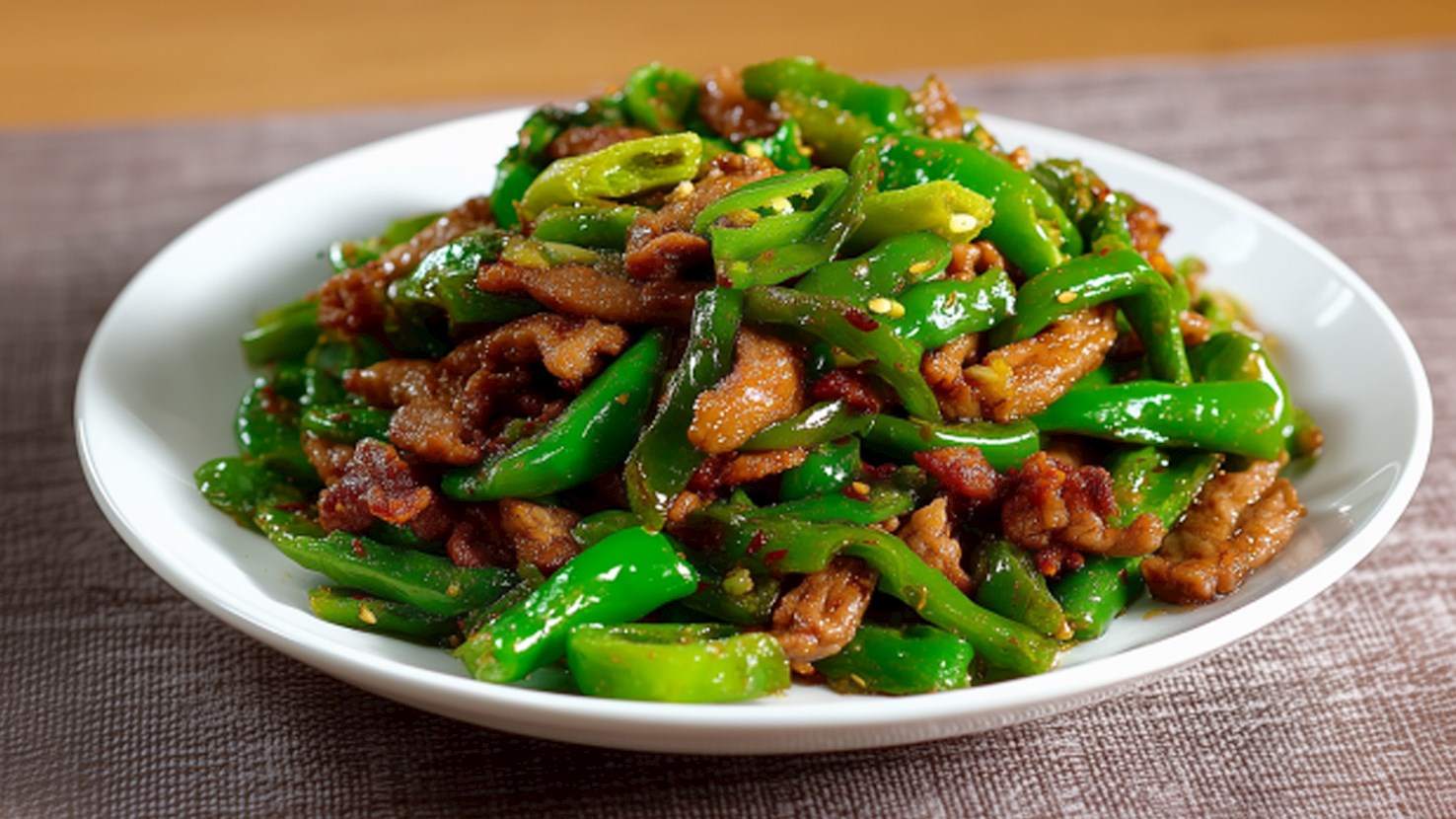
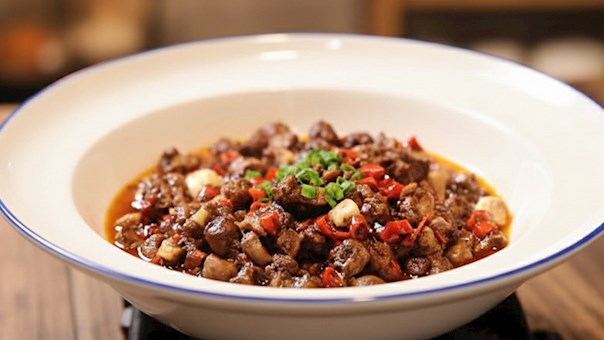
Làjiāo chǎoròu is a stir-fried pork dish from Hunan, built around the interplay of tender slices of pork and the sharp heat of fresh chili peppers. The use of chili became central to Hunan cooking from the late Ming and early Qing periods, when the crop was introduced to China and quickly adapted to the province’s warm, humid climate. As chili cultivation spread, it transformed local cooking styles, and pairing pork with an abundance of fresh peppers became a defining feature of the regional palate. The preparation of làjiāo chǎoròu relies on simplicity and speed. Pork belly or another cut with both fat and lean meat is thinly sliced to ensure it cooks quickly and remains tender. The meat is usually marinated briefly with light soy sauce, Shaoxing wine, and sometimes a small amount of sugar to enhance its depth of flavor. Fresh green and red chilies, typically small and intensely hot, are sliced and quickly stir-fried in hot oil to release their aroma and pungency. The pork is then added and cooked over high heat until it takes on a slightly crisp edge and absorbs the flavors of the chilies. Garlic, ginger, and sometimes fermented black beans or pickled chilies are added to deepen the flavor profile, but the dish remains focused on the combination of meat and fresh chili heat. Làjiāo chǎoròu is usually served hot as a main dish and is rarely eaten on its own. It is most often accompanied by plain steamed rice, which balances the heat and soaks up the savory juices released during cooking. At the table, it is typically part of a larger spread of dishes that might include mild vegetable stir-fries or light soups, which provide contrast and roundness to the meal. It is eaten in homes throughout Hunan as part of everyday cooking, but it also appears frequently in restaurants across China, where it represents one of the clearest expressions of Hunan’s flavor philosophy.
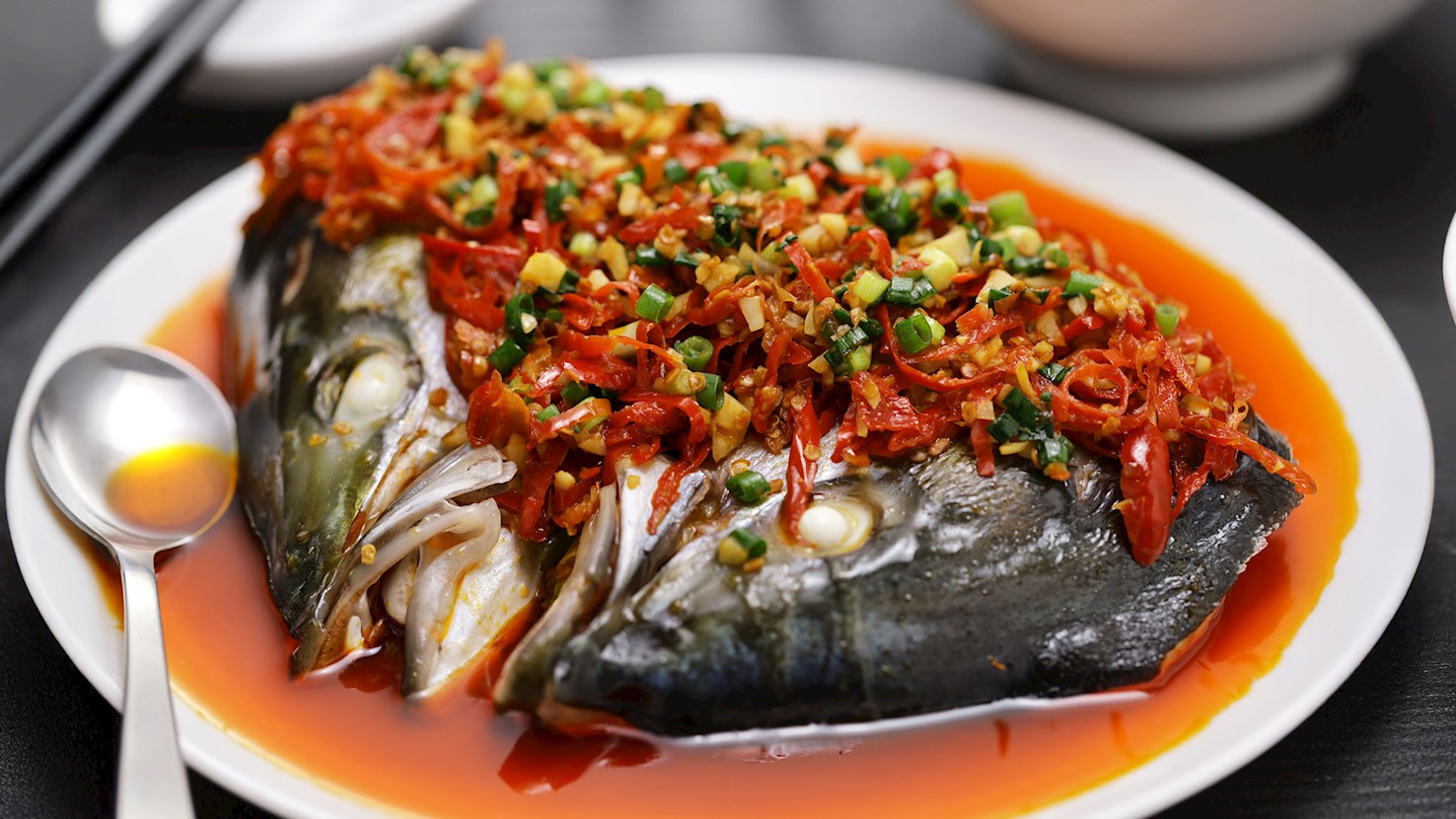
Duòjiāo yútóu is a renowned Hunanese dish, consisting of a large fish head steamed with chopped pickled chili peppers, aromatics, and seasonings to create a boldly flavored, spicy and savory centerpiece. The dish developed as part of the region’s broader river fish cooking culture, where freshwater species such as carp and bighead fish were widely available and often used whole. Fish head, in particular, was valued both for its delicate meat and for the collagen-rich textures prized in Chinese cooking. Over time, the combination of pickled chilies, a staple ingredient in Hunan kitchens, with steamed fish head became a signature preparation, celebrated in restaurants and home kitchens alike. Preparing duòjiāo yútóu begins with a large fish head, often from bighead carp, which is cleaned thoroughly and sometimes briefly marinated with salt, cooking wine, and ginger to eliminate any fishy odors. The defining element is the topping: finely chopped pickled red chilies known as duòjiāo, mixed with garlic, ginger, fermented soybeans, and sometimes a little oil to deepen the flavor. This mixture is generously spread over the fish head before it is steamed over high heat until the flesh becomes tender and infused with the sharp, tangy-spicy flavor of the chilies. After steaming, hot oil is often poured over the top to release the aroma of the seasonings and give the surface a glossy finish. The resulting dish is characterized by a balance of flavors: the richness of the fish, the brightness and acidity of the pickled chili, and the deep umami from the fermented elements, all intensified by the heat of the oil. One feature that sets duòjiāo yútóu apart from many other fish preparations is its emphasis on pickled rather than fresh chili, which adds layers of sourness and complexity beyond simple spiciness. It also reflects a broader culinary principle in Hunan cooking, where preserved and fermented ingredients are used to heighten natural flavors. The dish is usually served hot and shared communally, with diners picking the tender meat from around the head and cheeks, which are considered the most flavorful parts. It is commonly paired with steamed rice, which balances the intensity of the sauce, and sometimes accompanied by simple stir-fried greens or tofu dishes to round out the meal.
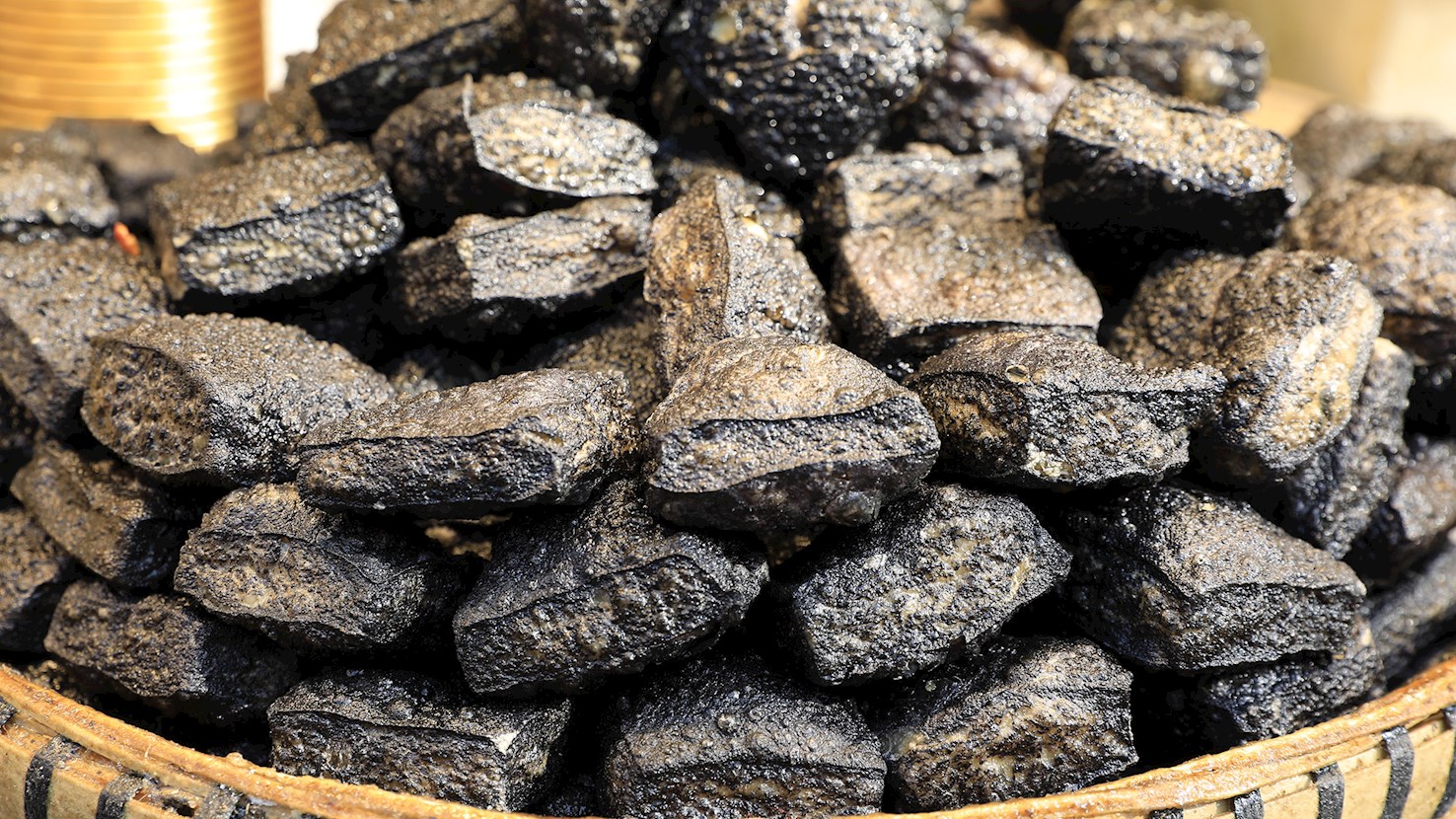
Chángshā chòu dòufu is a famous street food from Changsha in Hunan province, recognized across China for its striking aroma, blackened exterior, and spicy, flavorful toppings. While stinky tofu is prepared in many regions, the Changsha version has become one of the most iconic, standing out for its fiery seasoning that reflects the broader character of Hunan cuisine. The origins of stinky tofu go back several centuries, when methods of fermenting tofu developed both as a means of preservation and as a way of deepening flavor. In Changsha, vendors adapted the process to suit local tastes, creating a version with a darker outer skin and a stronger aroma. Over time, this style became inseparable from the city’s identity, praised in travel accounts and sought out by visitors as a culinary landmark. Its reputation grew as Changsha’s night markets flourished, turning the dish from a practical snack into a defining feature of local street food culture. Preparation starts with tofu that has been fermented in a brine made from vegetables, herbs, and seasonings, a process that develops its pungent character. The tofu cubes are deep-fried until the outside is crisp and dark while the inside remains soft and tender. They are served hot, topped with chili sauce, garlic, sesame oil, and pickled vegetables, making each bite a mixture of heat, aroma, and texture. Vendors often adjust the spiciness to suit different diners, but chili is central to the Changsha version, underscoring the city’s love for bold flavors. Today, Chángshā chòu dòufu is eaten mainly as street food in the bustling markets of Changsha, often late into the evening when food stalls are busiest. It is enjoyed by locals as an everyday snack and by tourists as a must-try specialty. Served in small portions, it is eaten hot and fresh, sometimes with chopsticks but just as often skewered on sticks for convenience.
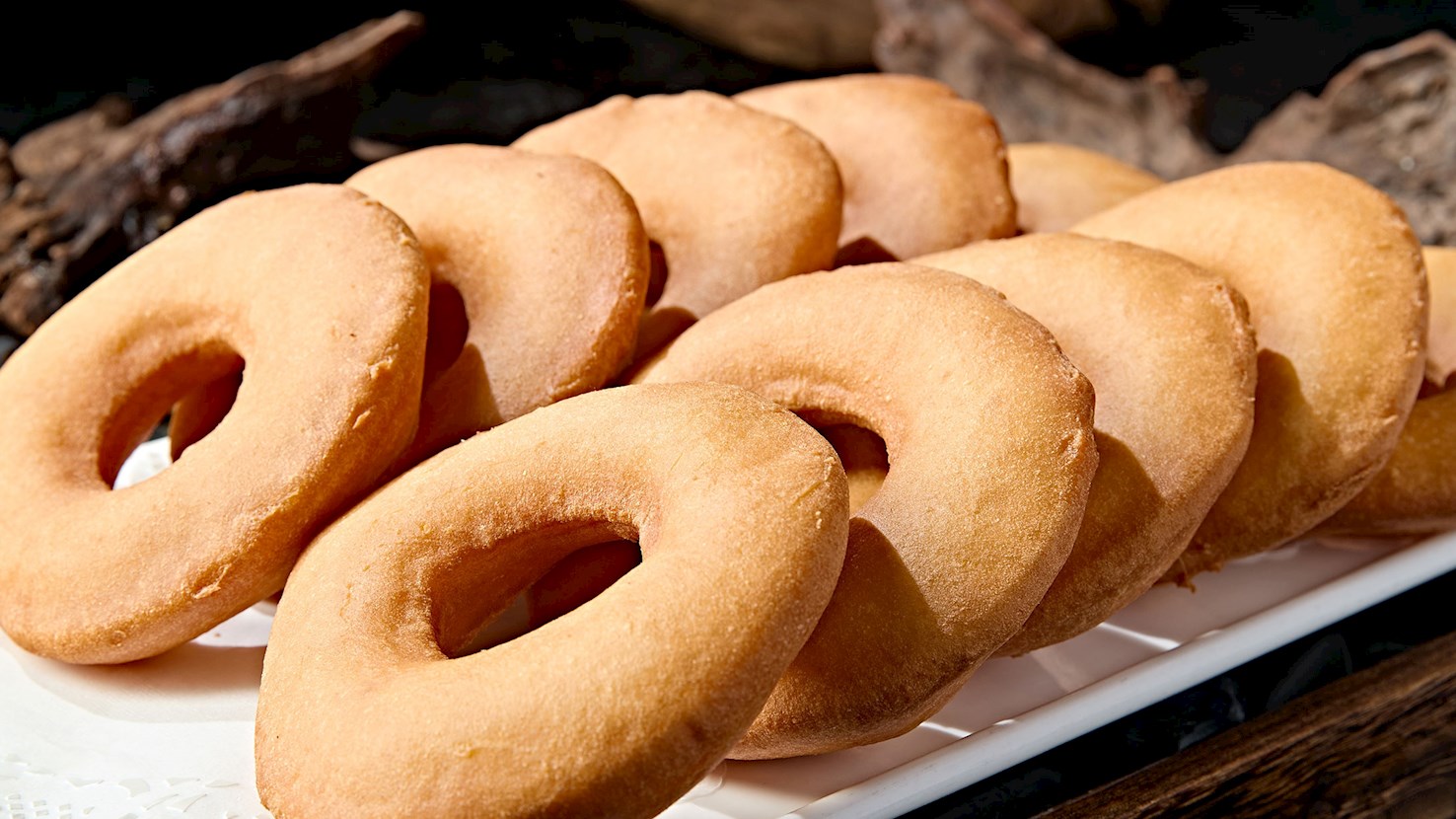
Cōng yóu bābā is a savory, donut-shaped pancake from Hunan province, known for its crisp exterior, soft interior, and aromatic scallion flavor. It is a popular street food and breakfast item, often eaten on its own or paired with noodles and soup, and is especially common in urban markets and small-town eateries where quick, satisfying snacks are part of daily life. Its name translates literally to “scallion oil baba,” referring to the two defining elements of the dish: finely chopped scallions and the oil in which it is cooked. The origins of cōng yóu bābā are rooted in the broader Chinese custom of frying dough as an accessible and filling food, a practice that dates back centuries. In Hunan, where scallions are widely used to enhance savory dishes, cooks adapted this technique to create a more flavorful and aromatic version of fried dough. Over time, the snack evolved from simple street-side sustenance into a recognizable specialty of the region, often linked to breakfast culture and market food stalls. Making cōng yóu bābā begins with a basic dough of rice flour, water, salt, and chopped scallions. The dough is kneaded until smooth, then shaped into small rings or flattened rounds with a hole in the center. These are shallow-fried or pan-fried in oil until golden and crisp on the outside while remaining soft and slightly chewy inside. The frying process allows the scallions to release their aroma into the dough and oil, resulting in a rich, savory flavor. Some variations include a touch of sesame oil for added fragrance or a sprinkle of salt on the surface just before frying. The finished bābā is typically served warm, either plain or accompanied by chili sauce, soy-based dips, or pickled vegetables. Cōng yóu bābā is most commonly eaten fresh off the griddle in morning markets, where vendors serve it as a quick breakfast to be eaten by hand. It is also a common side item with bowls of rice noodles or soup, where its savory flavor and slight crispness complement softer textures. In some areas, it is enjoyed with hot soy milk or congee, while in others it may be paired with spicy chili paste for added heat.
Chángdé niúròu fěn is a beef rice noodle soup from Changde in Hunan province, known for its rich broth, tender beef, and smooth, slippery noodles. It is one of the most representative breakfast foods in the city and has become an essential part of the local food culture, often found in street stalls and small eateries that serve it from early morning until midday. The dish is deeply tied to Changde’s culinary identity and reflects the region’s preference for hearty, savory flavors balanced with spice and aroma. Its origins trace back to local noodle shops that began preparing beef noodles as a nourishing and affordable meal for workers and travelers in the early 20th century. Rice noodles had long been a staple in Hunan due to the region’s abundant rice cultivation, and beef became a favored addition as cattle rearing grew more common in inland China. Over time, cooks refined the recipe to highlight the beef’s flavor through slow cooking and seasoning techniques typical of Hunanese cuisine, which favors depth and intensity over subtlety. The dish’s popularity spread beyond the city, and it is now considered a benchmark example of how local flavors shape noodle-based meals in southern China. Preparation begins with the broth, which is the foundation of the dish. Beef bones and cuts with connective tissue are simmered slowly for several hours with ginger, garlic, scallions, star anise, and sometimes dried tangerine peel, creating a deep and aromatic stock. Thin slices of beef, often brisket or shank, are stewed separately with soy sauce, Shaoxing wine, and chili paste until tender and infused with flavor. The rice noodles, made from finely ground rice flour and water, are briefly blanched to maintain their delicate texture before being added to the hot broth. The stewed beef is then layered on top, and the bowl is finished with chopped scallions, pickled vegetables, chili oil, and occasionally a splash of beef fat to enrich the flavor. Chángdé niúròu fěn is most often eaten as a breakfast or lunch dish, commonly enjoyed at small family-run noodle shops where bowls are prepared to order and served steaming hot. It is sometimes paired with pickled side dishes or small plates of cold vegetables, and in colder months, diners may add extra chili paste or fermented bean sauce to increase the warmth and depth of flavor.
Táng yóu bābā is a sweet, sticky pastry from Xiangtan in Hunan province, known for its chewy glutinous rice dough coated in caramelized sugar syrup. Its name translates to “sugar oil baba,” referring to the two essential elements that define it: sweet syrup and fried dough. The dessert is especially popular during festivals, family gatherings, and celebratory occasions, where it is often served as a treat symbolizing happiness and good fortune. The origins of táng yóu bābā are closely linked to the food culture of central China, where glutinous rice has long been a staple ingredient in festive sweets and ceremonial foods. It is believed to have been developed by local families who sought to transform simple, readily available ingredients, rice flour, sugar, and oil, into a luxurious dessert. Over time, the recipe became a cherished part of regional celebrations, often associated with Lunar New Year feasts, weddings, and birthdays. Its texture and sweetness also reflect historical preferences in southern Chinese desserts, which favor chewy, slightly elastic pastries enriched with sugar and oil rather than baked goods. Preparation begins with glutinous rice flour mixed with water to form a soft, pliable dough, which is then shaped into small, round cakes or patties. These pieces are deep-fried in oil until golden and crisp on the outside while remaining tender and chewy inside. In a separate pan, sugar is gently melted into a syrup, often with a splash of water or maltose to achieve the right viscosity, and sometimes flavored with osmanthus or honey. The fried cakes are then tossed in the bubbling syrup, which coats them in a glossy, amber-colored layer that hardens slightly as it cools, forming a delicate shell that contrasts with the soft interior. Táng yóu bābā is most often eaten freshly made, when the sugar coating is still warm and slightly brittle. It is served on its own as a dessert or snack but is also enjoyed alongside tea, which helps balance its sweetness. In some regions, it is paired with lightly salted snacks or simple savory dishes to create contrast in a celebratory meal.
Wàipó cài is a classic homestyle stir-fry dish from Hunan province, typically made with pork belly, tofu skin, dried chilies, and pickled vegetables. The name means “grandmother’s dish,” and it represents a style of cooking rooted in everyday family meals of the region rather than restaurant fare. It is widely regarded as a staple of Hunan home kitchens and is known for its robust, savory character and the balance of spicy, salty, and aromatic flavors that define much of the province’s cuisine. Its development reflects the domestic cooking practices of rural Hunan households, where resourcefulness shaped both the choice of ingredients and the techniques used. Preservation played an important role in the local diet due to the region’s humid climate and agricultural cycles, leading to the use of dried tofu, cured meats, and pickled vegetables as everyday staples. Pork belly was often prepared in bulk after seasonal slaughtering and preserved or cooked in ways that maximized flavor and storage life. Over generations, these methods formed the basis of dishes like wàipó cài, which combined preserved ingredients with fresh ones in a single pot to create filling meals that could feed large families. Its status as a comforting, familiar dish meant it was commonly served at family gatherings, festivals, and communal meals, especially in rural areas. Preparation begins with stir-frying sliced pork belly until the fat renders and the meat becomes slightly crisp. Aromatics such as ginger, garlic, and dried chilies are added, creating a base that infuses the dish with fragrance. Tofu skin or dried bean curd sheets, bamboo shoots, and pickled vegetables like long beans or mustard stems are then added and tossed in the pork fat. Soy sauce, Shaoxing wine, and a small amount of sugar are introduced to balance the flavors, and the dish is simmered gently until the ingredients absorb the sauce and become tender. The result is a rich, flavorful braise with multiple layers of taste and texture, combining the softness of tofu and vegetables with the richness of pork. The dish is most often served hot as part of a shared family meal, almost always accompanied by plain steamed rice to absorb its concentrated sauce. It is commonly paired with lighter vegetable stir-fries or cold pickled sides, which provide contrast to its richness.
TasteAtlas food rankings are based on the ratings of the TasteAtlas audience, with a series of mechanisms that recognize real users and that ignore bot,
nationalist or local patriotic ratings, and give additional value to the ratings of users that the system recognizes as knowledgeable.
For the “Top 16 Hunan Foods” list until September 30, 2026, 961 ratings were recorded, of which 873 were recognized by the system as legitimate.
TasteAtlas Rankings should not be seen as the final global conclusion about food. Their purpose is to promote excellent local foods,
instill pride in traditional dishes, and arouse curiosity about dishes you haven’t tried.







What People Say