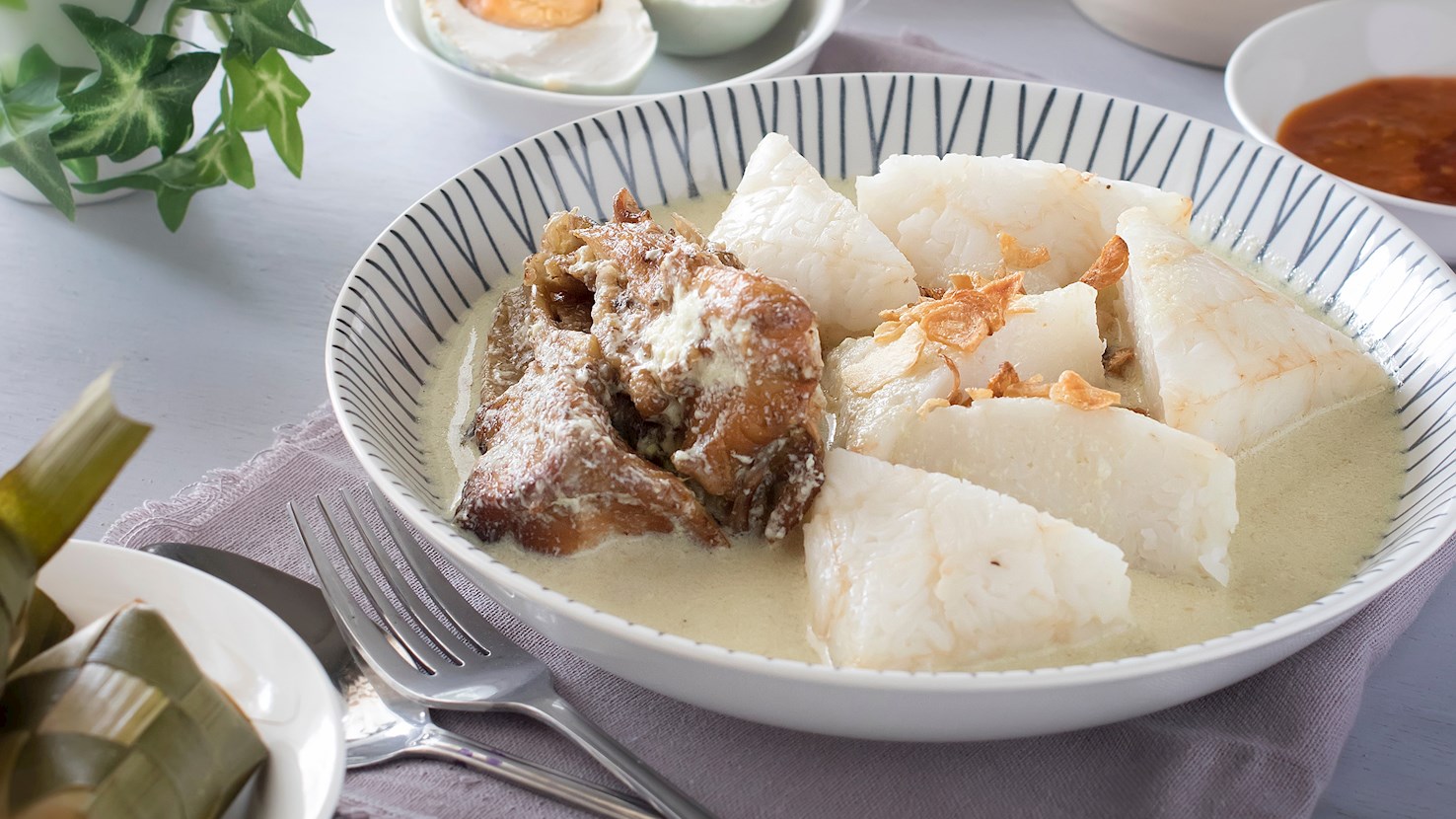
Ketupat kandangan is a distinctive rice dish from South Kalimantan in Indonesia, particularly well known in the Banjar community. It consists of ketupat, which is rice compressed inside woven palm leaf pouches, served with a rich coconut milk curry and paired with ikan gabus, a freshwater snakehead fish. The preparation begins by boiling the ketupat for several hours so the rice grains expand and compact into a firm cake that can be sliced neatly. The fish is cleaned and sometimes briefly marinated, then simmered gently in coconut milk mixed with a blend of ground spices including turmeric, coriander, galangal, lemongrass, garlic, and shallots. This slow cooking process produces a pale yellow broth with a smooth, slightly oily texture and a savory, fragrant flavor that penetrates the fish thoroughly. Once the ketupat is fully cooked and cooled, it is cut into cubes and arranged in shallow bowls. The cooked fish is placed on top or alongside, and the coconut curry is poured generously over everything. The dish is often served for special family meals, large communal gatherings, and celebrations marking Islamic holidays such as Eid al-Fitr. Because it is filling and mild, ketupat kandangan is frequently eaten as a breakfast or brunch dish rather than dinner. Unlike other Indonesian dishes that commonly feature fried or grilled side dishes, this recipe relies entirely on the coconut curry to bring richness and moisture to the meal. In some regions of South Kalimantan, cooks use additional seasonings such as cloves or cinnamon for a slightly more complex aroma. Ketupat kandangan has also become associated with hospitality and social events in Banjar culture, where serving it to guests is seen as a gesture of respect. Many families prepare it in large quantities because it keeps well if gently reheated. Outside South Kalimantan, the dish has been adapted using different types of fish like catfish or milkfish, showing how the recipe is flexible depending on local ingredients.
Babi masak tomat is a pork dish prepared by Dayak communities in Kalimantan, where it is commonly cooked for family meals and gatherings. The recipe features pork pieces simmered slowly with fresh tomatoes, creating a sauce that balances savory and sour flavors with moderate heat from local chilies. The Dayak have long incorporated pork in their cuisine, using various methods such as roasting over an open fire, stewing with wild herbs, or braising with spices grown in the interior of Borneo. In babi masak tomat, the acidity of ripe tomatoes is central to the taste, helping to soften the richness of the pork without overpowering the other ingredients. The preparation begins by cutting pork belly or shoulder into bite-sized pieces and lightly seasoning it with salt. A mixture of shallots, garlic, ginger, and red chilies is pounded into a coarse paste, which is sautéed in hot oil until fragrant. Fresh tomatoes, chopped or crushed by hand, are added along with a small amount of water or broth. Once the tomatoes have started to break down, the pork is returned to the pot and simmered gently until it becomes tender and infused with the flavor of the sauce. Some cooks add lemongrass, torch ginger flower, or slices of sour starfruit to enhance the aroma and adjust the balance between acidity and sweetness. Babi masak tomat is typically served hot with steamed rice and fresh vegetables or sambal. In some Dayak households, the dish is complemented by preserved jungle ferns or pickled side dishes. Although less widely known outside Kalimantan, it is valued locally for its straightforward preparation and the way it reflects the use of garden produce and home-raised pork. Recipes may differ between villages, with variations in the proportion of tomatoes, the type of chilies, or the choice of pork cuts.
Gence ruan is a seasoned fried fish dish that comes from East Kalimantan, Indonesia, particularly among the Kutai people who have long prepared it as a popular accompaniment to rice. The name refers to a cooking style in which freshwater fish, usually gourami or catfish, is marinated in a mixture of spices and then fried until the surface becomes crisp and aromatic. The preparation starts with cleaning and scoring the fish so that the seasonings can penetrate more thoroughly. A marinade made from ground shallots, garlic, turmeric, galangal, coriander, and sometimes lemongrass is rubbed over the fish and left to absorb the flavors. Once marinated, the fish is deep-fried in hot oil until golden and cooked through. What sets gence ruan apart is the additional sauce poured over the fish after frying. This sauce is prepared by cooking ground spices with chopped lemongrass, red chilies, and palm sugar, then simmering until it thickens and develops a savory-sweet character. The sauce is spooned generously over the crispy fish before serving, creating a layered taste that balances heat, sweetness, and a hint of bitterness from the browned spices. Gence ruan is typically served warm alongside steamed rice and raw vegetables such as cucumber and basil leaves. Many cooks in East Kalimantan use local river fish for this recipe, reflecting the region’s reliance on freshwater catches. The dish is often associated with communal meals and is considered a practical way to prepare fish for a family, since frying preserves it for longer compared to boiling. In some households, extra portions are set aside to be reheated later, and the sauce helps keep the fish moist even after cooling. Outside East Kalimantan, gence ruan has become known as a regional specialty, and visitors to Samarinda and nearby towns frequently seek it out at restaurants and food stalls. Some recipes adapt the sauce by adding tamarind juice or coconut milk to create slight variations in taste.
Sambal raja Kutai is a distinctive sambal originating from East Kalimantan, specifically associated with the culinary heritage of the Kutai people. The name means “king’s sambal,” reflecting its reputation as a special preparation once enjoyed in noble households of the Kutai Kartanegara Sultanate. This sambal combines a variety of fresh and cooked elements, resulting in a complex mixture of flavors and textures. It typically features lightly fried vegetables such as long beans, eggplant, and green chilies, which are then combined with a rich, aromatic sauce made from shallots, garlic, shrimp paste, and ground red chilies. The mixture is finished with a drizzle of coconut milk or fried shallot oil to bind everything together. Preparation starts with slicing and frying the vegetables until they become tender but retain some bite. The cooked vegetables are set aside while the base of the sambal is prepared. This base involves grinding or blending roasted shrimp paste with fresh chilies, garlic, and shallots to form a coarse paste. The paste is briefly sautéed to remove raw flavors and deepen its aroma. Once the mixture is fragrant, it is combined with the vegetables and a little coconut milk to create a sambal that is rich, spicy, and slightly creamy. In some variations, slices of boiled eggs or fried anchovies are added to enhance the taste further. Sambal raja Kutai is typically served as an accompaniment to steamed rice and grilled or fried fish, making it a central component of everyday meals as well as festive gatherings. Throughout East Kalimantan, this sambal is valued not only for its taste but also for the way it reflects local cooking practices that blend fresh produce, preserved seafood, and coconut-based sauces. Recipes can differ between households, with some cooks preferring to make the sambal milder by reducing the number of chilies, while others intensify the heat with additional bird’s eye chilies. In recent years, sambal raja Kutai has gained broader recognition across Indonesia as part of efforts to document and celebrate regional food traditions. Some home cooks prepare large batches to store for several days, while restaurants often present it alongside other Kutai specialties such as gence ruan or singgang.
TasteAtlas food rankings are based on the ratings of the TasteAtlas audience, with a series of mechanisms that recognize real users and that ignore bot,
nationalist or local patriotic ratings, and give additional value to the ratings of users that the system recognizes as knowledgeable.
TasteAtlas Rankings should not be seen as the final global conclusion about food. Their purpose is to promote excellent local foods,
instill pride in traditional dishes, and arouse curiosity about dishes you haven’t tried.





What People Say