Lapis palaro is a traditional dish originating from Maluku islands. The dish is usually made with a combination of beef, corn starch, oil, and a spice paste consisting of shallots, garlic, ginger, galangal, coriander, nutmeg, cumin, hot peppers, salt, and sugar. The beef is cut into slices, and it is then placed in a pan with the spice paste and water. The meat is cooked over medium heat until tender, and it's then taken out of the pan and fried in oil until golden brown. The corn starch is mixed with the leftover broth and it's cooked into a sauce that's seasoned with salt and sugar before it's poured over fried beef slices. The dish is served immediately while still hot.
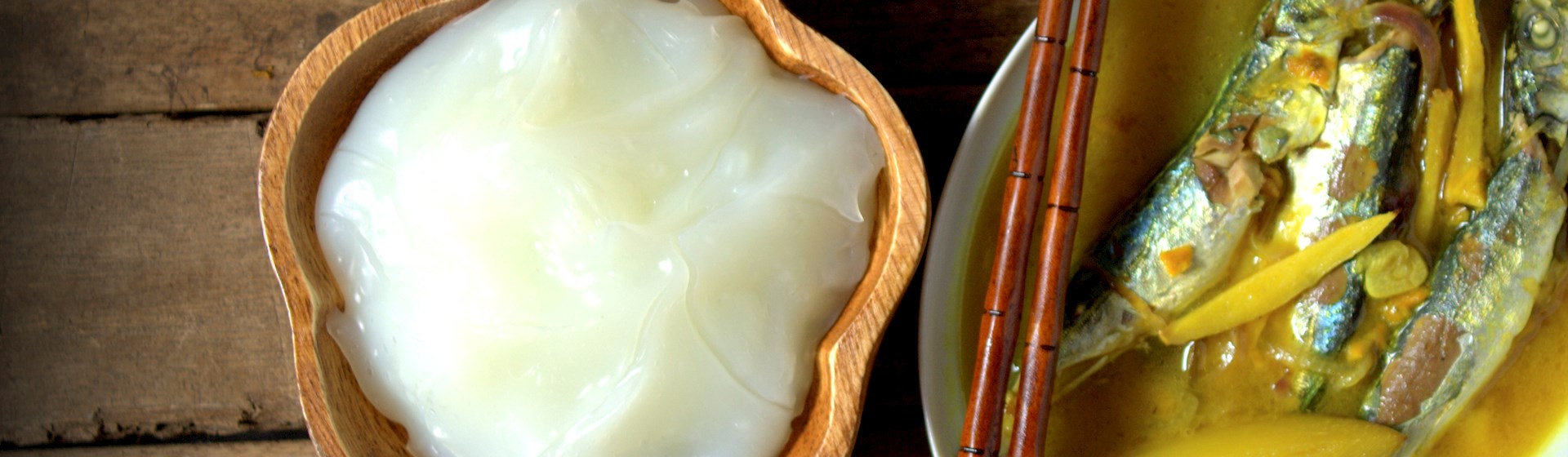
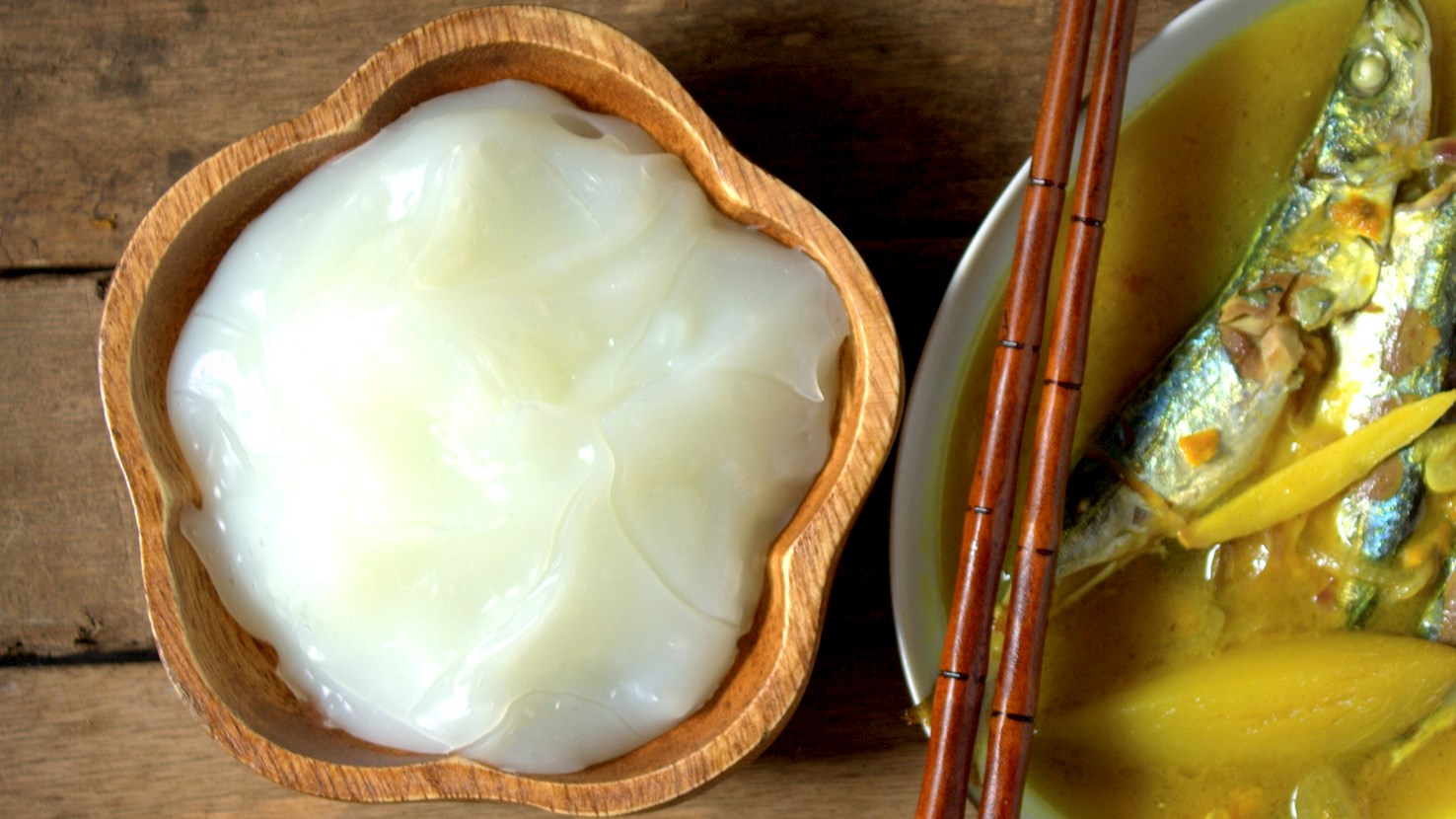
Papeda is a staple sago-based porridge from eastern Indonesia, particularly prominent in Papua and Maluku, known for its smooth, glue-like texture and neutral taste. Made by stirring sago starch with hot water until it thickens into a translucent, sticky porridge, papeda is typically served as a carbohydrate component in meals, much like rice in other parts of the country. It is almost always paired with rich and flavorful side dishes such as yellow spiced fish soup made with turmeric, or sautéed vegetables, which provide the necessary contrast and seasoning to balance its bland base. Eaten communally, papeda is scooped using chopsticks or a fork and twirled until it forms a manageable portion, then dipped or swirled into accompanying dishes. The dish reflects the agricultural and cultural realities of eastern Indonesia, where rice is less prevalent and sago palms provide a sustainable and locally sourced starch. Extracted from the pith of the sago palm trunk, the starch is dried and stored, then reconstituted with boiling water for daily use. The preparation and sharing of papeda is a deeply ingrained practice in local communities, often associated with family gatherings, ceremonies, and daily meals.
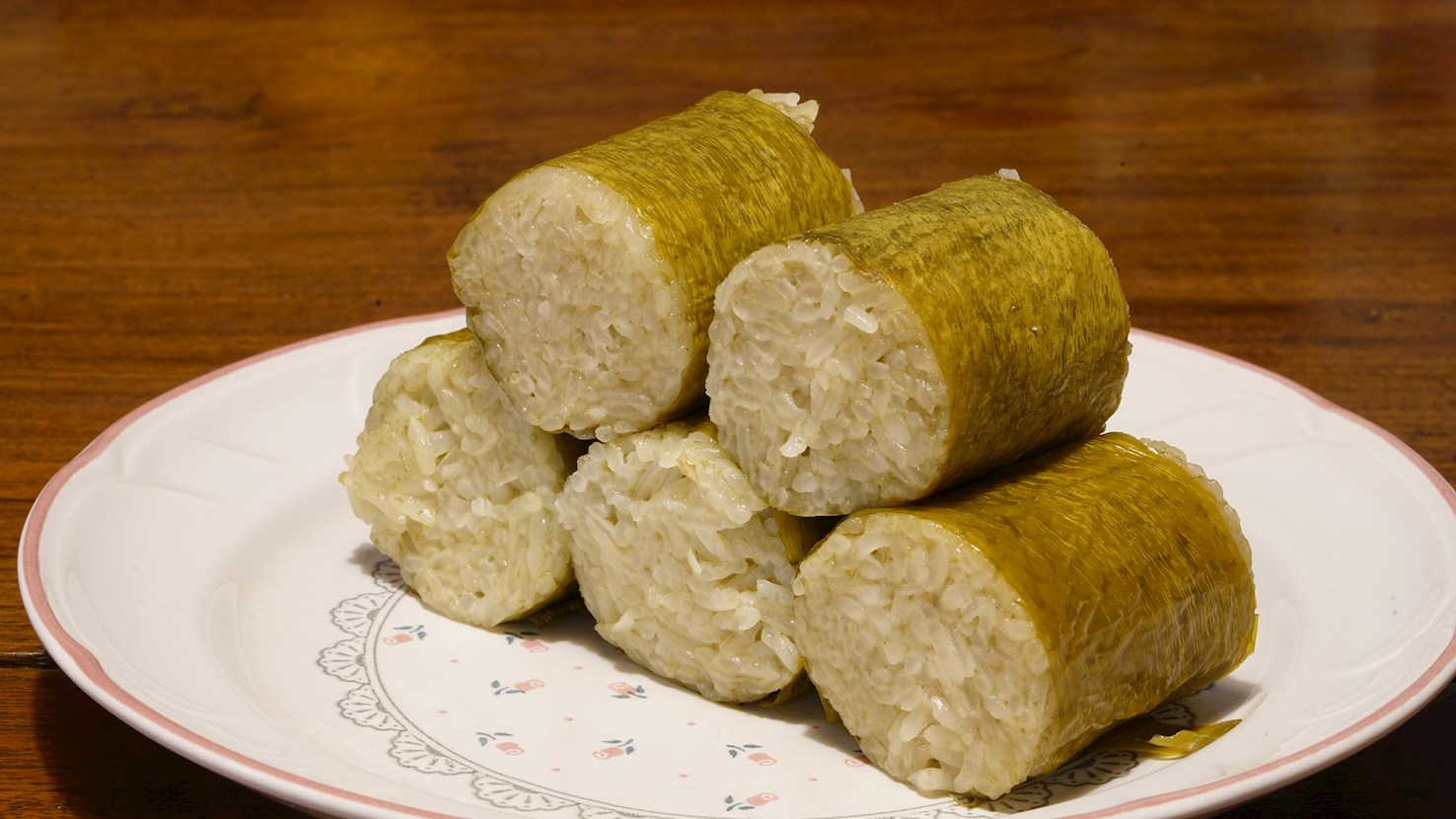
Nasi jaha is a fragrant rice dish that comes from the Maluku Islands in eastern Indonesia. It is prepared by mixing glutinous rice and regular white rice with coconut milk and a blend of aromatic spices, then cooking the mixture inside hollow bamboo tubes lined with banana leaves. The rice is steamed slowly over a wood fire or hot coals, allowing it to absorb the flavors of the coconut milk, ginger, lemongrass, and sometimes galangal. The result is a slightly sticky, rich, and subtly spiced rice that is typically sliced into neat sections before serving. Nasi jaha is often presented at ceremonies, family gatherings, and festive occasions where it is enjoyed as an accompaniment to grilled meats, spicy sambal, and vegetable dishes. Preparation begins with carefully washing and soaking the rice to ensure an even, tender texture after cooking. The coconut milk is combined with grated ginger and lemongrass and poured over the drained rice, which is then spooned into bamboo tubes lined with banana leaves to prevent sticking and enhance the aroma. Once filled, the tubes are closed and placed near a heat source to steam gradually for several hours. When ready, the rice is removed and cut into slices, which can be eaten warm or at room temperature. In North Sulawesi, nasi jaha is commonly paired with grilled chicken, smoked fish, or spicy condiments, forming a meal that highlights the local preference for coconut-rich, well-seasoned foods. Nasi jaha cooking process and presentation have similarities with lemang, a rice dish found in Sumatra and Malaysia, although the spice blends and texture are different. In Minahasan communities, nasi jaha is often prepared during Christmas and other important holidays, and the bamboo tubes are sometimes decorated or tied with colored strings. The method of cooking rice in bamboo is also used in other parts of eastern Indonesia, showing how local communities have adapted this approach to fit their own ingredients and tastes. Another notable detail is that nasi jaha keeps well at room temperature because the coconut milk and bamboo cooking process help preserve its moisture and aroma for several days.
Sambal tappa is a traditional salad originating from Ambon, Maluku, where fresh tuna is abundant. The salad is made with a combination of tuna, unripe mangoes, shallots, coconut milk, salt, and white pepper. The mango is sliced into matchsticks, then sprinkled with salt and squeezed to remove as much liquid as possible. It is then mixed with flaked tuna, white pepper, coconut milk, and shallots in a large bowl. Sambal tappa is traditionally served well-chilled.
TasteAtlas food rankings are based on the ratings of the TasteAtlas audience, with a series of mechanisms that recognize real users and that ignore bot,
nationalist or local patriotic ratings, and give additional value to the ratings of users that the system recognizes as knowledgeable.
TasteAtlas Rankings should not be seen as the final global conclusion about food. Their purpose is to promote excellent local foods,
instill pride in traditional dishes, and arouse curiosity about dishes you haven’t tried.





What People Say