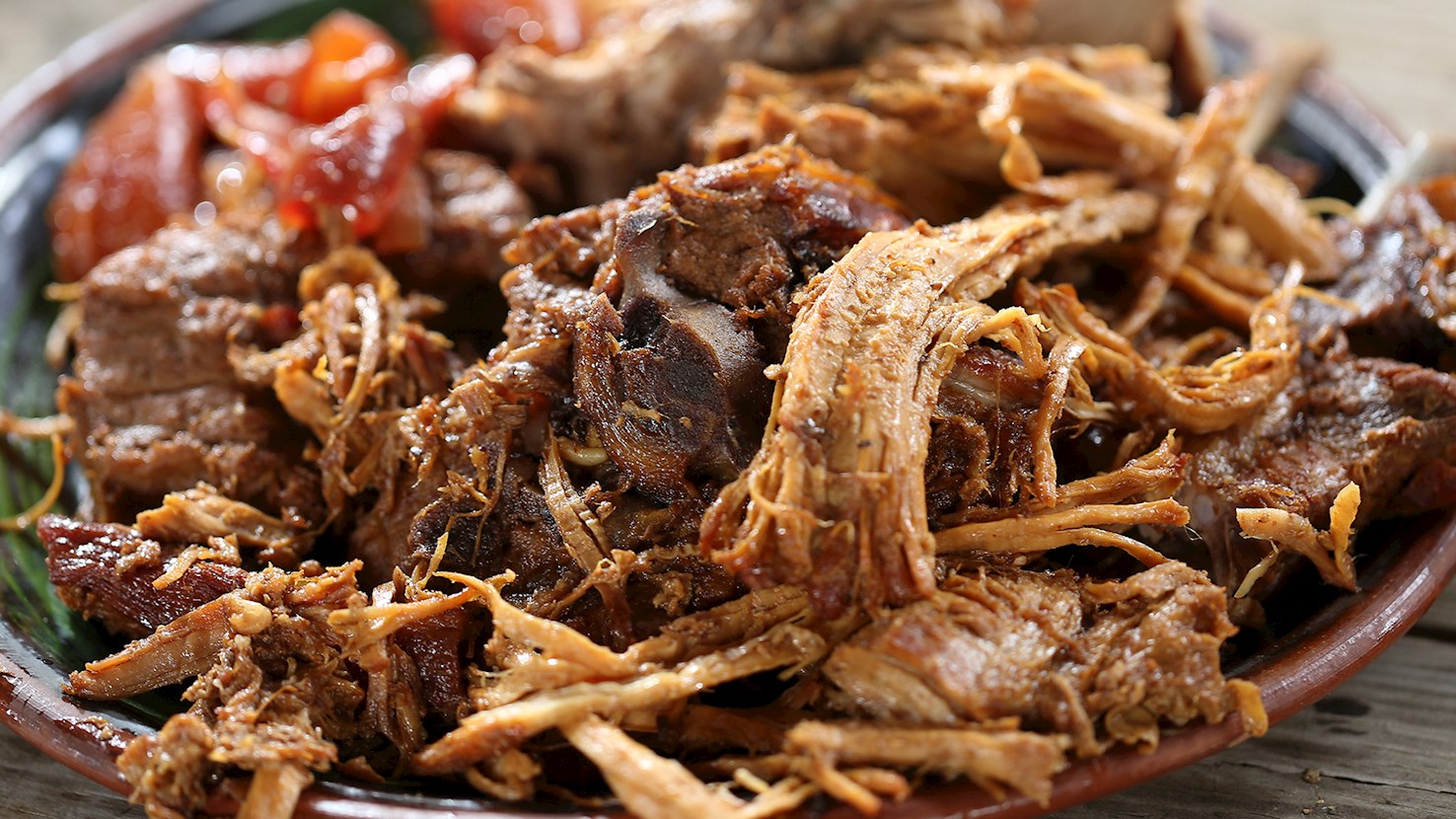
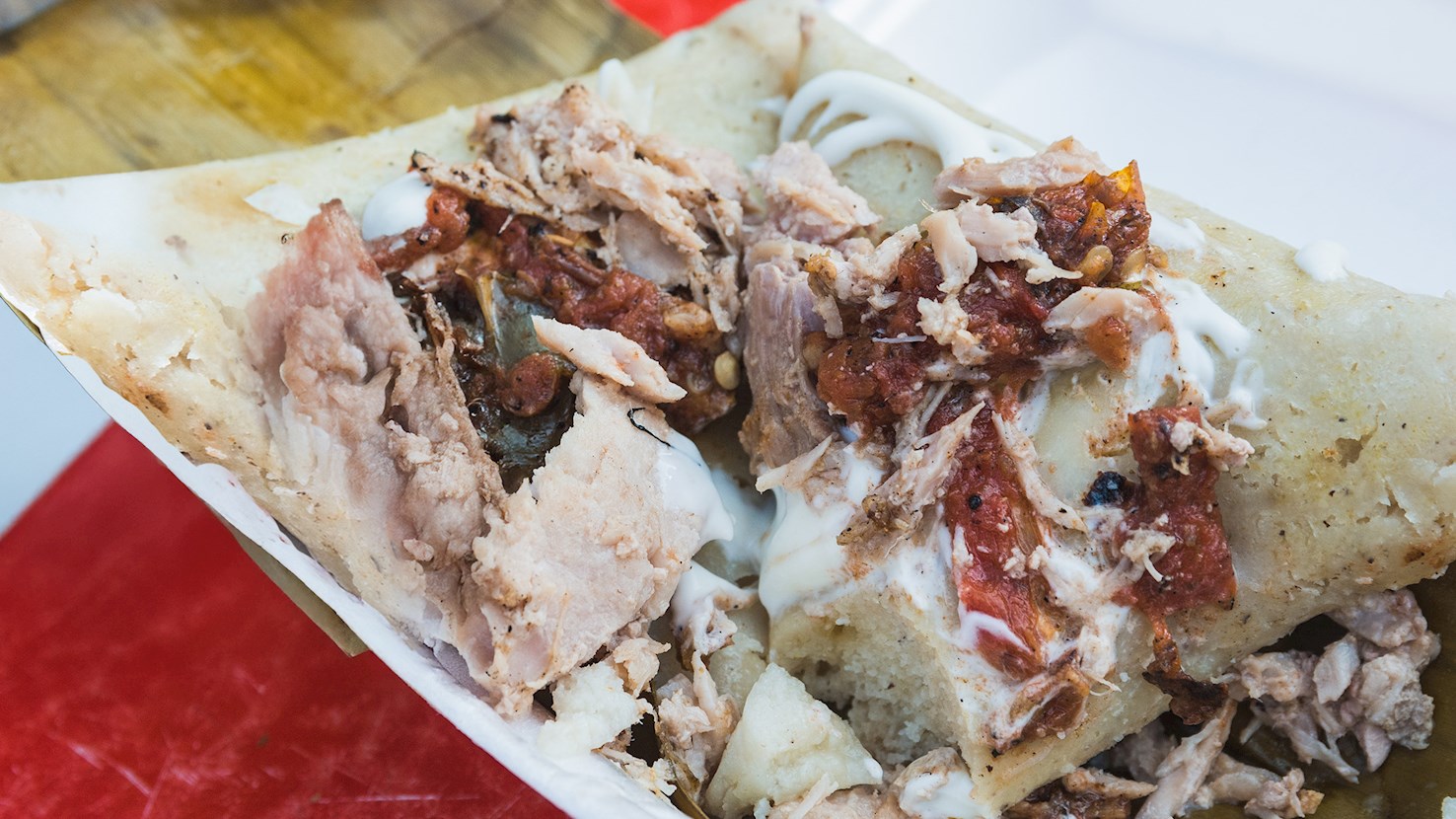
Originating from the Mexican state of Michoacán, carnitas is a flavorful dish made from pork (usually front sections or pork shoulder) that is braised, roasted, or slow-cooked in its own fat for a long time until fully tender and succulent. The heat is then turned up until the meat is crispy on the exterior and can be shredded. Carnitas, which translates to little meats, is often served with tortillas, accompanied by salsas, beans, guacamole, lime, or fresh vegetables. In Michoacán, carnitas are found everywhere from street stalls to upscale restaurants, although the dish is more often made for special occasions such as Christmas, anniversaries, or birthdays. Tender, fresh, and tasty, carnitas are a special treat for meat lovers worldwide.
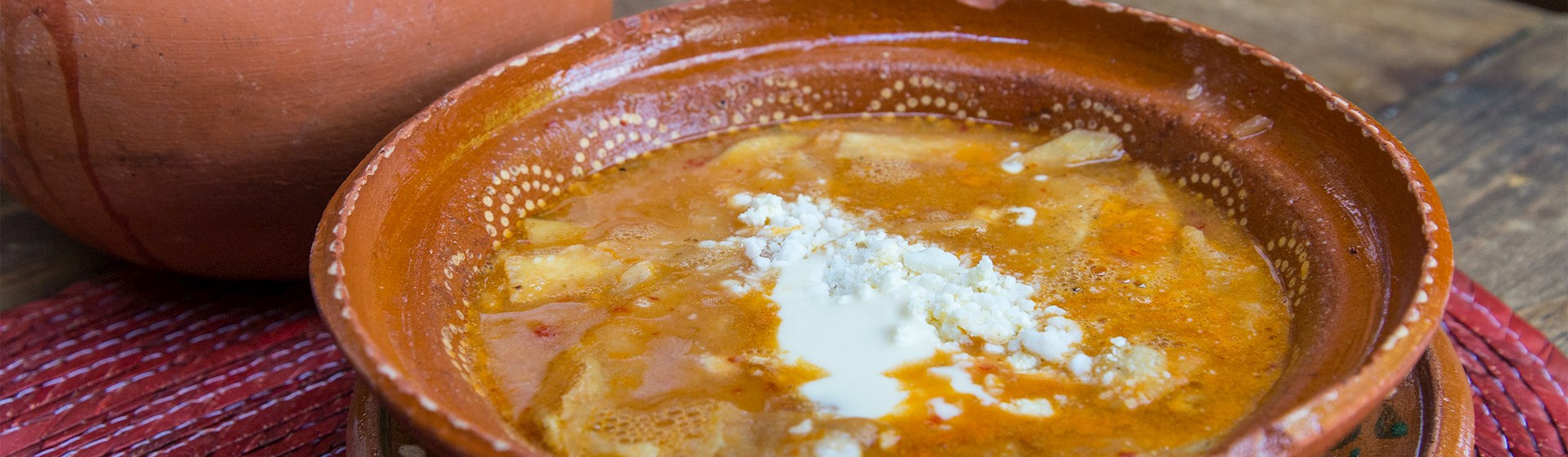
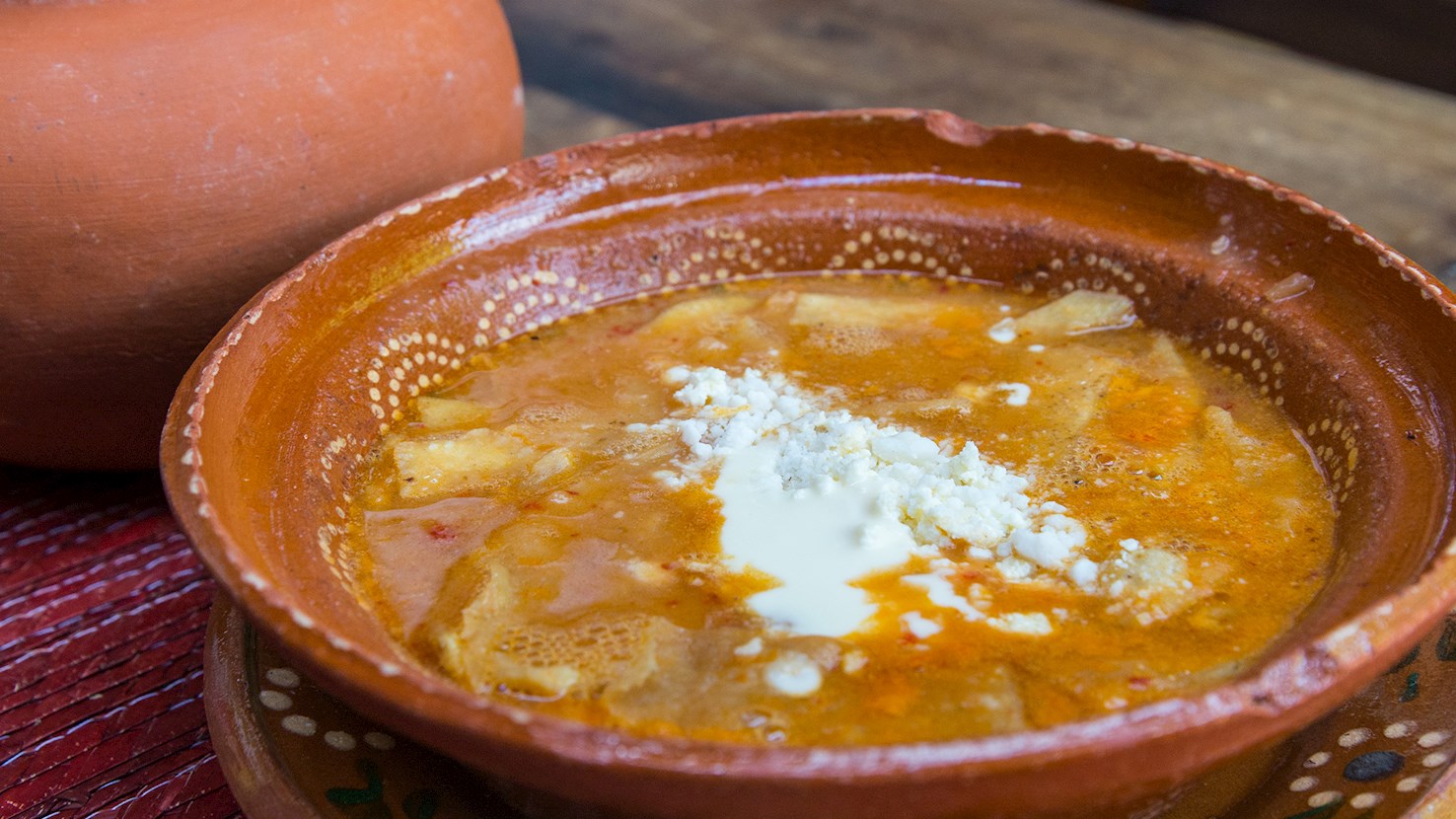
Tarascan puréed bean soup hails from the Mexican state of Michoacán, home of the Tarascan or Purépecha people — one of the major pre-Columbian civilizations of Mesoamerica. Their culture flourished from 1100s to the early 1500s, but by the 1530, Purépecha people had succumbed to the Spanish conquistadors who eventually named them Tarascos, hence the name sopa Tarasca. Apart from the beans — which are usually cooked together with tomatoes in a simple chicken broth — this dish is a great source of both fresh and dried chili peppers, most of which are native to the New World like the smoked pasilla de Oaxaca, which imparts not only a delicate heat but also adds a nice smoky flavor to this hearty soup.
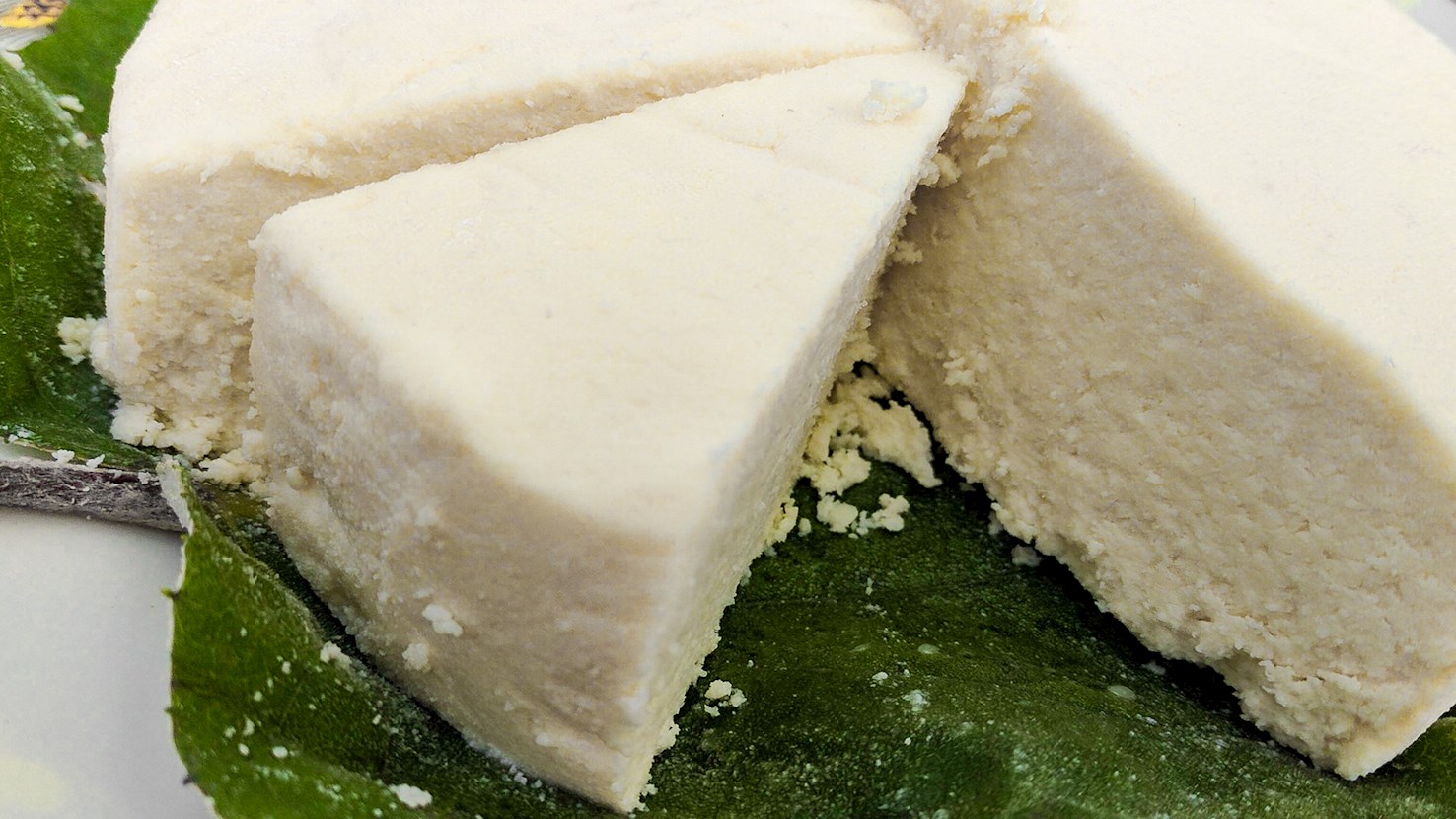
Cotija is a Mexican cheese that is traditionally made with raw cow's milk. When prepared, the cheese is fresh, white, and salty, bearing resemblance to feta cheese. With aging, its texture becomes crumbly, dense, and hard, similar to Parmigiano-Reggiano. The aged version of Cotija is called anejo. The cheese does not melt easily, and it is typically grated over elotes (grilled corn), salads, enchiladas, tostadas, and casseroles. Cotija is available in small wheels or large blocks, and it is named after the city of Cotija in the state of Michoacán.
Corunda is a Mexican steamed corn masa dumpling from Michoacán, usually shaped into a triangle, pyramid, or small multi-pointed form and wrapped in fresh green corn leaves. The dish is closely associated with Purépecha cooking, where maize has long served as both a staple ingredient and a source of cooking materials, including the flexible leaves used to enclose the dough. Today, the dish is especially popular during the Day of the Dead. Unlike tamales wrapped in dried corn husks, corundas are commonly folded in fresh leaves taken from the corn stalk, which give the steamed masa a subtle grassy aroma. The dough is made with nixtamalized corn masa, salt, warm water, and rendered pork lard, then beaten until light and aerated. A spoonful of the soft masa is placed on a green corn leaf, which is folded tightly around it at sharp angles to create the characteristic geometric shape. The wrapped dumplings are arranged in a steamer and cooked until the masa firms while remaining tender and slightly fluffy. Some versions include small amounts of shredded pork, chilies, cheese, or other fillings, while others are made only with seasoned masa. Regional variations may also use masa made from corn cooked with wood ash, producing a darker, denser dough with a more pronounced mineral note. Once cooked, the leaves are removed and discarded. Corundas are typically served warm with roasted tomato sauce, Mexican crema, and crumbled cotija cheese, allowing the mild corn dough to absorb the sauce and dairy. They are often eaten with churipo, a red-chile-and-beef broth from Michoacán, whose sharp, spicy flavor balances the richness of the masa and lard.
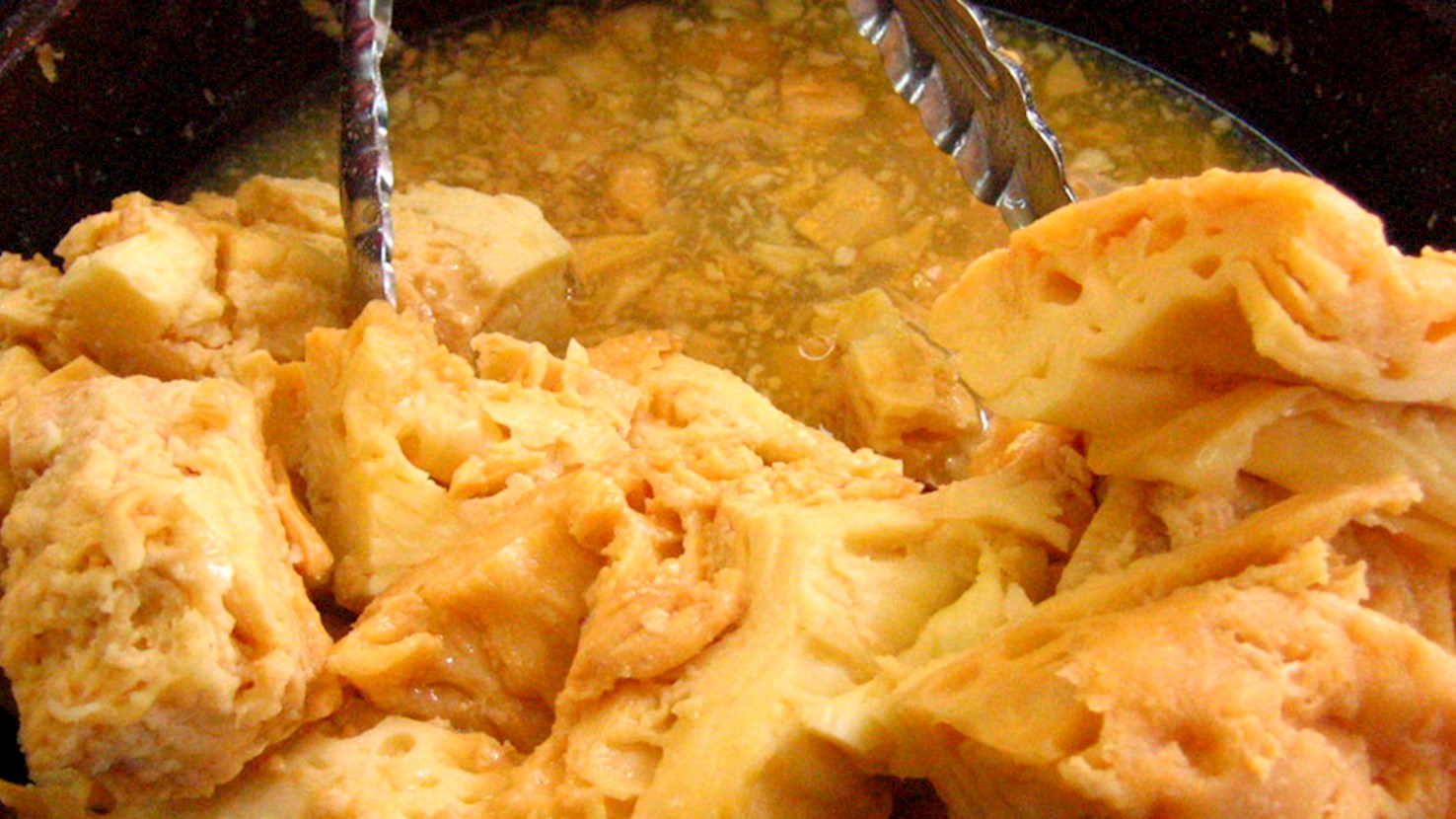
Chongos Zamoranos are a milk-curd dessert from Zamora, Michoacán, made by coagulating milk and slowly cooking the curds with sugar and cinnamon until they develop a soft, slightly chewy texture and sit in a sweet, aromatic syrup. The curds contract as they cook, forming irregular folds and knots rather than smooth cubes, while the liquid gradually becomes concentrated and takes on a pale golden to amber color. The dessert is usually served with plenty of its syrup and can be eaten warm, at room temperature, or chilled, although cool and room-temperature versions are especially common. It is generally served in a small bowl or dessert dish and eaten with a spoon. The texture is tender, spongy, and slightly springy rather than genuinely rubbery, and the curds remain juicy because they are stored and served in the syrup. The dessert is strongly associated with Zamora and the dairy-producing region surrounding the city. Its precise origin is not documented. One longstanding account places its beginnings in convent kitchens during the viceregal period, while other local stories describe it as the result of experiments or accidents involving curdled milk. What is clear is that it developed in an area with a strong dairy culture and uses the same basic principle that underlies many milk-curd products: separating milk into curds and whey, then transforming the curds through prolonged cooking. Chongos Zamoranos became commercially important during the early 20th century. Industrial production is generally dated to around 1934, when María Luisa Verduzco Vaca began producing and selling them through her Zamora confectionery business, La Regional. Commercial canning made it possible to distribute the dessert well beyond Michoacán and helped turn it into one of Zamora's best-known foods. Canned chongos Zamoranos remain widely available, although the dessert is still made at home and by small confectionery businesses. The basic ingredients are whole cow's milk, a coagulating agent, sugar, and cinnamon. Rennet is a common way to set the milk and can be used in liquid form or as a tablet dissolved in water. Some recipes instead curdle the milk with lemon juice or another acid, although the resulting texture can differ. Raw milk is not required, and pasteurized whole milk works well. Artisanal production can use a copper pot, but it is not essential. The milk is warmed gently and combined with the rennet, then left undisturbed until it sets into a soft curd. Once firm, the curd is cut into large pieces or scored into a grid. The pot is then heated slowly with sugar and cinnamon. As the curds warm, they shrink and release whey. The sugar dissolves into this liquid, gradually creating the syrup in which the chongos continue to cook. The curds should not be stirred aggressively because they need to retain their irregular shape. Prolonged cooking concentrates both the milk and sugar, giving the chongos their characteristic folded appearance, firmer surface, and soft, porous interior. White granulated sugar is extremely common and is not a modern departure from a mandatory piloncillo recipe. Piloncillo can also be used, either alone or together with white sugar, and produces a darker syrup with stronger caramel and molasses notes. The syrup therefore ranges from relatively pale and clear to deep amber depending on the type of sugar and the length of cooking. Likewise, cinnamon is usually specified simply as cinnamon sticks; Ceylon cinnamon is not required. The combination of milk, sugar, cinnamon, and curdling agent is more fundamental than the exact variety of sugar or cinnamon. During the slow simmer, the whey does not disappear. Instead, it becomes part of the dessert's syrup as water evaporates and the dissolved sugar concentrates. This distinguishes chongos Zamoranos from cheese, where much of the whey is drained away. The curds remain immersed in the sweet liquid and absorb some of it as they cook. The finished pieces have an irregular, wrinkled appearance and a texture that is denser than custard but much softer and wetter than most cheeses. The flavor is primarily milky, caramelized, and cinnamon-scented. Long cooking creates deeper cooked-milk notes, while piloncillo, when used, adds a stronger cane-sugar flavor. Some modern versions include vanilla, but it isn't necessary. Contemporary variations also use liqueurs, dried fruits, nuts, and other flavorings, but rum and tequila are additions rather than defining ingredients. Artificial coloring is likewise not required; the characteristic golden or amber color can develop naturally as the milk and sugar cook. Chongos Zamoranos are generally served as a dessert with enough syrup to keep the curds moist.
Avocados rellenos de verduras is a traditional dish that's especially popular in Michoacán. Although there are many variations, it's usually prepared with a combination of ripe avocados, peas, chopped tomatoes, salt, pepper, lemon juice, and diced cheese such as panela or feta. The avocados are cut lengthwise, the pit is removed, and most of the flesh is scooped out. The skins are peeled, and the avocados are sprinkled with salt and lemon juice. The removed avocado flesh is mixed with the cheese, tomatoes, peas, mayonnaise, and seasonings. The mixture is placed into avocado halves and the dish is then served, usually as an appetizer.
Huevos migas is a Mexican egg-based dish originating from the Michoacan region. It is made with a combination of soaked bread or tortilla pieces, stock, tomatoes, onions, garlic, chili peppers, and eggs. Cheese and sausage pieces are often added for extra flavor and texture, but due to the fact that the dish is quite popular during Lent, sausages are omitted at that time. Once prepared, huevos migas are usually served immediately, ideally with hot tortillas on the side.
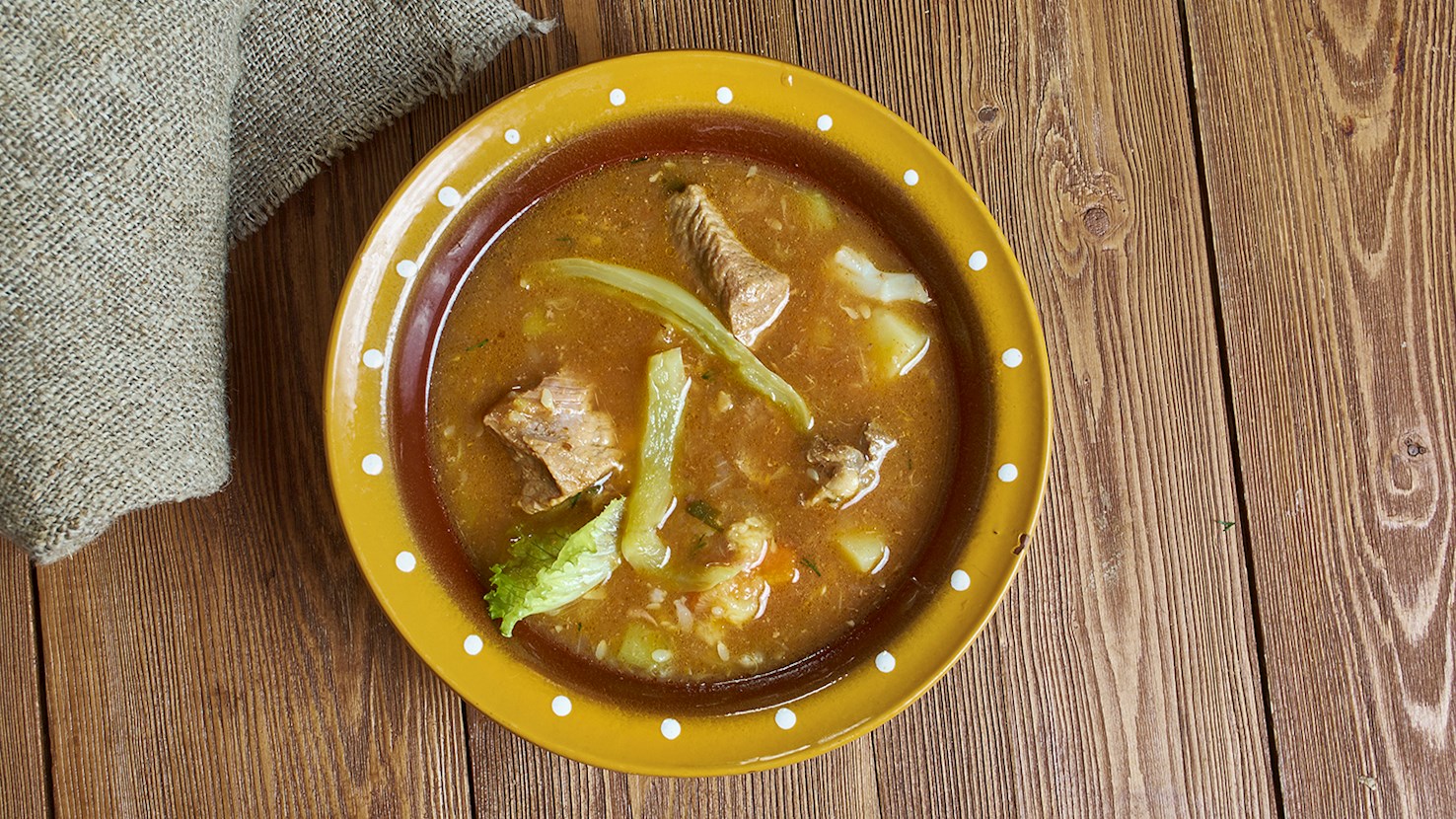
Churipo is a spicy Mexican stew prepared with chunks of beef, vegetables, and spicy chilis. The stew is a staple of the indigenous Purepecha peoples from the Mexican region of Michoacán. Churipo is traditionally served with corundas, which are local tamales that are shaped like pyramids and prepared without any fillings.
TasteAtlas food rankings are based on the ratings of the TasteAtlas audience, with a series of mechanisms that recognize real users and that ignore bot,
nationalist or local patriotic ratings, and give additional value to the ratings of users that the system recognizes as knowledgeable.
For the “Top 8 Michoacanese Foods” list until September 09, 2026, 1,156 ratings were recorded, of which 549 were recognized by the system as legitimate.
TasteAtlas Rankings should not be seen as the final global conclusion about food. Their purpose is to promote excellent local foods,
instill pride in traditional dishes, and arouse curiosity about dishes you haven’t tried.
The initial list of top producers was compiled based on available reviews, awards, local recommendations, media and blog coverage, and consumer reviews.
The list will be updated with ratings from TasteAtlas local ambassadors and TasteAtlas users.






What People Say