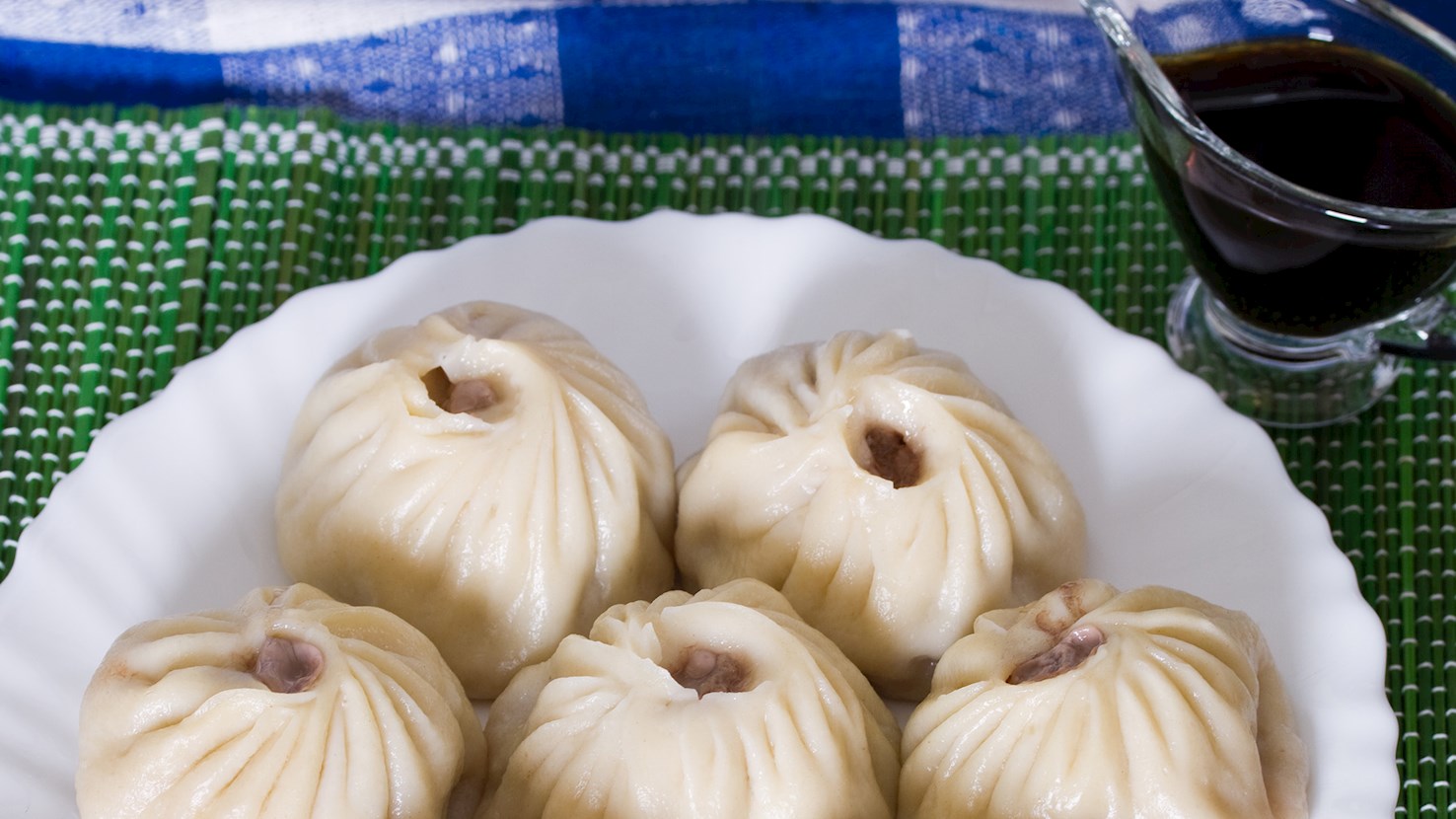
Buuz is a traditional and Buryatian steamed dumpling filled with meat such as beef or mutton. The meat is usually seasoned with salt, onions, garlic, and fresh herbs. The dumplings are prepared in large quantities and are consumed throughout the year, although buuz is the most popular during Tsagaan Sar, the Mongolian New Year festivity which usually takes place in February. Buuz is characterized by a small opening on its top, and it is often eaten by hand. Traditionally, the dumplings are served with fried bread, dipping sauces and salads on the side, while it is recommended to pair them with beverages such as vodka or tea.
Baursak is a small fried dough food made from wheat flour, fat, and a leavening agent, prepared widely in Central Asia and especially identified with Kazakhstan, where it appears as a common element on family tables, guest meals, and ceremonial spreads rather than as a single-plate dish. Its formation is tied to pastoral and semi-nomadic lifeways in which portable ingredients such as flour and animal fat were readily available and cooking methods favored pots and shallow cauldrons over ovens, making frying small pieces of dough an efficient way to produce bread-like food that could be cooked quickly and shared easily, while the use of yeast or fermented dairy as a leaven reflected locally accessible fermentation practices. Preparation involves mixing flour with warm liquid, salt, fat, and yeast or another leavening agent, kneading the dough until smooth, allowing it to rise, then cutting it into small rounds, diamonds, or irregular pieces that are fried in hot oil or rendered fat until puffed and evenly colored, after which they are drained and kept warm. Serving places baursak in large bowls or piles at the center of the table, often alongside both savory and sweet foods, without sauces or toppings applied directly, allowing it to function flexibly as bread, snack, or accompaniment depending on the context. It is eaten by hand at home meals, celebrations, and guest gatherings, commonly paired with boiled meats, soups, honey, jam, or dairy products, and is most often consumed with black tea, milk tea, or fermented dairy drinks, which complement its fried richness without requiring additional seasoning. Interestingly, the biggest baursak was made in Ufa, Russia, in 2014, with a weight of 179 kg.
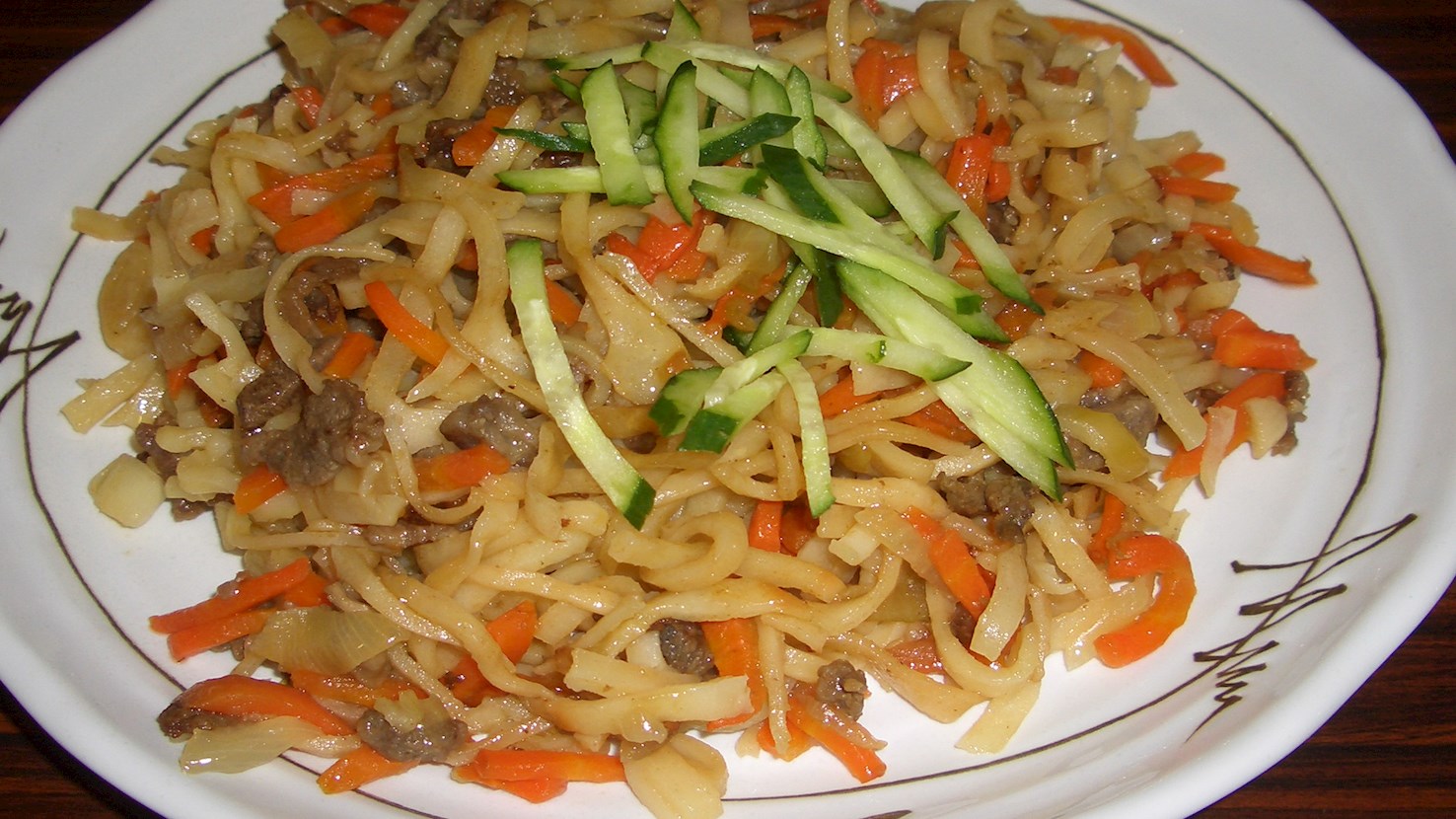
Tsuivan is a Mongolian noodle dish that is usually prepared with mutton and various vegetables. The noodles are traditionally made by hand and they're steamed or cooked together with diced meat and vegetables. People sometimes replace mutton with beef, camel, and even horse meat, while the vegetables used in the dish typically include onions, peppers, cabbage, carrots, or potatoes. Tsuivan is enjoyed throughout the country, and it is best served freshly prepared and sprinkled with scallions.
Khuushuur is a savory Mongolian pastry that is traditionally filled with a mixture of ground mutton and onions, but there are a few variations that include beef, garlic or peppers, as well as other vegetables. This crescent-shaped pastry is usually deep-fried and is meant to be eaten by hand. It is mostly enjoyed as street food, but it is also served in local restaurants, where the order usually includes four pieces of khuushuur accompanied by lettuce or pickles.
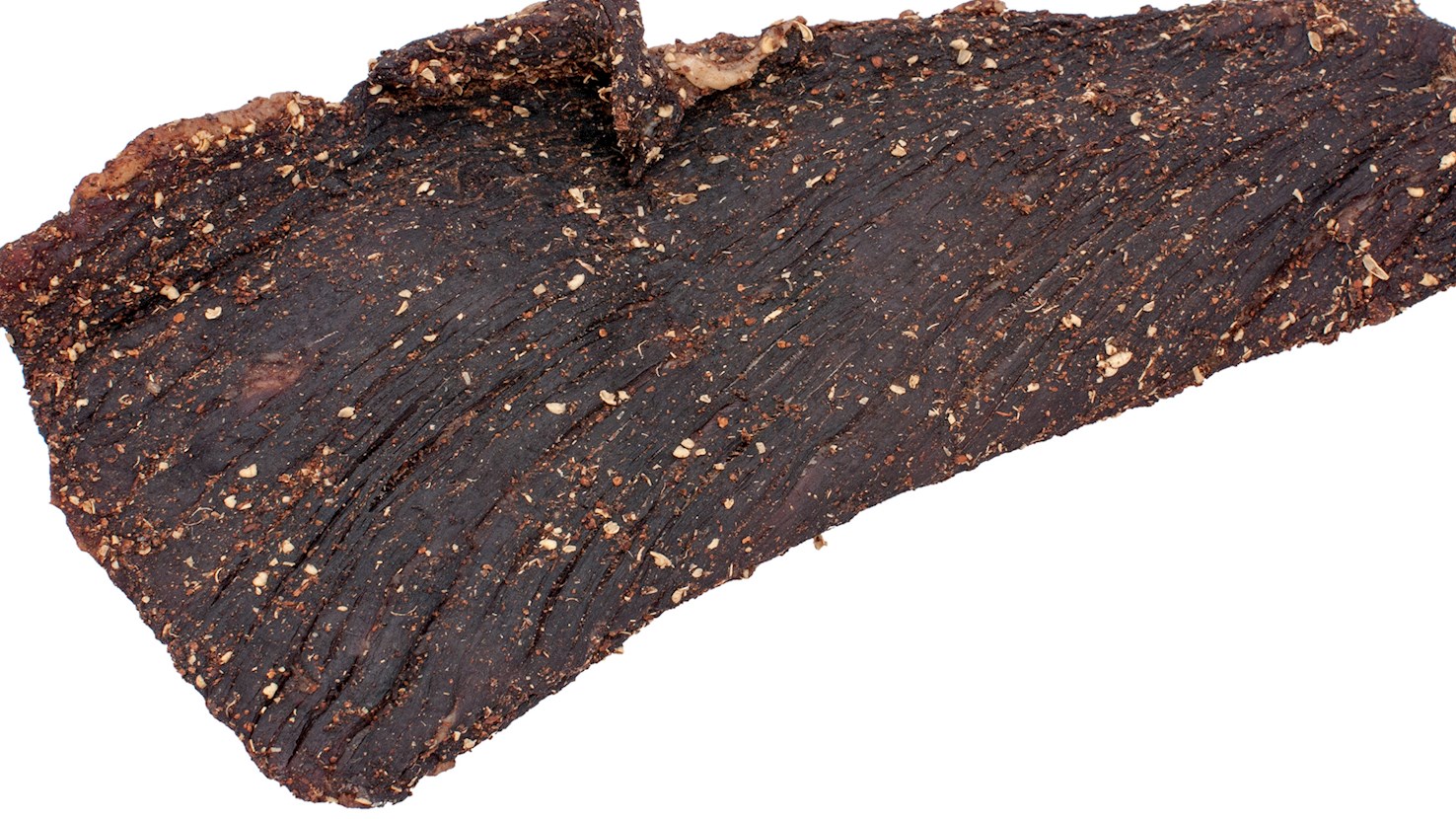
Borts is a highly preserved, freeze-dried meat product made by hanging long strips of raw beef, horse, camel, or sheep in freezing winter air until the moisture fully evaporates. The method dates to the 13th-century Mongol Empire, when nomadic cavalrymen under Genghis Khan needed extremely lightweight, shelf-stable rations that could last through months of continuous military movement across the Eurasian Steppe. By using the region’s naturally dry, sub-zero winter climate, these nomadic groups developed a freeze-drying technique centuries before mechanical refrigeration existed. An entire slaughtered cow could be dried, milled, and compressed into a single animal stomach, creating a huge supply of calories that weighed only a few kilograms. The drying cycle begins only in late November or December, when temperatures drop sharply. Fresh lean meat is sliced into long, thick ribbons, usually two to three centimeters wide. These raw strips are draped over horizontal ropes strung across the ceiling of a circular felt tent or placed under the protective eaves of a wooden roof. Continuous exposure to harsh, freezing drafts slowly removes all moisture from the muscle fibers over several months. By spring, the strips have shrunk drastically and turned into brittle, rock-hard brown shards. A heavy wooden mortar and pestle are then used to crush the stiff pieces into a coarse, fibrous powder, breaking down the tough connective tissues. The choice of livestock strongly affects both the fat content and the shelf life of the finished product. Beef is the most common option, producing a direct savory flavor that blends easily into many broths. Horse meat gives a sweeter, leaner profile and dries faster because of its particular muscle structure. Camel meat has an especially dense, iron-rich flavor and the longest shelf life, remaining safe to eat for several years without spoiling. The pulverized meat is never eaten dry. To rehydrate it, a small handful of the coarse powder is dropped directly into a pot of rapidly boiling water. Within minutes, it expands greatly, turning the clear water into a cloudy, nutrient-rich broth. Small pieces of raw wheat dough or dried noodles are often added to the boiling liquid along with the meat powder, creating a thick, savory soup. The hot meal is served straight from the cast-iron cooking pot into shallow wooden bowls and functions as a vital, fast source of hot calories during isolated winter travel.
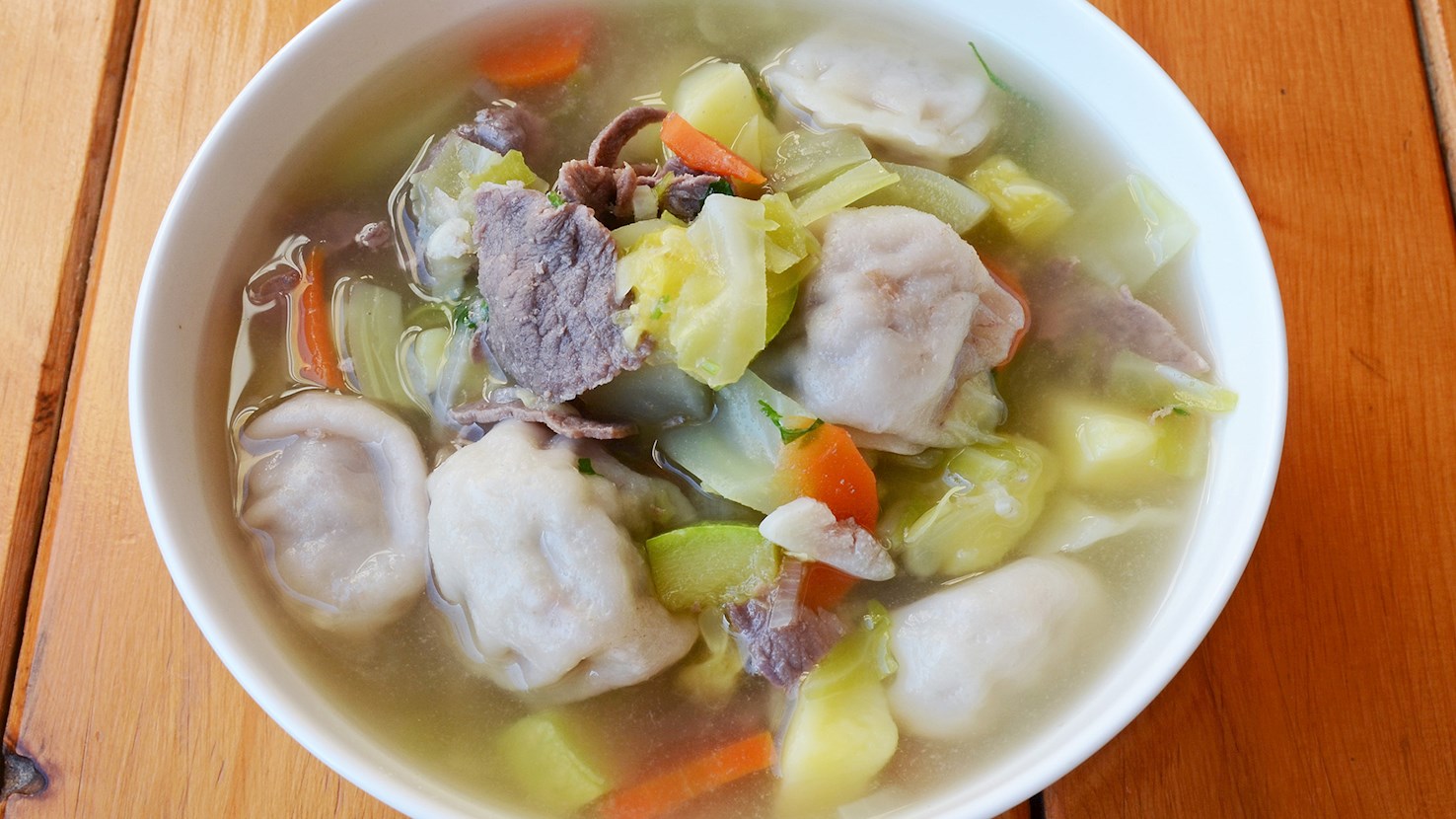
Bansh are small dumplings made from thin wheat dough wrapped around a filling of minced mutton or beef, common in Mongolia. They are usually boiled and can be eaten on their own, served in broth, or added to savory Mongolian milk tea. They are closely related to buuz but are generally much smaller. The dough is simple and unleavened, usually made from wheat flour, water, and a little salt. It is kneaded until smooth, allowed to rest, and then rolled thin before being cut into small rounds. The filling traditionally consists of finely minced or ground mutton, lamb, or beef mixed with onion and sometimes garlic. Salt and black pepper are the basic seasonings. Caraway, wild onion, or other local herbs can also be used, but heavily spiced fillings are not typical of traditional Mongolian cooking. A little water may be mixed into the meat to keep it juicy during cooking. A small amount of filling is placed in the center of each dough circle, and the edges are pinched firmly together. Bansh can be folded into several shapes, but they are usually compact enough to be eaten in one or two bites. Their small size is one of the easiest ways to distinguish them from buuz. The dumplings are traditionally cooked in boiling water or broth. Once they rise to the surface, they cook a little longer to ensure the meat filling is fully cooked. The finished dough is tender and slightly chewy, with a juicy meat filling inside. One of the best-known dishes made with bansh is banshtai shöl, or soup with dumplings. The dumplings are cooked in a meat broth, sometimes with vegetables or other additions, making a simple, filling soup. An even more distinctive preparation is banshtai tsai, meaning tea with dumplings. Small bansh are cooked in suutei tsai, Mongolia’s savory milk tea. Depending on the household, the tea may also contain salt, millet or rice, flour, butter or ghee, lamb fat and dried meat. The result falls somewhere between a drink and a light soup and is particularly associated with cold weather and home cooking. Bansh can also be served drained after boiling and eaten as a separate dish. Modern condiments may include soy sauce, ketchup, or other sauces. Sour cream, vinegar-soy dipping sauce, salad, and steamed vegetables, although common, are not defining parts of the traditional serving style. Fried versions of bansh also exist, although boiling is much more characteristic. Steaming them moves the preparation closer to buuz, while larger flattened dumplings that are fried in oil are known as khuushuur. Bansh belong to a wider family of filled dumplings found across Mongolia, northern China, and Central Asia. Mongolia’s pastoral food culture historically centered heavily on meat and dairy, while wheat and other grain foods became increasingly important through trade and contact with neighboring agricultural societies. Small boiled meat dumplings were clearly established in Mongolia by the 19th century, when they were described as small parcels of minced mutton wrapped in dough.
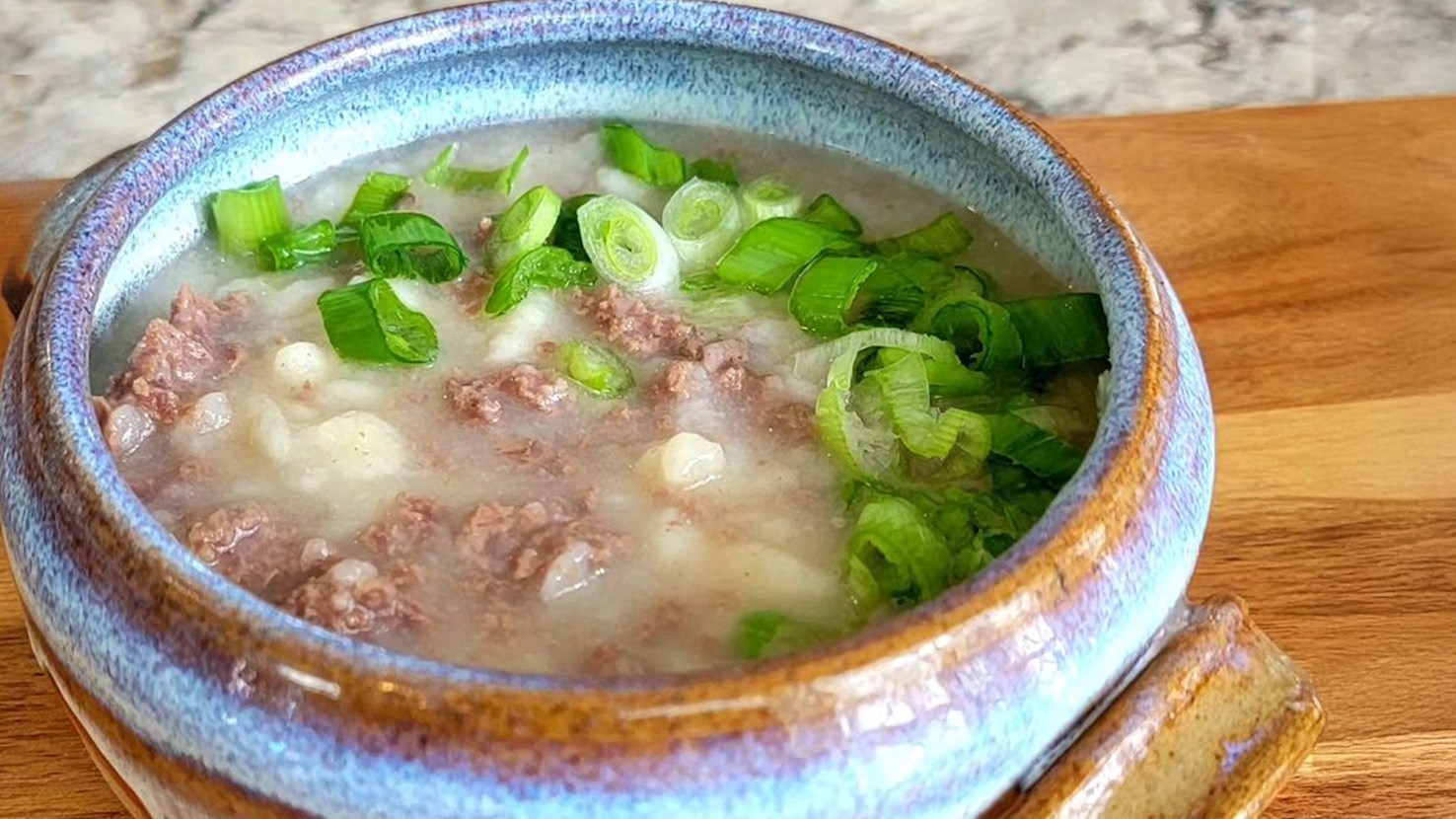
Bantan is a traditional soup that is often used as a hangover cure. It consists of water, chopped spring onions, pieces of meat (typically lamb), and wheat flour, which is made into dough crumbs. Although the soup is usually garnished with chopped spring onions, various herbs and spices are also common. Bantan is often compared to Korean beef porridge due to its creamy, thick, and soft texture.
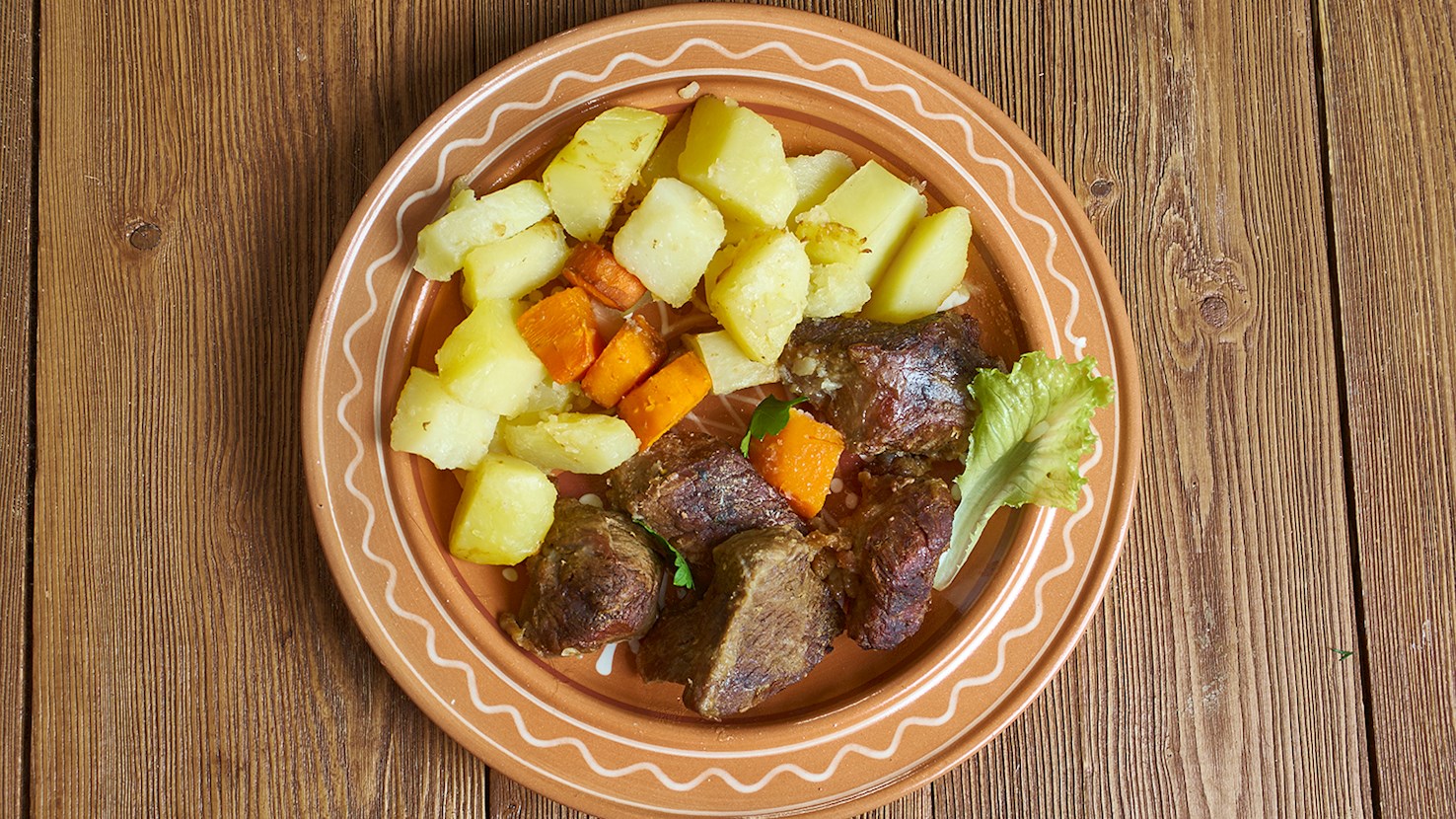
Boodog is a traditional roast typically made with whole goat that is filled with hot stones, potatoes, and onions so that they are cooked within its skin. Apart from goats, the roast can also be prepared with whole marmots. The stones should have a smooth, round surface – the smaller ones usually go into the upper legs, while the larger ones are placed into the abdominal cavity. The neck of the animal is closed with a piece of wire. Boodog is cooked when all of the skin surfaces start leaking fat. This nomadic dish can be found throughout Mongolia, although many Ulan Bator restaurants will often offer a more refined take on boodog.
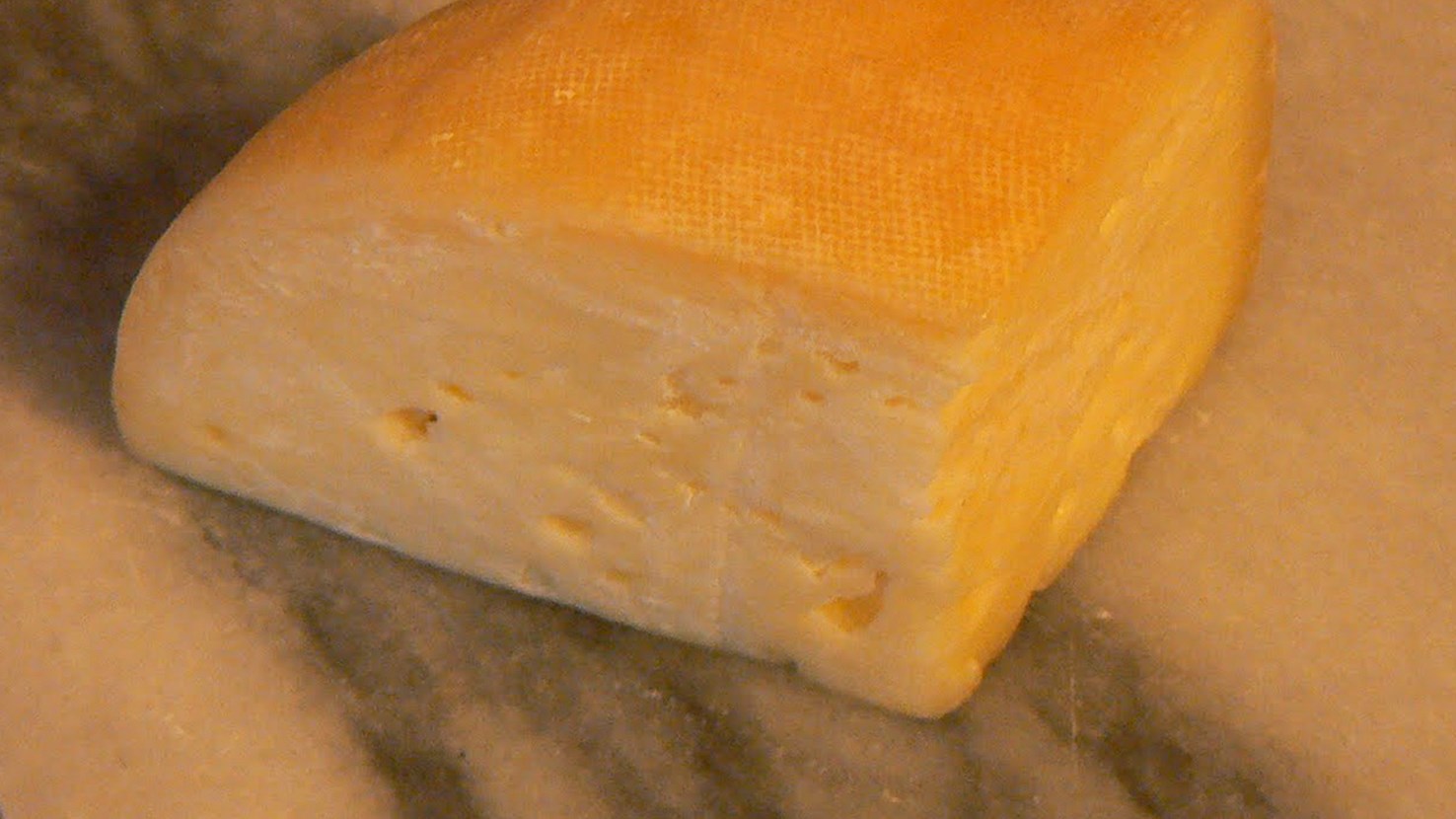
Byaslag is a mild Mongolian cheese made with yak or cow milk. Kefir is typically used in place of rennet to separate the curds from the milk. After draining, the curds are wrapped in a cloth, then pressed between wooden boards with weights. The cheese is shaped into squares, which are then cut into slices and consumed fresh as a snack, while the hard variety can be consumed with tea or soups. Byaslag has a pale yellow color, a firm texture, while its flavors are salty, mild, and creamy. This Mongolian delicacy is often offered to guests and visitors, but it is especially popular at weddings.
Budaatati huurga is a traditional dish based on rice. In order to prepare it, the rice is cooked with shredded beef or lamb, along with eggs, cabbage, onions, bell peppers, and carrots. The dish is usually flavored with soy sauce, cumin, and chili flakes or chili powder. It's ready to serve when all the ingredients are fully cooked and tender, and the rice on the bottom becomes crispy. Budaatai huurga or Mongolian rice is always served warm, for lunch or dinner.
TasteAtlas food rankings are based on the ratings of the TasteAtlas audience, with a series of mechanisms that recognize real users and that ignore bot,
nationalist or local patriotic ratings, and give additional value to the ratings of users that the system recognizes as knowledgeable.
TasteAtlas Rankings should not be seen as the final global conclusion about food. Their purpose is to promote excellent local foods,
instill pride in traditional dishes, and arouse curiosity about dishes you haven’t tried.
The initial list of top producers was compiled based on available reviews, awards, local recommendations, media and blog coverage, and consumer reviews.
The list will be updated with ratings from TasteAtlas local ambassadors and TasteAtlas users.











What People Say