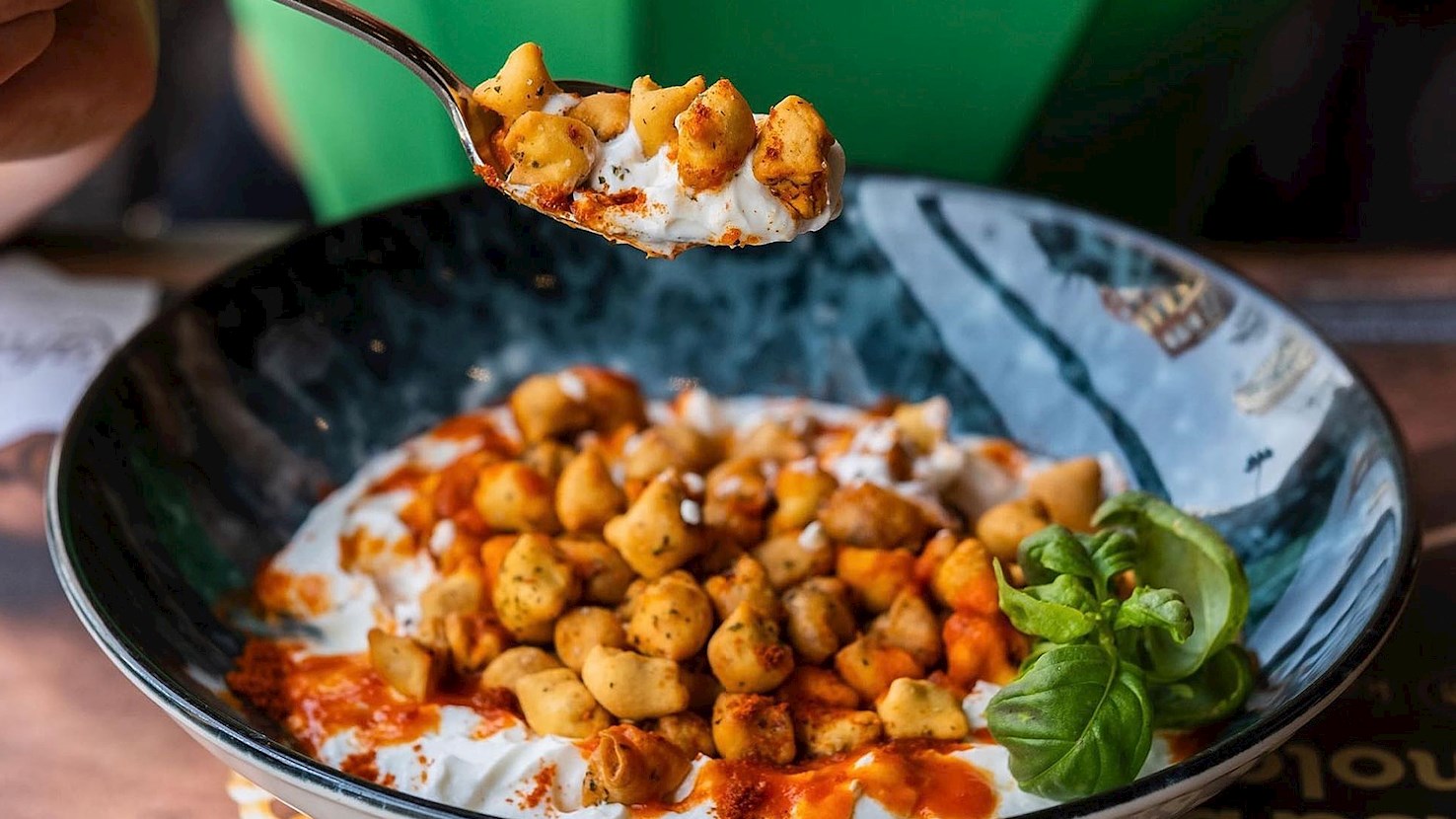
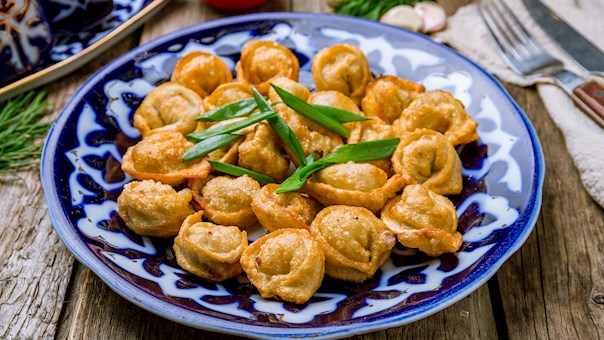
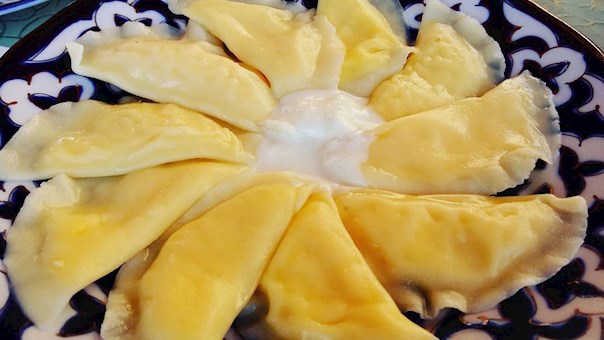
Manti are traditional Turkish dumplings filled with spiced ground meat and onions. The dumplings are most commonly topped with a sauce consisting of yogurt and garlic. The name of the dish is derived from mantu, meaning dumplings, and they were originally brought over from Central Asia to Türkiye by nomadic Turkish tribes in the 13th century. Today, manti dumplings are popular throughout Turkey, as well as in numerous other cuisines such as Armenian, Afghan, and Central Asian.
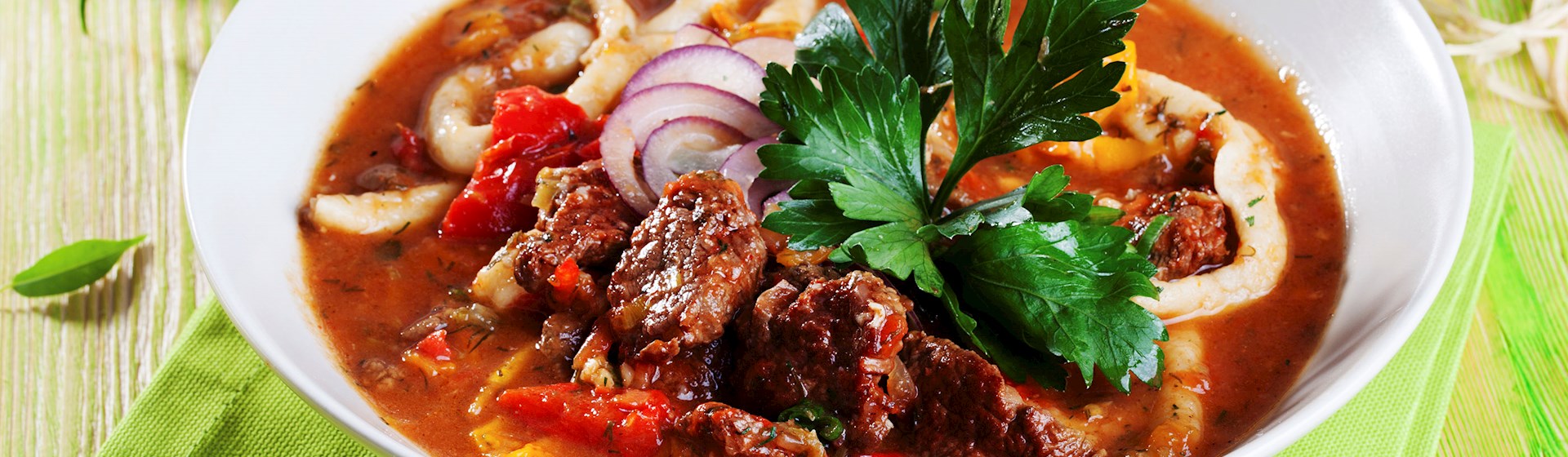
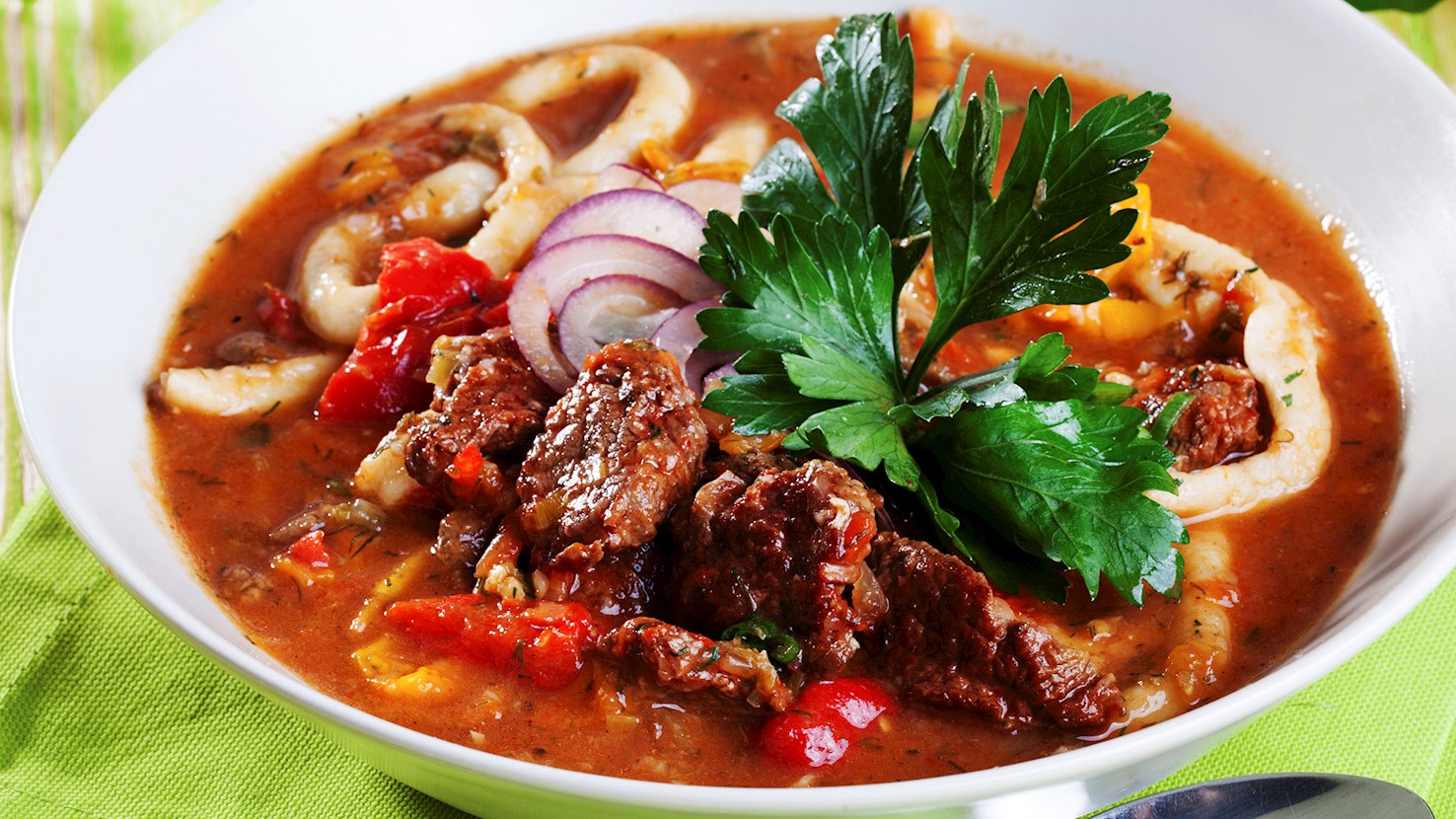
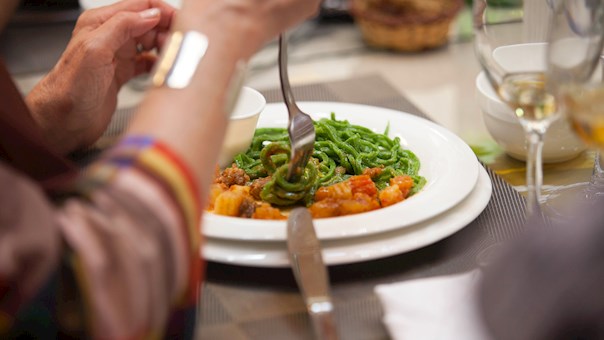
Lağman is a noodle-based dish made from hand-pulled wheat noodles served with a savory topping of meat, vegetables, and sauce, prepared across Central Asia and most closely associated with Uyghur communities in the Xinjiang region of China as well as widely cooked in Kazakhstan, Kyrgyzstan, and Uzbekistan, where it appears in home kitchens and casual eateries as a full meal rather than a side. Its development follows the movement of Turkic-speaking peoples along inland trade routes, where wheat cultivation, noodle-making techniques, and stir-based meat cookery intersected, resulting in a dish that combined Chinese-style hand-pulled noodles with Central Asian preferences for lamb, onions, and robust sauces, and adapted locally depending on available vegetables and fats. Preparation centers on a firm dough made from wheat flour, water, and salt that is rested and repeatedly stretched and pulled by hand into long, elastic strands, while the topping is cooked separately by sautéing meat, most often lamb or beef, with onions, garlic, tomatoes, peppers, and other vegetables, simmered until cohesive but not thickened into a paste, then spooned over or mixed with the cooked noodles. Serving can take two main forms, either with the sauce ladled generously over drained noodles or with additional broth added to create a soup-like consistency, and it is brought to the table immediately so the noodles retain their structure. What distinguishes lağman is the noodle-making method itself, which relies on manual stretching rather than cutting, producing strands with uneven thickness that hold sauce differently along their length and require skill and timing rather than tools. It is eaten hot, usually with a spoon and fork or chopsticks depending on local custom, commonly at lunch or dinner, and it pairs well with simple salads, pickled vegetables, or raw onions, while beverages such as black tea, lightly salted tea, or plain water are most often consumed alongside to balance the richness of the meat and sauce.
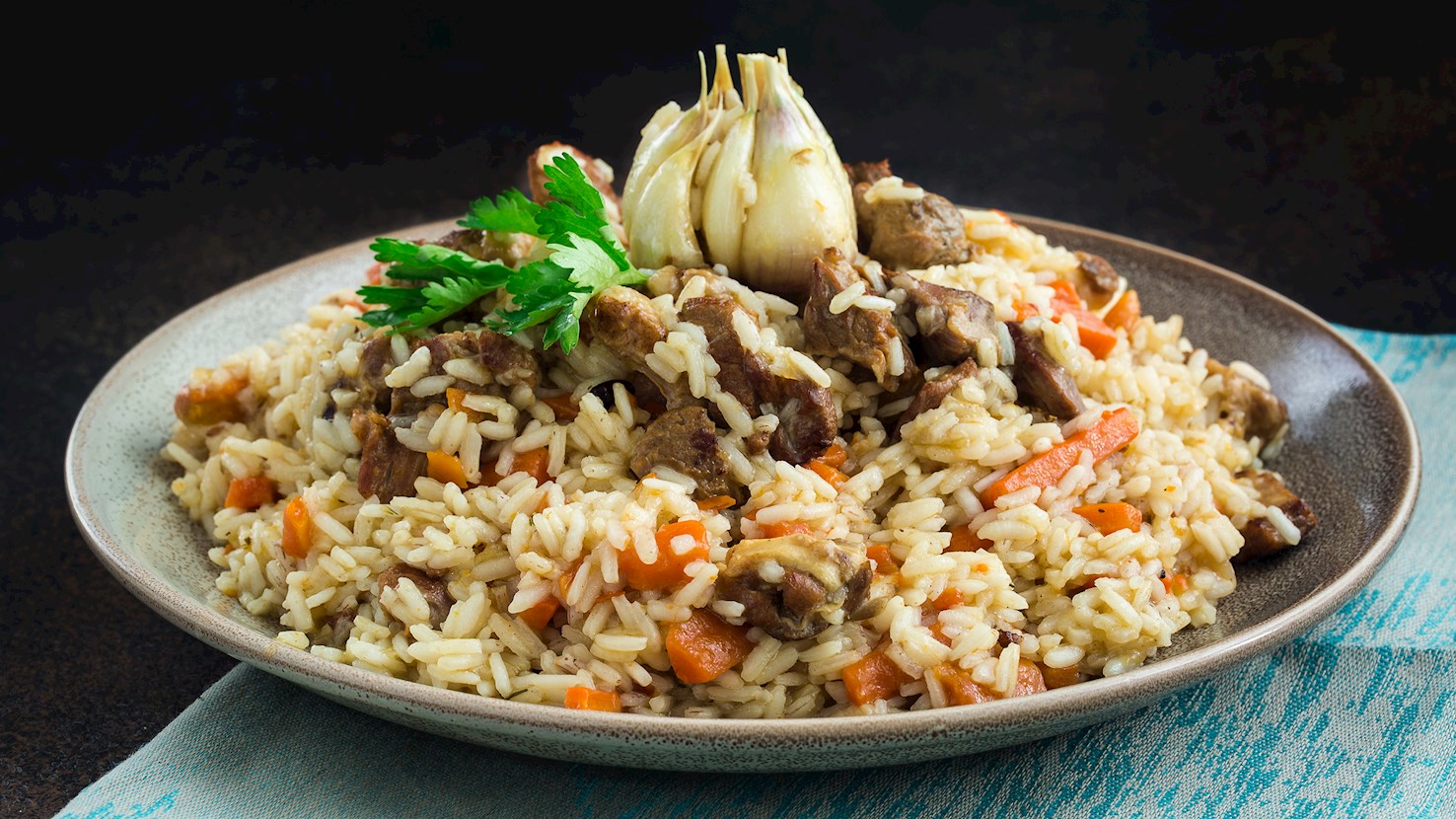
Plov is the national dish of Uzbekistan and the Uzbek word for the famous rice dish called pilaf or pullao. It is of great importance to the nation's history, tradition, and culture. Over fifty versions of the recipe exist, some of them even 10 centuries old, but to make the best-known version, the first step is to make zirvak, a base consisting of seasoned carrots, onions, and meat sautéed in fat. Once the base is done, rice is added in a layer over the previously sautéed ingredients, topped with water, and everything is simmered until the rice is fully cooked. A vast array of ingredients can be added to plov such as meat, vegetables, and fruit.
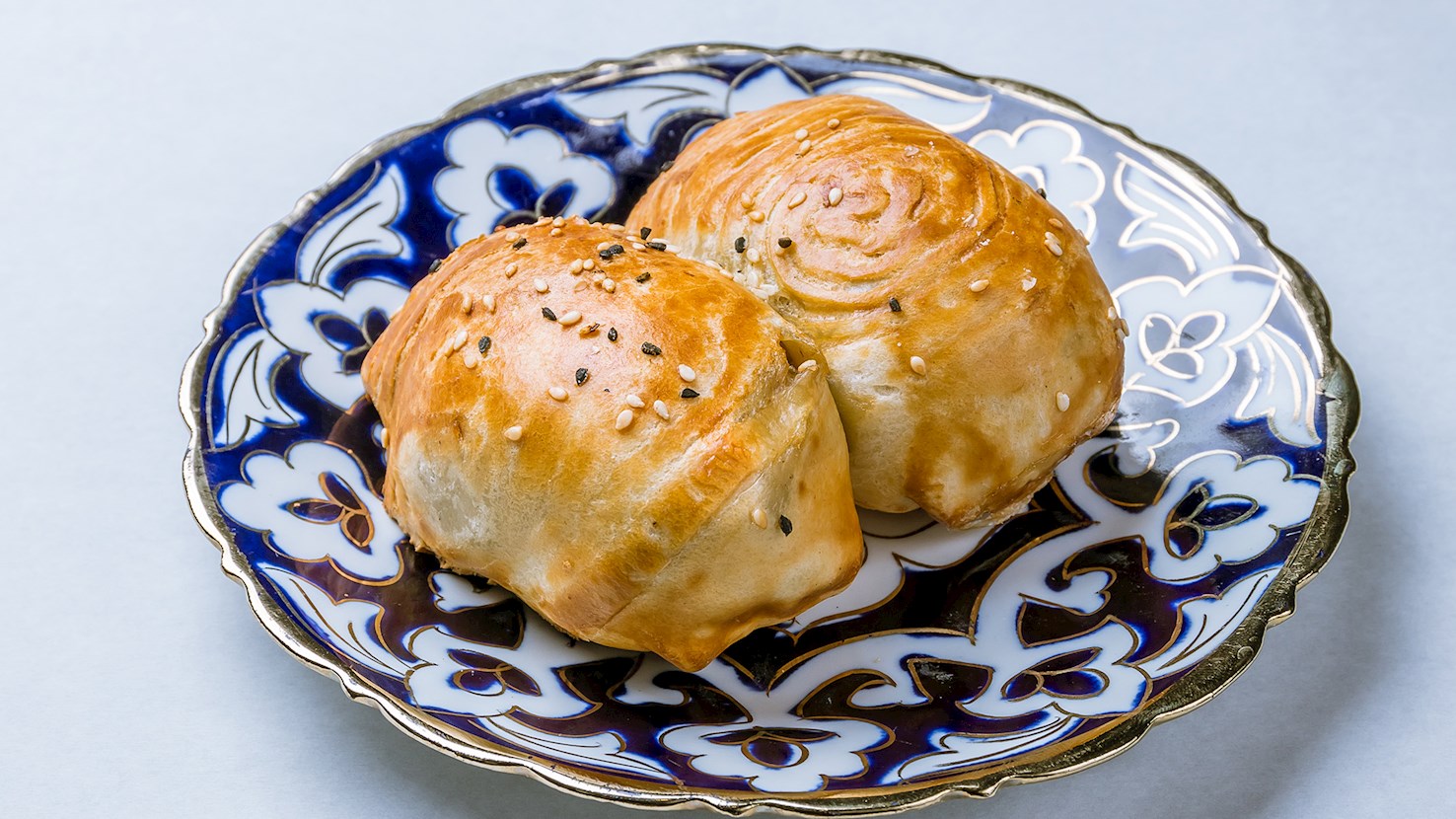
Samsa is a savory baked filled pastry originating from Central Asia, consumed across Uzbekistan, Kazakhstan, Kyrgyzstan, Tajikistan, and Turkmenistan. The dish spread throughout the region along Silk Road trade corridors via Persian culinary influences, deriving its name from the Middle Persian word sanbosag and sharing a common ancestral lineage with Middle Eastern sambousek and South Asian samosa. Preparation requires a multi-layered laminated dough or plain yeastless wheat dough, which is rolled ultra-thin, brushed with melted mutton fat, butter, or oil, rolled into a tight coil, chilled, and sliced into individual rounds that are flattened to form distinct flaky layers. The dough rounds are filled with hand-chopped lamb or beef, tail fat (kyryk), diced onions, cumin seeds, black pepper, and salt, before being folded into triangular, square, or half-moon shapes, glazed with egg wash, and sprinkled with black nigella or sesame seeds. Unlike fried variants found in neighboring regions, Central Asian samsa is baked directly against the red-hot inner clay walls of a vertical cylindrical oven called a tandyr (tandoor) or in high-heat commercial baking ovens, where water brushed onto the flat bottom of the pastry allows it to adhere to the curved clay until fully cooked. The clay oven baking method exposes the pastry simultaneously to conductive heat from the wall and intense radiant heat from charcoal coals at the base, melting the internal fat cubes into a rich broth that steams the meat and onions inside a sealed crust. Samsa is eaten hot by hand directly at street stalls, bazaar bakeries, roadside eateries, and domestic dining tables throughout Central Asia, often by turning the triangular pastry upside down, cutting open the bottom crust with a knife, and spooning in tomato-garlic vinegar sauce or hot chili relish before eating. Diners pair Samsa with hot black or green tea, fermented dairy drinks like chalap or katyk, or fresh tomato and onion salad (achichuk) to balance the high fat content of the baked meat filing.
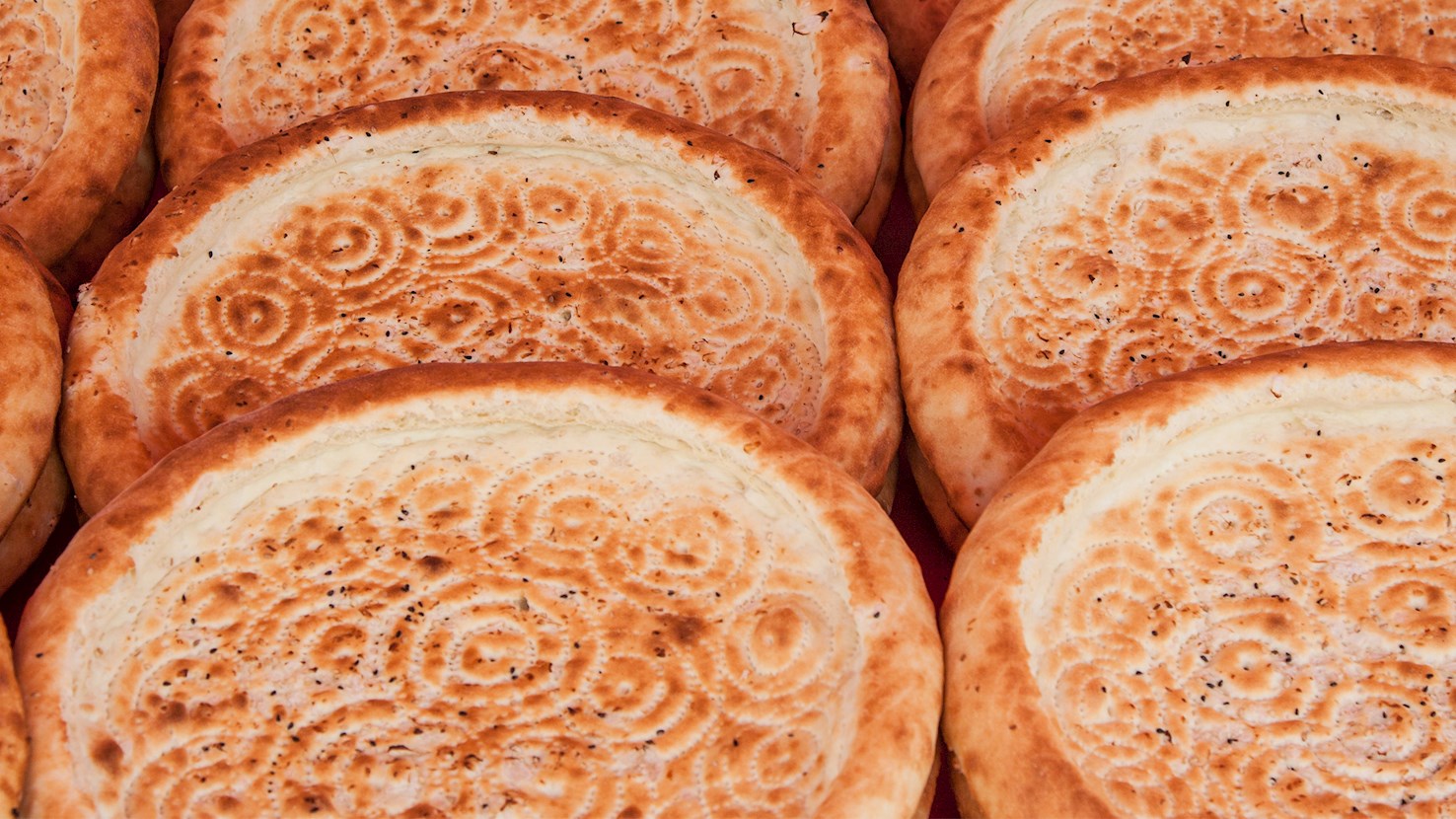
Obi non or lepyoshka is a traditional flatbread that is somewhat thicker than naan and is typically shaped into a disc with a decorated top. The dough is made from flour, water, salt, and yeast, and it is traditionally baked in a clay oven known as a tandyr. Today, there are numerous varieties of the flatbread such as bukhara lepyoshka (sprinkled with sesame and nigella seeds), flaky lepyoshka with cream and butter, and tashkent lepyoshka that is baked as a pastry with milk, butter, and sugar.
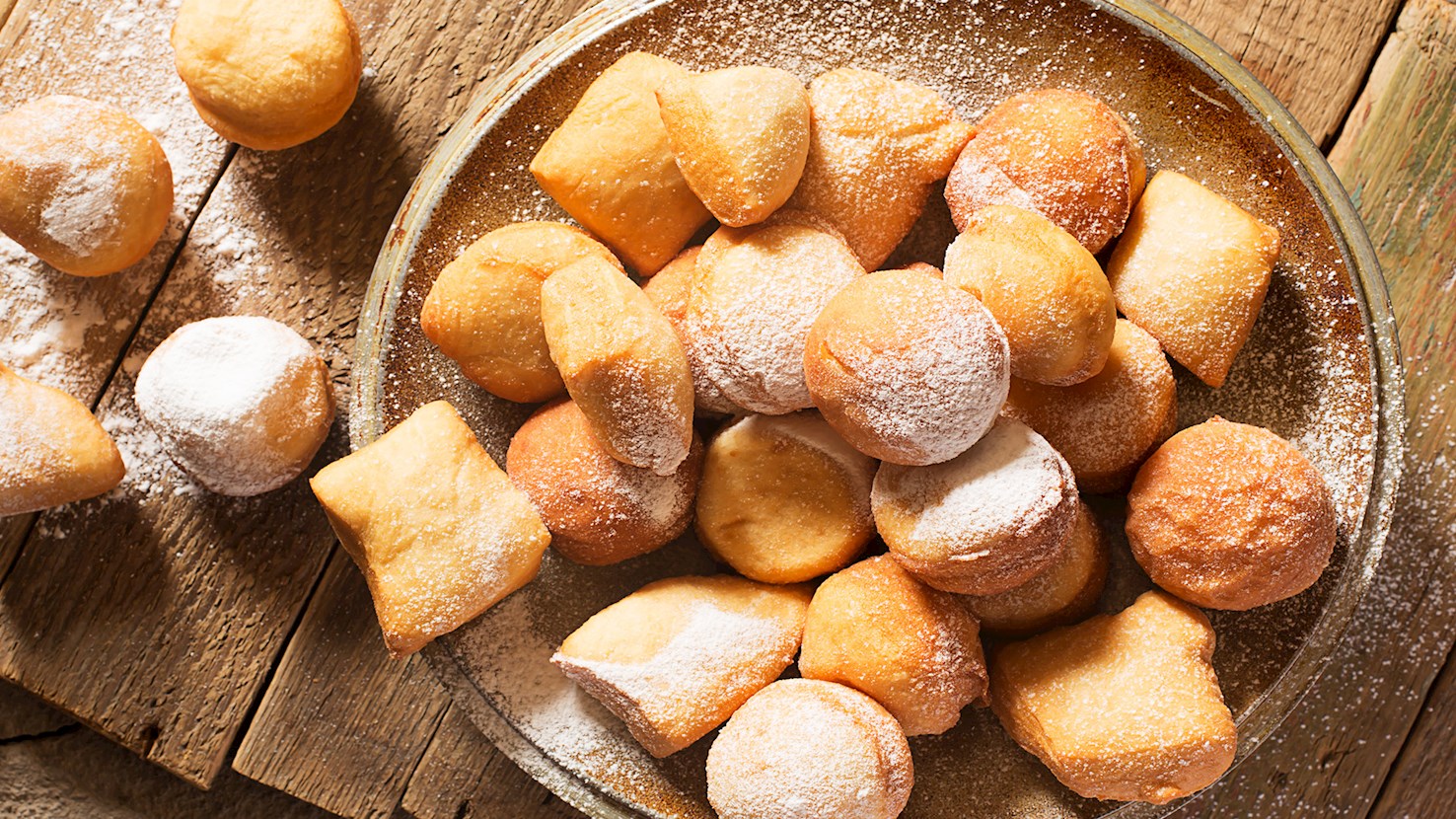
Baursak is a small fried dough food made from wheat flour, fat, and a leavening agent, prepared widely in Central Asia and especially identified with Kazakhstan, where it appears as a common element on family tables, guest meals, and ceremonial spreads rather than as a single-plate dish. Its formation is tied to pastoral and semi-nomadic lifeways in which portable ingredients such as flour and animal fat were readily available and cooking methods favored pots and shallow cauldrons over ovens, making frying small pieces of dough an efficient way to produce bread-like food that could be cooked quickly and shared easily, while the use of yeast or fermented dairy as a leaven reflected locally accessible fermentation practices. Preparation involves mixing flour with warm liquid, salt, fat, and yeast or another leavening agent, kneading the dough until smooth, allowing it to rise, then cutting it into small rounds, diamonds, or irregular pieces that are fried in hot oil or rendered fat until puffed and evenly colored, after which they are drained and kept warm. Serving places baursak in large bowls or piles at the center of the table, often alongside both savory and sweet foods, without sauces or toppings applied directly, allowing it to function flexibly as bread, snack, or accompaniment depending on the context. It is eaten by hand at home meals, celebrations, and guest gatherings, commonly paired with boiled meats, soups, honey, jam, or dairy products, and is most often consumed with black tea, milk tea, or fermented dairy drinks, which complement its fried richness without requiring additional seasoning. Interestingly, the biggest baursak was made in Ufa, Russia, in 2014, with a weight of 179 kg.
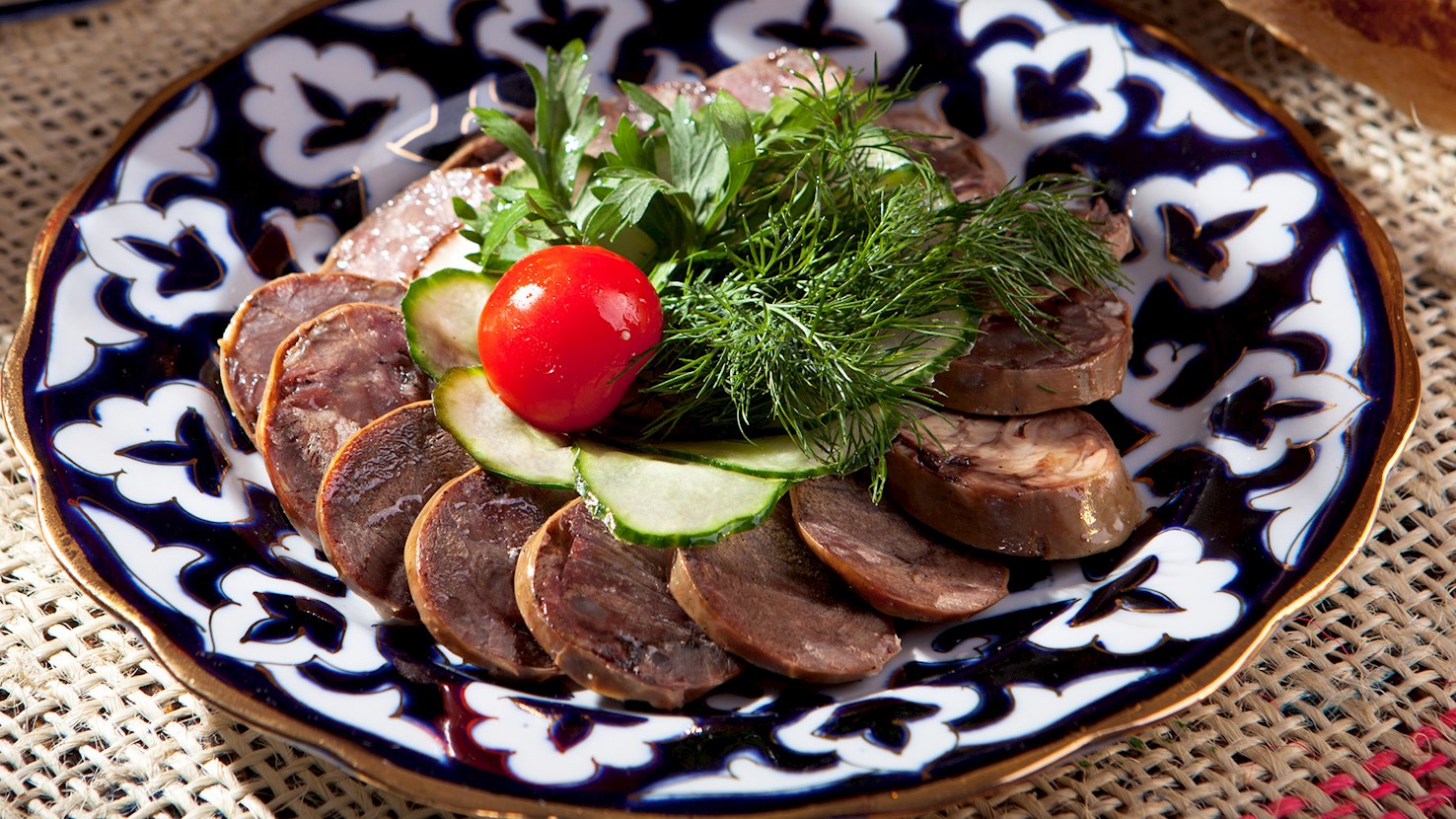
Qazı is a sausage made from horse rib meat and fat, prepared and consumed across Central Asia with its strongest identification in Kazakhstan, where it is regarded as a formal meat item associated with guest meals and ceremonial tables rather than daily cooking. Its formation is rooted in steppe pastoral systems in which horses played a central role in transport, economy, and food supply, and where slaughtering a horse was an infrequent but socially significant event that required preserving valuable cuts in ways that maintained both nutritional value and structure, leading to the development of whole-cut sausages that relied on salting, drying, and boiling rather than grinding or heavy seasoning. Preparation begins by separating rib meat and attached fat from the horse, cutting it into long strips, seasoning primarily with salt and occasionally black pepper or garlic, then stuffing the pieces tightly into cleaned horse intestines, tying the casing at intervals, and allowing the sausage to dry for a controlled period before being slowly boiled until fully cooked, with care taken to avoid splitting so the fat remains enclosed. Serving typically involves slicing the cooked qazı into thick rounds and arranging it prominently on a platter or incorporating it into dishes built around dough and broth such as beshbarmak, while in some contexts it is cooled and served in thinner slices as part of a cold meat spread. What distinguishes qazı is that it is made from intact muscle and fat rather than minced meat, preserving a visible pattern inside each slice and linking the product directly to a specific anatomical cut, a practice that reinforces its status and limits substitution with other meats. It is eaten during large family gatherings, weddings, commemorative meals, and honored guest occasions, shared communally and often served early in the meal, and it pairs naturally with flat noodles or dough sheets, onions softened in broth, and clear soups, while beverages such as black tea, fermented mare’s milk, or lightly salted broth accompany it to balance its richness without adding sweetness or acidity.
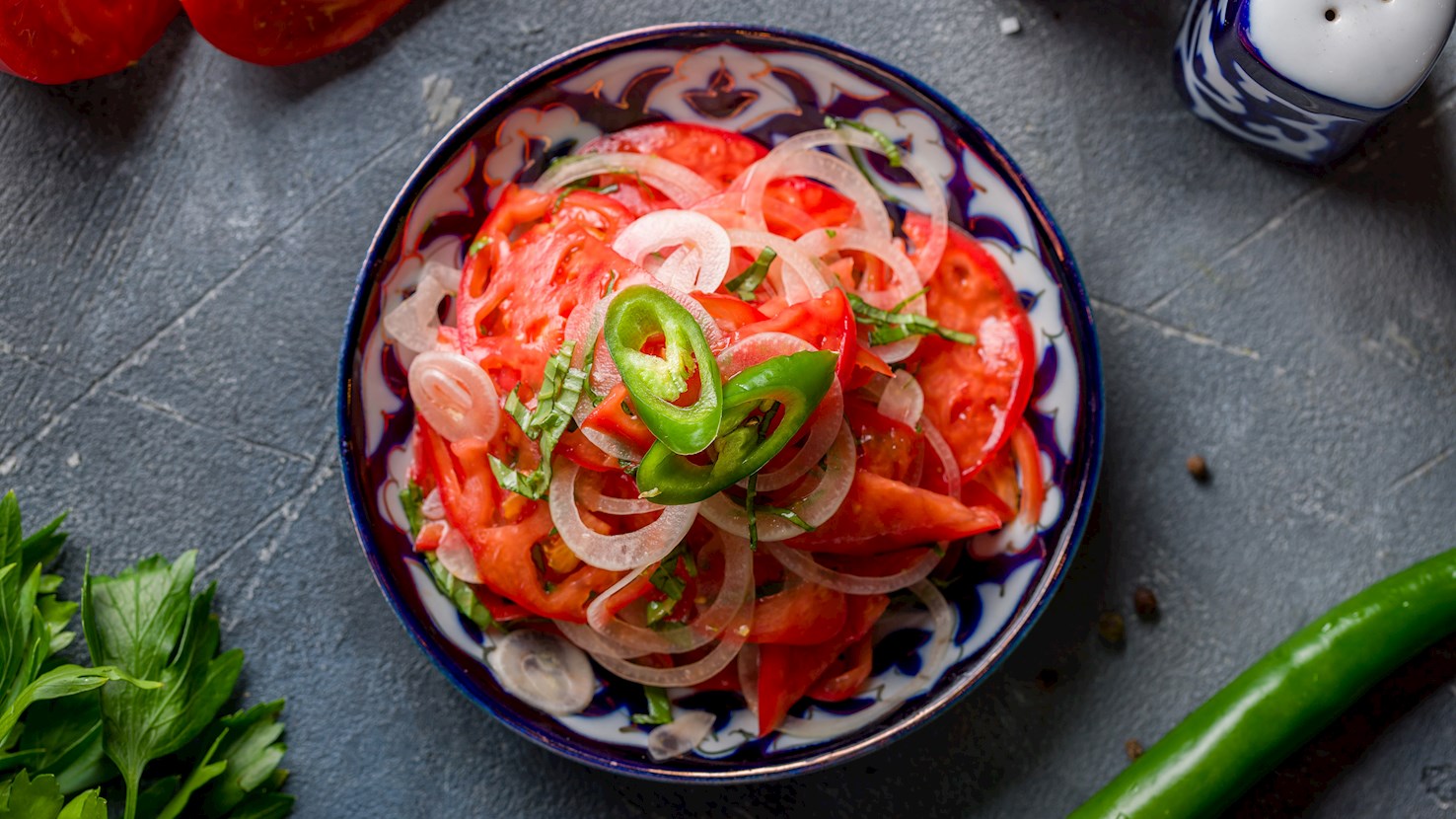
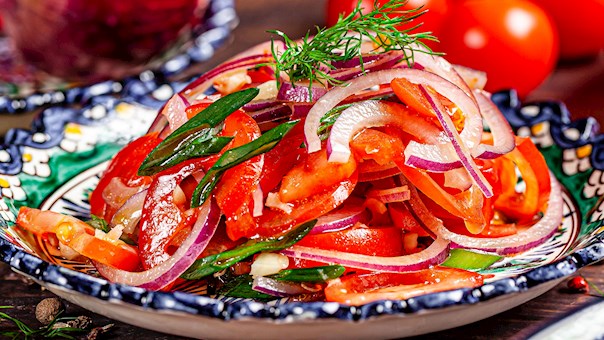
Achicuk salad is a traditional and simple salad originating from Uzbekistan. This salad has many variations, but it is always made with a base of tomatoes and onions. Other ingredients often include thinly sliced chili peppers, coriander, or basil. The ingredients are thinly sliced, seasoned with salt, then served over pilau rice. Achicuk salad is beloved because it's easy to prepare and it makes for a great accompaniment to almost any dish.
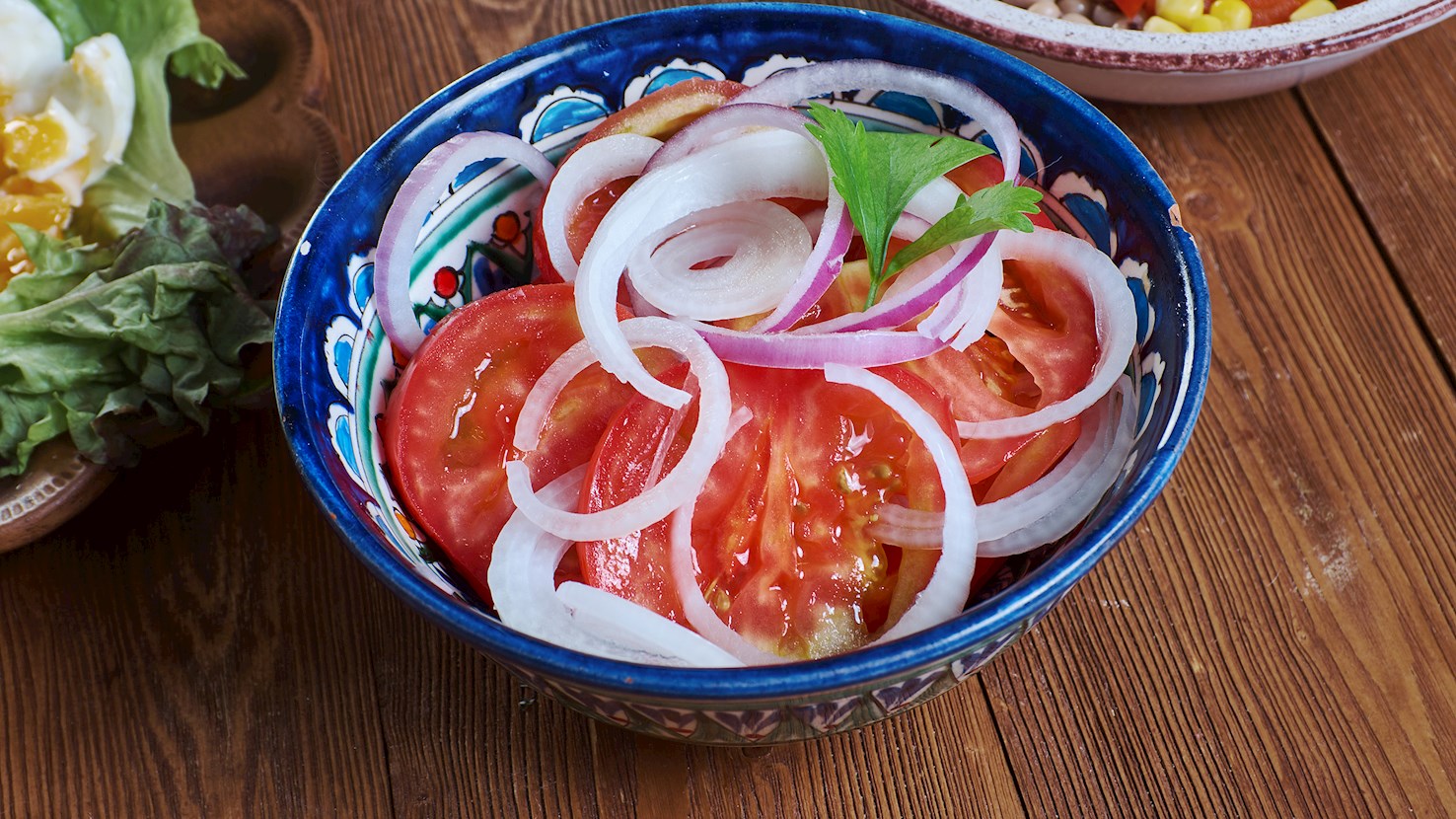
Shakarap is a Central Asian salad made primarily from ripe tomatoes and raw onions, seasoned with salt and usually black or red pepper. It is especially common in Uzbekistan and Kyrgyzstan and is also known in Tajikistan and neighboring parts of the region. The vegetables are sliced very thinly so that the tomatoes release enough juice to coat the onions, meaning that the basic salad requires no separate oil or vinegar dressing. It is most closely associated with plov, although it is also served with grilled meat, kebabs, and other substantial rice or meat dishes. In Uzbekistan the name often appears as shakarob, while shakarap is particularly common in Kyrgyz usage. Its present form belongs to the vegetable-based side dishes that developed across the settled agricultural areas of Central Asia, where tomatoes and onions became important summer produce. Because tomato is a New World crop, the current tomato-based salad is necessarily much younger than dishes such as plov with which it is now closely associated. Over time, the combination became established throughout Uzbek and Kyrgyz cooking as a simple counterpoint to fatty meat and rice. The terminology varies considerably. Uzbek sources use shakarob and sometimes treat it as closely related to achchiq-chuchuk, while Kyrgyz sources commonly use shakarap for a comparable tomato-and-onion salad. Some sources use these names almost interchangeably, while others distinguish them: shakarob or shakarap is described as the milder tomato-and-onion version, whereas achchiq-chuchuk more consistently includes fresh hot pepper. Because household and regional practice overlaps, the distinction is useful but not absolute. The core preparation depends more on slicing than on a complicated ingredient list. Ripe but still firm tomatoes are cut into very thin rounds, half-moons, or wedges, while onions are sliced into equally fine rings or half-rings. Salt is added shortly before serving. As the vegetables are gently mixed, the salt draws liquid from the tomatoes and softens the raw onion, producing a light natural dressing at the bottom of the bowl. Black pepper or ground red pepper can be added according to preference. The tomatoes are important because the salad depends on their own juice. Very dry or underripe tomatoes produce a noticeably different result, while overripe fruit can collapse when sliced. The onions should remain crisp but thin enough that they lose some of their harshness once mixed with tomato juice. If especially pungent onions are used, they may be rinsed briefly in cold water before being added. Cucumber is one of the most common additions, particularly in Kyrgyz and some Uzbek versions. Fresh chili, cilantro, basil, dill, parsley, or other herbs may also appear. These ingredients broaden the salad but are not required for its simplest form. Oil is likewise optional in some contemporary recipes, but the basic shakarap is notable precisely because the juice released by tomato and onion can provide all the moisture it needs. Shakarap is prepared immediately before eating rather than left to stand for a long time. Extended resting softens the tomatoes and onions and produces more liquid than is usually desired. The preferred texture combines juicy tomato with onion that still has some bite, with seasoning kept restrained enough that the vegetables remain dominant. Its strongest culinary association is with plov. The fresh tomato, raw onion, and light acidity help balance rice cooked with meat and fat, which explains why a small bowl of shakarap is so commonly placed alongside a serving of plov. It also works well with shashlik, grilled lamb, beef, samsa, and other rich Central Asian foods. Shakarap is eaten throughout the warmer months when ripe field tomatoes are at their best, although greenhouse production has made it available year-round. It is usually served in a communal or individual salad bowl beside the main dish rather than as a separate course. Plov remains its clearest pairing, followed by grilled meats and kebabs. Green or black tea suits the wider Central Asian meal, while water or ayran also works well alongside the combination of fresh vegetables, meat, and rice.
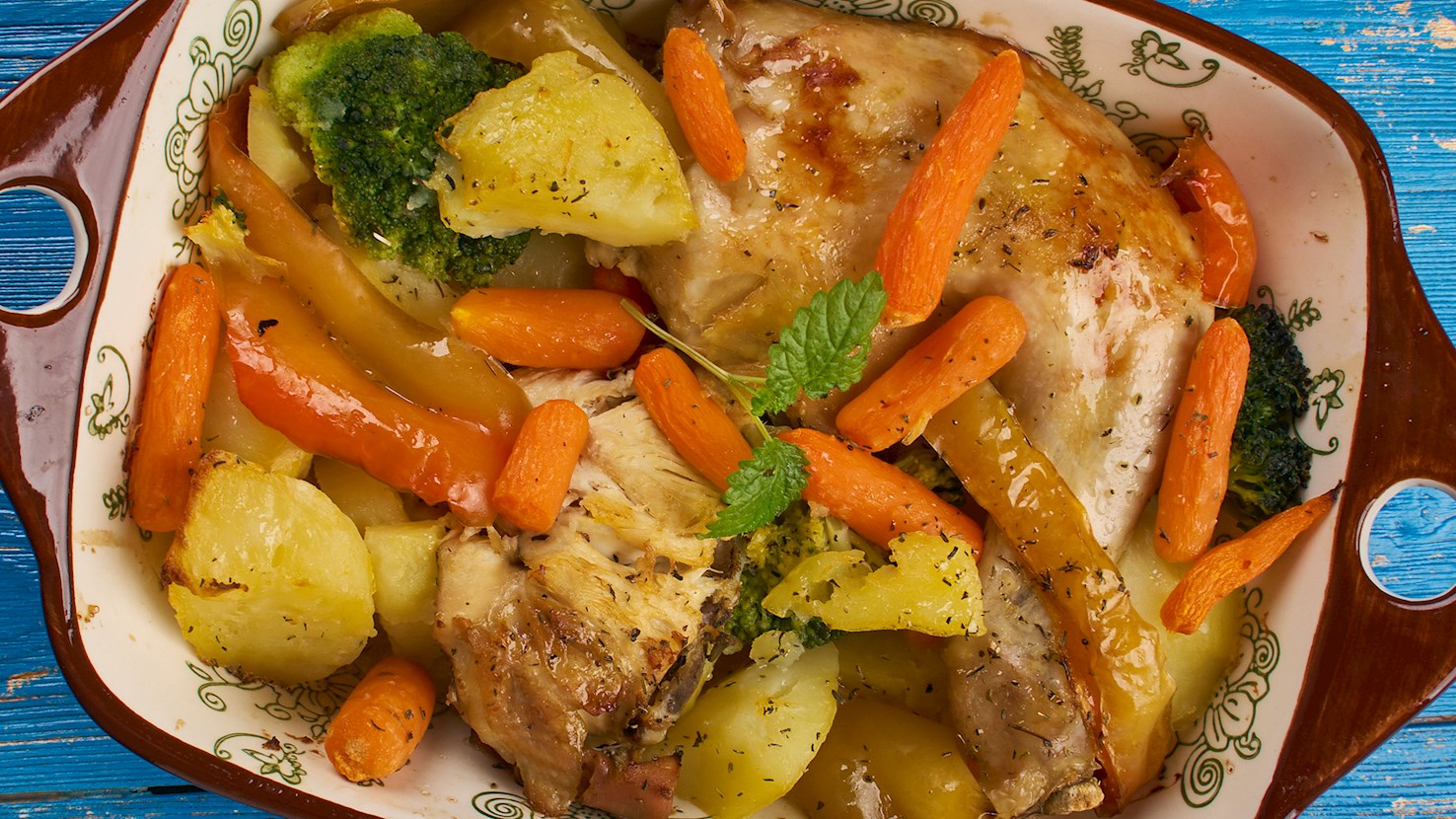
Dimlama is a traditional stew that's prepared during harvest time. Although every household makes it differently, dimlama is usually prepared with a combination of lamb or beef, onions, potatoes, carrots, peppers, tomatoes, garlic, turnips, pumpkin, green onions, cumin, and cabbage. What's most important about dimlama is the layering – the lamb is first browned with onions, and the rest of the vegetables are then layered on top without stirring the pot, while the final layer should be cabbage, which helps to seal the flavorful juices inside the pot. The dish is slowly cooked, for about 2 hours, and when served, it can be garnished with fresh cilantro or dill, if desired.
TasteAtlas food rankings are based on the ratings of the TasteAtlas audience, with a series of mechanisms that recognize real users and that ignore bot,
nationalist or local patriotic ratings, and give additional value to the ratings of users that the system recognizes as knowledgeable.
For the “Top 21 Uzbekistani Foods” list until September 23, 2026, 1,520 ratings were recorded, of which 912 were recognized by the system as legitimate.
TasteAtlas Rankings should not be seen as the final global conclusion about food. Their purpose is to promote excellent local foods,
instill pride in traditional dishes, and arouse curiosity about dishes you haven’t tried.





What People Say