shutterstock

Top 16 Yemeni Foods

Last updated on June 17, 2026

Best Yemeni food products

01
Coffee

Haraaz

4.6 ·
Haraz Coffee is a distinguished Yemeni coffee producer committed to preserving the legacy of Yemen’s world-renowned coffee culture. With deep roots in Yemen’s coffee-growing regions, we are dedicated to cultivating, processing, and delivering the highest-quality coffee, staying true to the traditions that have defined Yemeni coffee for centuries. Haraz Coffee invites you to experience the authentic taste of Yemen, crafted with passion, tradition, and the pursuit of excellence. Coffee is sourced from legendary high-altitude regions such as Haraz, Bani Hamadi, Bani Matar, Yafea, and Khawlan, where farmers use traditional, organic methods passed down through generations. We specialize in heirloom coffee varieties like Dawairi, Jaadi, Jufaini, and Tufahi, ensuring that each bean carries the distinctive and complex flavors that make Yemeni coffee unique.

Best Yemeni foods

01
Egg Dish

Shakshouka

4.2 ·

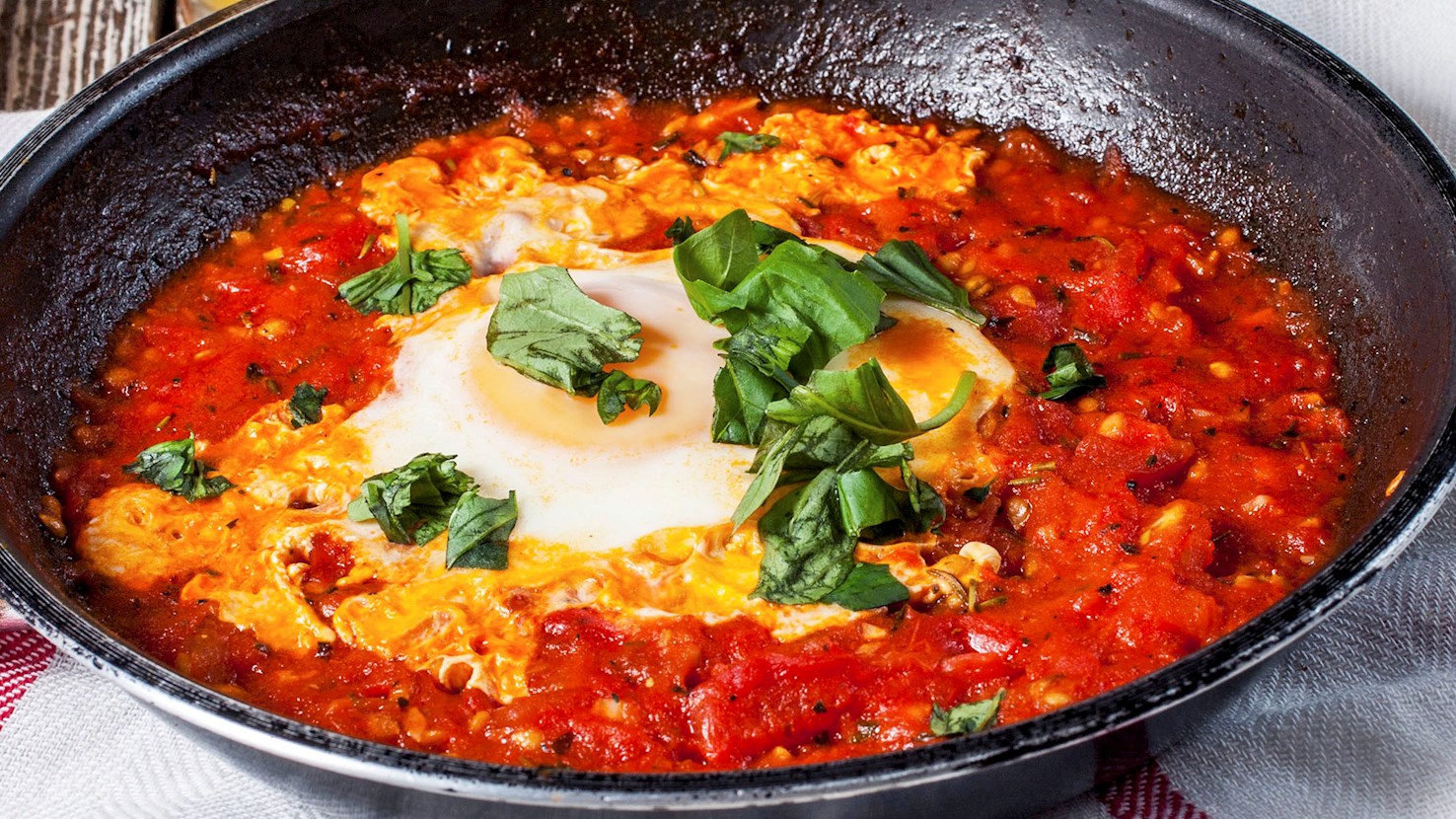
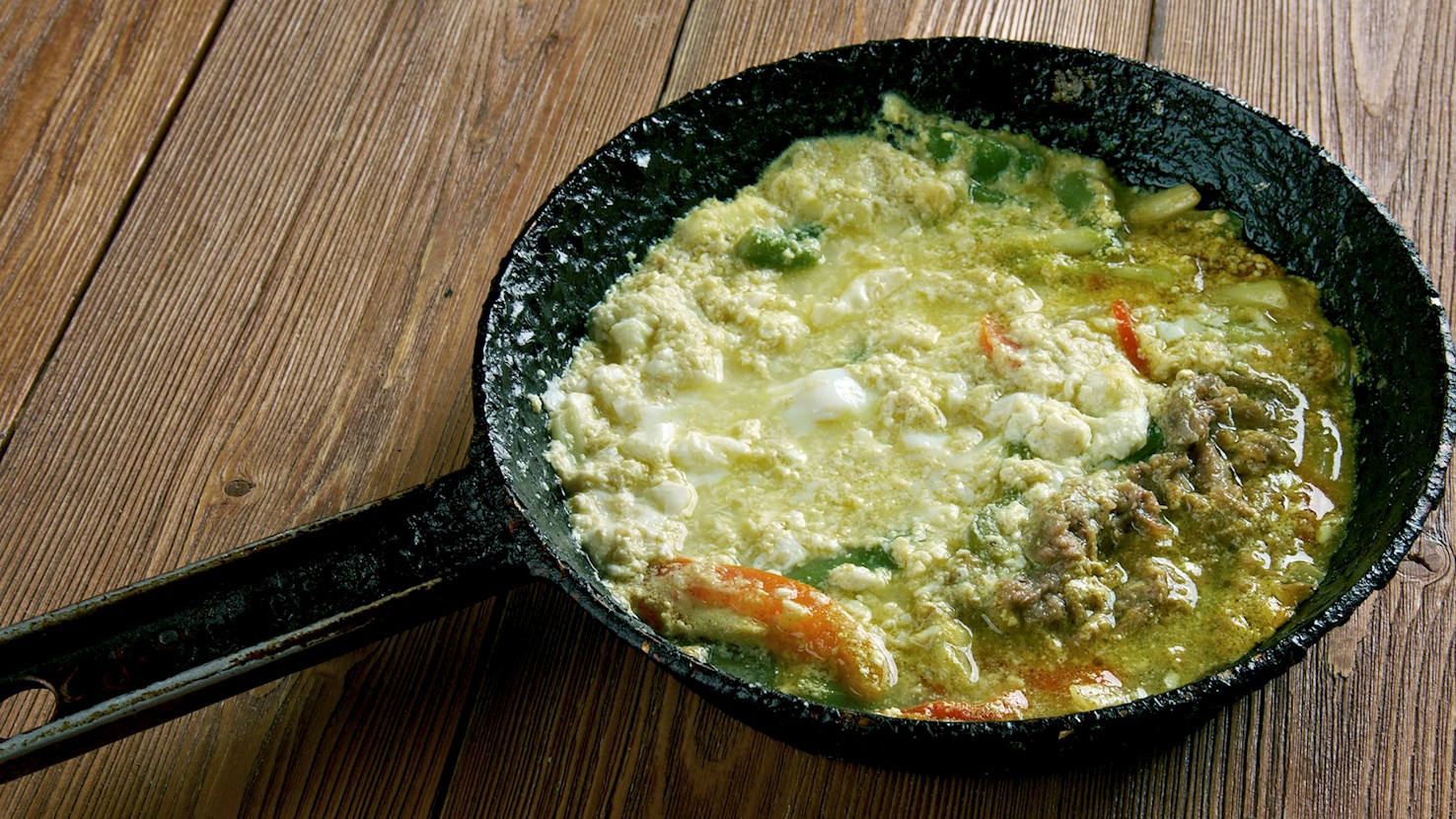
Shakshouka is a delicious combination of eggs poached in a spicy tomato sauce. Although it has an unusual name, the dish is straightforward and easy to make. It is usually made in a skillet in which onions, tomatoes, and spices are cooked until they form a delicious tomato sauce. Eggs are then added directly to the tomato sauce and poached until done. Merguez sausage can also be added to the dish. It is believed that shakshouka originated in Tunisia, but the dish is well-known and commonly eaten throughout North Africa and the Middle East as well. Almost every region has formed their distinctive variety of shakshouka: in Egypt, eggs are usually scrambled and served in a sandwich, and in Israel it is often served with salty feta cheese on top. The consistency of the sauce and eggs is also variable – the sauce can be thinner or thicker, while the eggs can be completely firm or soft. For a more nutritious meal, meat, most commonly sausages, can be included in the dish. Shakshouka is suitable for any meal of the day and is usually served warm or sizzling hot, with bread on the side. Because it is budget-friendly, simple, and easy to prepare, the dish has recently gained popularity both in Europe and North America.

02
Flatbread

Malawach

4 ·

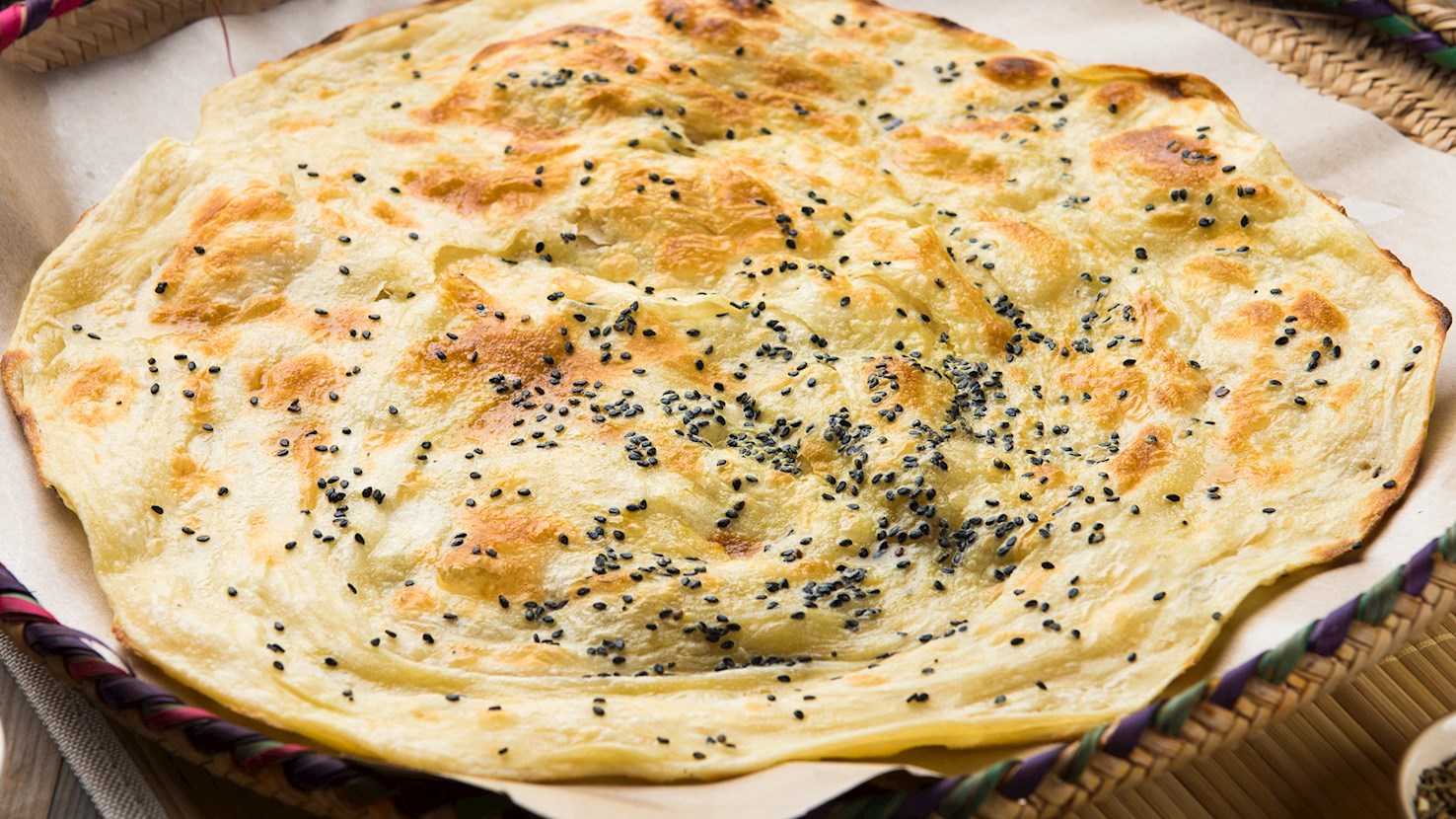
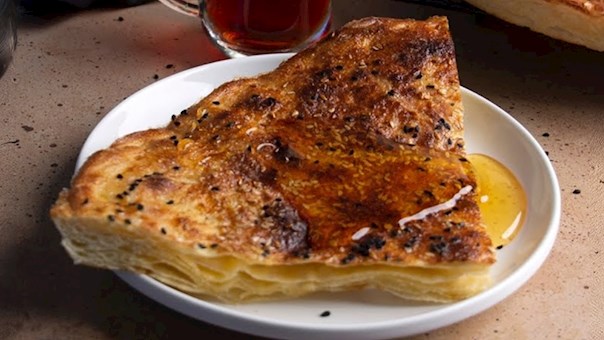
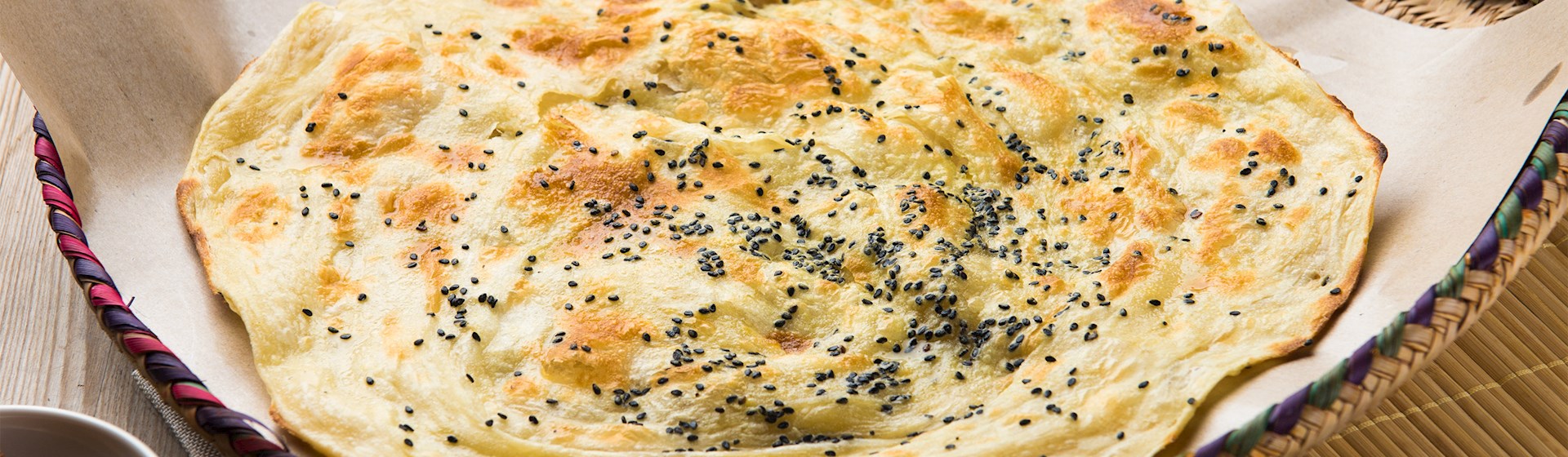
Malawach is a laminated flatbread that originated among Yemenite Jewish communities and is now widely eaten in Israel, where it has become a common household and street-food item. It comes from a culinary context in Yemen where dough-based dishes that relied on layering and frying were common in home kitchens, and Jewish communities preserved specific styles of preparation that later spread as migration increased during the twentieth century. The dough is made from flour, water, salt and fat, mixed into a soft and pliable base that is rolled out thinly, coated generously with oil or margarine, folded or rolled to create layers, and flattened again before cooking; the layering produces a flaky structure that resembles other laminated breads, though the handling method is specific to this dish. Cooking is done on a hot pan or skillet without additional oil, relying on the fat within the layers to create browning and separation, and the result is a soft, slightly crisp flatbread with distinct strata that pull apart easily. A notable aspect is the versatility of its serving style, as malawach is eaten either plain or accompanied by hard-boiled eggs, grated tomatoes, zhug, cheese, honey or sugar, depending on whether it is served as a savory or sweet meal. It is eaten throughout Israel in homes, bakeries and market stalls and remains part of Yemenite Jewish cooking in diaspora communities, pairing well with tea, yogurt drinks, fresh salads or dips that balance its richness.

03
Saltwater Fish Dish

Sayadiyah

3.9 ·

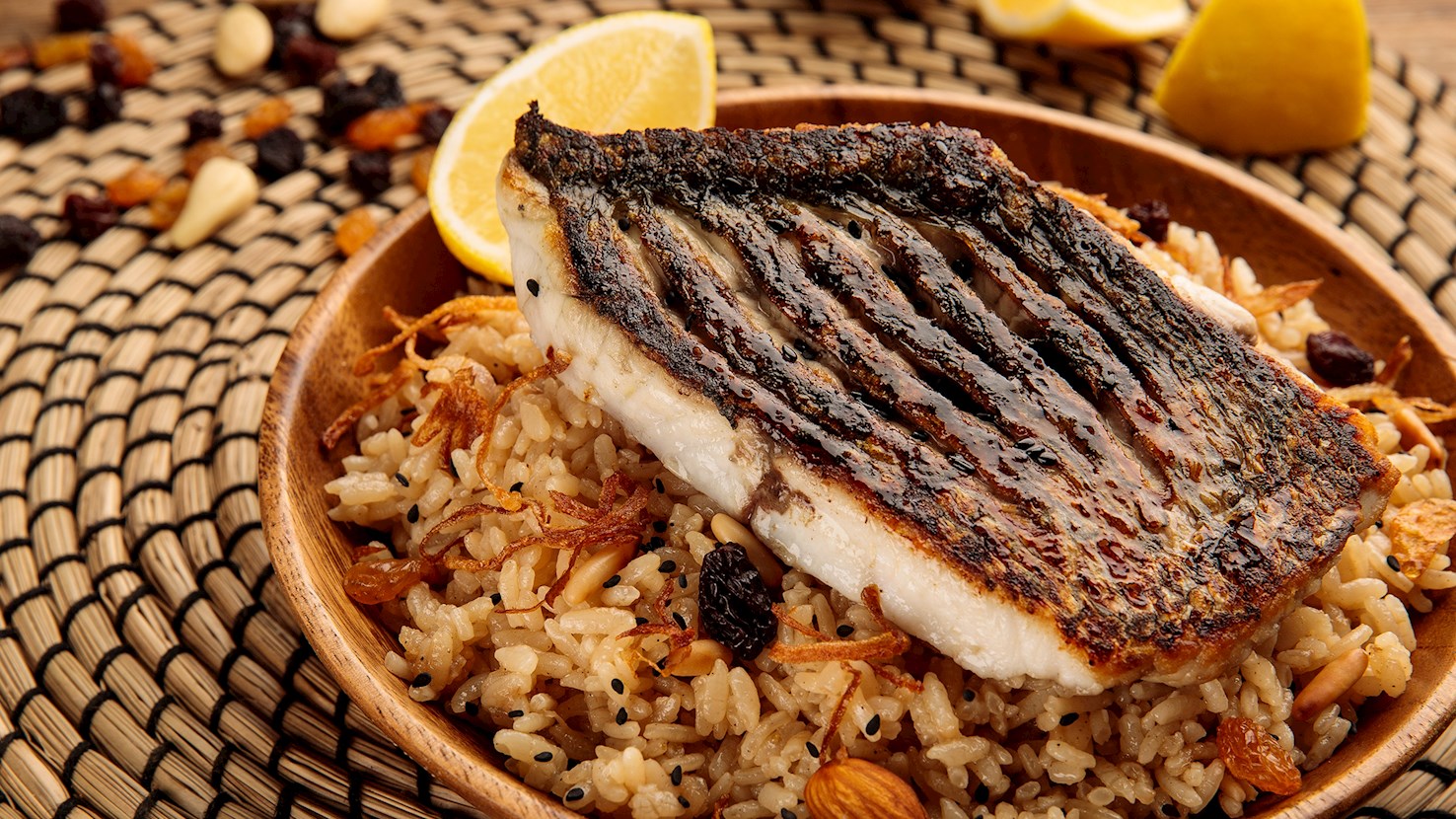
This traditional combination of rice and fish is typically prepared with white fish such as sea bass or red snapper. The fish is fried or baked separately, while the rice is cooked in a special fish broth that is prepared with fried onions and bahārāt - a traditional spice blend that usually employs allspice, peppercorns, cassia, coriander, cardamom, cumin, and chili peppers or paprika. The dish is traditionally served on one plate, topped with lightly toasted pine nuts and slivered almonds. If desired, a special sauce can be served on the side.

04
Meat Dish

Mandi

3.8 ·

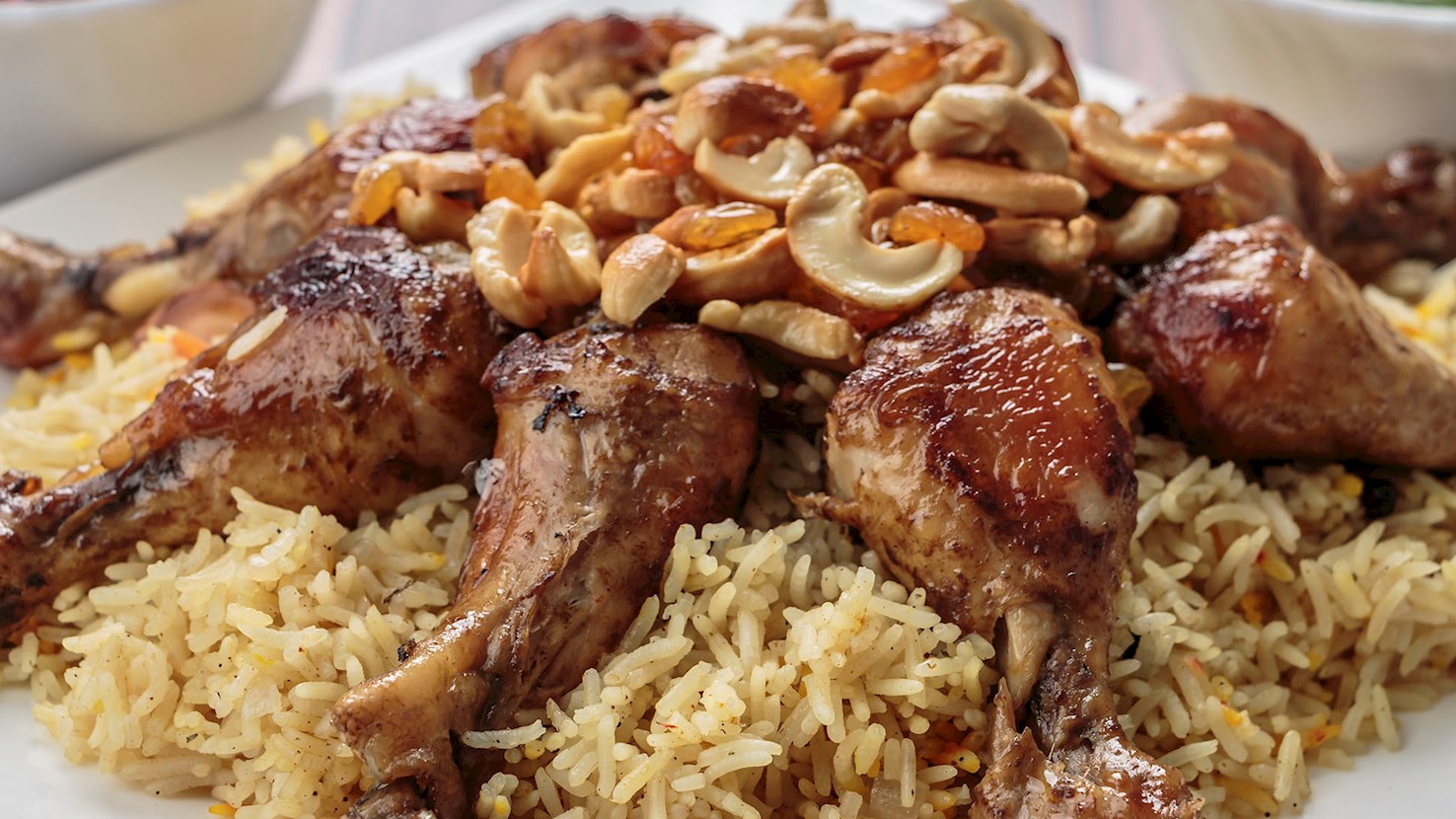
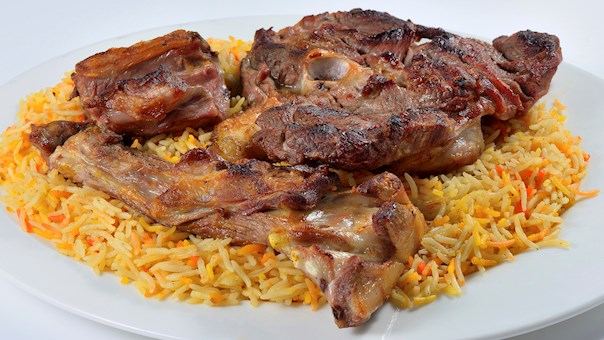
Mandi is Yemen's national dish (also popular in Saudi Arabia), consisting of lamb or chicken meat, fragrant basmati rice and a mixture of various spices. If lamb is used in the dish, it should be small-sized and as young as possible, to further enhance the flavors. To make mandi, the meat should be cooked in the tandoor, a specially designed hole in the ground covered with clay and charcoal, acting as an oven for the suspended meat above it. It is then closed and no smoke is allowed to go outside as it flavors the meat instead. When the meat is tender and juicy, it is served with rice and accompaniments such as salads, yogurt, and spicy tomato chutneys. Beloved in all of the Arabian Peninsula, mandi is often served for special events, such as feasts and weddings.

05
Pancake

Martabak

3.7 ·

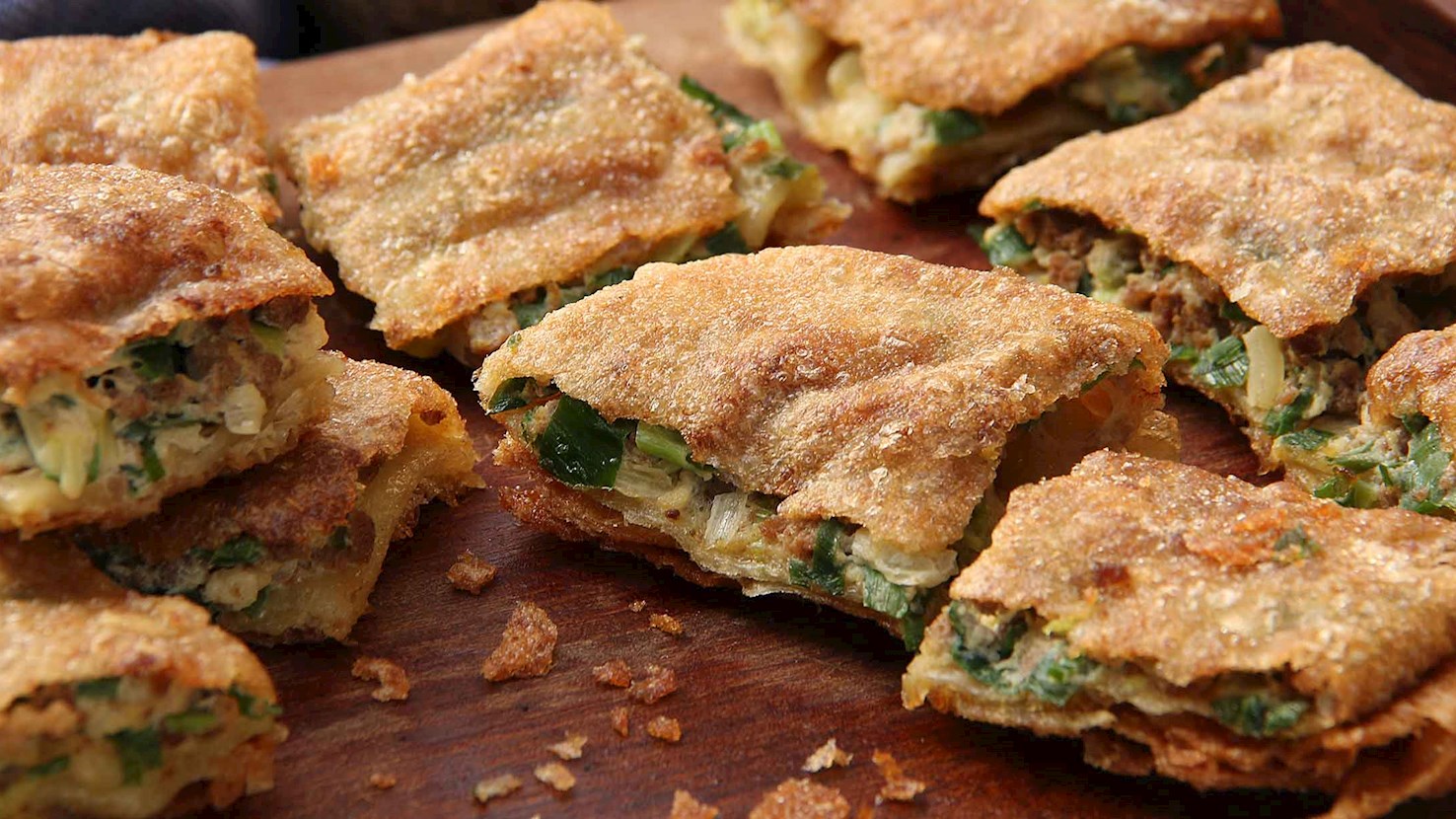
Martabak is a roti-like stuffed and fried pancake which is often served as a popular street food item in countries such as Saudi Arabia, Yemen, Indonesia, and Malaysia. Although the fillings may vary, some of the most popular ones include ground meat, eggs, garlic, onions, peppers, curry, and ghee. Fresh herbs such as coriander and mint are often used for additional flavoring. The flatbread dough is supposed to be extremely thin and requires a lot of expertise. Another name for the dish is mutabbaq, an Arabic word meaning folded, referring to the way in which the stretchy dough is folded around the filling during cooking. The end product is usually shaped like a rectangle, right after it develops a golden brown color on both sides. It is believed that martabak was invented in Yemen and Saudi Arabia around the same time, and as both countries have a large Indian population, it soon spread to other regions of the Arabic world, India, and Persia. Today, when martabak is not served fresh from street stalls, it can be found in numerous stores in its finished form, while sweet varieties called martabak manis are especially popular - filled with chocolate, peanuts, and sugar.

06
Pastry

Jachnun

3.7 ·

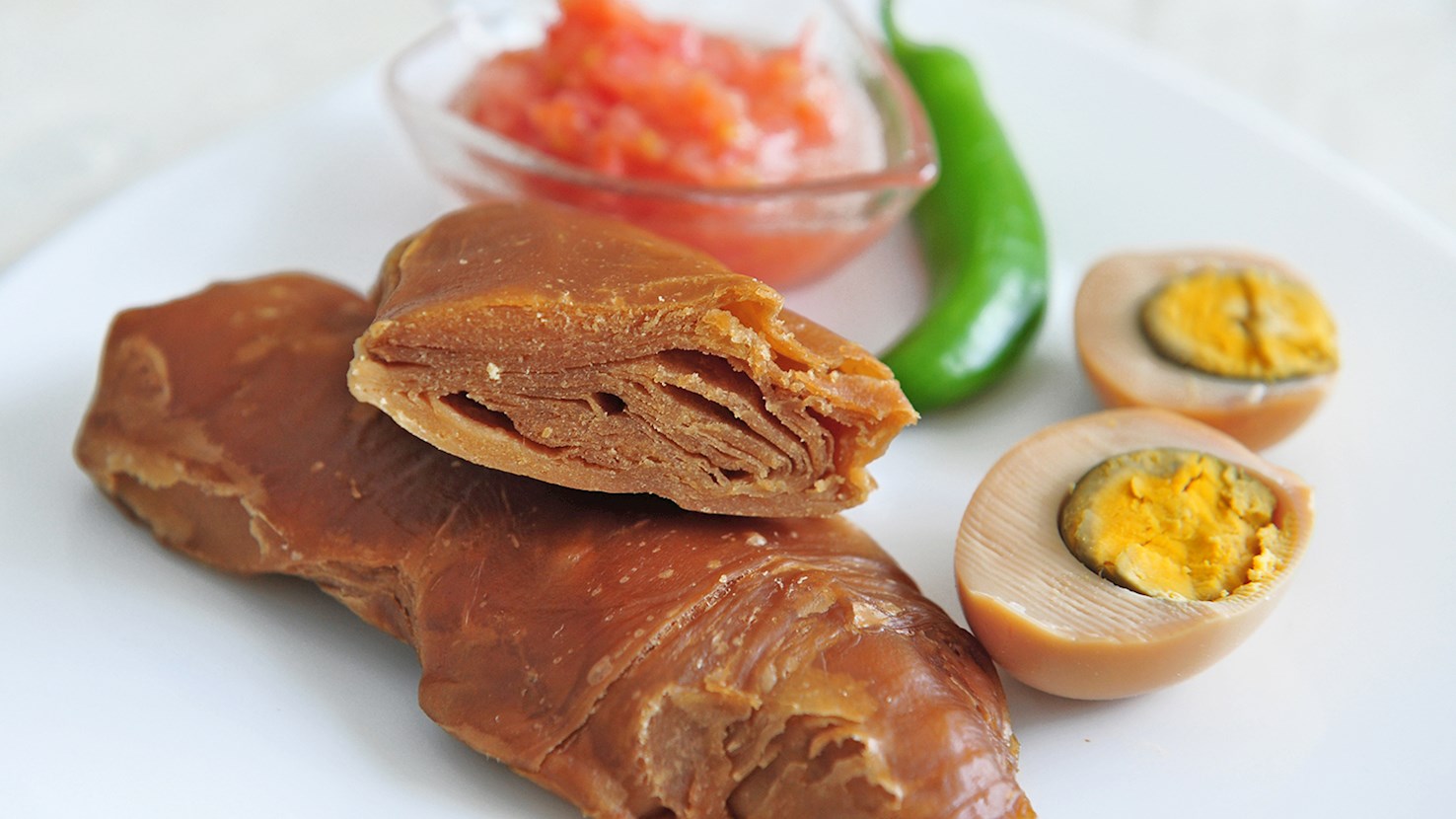
Jachnun is a slow-cooked, rolled dough dish from the cuisine of Yemenite Jews, prepared for consumption on Shabbat morning and today widely eaten in Israel. It consists of thinly stretched dough brushed with fat, rolled tightly, placed in a pot, and cooked at low heat overnight until it becomes soft, amber-colored, and slightly sweet. Its development took place among Jewish communities in Yemen, where cooks adapted local dough-making practices to meet the requirement of preparing Shabbat food in advance without active cooking on the day of rest. The long, low-temperature cooking method made use of the communal oven or a covered home vessel that maintained steady heat until morning. The ingredients were simple and based on what was reliably available, such as flour, water, clarified butter or later margarine, and a small amount of sweetener, with the slow cooking contributing strongly to the final flavor and texture. Preparation begins by kneading a soft, elastic dough and allowing it to rest so it can be stretched easily. The dough is then rolled out very thin, brushed with fat, folded and rolled into a compact cylinder, and arranged in a lidded pot. A small amount of fat or parchment is placed at the bottom to prevent sticking, and eggs in their shells are often added to the pot so they slowly cook alongside the jachnun. The pot is kept at low heat, traditionally overnight, until the dough darkens and takes on a tender, layered consistency. Jachnun is eaten in Israel in homes, bakeries, cafés, and weekend food stalls, especially on Saturday mornings. It is served with grated tomatoes, hard-boiled eggs, schug, and sometimes yogurt-based sauces depending on the household custom. It pairs well with tea or light herbal infusions, and in modern settings it is sometimes served with fresh salads or simple cold drinks that balance its richness and mild sweetness.

07
Flatbread

Malooga

n/a ·

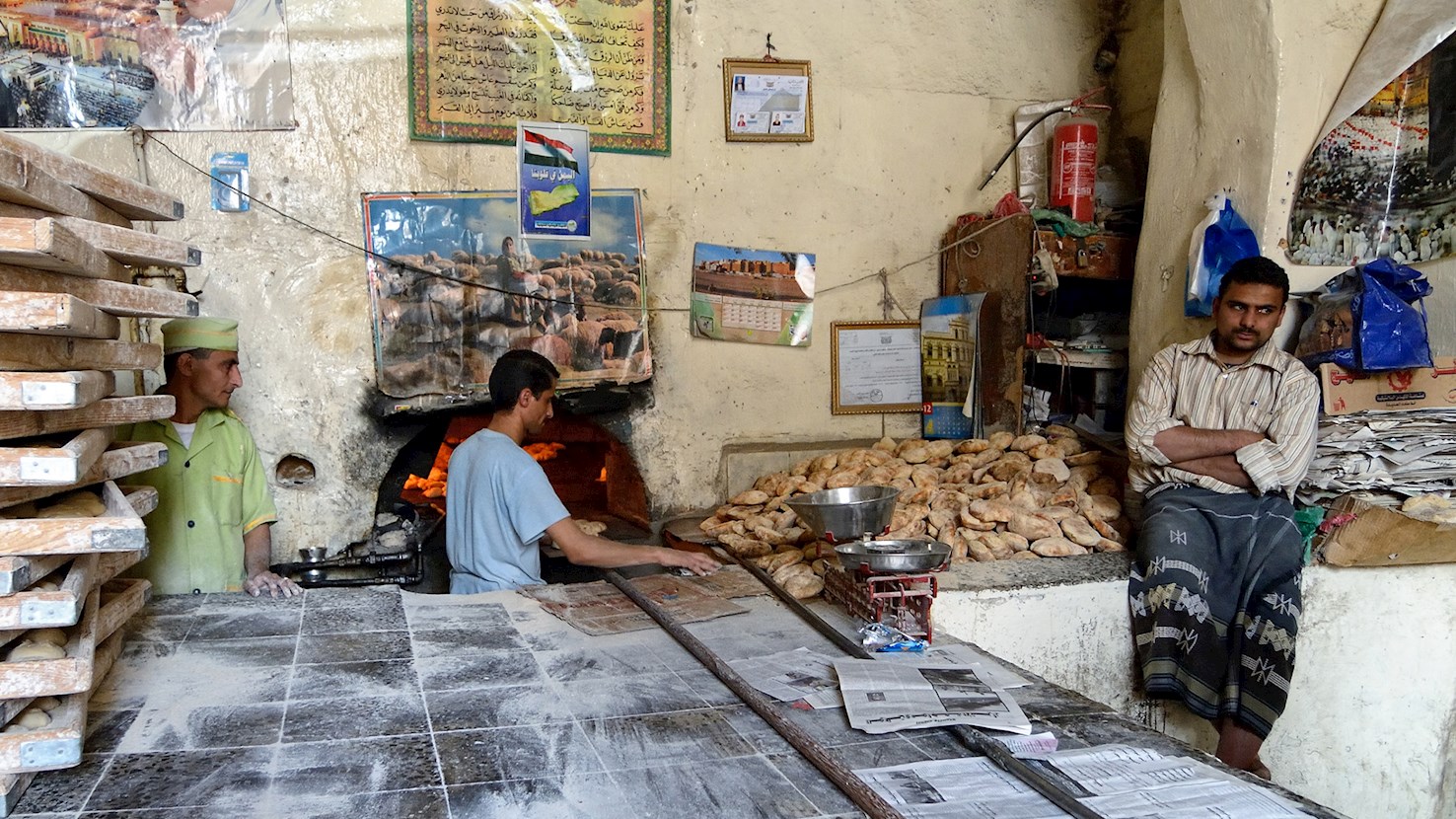
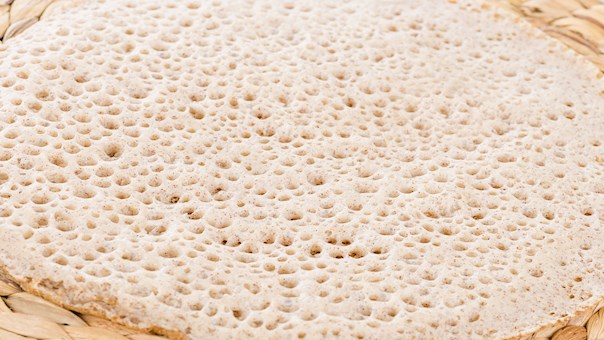
Malooga is a yeasted Yemeni flatbread that is traditionally baked in a taboon. It consists of flour, yeast, water, salt, oil, and dark clarified butter known as semn. The bread has a status of being an inexpensive item for the poor people of Yemen. Malooga is often consumed with buttermilk, beans, and eggs, but it is also used in a popular Yemeni Ramadan dish called shafuta.

08
Bread

Kubaneh

n/a ·

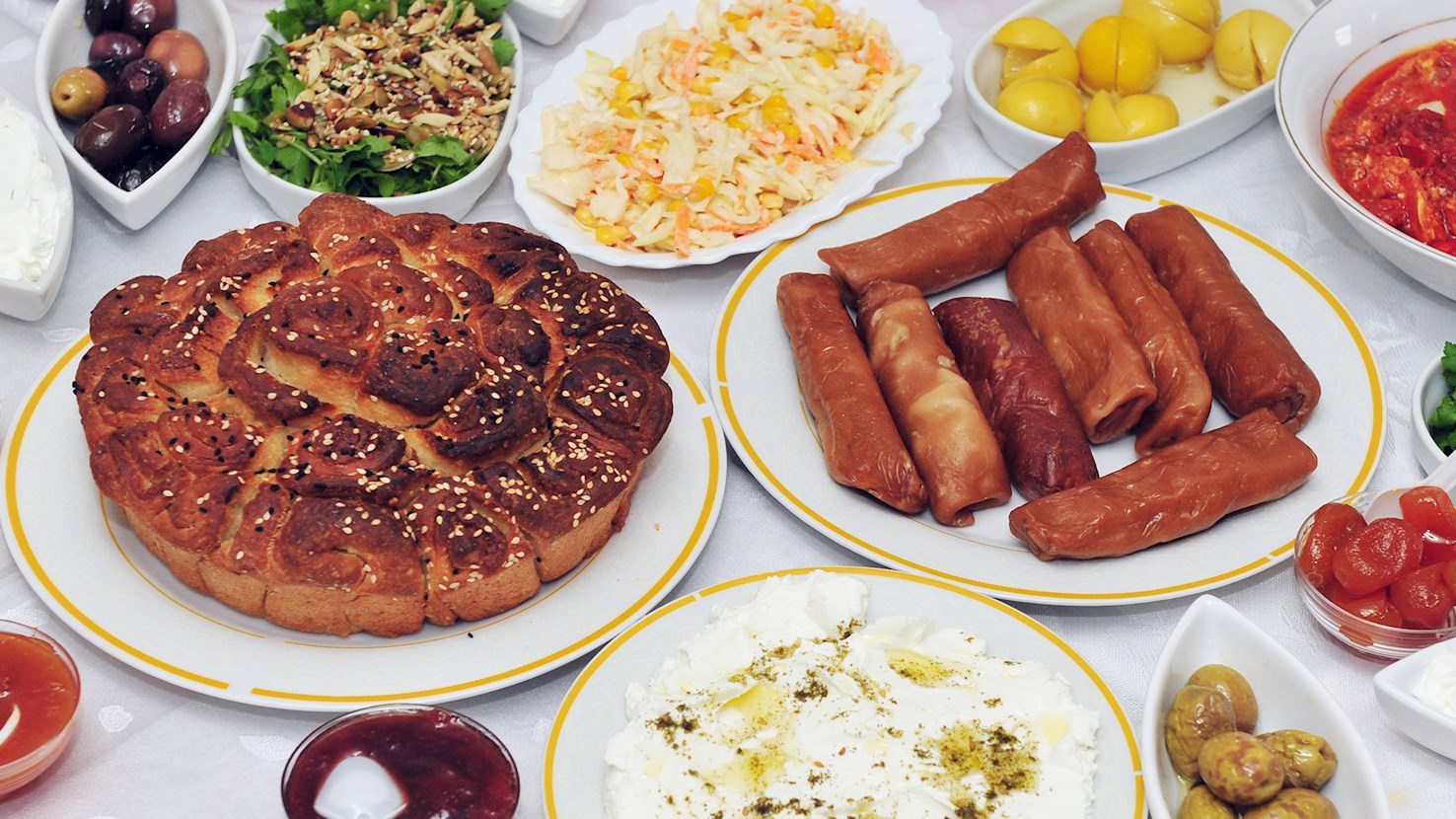
Kubaneh is a popular Yemeni-Jewish bread consisting of flour, sugar, salt, and butter. It is traditionally served warm for breakfast. The bread comes in two varieties: folded (the dough is shaped into balls, combined with butter, and rolled in a spiral) and monkey bread (balls of dough are dipped in butter and placed in the pan). Kubaneh is often topped with powdered sugar or served with tomato salsa.

09
Stew

Saltah

3.7 ·

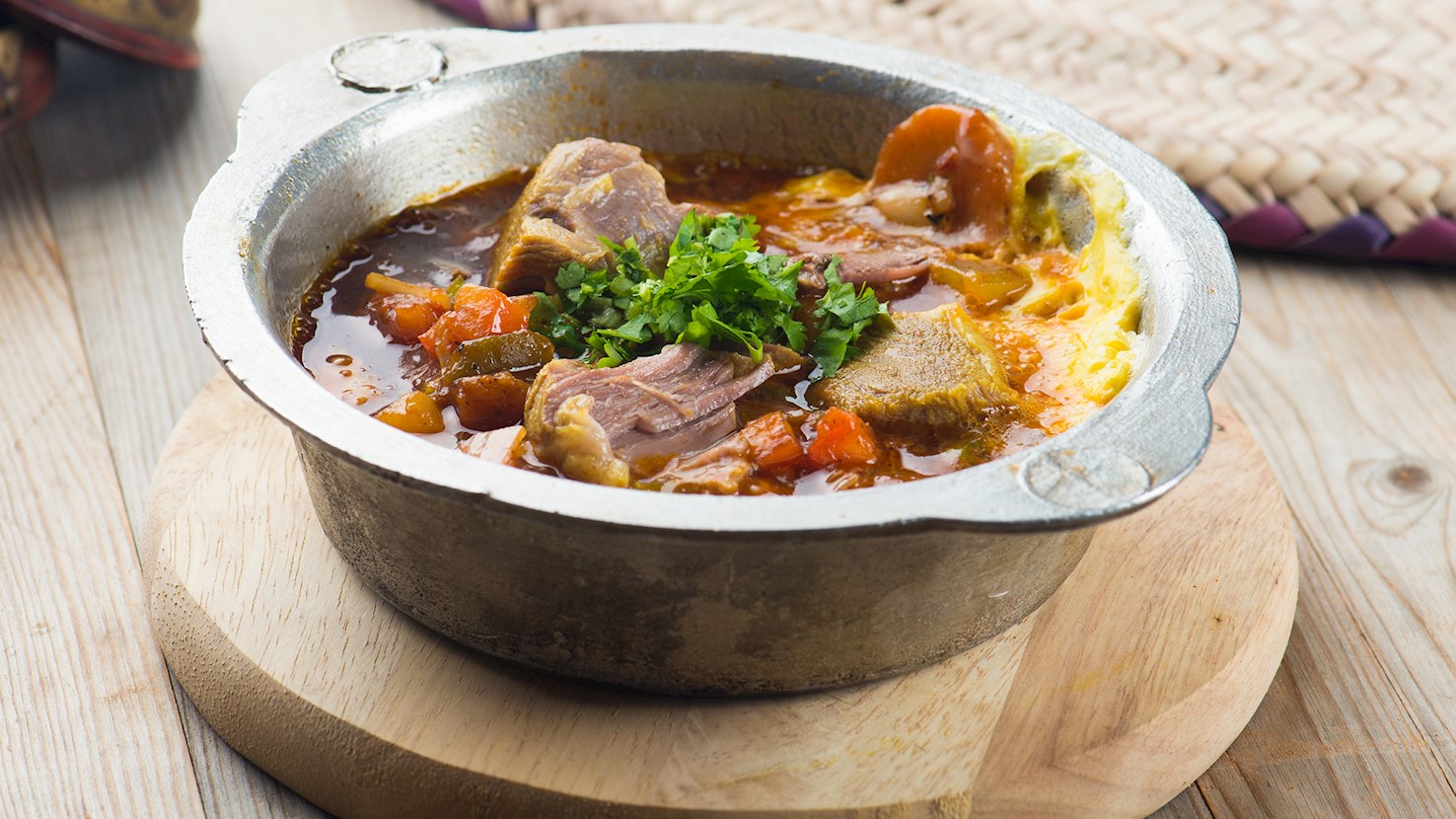
Saltah is the national dish of Yemen, a hearty stew usually eaten for lunch. It can be prepared with or without meat. The key ingredients in saltah are hilbeh, a condiment based on fenugreek, and zhug, a condiment consisting of chillies, oil, cumin, garlic and coriander. Hilbeh and zhug are added to the brown stew that often contains lamb or chicken meat, if used at all. It is quite likely that the dish is of Turkish origin when it was made from leftover ingredients. Common accompaniments to saltah include rice, tomato, potatoes, vegetables and scrambled eggs, and saltah is traditionally served piping hot in a metal or stone bowl and eaten with Yemeni flatbread that can serve as a utensil to scoop up the food.

10
Meat Soup

Maraq

n/a ·

Maraq is a delicate and aromatic Yemeni lamb (or chicken) broth soup that is traditionally served at the beginning of the meal. Each family and restaurant makes a different maraq stock, so it may be simmered with garlic, turmeric, onions, coriander, pepper, or cinnamon, depending on personal preferences. The stock can also act as a base for numerous other dishes, such as salta, a stew that is also the national dish of Yemen. Maraq is also a natural remedy for sick people, and it is often served to women who just gave birth, in order to strengthen them. The soup is traditionally served with fresh slices of lemon which should be squeezed in it for that extra flavor.

11
Breakfast

Aseeda

n/a ·
12
Dessert

Masoub

3.3 ·
13
Dessert

Areeka

n/a ·
15
Flatbread

Lahoh

3 ·
16
Dessert

Bint al-Sahn

n/a ·
Read more
View all
View map
About this ranking

TasteAtlas food rankings are based on the ratings of the TasteAtlas audience, with a series of mechanisms that recognize real users and that ignore bot, nationalist or local patriotic ratings, and give additional value to the ratings of users that the system recognizes as knowledgeable. For the “Top 16 Yemeni Foods” list until June 17, 2026, 1,674 ratings were recorded, of which 701 were recognized by the system as legitimate. TasteAtlas Rankings should not be seen as the final global conclusion about food. Their purpose is to promote excellent local foods, instill pride in traditional dishes, and arouse curiosity about dishes you haven’t tried.

The initial list of top producers was compiled based on available reviews, awards, local recommendations, media and blog coverage, and consumer reviews. The list will be updated with ratings from TasteAtlas local ambassadors and TasteAtlas users.

Similar lists