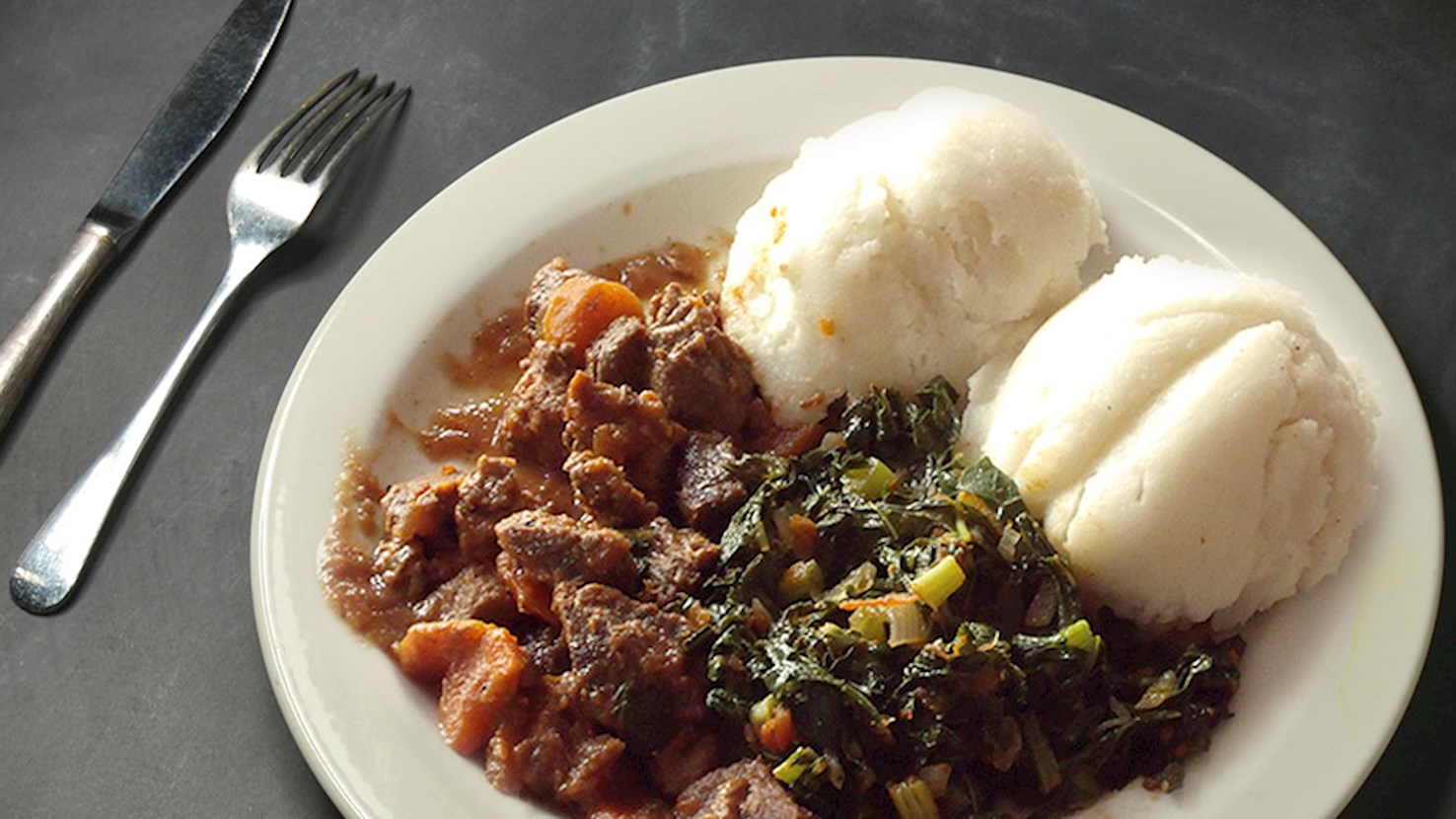
Ugali is a stiff maize-based staple food made by cooking maize flour with water into a firm mass, eaten widely across eastern and southern Africa, most prominently in Kenya and Tanzania, and also present under the same name or close variants in many other African countries, where it functions as a primary source of dietary energy rather than a side dish. Its development followed the introduction of maize to Africa from the Americas beginning in the sixteenth century, after which the crop spread rapidly because of its adaptability and yield, gradually replacing earlier millet and sorghum porridges in many areas and becoming embedded in everyday meals due to its affordability, long storage life, and compatibility with diverse local sauces. Preparation involves bringing water to a boil and steadily adding maize flour while stirring continuously to prevent lumps, then cooking the mixture until it thickens into a cohesive mass with no free liquid, a process governed more by experience and texture than by fixed measurements. Serving is immediate, with the cooked ugali shaped into a mound and portioned by hand or spoon, and it is not consumed alone but used to scoop vegetables, legumes, meat stews, or fish, acting as a neutral carrier rather than a flavored component. It is eaten primarily at lunch or dinner in homes, eateries, and communal settings, most often by hand, and it pairs naturally with leafy greens, bean dishes, grilled or stewed meats, and fish sauces, while beverages alongside are typically water, unsweetened tea, or light fermented drinks rather than sweet or acidic options, keeping attention on the accompanying foods rather than the starch itself. Nsima from Malawi, which follows the same method and role at the table and was formally recognized in 2017 when it was inscribed on the Representative List of the Intangible Cultural Heritage of Humanity by UNESCO, reflecting its central place in daily life and social practice.
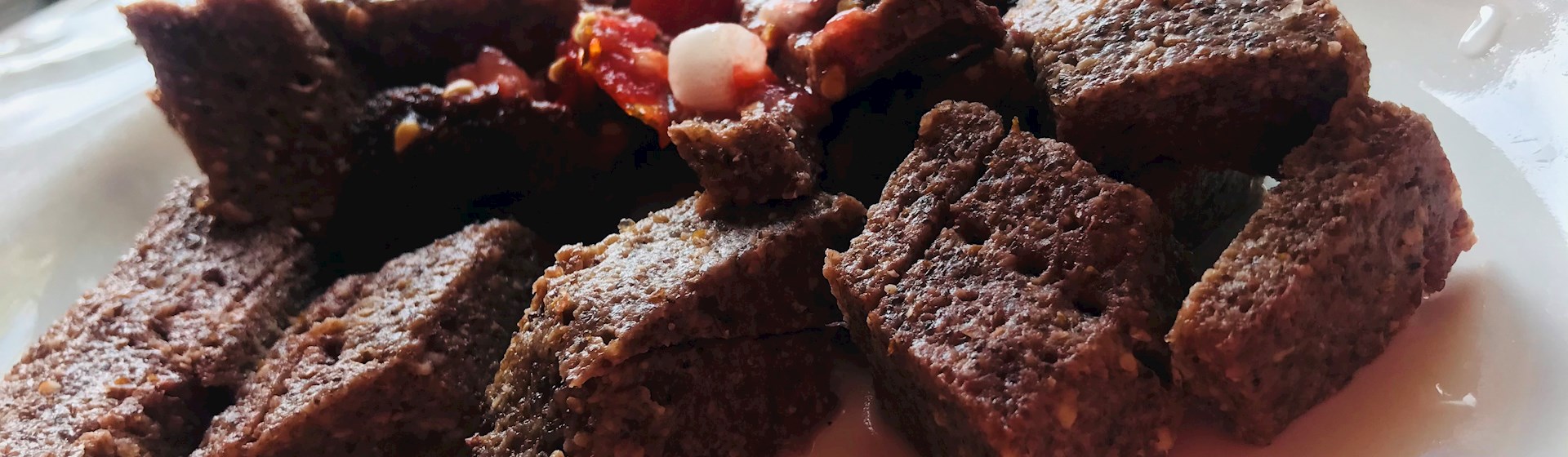
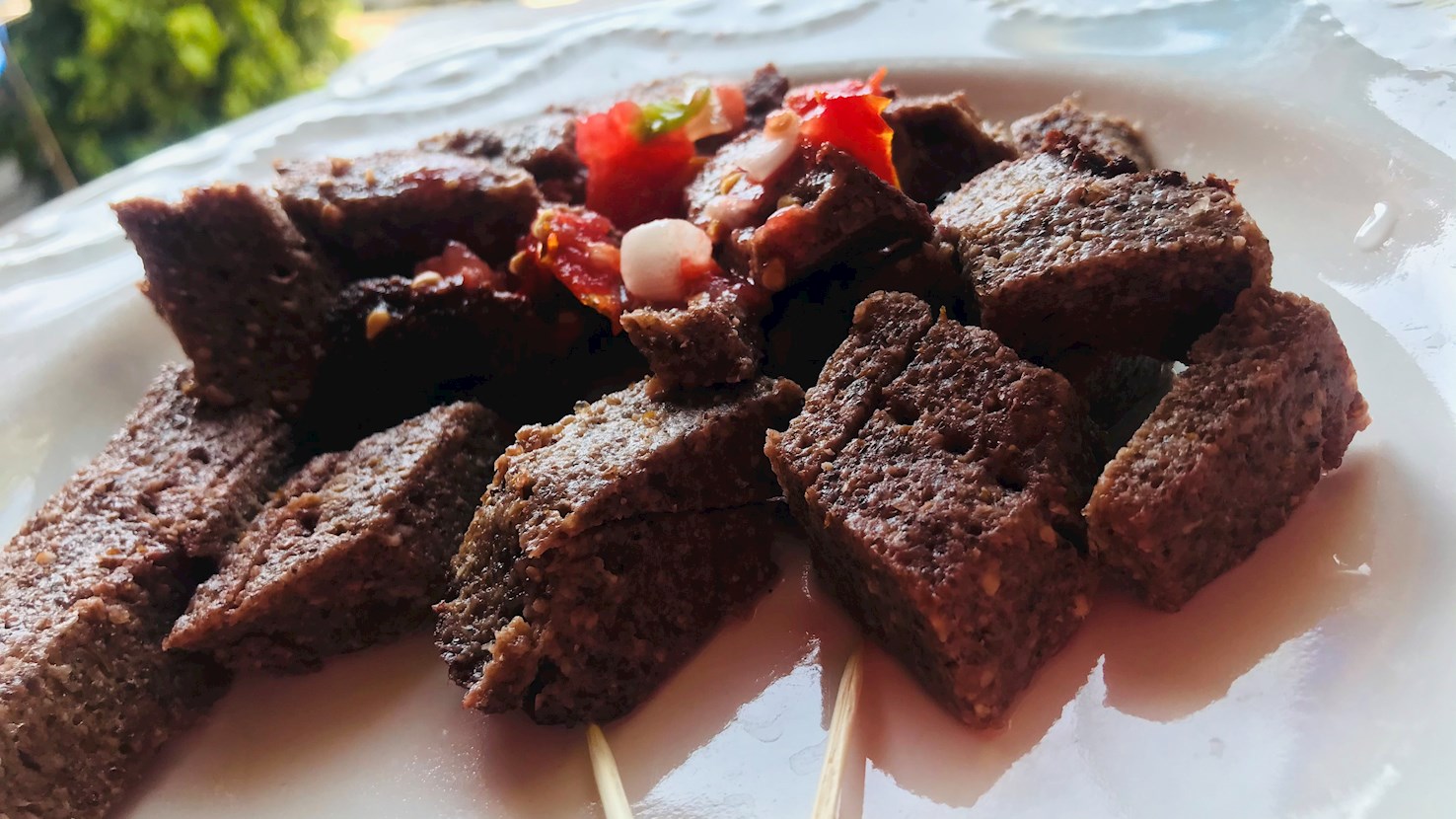
This Zambian snack is prepared with a tuber of chikanda orchids. The small-sized tubers are dried and pounded, and then combined with a thick mixture of peanuts and dry chili peppers. Chikanda is often referred to as African polony, because of its meat-like consistency. In the past, the dish was traditionally associated with the Bemba tribe in north-east Zambia, but nowadays it is consumed throughout the country. Chikanda is usually served sliced and can be enjoyed as a snack, dessert, or an accompaniment to nshima,a traditional Zambian maize porridge.
This dish originates from land-locked Zambia, where animals such as gazelles freely roam on the vast land, so it is not a surprise that a curry made with good-quality gazelle meat is quite popular in the country. The dish is made with gazelle rump steak, onions, garlic, chilis, sliced plantains, coconut milk, tomato paste, and flavorings such as cumin, cardamom, and curry powder. The ingredients are slowly simmered until the desired consistency is achieved. The dish is then served hot, preferably on a bed of white rice.
Tongabezi chicken curry is a traditional chicken stew originating from Zambia. Although there are a few recipes, the curry is usually made with a combination of chicken, sweet potatoes, onions, tomatoes, garlic, lemongrass, hot peppers, stock, yogurt, ginger, coriander, and curry powder. The onions, ginger, and garlic are sautéed in oil until soft. Chicken pieces are added to the pan and cooked until done. Chopped tomatoes, lemongrass, curry powder, and stock are stirred in, and the curry is simmered for a few minutes. The sweet potatoes are boiled, sliced, fried in oil, and then served as an accompaniment to the curry, along with rice and yogurt.
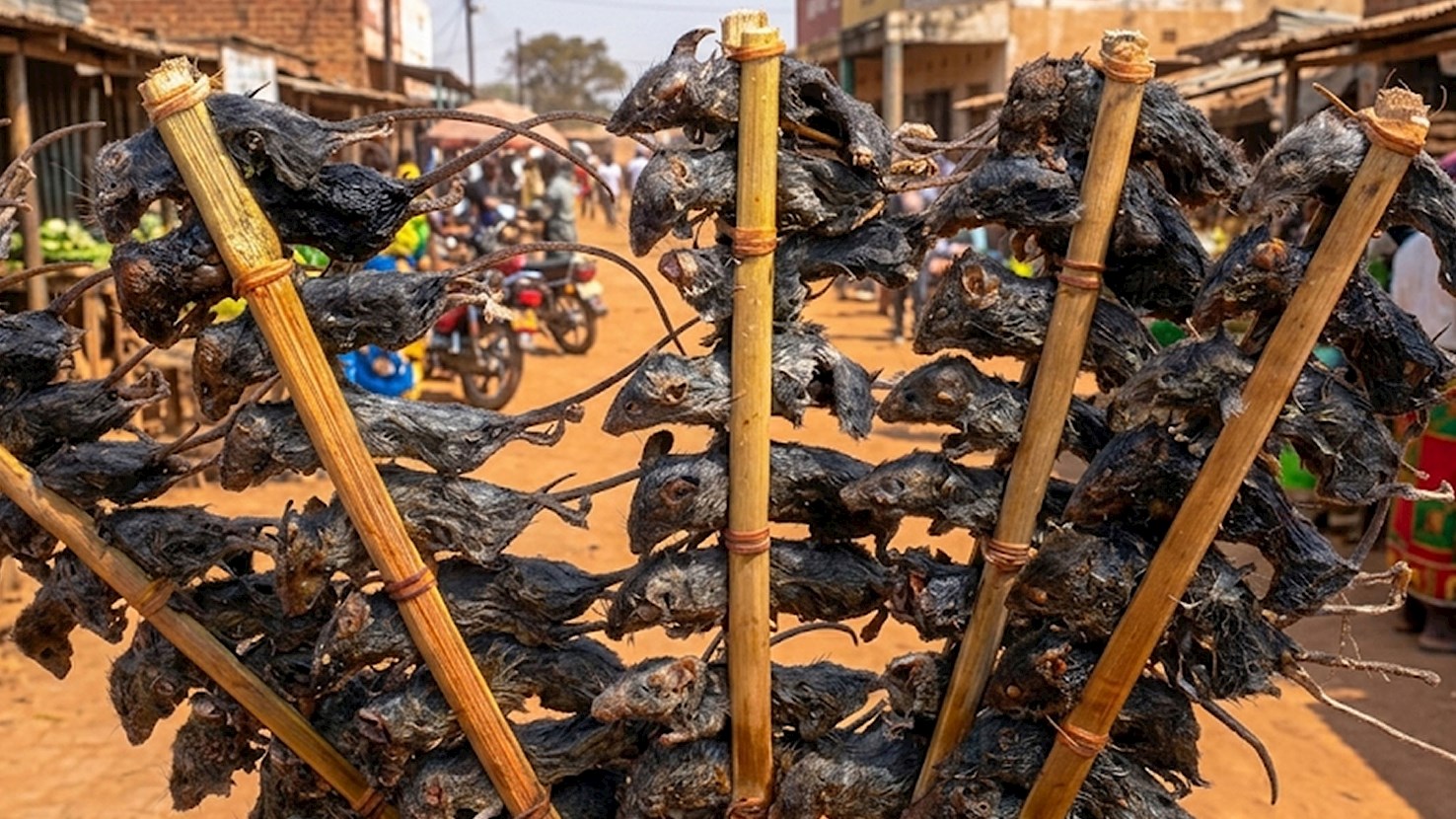
Mbeva, also known as roasted field mice, is a traditional snack in some parts of Africa, particularly in Zambia, Malawi, and some other Southern African countries. This snack is considered a delicacy in certain regions and is often enjoyed as a street food. In rural regions of Southern Africa, roasted field mice, known as mbeva, are prepared by first catching the mice, cleaning them thoroughly, and then roasting them over an open fire until crispy. They are typically consumed whole and often enjoyed as a snack or part of a meal. While mbeva can be a nutritious source of protein and other nutrients, potential health concerns include the risk of zoonotic diseases, but ensuring thorough cooking and proper hygiene can mitigate these risks.
TasteAtlas food rankings are based on the ratings of the TasteAtlas audience, with a series of mechanisms that recognize real users and that ignore bot,
nationalist or local patriotic ratings, and give additional value to the ratings of users that the system recognizes as knowledgeable.
TasteAtlas Rankings should not be seen as the final global conclusion about food. Their purpose is to promote excellent local foods,
instill pride in traditional dishes, and arouse curiosity about dishes you haven’t tried.




What People Say