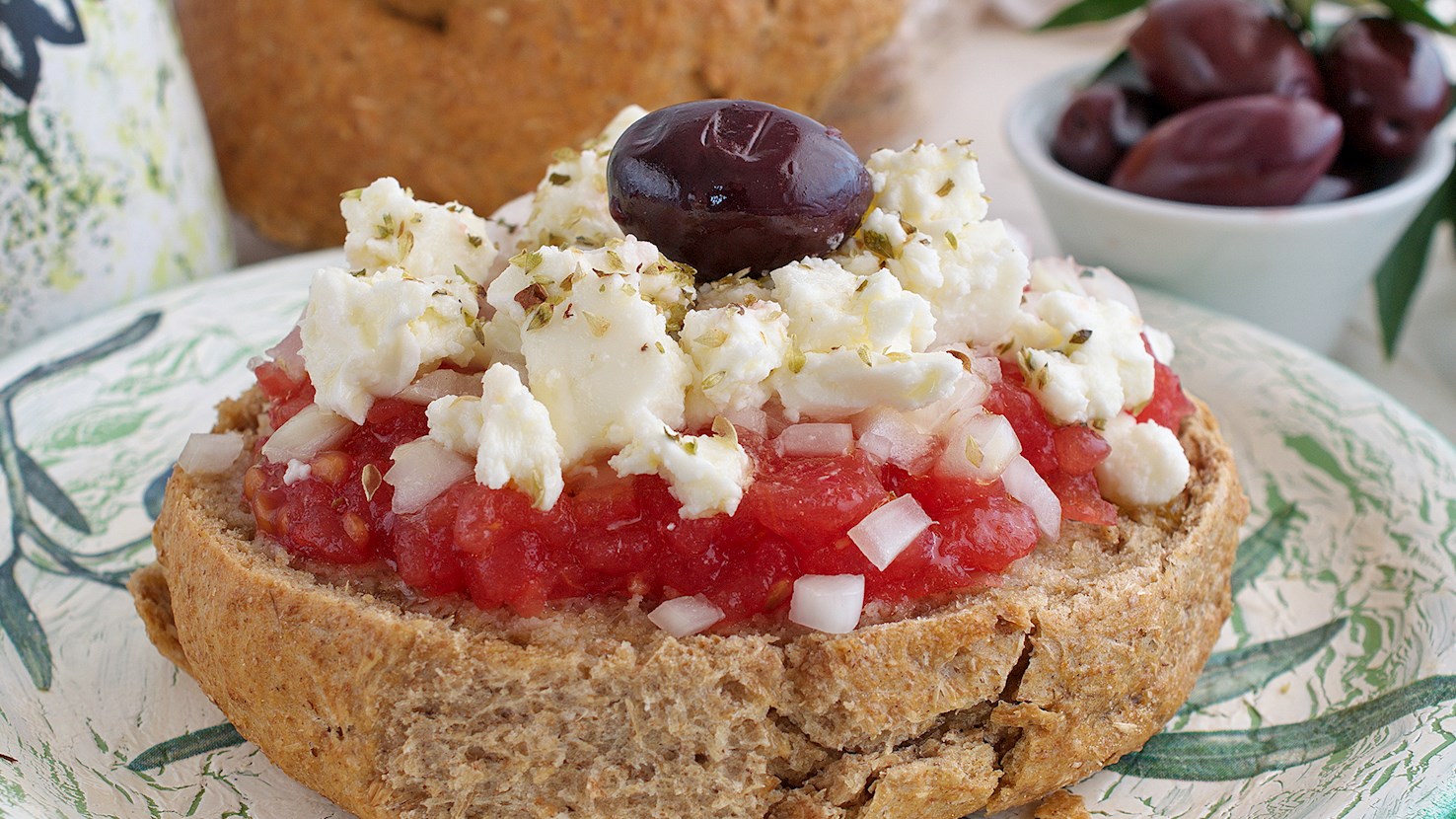
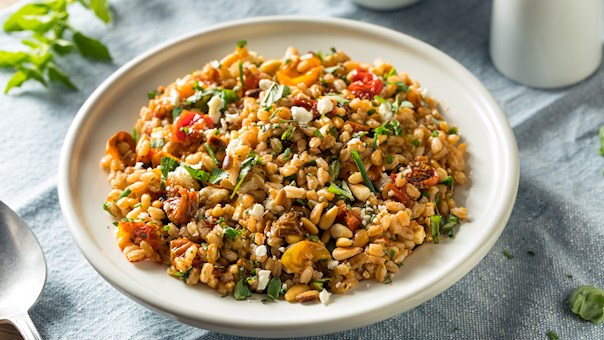
Dakos or ntakos is a traditional Cretan dish consisting of a dry barley rusk called paximadi that is topped with crumbled myzithra cheese, chopped ripe tomatoes, whole olives, capers, fresh oregano, and a few generous splashes of high-quality olive oil. It's recommended to use olive varieties such as Koroneiki, Lianes, or Tsounates. Myzithra cheese is traditionally used, and not feta, which is usually reserved for tourist restaurants. The rusk is often gently rubbed with a small piece of garlic and lightly sprinkled with sea salt. If available, kritamo (sea fennel) is also sometimes added to dakos. The dish is usually served as a meze or light dinner.
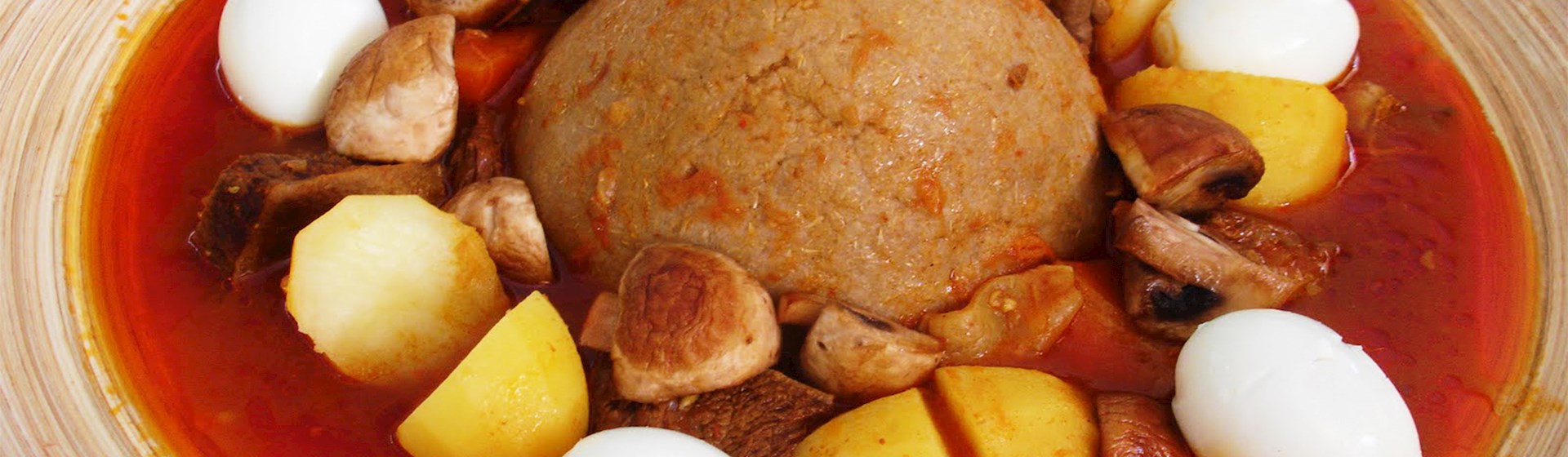
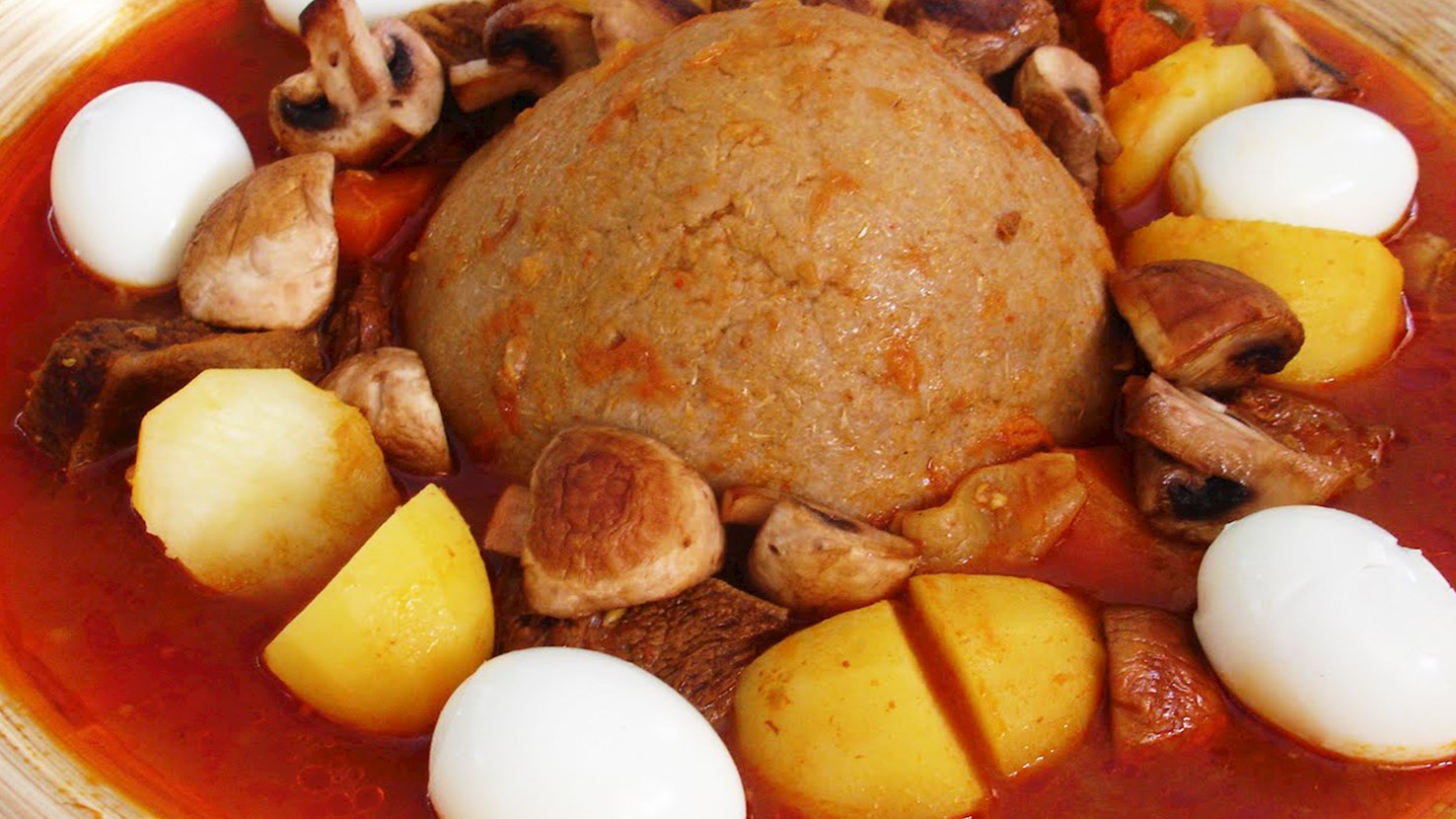
Bazin is a popular Libyan unleavened bread (also considered a dough-based dish) made by boiling barley flour and salt in water and beating it with a stick called magraf until it develops into a dough which is then baked or steamed. The bread is characterized by its hard texture, achieved by the usage of large amounts of salt. It is traditionally shared and consumed using the right hand. Bazin is often served with a tomato-based stew, potatoes, hard-boiled eggs, and mutton.
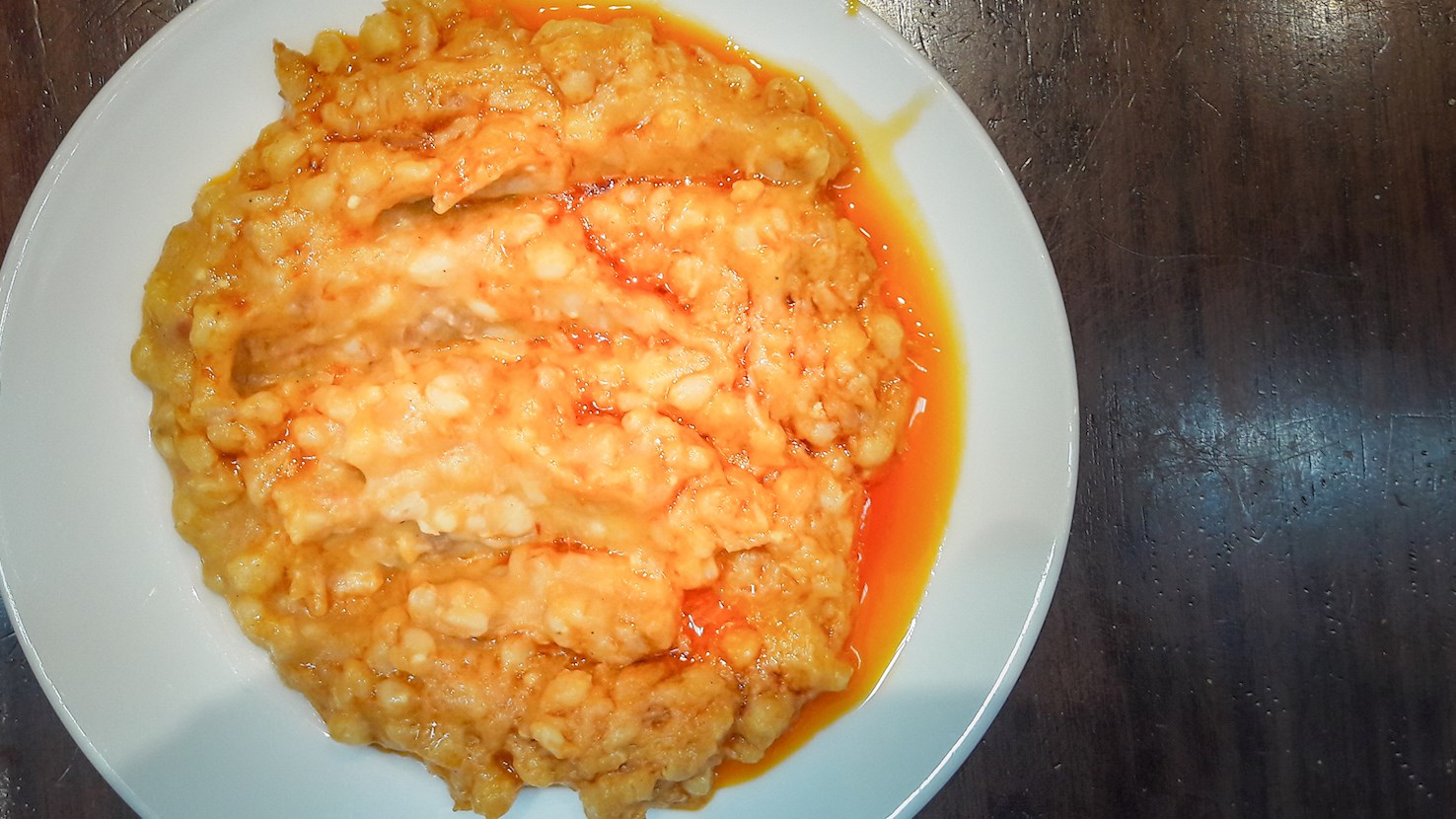
Keşkek is a traditional ceremonial dish made with lamb or chicken meat combined with wheat or barley stew. The mashed wheat or barley is placed in a bowl, followed by a sauce made with butter, meat broth, and pepper flakes, while the meat is placed on top. Traditionally, keşkek is served as a part of wedding celebrations and religious holidays in the Turkish region of Anatolia. In 2011, the dish became a part of UNESCO’s Intangible Cultural Heritage of Türkiye.
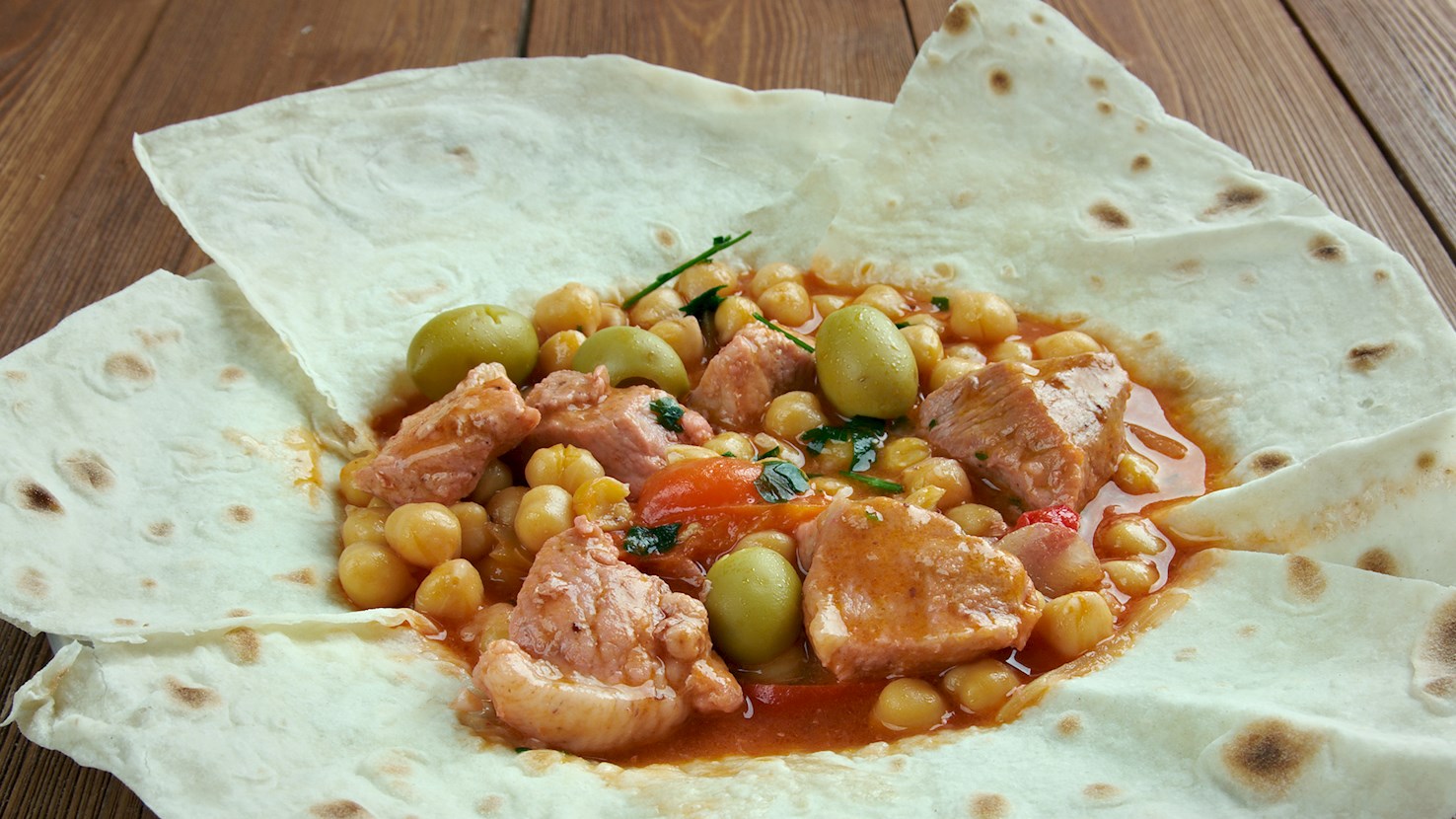
This traditional Arabian dish is most often described as a spicy lamb stew thickened with barley bread, though the word tharīd also refers to a large earthenware bowl. According to legend and several Hadith teachings, tharīd was one of the Prophet Muhammad’s favorite dishes, even though its origins are said to date back to the pre-Islamic times. Today, this satisfying dish is prepared with a variety of halāl meats which are stewed with vegetables and ladled over thin, unleavened bread. In Islamic countries, tharīd is typically enjoyed for al'iiftar, the evening meal served at sunset when Muslims end their daily Ramadan fast.
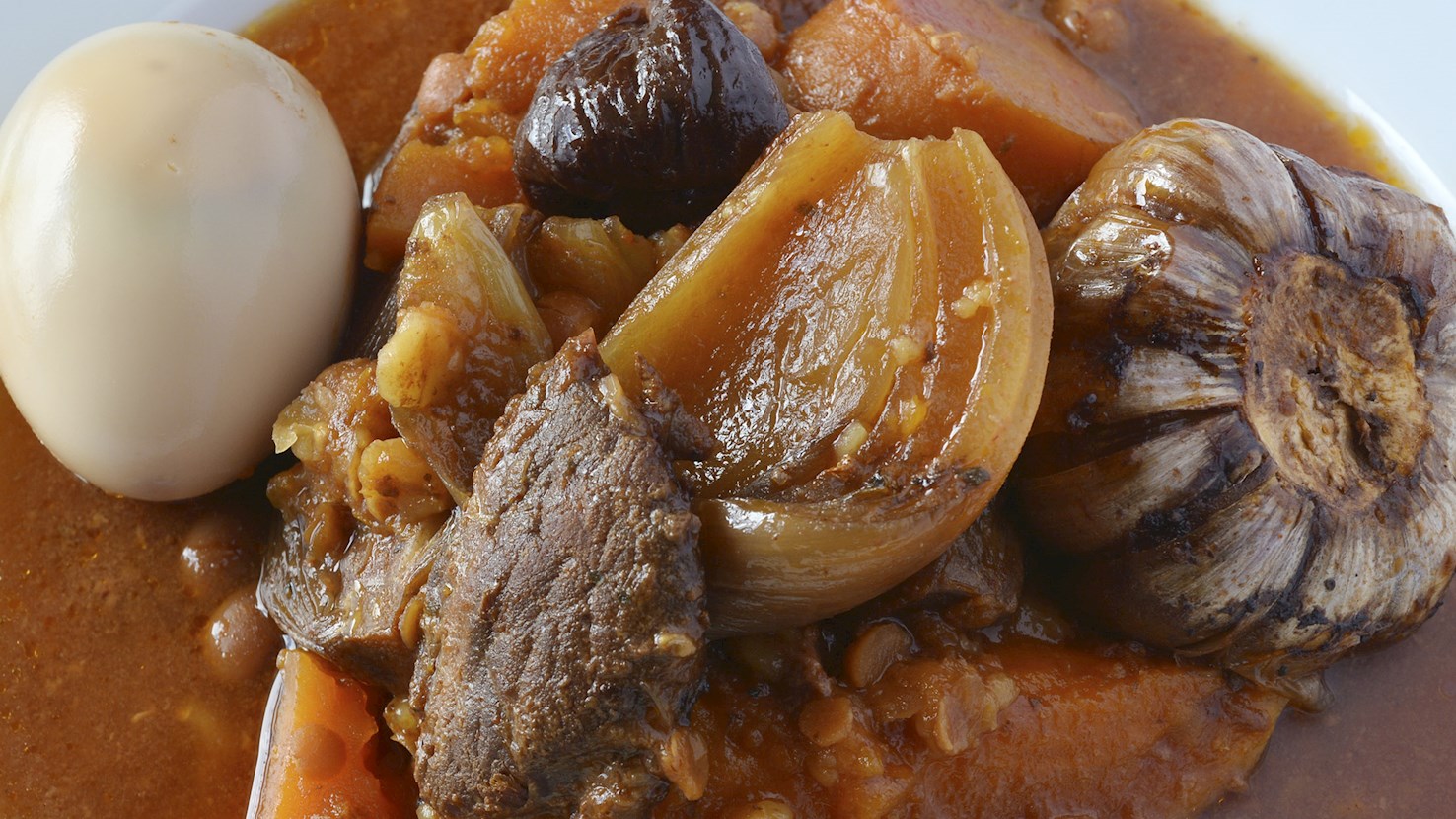
Cholent is a slow-cooked stew originating from Ashkenazi Jewish cuisine, prepared for the Sabbath when cooking is not permitted. It typically consists of beef, beans, barley, potatoes, and onions, cooked together over low heat for many hours until the ingredients meld into a thick, hearty dish. Cholent is a central feature of the Sabbath meal in Jewish communities of Eastern and Central Europe and has many regional variations reflecting local ingredients and customs. The dish developed as a practical response to Jewish dietary laws concerning the Sabbath, which prohibit lighting a fire or cooking during the day of rest. Jewish families in medieval Europe began preparing stews on Friday, placing them in communal ovens or covered pots that stayed warm until the following day. This technique ensured a hot meal could be enjoyed without breaking religious rules. Over time, cholent became an emblem of Ashkenazi home cooking, with each community, and often each family, maintaining its own preferred combination of meat, legumes, and grains. Sephardic Jews developed a similar dish called hamin, made with chickpeas, rice, and spices, showing a shared cultural approach to Sabbath meals across Jewish traditions. Preparation begins by layering ingredients in a heavy pot, often starting with onions sautéed in fat or oil, followed by chunks of beef, marrow bones, or brisket. Potatoes, beans, and barley are added, along with water or broth to cover the mixture. Seasonings typically include salt, pepper, garlic, and sometimes paprika or bay leaves. The pot is brought to a brief simmer before being covered tightly and left to cook slowly overnight, either in an oven, on a hotplate, or in a slow cooker. As it cooks, the starches and fats combine to create a rich, dense texture, with flavors deepening over time. Some versions include kishke (a stuffed casing of flour and fat), hard-boiled eggs, or dumplings that cook in the same pot, absorbing the flavor of the stew. Cholent is served hot directly from the pot, with each portion containing a mix of beans, grains, meat, and potatoes. The long cooking time produces tender meat and thick gravy, with a balance of savory and slightly sweet flavors. In Eastern Europe, goose fat or schmaltz was often used, while in modern kitchens, vegetable oil or olive oil may replace it. The dish is hearty and filling, suited for cold weather and communal Sabbath meals. It is most often eaten during Saturday lunch, following synagogue services, and accompanied by challah or pickled vegetables. In Israel, variations such as Sephardic hamin and North African dafina are popular, showing regional interpretations of the same concept. Cholent pairs well with robust red wines, light beer, or tea, complementing its rich, slow-cooked flavor. Across Jewish communities worldwide, it remains a defining example of slow-cooked comfort food shaped by faith, climate, and family practice.
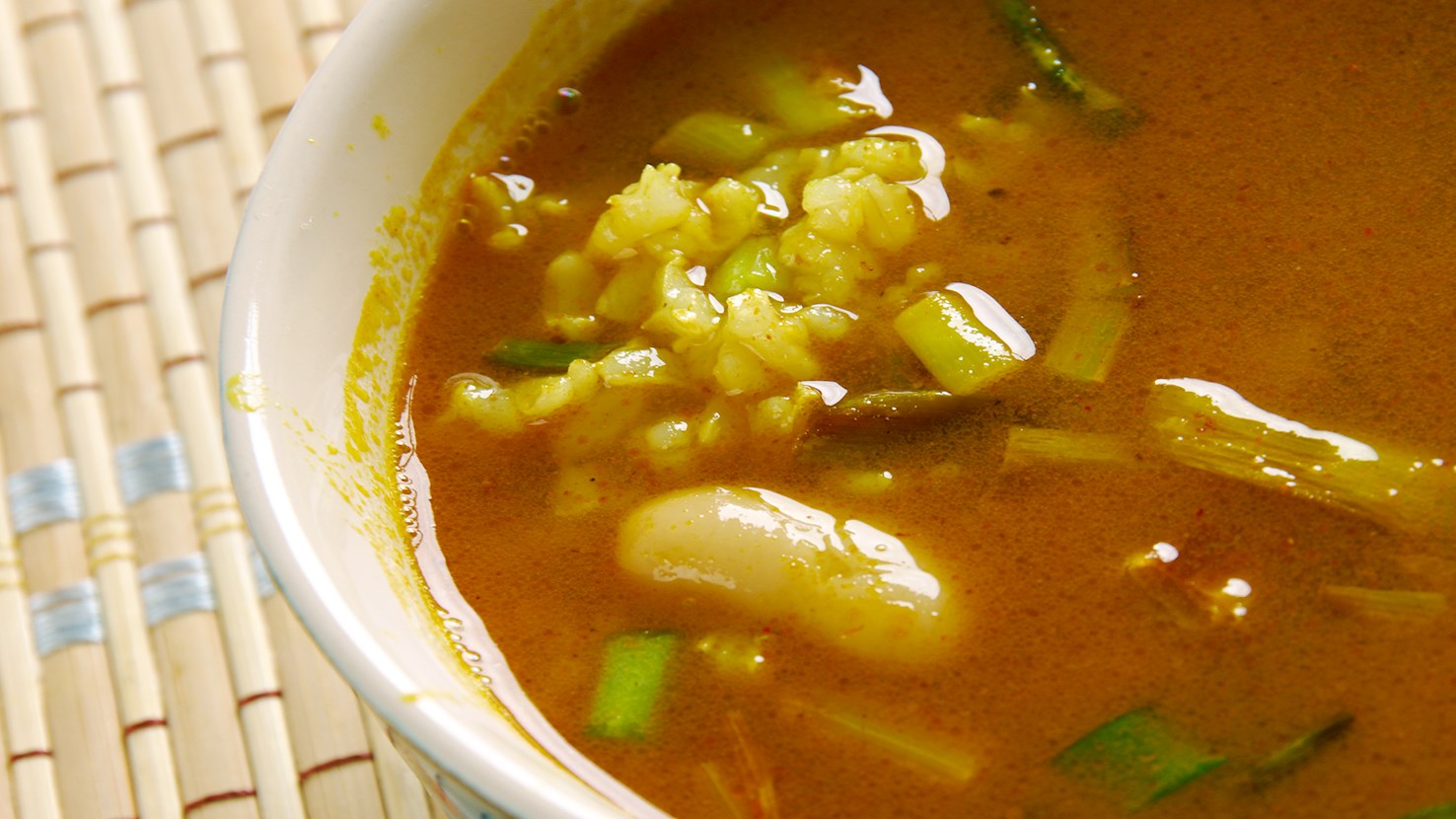
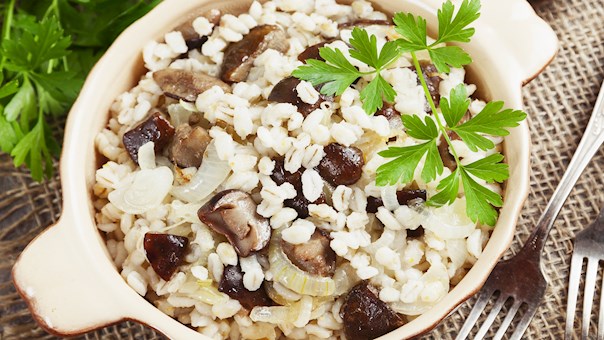
Ash-e jo is a barley-based soup from Iran, where it is widely prepared as a nourishing, slow-cooked meal often shared among families and neighbors. The name comes from the Persian word ash, which refers to thick soups or stews, and jo, meaning barley. The history of ash-e jo is closely tied to Iran’s agricultural heritage. Barley has been cultivated in the Iranian plateau for thousands of years, valued both as animal fodder and a staple grain in human diets. Recipes for barley soups appear in Persian culinary records that date back centuries, where they were recommended for their filling and restorative qualities. Over time, ash-e jo developed as a distinct dish, incorporating vegetables, herbs, legumes, and occasionally meat, making it a versatile preparation that could be adapted to seasonal produce and household means. Preparation begins by soaking barley to soften the grains. In many households, dried legumes such as lentils and beans are also soaked in advance to shorten cooking time. The base of the soup is built by gently frying onions, turmeric, and sometimes garlic in oil until aromatic. Chopped carrots, celery, and sometimes tomatoes are added for sweetness and depth. Water or meat broth is poured over the mixture, and the drained barley and legumes are stirred in. The pot simmers over low heat for several hours, allowing the barley to swell and release starch, which gives the soup a naturally thick consistency. Toward the end of cooking, generous amounts of chopped herbs, most often parsley, cilantro, dill, and spinach, are mixed in to brighten the flavor and add a green tint. Ash-e jo is typically seasoned with salt, black pepper, and occasionally a splash of verjuice or lemon juice to balance the richness. When served, the soup is ladled into bowls and often garnished with kashk, a tangy fermented whey sauce that is drizzled over the surface. Fried onions and dried mint in hot oil are also common toppings that bring aromatic contrast to the dish. While some variations include small pieces of lamb or beef, vegetarian versions are equally popular and widely consumed. Ash-e jo is most commonly eaten as a hearty lunch or dinner, particularly during colder months when warming foods are favored. It is served both at home and in small eateries specializing in ash, where pots of different varieties simmer side by side. In Iran, sharing ash-e jo is a gesture of hospitality, and it is often prepared in large quantities to offer to guests, neighbors, or during religious commemorations.
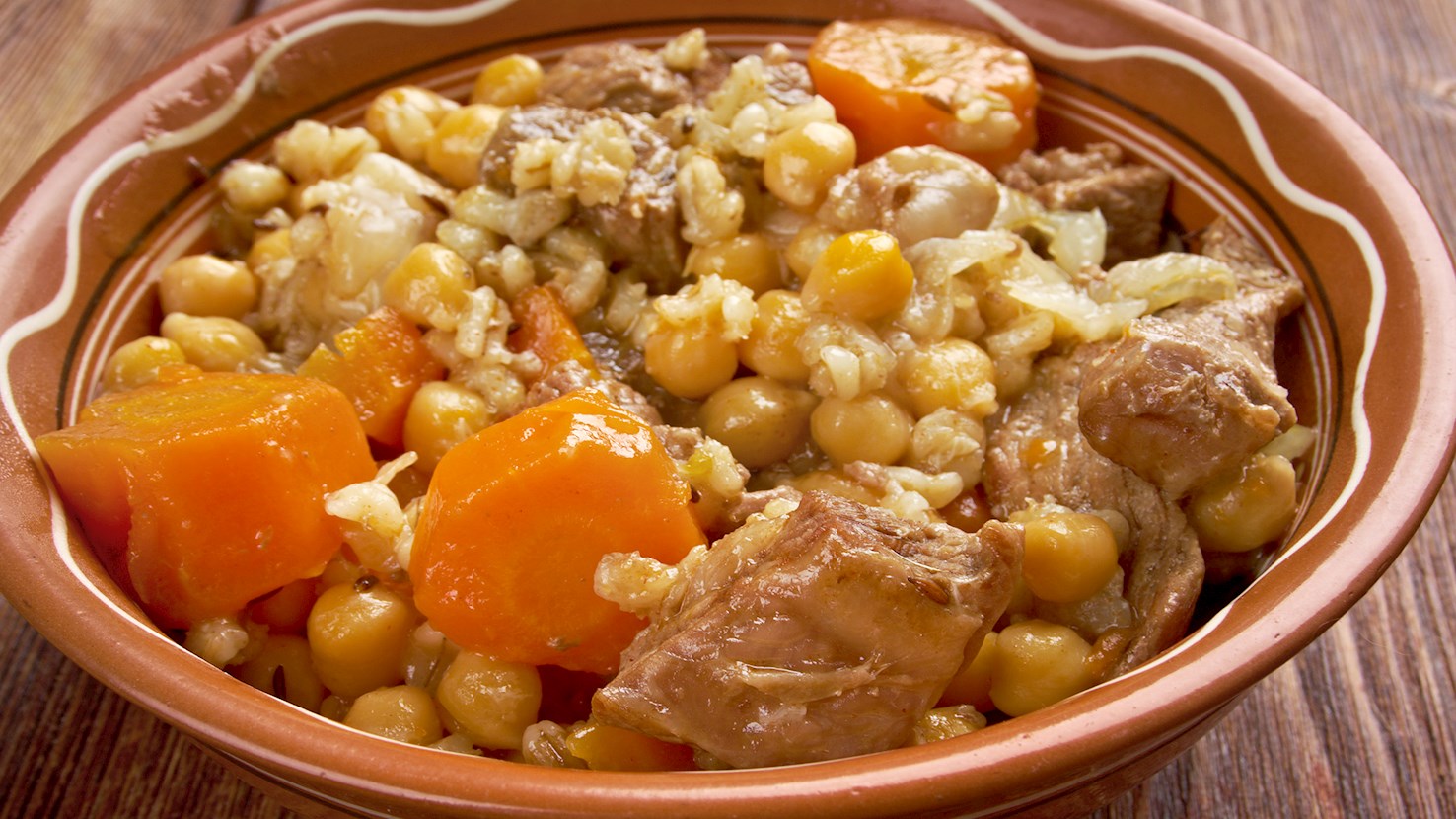
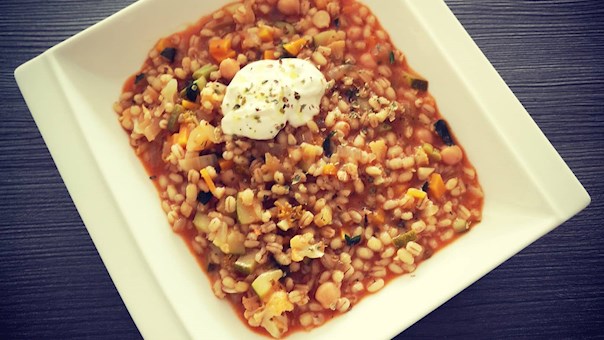
This rustic dish is the Czech version of traditional cholent–a popular Jewish stew. Developed by the Jewish community, it usually consists of various legumes such as beans or peas, barley, selected seasonings, and occasionally meat. Whether it is prepared as a hearty stew or a casserole, it is typically enjoyed as the main course on Sabbath.
Südtiroler gerstensuppe or zuppa d'orzo is a traditional soup originating from South Tyrol. The soup is usually made with a combination of barley, onions, garlic, potatoes, carrots, celery, pancetta, smoked pork or Alto Adige speck, olive oil or butter, salt, and pepper. The vegetables (except the potatoes) are sautéed in butter or olive oil. Barley is added to the pot with the seasoning and water, and the soup is simmered for about an hour. The speck and potatoes are added near the end of cooking, and the soup is then simmered until everything is tender and the consistency becomes viscous and creamy. If desired, the soup can be garnished with chopped chives. Barley soup from South Tyrol is a typical mountain farmer's dish that's served in farm taverns, mountain huts, and hotel restaurants in the area. It's especially popular in winter and during the Törggele time in autumn.
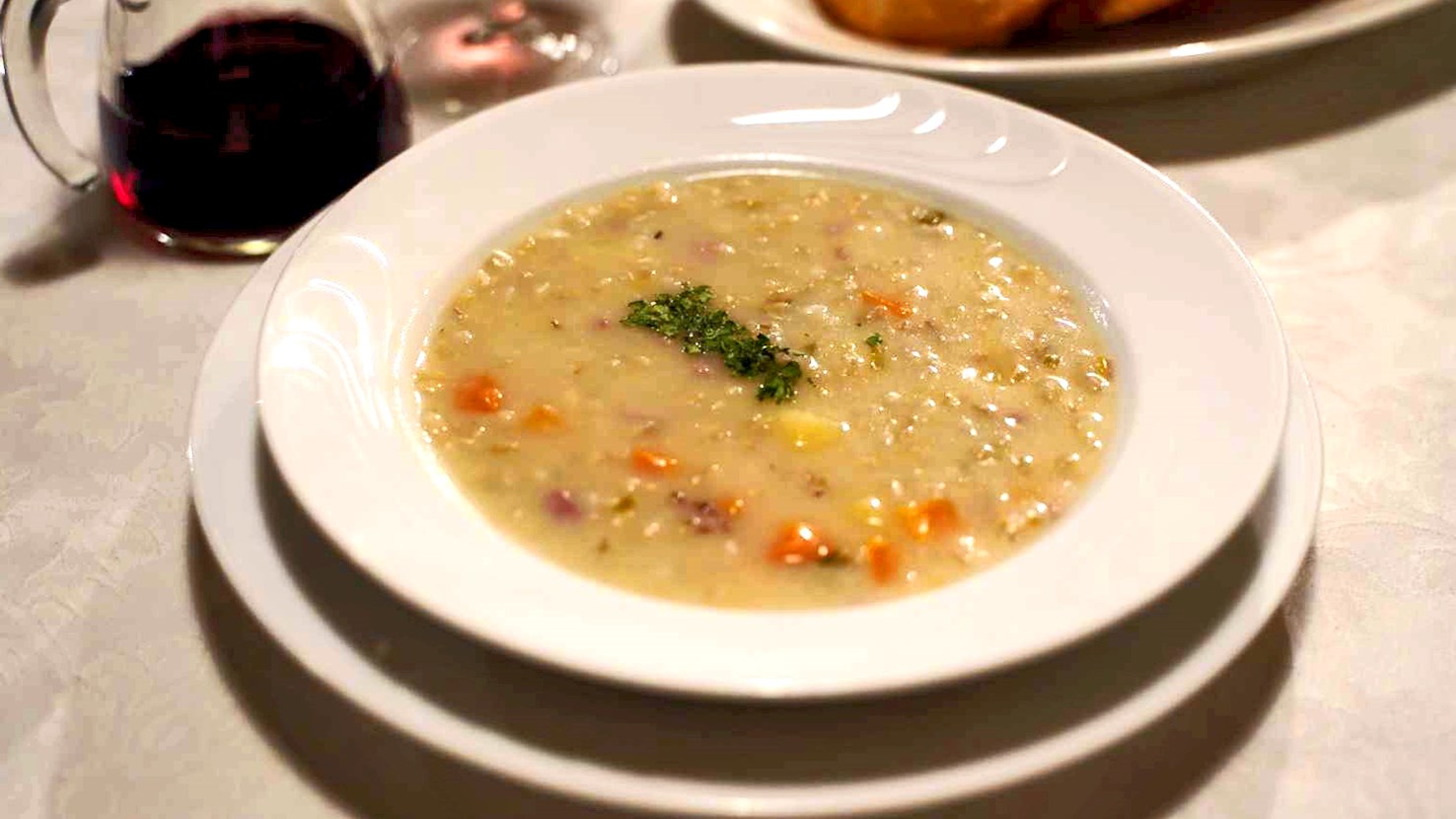
This nourishing Swiss barley soup has origins in the alpine Canton of Graubünden. Traditionally, it is made with pearl barley, stock, carrots, potatoes, celery, white cabbage, leeks, dried or smoked meat, and cream. Although the soup is not difficult to prepare, it is quite time-consuming in order to bring out all of the flavors. This thick soup is especially popular as a lunch option while skiing in the Alps.
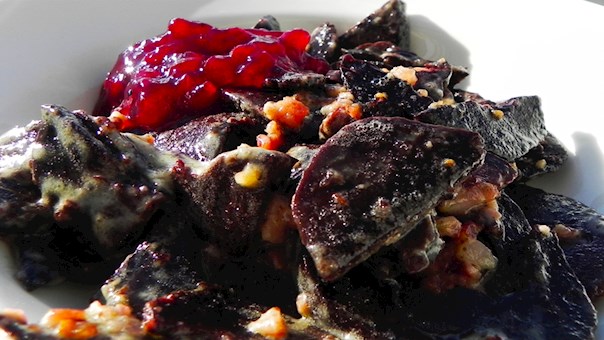
The name palt refers to different varieties of popular Swedish dumplings that are created with grated raw potatoes and various fillings. They are usually associated with the north of Sweden and are commonly referred to as pitepalt, after the city of Piteå, where they are a traditional specialty. The dough often incorporates rye, barley, or wheat flour, and the most common filling is a mixture of sautéed onions and fried bacon. It is said there are as many palt varieties as there are villages in Sweden, and one of the most intriguing varieties is called blodpalt, which incorporates animal blood. The dumplings are usually served doused in melted butter, plain or sour cream, lingonberry jam, béchamel sauce, or milk. The boiled potatoes version is more common in the southern parts of the country, where it is known under the name korppkakor.
TasteAtlas food rankings are based on the ratings of the TasteAtlas audience, with a series of mechanisms that recognize real users and that ignore bot,
nationalist or local patriotic ratings, and give additional value to the ratings of users that the system recognizes as knowledgeable.
For the “35 Best Rated Dishes with Barley” list until May 22, 2026, 989,150 ratings were recorded, of which 646,958 were recognized by the system as legitimate.
TasteAtlas Rankings should not be seen as the final global conclusion about food. Their purpose is to promote excellent local foods,
instill pride in traditional dishes, and arouse curiosity about dishes you haven’t tried.