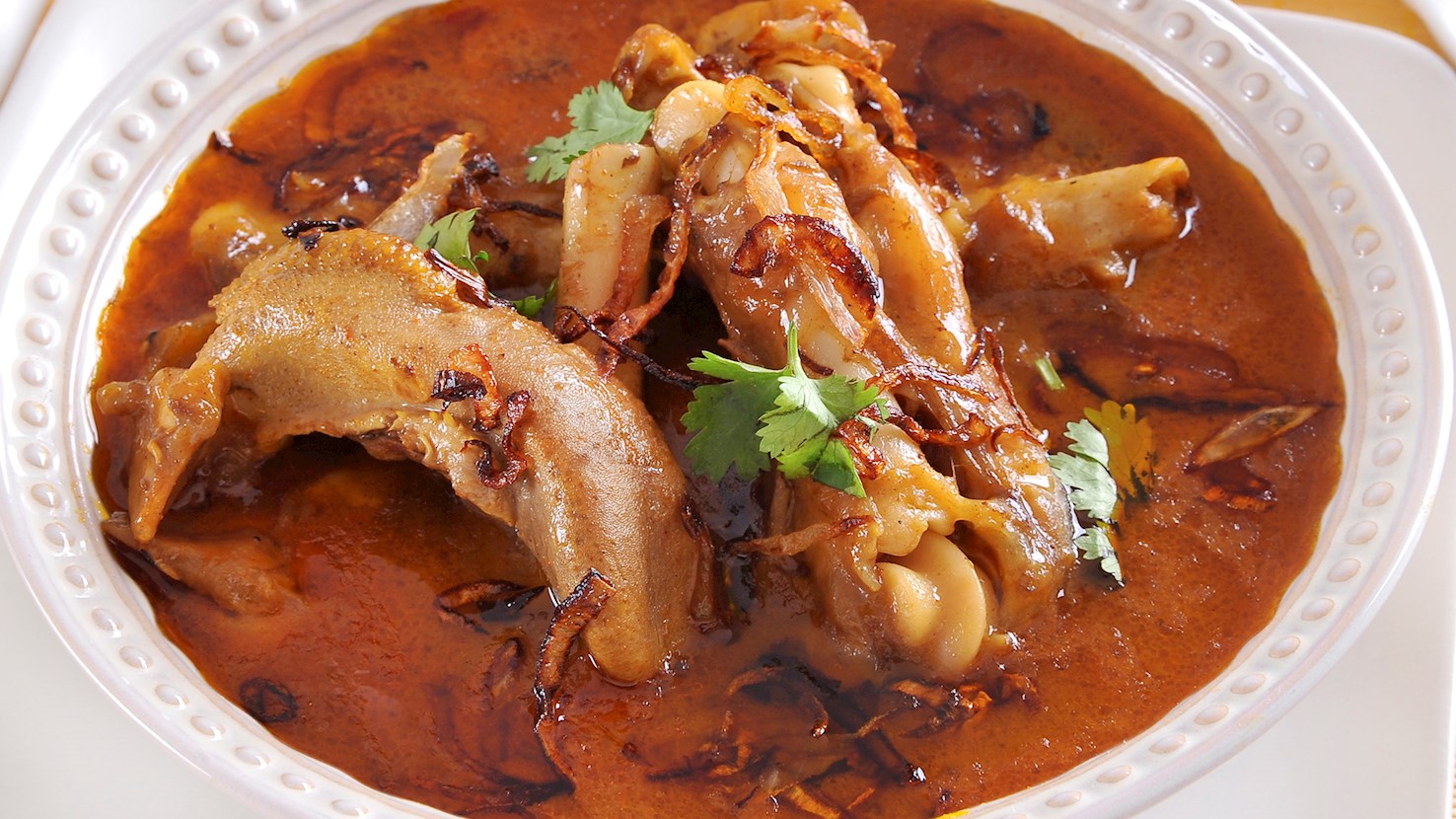
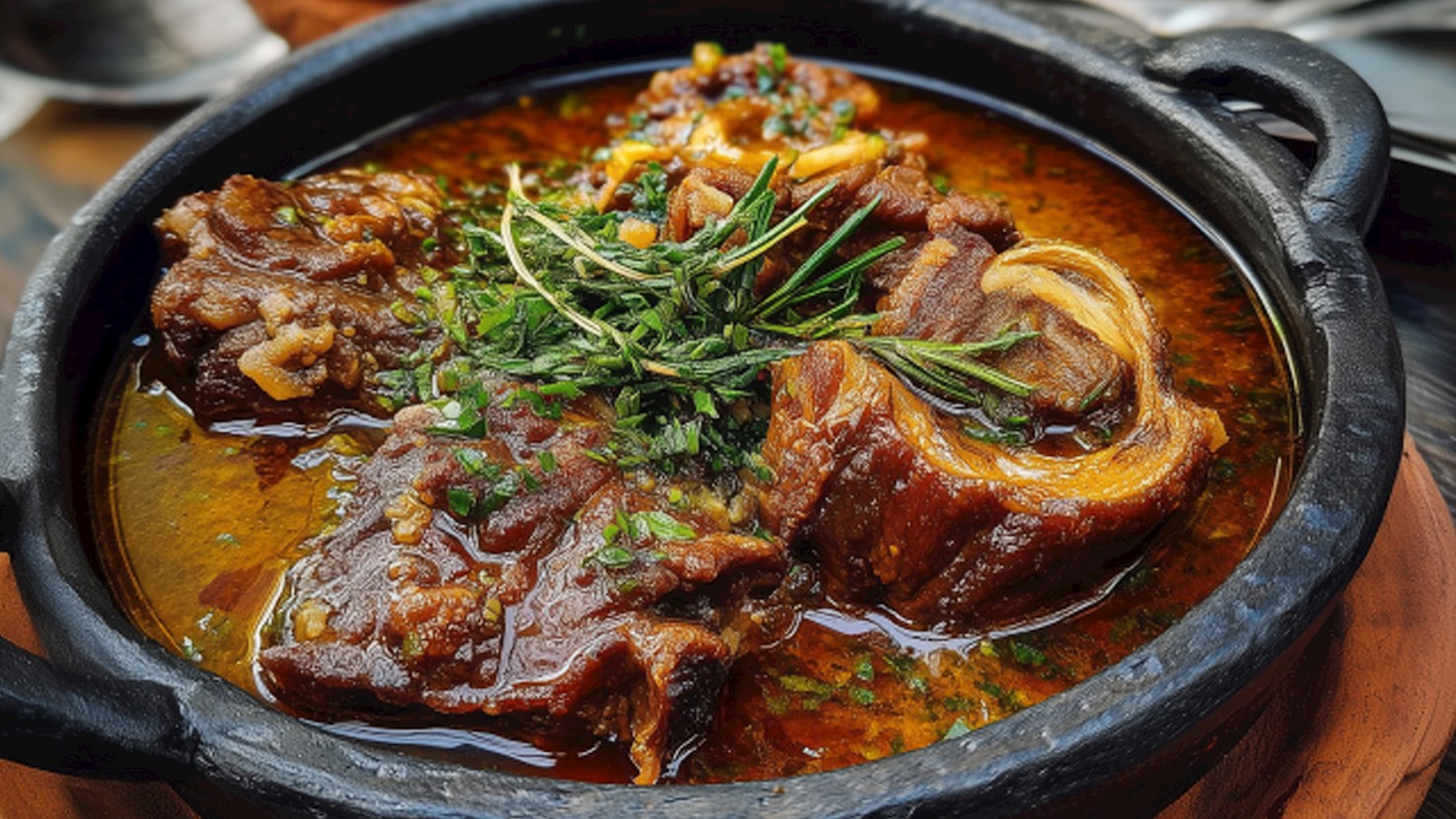
Nihari is a popular meat-based dish originating from Old Delhi. When Pakistan gained independence in 1947, numerous immigrants from Delhi settled in Karachi, where they established their own restaurants, so nihar is also associated with Pakistani cuisine. The dish consists of slowly cooked meat such as beef shanks, mutton, or chicken. The meat is cooked together with stock and numerous spices such as cumin, cloves, garam masala, and cardamom in big vessels which are sealed with dough. It takes anywhere from six to eight hours for nihari to be cooked properly, and it is traditionally consumed for breakfast, since the name of the dish is derived from the Arabic word nahar, meaning morning. Originally, nihari was consumed by the Nawabs in the Mughal Empire as a breakfast dish, before the usual morning prayers, although some people believe that the dish was invented in the royal kitchens of Awadh. It is usually served with tandoori rotis or khameeri rotis, and some like to garnish nihari with green chilis on top. Nihari's texture, spiciness, and tenderness of the meat make it a favorite among many Indian and Pakistani people.
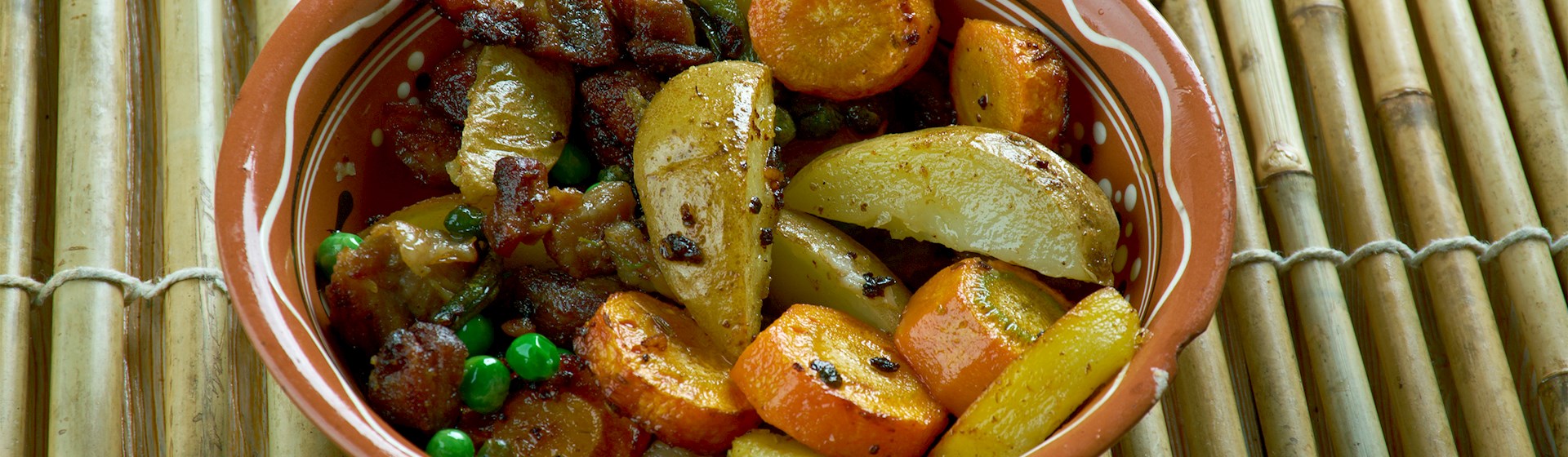
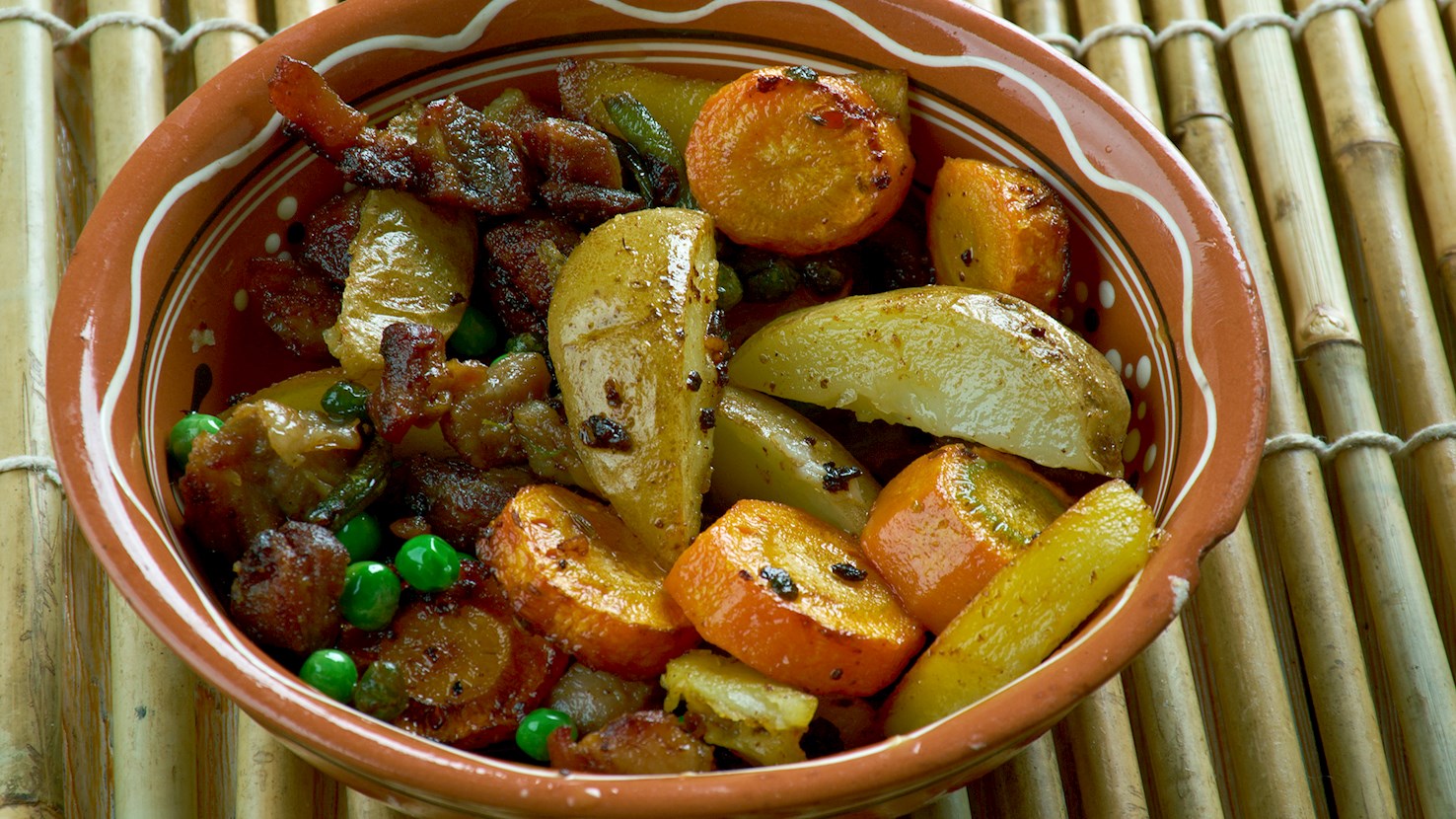
Jarret de boeuf is a traditional stew (also popular in ther formar colony Chad) consisting of beef cooked with vegetables such as carrots, sweet potatoes, leeks, and aubergines. The stew should be cooked for at least two hours until the meat and vegetables become tender. It is recommended to serve the dish in bowls and pair it with fufu or rice.
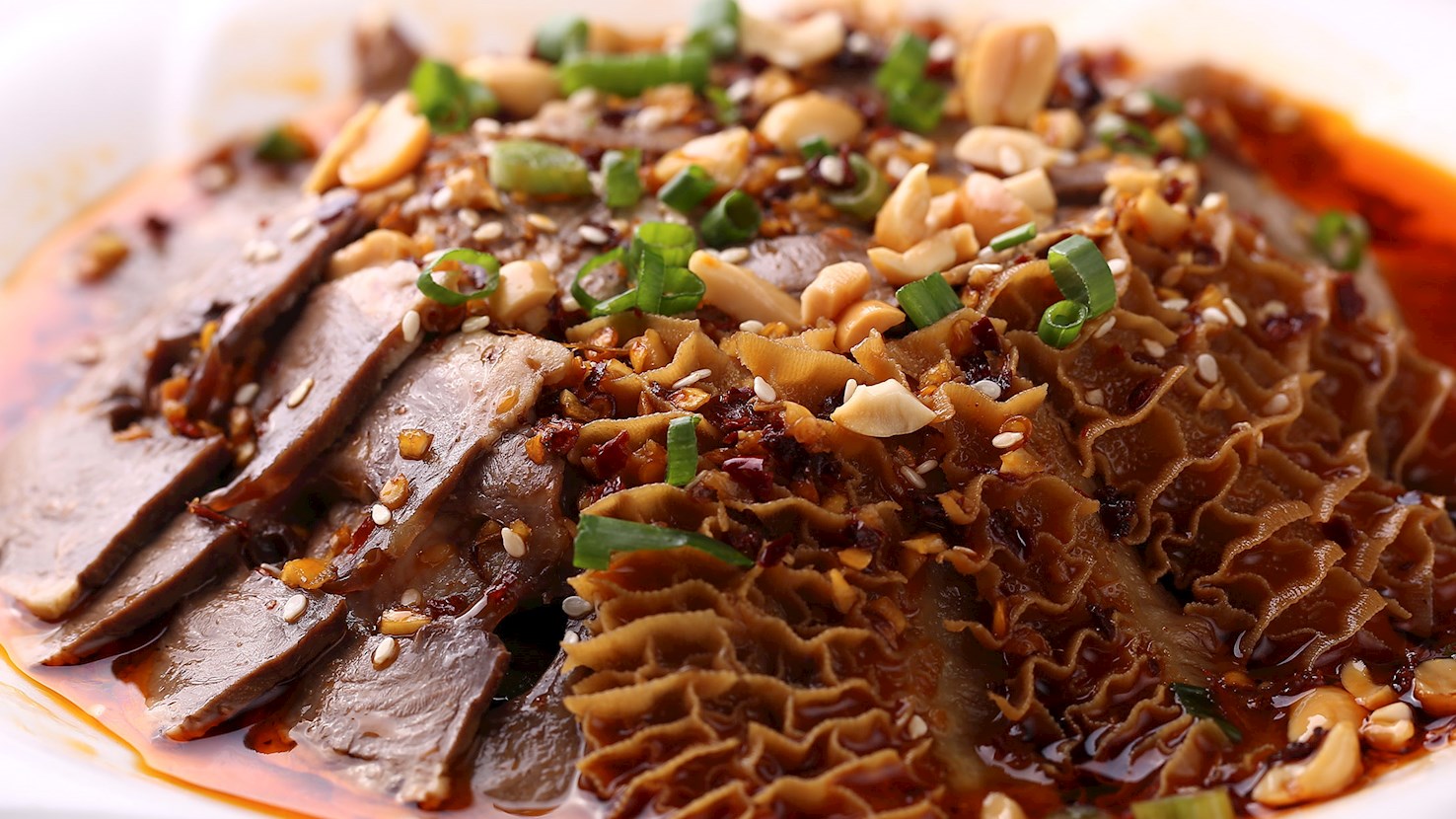
Fūqī fèipiàn is a Sichuanese cold dish made from thinly sliced beef and offal dressed in a fragrant, spicy sauce. The dish gained its distinctive name, meaning “husband and wife slices,” from a couple in Chengdu, Guo Chaohua and Zhang Tianzheng, who became famous in the early twentieth century for their exceptional version sold at street stalls. Their skill in seasoning and preparation turned what began as a humble vendor’s snack into one of the most recognizable representatives of Sichuan cuisine. Over time, the name stuck, spreading beyond Chengdu until it became synonymous with this particular style of seasoned beef. Preparation begins with beef heart, tongue, and tripe simmered in a lightly spiced broth until tender, then cooled and sliced thin to achieve a uniform texture. The sauce is what defines the dish: chili oil blended with Sichuan peppercorn, garlic, soy sauce, vinegar, sugar, and sesame paste, each component calibrated to strike a balance between numbing, heat, salt, and subtle sweetness. Once mixed, the sliced meat is coated thoroughly, allowing the oil to glisten over the surface and carry the fragrance of pepper and spice. Peanuts, sesame seeds, and fresh cilantro are often sprinkled on top, adding crispness and color. The result is both rich and precise, with the coolness of the meat offset by the warmth and sting of the dressing. Fūqī fèipiàn is served widely in Sichuan restaurants and across China, often as an appetizer or part of a shared spread. It pairs naturally with plain rice or light noodles that absorb its sauce without dulling its sharpness. Many people enjoy it with cold beer or mild grain spirits, as the drink’s crispness refreshes the palate between bites.
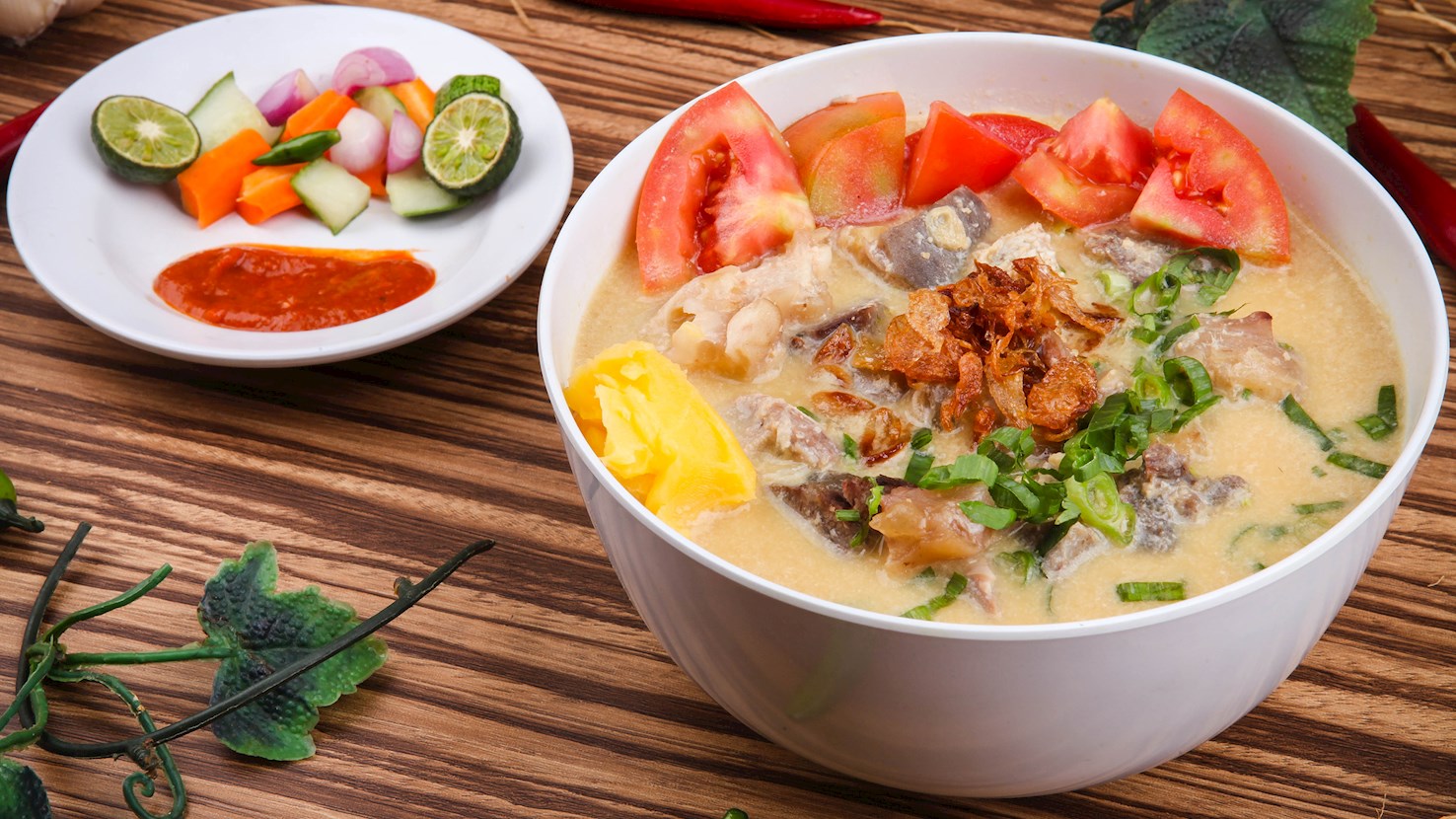
Soto kaki is a rich, aromatic Indonesian soup that originates from Jakarta and is most commonly associated with Betawi cuisine. The name translates to “leg soto,” referring to its defining ingredient: cow’s leg or trotter, often including skin, tendons, and marrow-rich bones. This dish stands out among Indonesia’s many regional soto variations due to its use of gelatinous cuts of meat and a savory, coconut milk–based broth. It is a popular street food in the capital city and is typically served hot, especially in the evening or at night, by roadside vendors and small eateries. The broth of soto kaki is made by simmering bones and cow’s leg parts for several hours to extract flavor and gelatin, creating a thick, slightly oily base. The soup is further enriched with coconut milk and a blend of spices that usually includes garlic, shallots, ginger, galangal, lemongrass, coriander, and sometimes nutmeg or cinnamon, depending on the vendor or home recipe. The result is a full-bodied, fragrant soup with a creamy texture and depth from the combination of beef and coconut elements. Turmeric gives the broth its characteristic pale yellow color. The meat in soto kaki is soft and tender, often slightly chewy due to the connective tissue in the cuts used. It is usually served alongside or over steamed rice or compressed rice cakes called lontong, and topped with a range of condiments such as fried shallots, lime wedges, sambal, sweet soy sauce, celery leaves, and occasionally emping crackers or sliced tomatoes. Some versions include vermicelli or glass noodles as well. Diners often personalize their bowls with these toppings and sauces to suit their taste preferences. While soto kaki is available in various parts of Indonesia, it is most closely linked to Jakarta’s street food culture, particularly in Betawi neighborhoods and areas where night markets thrive. It has been a mainstay in the city’s culinary offerings for decades and is often enjoyed as a hearty late dinner. Vendors often advertise their soto kaki with large cauldrons placed in front of carts or stalls, displaying the cooked cow leg or bones as a visual marker of authenticity.
Chambari, sometimes also known as chambaril, is a stew from the Brazilian state of Tocantins, made with beef shank on the bone, including marrow. Deeply rooted in the local food culture, it's considered a symbol of regional identity and was officially declared part of the Cultural and Gastronomic Heritage of Tocantins in 2017. The dish is prepared by slowly simmering beef shank with garlic, onions, tomatoes, sometimes peppers, and parsley until the meat becomes tender, allowing the marrow to enrich the broth. Traditionally, it's served with white rice, cassava flour (farinha de mandioca), green herbs (usually parsley), and hot pepper sauce. While commonly eaten at lunch, in Paraíso do Tocantins—where the dish is especially celebrated—chambari is also a popular breakfast item, renowned for its hearty and sustaining qualities. For this reason, it is also often eaten as a hangover cure. Chambari is typically sold at street food stalls, but also served at markets, festivals, and community gatherings, and even featured at the annual Chambari Festival.
TasteAtlas food rankings are based on the ratings of the TasteAtlas audience, with a series of mechanisms that recognize real users and that ignore bot,
nationalist or local patriotic ratings, and give additional value to the ratings of users that the system recognizes as knowledgeable.
For the “5 Best Rated Dishes with Beef Shank” list until May 22, 2026, 989,163 ratings were recorded, of which 646,971 were recognized by the system as legitimate.
TasteAtlas Rankings should not be seen as the final global conclusion about food. Their purpose is to promote excellent local foods,
instill pride in traditional dishes, and arouse curiosity about dishes you haven’t tried.