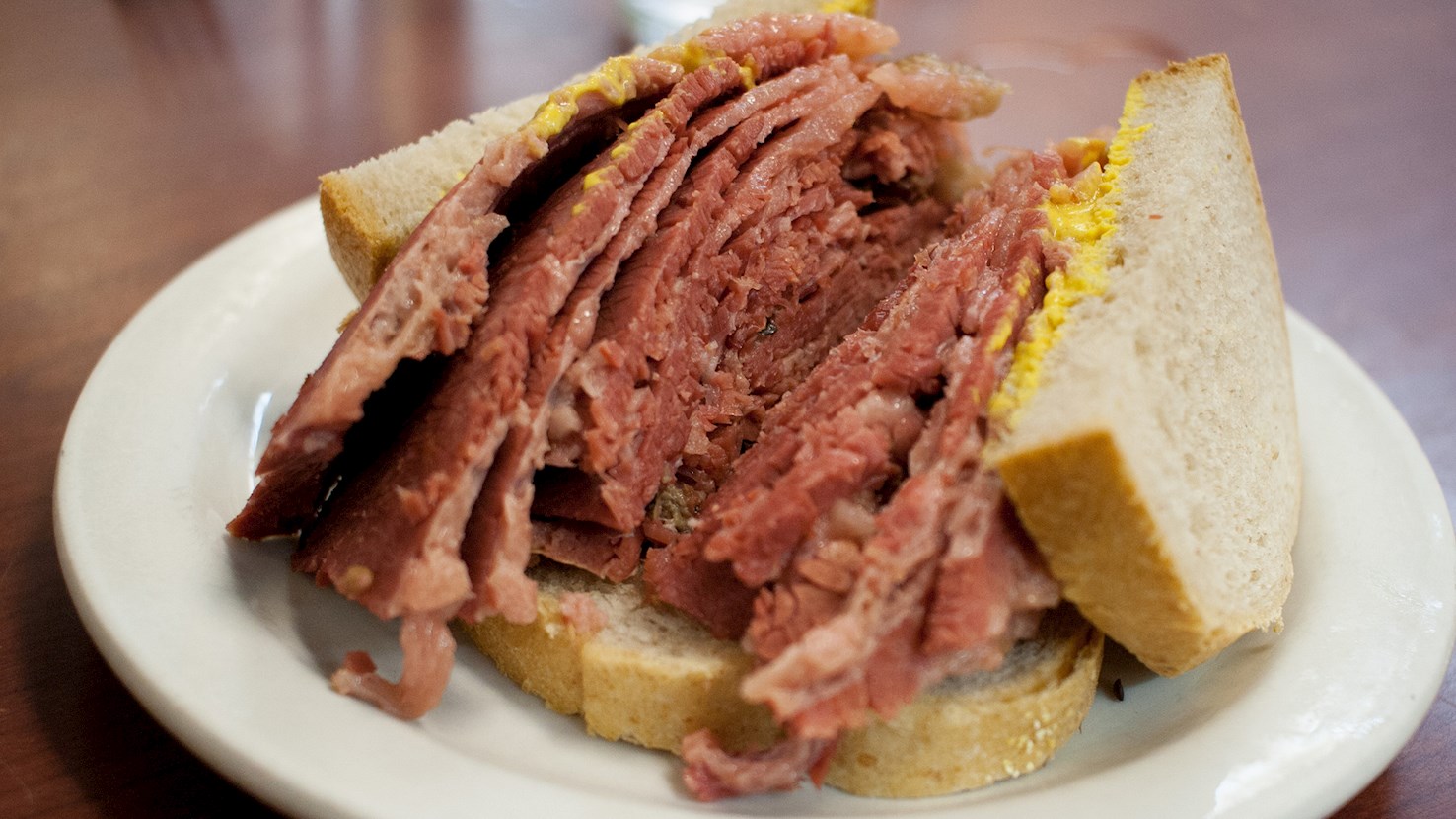
Montreal smoked meat is a type of deli meat sandwich that originated in Montreal, Canada. It's similar to corned beef and pastrami sandwiches, but the meat used has its own distinct preparation process and flavor profile. Pastrami was invented in Romania, a cured beef product prepared by pickling and smoking the fatty and succulent cuts of brisket, then covering them with a coating of various spices and peppercorns. Reuben Schwartz, a Romanian immigrant, started making smoked meat in Montreal in 1928, a product similar to the original pastrami. Called viande fumé in the Quebec province, it is a much sturdier product with an intense, smoky flavor. Prime beef brisket is marinated for at least ten days in a mixture of herbs and spices, and is then smoked, hand-sliced, and placed in delicious, mouth-watering rye-bread sandwiches, accompanied by French fries, pickles, coleslaw, yellow mustard, peppers, or olives. It is no wonder that there are huge lines in front of Schwartz's Deli in Montreal because everyone wants to try this world-famous smoked meat sandwich.
Corned beef boxty is an Irish dish that combines two elements strongly associated with the country’s food culture: the potato-based pancake known as boxty and the cured meat that became popular in Irish households and abroad, especially in the diaspora. Boxty itself comes from rural Ireland, where potatoes were central to the diet and used in as many forms as possible. Corned beef, while often thought of as Irish, became more widespread among Irish communities abroad, particularly in America, where beef was more accessible than in Ireland itself. The preparation of corned beef boxty starts with the making of the potato batter, which involves combining grated raw potatoes with mashed cooked potatoes, flour, and buttermilk to form a mixture that is fried on a griddle or pan until golden and crisp. Into this, corned beef is folded, either diced into the batter itself or layered between the pancakes, depending on the cook’s preference. The beef provides a savory, salty counterpoint to the mild starchiness of the potato, while the buttermilk in the batter lends a slight tang that balances the richness. The dish is usually fried in butter or oil, producing a crisp exterior with a soft, comforting interior. Today, corned beef boxty is eaten both in Ireland and in countries with large Irish populations, especially during festive occasions like St. Patrick’s Day, where it reflects both tradition and adaptation. It pairs naturally with stout or Irish ale, though lighter beers or even cider can complement its flavors.
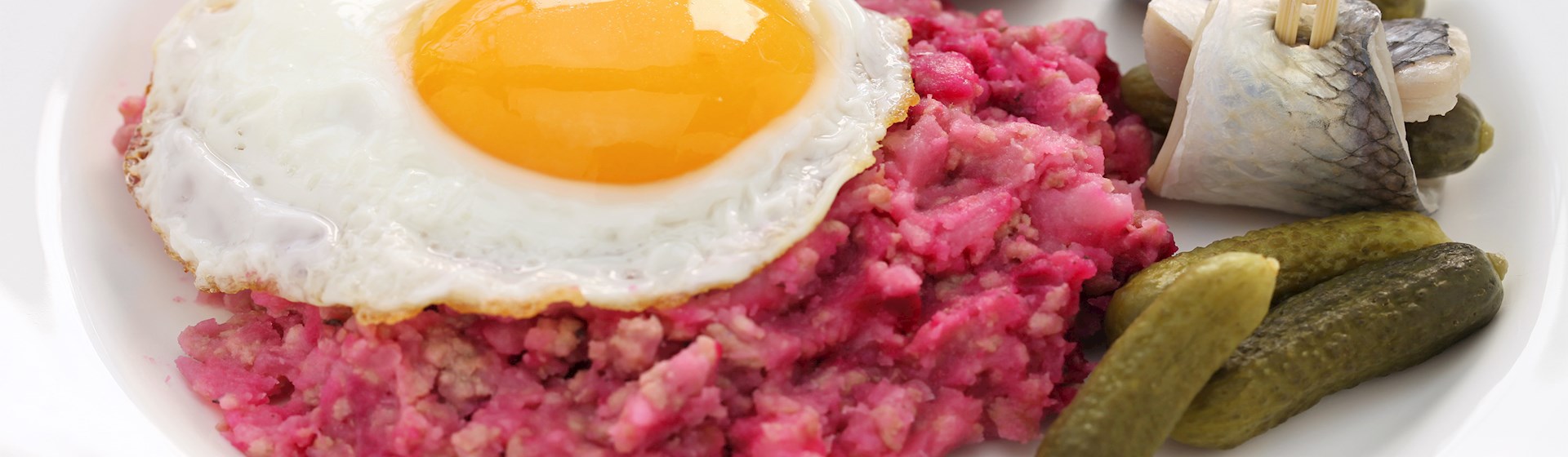
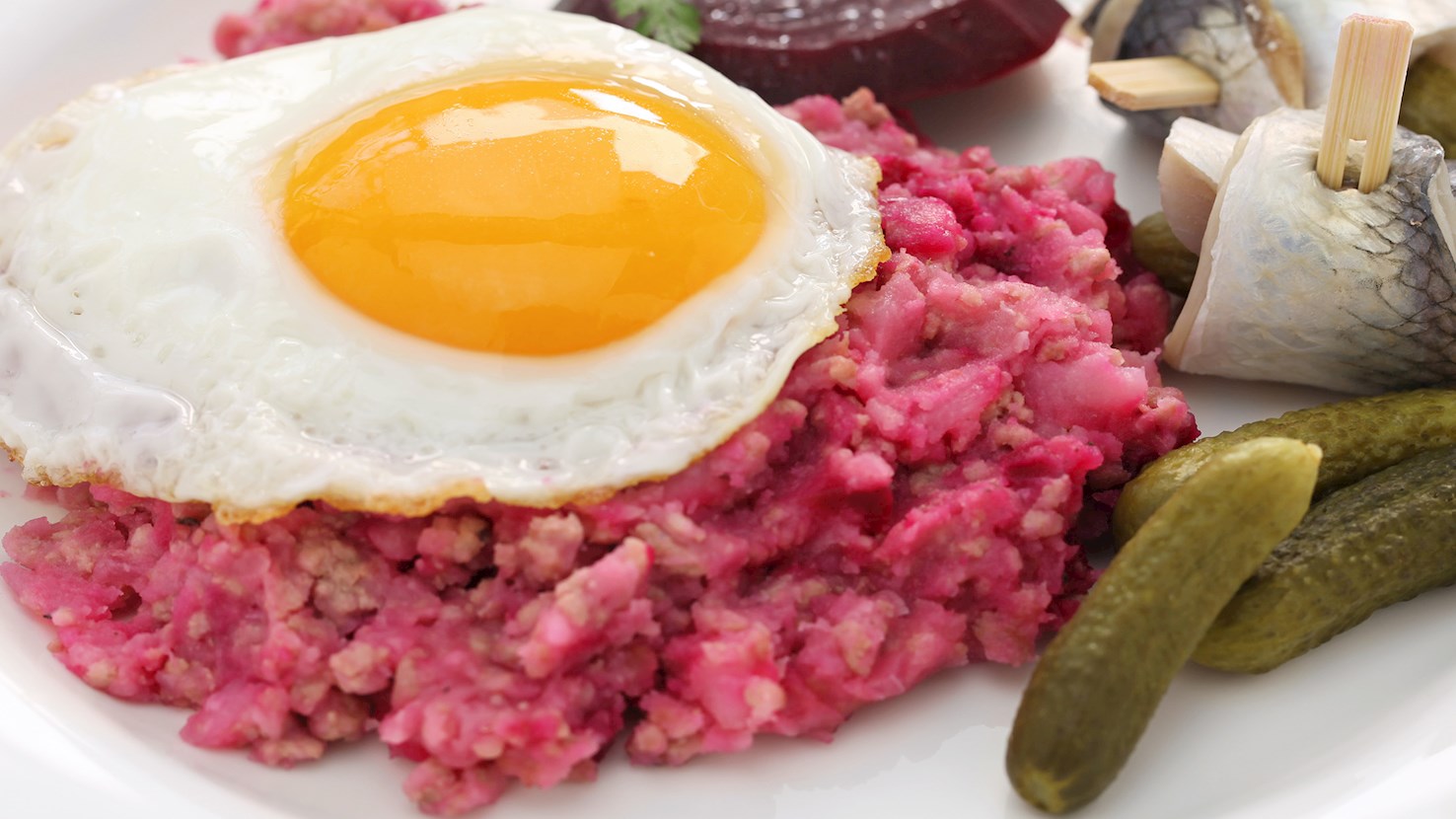
Labskaus is a dish from northern Germany consisting of corned beef, mashed potatoes, and beets, with additional ingredients such as fried eggs, pickles, and rollmops—a pickled, rolled herring. Although its origins are somewhat murky, the dish was most probably invented in the 16th century, when it was typically eaten by poor people, sailors, and seamen, due to the fact that pickled and canned foods were inexpensive and could last during long travels. Although the dish is particularly popular in the cities of Hamburg, Bremen, and Lübeck, variations of labskaus are prepared and consumed throughout northern Europe.
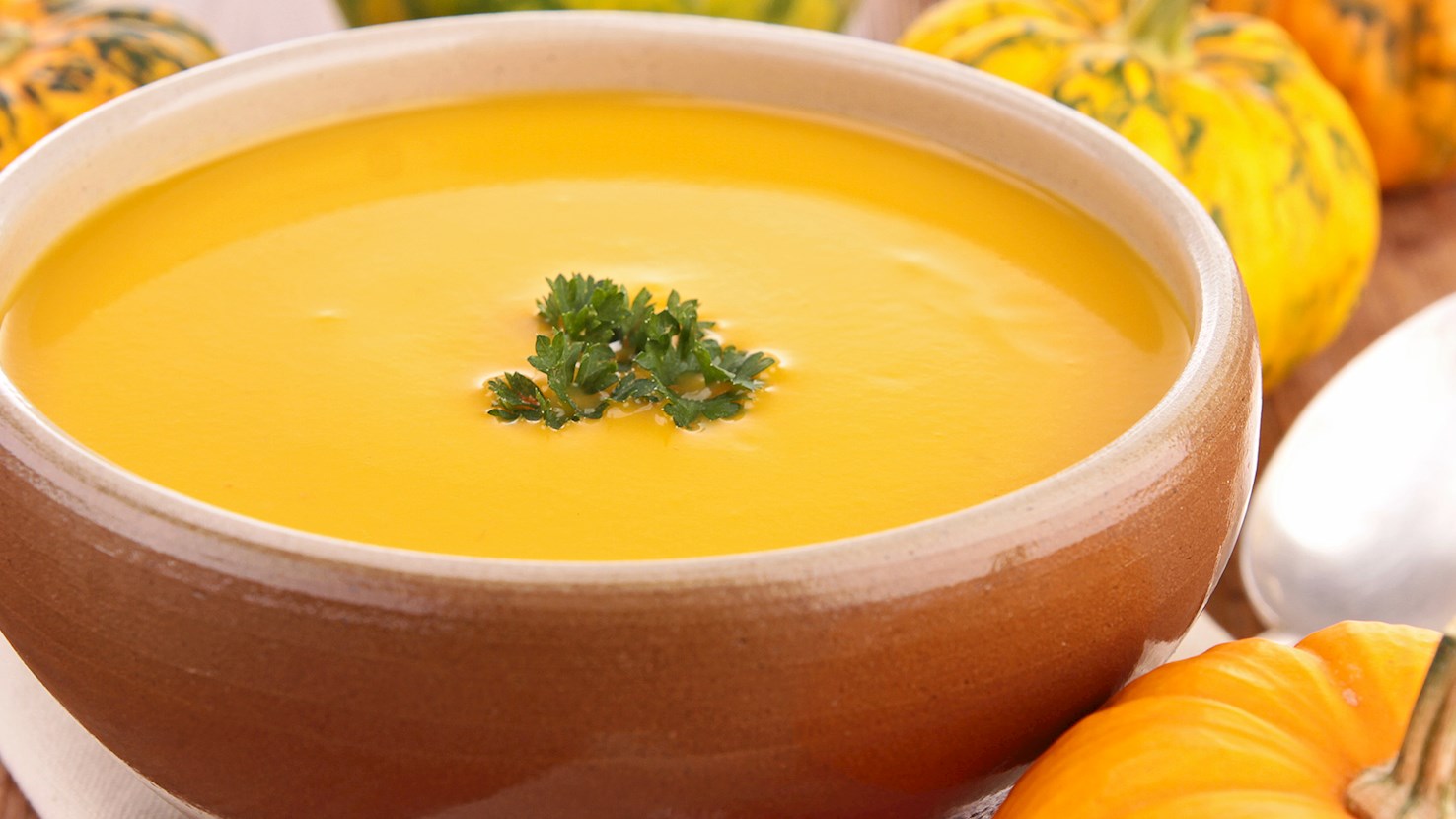
Sopi di pampuna is a flavorful pumpkin soup from Aruba that is commonly consumed throughout the Caribbean islands. Apart from pumpkin, other key ingredients in the soup are salted beef, heavy cream, cinnamon, Tabasco sauce, and vegetables such as onions, celery, leeks, and potatoes. The charasteristical deep orange color of sopi di pampuna is made by heating ruku seeds in hot oil, discarding them, and using the colored oil in the soup.
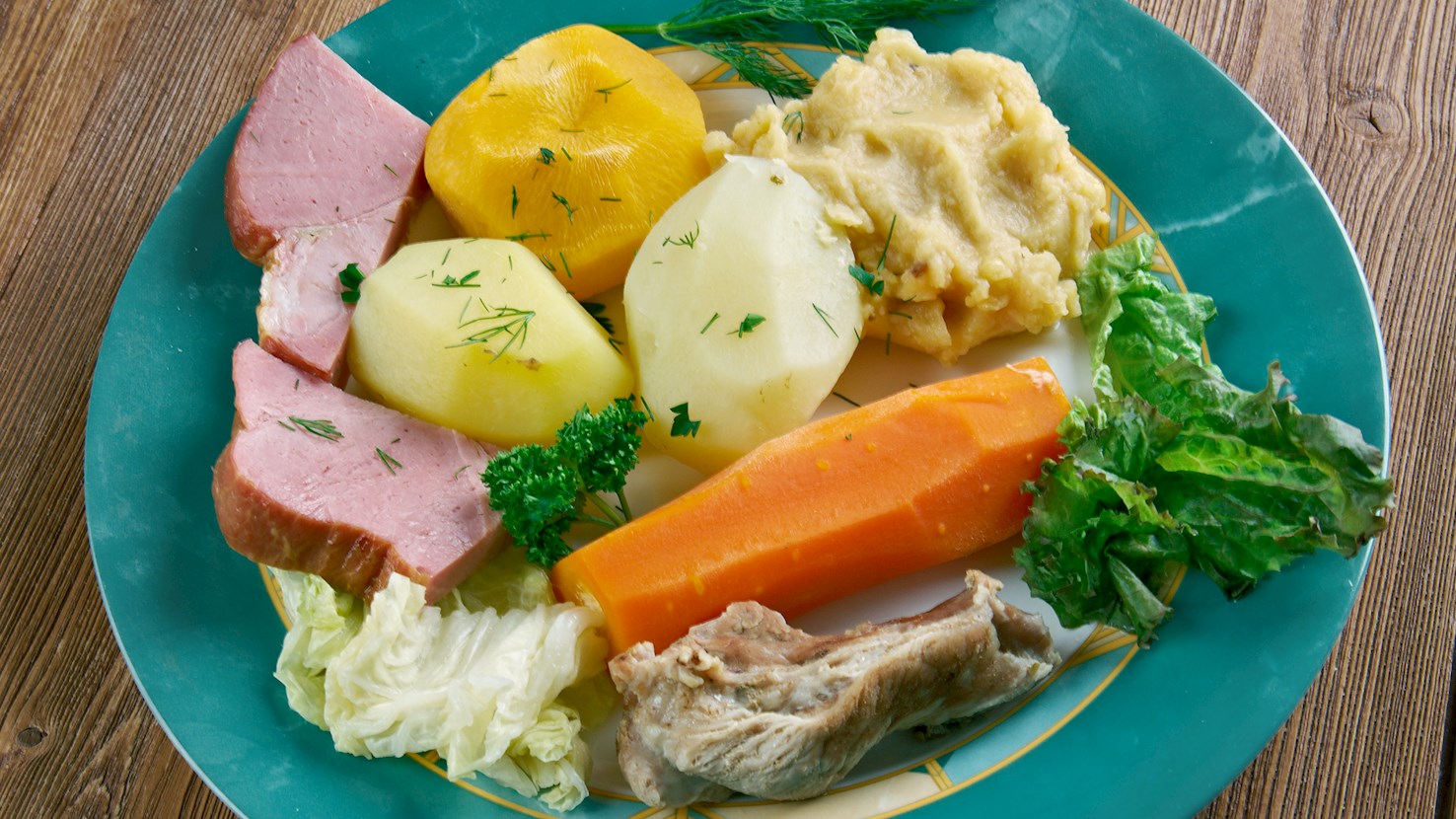
Jiggs dinner is a meat dish that is traditionally prepared on Sundays in Newfoundland and Labrador. It consists of salt beef, figgy duff, pease pudding, and various vegetables such as carrots, potatoes, cabbage, and turnips. The dish is often accompanied by butter, pickled beets, and cranberry sauce on the side. It is typically prepared for large groups of people, often resulting in lots of leftovers, which are then fried and made into a dish called cabbage hash. Jiggs dinner is named after a popular cartoon character called Jiggs, whose favorite meal was corned beef and cabbage.
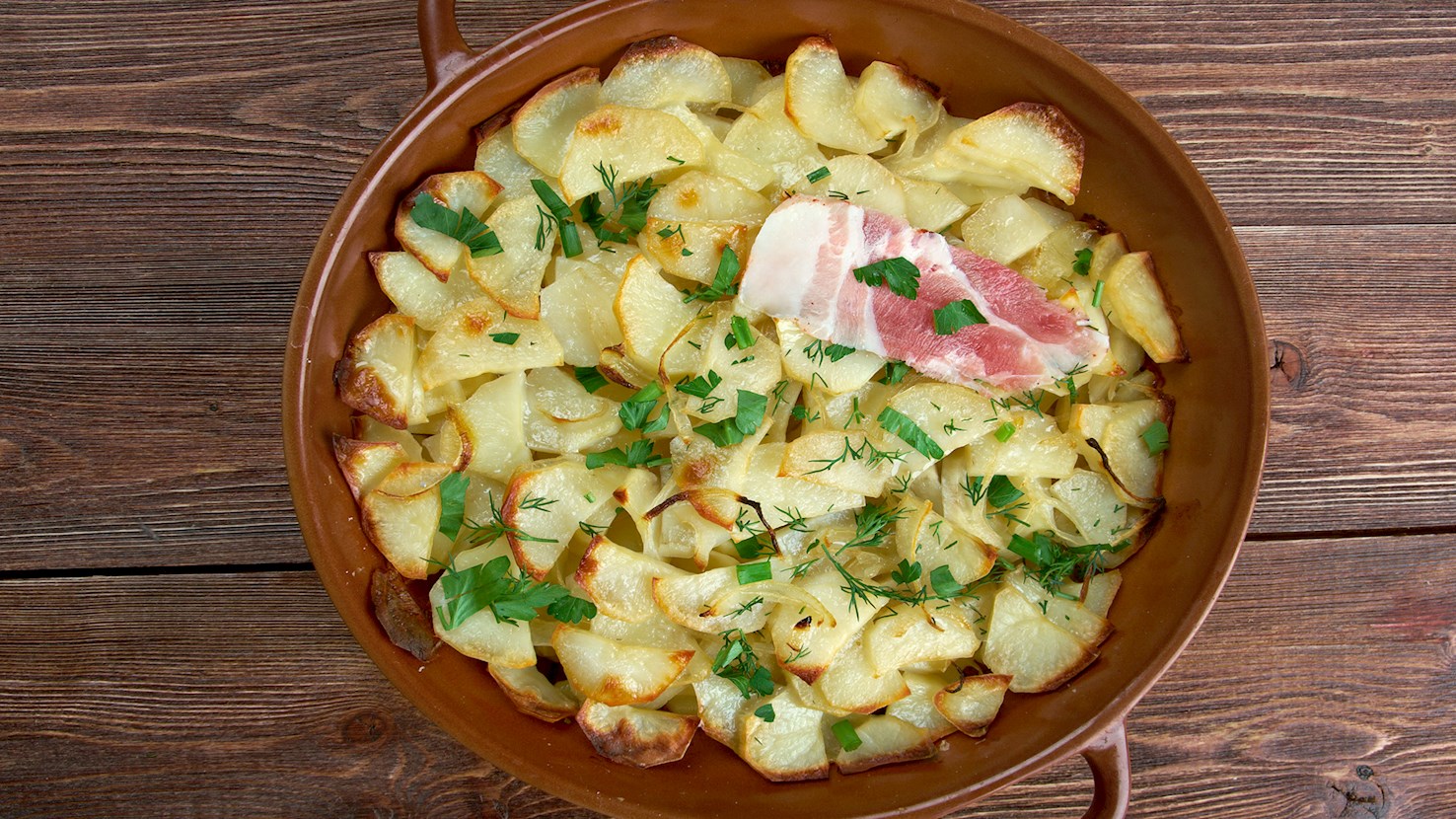
Panackelty is a popular English casserole that is especially popular in County Durham and Sunderland. It consists of slowly cooked meat (typically lamb chops or corned beef) and root vegetables such as onions, carrots, and potatoes, although there are numerous recipe variations throughout the region, so the type of meat and vegetables may vary. The dish is cooked in a pan which is placed in an oven at a low temperature, hence the name. It is believed that panackelty was invented out of necessity as a frugal and hearty dish.
Banana stobá is a traditional dish originating from Curaçao. This stew is made with a combination of ripe plantains, corned beef, sweet potatoes, pumpkin, butter, onions, celery, cinnamon, cloves, allspice, and sugar. The salted meat, either beef or pork, is placed in water overnight in order to remove some of the salt. On the following morning, the salted meat is placed in a pot with the butter and water, and it is then boiled until soft. The plantains and other ingredients are chopped and added to the pot, and the stew is simmered until the plantains and other vegetables become soft. The stew is beloved for the contrast of textures and fragrant hints of cloves, allspice, and cinnamon. Banana stobá is traditionally cooked on a barbecue-like stove called konfó, and it's then served with funchi (local polenta) on the side.
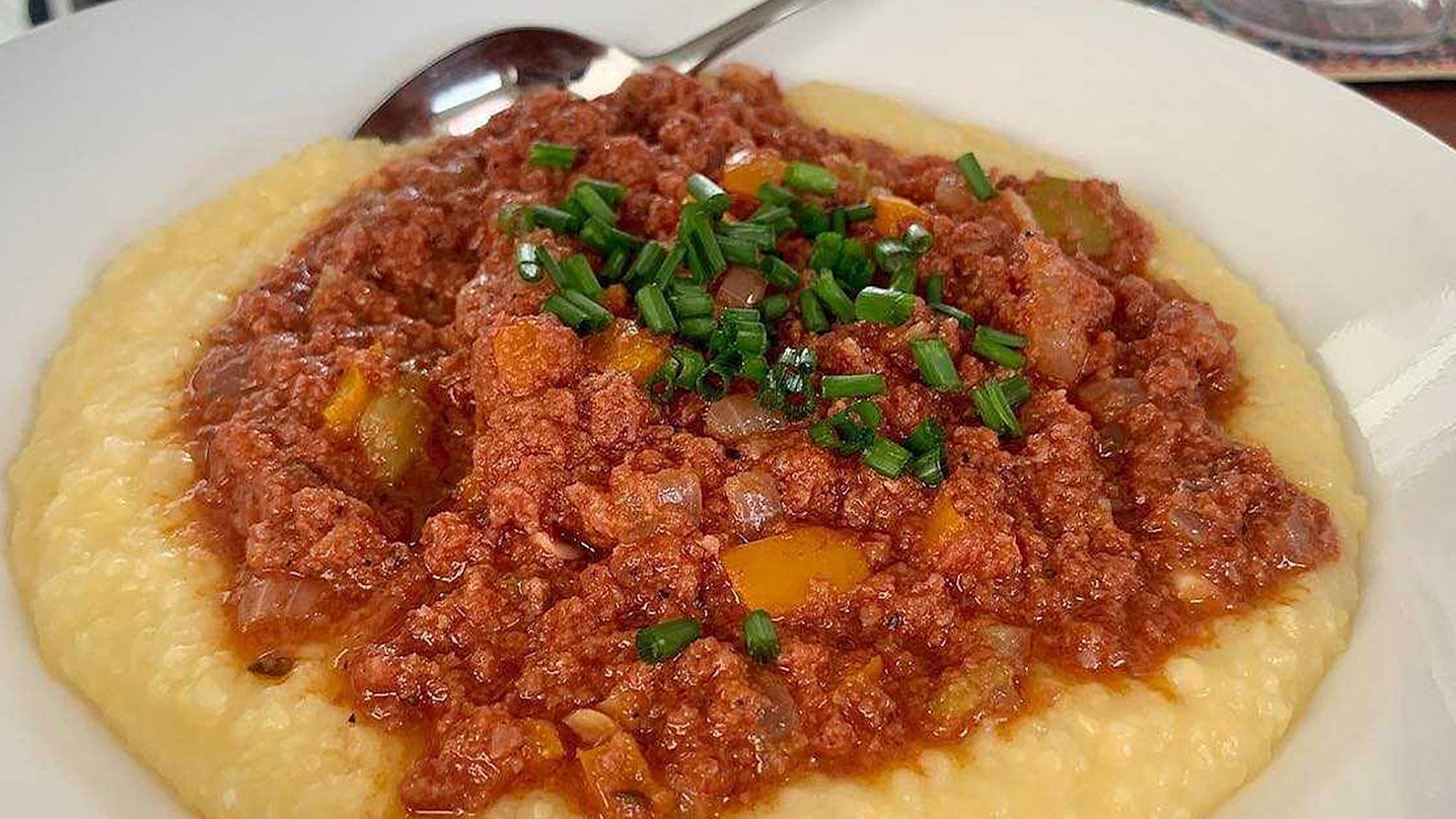
Fire engine is a traditional dish that's a staple for breakfast and a local hangover cure. Also known as steamed corned beef, it's usually made with a combination of canned corned beef, thyme, tomato paste, onions, celery, bell peppers, tomatoes, oil, salt, and lots of black pepper. The ingredients are simply cooked in a large frying pan over medium heat and stirred frequently. Once done, the fire engine is served with rice or grits. The dish can be made at home or bought at roadside stalls and food carts, especially near construction sites. If desired, the level of heat can be elevated with the addition of diced Bahamian goat pepper.
Bonchi kora is a traditional dish originating from the islands of Aruba, Curaçao, and Bonaire. The soup consists of red kidney beans, corned beef, pork tail, onions, nutmeg, butter, garlic, and sugar. The meat is placed in water overnight in order to remove some of the salt. On the following morning, the meat is boiled until soft. The beans and garlic are boiled and mixed with the onions, nutmeg, and meat, then simmered with butter and sugar until everything is tender and fully cooked. Once done, bonchi kora is traditionally served with bread, rice, or funchi (local polenta). The dish is traditionally cooked on Mondays so that the leftovers can be enjoyed throughout the week.
Te bua toro ni baukin is a dense, steamed or baked vegetable and meat casserole composed of pumpkin, cabbage, and canned meat, originating from the Republic of Kiribati. The development of this dish is a result of the 20th-century integration of imported non-perishable goods into the atoll diet, where the introduction of pumpkins and canned meats, primarily corned beef, provided a stable caloric alternative to the fluctuating availability of reef fish and seasonal fruits. The practice of combining these introduced elements with local cooking methods emerged as a solution for communal feeding in an environment with limited fuel sources. Preparation involves grating fresh pumpkin and cabbage and mixing it with wheat flour, sugar, and tinned corned beef to form a thick, heavy batter. This mixture is then wrapped in softened pandanus or banana leaves and cooked in a large pot or an earth oven (umu) until the starches have fully set and the pumpkin has softened into the binder. A specific property of te bua toro ni baukin is the high fat content provided by the corned beef, which acts as a preserving agent and provides a distinct savory contrast to the natural sweetness of the pumpkin. The dish is served in thick, rectangular slices after it has cooled sufficiently to maintain its structural integrity. It is eaten as a substantial meal or snack during social gatherings in the maneaba or as a portable food source for travelers and fishermen. Because of its density and high energy yield, it is frequently paired with fresh te karewe (coconut sap) to provide hydration and a light sweetness that balances the saltiness of the processed meat. Functional food pairings include small portions of fried fish like te inai to add a different protein texture, while the high sodium content of the loaf is often neutralized by the consumption of fresh coconut water.
TasteAtlas food rankings are based on the ratings of the TasteAtlas audience, with a series of mechanisms that recognize real users and that ignore bot,
nationalist or local patriotic ratings, and give additional value to the ratings of users that the system recognizes as knowledgeable.
For the “11 Best Rated Dishes with Corned Beef” list until May 22, 2026, 989,162 ratings were recorded, of which 646,970 were recognized by the system as legitimate.
TasteAtlas Rankings should not be seen as the final global conclusion about food. Their purpose is to promote excellent local foods,
instill pride in traditional dishes, and arouse curiosity about dishes you haven’t tried.