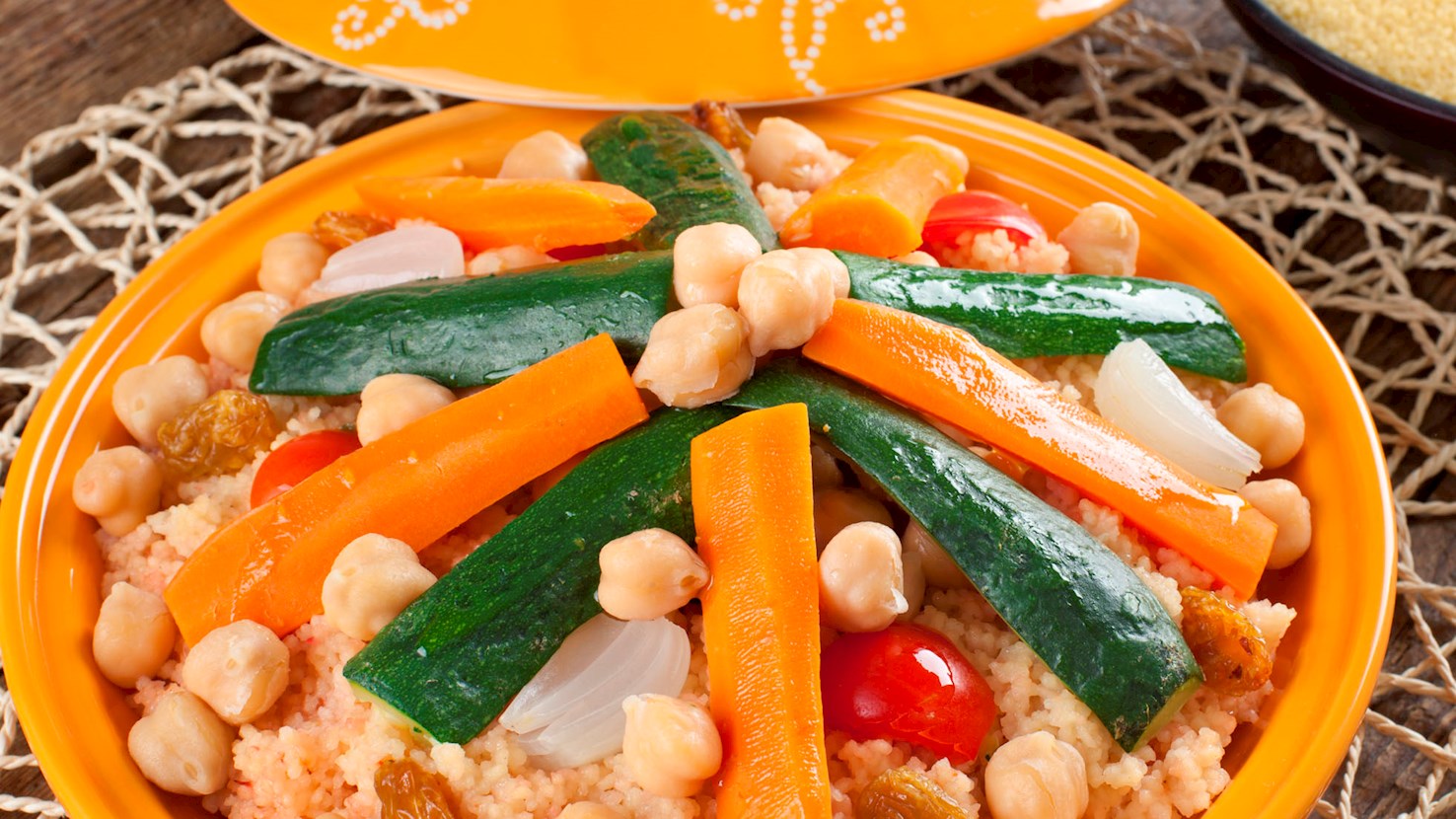
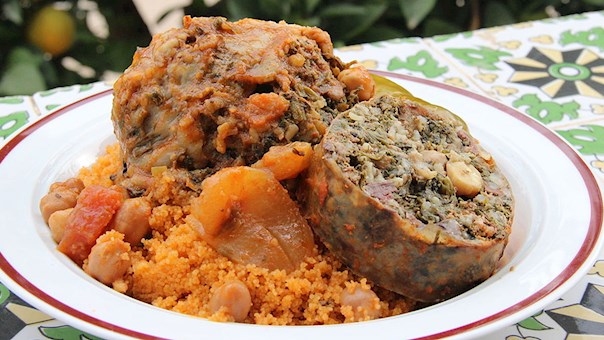
Numerous tiny, light, tender grains, ideally arranged to form a pyramid and served on a platter at the end of a meal - that is couscous, the national dish of Morocco and Algeria and a must-have dish in any Moroccan and Algerian restaurant. The word itself refers both to the complete dish and the tiny grains of semolina. Semolina flour is sprinkled with water until it forms into tiny pellets that are then pushed through a sieve. Couscous is usually prepared on Fridays for lunch, when whole families get together for the most important meal of the week. The dish is traditionally made in a metal steamer pot called a couscoussier, where the stew is on the bottom, while the small grains are in the perforated basket on top, cooking in the steam that is rising from the rich stew. Although couscous dishes are often full of vegetables, they are rarely vegetarian. Some classics include couscous with seven vegetables and couscous with raisins and caramelized onions, but there are many more varieties such as spicy with chili peppers, sweet with chickpeas, lamb and raisins, Berber-style with chicken, milk and turnips, or fish couscous with fish, fennel stalks, and wild turnips. There is even a dessert couscous dish served with butter and enhanced with cinnamon and sugar. After couscous is served, it is covered with meat or fish and vegetables, while the broth from the same stew is served on the side, for the ones who want to ladle some on top of the grains. However, don't be mistaken - it is not the main course, as it is served at the end of a long string of courses to totally satiate the consumer, as the popular Arabian hospitality saying goes - "No guest should go home hungry".
Mesfouf refers to a dish where the main ingredient is a version of couscous made with finely ground semolina and butter. The dish can then be made in sweet or savory versions, depending on the additional ingredients. This flavorful side dish originates from Algeria and Tunisia, but it is consumed throughout Maghreb, a region in northwest Africa.
Couscous bil-bosla is a traditional dish made with a combination of couscous, chickpeas, potatoes, tomatoes, and lamb. Other ingredients used in the dish include onions, butter, chili peppers, and various spices. When served, couscous is arranged on a platter and topped with the lamb chops, and the whole dish is then covered with the chickpea sauce. The dish is traditionally served on a large sharing platter.
Chakery is a sweet West African dessert with a creamy texture. It consists of couscous, milk, yogurt, and sour cream. Chakery is usually served at the end of an African meal, and it is recommended to add pineapple chunks in it for extra sweetness, then garnish the dish with some cinnamon on top.
Baixaria is a traditional dish originating from Acre. It's made with a combination of cornmeal, ground beef, onions, garlic, olive oil, bell peppers, and tomatoes. The couscous is steamed and served with the combination of ground beef, onions, and vegetables. Once done, baixaria is topped with a fried egg, garnished with chopped parsley, then served, usually for breakfast.
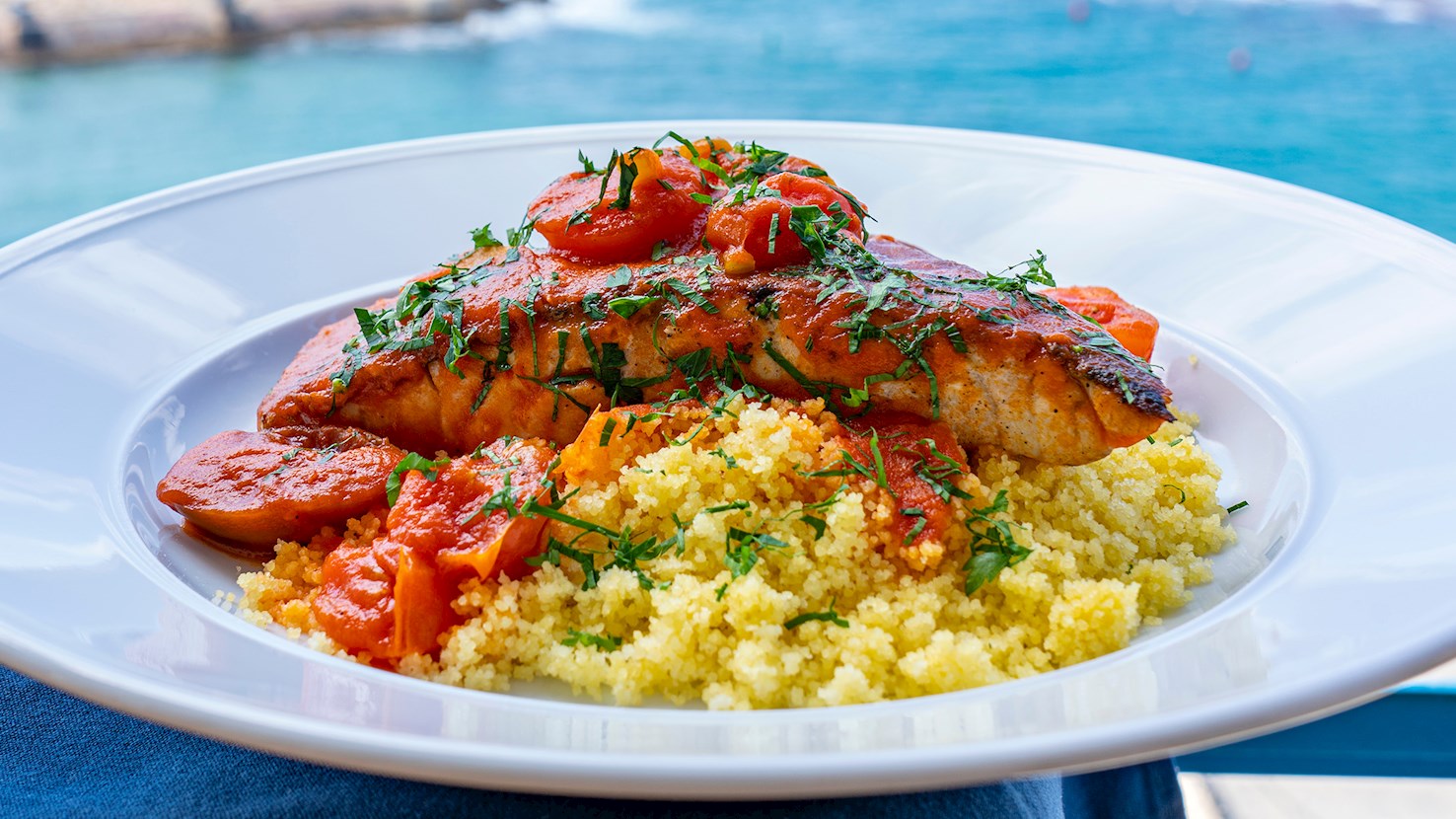
Kusksi bil hoot is a traditional dish using steamed couscous and fried firm-fleshed fish (e.g. grouper) as the main ingredients. Before frying, the fish is usually marinated in a combination of garlic, lemon juice, hot peppers, celery, olive oil, and cumin, while couscous is steamed with the addition of stock made from onions, tomatoes, parsley, and fish heads. Couscous and fried fish are then combined with a sauce consisting of tomatoes and fried vegetables such as potatoes, squash, bell peppers, chickpeas, aubergines, and onions. Once prepared, kusksi bil hoot is typically served in a communal dish so everyone can feast from the same plate.
Cùscusu alla trapanese is the Sicilian version of couscous, particularly associated with the city of Trapani. It is prepared with semolina wheat, just like traditional couscous, but it is often hand-rolled, steamed, and served with a rich and flavorful fish broth instead of the meat or vegetable broths typically found in North African cuisine. The couscous grains are steamed multiple times in a special pot called a couscoussiere, which allows them to become light and fluffy. The dish is served with a broth made from fresh fish such as grouper, snapper, or scorpionfish, along with shellfish like mussels or shrimp. The broth is flavored with onions, garlic, tomatoes, parsley, saffron, and a touch of cinnamon, creating a complex and aromatic base. Often, the fish or seafood is served on top of the couscous or alongside it, along with a drizzle of olive oil and fresh herbs. It is traditionally prepared for festivals or special occasions, such as religious feasts or community gatherings, and remains a staple in Trapani’s cuisine.
Couscous bel hout is a flavorful seafood couscous dish originating from the coastal regions of Tunisia, where the Mediterranean Sea provides a rich bounty of fresh fish and shellfish. This dish combines fluffy, steamed couscous grains with a vibrant, spiced broth infused with tomatoes, garlic, and aromatic herbs, complemented by an assortment of seafood such as fish, shrimp, and sometimes squid or mussels. The history of couscous bel hout is deeply intertwined with the Mediterranean’s maritime culture, where fishing communities developed recipes that make full use of their local resources. The dish evolved as a variation of the broader North African couscous tradition, adapted to incorporate the abundant seafood available along Tunisia’s shores. This adaptation reflects the diversity of ingredients found across Tunisia’s regions and the interplay between land and sea in its cuisine. Over time, couscous bel hout became a popular dish not only in coastal towns but throughout the country, enjoyed in both homes and local eateries. Preparation of couscous bel hout begins with cleaning and preparing the seafood, which is cooked gently in a tomato-based broth seasoned with garlic, cumin, coriander, and fresh herbs such as parsley and cilantro. The couscous grains are steamed until light and fluffy, absorbing subtle flavors from the broth. The seafood is then arranged atop the couscous, and the rich broth is served alongside or poured over the dish, allowing the grains to soak up the savory, spiced liquid. This method ensures a harmonious combination of textures and tastes that highlight both the delicate seafood and the hearty couscous. Couscous bel hout is traditionally enjoyed as a communal meal, often served during family gatherings and special occasions along the Tunisian coast. It is accompanied by salads or pickled vegetables that provide a refreshing contrast to the rich main dish.
Ngomou is a couscous-style dish prepared in Mauritania and most closely associated with the Pulaar-speaking communities of the southern regions near the Senegal River, where it functions as a core meal rather than a festive specialty. Its presence reflects the ethnic and ecological diversity of Mauritanian foodways, as inland pastoral and riverine groups relied on grains such as millet, sorghum, and barley instead of wheat, and developed couscous forms that differed in color, density, and structure from North African semolina-based versions, while naming practices varied by language, with Pulaar speakers using the term ngomou and Hassaniya Arabic speakers more commonly saying kuskus or keskès for the same category of dish. Preparation begins with hand-rolled grains made from non-wheat flours, which are steamed rather than boiled, producing a darker and more robust base, and a defining step involves incorporating powdered baobab leaves, known as lalo, into the grains or sauce, lending a faint green hue and a viscous quality that allows broth to adhere closely rather than run off. The couscous is paired with a stew built from lamb, goat, or beef simmered slowly with vegetables such as carrots, cabbage, and turnips, seasoned without sharp spices so the grain and sauce remain balanced, and the components are assembled just before serving rather than mixed during cooking. Serving follows a communal format, with the grains arranged around the edge of a large shared bowl and the meat and vegetables placed at the center, reinforcing collective eating practices common to rural and nomadic settings. What distinguishes ngomou within the broader couscous family is the combined use of non-wheat grains and lalo, which together produce a heavier texture and sauce-binding quality not found in lighter couscous styles, and its identity remains tied more to community and method than to a fixed recipe. It is eaten by hand or with a spoon during midday or evening meals, most often at home or in rural settings, and it pairs naturally with water or lightly sweetened tea, while the richness of the stew makes additional side dishes unnecessary.
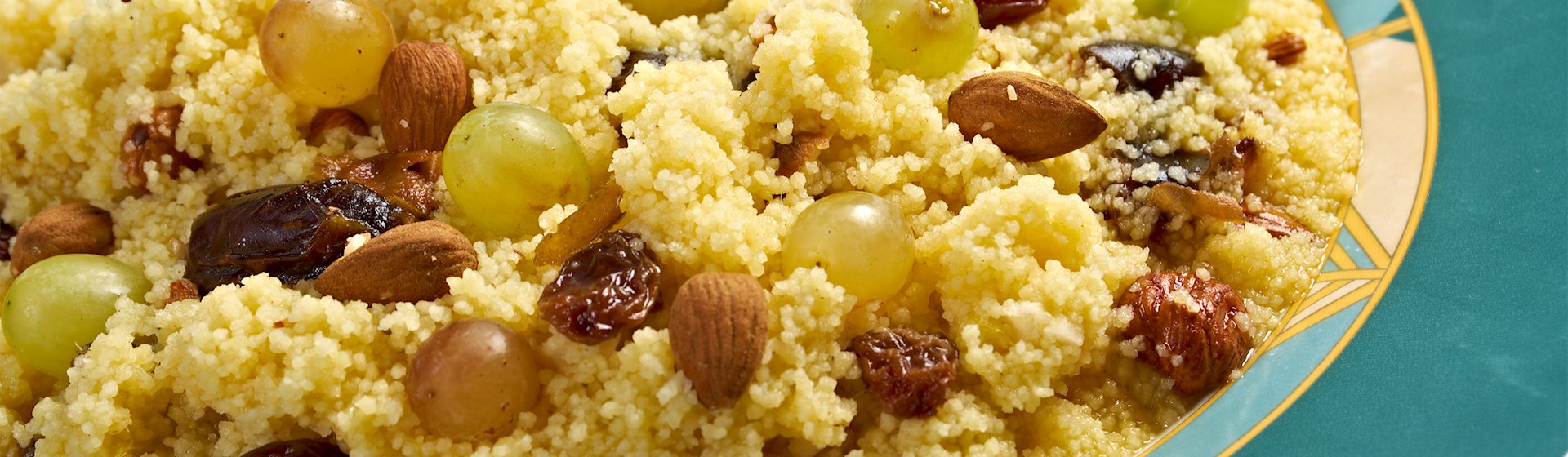
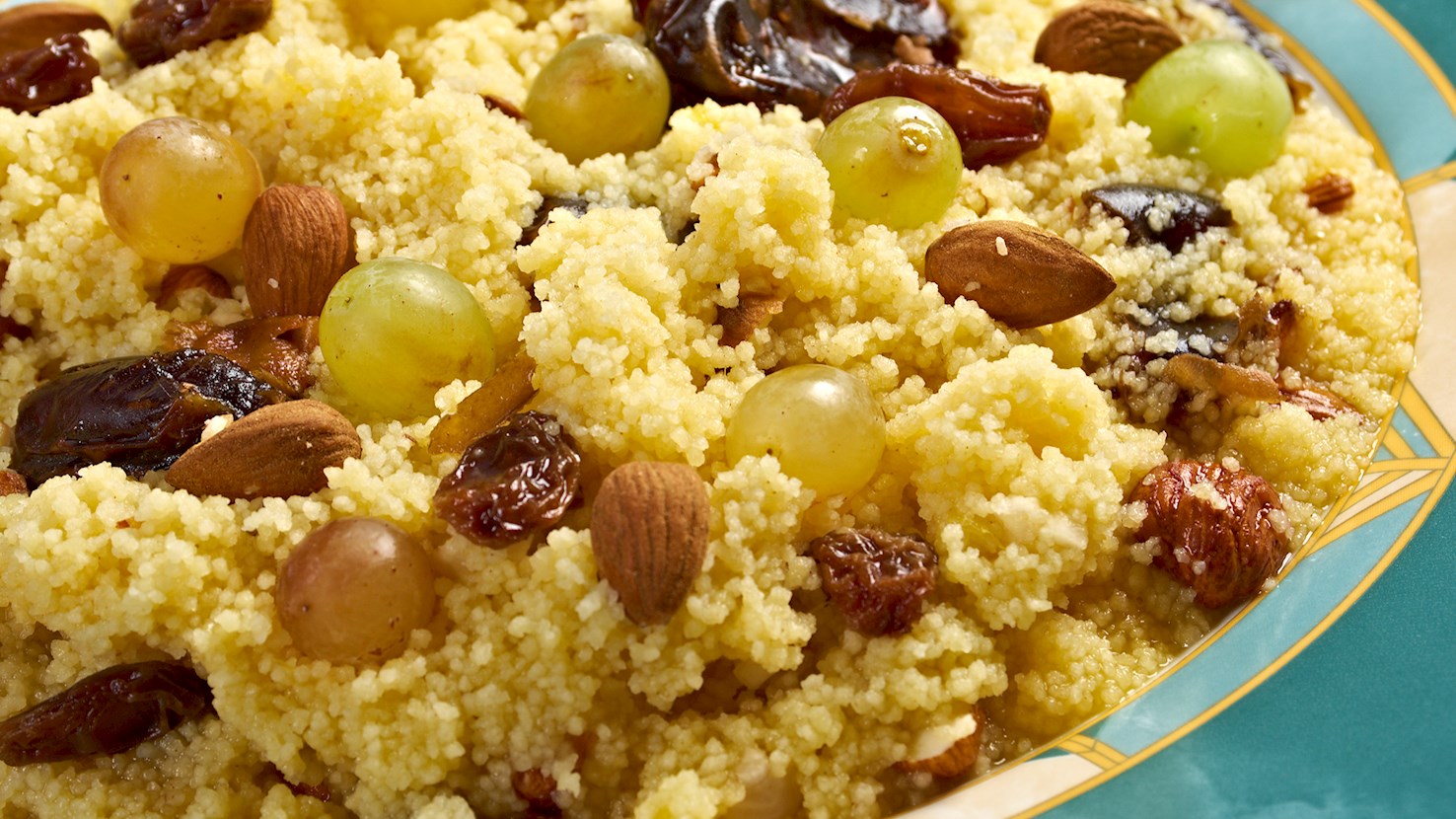
Borzgane is a kind of sweet-savory couscous dish from northern Tunisia, especially around the regions of Béja and Le Kef, made by cooking fine couscous with lamb (or mutton), milk, dates, and a mix of dried nuts and fruits, blending rich and delicate flavors in one dish. The origins of borzgane reach deep into the agricultural and pastoral life of the Tunisian hinterland, where cereals, sheep herding, and the use of fruit and nuts shaped the local meals. In seasons when both grain and dried fruit were abundant, cooks developed a couscous variant that combined meat and sweetness, marking celebrations and seasonal transitions. Over time, borzgane took on ritual significance: it became associated with spring festivals in the region, notably with the Mayou festival at Le Kef, when new cereals are celebrated and a lamb is often slaughtered to signal renewal. To make borzgane, one first steams or soaks couscous until light and separated, often with a mix of milk and water to give it a mildly sweet undertone. Meanwhile, lamb is cooked (often with bone to enrich the stock), sometimes until tender in a lightly spiced broth. Dried fruits and nuts, such as raisins, dates, almonds, and hazelnuts, are toasted or soaked, then folded into the couscous. A touch of sugar, a hint of orange blossom water or rose water, and sometimes a sprig of rosemary are added to bring aromatic notes. The meat is placed over the couscous, and the whole dish is moistened with its cooking liquid or additional milk, so that the grains absorb flavor without becoming soggy. The final presentation is generous: the couscous forms a base, the meat is laid on top, and nuts and fruits are scattered, combining textures and tastes. It is eaten as a main dish, with people taking portions of couscous, meat, and the sweet nuts and fruit together. It pairs well with light mint tea or a rose-water infused drink, and sometimes with a fresh green salad that offsets its richness. In local markets or at family feasts, borzgane continues to convey the sense of place—in grain, dairy, lamb, and fruit—of the high plains of Tunisia.
TasteAtlas food rankings are based on the ratings of the TasteAtlas audience, with a series of mechanisms that recognize real users and that ignore bot,
nationalist or local patriotic ratings, and give additional value to the ratings of users that the system recognizes as knowledgeable.
For the “12 Best Rated Dishes with Couscous” list until May 22, 2026, 989,163 ratings were recorded, of which 646,971 were recognized by the system as legitimate.
TasteAtlas Rankings should not be seen as the final global conclusion about food. Their purpose is to promote excellent local foods,
instill pride in traditional dishes, and arouse curiosity about dishes you haven’t tried.